Movie
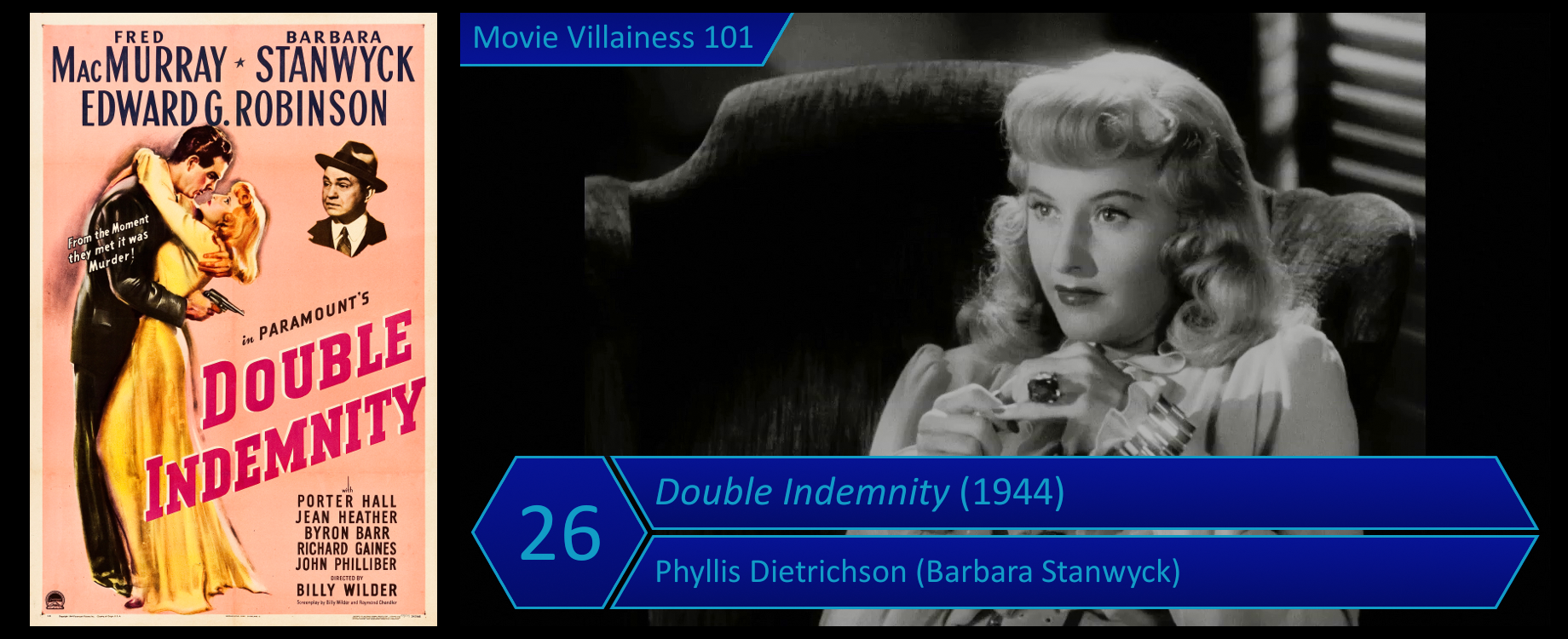
Double Indemnity (1944)
My original list didn’t include films made before the 1960s, mainly because of personal preference. Plus, the black and white era is more dialogue-heavy. However, when said dialogue is well written it becomes timeless, and Barbara Stanwyck’s scheming femme fatale – perhaps the classic film noir villainess – more than merits her place among the legends.
Double Indemnity was produced during World War II, but set in 1930s Los Angeles. The main character is insurance salesman Walter Neff (Fred MacMurray). The story is told in flashback, and since we see a wounded Neff record a confession on a dictaphone (no tape recorders back then), we know it won’t end well. Some advice: getting involved with a beautiful woman who plans to murder her husband is a bad idea.
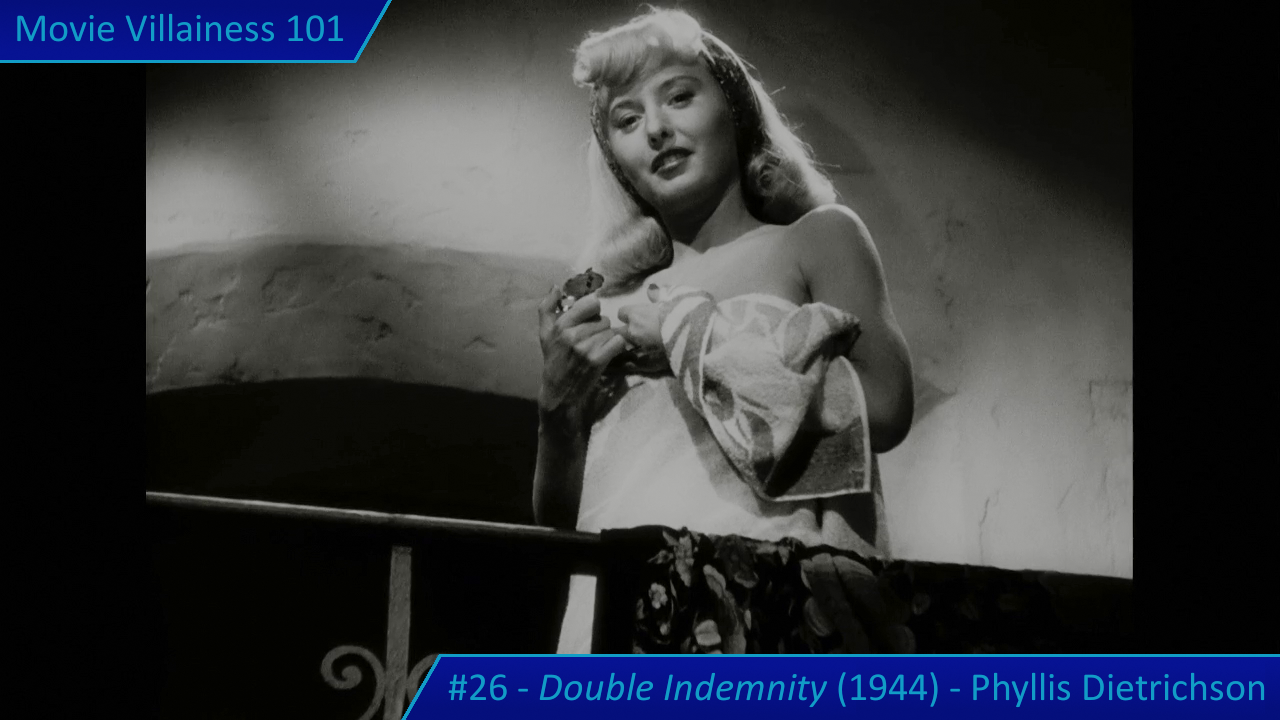
From the moment Phyllis Dietrichson appears on her upstairs landing, it’s obvious she’s trouble personified. Seduction was family-friendly in this era, long before nudity and steamy sex became the norm. Instead, we get suggestive comments about Phyllis’ anklet and sizzling dialogue laden with double entendres. Friendly conversation, but it’s not long before Neff returns and the woman enquires about accident insurance. He quickly deduces what Phyllis has in mind, but it’s her way of testing his intelligence. After he thinks it over, he’s on board with the deadly scheme.
Neff has the husband sign a policy document without his knowledge, by deceiving him into thinking he’s buying automobile insurance. The policy comes with a double indemnity clause – an increased payout for more unlikely accidents – so Neff and Phyllis arrange for their victim to travel by train. As an insider, Neff is careful to create suitable alibis and witnesses and avoid obvious traps. The scheming duo meet in a convenience store to discuss their plans, and the setup seems perfect after the husband injures his leg.
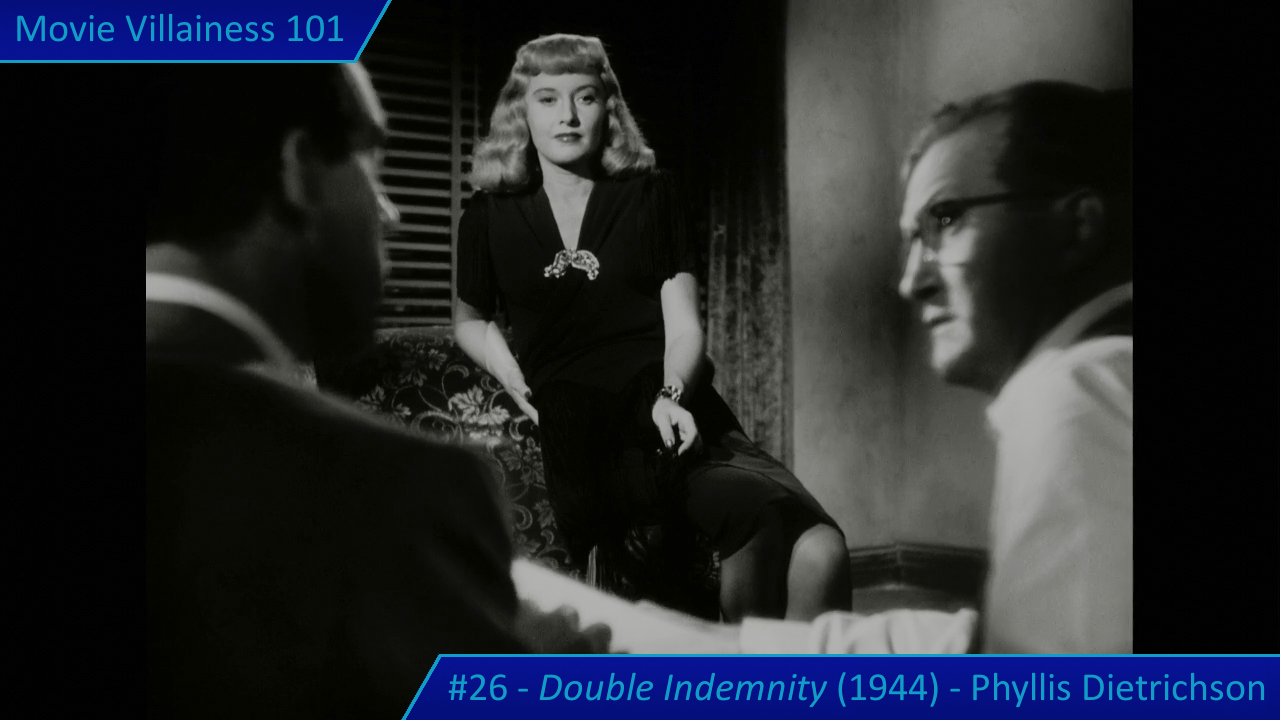
The chief obstacle to the culprits getting away with the murder is Barton Keyes (Edward G. Robinson), a dogged claims investigator who verifies every detail. Long before Columbo found little things wrong with “perfect” schemes, there was this man. By the time Neff learns Phyllis may have also killed her previous husband, it’s already too late. He’s about to learn the hard way that a beautiful woman means trouble.
Villainess
Phyllis Dietrichson (Barbara Stanwyck)
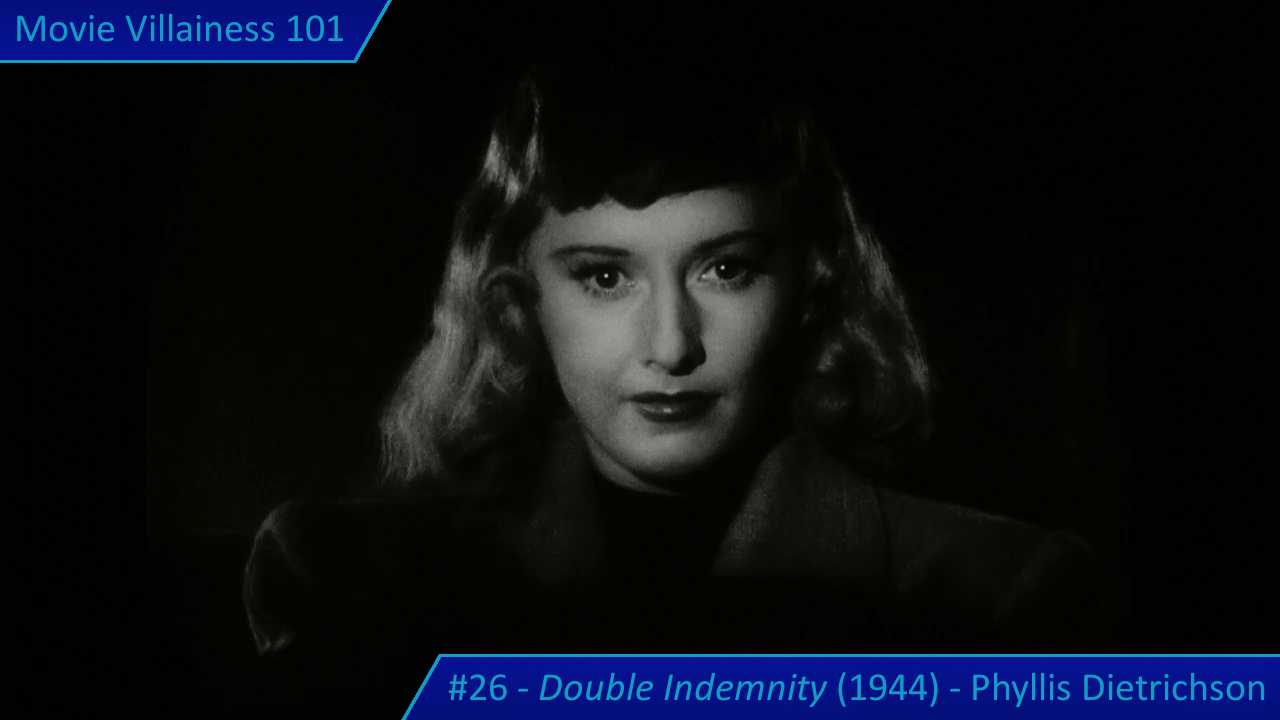
With the groundwork laid, Neff hides in the back seat of Dietrichson’s car while she drives her husband to the train station. After Phyllis beeps the horn – a pre-arranged signal – Neff does the dirty deed. The murder occurs off-screen with only an anguished cry to hint at what takes place, but this is beneficial as we see Phyllis in close-up. Watching her smirk in silence is far more chilling than any 1940s cinema death could be.
The next ten minutes are devoted to Neff staging an accident. Many things go wrong with the plan, notably a witness on the rear carriage platform. Neff gets rid of the man by asking for a cigarette, whilst concealing his face from view. With the coast clear, he jumps and meets up with Phyllis. They place the body and his crutches on the tracks and get away after another scare where the car engine won’t start.
The scheme and convincing act fool Keyes, and the company is prepared to pay out after suicide is dismissed as a possibility. Then the investigator finds the key flaw: that the injured Dietrichson didn’t claim for the accident where he broke his leg. Keyes discusses this with a worried Neff, which leads to a tense moment as Phyllis hides behind the apartment door. Keyes soon locates the witness who testifies that the man on the train was much younger than the husband. That’s when the lies unravel.
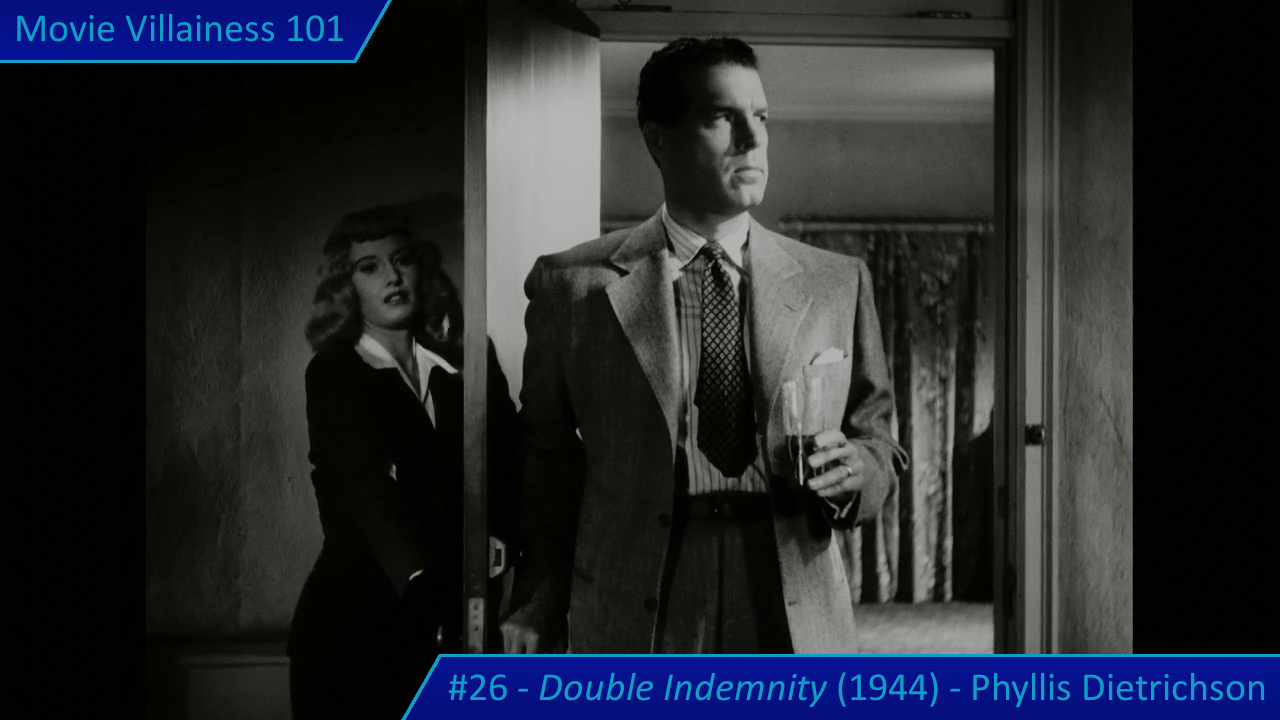
Neff learns some disturbing information from Dietrichson’s daughter, and her boyfriend is the perfect fall guy. Phyllis makes it clear she’ll drag Neff down with her, and there’s no option for him to back out. Now the villainess shows her true evil – a woman without remorse who’ll do anything to escape justice.
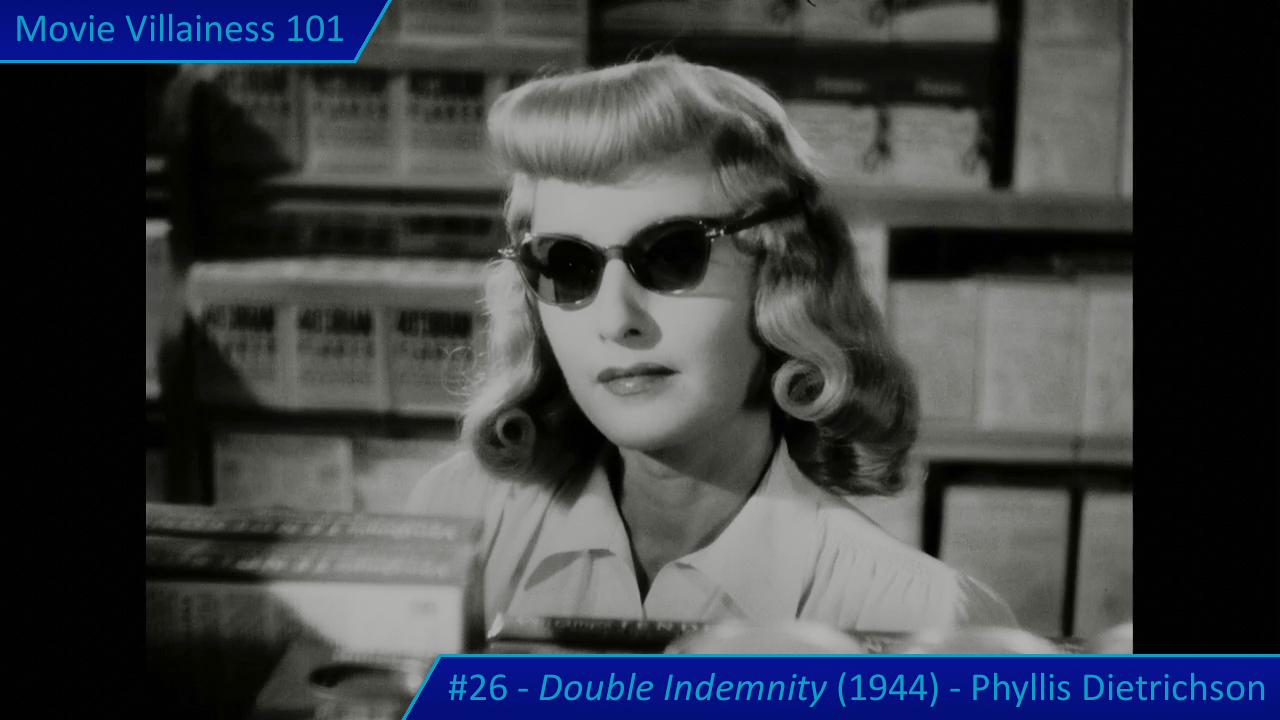
Neff foolishly confronts Phyllis at her house. This leads to a scene where she switches off the lights and lights a cigarette in the dark. Even though, or perhaps because, the film is black and white, this creates the perfect ambiance for a double cross. It’s obvious Phyllis will shoot Neff because we know he ends up injured. Neither the gunshot nor the wound is shown, and the question of what happens to Phyllis is resolved when Neff fatally wounds her with the same gun.
Soon after that, Keyes arrives to hear the end of Neff’s confession. Walter tries to escape, but dies before he reaches the office elevator. One last victim of the conniving femme fatale.
Honourable Mention: Femme Fatales
Body Heat (1981) – Matty Walker (Kathleen Turner)
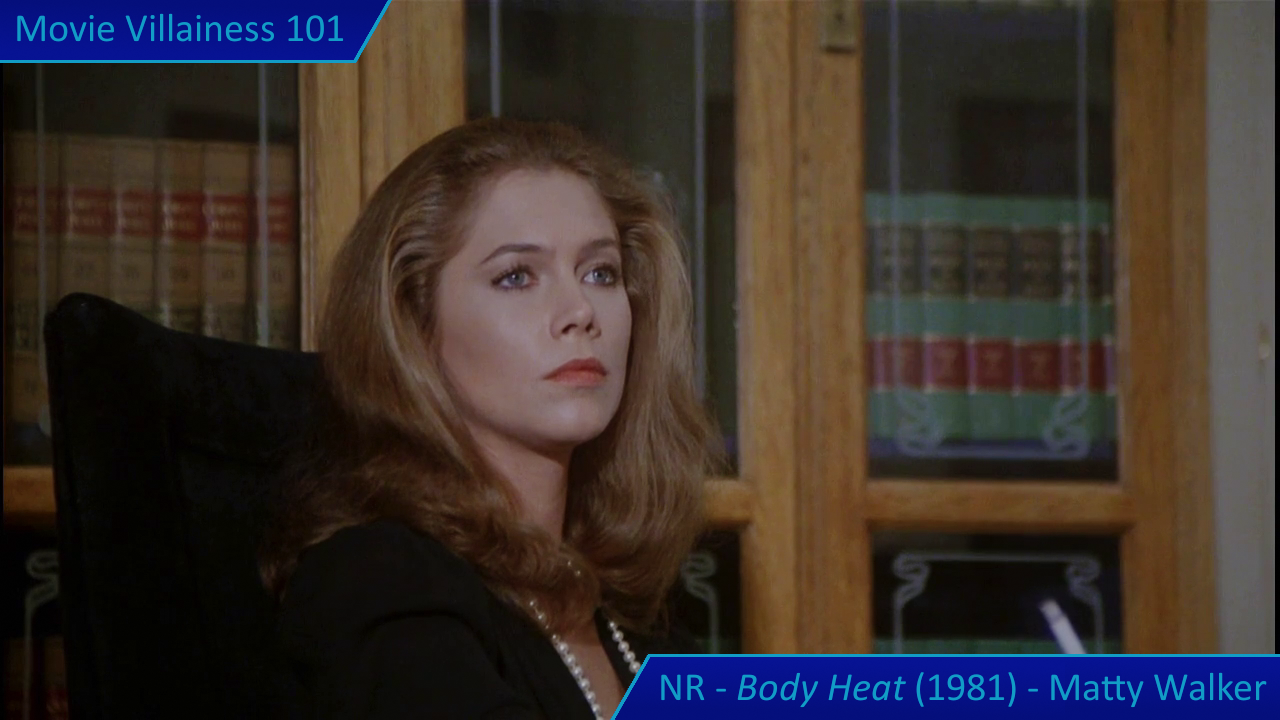
Supposedly inspired by Double Indemnity, this is a steamy 1980s thriller with added sex and nudity. It’s a triumph of style over substance, with clever camera angles but a rather basic story. Turner makes a great femme fatale in her film debut, alongside William Hurt as South Florida lawyer Ned Racine.
Heat is a prominent theme, and the sweltering conditions are a good excuse to have the two leading stars naked. When Ned meets Matty in a supposedly chance encounter (genre-savvy viewers will know it isn’t), they quickly get involved. After a few sweaty nights in bed and cooling off with ice in a bathtub, the lovers plot to murder Matty’s husband, Edmund (Richard Crenna). A name actor, but it’s a cameo role before Ned whacks him over the head and sets up a staged arson gone wrong.
We’re halfway into the film, but the post-murder section is where the double-crossing Matty shows her devious and deadly nature. Racine is incompetent, so the villainess forges a will in his name with a deliberate legal mistake that means the spouse gets the entire inheritance. Matty’s greed tips off Ned’s colleague and detective friend, and they dig into the supposed accidental death.
Matty concocts a crafty scheme where she assumes the identity of a high school classmate, stages her own death, and lets Ned take the fall. By 1981, it was acceptable for a femme fatale to get away with murder, and this villainess was always going to outsmart her dumb patsy. A solid film overall, but no standout moments.

