Movie
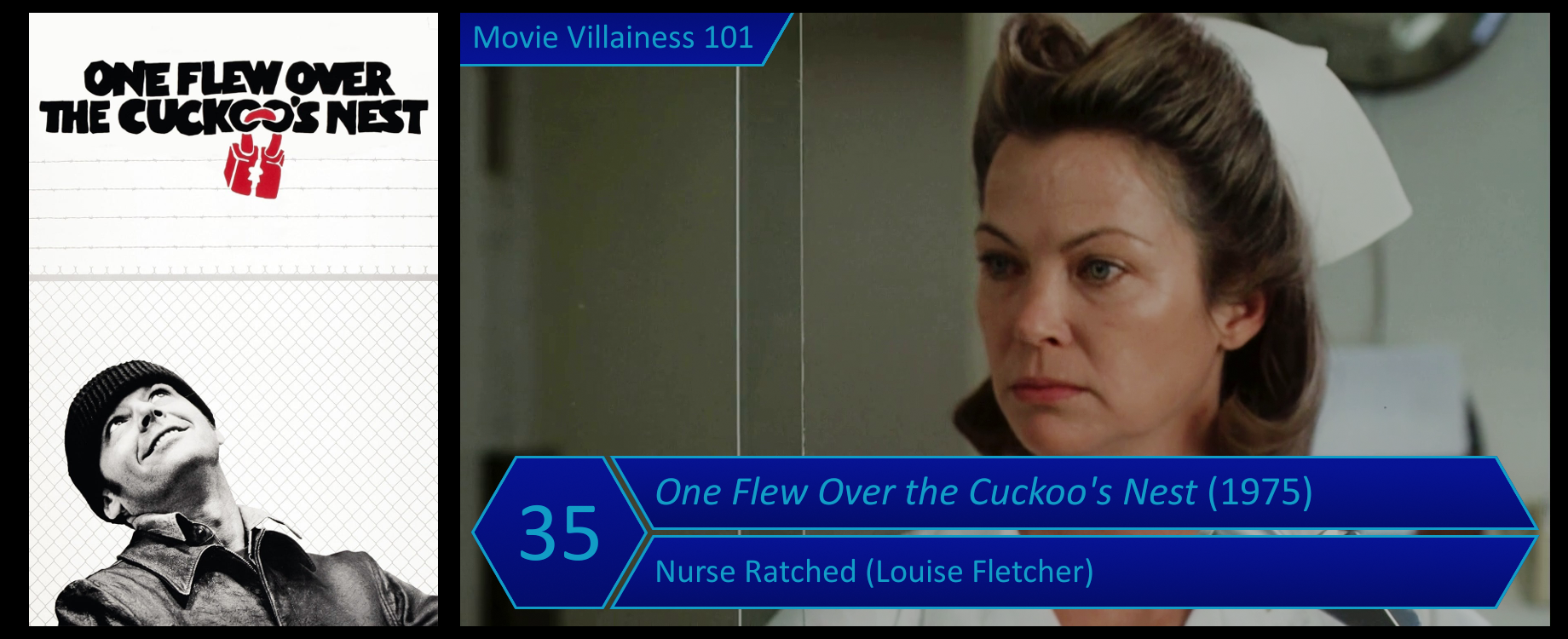
One Flew Over the Cuckoo’s Nest (1975)
Perhaps a controversially low rank, given many female villain lists rate the tyrannical nurse highly, but I consider all the top forty choices to be legendary. The film is undoubtedly a classic, one of only three (to date) to win all five “big” Academy Awards. A lot of time is devoted to patient bonding, and the antagonist is the corrupt US mental health system, even if Nurse Ratched makes a terrifying figurehead.
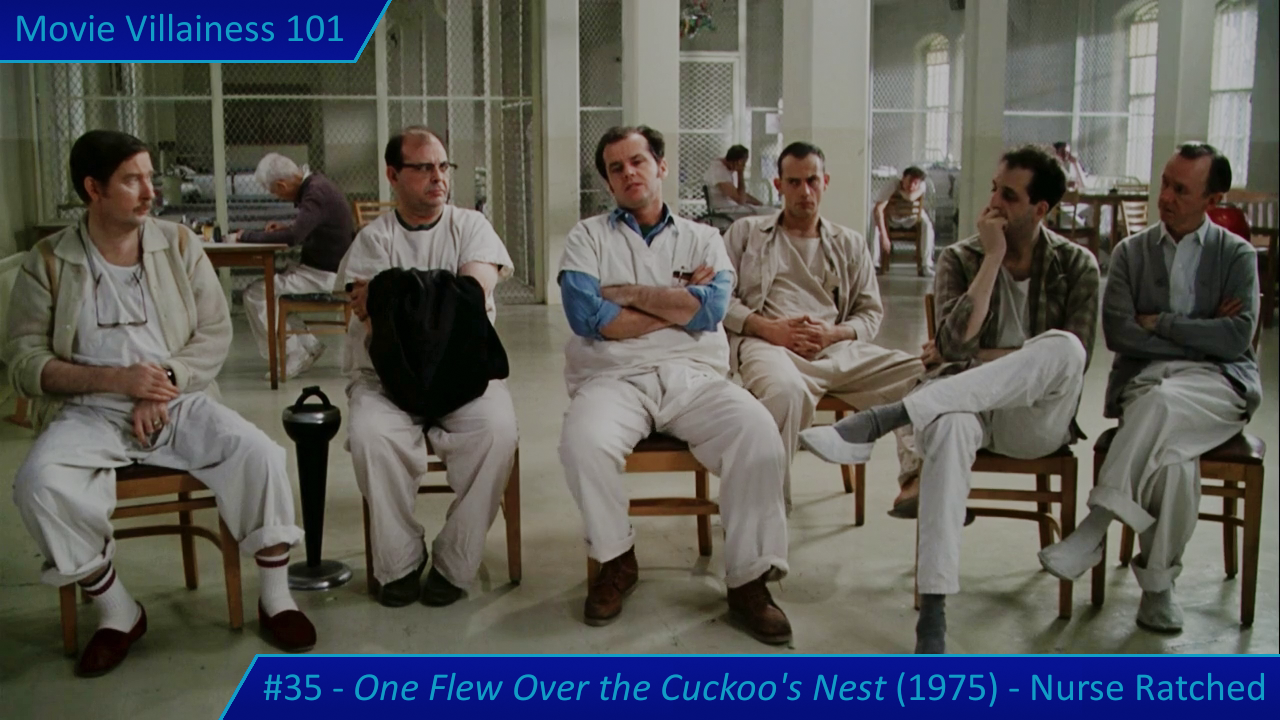
The biggest threat to her authority comes from Randle McMurphy (Jack Nicholson), a recent transfer suspected of faking mental illness to lessen his sentence for statutory rape. This guy is hardly hero material, but he comes across as likeable because the head nurse is a sadistic control freak and his charisma has a positive influence on the other patients.
From the outset, it’s obvious a rule-breaker like McMurphy won’t approve of Ratched’s tight-ship approach. Early on, he’s a quiet participant in group therapy, while the nurse and her passive assistant watch in silence. But then Randle encourages his fellow patients to disregard the rules and forms a bond with the giant deaf-mute Bromden, also known as “The Chief”. This relationship matures into friendship, leading to eventual triumph in a bad-tempered basketball game against the hospital orderlies.
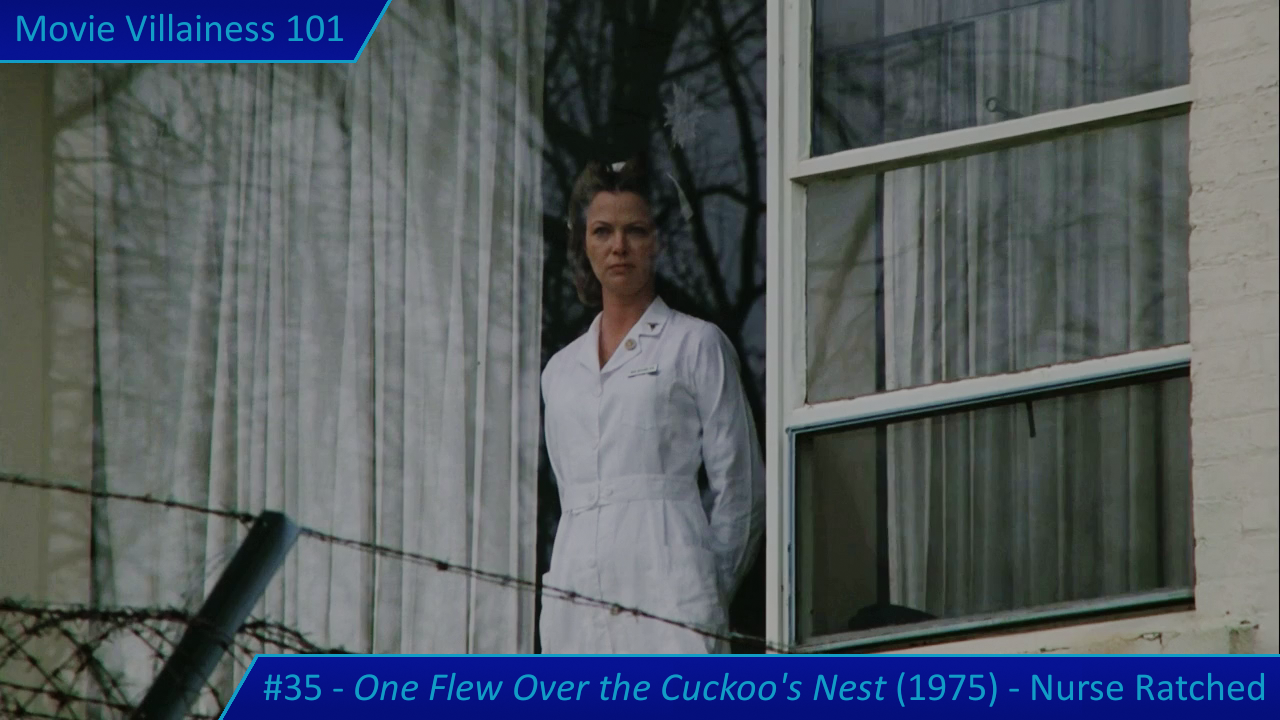
The pacing is much slower than in modern movies. A few scenes feel stretched out, notably where the patients play cards for cigarettes, the therapy sessions, and a long section where McMurphy leads an unauthorised fishing expedition. These parts could have been trimmed without losing substance, but the ensemble cast – which includes a young Danny DeVito, and film debuts from Christopher Lloyd and Brad Dourif – all give terrific performances.
Despite the positivity from McMurphy, this is a dark tale and would never end happily. Not a film to watch when you’re feeling depressed and want to finish on a cheery note.
Villainess
Nurse Ratched (Louise Fletcher)
Early confrontations between McMurphy and Ratched are over trivial matters. First, he wants her to turn down the music on the ward. She refuses, showing an intent to control every little thing. Next on the agenda is the more serious matter of the baseball World Series, which McMurphy wants to watch on television. This goes to a vote, but few patients support the motion, and Nurse Ratched responds with a gloating smile.
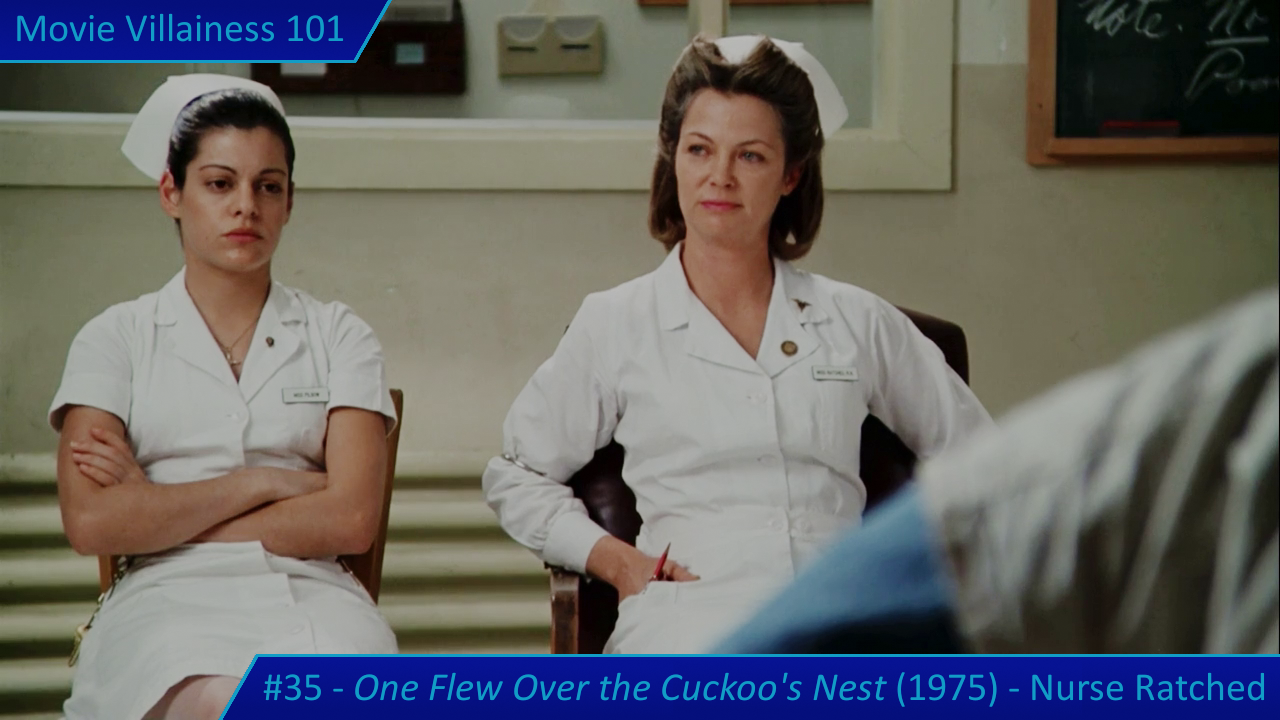
McMurphy isn’t one to quit, and after a bit of unorthodox hydrotherapy where he drowns two men and a Monopoly board, he’s got the other men thinking about free will and escaping. For the second vote on the World Series issue, the group votes unanimously in favour. Nurse Ratched, remaining super calm, points out there are nine other men on the ward (the crazy and delusional patients), and McMurphy doesn’t have a majority.
He runs around searching for the one supporter he needs, showing real leadership, but his rallying attempt seems doomed to fail until the Chief raises his hand. Ratched argues the session was closed before the final vote, so it doesn’t count. Do you get the impression she decided the result beforehand?
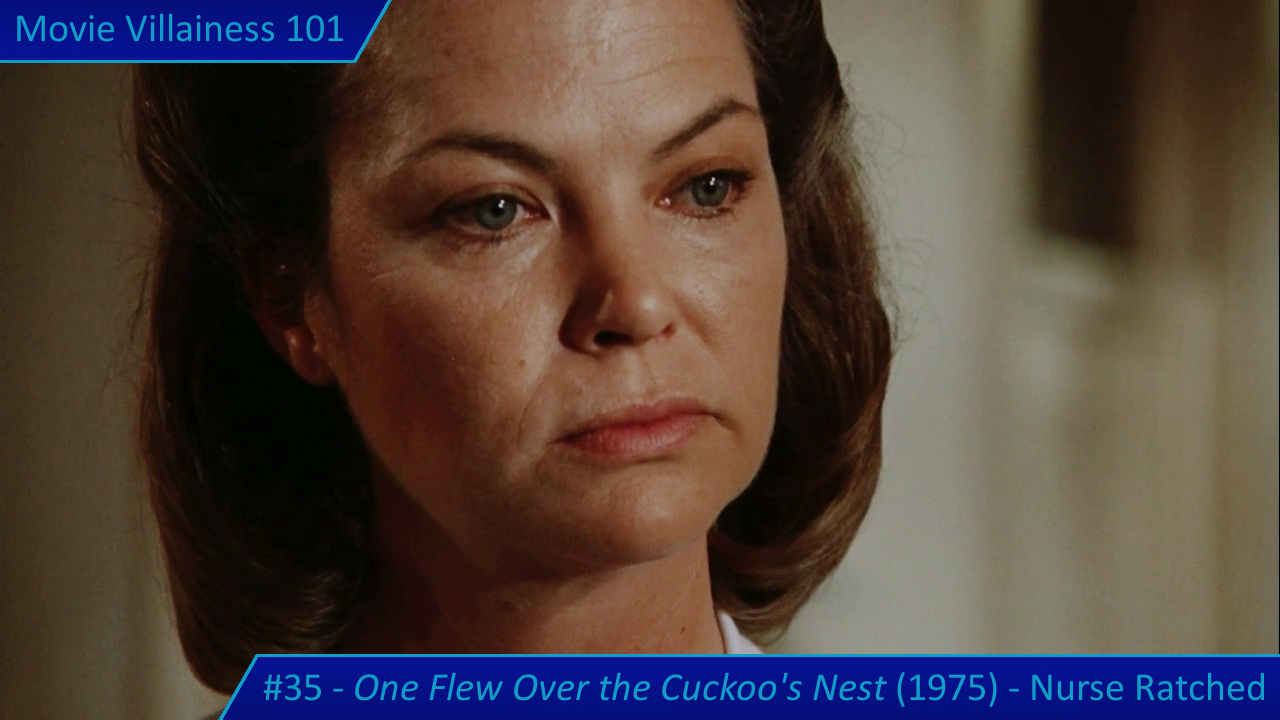
After McMurphy’s disorganised fishing trip, the head doctor suggests sending him to the work farm, but Ratched insists on helping him. Or so she claims, but her joyful smile when Randle finds out there’s no time limit on his hospital stay suggests she wants to regain control. The previously calm nurse gets angry when the patients act defiantly. One man demands she return his cigarettes, and Ratched shifts blame to McMurphy over gambling to turn the others against him.
Following a ward fight, the staff subject McMurphy to electrotherapy, but this only stiffens his resolve. The Chief – previously thought to be mute – reveals he’s been faking it the whole time, and McMurphy throws a Christmas party. He bribes a staff member to let booze and women onto the premises, and things predictably get out of hand. Another strict nurse almost discovers the patients out of their beds, but this is a delaying tactic until Ratched returns the following morning.
Then the nurse shows her truly evil side. She’d always been a controlling sadist, but could have been misguided. Until she drives a patient to suicide by threatening to tell his mother he’d slept with a woman. This prompts McMurphy to attack Ratched and – tellingly – nobody helps her. Eventually, the staff subdue the anti-hero, and it’s later revealed the nurse had ordered him lobotomised. Talk about extreme measures.
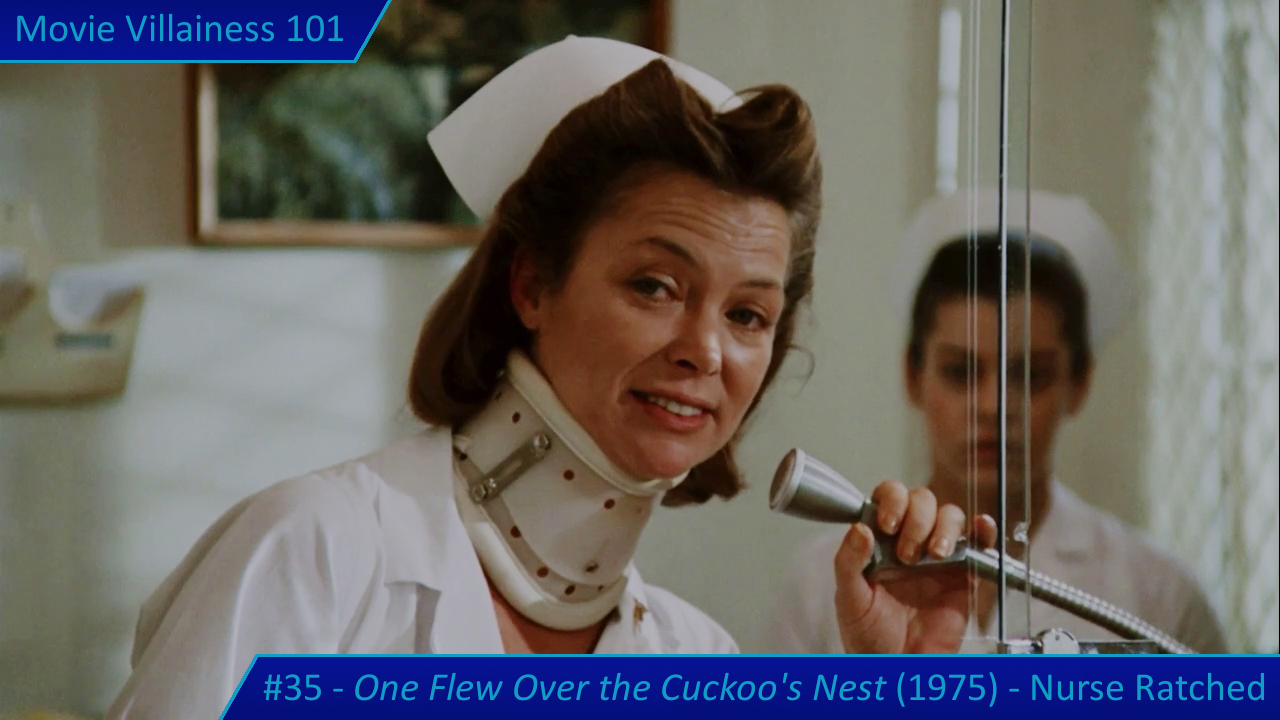
The Chief kills the comatose McMurphy out of pity and uses a hydrotherapy fountain – as Randle suggested earlier – to break out. Nurse Ratched survives with only a neck injury, and she’s back in charge of her patients. This is one villainess victory nobody will want to root for.
Honourable Mention: Controlling Women
The Devil Wears Prada (2006) – Miranda Priestly (Meryl Streep)
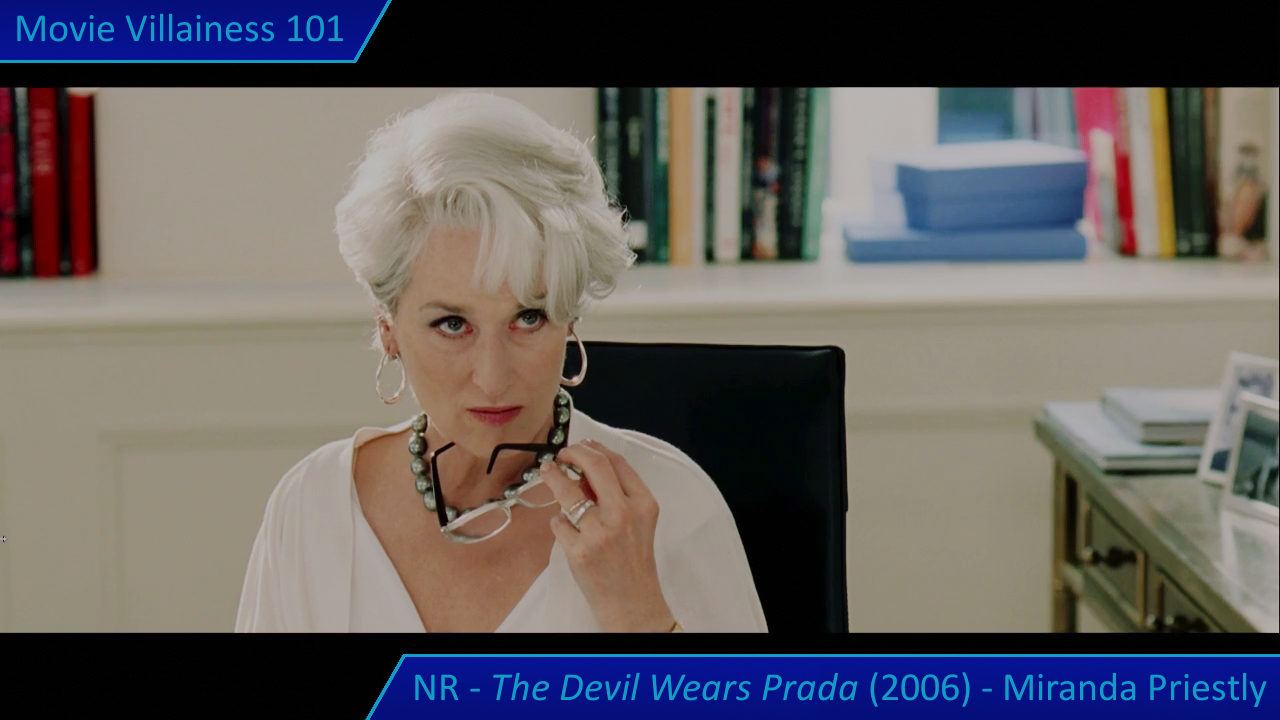
To show I’m considering villainesses from all sources, I’m delving into an area I’m hardly an expert in: women’s fashion. It’s debatable whether Meryl Streep’s “Dragon Lady” boss is actually a villain. She’d make a fine presenter of The Apprentice, but her acts are more ruthless than outright evil. The tough businesswoman even comes to respect the main character, Andrea Sachs (Anne Hathaway).
It doesn’t start out that way. Andrea is a fresh college graduate who shows up unprepared for a job interview with no knowledge of fashion. Hardly good credentials for an assistant role, but her defiant moral speech gets Miranda’s attention, and she takes a chance. That’s the only break she gives Andrea, though, since this boss is akin to a slave driver. Employees run around the New York office to meet her endless list of demands.
Andrea isn’t popular given her unfashionable dress sense, and her relationship with fellow assistant Emily (Emily Blunt) is frosty. After a few mishaps, the newcomer has a wardrobe change and attends high society events, which leads to friction with her unsupportive friends. Andrea is uneasy with Miranda’s ruthless streak, especially when she promises a job to her assistant Nigel but gives it to a rival to save her own skin. That’s as villainous as it gets with Miranda. Welcome to the cutthroat business world.
The movie ends with Andrea quitting her job, but Miranda is pleased for her and gives her a positive reference. So maybe a tough experience was exactly what this young lady needed to further her career. If you’re after a lighter take on female authority figures, this movie is worth a look.

