Movie Villainess 101 Rank #76

She’s certainly having one

Movie

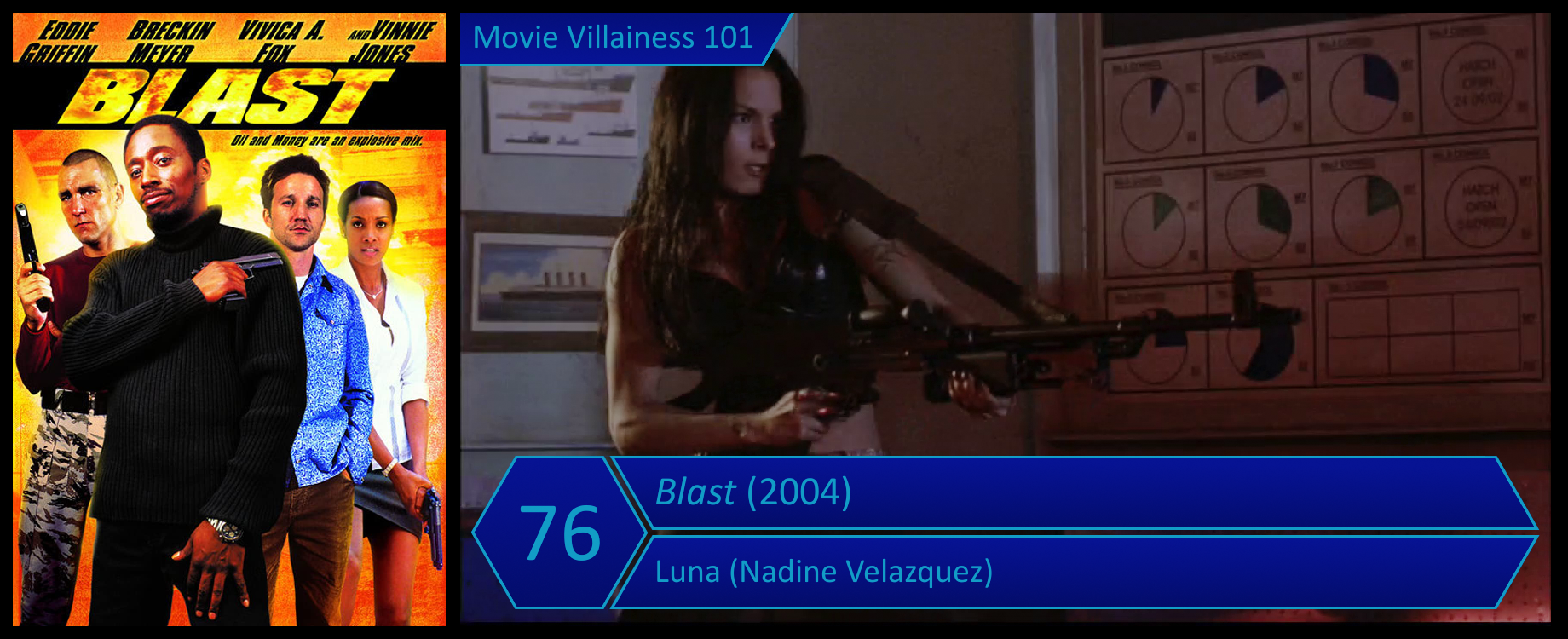
Blast (2004)

Another Die Hard on an X movie, and this particular X is an oil drilling platform off the San Diego coast. Terrorists posing as environmentalists stage a shipping accident, arm themselves with automatic weapons hidden in Christmas presents (!), and take over the facility. The unlikely hero is a tugboat captain with former military experience, who joins forces with an FBI plant to battle the bad guys.
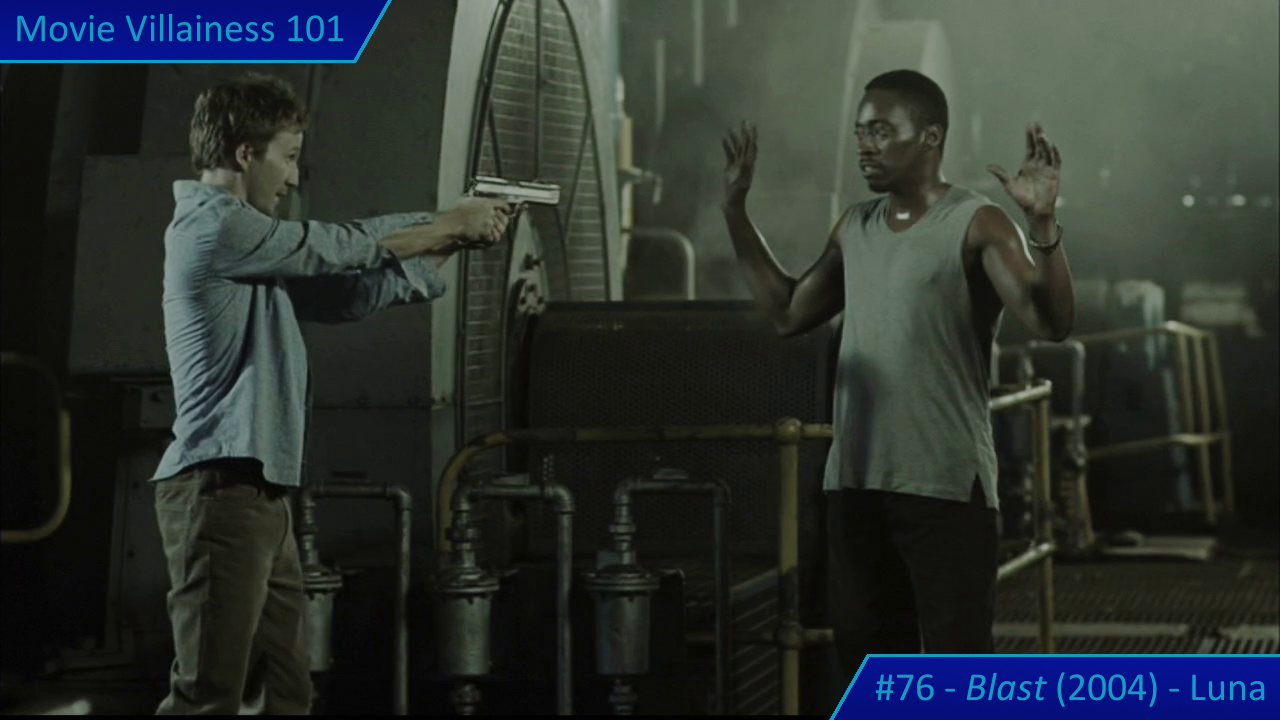
The production budget is large enough to hire some name actors. Vinnie Jones plays a villain (he usually does), and Vivica A. Fox is a tough-talking agent. She has a subplot of her own to contend with: a traitor on her team. And yes, she gets a badass moment when she arrests him.

The villains are after money (who knew?), and their plan is to set off an EMP (electromagnetic pulse) device launched by missile. While Blast goes through the obvious plot points – lone heroes against an army of bad guys, a botched raid by US special forces – it’s an entertaining ride.

Villainess

Luna (Nadine Velazquez)

Surprisingly, Luna is not the only female among the terrorists, though she is the only woman to see any real action. She soon ditches her Christmas outfit for the more usual leather top, and straps on an LMG. That’s a light machine gun for those unfamiliar with weapons. And she has a metal finger-blade and martial arts skills to fall back on. We get it – she’s a tough girl.
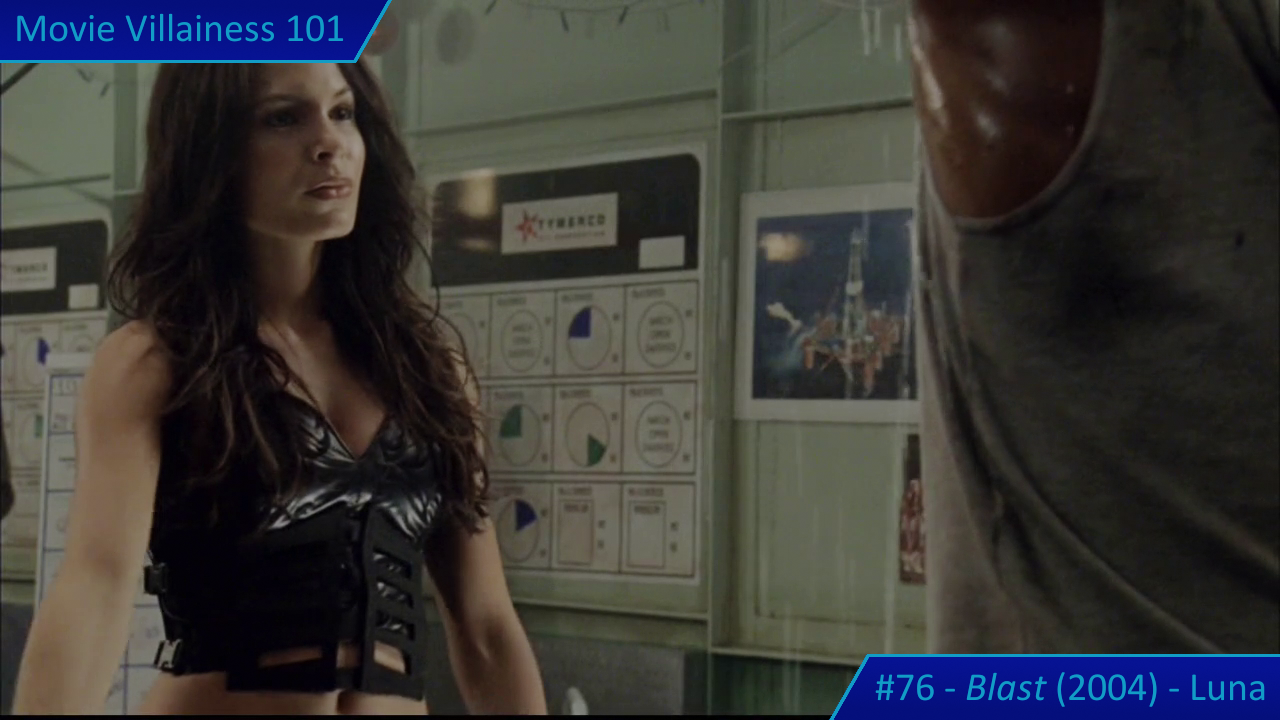
Luna’s role in the first half isn’t that memorable. She hunts an escaped child through the lower structure, sits around taking orders, and provides verbal support. Her first fight is against the hopelessly outmatched FBI agent. Things get more interesting later on, when Luna finally gets to fire her oversized weapon in a kitchen shootout. A shame that’s the only time she uses the LMG, and she somehow doesn’t hit her target.
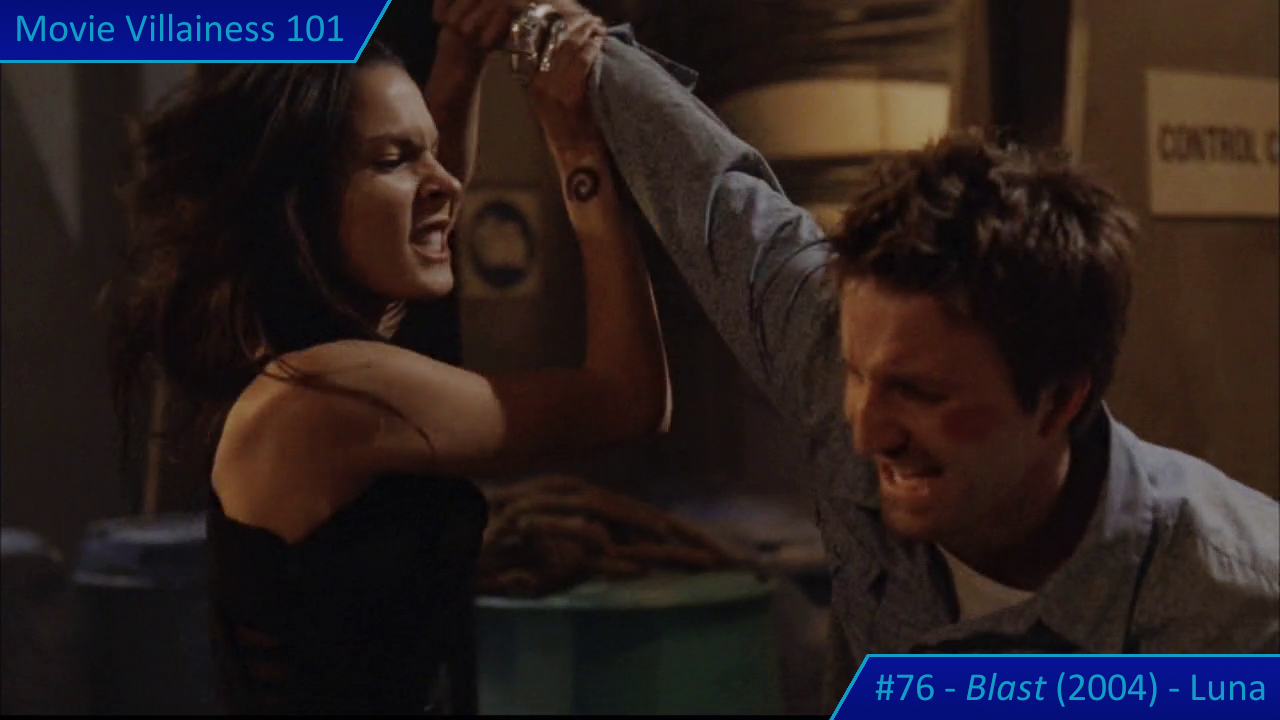
After the villains arm the EMP, the heroes attempt to avert disaster. Luna has repeated fights against the FBI agent, whom she takes a dislike to. The villainess is acrobatic and slippery, dodging automatic weapon fire by somersaulting. While a skilled opponent, the henchwoman survives because the heroes don’t finish her when they have the chance. Eventually, the FBI guy gets smart and drops a metal plate on her.

Honourable Mentions: Combat Henchwomen

Crash Dive (1996) – Bolanne (Elena DeBurdo)
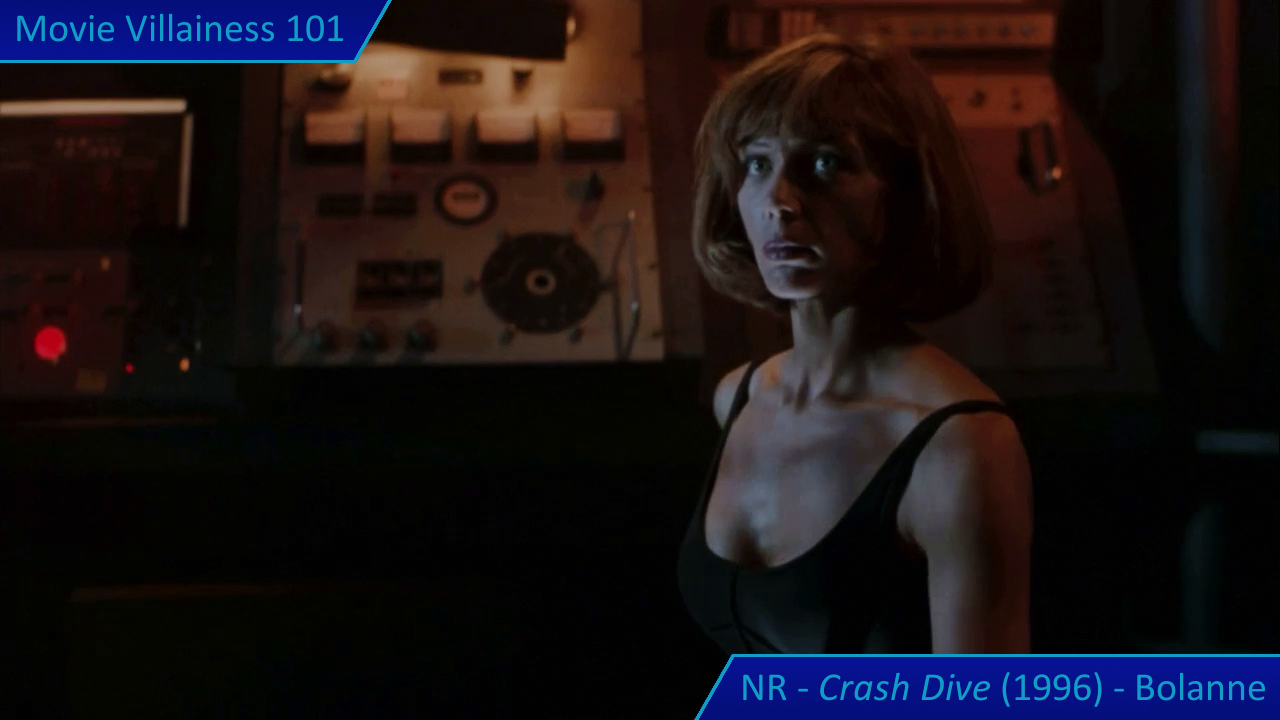
Another Michael Dudikoff-led B-movie action thriller, Crash Dive is one of his better efforts. When a nuclear submarine is hijacked by terrorists posing as shipwrecked sailors, only he can save us. The lone female in the villain ranks is Bolanne, a beautiful Eastern European who strips naked to seduce a crew member. Sex in the shower, then the nude assassin chokes him with a barbell.

Apart from that excellent kill, there are some decent henchwoman moments. Bolanne frees her captive leader with a throwing knife, snakes around menacingly, and stabs a man helping the hero. The end fight is longer than usual (about a minute), and the good guy has to work for his victory.

Triple Threat (2019) – Mook (JeeJa Yanin)
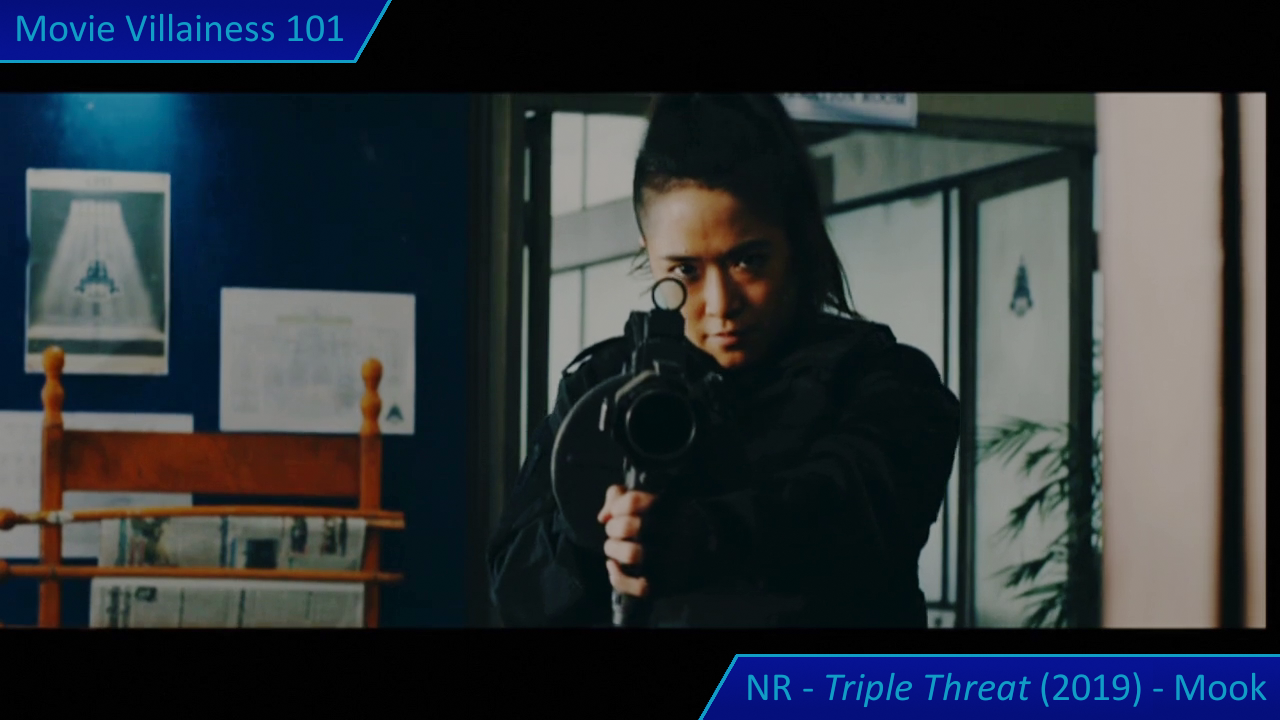
This aptly named henchwoman is a member of a mercenary group hired to eliminate a bothersome woman who makes the mistake of campaigning against crime. The pay mistress is a mysterious executive who gives orders by mobile phone. While the big bad isn’t particularly interesting as a villainess, Mook is a memorable inclusion, even if she dies before the halfway point.

The film features several high-profile action stars: Tony Jaa, Scott Adkins, and Michael Jai White. Brutal action, a high body count, and explosions galore – what did you expect? Most loud bangs come from Mook, who’s overzealous and trigger-happy with her grenade launcher. She specialises in clearing obstructions and dealing area of effect damage.

Mook gets three high-carnage, all-out assaults: a jungle compound, a TV studio, and a police station. On the third raid, she meets her match and loses to the hero. Then he gives Mook a taste of her own medicine and blows her to smithereens.
Movie Villainess 101 Rank #77

This copycat killer sees herself as the Black Queen

Movie

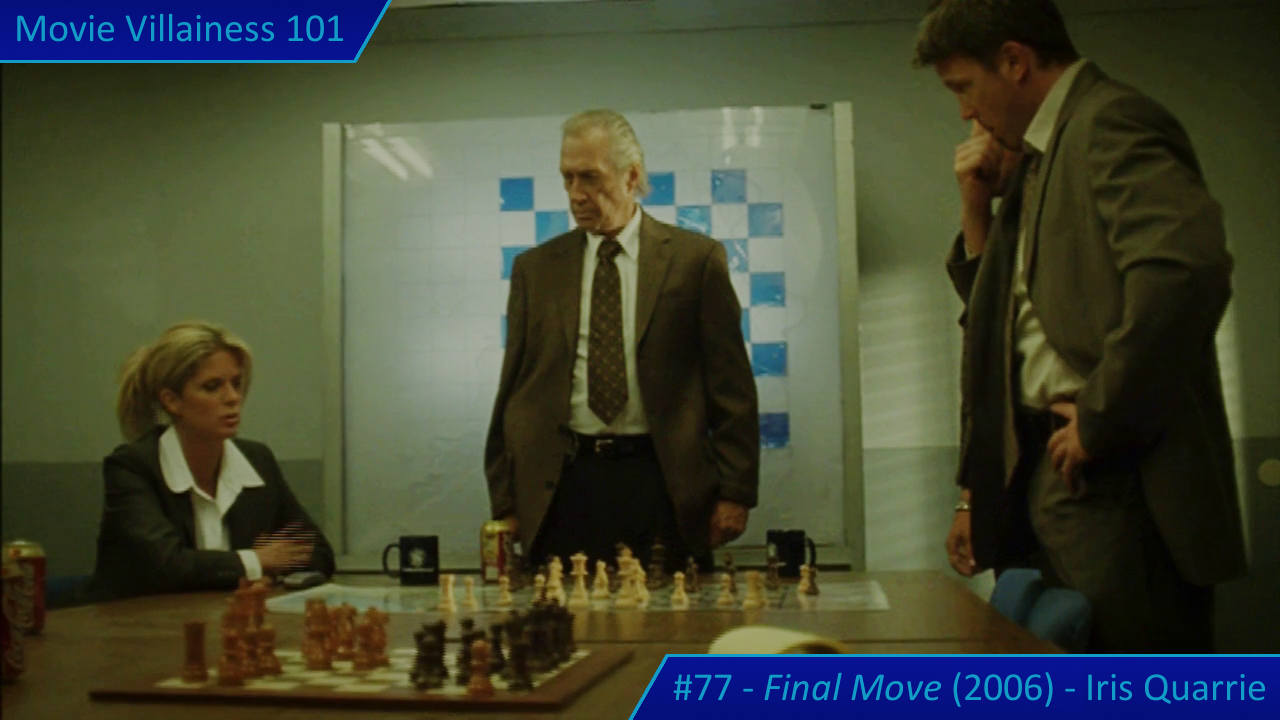
Final Move (2006)

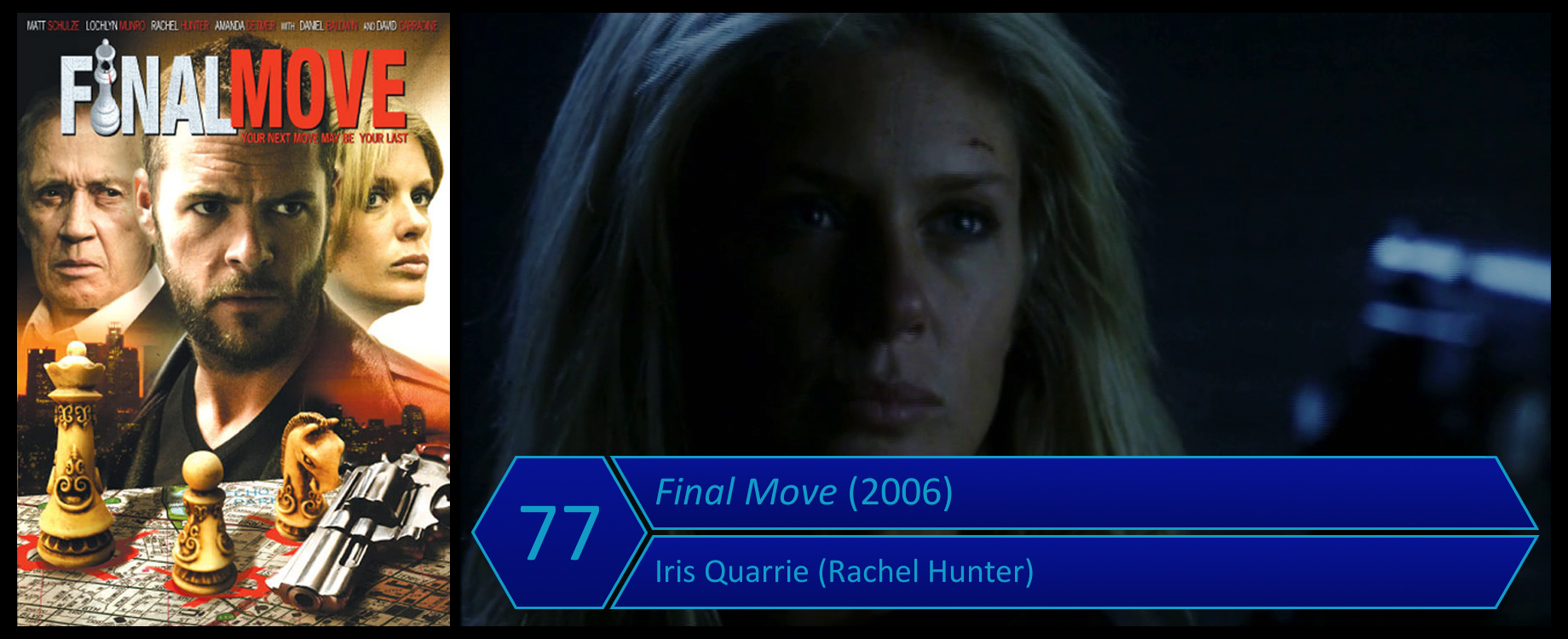
Chess-themed serial killer movies have been done before, but Final Move adds a paranormal element. Psychic Dan Marlowe (Matt Schulze) assists Detective Krieg (Lochlyn Munro) with his investigation. It appears someone is copying the recently executed “Chess Piece Killer” Thomas Page. Marlowe previously identified him from a vision, but did he make a mistake? Cue lots of murders as the duo go on a psycho hunt, and – yes – a city map is used as a chessboard. Why does that always happen?

The annoying colour palette – a horrible orange tint – makes some scenes difficult to watch. The opening murder is well staged, but the other killings are over too quickly. Some are only shown in psychic visions, green-filtered and filmed on shaky cam.

Another problem is that the villainess is too easy to spot. There’s an attempt to fool us into thinking an African American chess player is the bad guy, but the masked killer is clearly Caucasian. On the plus side, the film moves along at a brisk pace. The subplot about Marlowe’s strained relationship with his wife is well done, though it’s obvious the murderer will target his family.

Villainess

Iris Quarrie (Rachel Hunter)

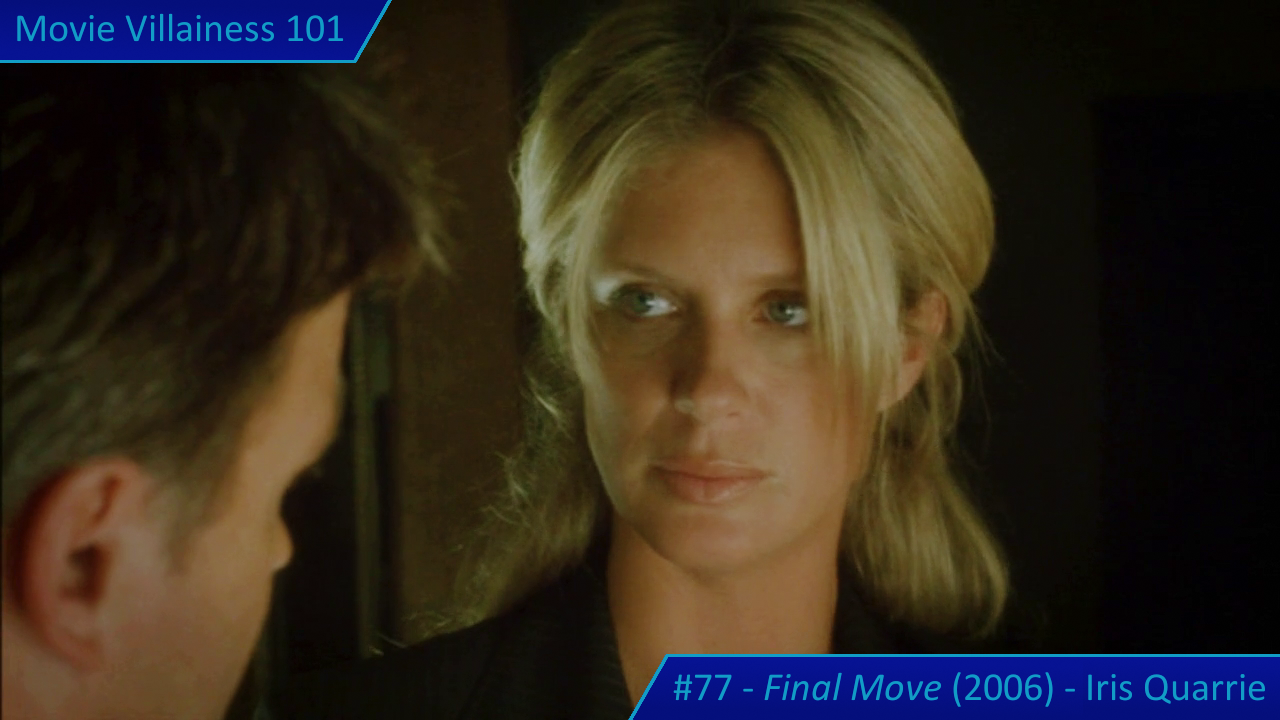
An FBI agent helping with the investigation (or pretending to), Iris is a rare example of a female serial killer with a high body count. She tasers a woman after taunting her over the phone, hangs a man in an elevator, and tosses a judge through a top-floor window. Can’t complain about a lack of variety.

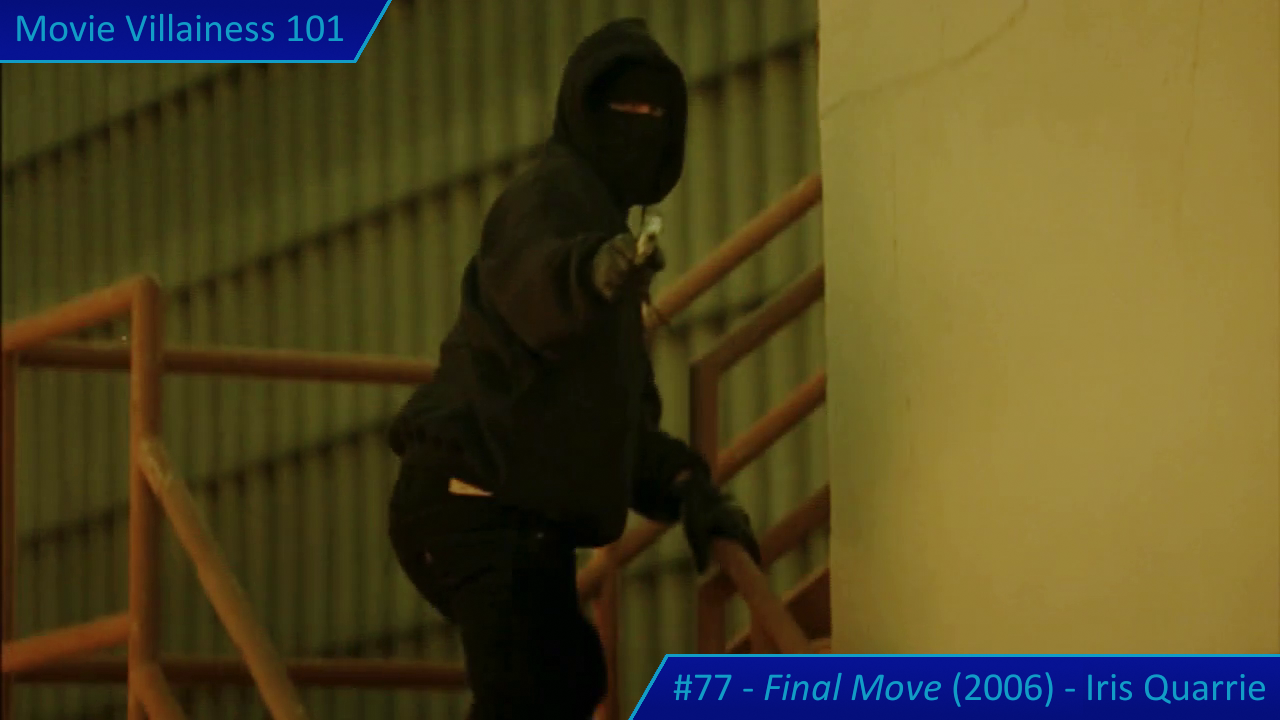
The opening murder is the most impressive. After making some nasty (voice distorted) threats, the masked psycho attacks her victim, roughs her up, and electrocutes her as she writhes in agony. When the police search the crime scene, they find a chess piece in the victim’s hand.

The killer leaves messages for Marlowe, phones him, and even breaks into his house. This hints at a personal connection, and despite the police arresting several suspects, viewers will suspect Iris after she attempts to seduce the married Marlowe. Her response to his rejection is to bed another man, have forced sex, and call him Danny. The director may as well hang the guilty sign around her neck.

After the elevator hanging, the killer escapes to the roof and makes a dramatic escape on a zipline, with the cops shooting in desperation at the fast-moving, black-clad figure. The assailant is masked, but on reviewing the footage of a rooftop shootout, it seems to be Rachel Hunter (or a close match) under the hood. Points for that.

Krieg grows suspicious of Iris when CCTV footage places her at the latest kill scene, but Marlowe is reluctant to accuse her. Iris attempts to throw the police off by claiming another suspect assaulted her. Since this happens off screen, it’s no surprise the attack turns out to have been staged. When Krieg and Marlowe find the suspect dead, they should identify Iris as the killer.

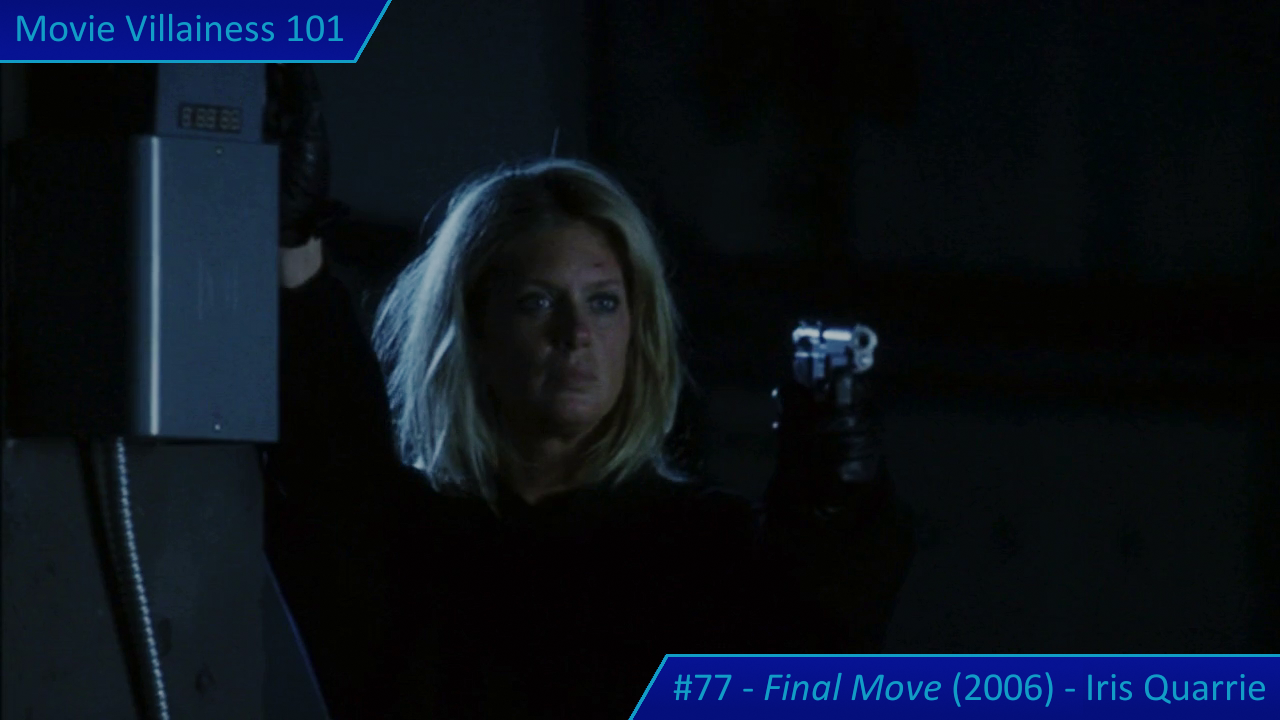
In the climax, the masked killer lures the men to a warehouse. She shoots Krieg and confronts Marlowe, with his kidnapped wife and daughter strapped to an explosive-rigged chair. When the black-clad Iris removes her balaclava, it’s no surprise she’s the copycat chess killer, but good to have an actual reveal.

There’s an average confrontation between the villainess and Marlowe where she taunts him only to get shot. The hero’s choice of post-mortem line is oh so predictable: “Checkmate.”

Honourable Mentions: Masked Assailants / Zip Lines

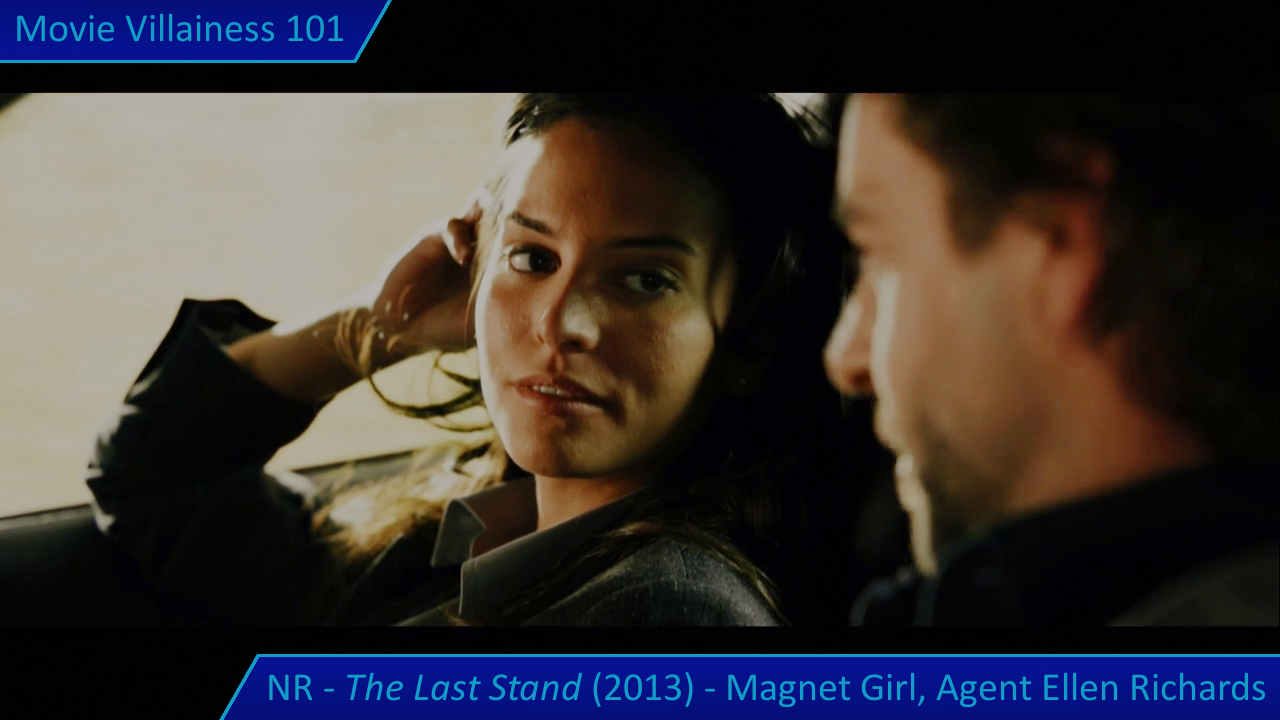
The Last Stand (2013) – Magnet Girl (Diane Lupo), Agent Ellen Richards (Genesis Rodriguez)

Two relatively under-used villainesses in this (kinda) comeback action thriller for Arnold Schwarzenegger. He plays a sheriff who must defend a town when an escaped crime lord and his private army roll in. Expect lots of shooting, explosions, fistfights, and general mayhem.

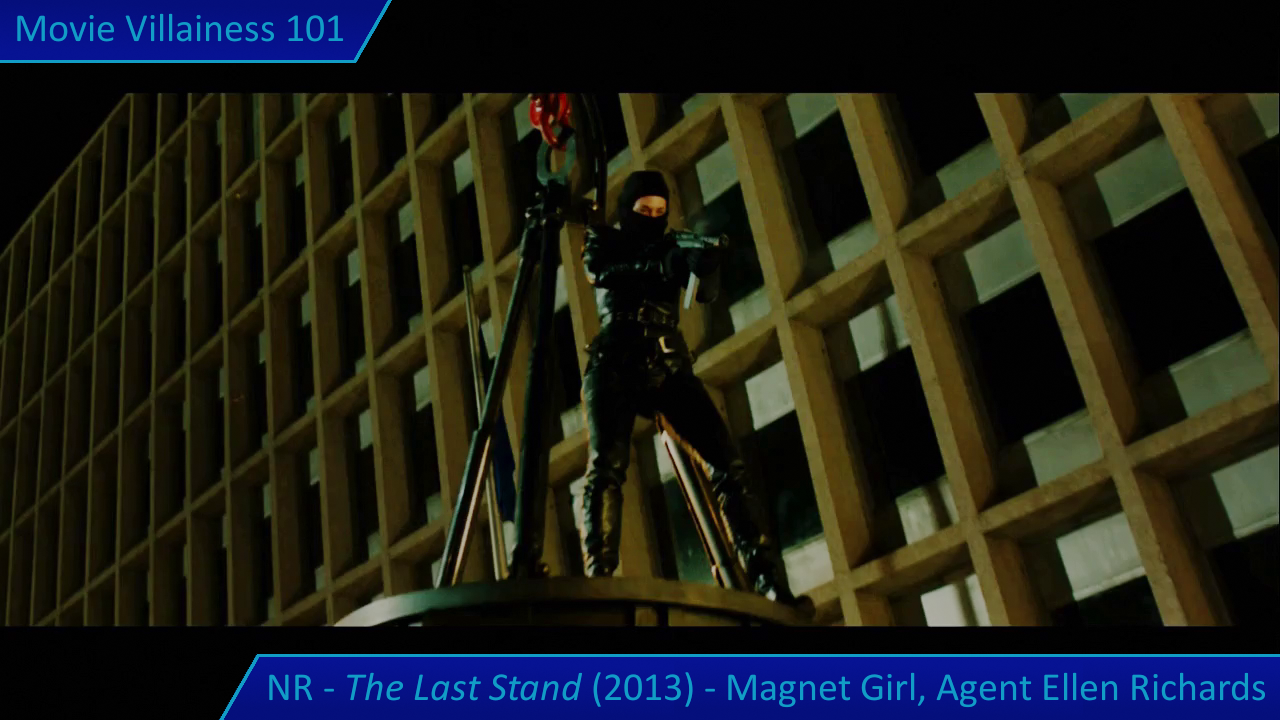
The black-garbed Magnet Girl, who remains masked throughout, is the point woman for the villain’s dramatic breakout. She presumably gets her name from the sequence where she descends atop a crane electromagnet and airlifts a prisoner transport van. She matches the police for firepower, riddles one officer with assault rifle rounds, and keeps the rest pinned down as she ascends. Sadly, this is her only action sequence, and she disappears with no explanation soon after.

Agent Ellen Richards is a weak addition: an FBI agent on the crime boss’ payroll. She’s revealed as a turncoat early on, but doesn’t do much except be the main villain’s passenger during his ride to the border. Ultimately, he gets fed up with the woman and kicks her out of his car. She then disappears, only to return at the end and get arrested.

Movie Villainess 101 Rank #78

Docile and controllable… or so they thought

Movie

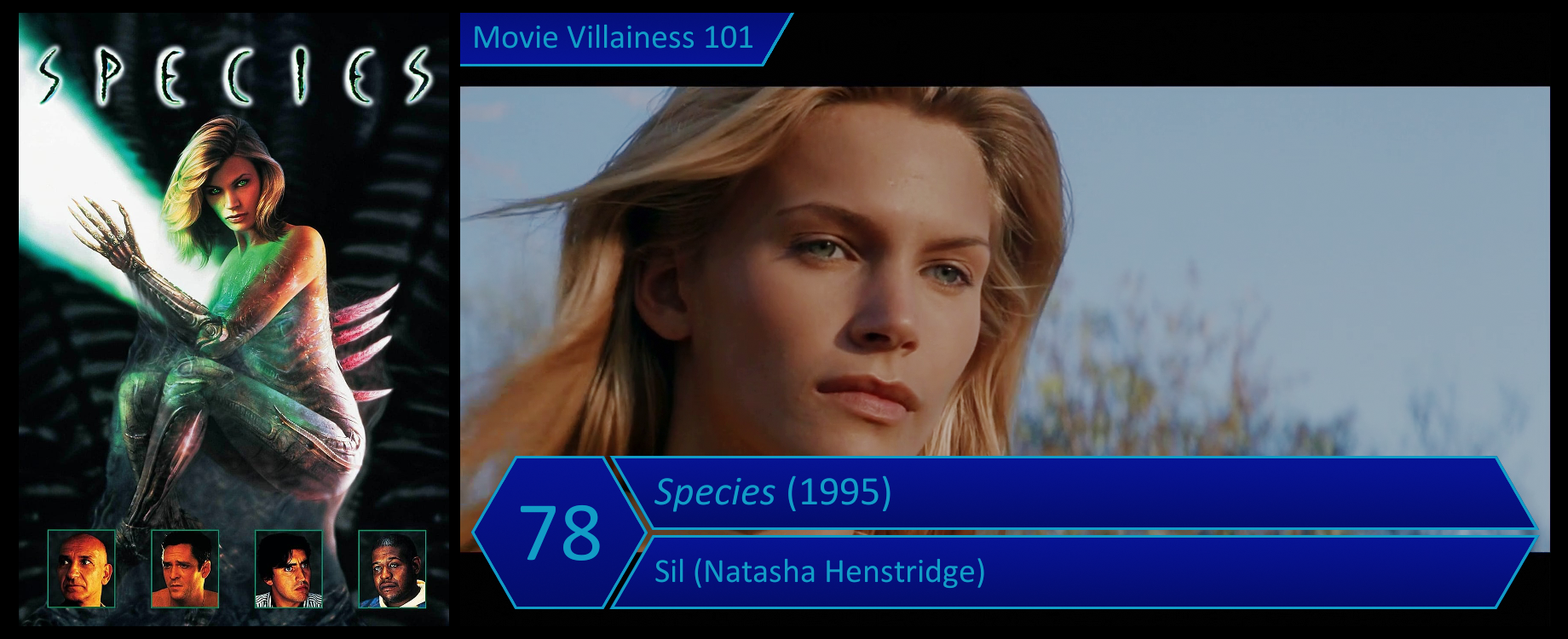
Species (1995)

This sci-fi thriller is best described as a high-budget B-movie. The opening credits scream Syfy channel, but the creature designs by H.R. Giger (better known for the Alien franchise) elevate this to an above-average romp.

The plot: a manhunt for an escaped alien/human hybrid. Scientists thought engineering a female guinea pig would make her “more docile and controllable” (their words). Nobody seems to have told them that women are the deadlier sex, and watching a few femme fatale movies beforehand might have suggested a rethink.

After things go wrong (shocker!) and the hybrid escapes, project lead Xavier Finch (Ben Kingsley) hires a team of specialists to track her. This includes a psychic empath (Forest Whitaker), a biologist (Marg Helgenberger), a social studies expert (Alfred Molina), and – naturally – a covert ops military guy (Michael Madsen).

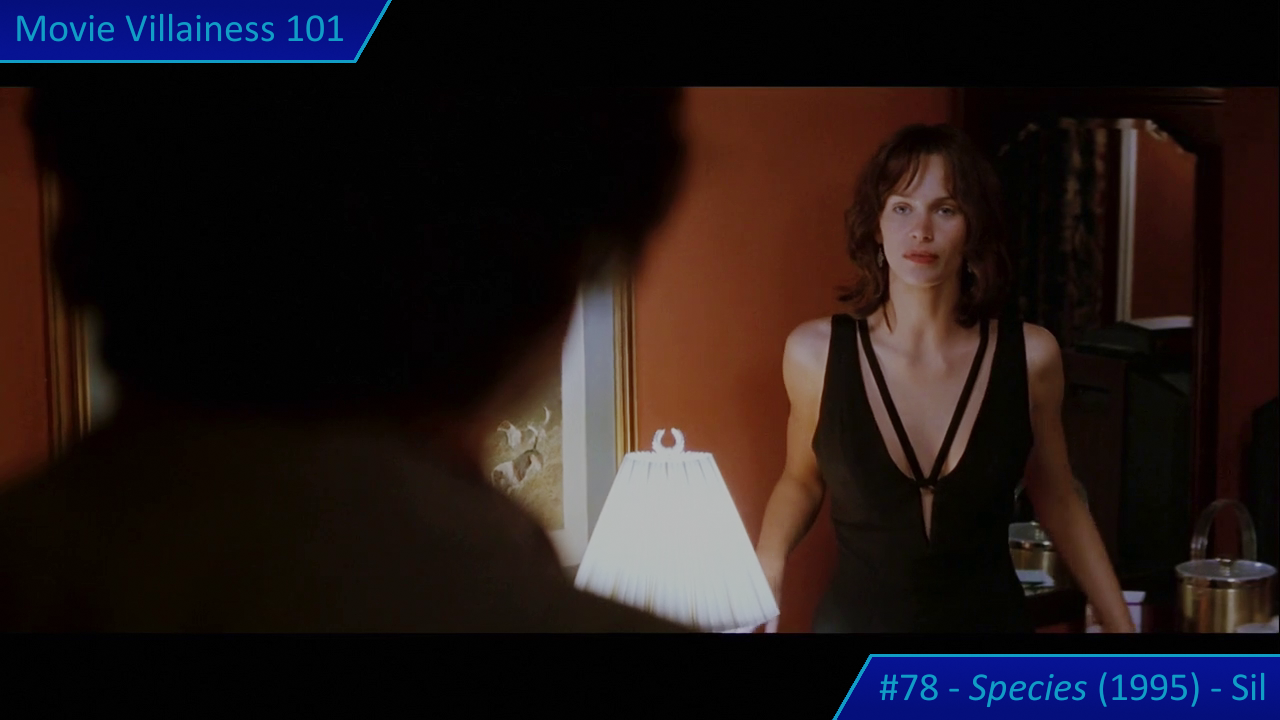
Sil isn’t content to remain the prey, however. After the escaped child transforms into an adult, she searches for a male mate. And given that just one hybrid leaves a trail of dead bodies and destruction, that wouldn’t be good.

Villainess

Sil (Natasha Henstridge)

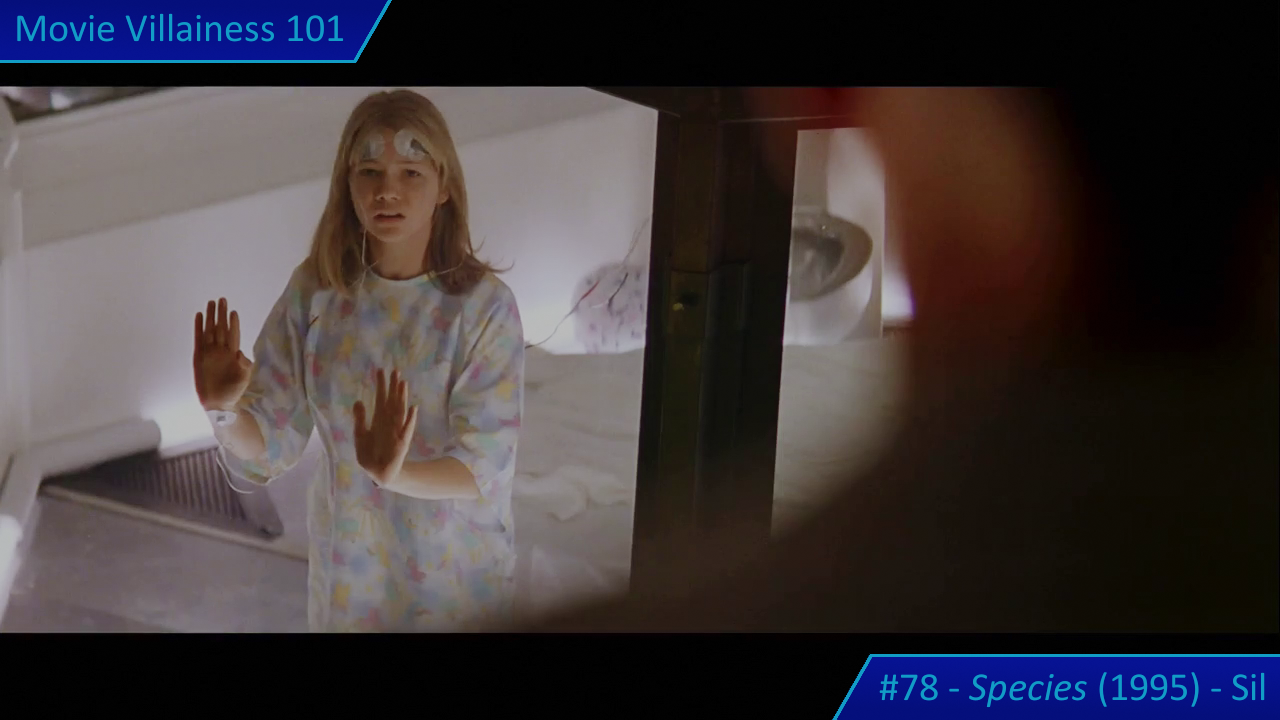
Species was Henstridge’s first film role, and it’s no coincidence the actress is a stunning beauty and appears in many topless scenes. For the early sequences in the research lab and the initial manhunt, Michelle Williams plays the child Sil. Even in this form, the alien hybrid is dangerous, capable of high speed and killing a much larger male. Then Sil grows up, and her real mission begins.
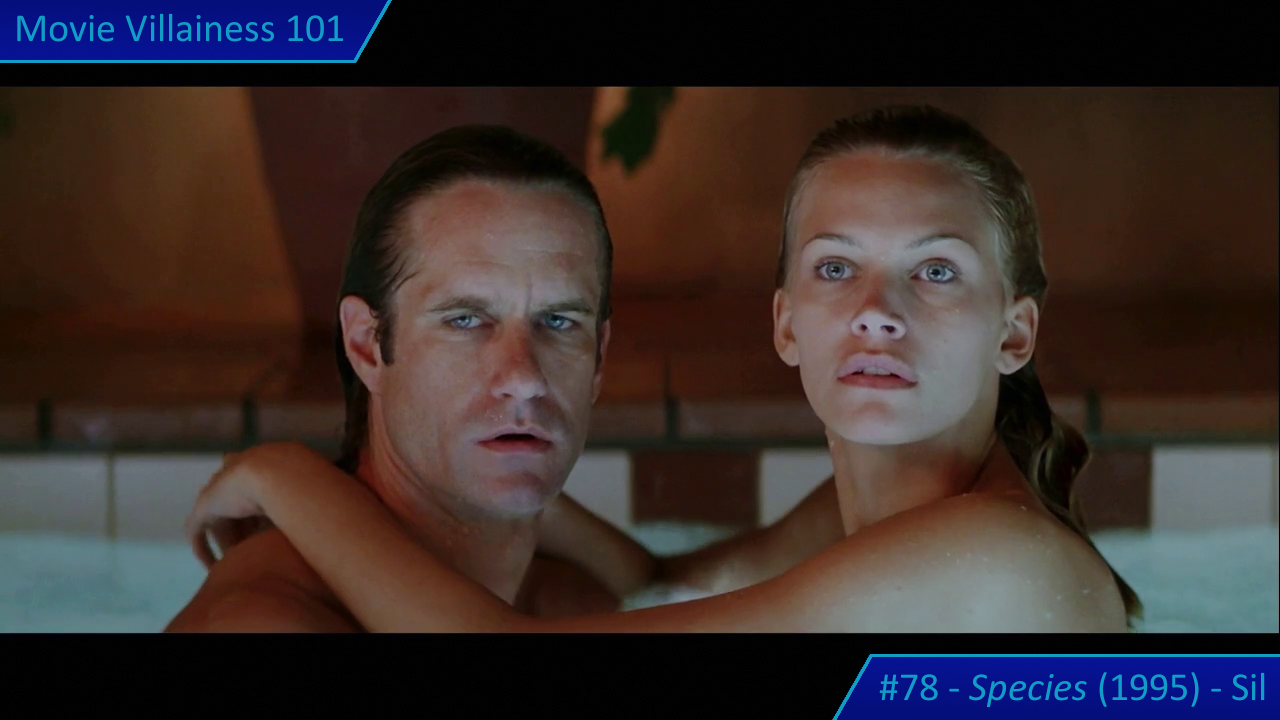
Los Angeles is the hunting ground and – as the culture specialist points out – an ideal location for Sil to blend in. She’s very particular about her mating habits, and violently rejects her first choice when she senses he’s a diabetic. The hybrid has more luck with the second man, whom she lures into a hot tub for passionate interspecies sex. Unfortunately for Sil and the companion who’s promptly drowned, the tracker team arrives before he impregnates her.

Sil can change between human and alien forms, seemingly at will. There are some decent creature effects as the hunted woman becomes a green-skinned predator. The best part of the movie is when she goes on the offensive and becomes the huntress. Deciding the military man would be a suitable mate, she fakes her own death. The humans are too quick to believe their quarry is dead (don’t they watch these films?), especially since the hybrid has proven elusive and dangerous.
After changing her appearance, Sil continues her hunt. She’s adept at infiltration, and even converses with the biologist in a restroom. Her third attempt at sex, with the social expert, is successful. The pregnant hybrid eliminates her mate and escapes underground with the trackers in close pursuit.

The ending sequence is unimpressive. Sil stays in creature form throughout and doesn’t carry the same threat the disguised woman did. In a thankfully brief sequence, Sil gives birth and the heroes burn her disgusting offspring alive. The enraged mother is harder to kill, but the confrontation is weak. It turns into a Michael Madsen show, with the other characters reduced to inactive supporting roles.

Species spawned several poorly regarded sequels, though the original received some acclaim. Henstridge signed up for a trilogy, but only appears briefly in Species III.

Honourable Mention: Aliens

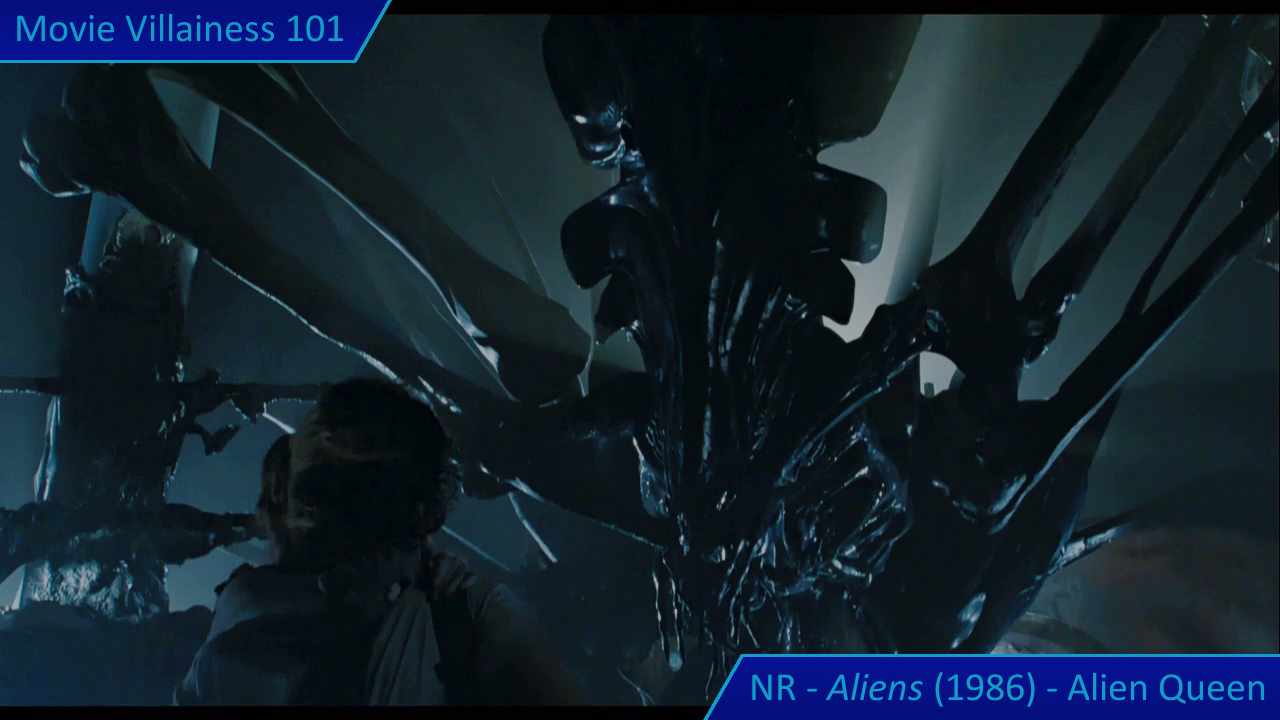
Aliens (1986) – Alien Queen (N/A)

Okay, so it’s debatable whether a creature can truly be a villainess. But this iconic antagonist, and the epic confrontation with the one-woman army Ellen Ripley, deserve an honourable mention.

The standout segment is the iconic battle, which goes on for several minutes. Like a video game final boss, the creature is a bullet sponge. She (it?) shrugs off entire magazines of ammo that would shred her minions in seconds. Explosive rounds merely prompt the Queen to abandon her lower body and chase the heroine to a spacecraft.

Even 35 years after release, the creature effects stand up to modern viewing. They didn’t use CGI, which can date quickly. Ripley in a mechanical versus the Queen’s second form is no less exciting. While the creature is predictably jettisoned through an airlock, the death scene with the defeated monster floating through space is satisfying.

Movie Villainess 101 Rank #79

She’ll kill to get it

Movie

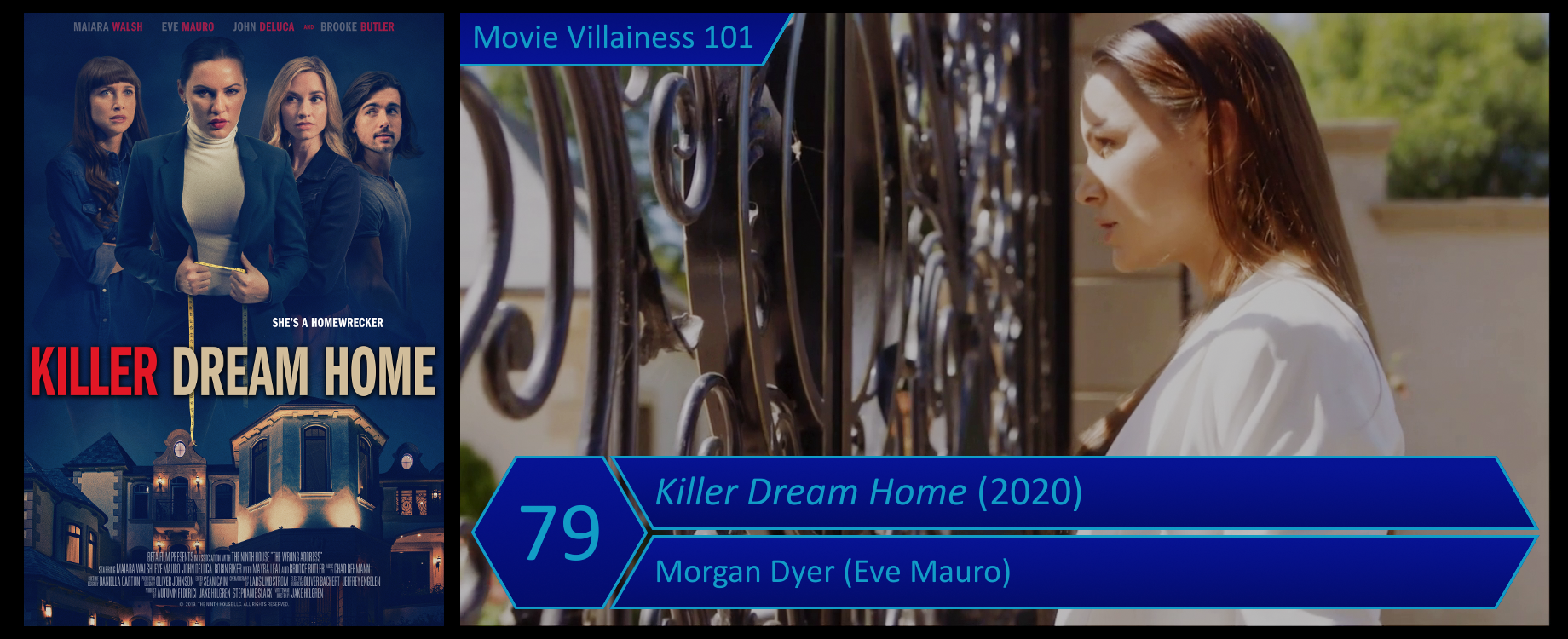
Killer Dream Home (2020)

Many modern Lifetime movies have female villains, but it’s a case of quantity over quality. Motives are unimaginative (how many jilted lovers are there in America?). Three murders, a low body count in the 1990s, would be a veritable bloodbath today. And the climaxes are weak or nonexistent.

Thankfully, some producers understand what’s expected in these films. Time to champion The Ninth House, a partnership between writer/director Jake Helgren and producer Autumn Federici. Movie titles are typical for the genre: Deadly Matrimony, Psycho Party Planner, Psycho Sister-in-law, Psycho Stripper… Yes, death and psychos abound. What makes them stand out are the unpredictability factor and exciting finales, truly a lost art in the 2020s.

Jake Helgren has a horror background, and that shines through in his final products. Expect darkly lit scenes, creepy supporting characters, red herrings, and a few people to get bumped off before the end credits.

Sourcing these movies in the UK is difficult. With no official Lifetime network, these films often turn up on the free-to-air Channel 5 for afternoon showings. That means censorship of violence, which is a big problem with Ninth House productions. The murder sequences are the best parts, and better shot than most TV movies – if only we could watch them. Killer Dream Home isn’t available in Britain, but I sourced enough footage from online clips to review it.

Villainess

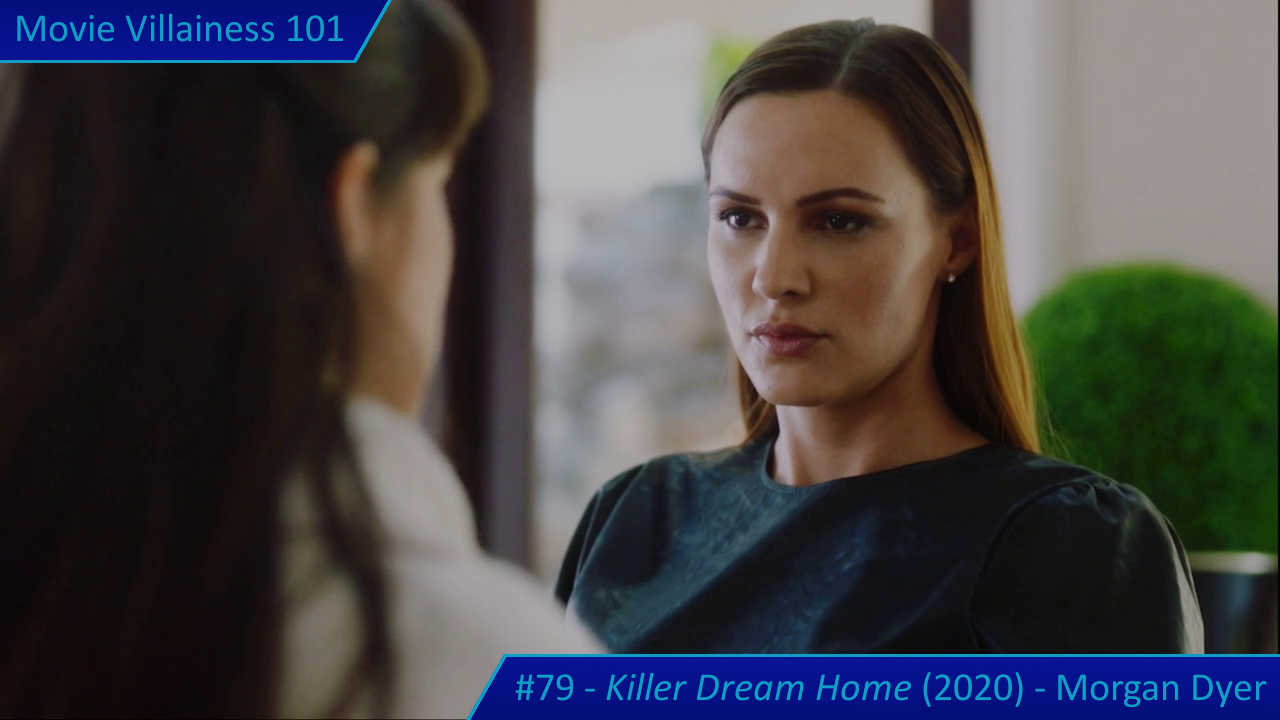
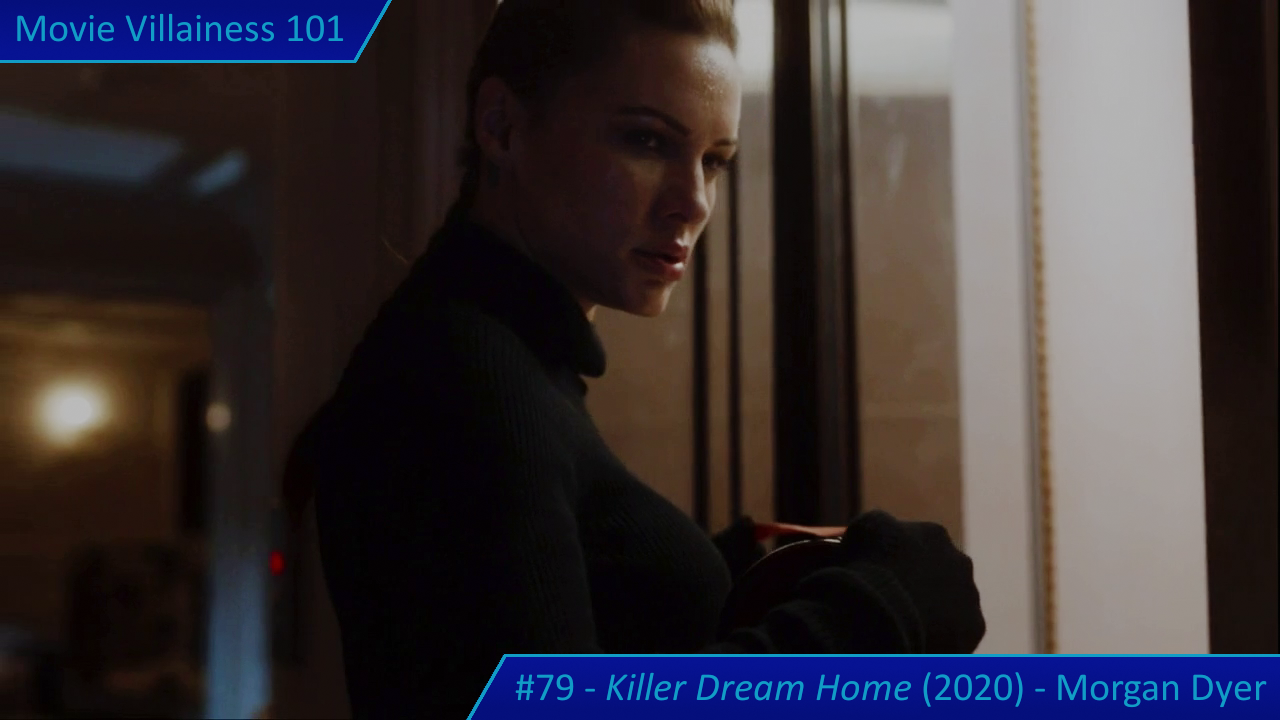
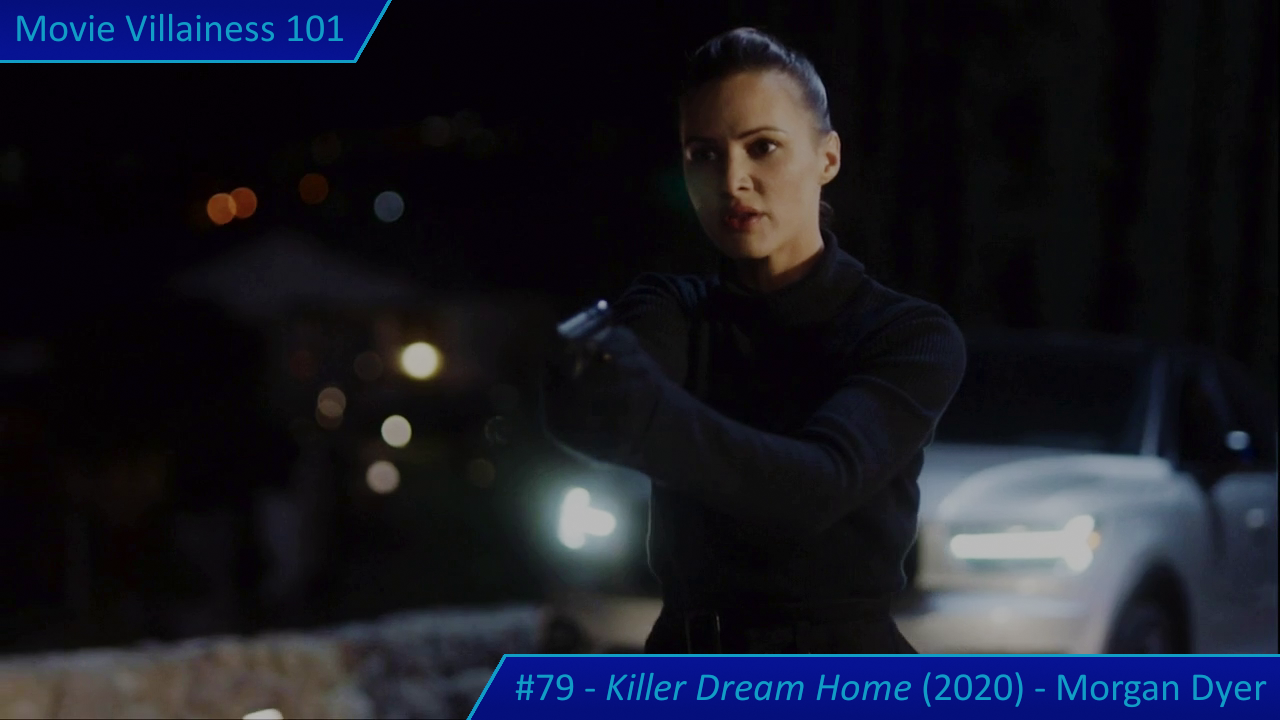
Morgan Dyer (Eve Mauro)

Ninth House varies its casting and includes actors who aren’t known for Lifetime movies. Eve Mauro is a fashion model and an unfamiliar face, which helps to keep things fresh, even if her psycho is suitably over the top.

Morgan really wants her dream home: a lavish mansion with exquisitely decorated rooms, a swimming pool, and even an elevator. As the movie title suggests, she’s prepared to kill for it. So, she breaks in and drowns the owner in her bathtub. Lunatic Morgan wears a red raincoat instead of the traditional black hoodie favoured by Lifetime villains. Points for originality straight from the outset.

When the property comes onto the market, it’s purchased by Josh and Jules Grant (John Deluca and Maiara Walsh) with the help of realtor Renee Rivera. Unfortunately, the happy couple makes the mistake of hiring a psycho woman as their interior designer. As is so often the case, the main characters are a little slow on the uptake, and it’s left to the supporting players to snoop. Best friend Bliss (Brooke Butler) is suspicious from the start, leading to many confrontations with Morgan and a simmering hatred between the two women. Which you know is going to end badly for Bliss, but it’s a while before we get there.

Morgan is physically attractive (she even gets a swimsuit scene) and uses that to her advantage. She seduces her landlord, who thinks he’s onto a winner. Until he wakes up and discovers kinky pictures plastered over the fridge, and a letter from Morgan “suggesting” he ignores a late rent payment. Murder is her solution for those who interfere, and Renee becomes the obligatory mid-movie victim to keep up the pace.

Like any decent Lifetime villainess, Morgan has some crazy chick lines. Her best is when she calls Bliss a lapdog and threatens to bury the mole. This is a preamble to the finale, where Morgan shows up pony-tailed and dressed all in black like an action movie henchwoman. In case Jules and Josh haven’t figured out she’s insane, Morgan delivers a barmy frame-up monologue served with extra ham and cheese.

Ninth House keeps viewers guessing who’ll survive until the end. They do a good job with a minor character who appears to die before he makes a heroic comeback. Being the best friend is usually deadly, so it’s no real surprise Bliss meets a gruesome end. Morgan strangles her in the elevator, though the choice of weapon (a tape measure) is inventive.Far too many Lifetime baddies are arrested or escape justice altogether. Ninth House continues to buck the trend by killing off the villain. Morgan is eliminated with her own nail gun. Not bad, but it would have been nice to add in a stunt double and balcony fall (like Deadly Matrimony) to cap things off.

Honourable Mention: Ninth House Productions

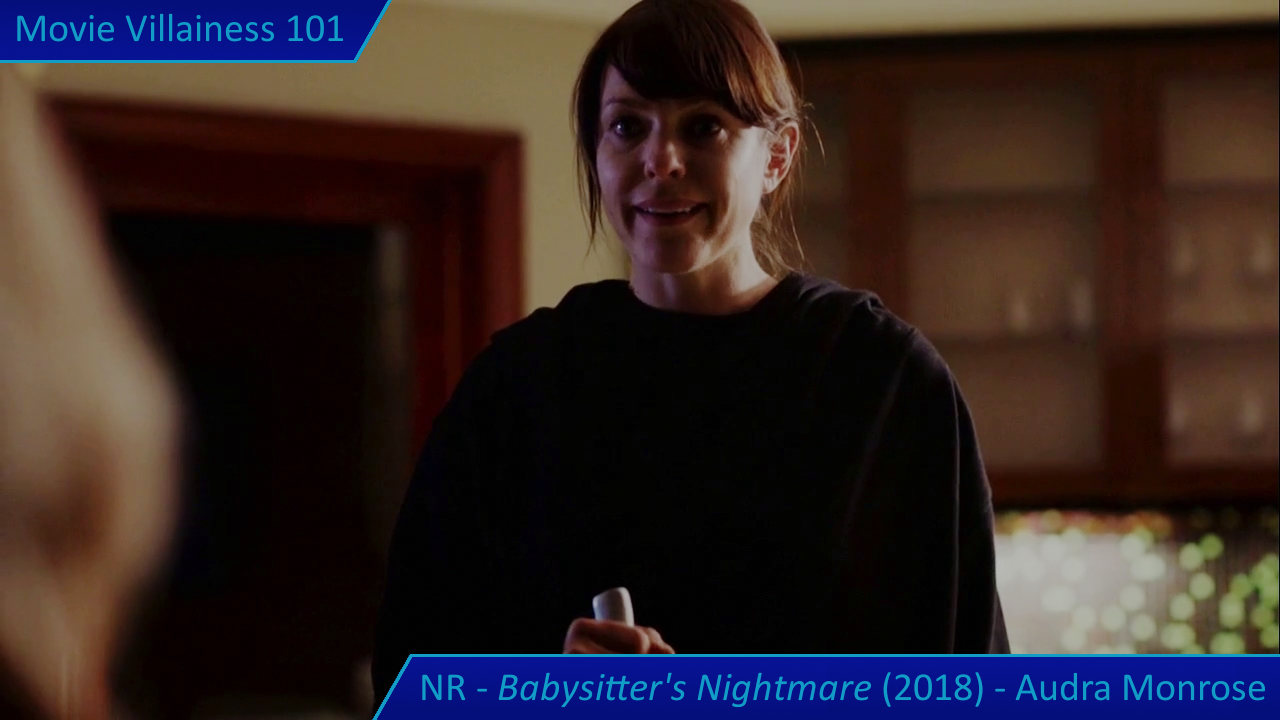
Babysitter’s Nightmare (2018) – Audra Monrose (Arianne Zucker)

Another Ninth House production, this is arguably a horror movie in disguise. It’s available to stream in the UK, but (to my knowledge) has never aired on TV. The opening murder scene, where a masked killer suffocates a babysitter, is brutal and graphic for afternoon television. Another woman is stabbed with a broken wine bottle – good luck getting that past the censors.

Babysitter’s Nightmare (also known as A Stranger Outside) is a typical female alone in the house scenario. Technically, the main character is not alone, since she has her child and best friend for company. As expected with this production team, there’s a high body count and a bizarre killer guise. The murderer likes to cosplay as Darth Sidious from Star Wars, with the same black robe and face-shadowing hood.

The villainess is a vengeful woman whose own child died, so she targets innocent nurses in retribution. There’s a great ending to look forward to – a prolonged 20-30 minute sequence with the killer defeated after an epic struggle. Lifetime filmmakers, please take note. This is how to shoot a climax.

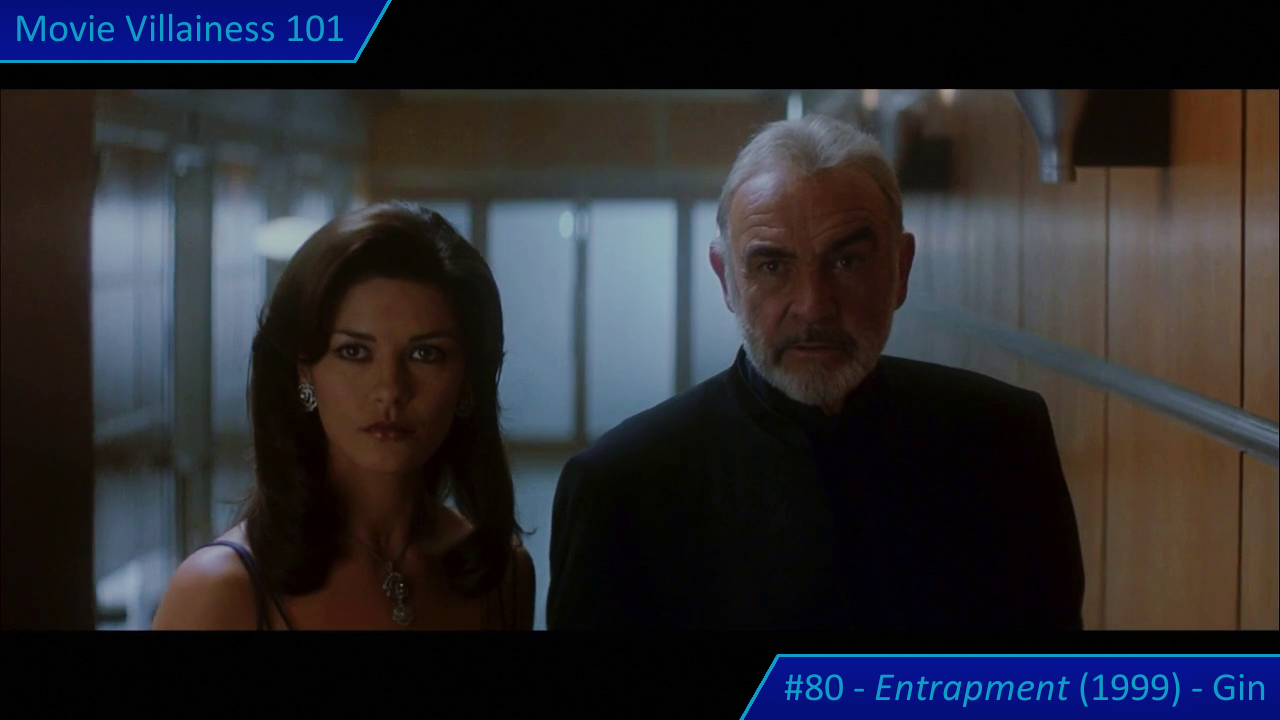
Movie Villainess 101 Rank #80

A daring $40 million heist – and that’s not even the big one

Movie

Entrapment (1999)

One of many late 1990s films to use the “Millennium Bug” as a plot device, this is a slick heist thriller with great performances from the two leads. Entrapment is notable for being one of Sean Connery’s last film roles. His only major features after this were Finding Forrester and The League of Extraordinary Gentlemen. Plus, there’s that bendy laser-dodging sequence with Catherine Zeta-Jones.

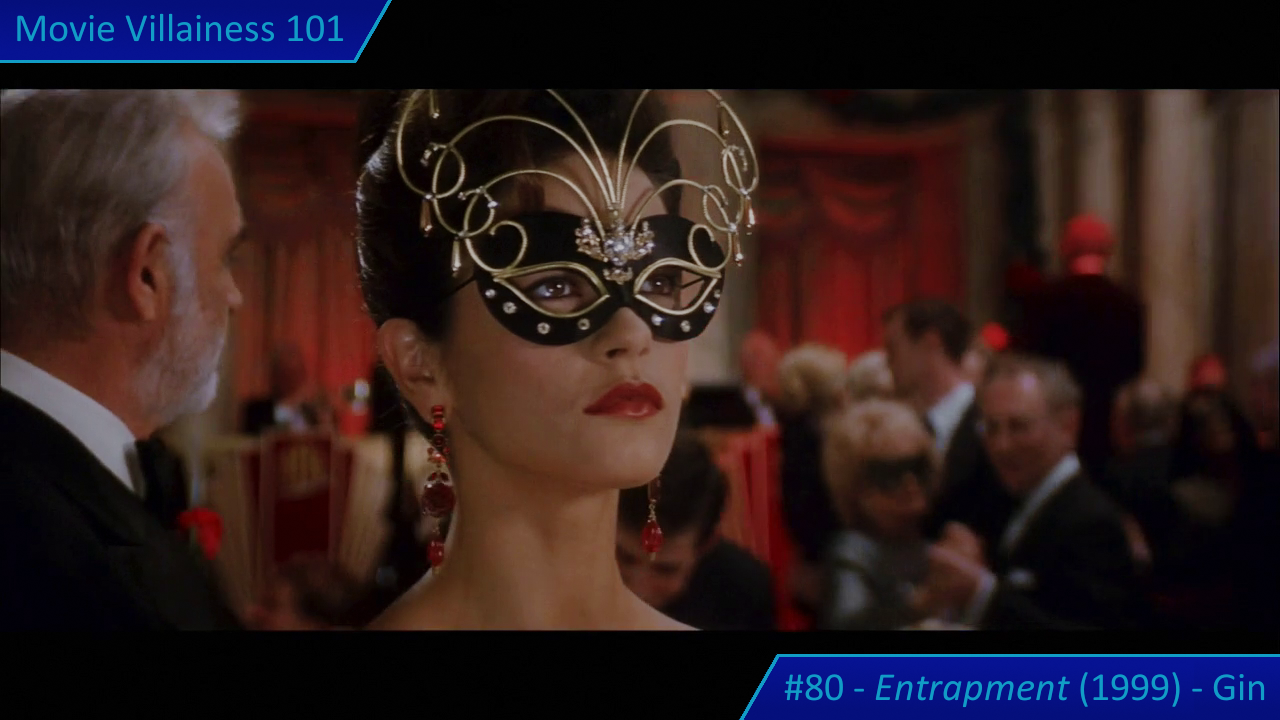
Oddly, the infamous set piece – the theft of a gold mask as a payoff for an even bigger score – occurs at the film’s midpoint rather than the climax. The action-packed climax is set in Kuala Lumpur on New Year’s Eve. The target? A whopping $8 billion from a banking terminal in the iconic Petronas Towers.

For the benefit of younger readers, the Millennium Bug was a computer flaw where date years were stored as two digits. This would have caused issues come 2000 with 00 interpreted as 1900. In the end, the glitch was resolved with no major consequences, so the panic seems silly in hindsight.

Entrapment has one of the cleverest film usages: an integrity test of electronic banking systems. A plausible occurrence in real life, although they probably didn’t run them at the last second.

Villainess

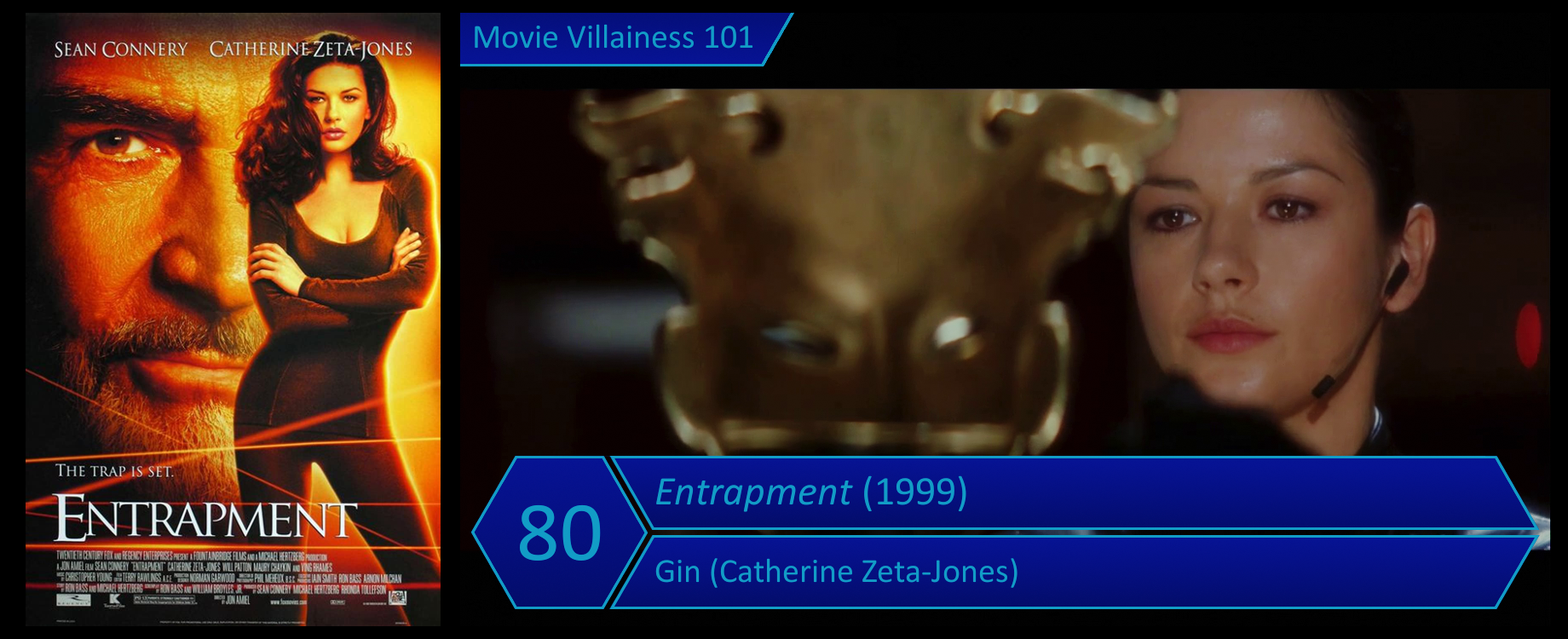
Gin (Catherine Zeta-Jones)

Virginia Baker (Gin for short) is an insurance investigator from New York. She’s after aging professional thief Robert “Mac” MacDougal (Connery). He’s suspected of stealing a Rembrandt, a daring office skyscraper heist that involved a remote controlled winch, and Gin is determined to get her man.

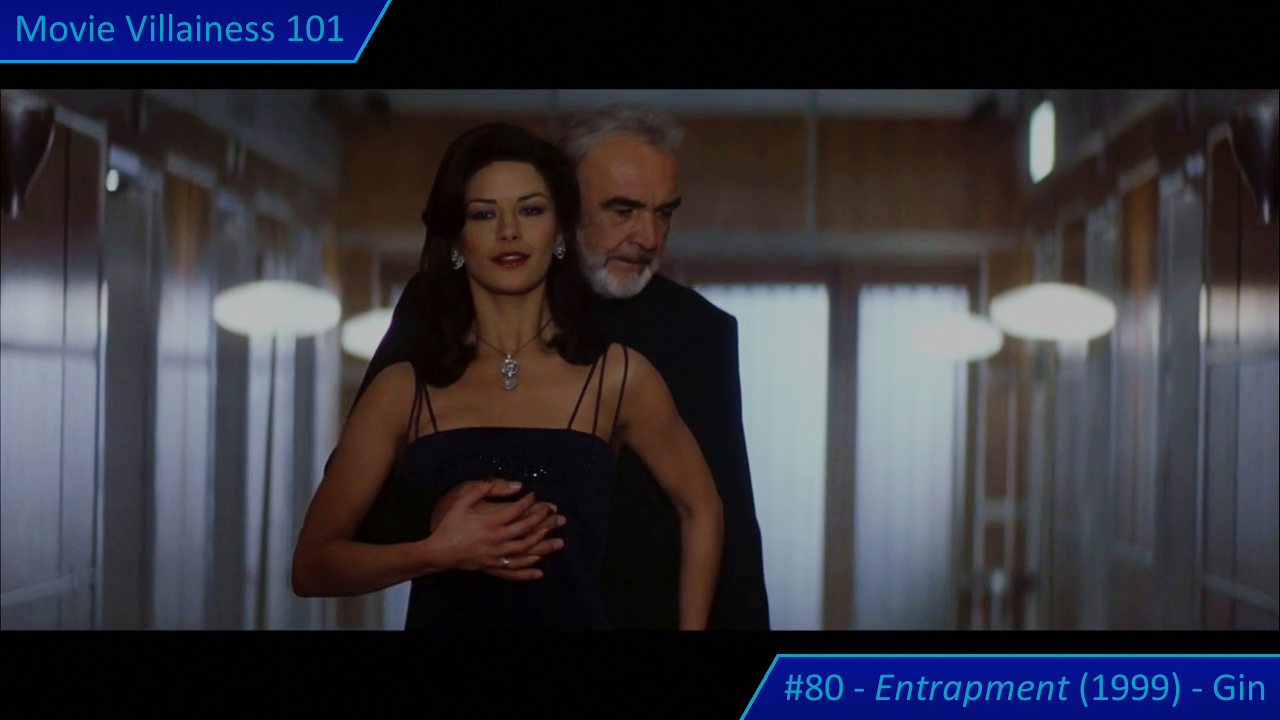
The Thomas Crown Affair setup is inverted when Gin reveals she stole the painting and needs Mac’s help for a job. He’s not impressed, which might have something to do with her overconfident ego. She has a habit of declaring an outcome “perfect” being messing up. Gin wastes no time in using her feminine charms on the much older Mac. He admires her form during a training montage scene, as she bends sexily between ropes substituting for lasers.

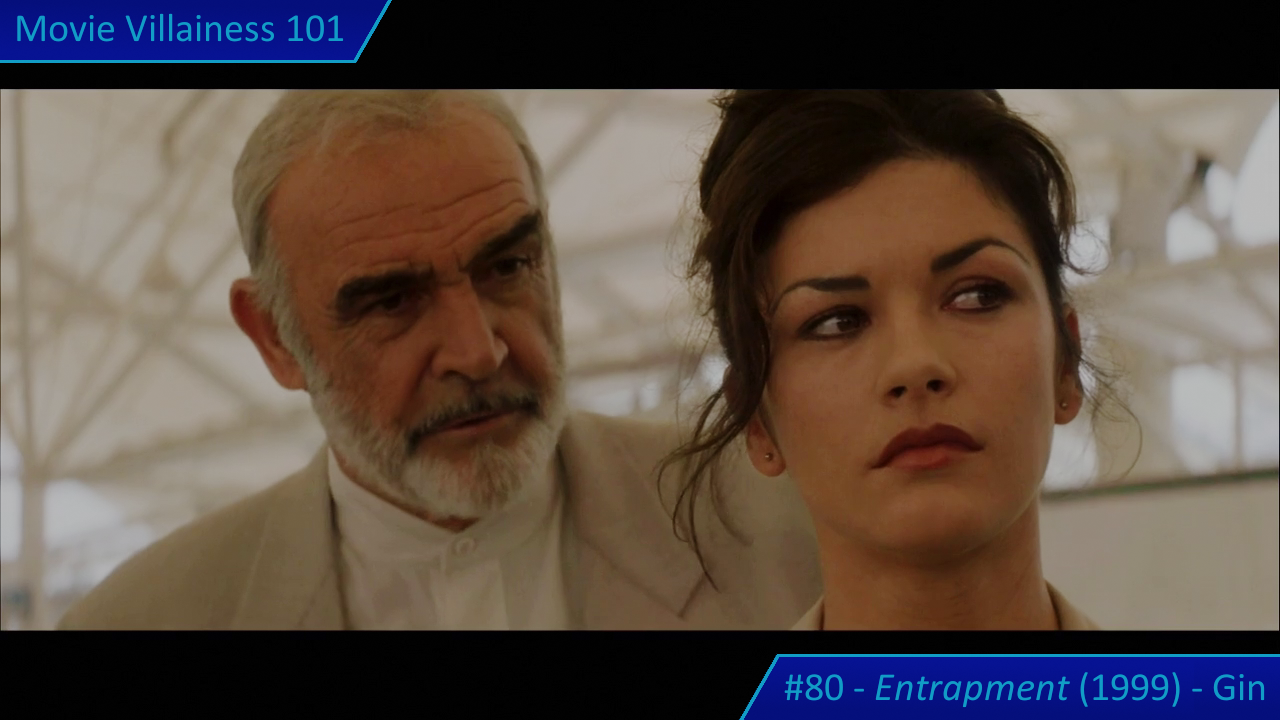
Many film critics criticised the “implausible” romantic relationship. But it’s about Gin’s thieving ability (Mac sees his younger self in her), and not simply her beauty. The old-timer desires to return to daredevil heists, and the initial deceptive flirting develops into genuine affection.

After Gin dodges lasers for real and steals the golden mask from Bedford Palace, things get tense when Mac accuses her of setting him up. Until she lets him in on her grand plan. Suspense builds well, with various side characters up to no good (notably Gin’s boss and a shadowy acquaintance of Mac’s).

The Malaysian heist is disappointing at first. The thieves crack a high-security vault that requires less effort than stealing the mask (or even the Rembrandt). But then Gin says “perfect” – just before she triggers a system integrity alarm. A dramatic escape follows, with the thieves swinging from lights under the sky bridge and sprinting through tear gas.

Gin and Mac separate and promise to meet at a train station. It’s then that the old man reveals he’s been playing her all this time, though he reconsiders and helps her escape. After they outwit the authorities, the lovers embrace in a surprisingly moving moment.

Honourable Mentions: Cat Burglars

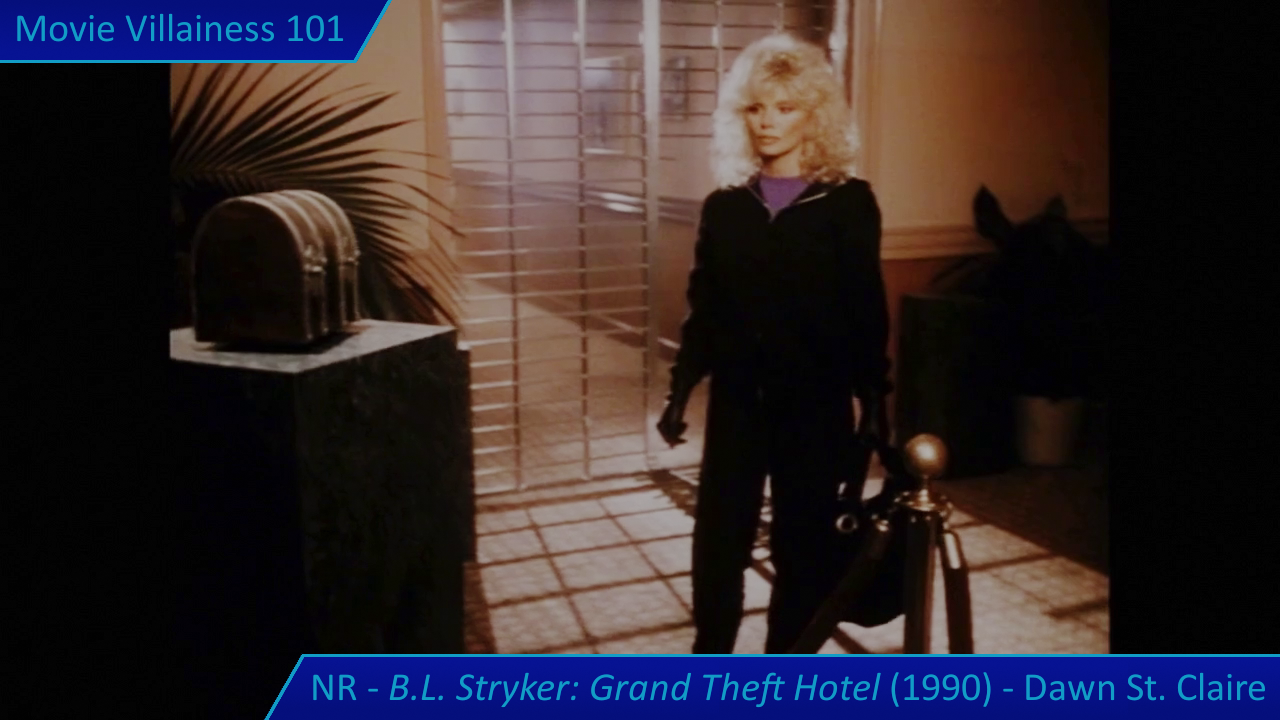
B.L. Stryker: Grand Theft Hotel (1990) – Dawn St. Claire (Loni Anderson)

This is technically an episode of the B.L. Stryker TV series, with Burt Reynolds in the title role. But since the runtime is ninety minutes, and this aired as a TV movie in the UK, it meets the inclusion criteria.

Buddy Lee is after a cat burglar with a penchant for stun guns and dramatic helicopter escapes. No surprise the masked thief ends up being female (don’t they always?), but her all-black outfit is impressive. Loni Anderson’s role as beautiful socialite Dawn St. Claire seems superfluous, so most viewers will peg her as the villain. For the middle act, she’s demoted to the sidelines while Stryker pursues other leads.

Unfortunately, we don’t get an unmasking reveal, or another robbery with Dawn in her masked outfit. A black-clad thief shoots a guard, but that’s a male copycat. The final heist takes the whole movie to happen, and then Dawn shows up unmasked to steal a jewelled necklace. She triggers the fire alarm to evacuate the hotel, but what self-respecting cat burglar would risk showing her face?

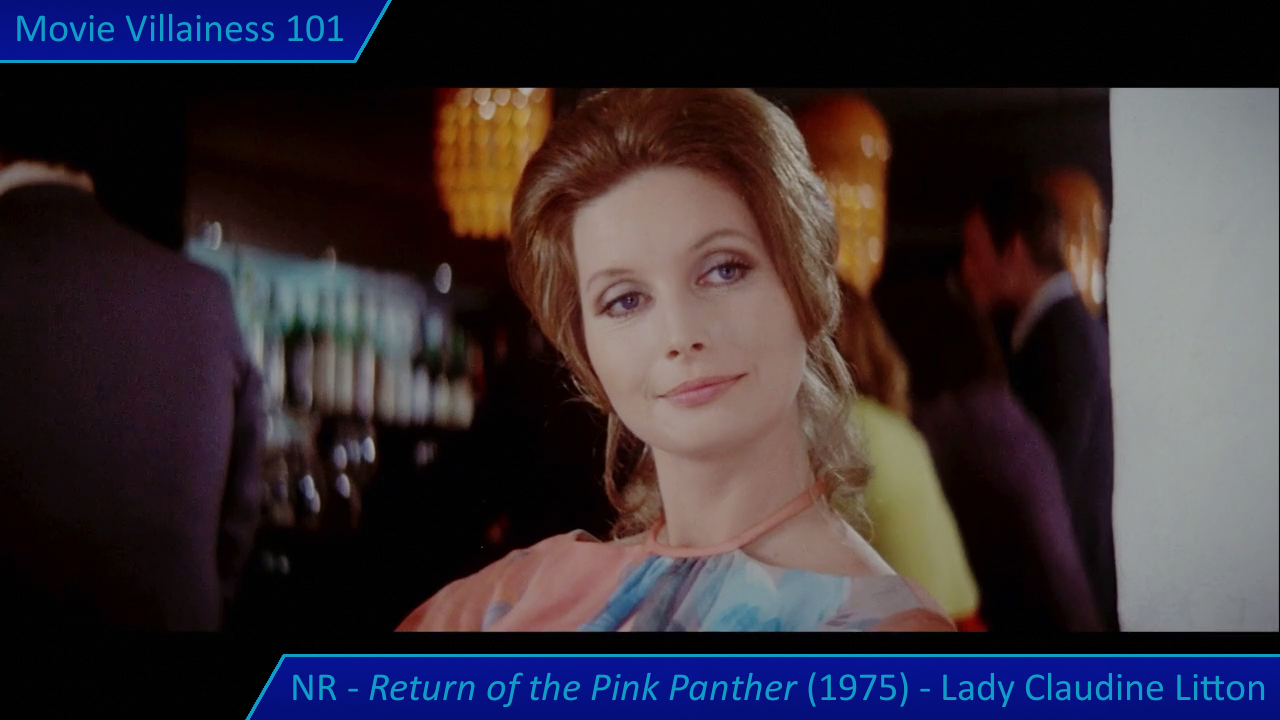
Return of the Pink Panther (1975) – Lady Claudine Litton (Catherine Schell)

Also, the return of Peter Sellers as Inspector Clouseau after a long break (his last movie was A Shot in the Dark way back in 1964). The infamous pink diamond is the target of a dramatic heist following the cartoony credits. In an impressive – and inventive – robbery scene for the era, a black-clad thief uses a crossbow, rope and lubricant to evade laser beams and guards.

The prime suspect is Charles Litton, aka The Phantom, with Christopher Plummer taking on the David Niven role from The Pink Panther (1963). Most scenes are played for laughs (this is a comedy, after all). Subplots include Clouseau’s boss Dreyfus descending into homicidal mania and the innocent Charles trying to figure out who set him up.

His wife stole the jewel, though a male stunt double was probably used to film the thief’s zipline getaway. The scheming Claudine has several encounters with the clueless detective and can’t contain her laughter, but her post-reveal role isn’t that memorable.

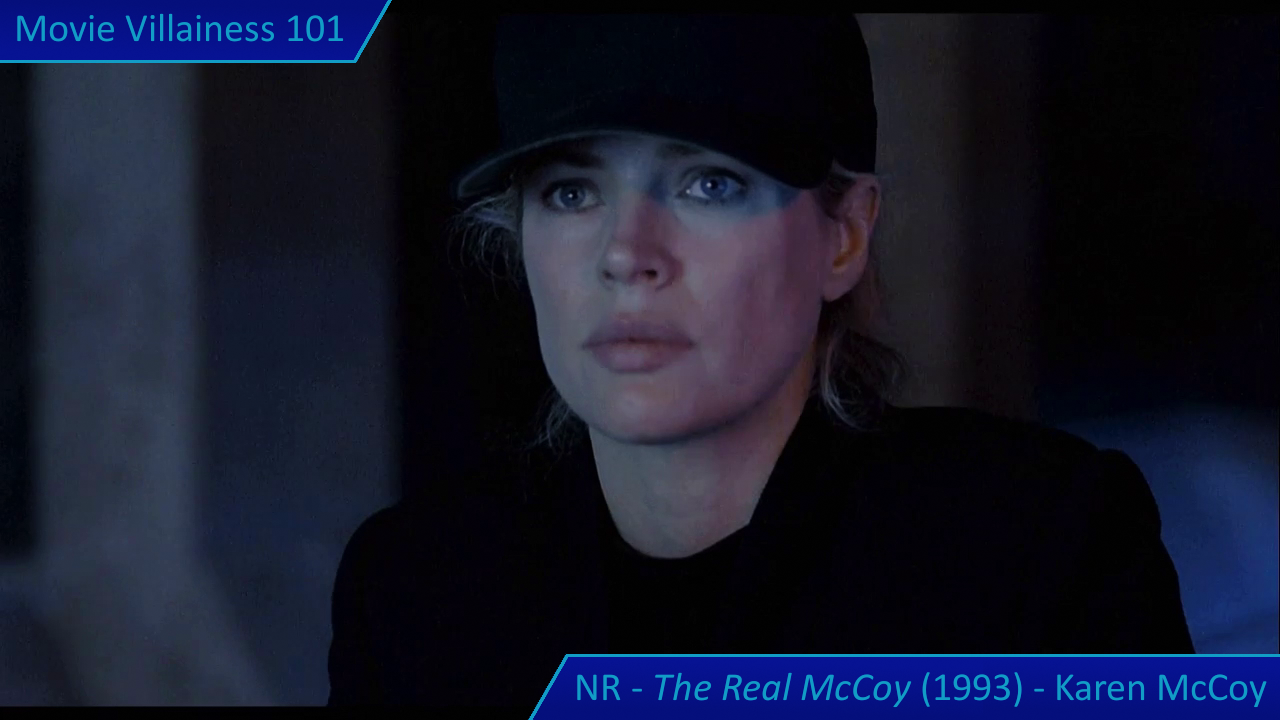
The Real McCoy (1993) – Karen McCoy (Kim Basinger)

Yet another example where the thief is masked at the beginning and never again. That’s four examples on this page alone (yes, it happens in Entrapment with the Rembrandt theft). Some advice for filmmakers: cat burglars are supposed to wear masks during robberies.

The Real McCoy has a villainess protagonist, though Karen is arguably an anti-heroine as she’s coerced into planning a heist by a crime boss. When threatening her doesn’t work, the bad guy takes her son hostage as leverage. So Karen teams up with an inept thief (Val Kilmer) to turn the tables.

Basinger plays the mother/criminal mix well, and there’s plenty of minor heist action before the big vault raid. Karen breaks into the villain’s mansion to rescue her son, but seasoned viewers won’t expect her to succeed. Lack of tension is a recurring problem, even with the bank heist finale. Nothing goes wrong, and Karen outsmarts the villains too easily.

Movie Villainess 101 Rank #81

This ex-spy is certainly no angel

Movie

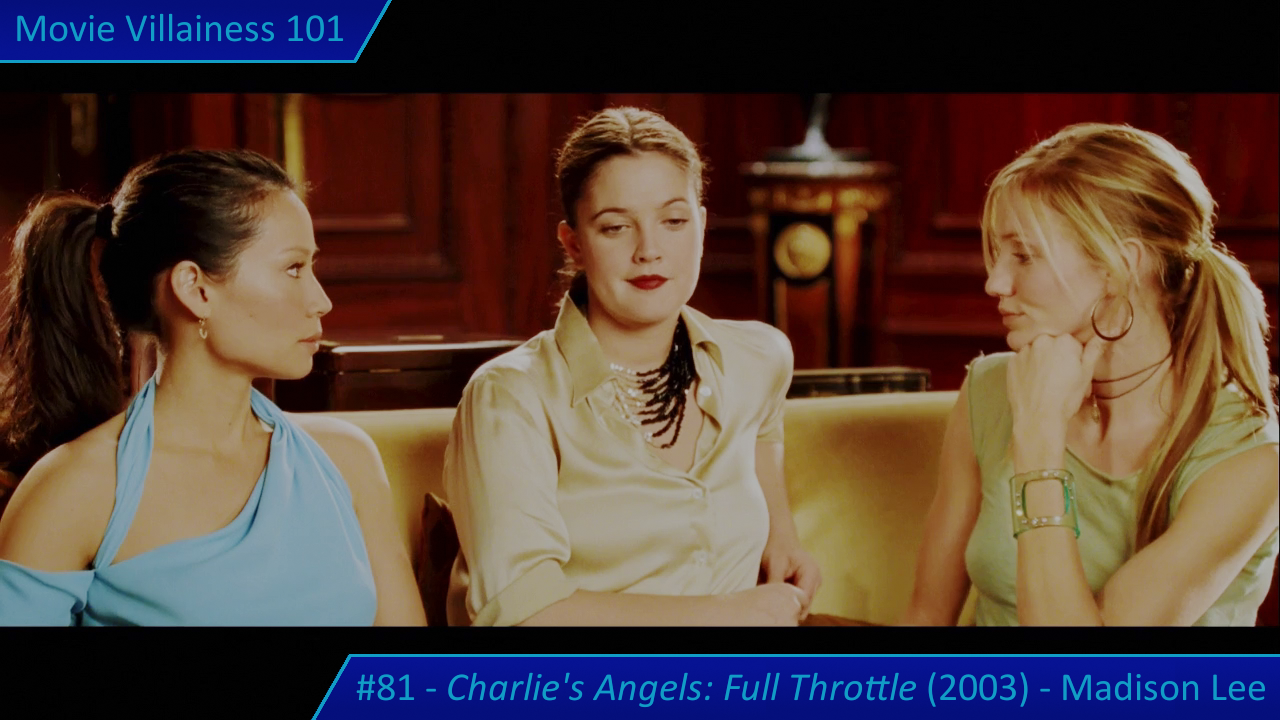
Charlie’s Angels: Full Throttle (2003)

A sequel to a re-imagining of an old TV series, which itself has since been rebooted. Perhaps audiences are growing tired of the whole remake thing, as the latest attempts were commercial failures.

The movie with Cameron Diaz, Drew Barrymore, and Lucy Liu as the secret agents hasn’t aged well. From a modern viewpoint, the heroines are overly sexualised with many instances of male gaze. But Full Throttle addresses the imbalance by adding topless men into the mix.

These films are better at humour than plot development. Given that jokes often fall flat, this should give some idea of how obvious the twists are. Plenty of action, though the fights are cheesy with impossible stunts involving CGI and obvious wire work. The first Charlie’s Angels film had its critics, but had a decent box office return. Hence, no change in style for Full Throttle.

If viewers switch off their brains and don’t take the movies seriously (is that even possible?), there is much to enjoy. Both entries feature a major villainess and the expected catfights that come with her. While the sequel is weaker than the first film, Madison makes my list because of her more interesting backstory.

Villainess

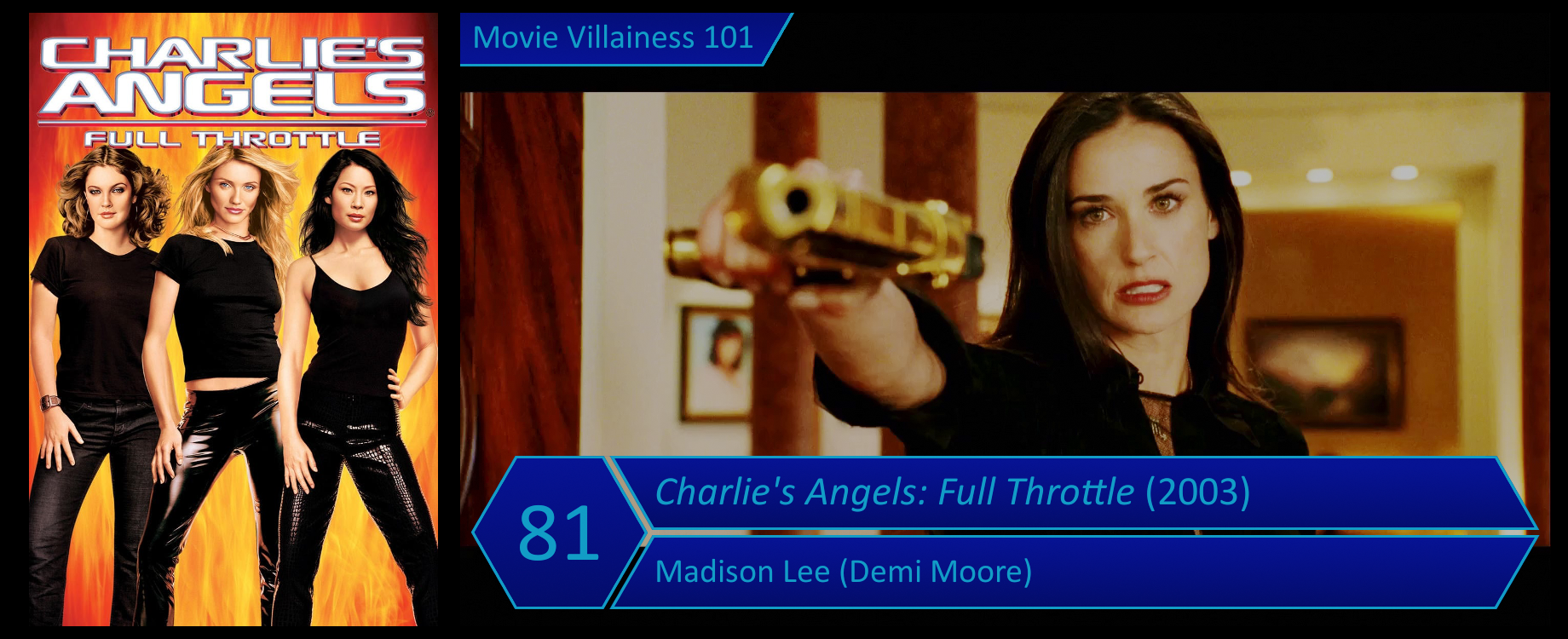
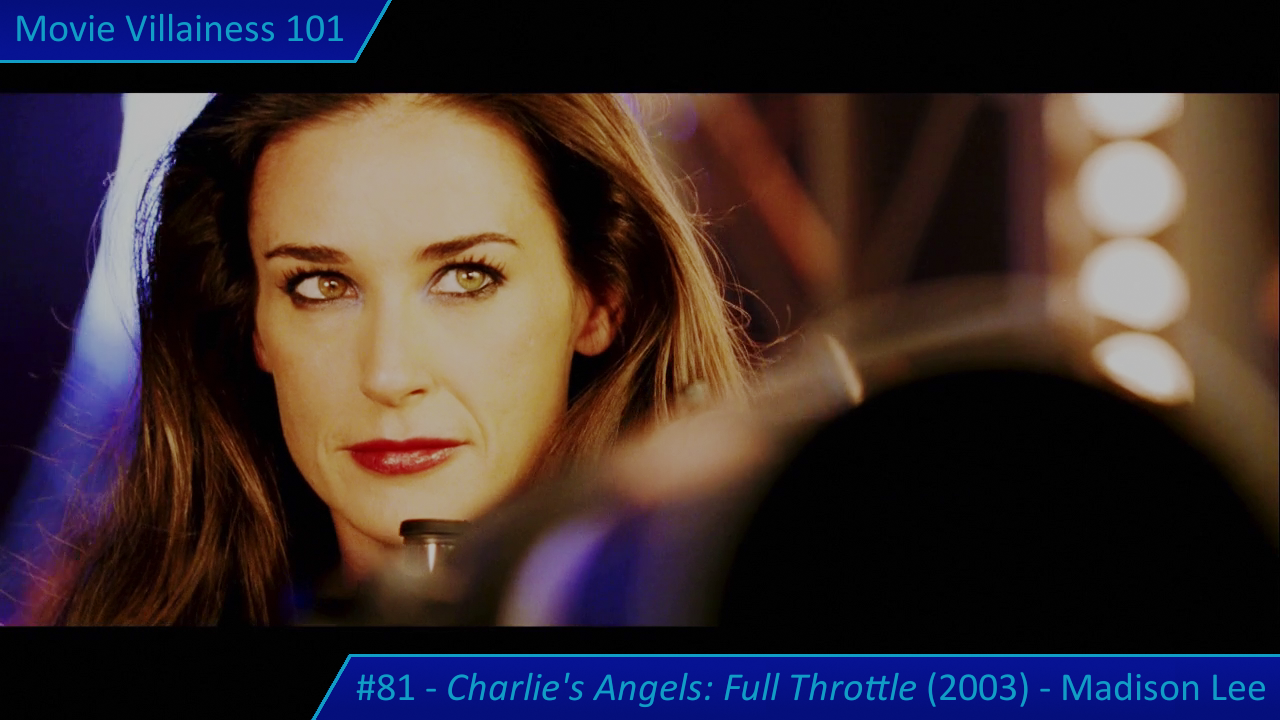
Madison Lee (Demi Moore)

The Charlie’s Angels films directed by McG have similar themes. There’s a mission that’s not what it seems, a supposed ally that turns out to be manipulative, and a last act reveal for the villainess. The sequel adds a dark-haired female antagonist (seen from behind) early on. So when a former Angel named Madison Lee enters the picture, it’s obvious she’s the bad girl.

A Mongolian warlord is the main villain in the opening teaser where the heroines rescue a US marshal (Robert Patrick). However, it soon becomes apparent that these are minor players in a much bigger scheme. The dark-haired lady is after two titanium rings, decoders that reveal the identities of people in witness protection.

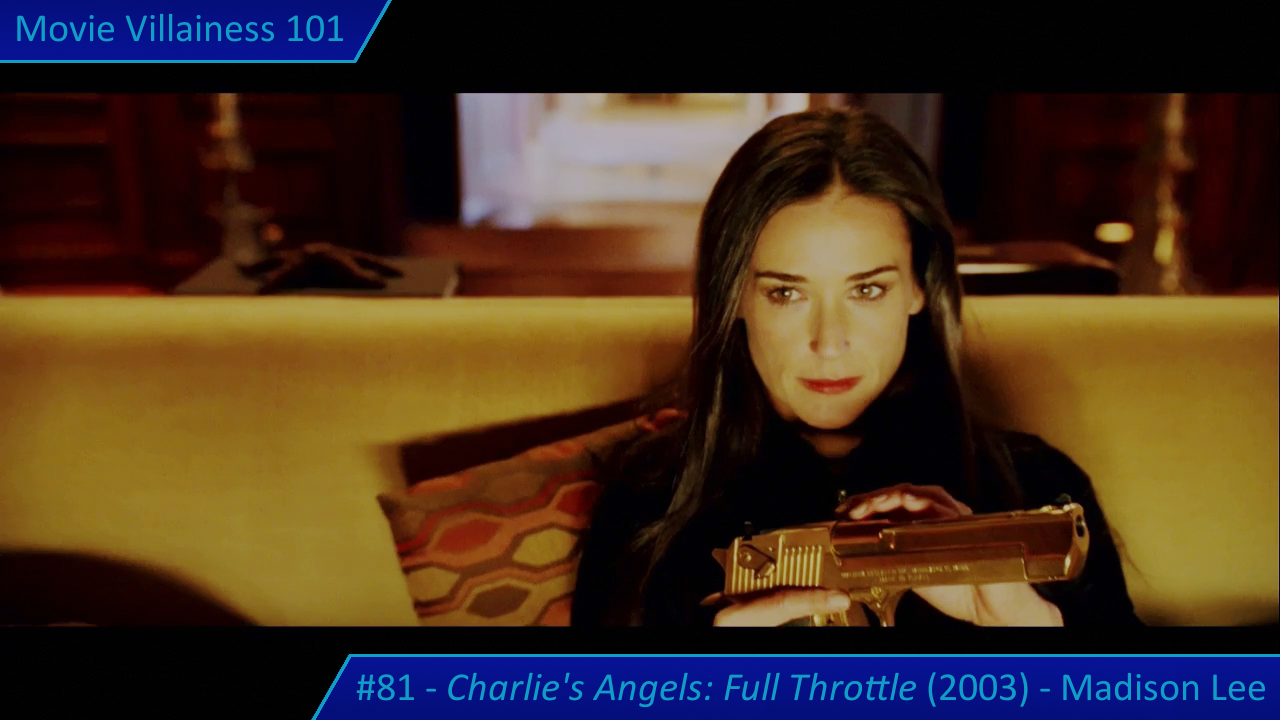
The marshal had one ring, and a Justice Department official is guarding the other. Bruce Willis has a short-lived cameo as the second man. He discovers his entire detail dead in an aircraft hangar (somehow they got slaughtered with absolutely no noise). The stealthy masked assailant hangs from the plane’s roof, like something out of Splinter Cell, and holds a gold-plated Desert Eagle to the official’s head. This is someone who kills with style.

The Angels track a surfer henchman to a beach. An excuse to show attractive women in bikinis, including Madison and a Baywatch-style entrance. The assassin is eliminated by the acrobatic Thin Man (returning from the first movie). There’s a history involving Drew Barrymore’s character and an Irish mobster against whom she testified. Given who’s playing the US marshal, it’s no surprise he’s a turncoat. In summary, a convoluted mess of minor villains and subplots.

Madison reveals herself as the principal antagonist when she blows the marshal away with a pair of Desert Eagles. In case you’d forgotten, those were the weapons used by the masked killer. The villainess likes her golden guns and uses several in the action sequences that follow. This, together with her black outfits and egotistical boasts, makes her a stylish foe who should have been revealed much sooner.

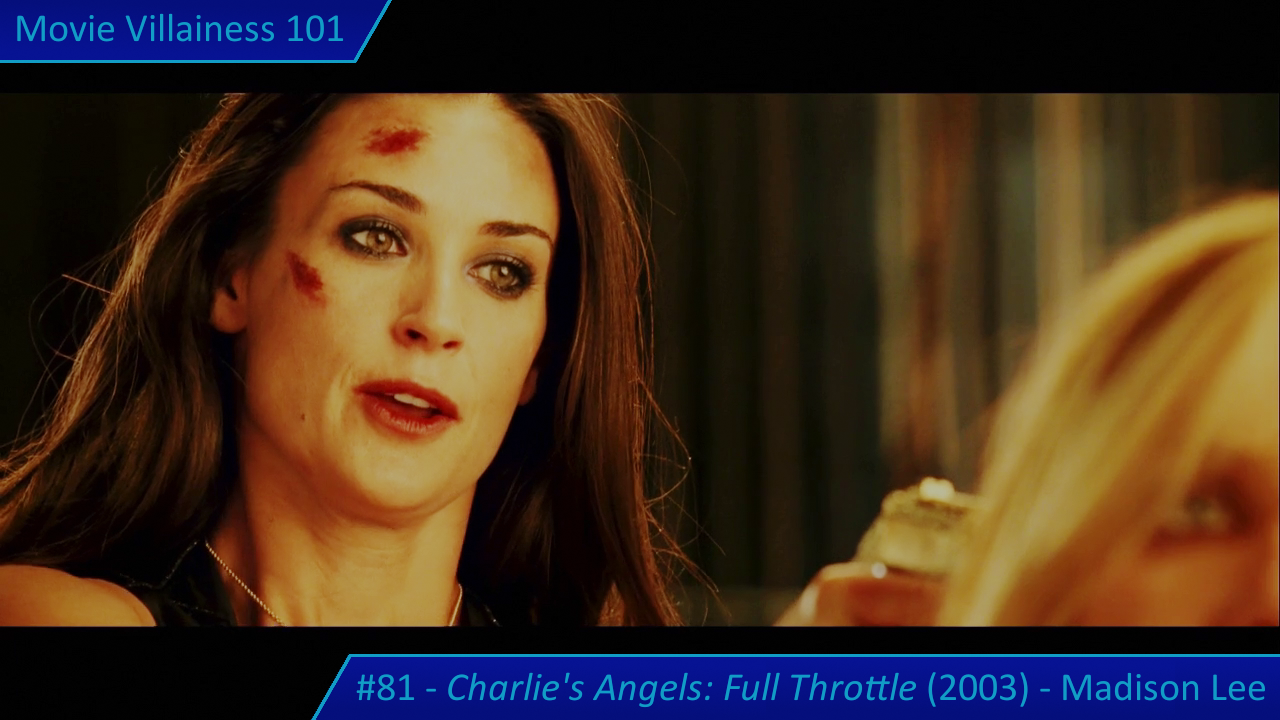
Madison is a formidable opponent for the Angels, countering their dodge moves with gunplay. One on one, the heroines are no match, and even all three acting together struggle to defeat the villainess. Only after a lengthy finale do the agents beat Madison in an abandoned theatre. She gets a good death scene when she falls through the floor and accidentally shoots an exposed gas pipe.

Honourable Mention: Charlie’s Angels

Charlie’s Angels (2000) – Vivian Wood (Kelly Lynch)

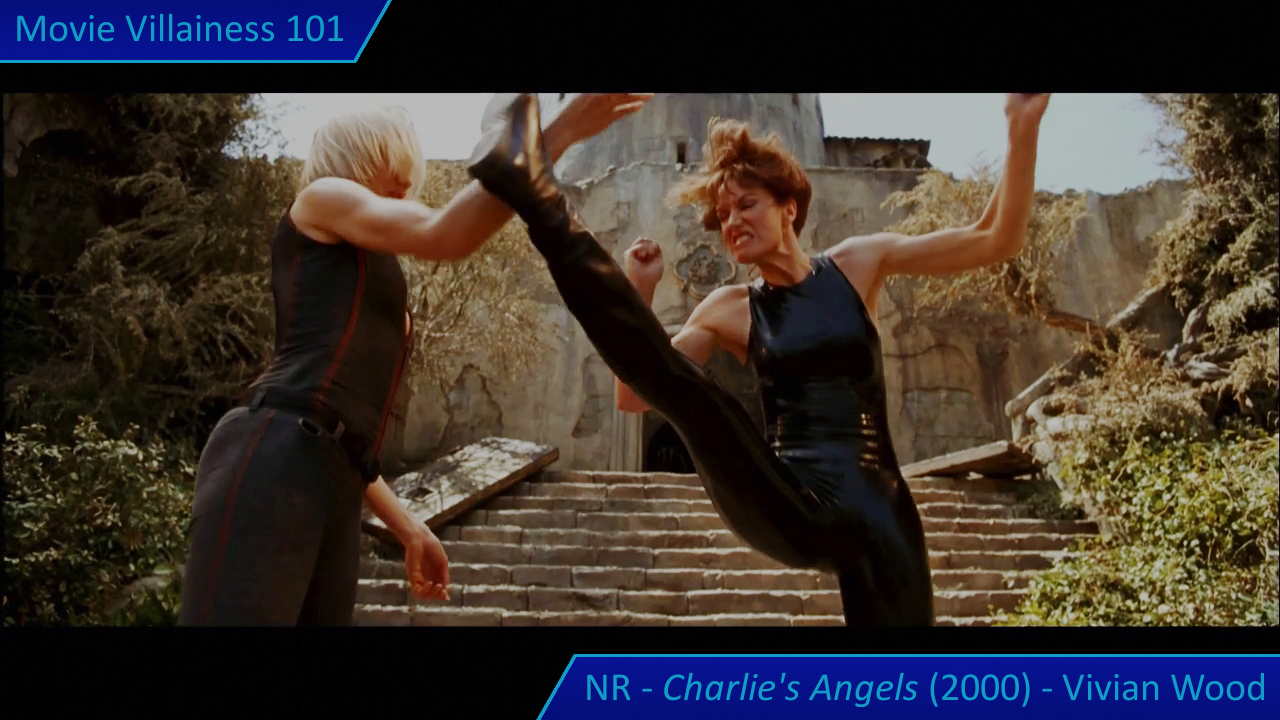
The first Charlie’s Angels movie also featured a villainess with stylish attire, though Vivian didn’t wear her skintight black catsuit until the finale. She’s proficient in unarmed combat and goes toe to toe with the Cameron Diaz character. The downside is that nothing stands out about her character. She’s a secondary foil to the chief bad guy, more of a henchwoman than a villain in her own right.

Vivian’s reveal is handled better than Madison’s. While viewers may suspect a plot twist is on the agenda, there are no giveaway shots of a mysterious female pulling the strings. So the client isn’t that suspicious before her heel turn.

Movie Villainess 101 Rank #82

Let’s make this an unfair fight, shall we?

Movie

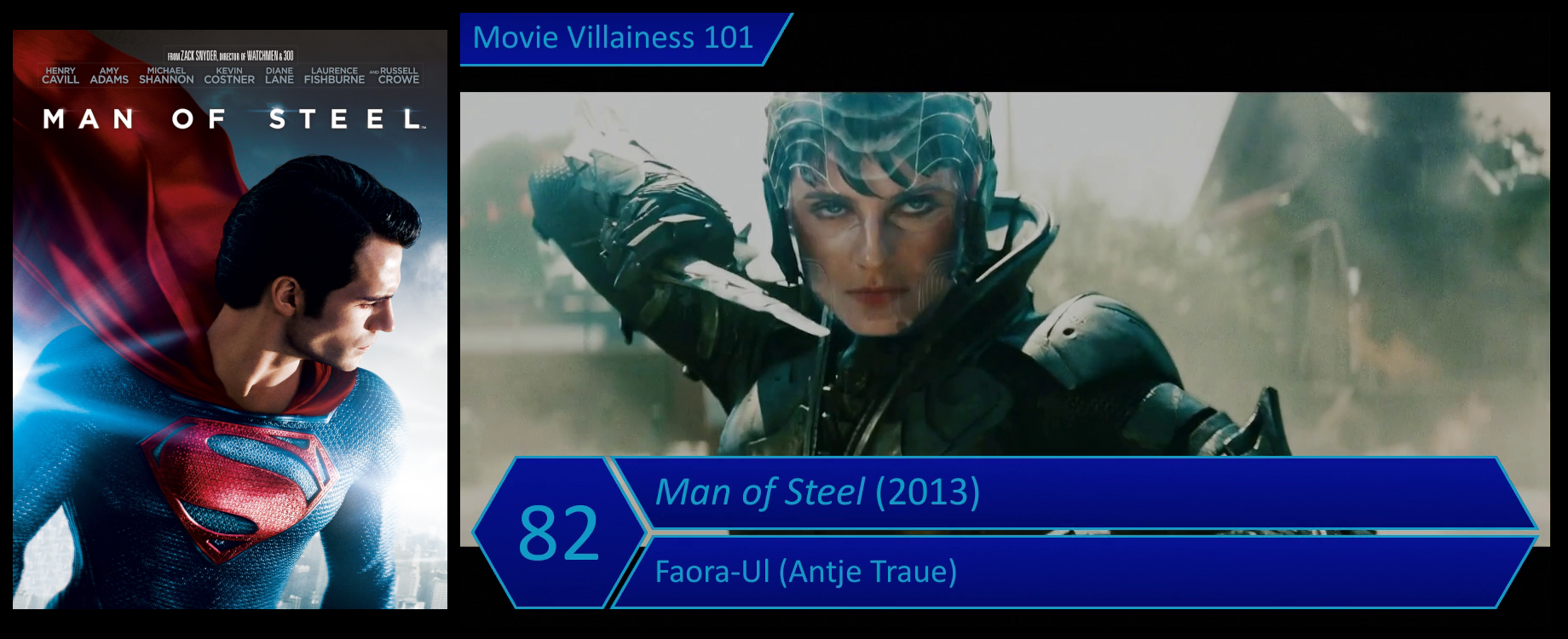
Man of Steel (2013)

Another movie in the never-ending deluge of Hollywood reboots, this is a solo outing for Superman. One difference from earlier adaptations is that the hero doesn’t work at the Daily Planet. He only takes on his Clark Kent “disguise” in the film’s last scene.

When reworking a franchise, it’s a good idea to revisit the previous movies, reuse the ideas that worked well, and ditch the rest. That appears to be the strategy. Man of Steel combines the origin story from Superman: The Movie (1978) with the rogue Kryptonian villain arc from Superman II (1980). As in the latter film, the main villain is General Zod, with Michael Shannon taking on the role previously played by Terence Stamp.

Besides the obvious improvement in special effects and scope, the pacing is superior to the 1978 film, where the villain’s plot only came into play later on. And Zod doesn’t have to share the stage with the overused Lex Luthor. In the DC Extended Universe movies, that character was saved for Batman v Superman: Dawn of Justice (2016).

The first act centres on Superman’s struggle with his identity and reporter Lois Lane’s investigation into his mysterious past. Things ramp up when Zod and his Krypton followers arrive on Earth, with a nefarious scheme to terraform the planet and wipe out humanity. With superhuman powers of their own, the villains are worthy adversaries and don’t need to rely on kryptonite to weaken the hero.

Villainess

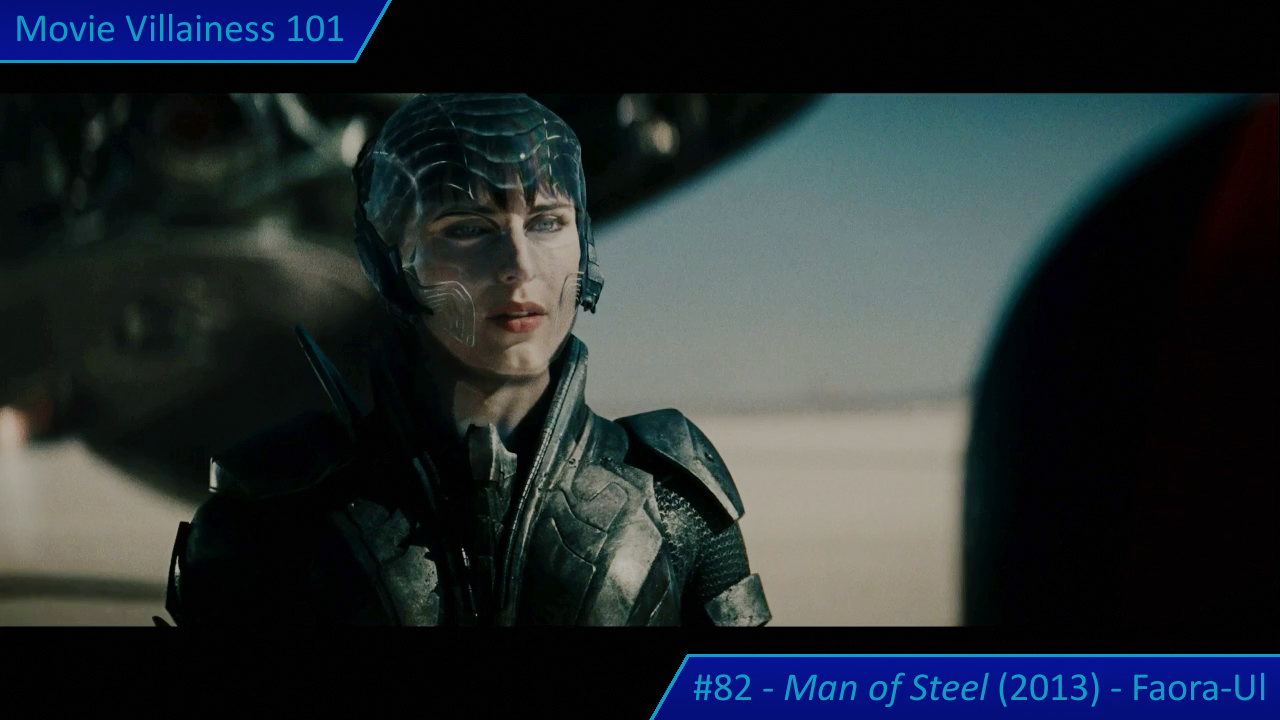
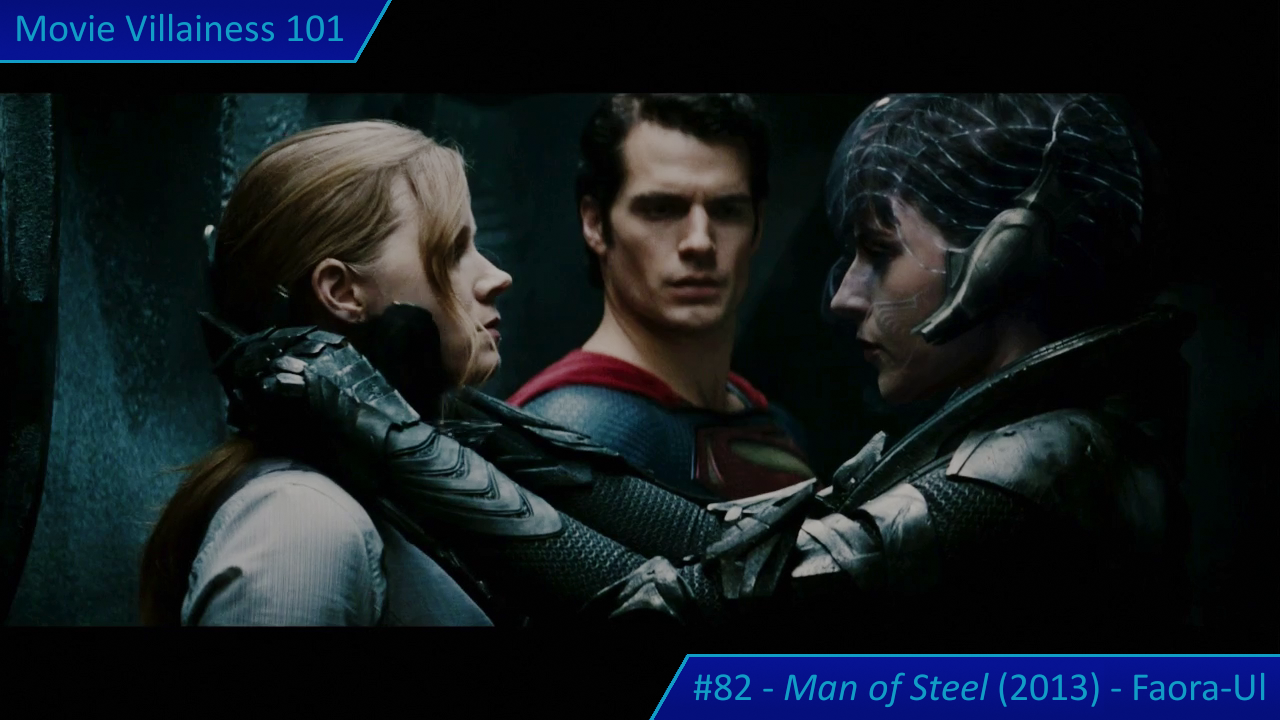
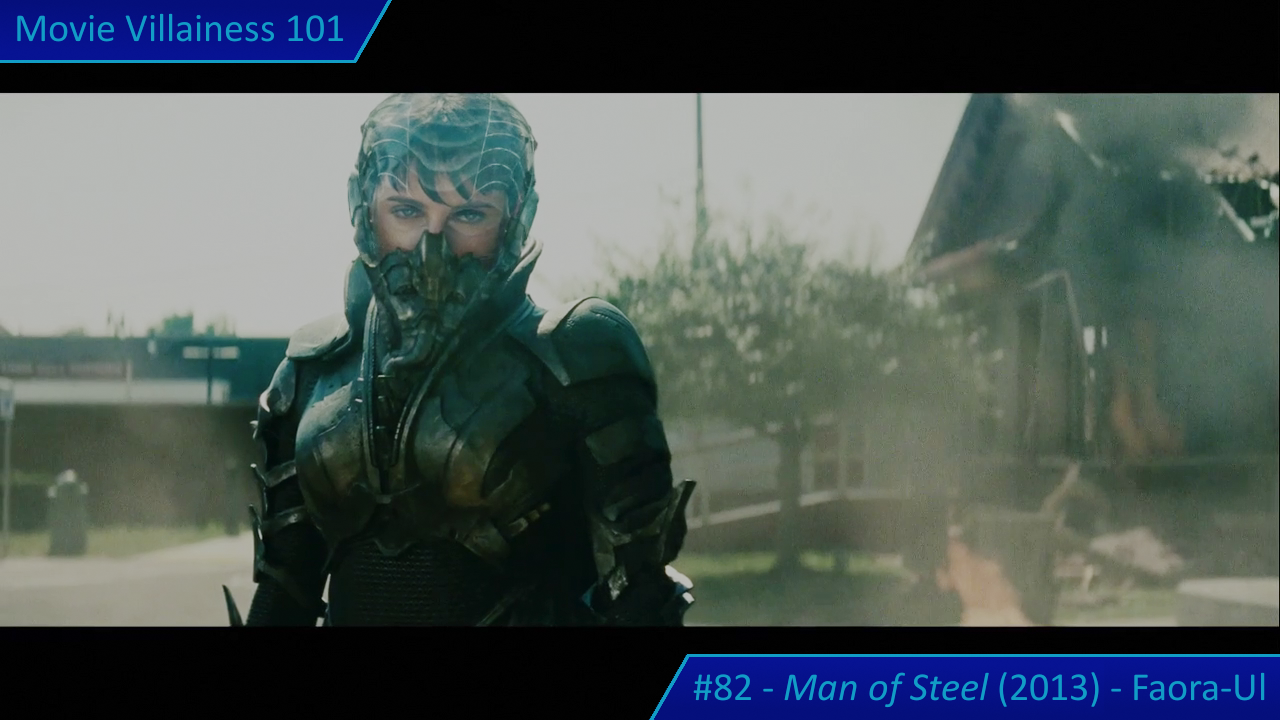
Faora-Ul (Antje Traue)

Ursa and Faora-Ul are two distinct characters in the comics, but they fill the same role as Zod’s second in command. Overall, I prefer the villainess in Man of Steel because her physical confrontations are better staged.

Faora appears in the Krypton-set prologue as part of Zod’s rebellion. Following their defeat, the rebels are sentenced to the Phantom Zone until (as in Superman II) a cosmic event frees the villains. Superman is the son of the man who imprisoned them, so the vengeful general travels to Earth.

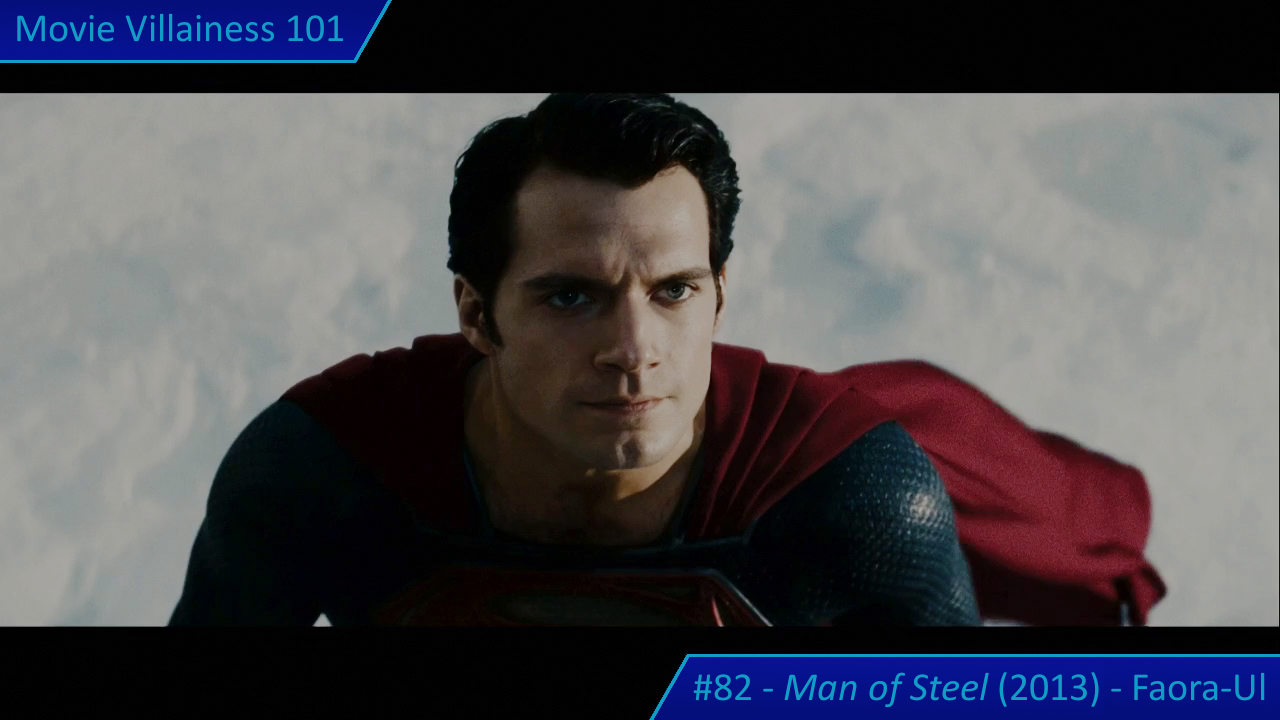
Zod and his underlings brush aside tanks and gunships and make a televised demand that the authorities turn Superman over to them. It’s then that the villainess introduces herself, leading to an explosive series of action set pieces. These culminate in a one-on-one battle with Superman. Rules about male/female fights have been relaxed over the last forty years. They are now expected to be brutal, and this one certainly delivers.

The winner is debatable, as both Superman and Faora are invulnerable to each other’s attacks. Neither pulls any punches, as entire buildings get destroyed during an epic fight that lasts several minutes.

Arguably, the most memorable encounter is when an ordinary soldier challenges Faora with a knife. Brave and foolish, and it would have meant certain death save for a last-second intervention from Superman. In the finale, the soldier commits suicide by crashing a spaceship (with Faora on board) into an alien device, a heroic act which returns the villainess to the Phantom Zone.

Honourable Mentions: Detective Comics (DC)

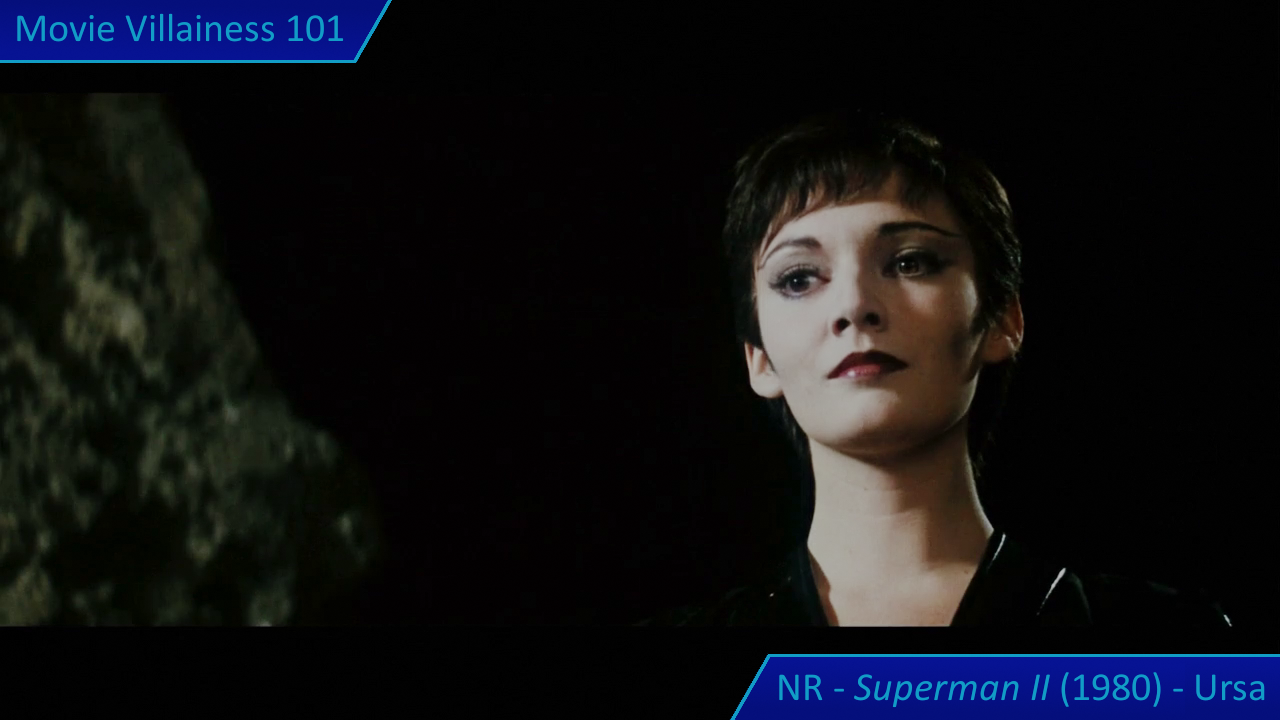
Superman II (1980) – Ursa (Sarah Douglas)

It wouldn’t be fair to discuss Faora without mentioning Ursa. The character was created especially for the movie franchise because of a shortage of female villains in the source material. It’s actually she who first encounters the humans during a lunar mission.

A spaceman is understandably shocked to see an unsuited woman float down and survive in the vacuum of space. Curious, Ursa pulls off his NASA badge, which ruptures his suit. Collecting trophies becomes a thing, and she adds a sheriff’s star and general’s stripes to her black outfit.

Ursa gets physical in confrontations with Superman, but never has a one-on-one battle like Faora in the reboot. Some of the action is tame by today’s standards, but Douglas still makes a fine villainess. She also has the honour of being the last villain standing after Superman strips his foes of their powers. Lois Lane gets to deliver the knockout punch, accompanied by a fitting one-liner.

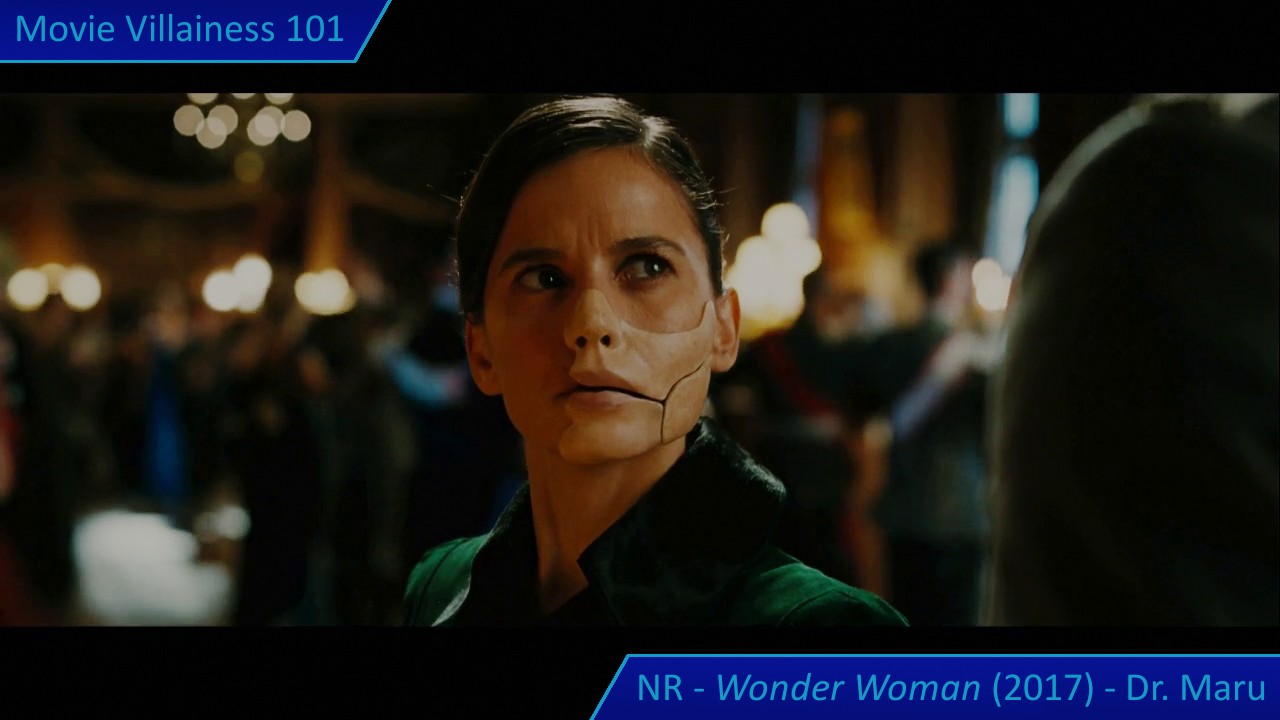
Wonder Woman (2017) – Dr Maru (Elena Anaya)

The female villain’s role in the first Wonder Woman movie is relatively small. Dr Maru (better known as Dr Poison) is a scientist who develops a corrosive gas which could impact the outcome of World War I. Hardly a minor contribution, but she’s a secondary antagonist to Greek god Ares.

Maru has a creepy aura thanks to the mask she wears to hide disfigurement. She also chuckles with the fake, big bad Ludendorff after gassing a room full of German officers. Then the real villain shows up in an overblown CGI finale, and the lethal poison plot becomes an afterthought. In the end, Maru’s fate is ambiguous after Wonder Woman discovers the value of love and spares the villainess’ life.

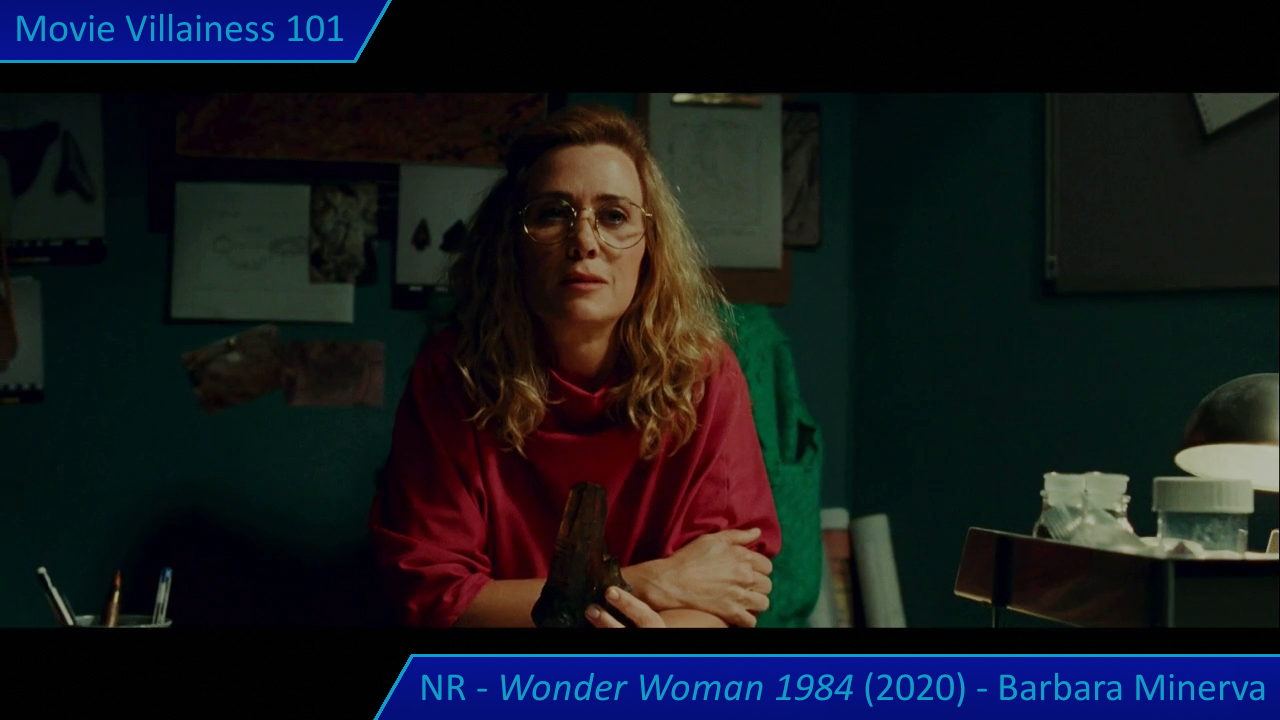
Wonder Woman 1984 (2020) – Barbara Minerva / Cheetah (Kristen Wiig)

The female antagonist in the sequel – Barbara Minerva, aka Cheetah – gets a lot more screen time, though she doesn’t take on her villainous persona until the third act. For most of the movie, the chief bad guy is Maxwell Lord: a power-mad businessman obsessed with a mystical artifact called the Dreamstone. The crystal has the power to grant its user a single wish, though it takes something they value in return. Things become desperate when Lord becomes the Dream Stone and abuses its power for his own ends.

Before all that, the timid Barbara wishes to be like Diana Prince (Wonder Woman), which grants her superhuman strength at the cost of humanity. The adverse effects can be reversed by relinquishing a wish, but Barbara embraces her powers and becomes the iconic feline foe.

Cheetah – and Wonder Woman herself – see little action until the second half. One of the villainess’ best moments is when she confronts a man who molested her and enjoys her revenge as only an evil person could. Like the first DCU film, the ending is CGI-heavy, and this time two women battle it out. The confrontation is brief, and Barbara reverts to her human form when it’s over.

Movie Villainess 101 Rank #83

Someone should tell her that hostages are more valuable alive

Movie

Strategic Command (1997)

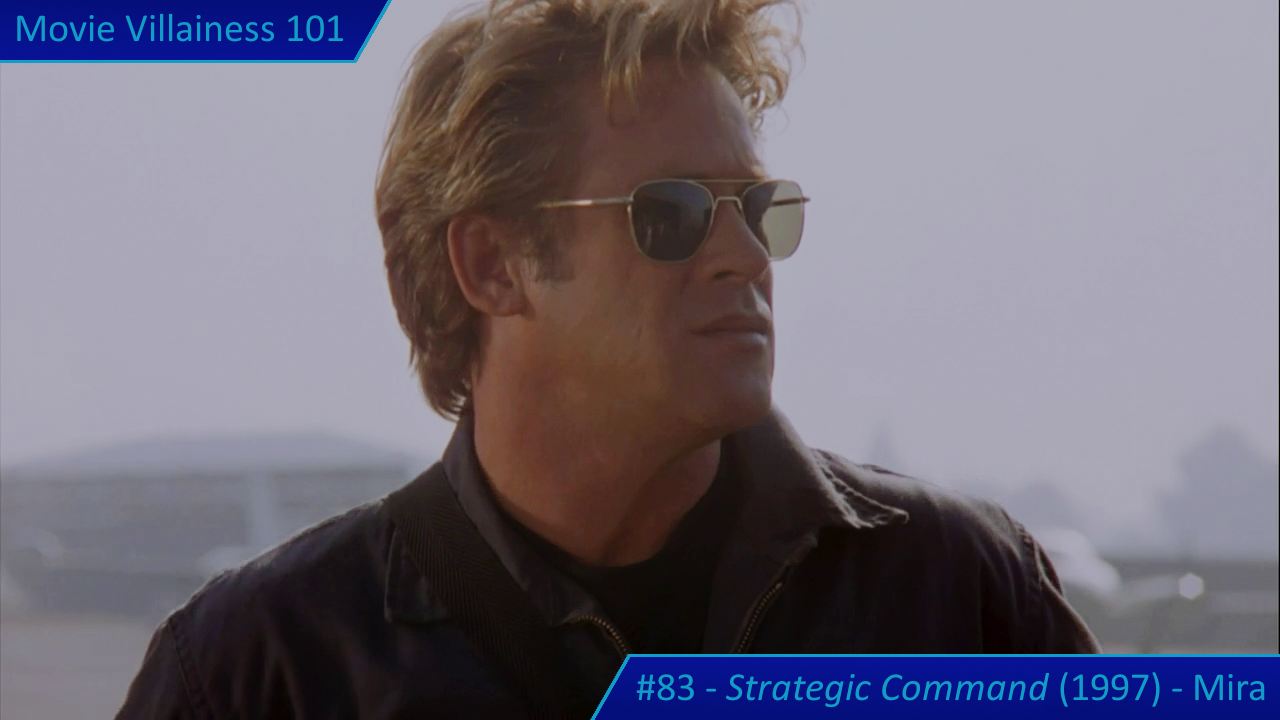
Royal Oaks Entertainment produced several low-budget action flicks in the 1990s. They always open with stock intro music and usually have Michael Dudikoff in the lead role. In this one, he’s a biologist named Rick Harding who conveniently has a military / martial arts background. Helpful when boarding a hijacked plane mid-air with a special forces unit as backup. Rick’s mission: defuse a nerve toxin bomb before the terrorists use it to attack the US.

If this sounds familiar, it’s because the plot is identical to Executive Decision (1996). In that, Kurt Russell is the scientist (no martial arts) and Steven Seagal’s commando is a decoy hero who dies halfway through. The heroes approach the hijacked commercial airliner in a stealth plane and use a connecting tube-like thing to access the cargo hatch. The sequence midway through Strategic Command is a carbon copy.

For added tension, the main character’s wife is on board the plane, which feels convenient and contrived. But since the inspired clone (or knockoff, if you’re feeling less generous) has a female hijacker – and a nasty one – in Mira, it’s worth checking out for villainess fans.

Villainess

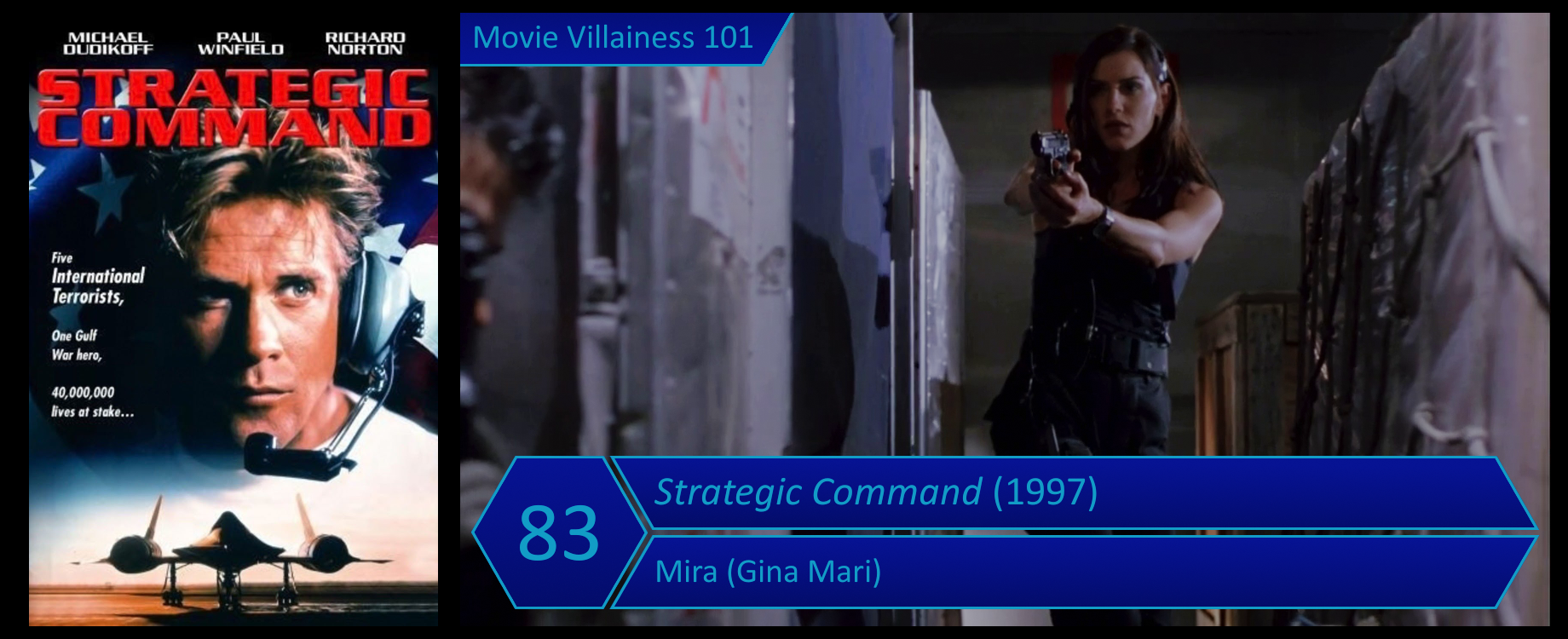
Mira (Gina Mari)

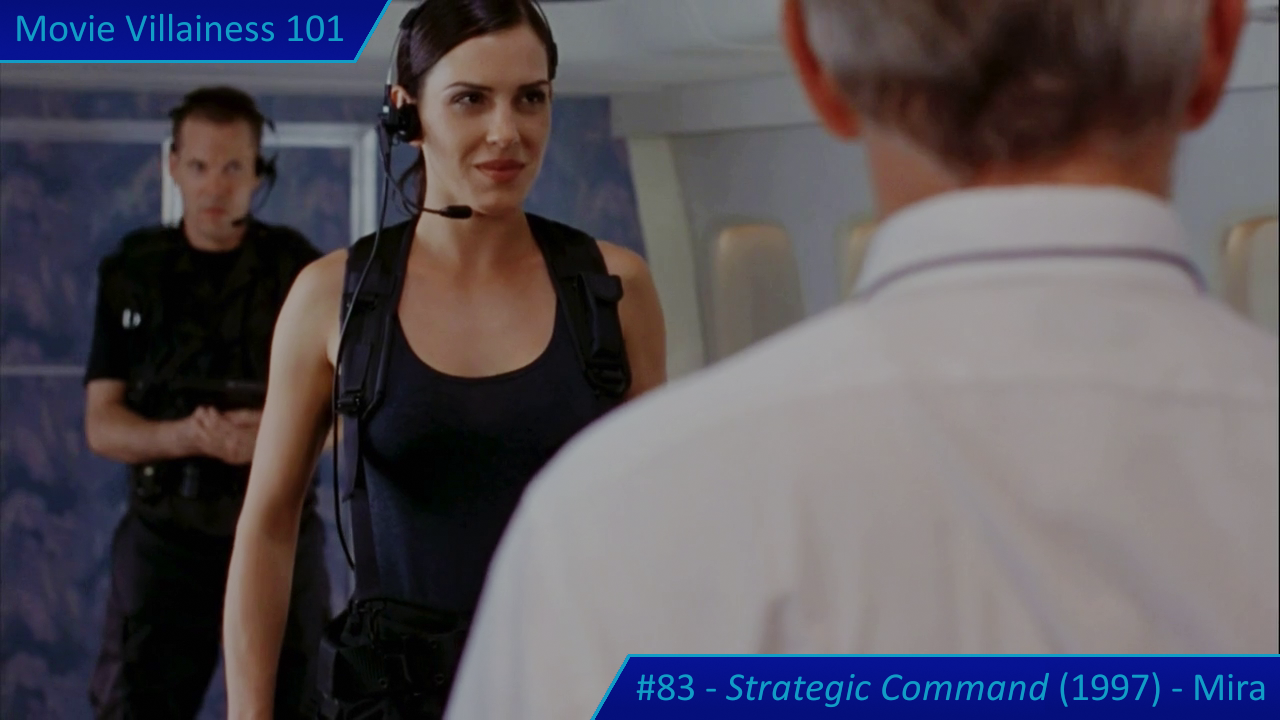
Before the mid-air antics, the terrorists raid a chemical storage facility and steal a fictional nerve agent called Bromex. It’s obvious these guys are bad because they wear black commando outfits, and the lone female, Mira, has a sleeveless top to emphasise her sexiness. She sure looks like a sadistic henchwoman, a role confirmed when the leader Gruber (any relation to Hans?) produces a human eyeball. Mira smiles in delight as they bypass a retina scanner.

Some toxin is accidentally released, and a disposable guy is sealed in an airtight chamber. His vomit is supposed to be stomach acid, but resembles milkshake. The terrorists make their escape, and there’s a decently staged shootout with casualties on both sides. And a surprise early fight between Harding and Gruber, but the hero can’t win yet, otherwise there would be no movie.

After the villains hijack a 747 with the Vice President on board, Mira acts the tough girl and headbutts the uncooperative VP. She’s eager to execute some hostages purely for fun. This is one psycho lady, who gets very excited when Gruber murders a press liaison to convince the authorities he’s serious.

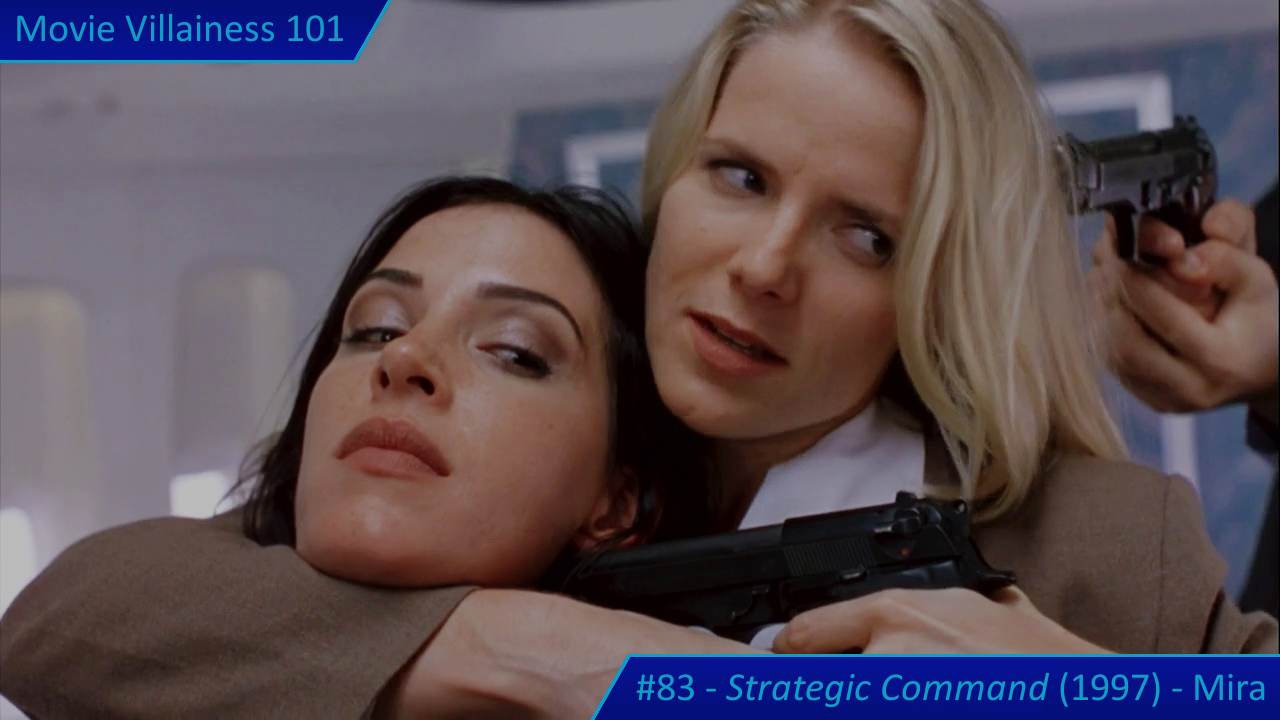
Mira’s best moment comes when the Secret Service attempts to retake the plane. A female agent holds the villainess hostage, then a traitor turns the tables. After the would-be heroine surrenders, Gruber orders her execution, and Mira is happy to oblige. The smiling villainess’ reaction – where she pants and draws back her hair – is downright evil.

After the heroes sneak on board Executive Decision style, Mira investigates the cargo hold. Harding escapes the henchwoman on this occasion, but a confrontation is coming. The showdown on the doomed airliner is weak, with shaky-cam fight scenes. It’s Harding against Gruber and Mira versus the traitor (who’s developed a conscience and joined the good guys).

The unlikely hero overpowers Mira and forces her against a fuselage door. Then he opens it, depressurising the cabin and sacrificing his own life to defeat the villainess. There’s a scene a little later where Harding kills Gruber with the nerve agent. The sadistic Mira deserved an equally nasty fate, but went out with a faint scream.

Honourable Mentions: Hijackers

Passenger 57 (1992) – Sabrina Ritchie (Elizabeth Hurley)

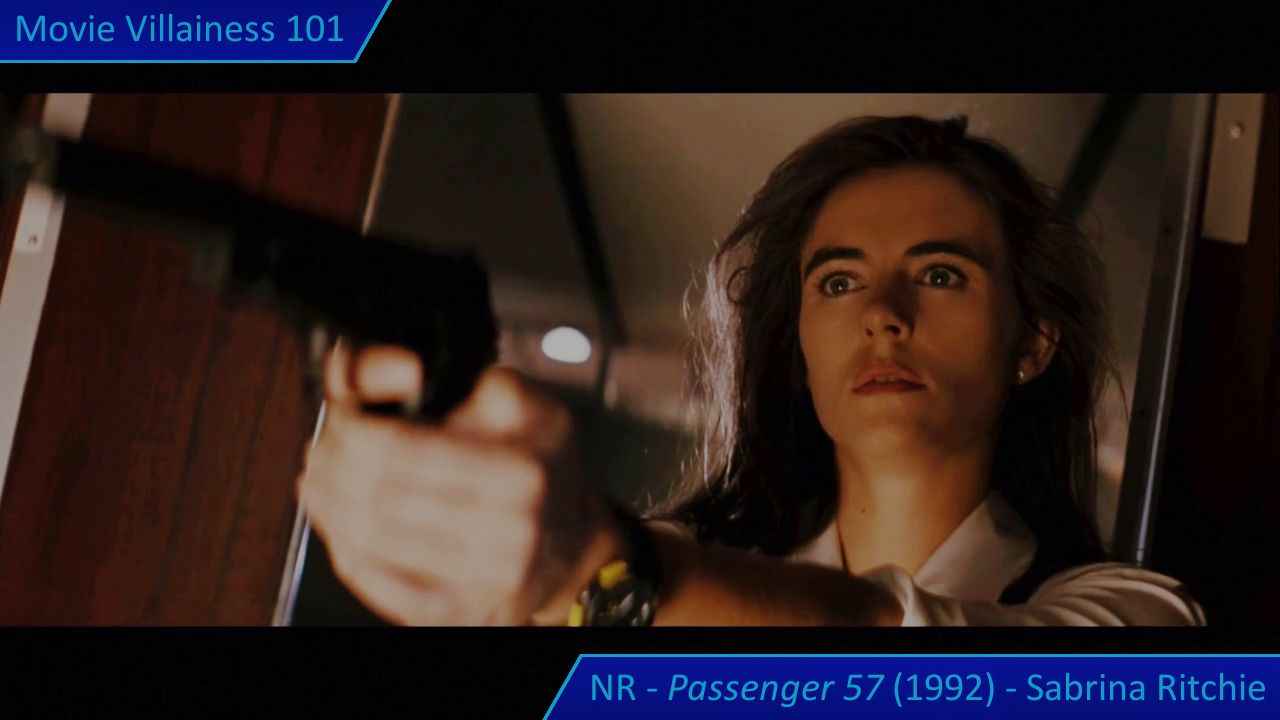
British actors playing villains is nothing new in Hollywood. This film gives us two: Bruce Payne’s psycho hijacker and Liz Hurley as his accomplice Sabrina Ritchie. She seems to be an innocent flight attendant, but that accent is a giveaway.

Sabrina reveals her treachery when she offers a meal to two unsuspecting FBI agents and serves up bullets from a silenced pistol. Too bad that’s her only decent moment. After that, Sabrina has occasional dialogue and holds a crew member hostage. The hero knocks her out with one punch, and she’s arrested when the plane lands. Anyone hoping for a decent climax will be very disappointed.

Hijacked (2017) – Sadie (Greer Grammer)

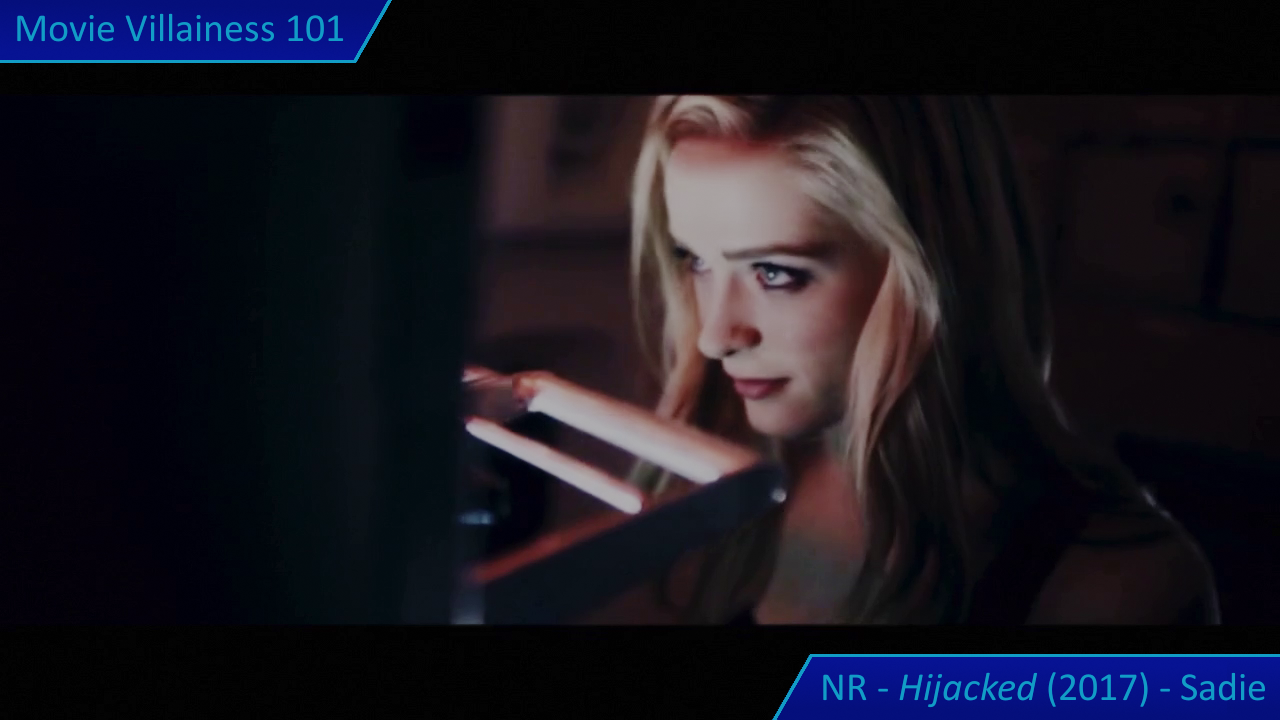
Also known as Altitude, this movie features a villainess with a wonderful introduction. Sadie – yet another fake flight attendant – is part of a criminal gang hunting a former associate. There had to be a simpler solution than hijacking a passenger plane, but it suffices as an excuse plot. The action heroine is hostage negotiator Gretchen Blair (Denise Richards, cast against type).

After Sadie breaks a jokey attendant’s neck to show off her martial arts prowess, she tricks her way into the cockpit. There, she injects the pilot with poison and stabs his co-pilot with her heeled shoe. An awesome double kill, but the film doesn’t build on this impressive opening.

The fight scenes are poorly choreographed and edited, and the two “confrontations” between Gretchen and Sadie don’t amount to much. Eventually, the villainess is sucked out of the plane. In hijack movies, you can guarantee at least one baddie will die this way. But it’s predictable and unconvincing.

Hijacked (2012) – Liesel (Ashley Cusato)

Yes, there are two generic B-movies with the same title. This one has more star power, with Randy Couture as CIA agent Paul Ross, who teams up with Dominic Purcell’s bodyguard to foil a hijacker extortion plot. The target is a private jet owned by a wealthy businessman, and – to make things personal – Ross’ girlfriend Olivia is on board. This appears to be a plot contrivance, but is later revealed to be a setup.

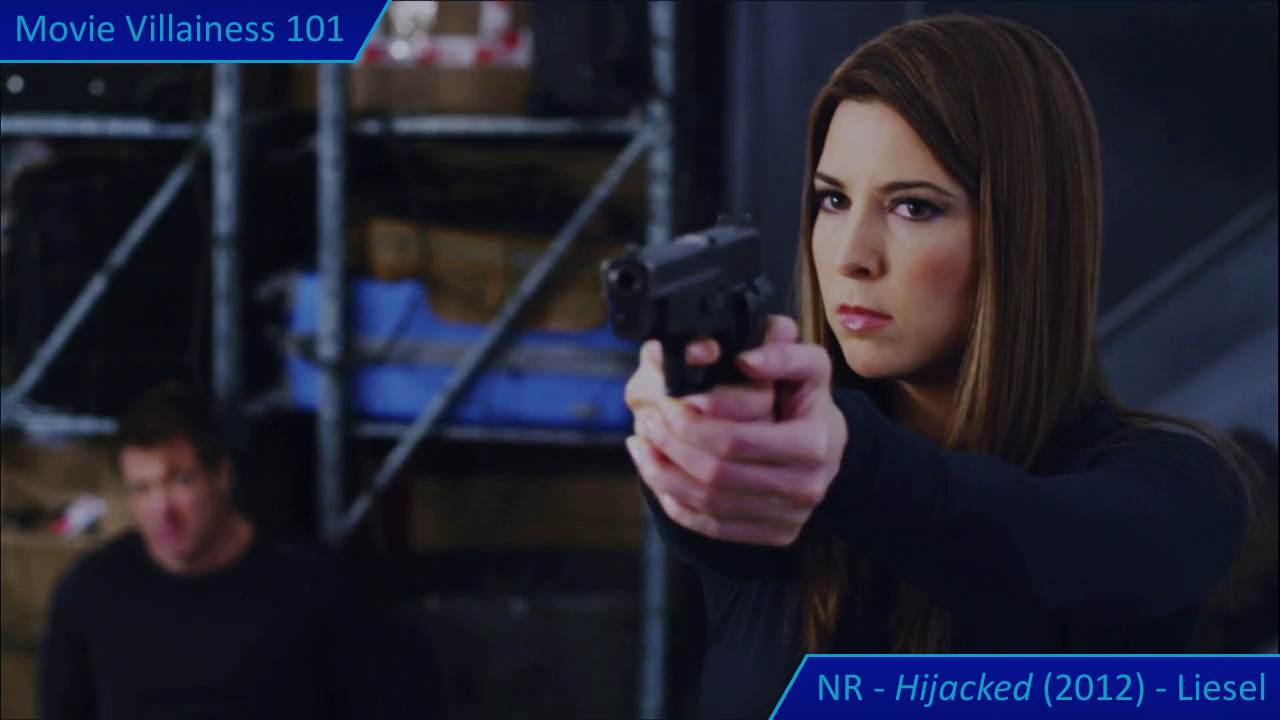
The villains are bland, leaving it to the henchwoman Liesel to offer the best action. Though her role is mostly limited to sinister facial expressions and the occasional tough-girl speech, she gets two great kills. Liesel is sadistic and trigger-happy. That goes for all the hijackers, since the businessman wants the hostages murdered as part of his diabolical scheme.

The opening party scene has a British spy played by Vinnie Jones (in a rare good guy role) don a tuxedo and do a not-so-great 007 impression as he flirts with a sexy woman. The awkward romance gets cut short by a phone call, then the MI6 agent and Ross later discover the female tied up during an armed raid. A trained operative should spot the warning signs, but he’s stupidly caught off guard. The villainess seems to enjoy her deception before she blows his brains out.

After the mercenaries board the jet with help from an inside woman (who’s nowhere near as smart as she thinks), Liesel enters a private cabin through a hatch. She surprises a couple in the middle of passionate sex, takes a moment to enjoy the view, and finishes them with a silenced pistol. Her best scene in the movie, and while it’s possible Liesel gets an off-screen kill later on, the shooter isn’t confirmed.

After a string of “act tough but don’t do a lot” scenes, Liesel engages the heroes in combat. Sadly, the henchwoman doesn’t have the fighting skills you’d expect, and is easily captured. For the last act, Liesel is a prisoner until she’s released to help defuse a bomb. She has no idea how to disarm it, but escapes and aims her gun at the careless Ross. Then the inevitable happens: Olivia shows up to put a bullet in the villainess’ back.

Movie Villainess 101 Rank #84

When the action starts, these women won’t be stopped

Movie

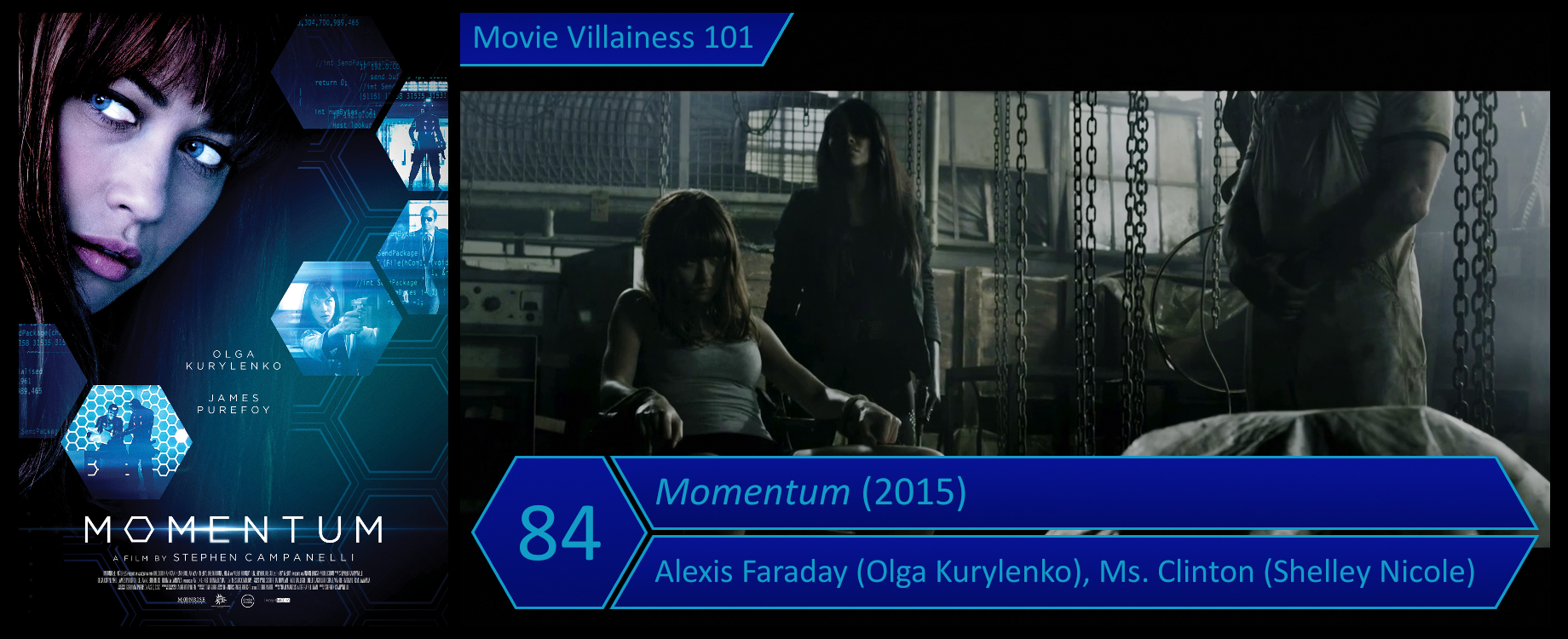
Momentum (2015)

When compiling my list, one goal was to vary the content as much as possible. So I included protagonists who commit serious crimes, and anti-heroines just as ruthless as the bad guys, even if their intentions are noble. The main character in Momentum fits into both categories.

For viewers who prefer outright villainy, there’s a cold-blooded – and especially hard to kill – henchwoman. More than enough to justify placing these deadly women in my rankings.

Anti-Heroine

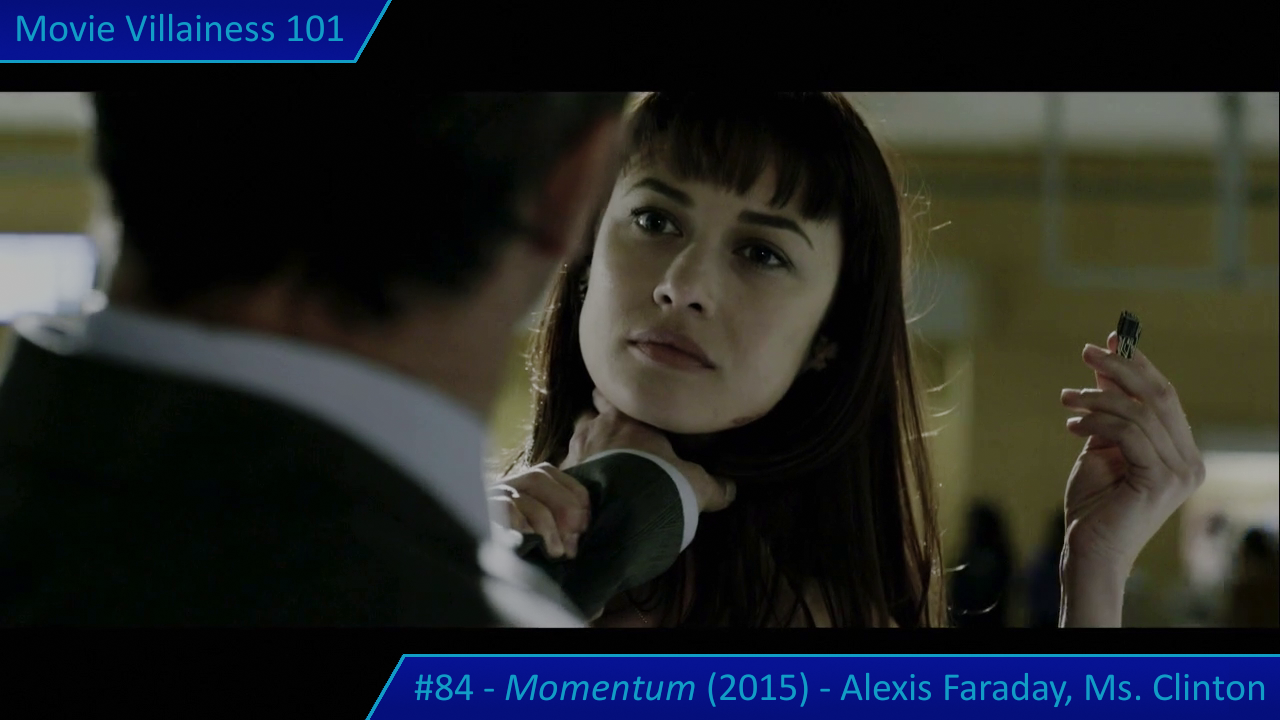
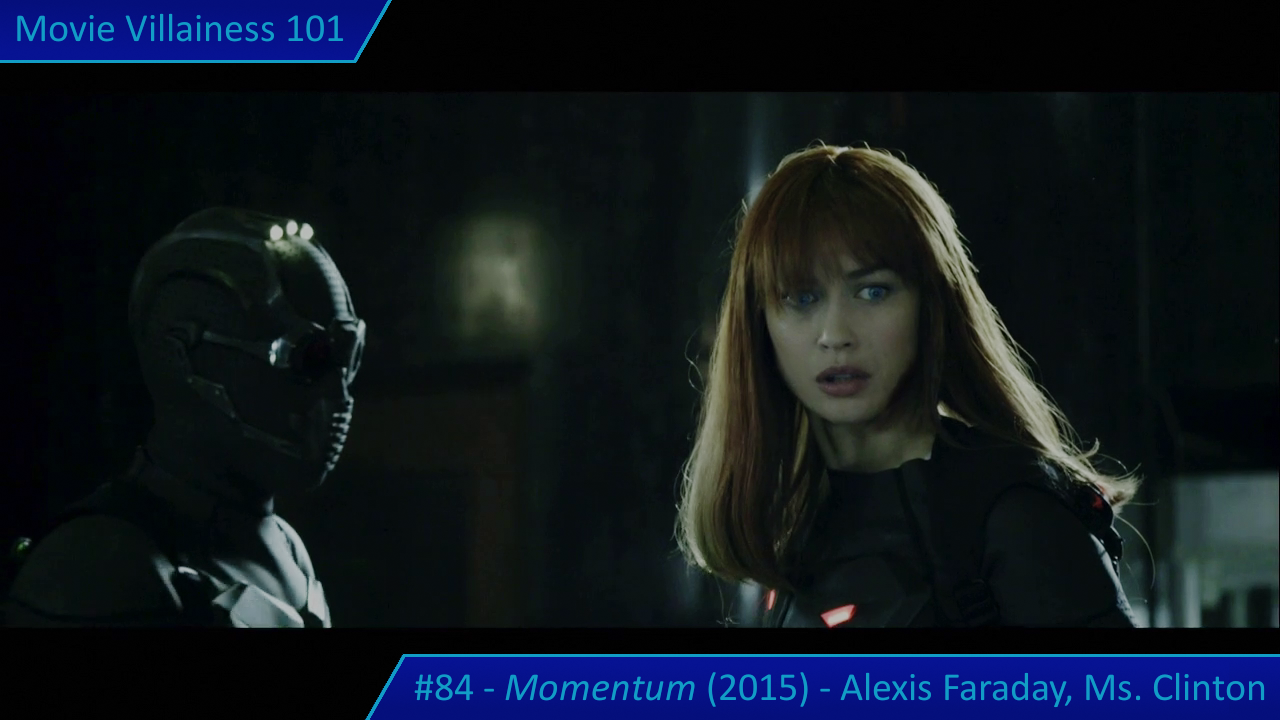
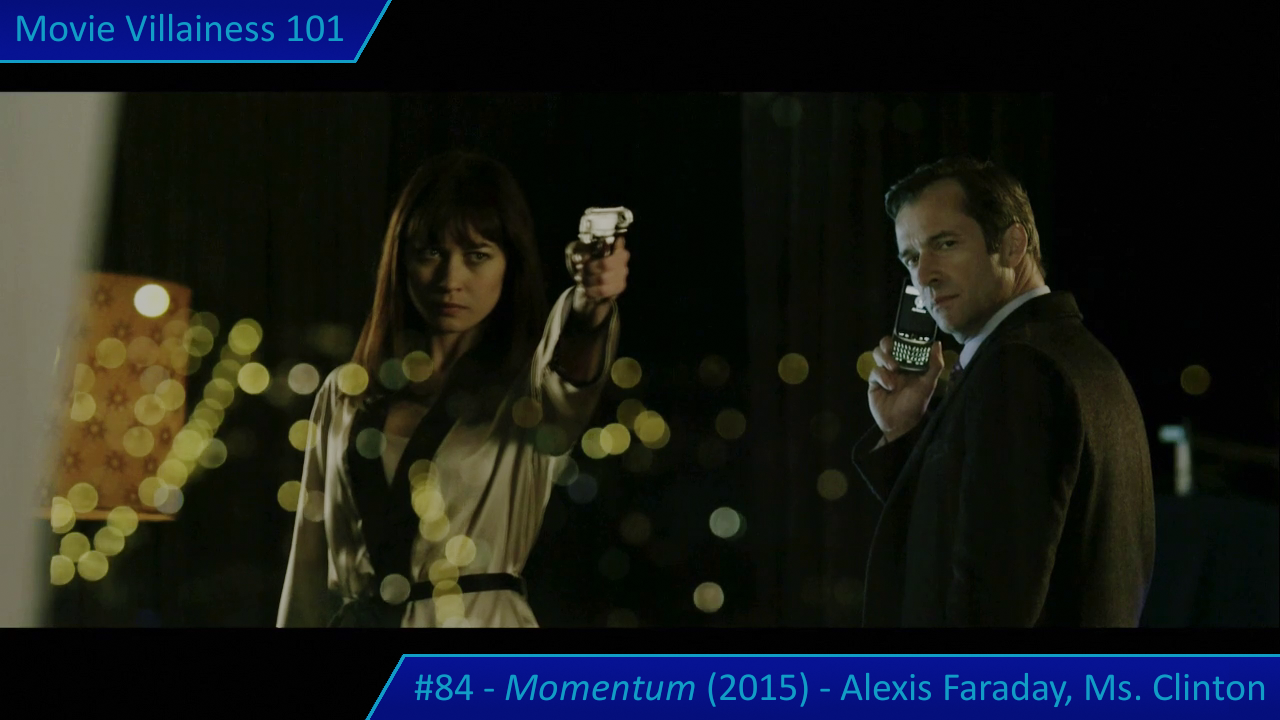
Alexis Faraday (Olga Kurylenko)

The protagonist is a professional thief, and straight from the outset, it’s clear she’s not a woman to mess with. Make that person, because the armed robbers are masked during the opening bank heist in Cape Town, South Africa.

The crooks wear sleek black outfits with body armour and voice modulators. Those conveniently light up in different colours, so we can tell the four apart. In one bizarre moment, a drugged-up robber quotes Dirty Harry to a terrified security guard while sounding like a robot.

The voice distortion and form-concealing outfit might fool the hostages into thinking the heist crew are all male. But anyone who’s read the blurb in advance or seen this trick before (most viewers, I suspect) won’t be deceived. But we still get an awesome reveal moment after the crazy robber shoots it out with Alex and her mask comes off in the struggle.

While the protagonist has a moral compass (no killing innocents), she is ruthless. When the bank manager doesn’t cooperate, she punches out his tooth, then forcibly re-inserts it to bypass a biometric security lock. And Alex has no problem executing her treacherous crew member, even if the lunatic had it coming.

Olga Kurylenko as a tough girl with a mysterious past? Familiar territory by now, but the actress plays these parts well, which explains why producers keep casting her.

Villainess

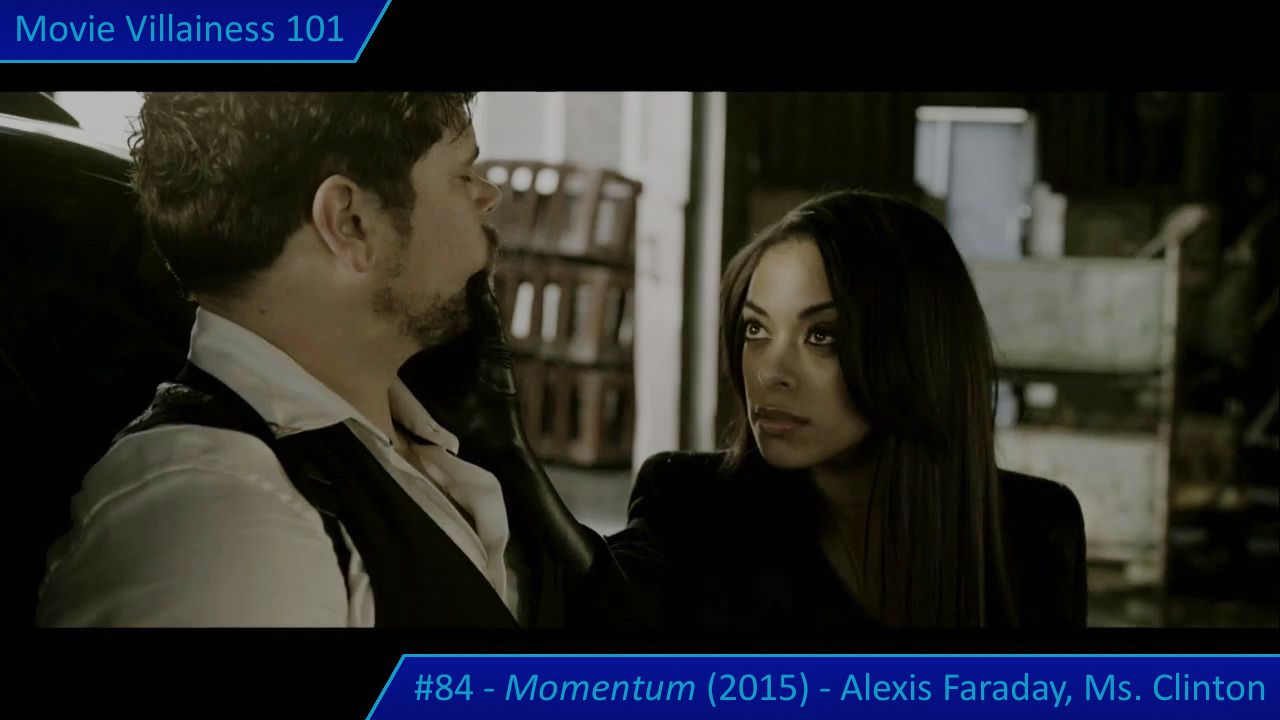
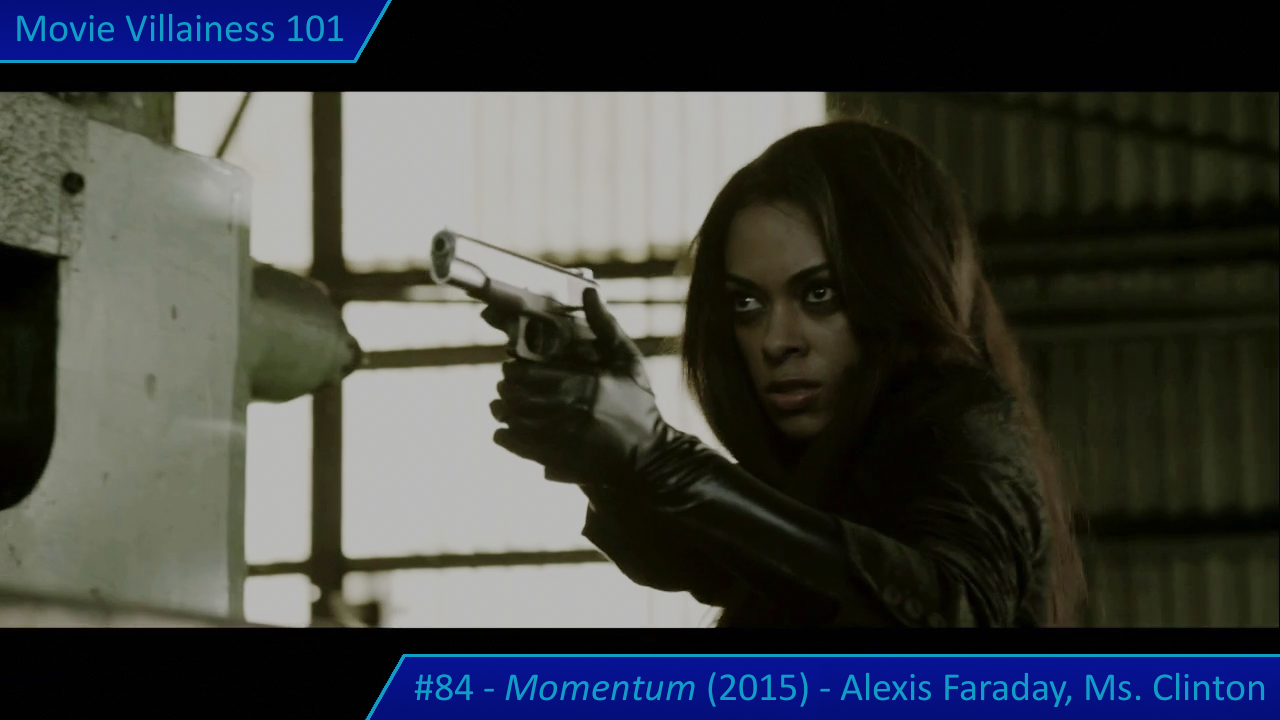
Ms Clinton (Shelley Nicole)

The villains are “cleaners” (translation: professional killers) employed by an unnamed senator. The big bad is played by Morgan Freeman, who always seems to be cast as a politician. James Purefoy is the evil Brit (there had to be one) and the antagonist with the most screen time.

His character is Mr Washington, whose team includes the equally ruthless Mr Jefferson, Mr Monroe and Ms Clinton. These are either code names based on former US presidents or one amazing coincidence. Since Clinton is female and the film predates 2016, perhaps the filmmakers assumed a certain woman would become president, which seems presumptuous now.

Clinton is a skilled fighter who kickboxes Alex’s partner into submission. The bad guys want a data drive stolen during the heist, which holds vital information about the Senator’s plans. After Washington’s crew torture the poor guy to death, Alex retrieves the MacGuffin and goes on the run.

Somewhat refreshingly, Ms Clinton is more professional than sadistic. Mostly calm, with the occasional smile and snarky comment to suggest she enjoys her work. Like the other cleaners, she’s a competent operative. Alex often evades the opposition through ingenuity, rather than their being hopeless.

However, the expected confrontation between the two women never transpires. The climax – in an airport terminal – has the crippled Alex outsmarting the villains by detonating a bomb. A risky move, but the security staff identifies Clinton as the threat. Probably because she strikes first and beats them up while Alex grapples with Mr Washington.

The cleaners are difficult to kill. Before this point, the baddies have survived explosions, a knife to the back, and stab wounds. So the outnumbered Ms Clinton was never going down easy. She takes out several men despite starting the fight unarmed. Until a more sensible guard shoots her. Yes, that’s right – killed by an unnamed character. Original, perhaps, but unrewarding.

As for Alex, she outsmarts Mr Washington and makes a memorable anti-heroine. Too bad the movie failed at the box office, and the sequel setup – with the senator still at large – will probably remain unresolved.

Honourable Mentions: Professional Killers

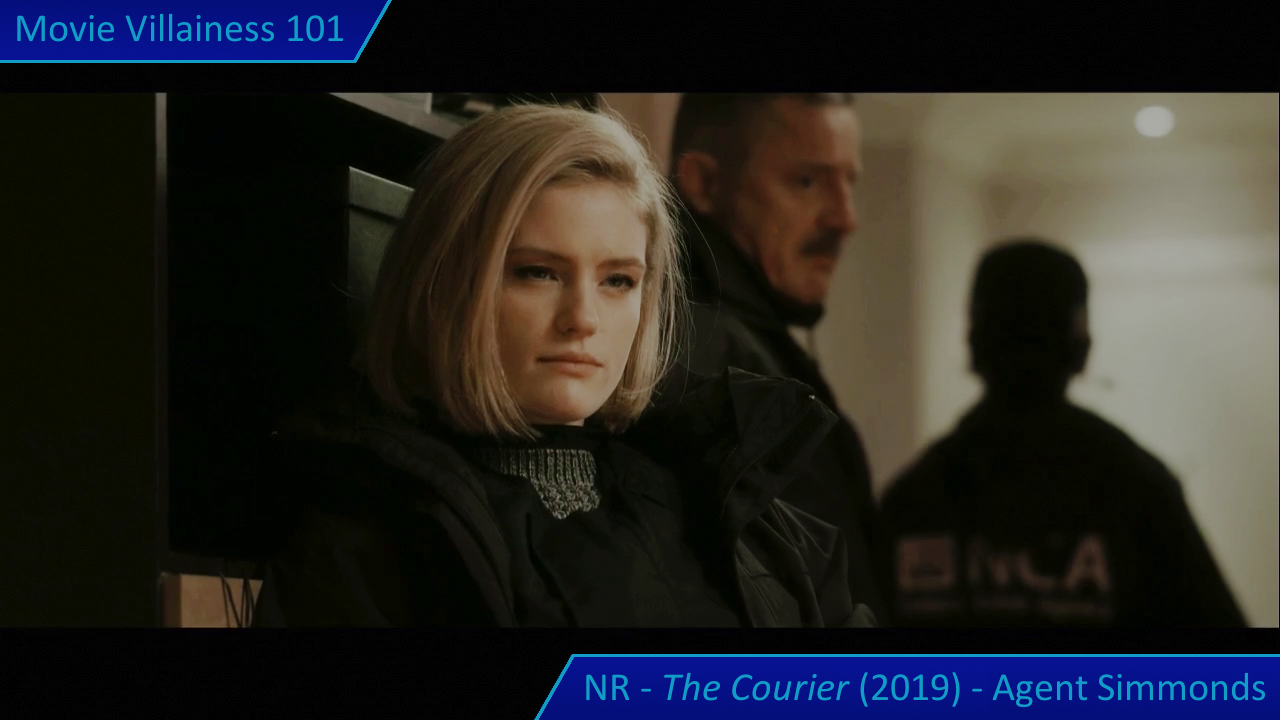
The Courier (2019) – Agent Simmonds (Alicia Agneson)

Olga Kurylenko has made a name for herself as an action star. In this movie she’s a motorcycle courier with – yes, you guessed it – a mysterious past. Mostly set in London, the story begins when she delivers a package to a safe house. Bad move, since it’s a disguised cyanide dispersal device. Say goodbye to a key witness.

As in Momentum, the main villain directs his business from overseas. Gary Oldman is the big-name baddie: a criminal boss sporting an eyepatch. His inside woman is Simmonds, a corrupt Interpol agent who murders her colleagues for financial gain.

Despite being fourth on the credits, Alicia Agneson’s character dies in the first twenty minutes. Presumably, her prominent position is because she has multiple dialogue lines in a movie where most characters don’t speak. Before the villainess leaves us, she shoots the courier (and stupidly assumes she’s dead), gets her ass kicked in retaliation, and ends up on the losing side.

A disappointment, but the treacherous agent looked fantastic in a gas mask.

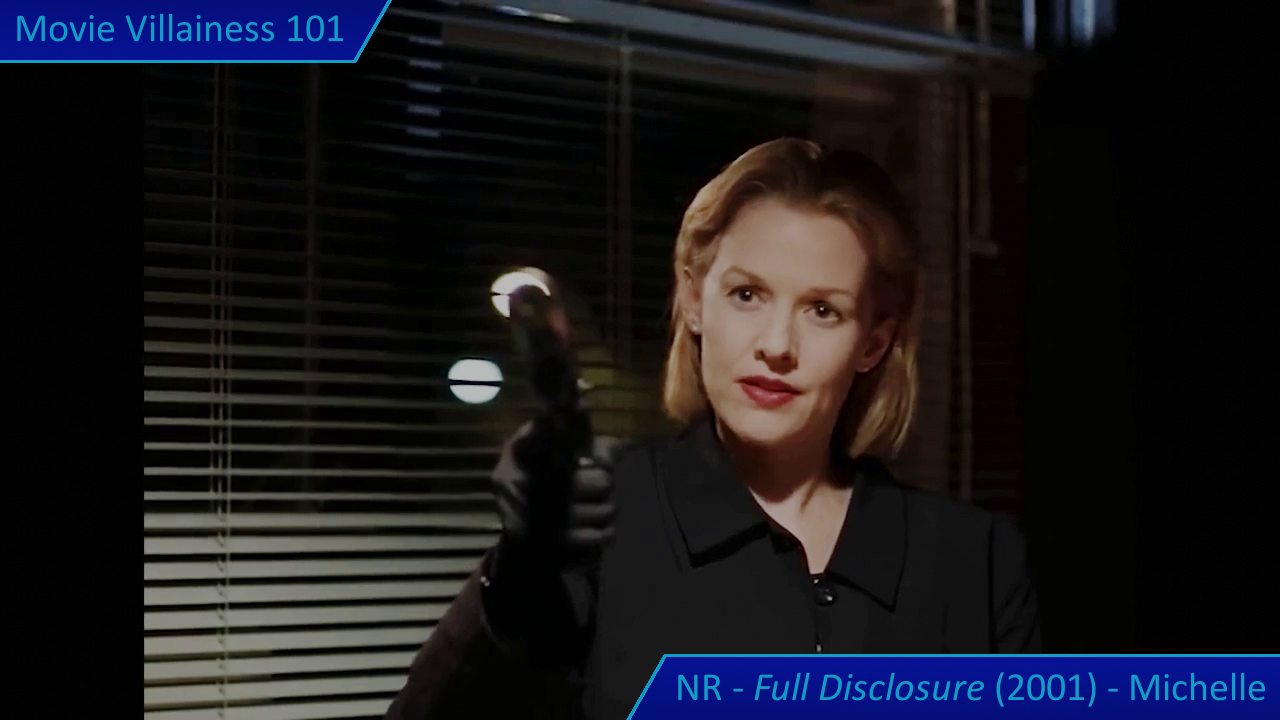
Full Disclosure (2001) – Michelle (Penelope Ann Miller)

Michelle is a secondary character, but still features prominently on the movie poster. Why? The ruthless and efficient hitwoman is the most interesting part of this dull political thriller.

Reporter John McWhirter (Fred Ward) investigates the murder of a prominent businessman. The muddled conspiracy surrounding his death leads to many encounters with recognisable B-movie actors. Christopher Plummer’s FBI boss is the definition of shady. Rachel Ticotin is a Middle Eastern love interest, and Virginia Madsen has an extended cameo as John’s newspaper editor.

Plot elements go nowhere, notably the Algerians behind the assassination, who don’t feature at all in the second half. Before they disappear, they hire Michelle to tie up loose ends, which gives viewers something to get excited about. The blonde woman is a cold professional who murders and tortures people as if it’s normal. After she eliminates the assassins, John is next on the list.

Fortunately, the reporter has a secret hiding spot in his apartment, allowing his female guest to surprise Michelle. The disappointing duel has the assassin chase the woman, and John uses her own silenced pistol to kill her. Then some postmortem shots to remind us how great the character was.

Movie Villainess 101 Rank #85

This ruthless businesswoman is determined to kill the scandal

Movie

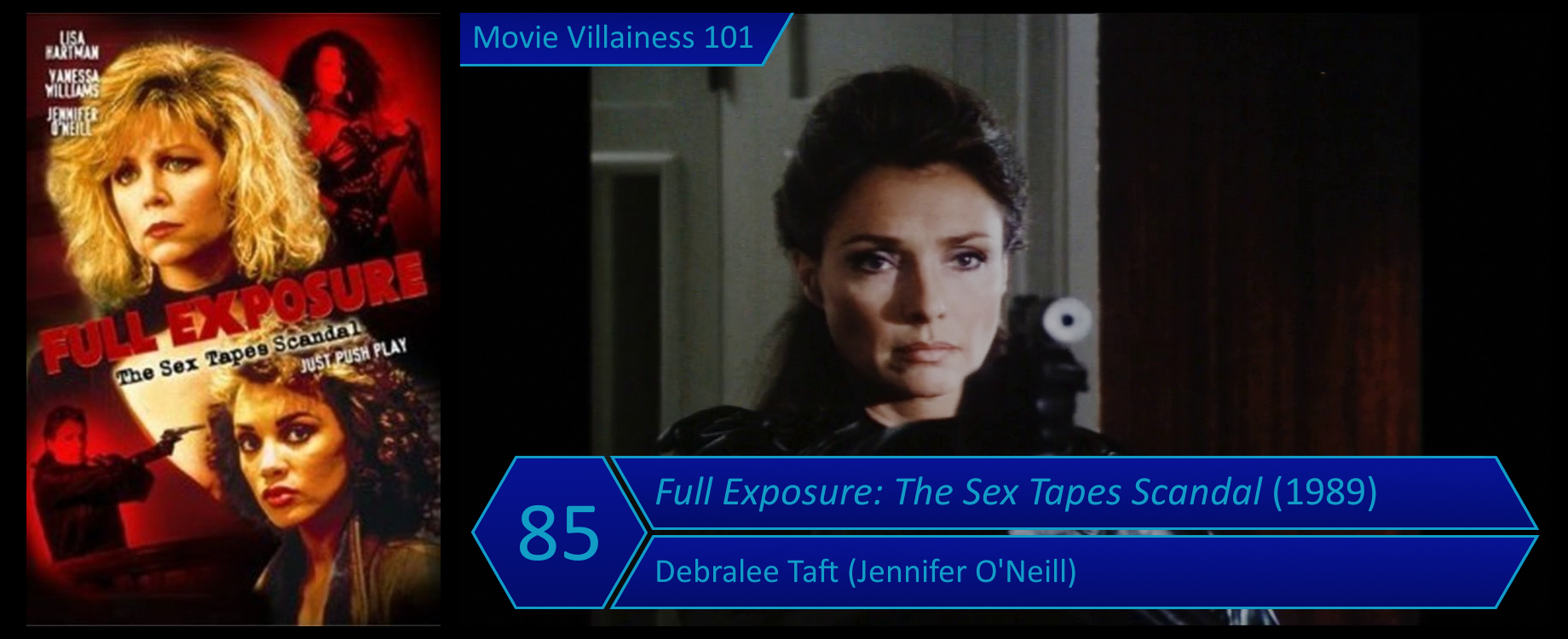
Full Exposure: The Sex Tapes Scandal (1989)

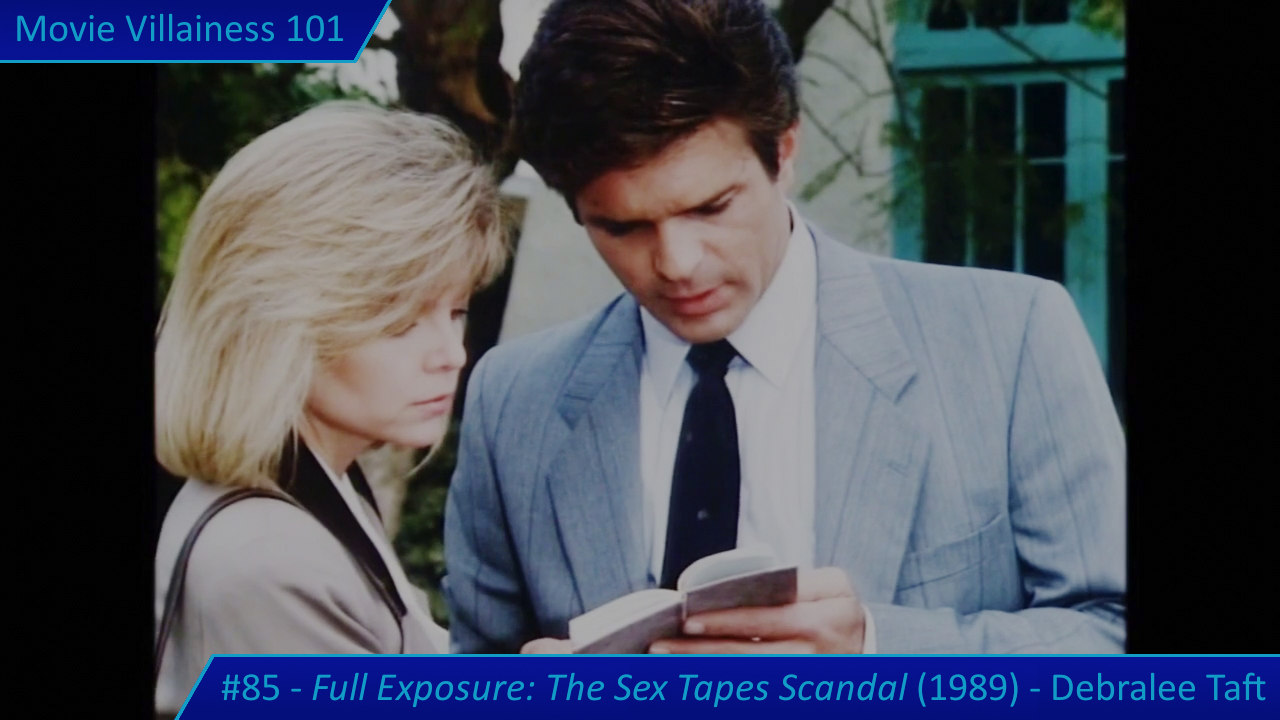
Don’t be dissuaded (or fooled) by the raunchy title. It may sound like a late-night softcore flick, but this is an NBC TV movie from the late 1980s. No nudity except rear shots of Lisa Hartman, though the film received an 18 certificate for its UK DVD release. One assumes the sex videos, which feature a dominatrix and whips, were enough to classify this as adult material.

A masked intruder murders a prostitute but flees when the flatmate returns earlier than expected. A stolen videotape gets left behind, and clearly contains footage someone is prepared to kill for. The foolish witness isn’t deterred by dead bodies and auctions the tape with the help of an adult film producer. Powerful men would prefer to keep their kinky private lives secret, so it’s a lucrative if dangerous play.

While two bidders are prepared to pay over $100,000 (a lot of money in 1989), the leather-clad, masked killer prefers more direct methods. The intruder gatecrashes the auction and wastes the competition with a shotgun. Great stuff, although violent for TV, and another potential reason for the age rating.

Duplicate tape recovered, but there’s still a copy out there, plus loose ends for the shooter to deal with. The two main characters, Lieutenant Thompson and rookie DA Sarah Dutton, must solve the murders, but find their investigation obstructed by an obviously corrupt police chief and judge. Are they on the tape by any chance?

Villainess

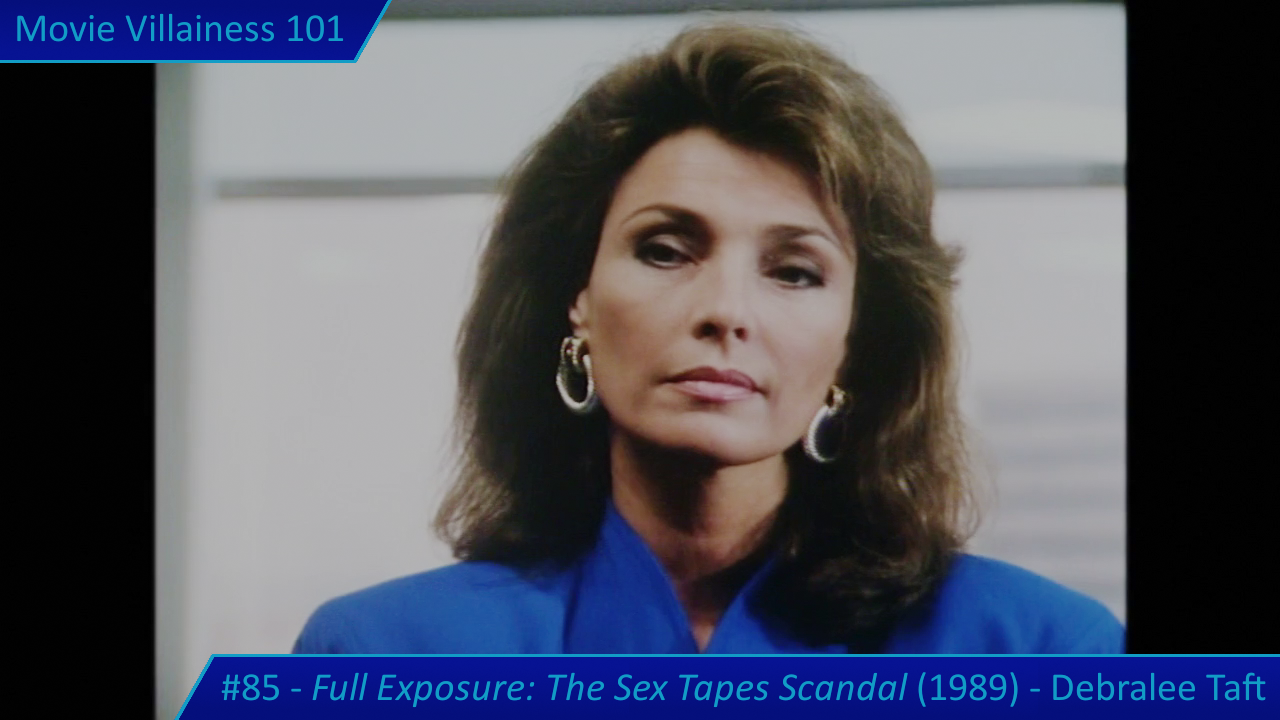
Debralee Taft (Jennifer O’Neill)

The investigators soon discover a connection between the dead prostitute and a modelling agency run by Debralee Taft. Since an unnamed bidder was absent from the auction massacre, it’s easy to infer Debralee is the culprit or somehow involved. She claims to be a legitimate businesswoman, but her evasive answers to Thompson’s questions – and a hulking bodyguard named Earl – suggest she’s hiding something. After an undercover policewoman is killed on her way to Debralee’s office, Thompson agrees to Sarah’s plan to pose as a model.

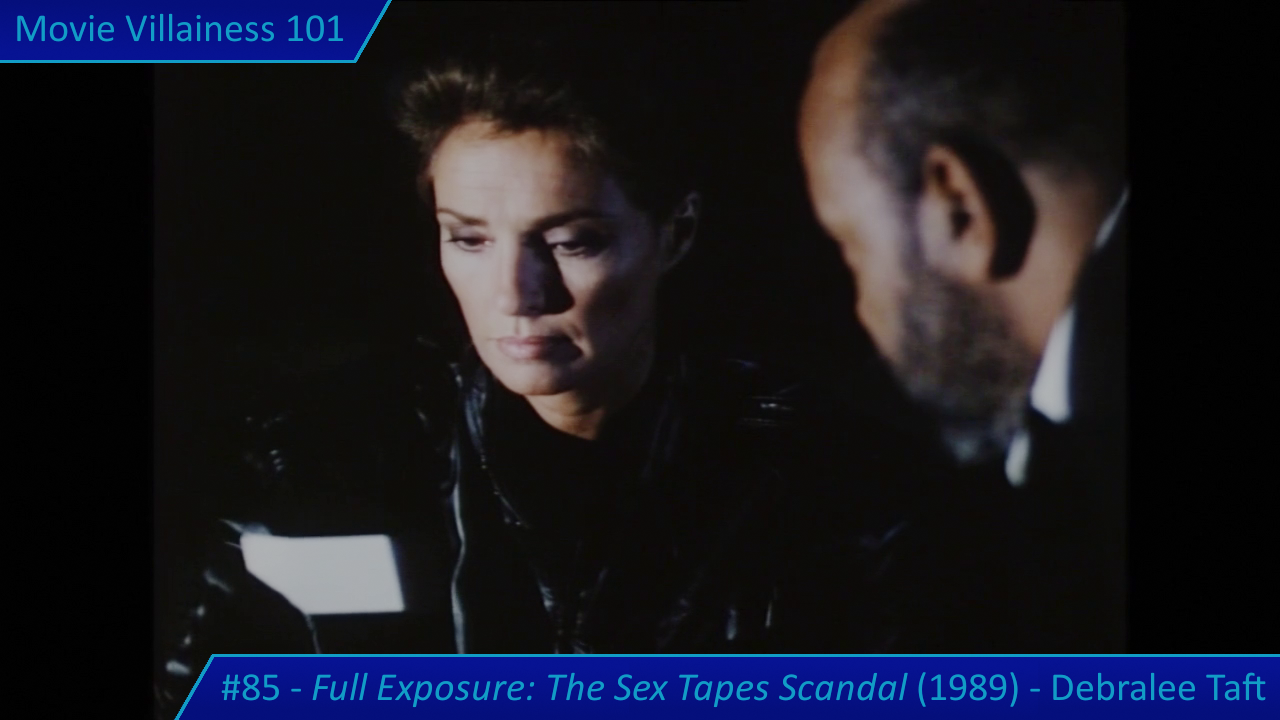
Debralee makes the list because she’s an unusual villainess. Instead of a typical psycho, this is a scheming businesswoman quite prepared to kill people herself. Jennifer O’Neill brings gravity to her performance, leading to a foreshadowed but welcome reveal in the last twenty minutes. The greedy flatmate gets shot with a silenced pistol, and the murderess in black leather goes after Sarah, who now has the all-important tape.

Sarah’s house is the setting for the showdown with Debralee and Earl. While never explicitly confirmed through dialogue, it’s likely Debralee committed the murders since her black jacket matches the killer’s. Earl has a shotgun, but voiced his objection to the killing spree. The predictable outcome sees the bodyguard shot by Thompson and Sarah cornered by the homicidal villainess. There’s a distraction, a chase where she fires a few shots, and a last-moment rescue by the hero.

Honourable Mentions: TV Movies

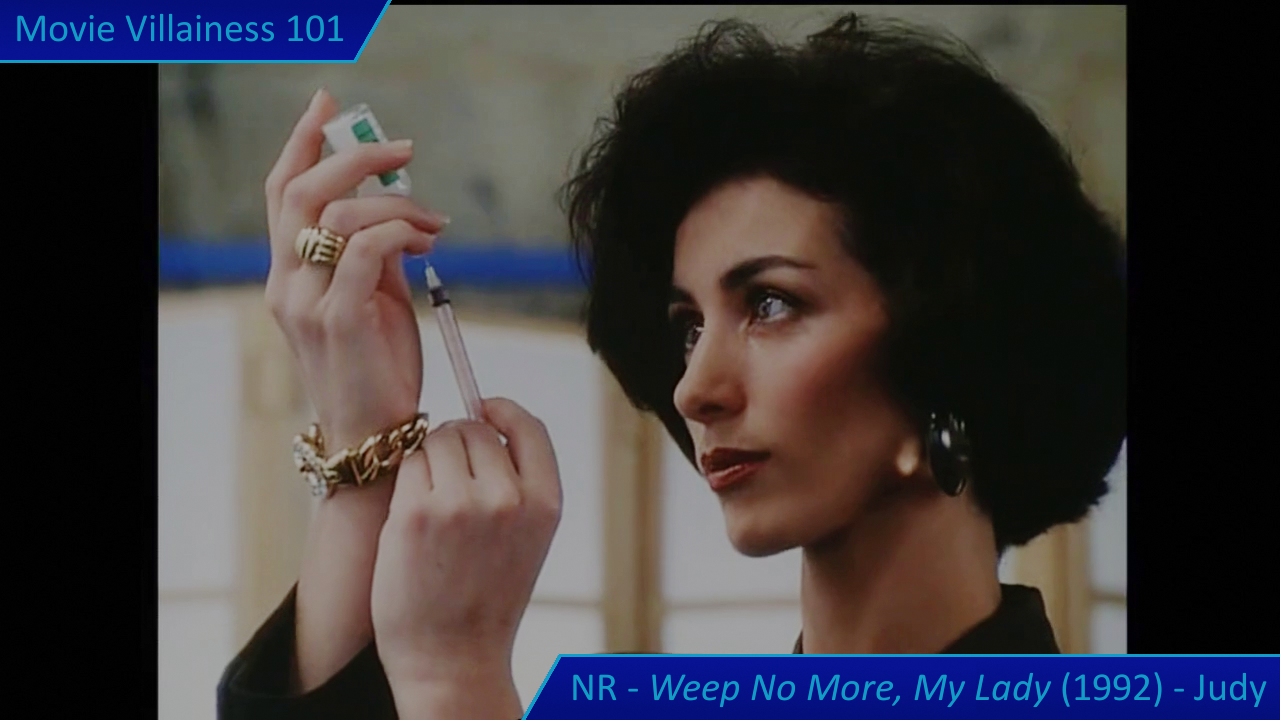
Weep No More, My Lady (1992) – Judy (Cécile Paoli)

This TV movie has imaginative murders and a mystery killer who wears two different masked outfits, but the pacing is ponderous, with all the exciting bits saved for the last half hour. The story, based on a novel by Mary Higgins Clark, is set in a Parisian chateau. So it’s strange that a Japanese theme runs throughout, right from the opening credits that include animated images of kendo fighters.

The main plot is rudimentary, and annoying side characters help stretch the runtime to ninety minutes. An actress named Leila (Francesca Annis) is driven mad by creepy phone calls, which strains her relationship with sister Elisabeth (Kristin Scott Thomas) and husband Ted. Leila has vocal arguments with her family in public, so when a scuba diver drowns her in a nearby lake, everyone assumes she’s run away. Except for Elisabeth, who’s determined to uncover the truth.

After the slow opening act, there’s a tense sequence where the kendo-masked killer eliminates a female assistant with a bow and arrow. The murderess then reveals herself – and a typical jealous lover motive – to a nosy guest too inquisitive for her own good.

Elisabeth replaces her dead sister in a movie production, and Judy takes a stunt diver’s place to make one last attempt on the heroine’s life. The killer dons a scuba mask as dramatic music plays, but what should be an exciting climax is a total dud. Gloomy underwater action shots, and a pathetic resolution where the film director saves Elisabeth.

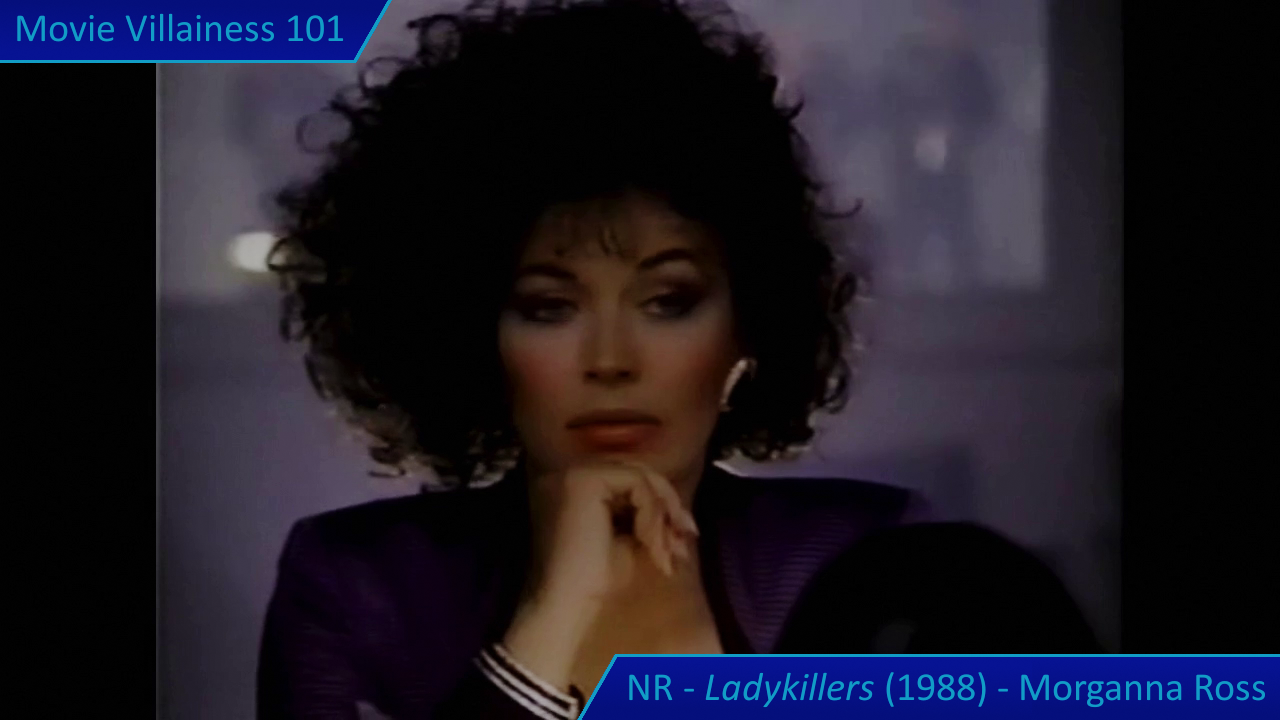
Ladykillers (1988) – Morganna Ross (Lesley-Anne Down)

This TV movie from the late 80s is difficult to find, so my review is based on an average quality broadcast scan with mediocre sound. The novel scenario takes a well-worn premise and gender-flips it. A mysterious blonde-wigged assailant slashes a male stripper while he’s performing on stage at Ladykillers nightclub. Forensics have a hard time identifying the murder weapon, which turns out to be an artist’s tool used for sign painting.

Lieutenant Flannery (Marilu Henner) is a tough homicide cop, and an early scene has a female PR agent sneak up on a showering man and pretend to strangle him with a scarf. In this movie, it’s women in charge and the males who get topless. This includes a mass strip scene at the police station when Flannery and club owner Morganna audition detectives to go undercover as a dancer.

After a near miss when the slasher almost kills a second stripper, an ex-prostitute gives Flannery a crucial lead. In an original turn of events, the heroine rushes to save her boyfriend. Morganna is revealed as the murderer, and the struggle in a burning lounge is above average for a TV thriller. Furniture gets knocked over as the two women wrestle, then the villainess gets the standard “tossed through a window” treatment.