Movie Villainess 101 Rank #95

This all-American girl is a fraud – and a real killer

Movie

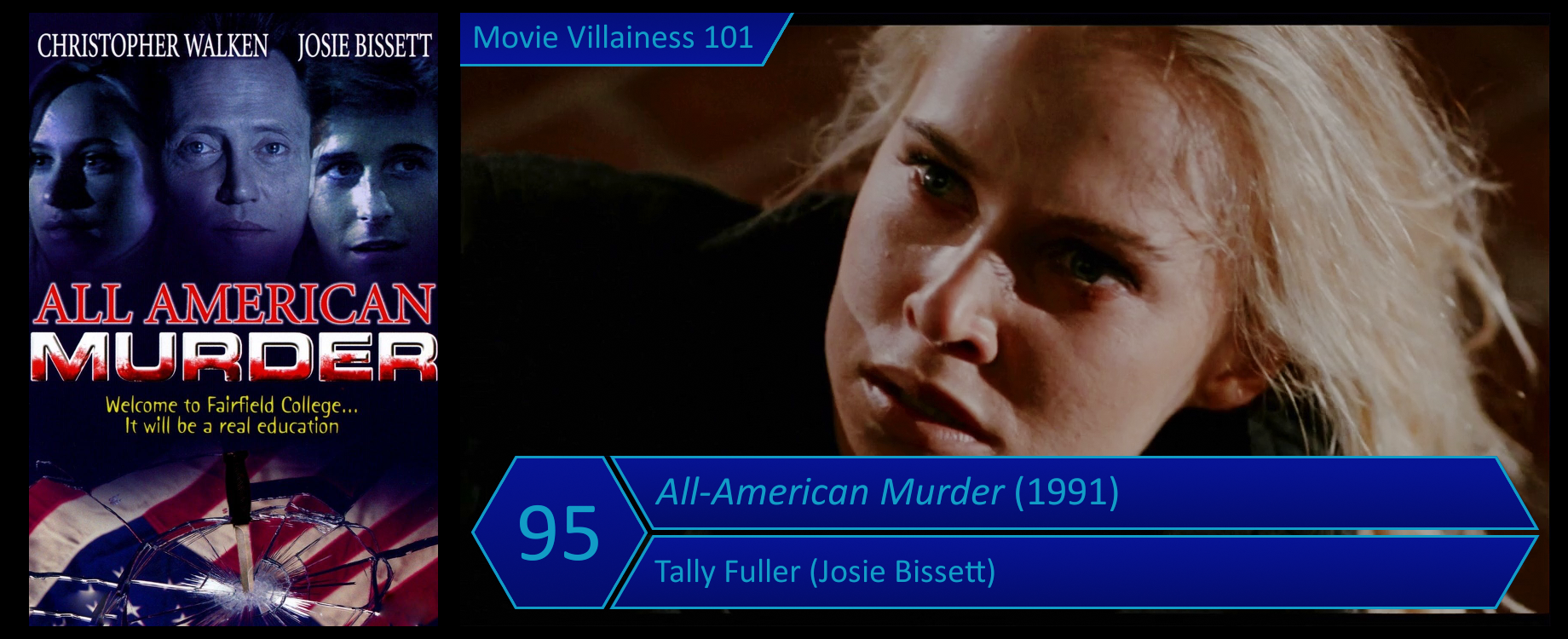
All-American Murder (1991)

Murder mysteries are tricky to cover as the villainess is not usually revealed until the end, so making the 101 list requires original elements, a great reveal, or a very entertaining movie. The main character of this darkly comic tale is Artie Logan (Charlie Schlatter), a social misfit with a long track record of getting kicked out of academic institutions. When he transfers to Fairfield College, people are naturally wary. Except for the dean’s flirty wife, who quickly invites the newcomer into her bed.
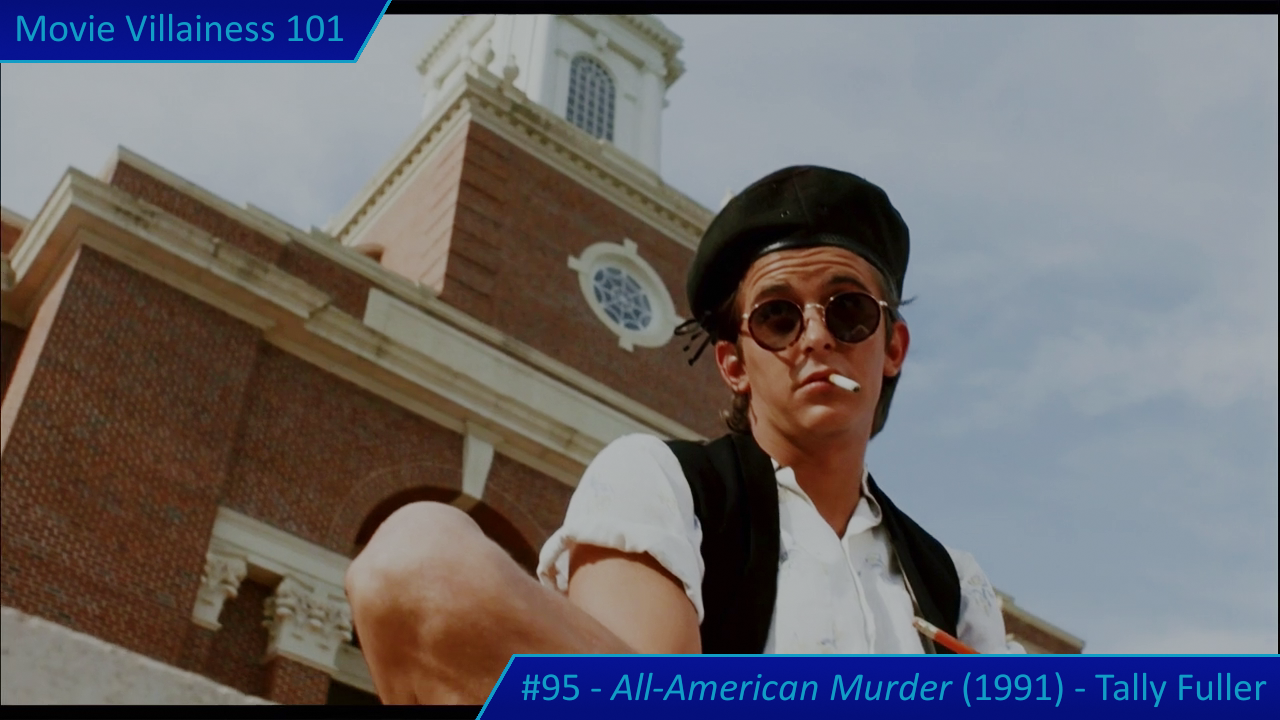
Artie’s life changes for the better when he meets Tally Fuller, who’s possibly the ideal woman. Smart, attractive, respected, a star cheerleader on the team – all-American qualities to be sure. Artie and Tally soon become romantically involved, go on dates, and even share a spooky love scene in a graveyard. Their bliss was never going to last, though, considering the movie title. Sure enough, Tally is burned alive and thrown over a balcony while Artie looks on.

At least we’re supposed to think it’s Tally, but savvy mystery buffs will know that when corpses are charred beyond recognition, there’s a good chance the dead person is somebody else. Which means the final act twist is not hard to guess if you have experience with murder mysteries. But before the “surprise” ending, we get an entertaining thriller, with more victims along the way.
The lead detective is P.J. Decker, played by Christopher Walken. In a major surprise, he’s not the villain. Decker is unorthodox in his methods, as he ably shows when he provokes a criminal into violence and fires a disabling gunshot into the man’s knee. Luckily for Artie, Decker believes his innocence plea and gives him twenty-four hours to prove it. Time for amateur detective work on campus, as Decker constantly turns up and reminds Artie how much time remains.

Villainess

Tally Fuller (Josie Bissett)
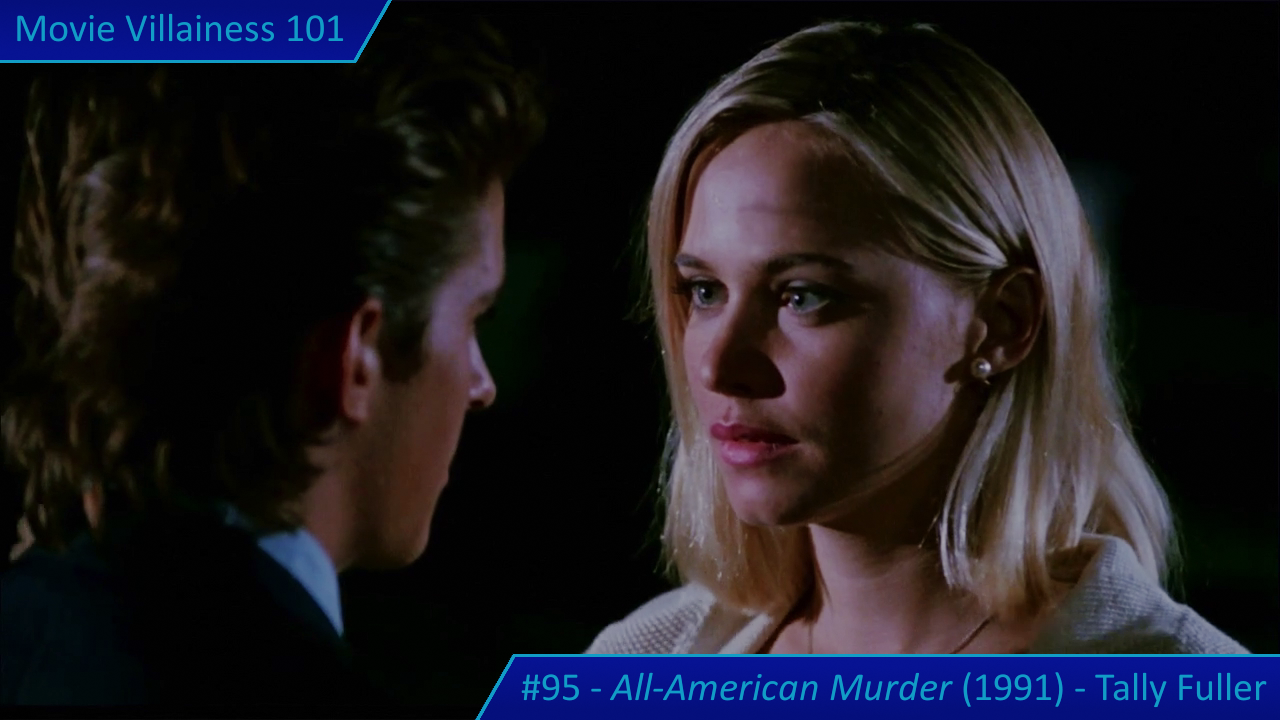
What makes Tally more interesting than most villains, and my reason for including her on the ranking list, is the backstory that unfolds as Artie digs into her past. The image of the perfect all-American girl is eroded over the course of the film, with Tally revealed to be a drug-taking shoplifter who slept with the dean and star football player to get ahead. Most notably, the hero uncovers a videotape of Tally blackballing Wendy (a student helping Artie) out of the sorority and encouraging her fellow pledges to follow suit.

There are plenty of red herrings, from Tally’s jealous boyfriend to the dean, who has many skeletons in his closet. And what mystery would be complete without a creepy janitor with a personal “shrine” to Tally in the basement? In the final half hour, the psychotic killer goes on a murder spree and whittles down the suspect list, racking up five victims before the denouement. This tests Decker’s patience, and the supportive cop becomes increasingly uncertain of Artie’s innocence.
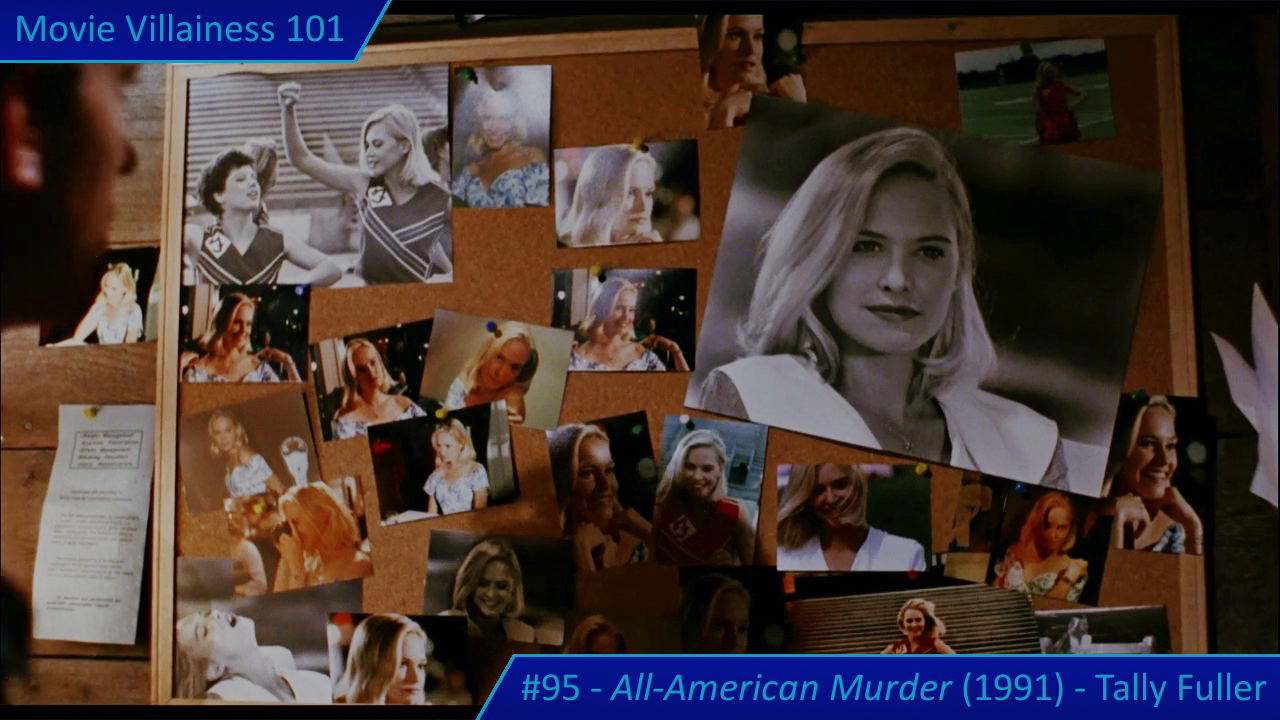
First to die is the janitor, who gets a drill bit through the forehead after Artie confronts him. Three more victims follow in quick succession to liven things up. The murder methods are creative, with the most bizarre involving a snake left in a car that poisons and strangles the dean’s wife. Not long after that, her equally unfortunate husband gets blown up with a hand grenade whilst working out. The scene where Artie discovers what’s left of the body, and Decker finally arrests the obvious suspect, is straight out of a gory horror movie.

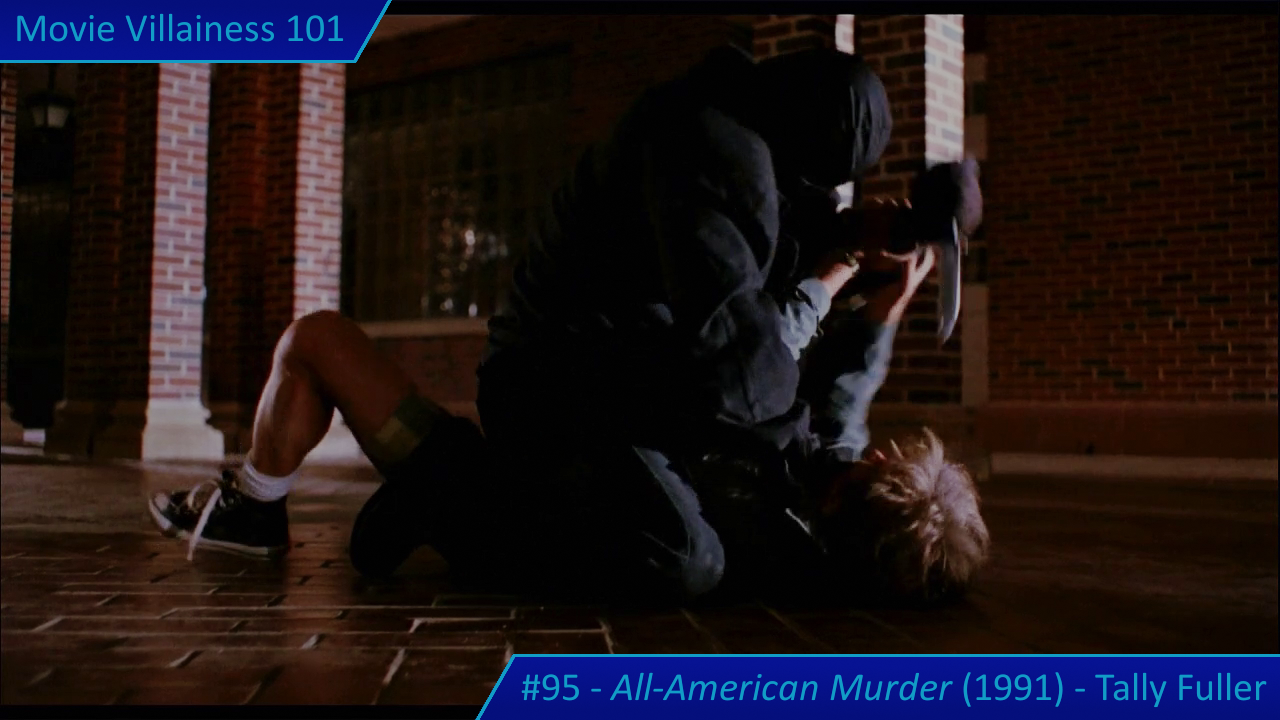
The ending is suitably climactic, with Wendy lured to a secluded location and attacked by the masked killer. Artie rushes to the rescue, but needs Decker to make a dramatic last-minute appearance to save him. Then the hero rips off the psycho’s mask, revealing the supposedly deceased Tally as the murderess. This part is a disappointment, as the unmasking, while on-screen, happens all too quickly.
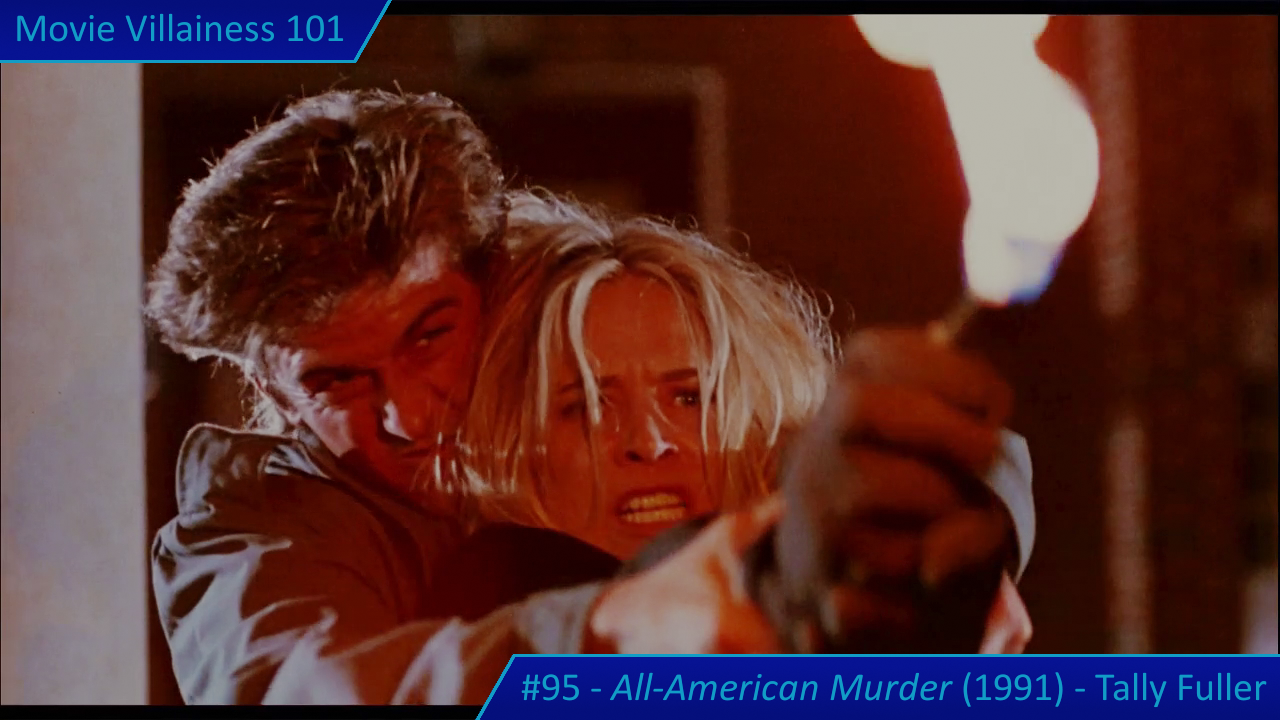
With the killer exposed, it’s time for her motive rant. Tally had grown tired of being prominent, so wanted to disappear, but first needed to “remove” those who knew about her shady past. Tally – not quite done yet – attacks Artie with a blowtorch as she’s being led away, but only burns her own face. Quite a karmic outcome, considering how Tally killed her double.

Honourable Mentions: Mystery Killers

Stringer (1992) – Sheila (Laura Reed)
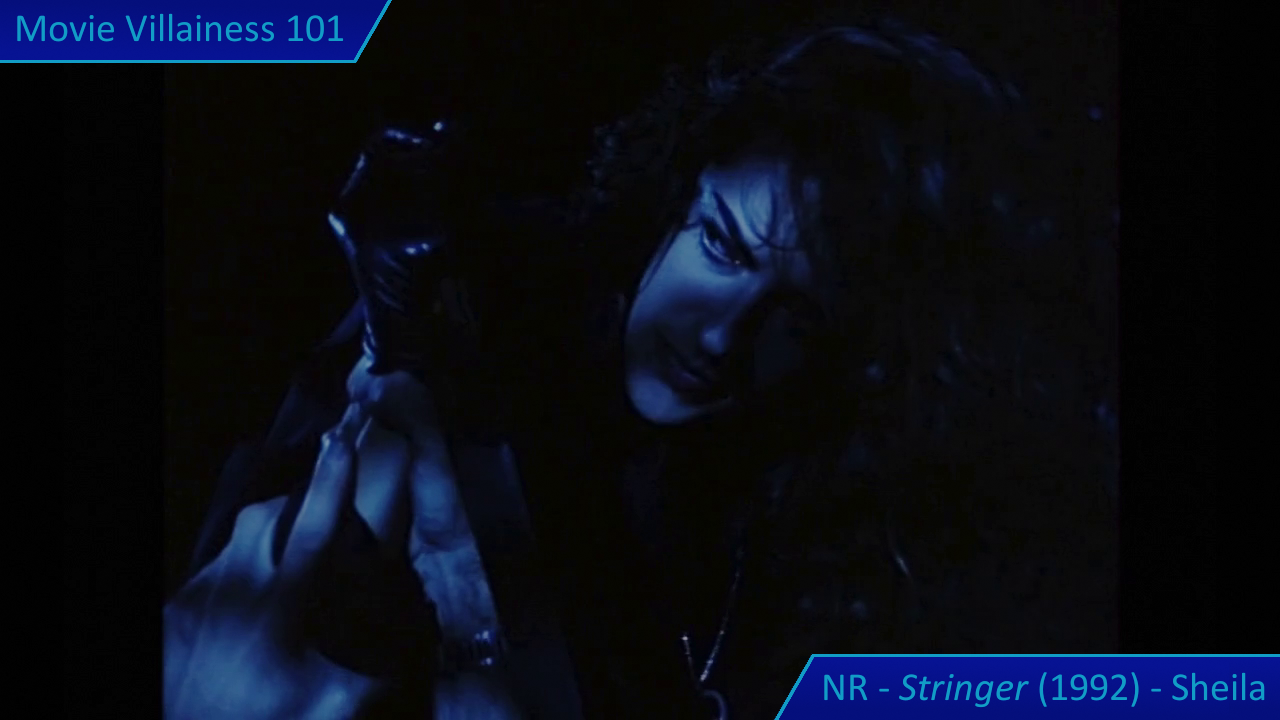
Released in the US as Prime Time Murder, this mystery thriller features an all too obvious culprit, but at least the setup is more interesting than usual. Frank Simmonetti (Anthony Finetti) is the titular stringer, a freelance video reporter who sells footage to local TV networks. Prepared to risk his life to settle his debts, Frank scares off a rookie partner who doesn’t enjoy being shot at. The “hero” has more success with Jack Mitchett (Tim Thomerson), an ex-cop not averse to dangerous action when the situation warrants it – such as confronting a shotgun-armed lunatic who’s convinced his hostage is an alien. Crazy intro? It’s that kind of movie.

Frank is determined to catch a serial killer who preys on homeless men and leaves poker chips by their bodies to signify moving on to a better life. Jack believes they’re hunting a “compassionate” psycho who murders out of remorse, so maybe Frank shouldn’t get too cosy with a charity worker named Sheila. Sally Kirkland has an extended cameo as a network editor, and suspicion falls on local beat cops who seem to hang around murder scenes. But there aren’t many suspects, and Sheila is the only person who fits the profile.

After Jack gets attacked during a sting operation, Frank searches old videotapes for clues. Evicted and without his partner’s support, he turns to Sheila for help. Since the person the hero trusts most is usually the killer in these films, it’s no surprise Frank finds a recording of a shadowy figure wearing a telltale necklace. Sheila arrives and does the standard psycho routine: a crazed explanation before she stabs Frank in the chest. Then, the murderer cuts the phone line before her victim can raise the alarm.

The ending is worth waiting for – or at least fast-forwarding to – with Sheila and Frank in a prolonged struggle on the floor. She’s on top holding a knife, while the wounded hero struggles to fend her off. Eventually, he knocks Sheila out and tosses away the weapon, but she comes back for another try when Frank makes it to the door. Then another cop shows up to finish the villainess off.

Whisper Kill (1988) – Winifred Rogers (June Lockhart)
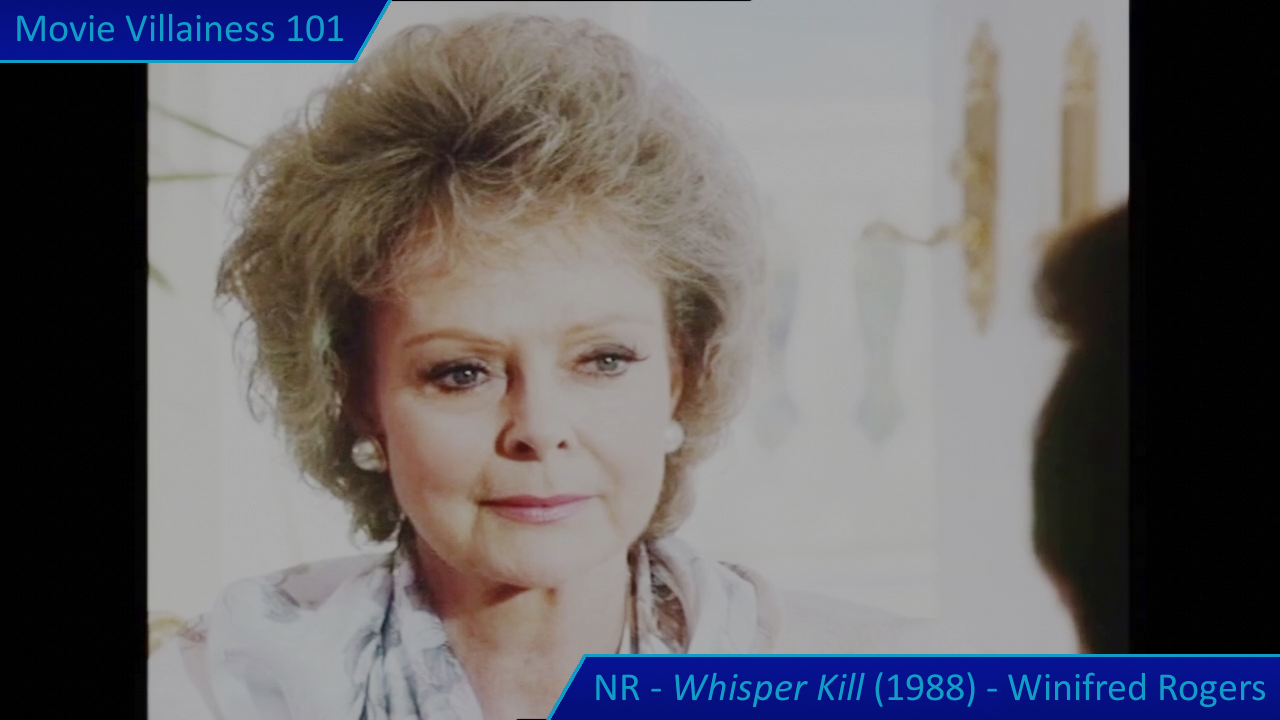
Another mystery thriller with an interesting premise that elevates it above usual TV movie fare, Whisper Kill is about a serial killer who telephones their victims before they commit the murders. The main characters are newspaper reporters Dan Walker and Liz Bartlett, played by Joe Penny and Loni Anderson. After two men are stabbed, the hero establishes a connection between the victims and Liz, which makes her the prime suspect. Of course, that doesn’t stop Dan from getting involved with a beautiful woman.

The ongoing whispered threats and murder scenes are the highlights, as the masked killer strikes in dark locations. The first victim is attacked after his sabotaged car breaks down, another dies near a phone booth in a park (probably the best kill of the bunch), and a sting operation goes horribly wrong when a third male receives the familiar back seat killer treatment.

There’s an interesting subplot where Dan and Liz use phones at the same time the whisperer makes a call. But obvious people are rarely guilty in TV mysteries, and the “least likely culprit” rule applies. The murderer turns out to be Liz’s mother, Winifred Rogers. Her motive is nuts, some nonsense about shielding Liz against the men in her life. Think your solution might be a tad extreme, Mom.

The anticlimax has the killer ditch her black outfit, gloves, and ski mask (for no apparent reason), and target Dan while wearing a blonde wig – all to fool him into thinking she’s Liz. This seems pointless if Winnie planned to kill the reporter anyway and is arguably a lame excuse to trick viewers. We get a brief shootout as the local police chief comes to Dan’s rescue… and that’s it. Someday we’ll get a great masked killer and reveal, but this is another letdown.
Movie Villainess 101 Rank #96

Actually, it’s the new acquaintance that could prove to be fatal

Movie

Fatal Reunion (2005)

I wanted my list to be as inclusive as possible, so I’ve included several Lifetime movies, with Fatal Reunion being the lowest ranked. Technically, these films are independently produced, but I’m referring to female-driven made-for-TV flicks as “Lifetime movies” because it’s a lot easier and tidier to write.

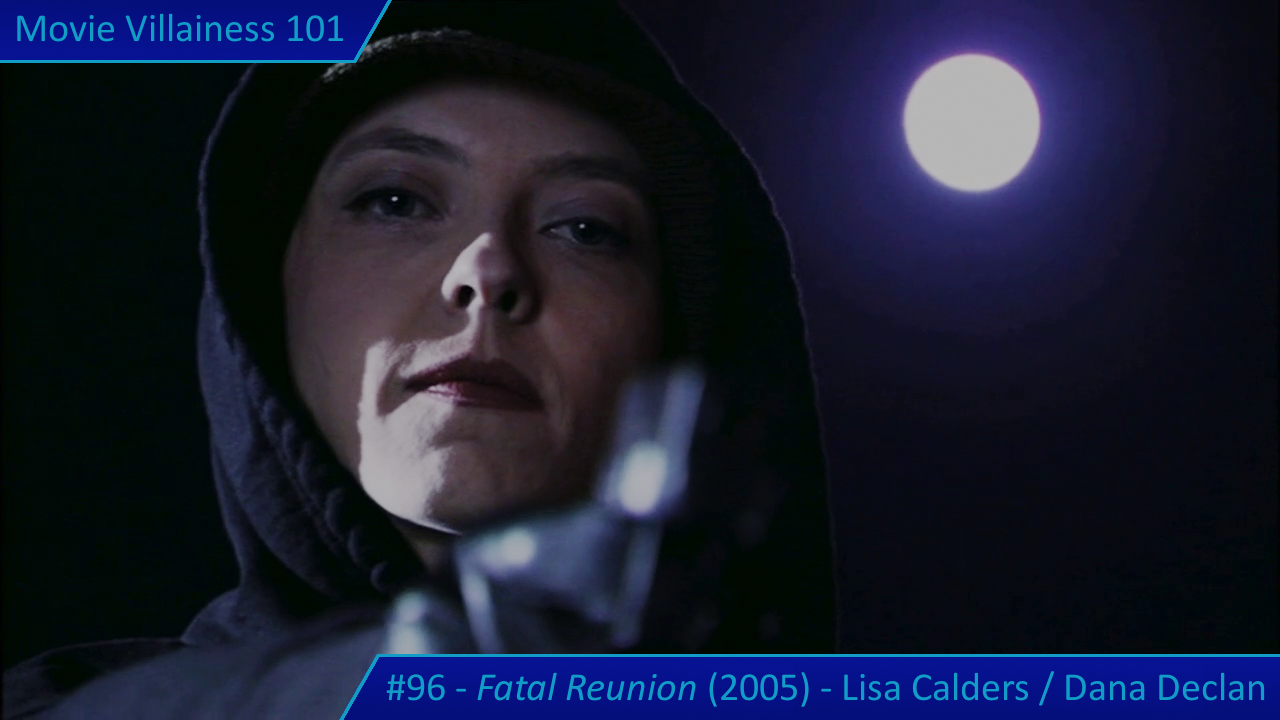
As is usual for this genre, there’s an opening murder sequence with a mysterious figure in a black hooded outfit offing some poor woman. So, nothing too original to start with. After that, we’re introduced to the main character, Jessica, played by Erika Eleniak (which satisfies the casting requirement of a well-known B-movie actress as the lead).

Jessica is unhappily married (surprise!), and believes her husband, Russell, may be cheating. So – in typical double-standard fashion – Jessica reaches out to old classmate Marcus Declan via an online reunion site. Anyone who’s ever seen a Lifetime movie will know such situations never end well, and it isn’t long before Marcus comes on to Jessica. After she rejects him, Jessica receives harassing phone calls in the middle of the night.

Fatal Reunion is a slow-burner, with hardly any interesting scenes in the first two acts. The director’s weird scene transitions don’t help. For some inexplicable reason, the camera pans off to the side, often to uninteresting background props or up towards the sky. We’re talking about almost every interlude here, which becomes flat out annoying.

Rare standout moments include Jessica pole fighting with a harsh instructor (which will obviously become important later) and finding herself on the wrong end of a loaded crossbow. Someone poisons the family dog, and the protagonist’s two children get completely forgotten about. But things pick up towards the final act, and the exciting, drawn-out climax is my main reason for ranking this movie.

Villainess

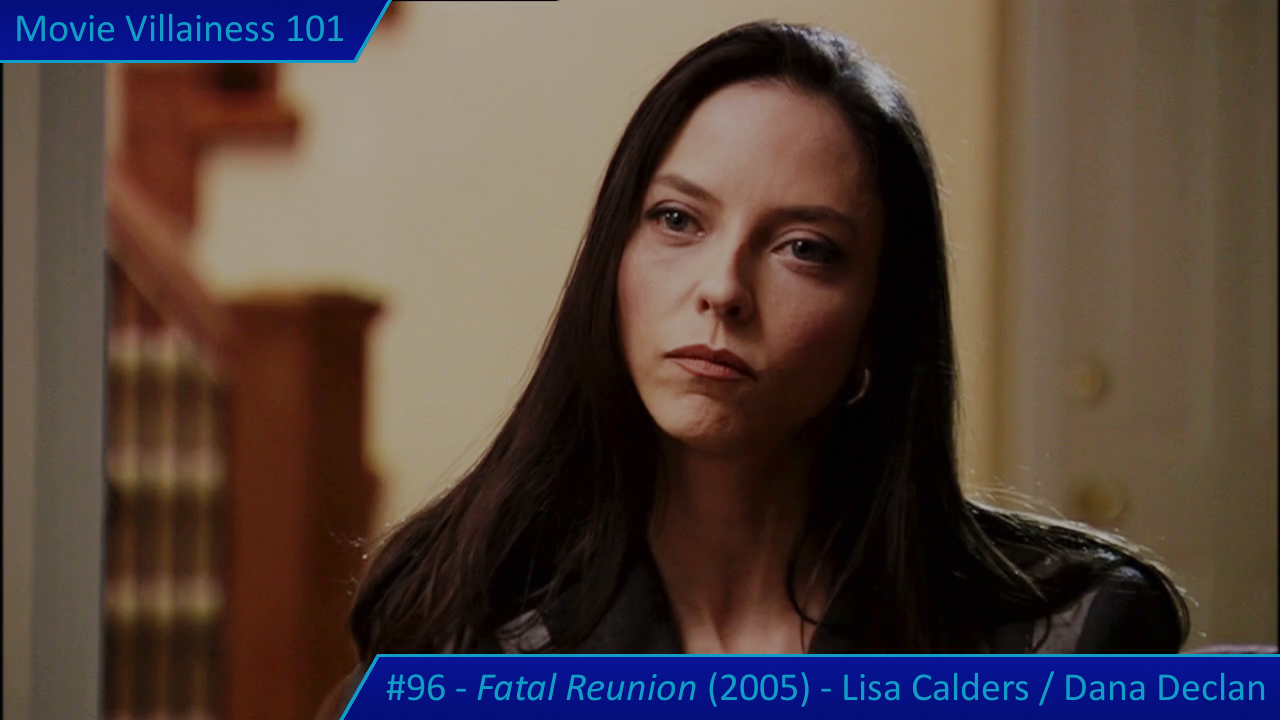
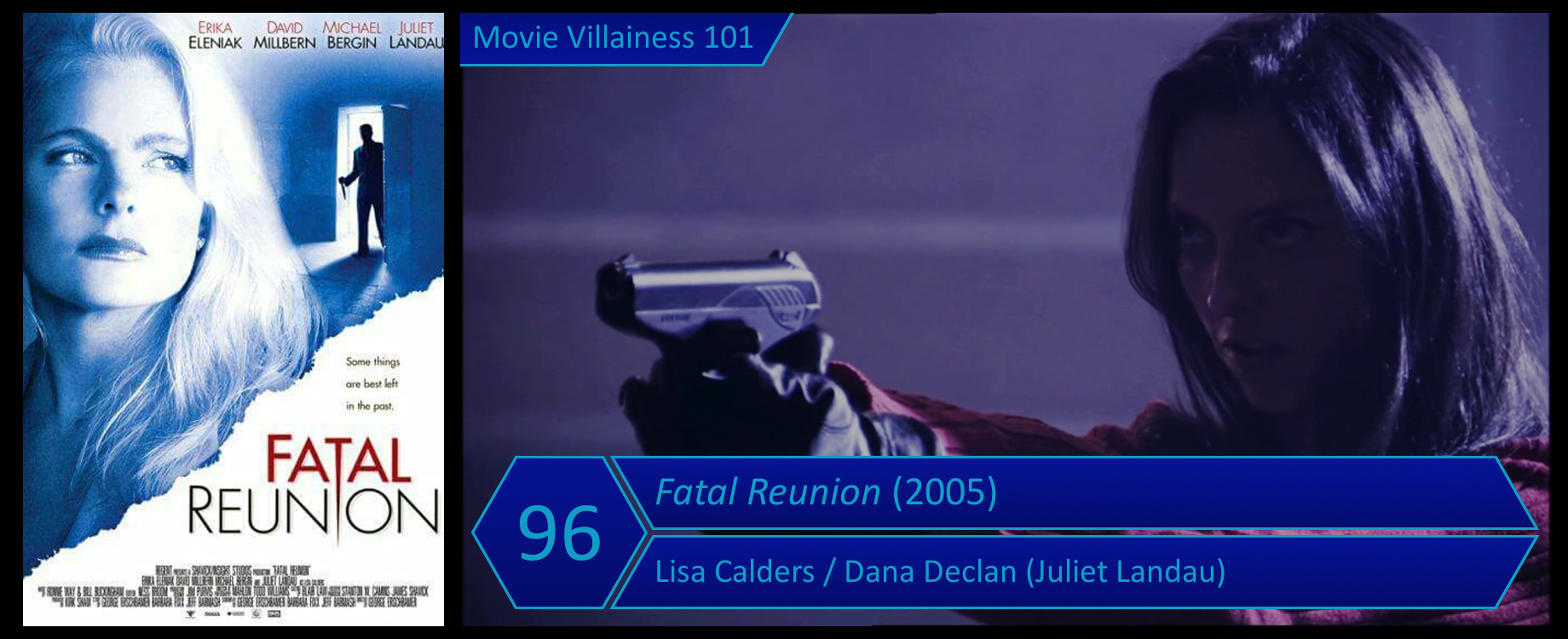
Lisa Calders / Dana Declan (Juliet Landau)

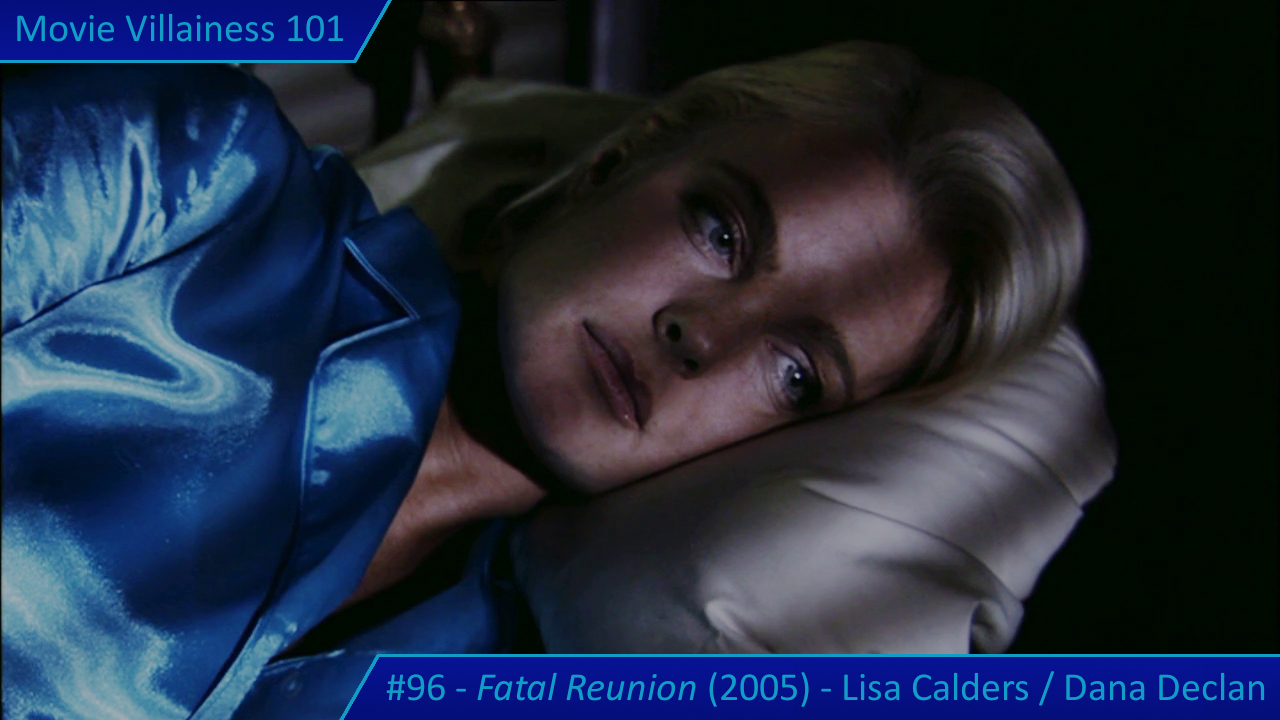
It’s not until approximately the sixty-minute mark that we’re introduced to the real killer. A brunette stranger shows up at Jessica’s house and introduces herself as Lisa Calders, an attorney from Dallas, Texas. Intelligent viewers may peg “Lisa” as the villainess from the moment she walks on screen, given we’ve never seen the stalker’s face and the newcomer’s Southern US accent is creepy enough to arouse suspicion. But Jessica and her husband Russell welcome Lisa with open arms and don’t do a background check until it’s too late.

Lisa offers to help the couple trap Marcus but advises they keep the cops out of it (a further clue something is off, in case another is needed). There are several meetings between the women, and it becomes obvious the villainess (we can stop pretending already) is drawing her victims into whatever scheme she’s cooked up. Jessica escapes a further attempt on her life, this time a hit and run by a masked driver, and goes to the police. Naturally, they don’t believe her claims and imply that the husband is responsible.

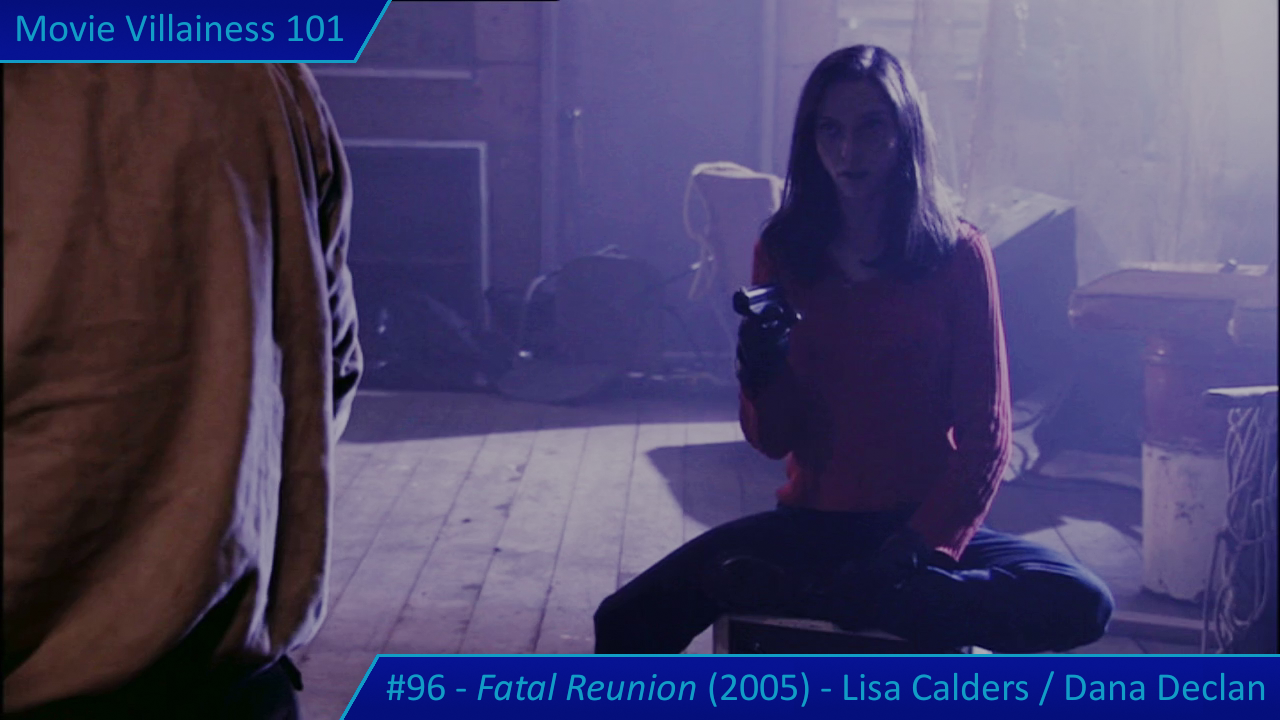
The movie climaxes in a barn when Lisa lures Jessica to a meeting. Russell, who finally figures the “lawyer” is an impostor, races to the rescue. Or that’s his plan anyway, because instead he discovers her holding Jessica and a tied-up Marcus at gunpoint. Then the villainess reveals her real identity: Dana Declan – Marcus’ wife – who doesn’t take too kindly to his perceived infidelity.

Juliet Landau is credited as Lisa Calders (her alias), probably to keep the reveal a surprise. Of course, the DVD cover gives the game away, as it shows her character wearing black gloves and holding a pistol.

The last confrontation is suitably long, with plenty of improvised weapons. With Marcus and Russell incapacitated, the two women battle it out. Jessica survives multiple strangulation attempts before she gets to put her martial arts practice to use. The heroine grabs a metal bar that happens to be lying around, deflects one blow, and impales the villainess. One of the better Lifetime death scenes – far superior to the tame resolutions that plague the modern era – which makes the tedium beforehand worth sitting through.

Honourable Mentions: Lifetime Movies

Deadly Sorority (2017) – Jubilee Swan (Chloe Babcock)

Another movie I considered, this surprisingly clever mystery thriller aired as Too Close to Kill in the UK. For once, Channel 5 made sparse edits.

The plot centres around the murder of a new sorority pledge, with many dodgy characters for prime suspect Samantha (Greer Grammer) to investigate. Some are clearly red herrings, such as the boyfriend who later winds up dead. The obvious candidate is a teaching assistant named Victor. Why? He isn’t obvious, and no evidence points to him. In 99% of TV mysteries, he would be the killer, but not this time.

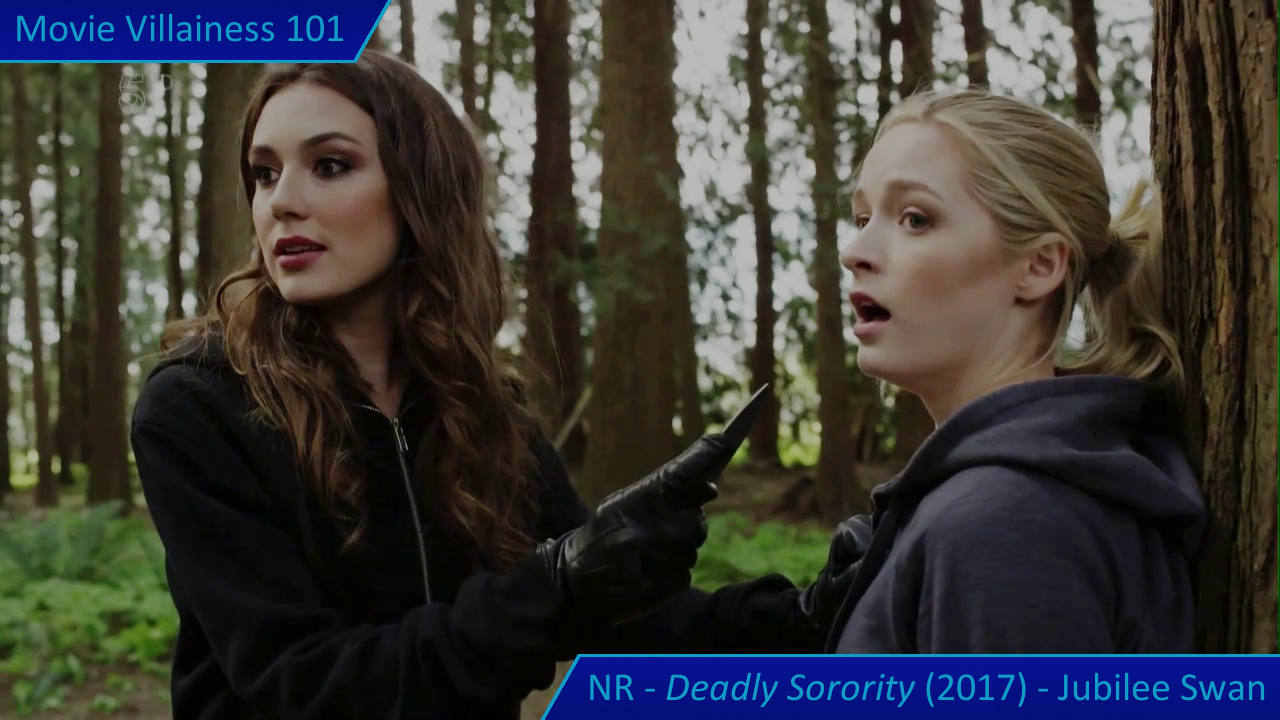
Instead, a relatively obvious suspect – bitchy sorority head Jubilee – is the villainess. An impressive narrative feint implies a college professor’s wife is the murderer. The genre-savvy heroine picks up on this and escapes after throwing hot tea in the woman’s face. Sadly, the amateur sleuth’s instincts are wrong, and the actual killer reveals herself soon afterward.

The knife-wielding psycho threatens Samantha, and there’s a rather brief confrontation before police arrest the villainess, but the above-average resolution earns an honourable mention.

A Neighbor’s Deception (2017) – Cheryl Dixon (Isabella Hofmann)

2017 was a good year for TV movie endings, because we got a surprisingly exciting conclusion to what seemed a pedestrian thriller. The plot is as generic as they come: a woman romances a guy with a mysterious past, only to find her life in danger.

After a drawn-out stalk and slash scene at the beginning, main character Chloe (Ashley Bell) moves in next door to the suspicious Gerald Dixon (Tom Amandes). The heroine suffers from panic attacks – a plot device to ensure nobody will believe her later – and Gerald conveniently reveals he’s a psychiatrist. Cue inevitable warning signs, a shadowy stalker breaking into Chloe’s house, amateur detective work, and near misses with the psycho doctor.

A secondary character gives Chloe dirt on Gerald. Can you guess what happens next? The guy is killed off almost immediately with the overused backseat garrote MO. This one’s longer and more realistic than usual, but annoyingly, it’s mostly filmed with a long-distance shot. So far, so average, and you’d never suspect an exciting and violent finale was on the cards.

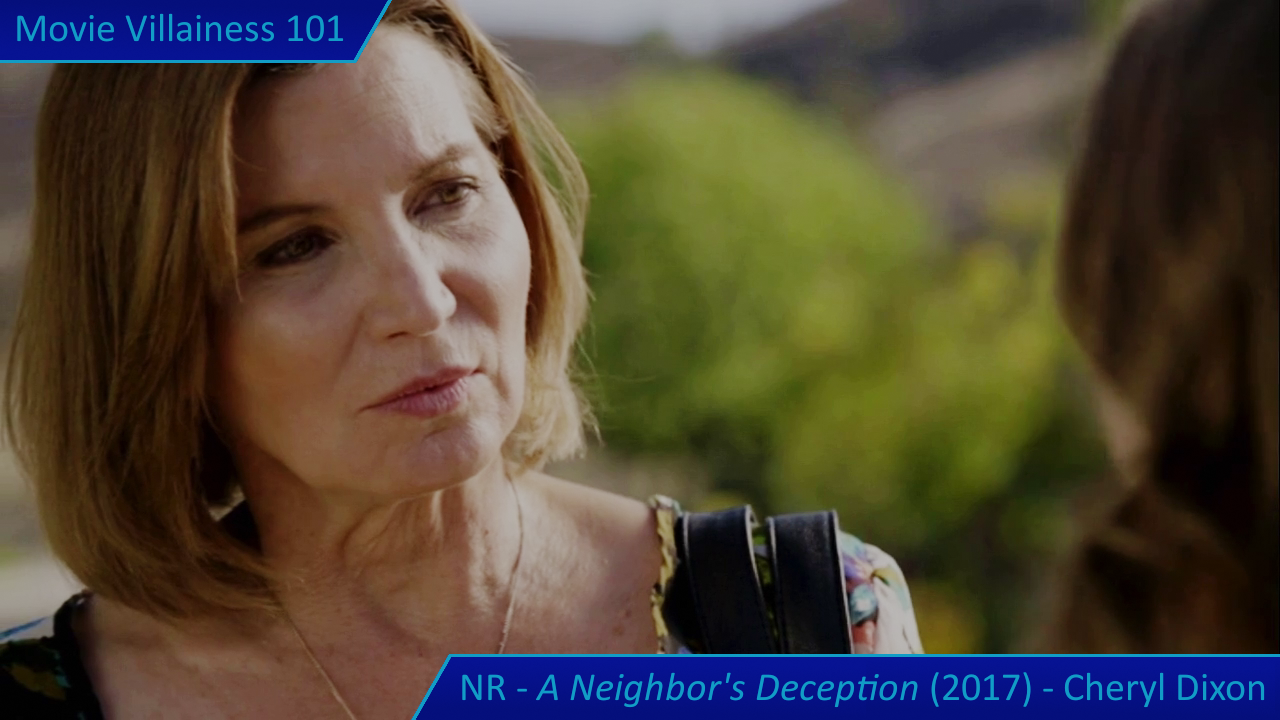
After Chloe learns Gerald’s wife Cheryl has mental issues, the villainess decides her nosy neighbour is a threat. The black-gloved killer attacks Chloe in her bathroom, leading to a drawn-out strangulation with multiple life attempts that goes on for several minutes. Yes, you read that correctly. Minutes, not the usual five seconds.

Eventually, Chloe frees herself only to be captured again. The heroine wakes up in a chair, restrained and forced to endure Cheryl’s insane ranting. Then, after the villainess and the slightly more sane Gerald have a violent difference of opinion, the murderess puts a plastic bag over Chloe’s head to suffocate her. Did the producers forget this is a TV movie? Eventually, the husband comes to the rescue at the last moment, and Cheryl goes down fairly easily considering what transpired before.

Killer Photo (2015) – Sarah Miller (AnnaLynne McCord)

Another so-so Lifetime movie with a good ending, this thriller (also known as Watch Your Back) earns an honourable mention thanks to an intriguing premise and a decent twist that makes sense. An elaborate prologue murder has a woman follow a trail of red heart balloons and greeting cards, only to find a mysterious assassin waiting with a silenced pistol.

Fast forward two years, and businesswoman Sarah Miller could be the next target. Viewers hoping for a killing spree will be disappointed, as the story focuses on Sarah’s relationships and dull office politics. Characters act weird just to create potential assassin candidates, and suspects include a company rival and a devoted assistant. Someone photographs Sarah and plants listening devices in her house, and it appears ex-cop Vincent Stirrup (Brent Stait) is the hitman when he leaves a mysterious package in the Millers’ letterbox.

However, appearances can be deceptive, and ultimately it’s revealed that Sarah is the hitwoman and Vincent a good guy tracking her. In retrospect, her odd behaviour – refusing to involve the police and caring more about a man’s camera than an accident victim – makes perfect sense. Scenes of the protagonist working out, handling firearms capably, and throwing darts with lethal accuracy will seem obvious hints on a repeat viewing.

The female assassin dishes out a couple of martial arts beatdowns and gains the upper hand on her cover story family. The confrontation with the husband goes the obvious way when the villainess claims he doesn’t have what it takes to squeeze the trigger. Fortunately, the assistant does, and the movie ends with Sarah receiving the same post-mortem photograph treatment she gave the opening victim.

Movie Villainess 101 Rank #97

There’s more than one snake in this movie

Movie

Cobra (1986)

Action movie buffs often hail the 1980s as a golden era. Back then, films received adult certificates, uncut violence was expected, and macho men uttered one-liners while taking down bad guys. No pesky character development was required. Cobra is a cult fan favourite because it adheres to this template.

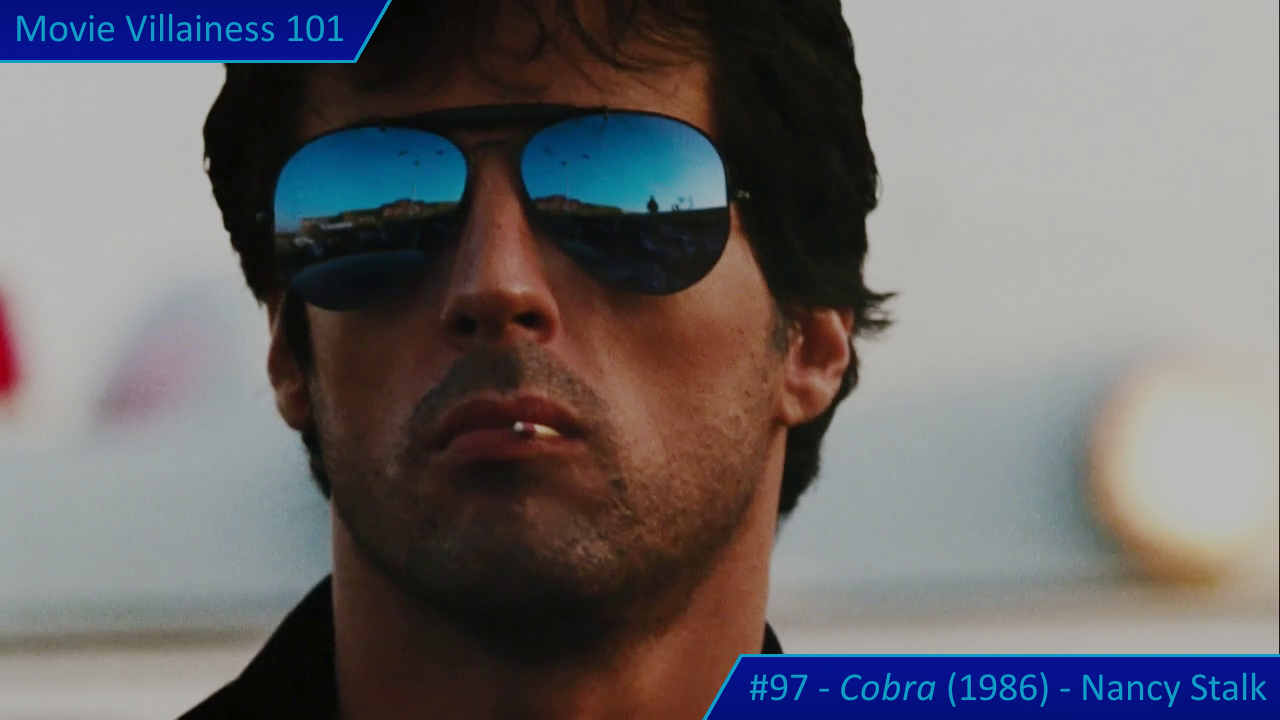
Lt. Cobretti (Sylvester Stallone) is the typical action hero: a cowboy cop who drives a classy car, wears cool shades, and chews matchsticks while dealing out lethal justice to criminals. “Cobra” is the man superiors call when they need tricky situations dealt with. Naturally, the same bureaucratic bosses then blame the hero for being reckless.

Like many gritty cop movies, Cobra is set in Los Angeles. The opening scenes establish the tone: a statistical voiceover by Stallone (thankfully brief), a psycho biker cult clinking bladed weapons together, and a lunatic terrorising supermarket customers with a shotgun. Said nutter serves as an introductory villain for the hero to blow away. The triumphant cop holsters his pistol: a fancy weapon with a cobra painted on the white handle.

The main baddie is the appropriately named Night Slasher, who’s attacking random civilians to usher in a new world order. A motive as nonsensical as the plot, but action movie fans won’t care. The guy has a fancy knife and an army of psychos to back him up. Cobra is on the case, and the streets of L.A. are about to turn even more violent.

Villainess

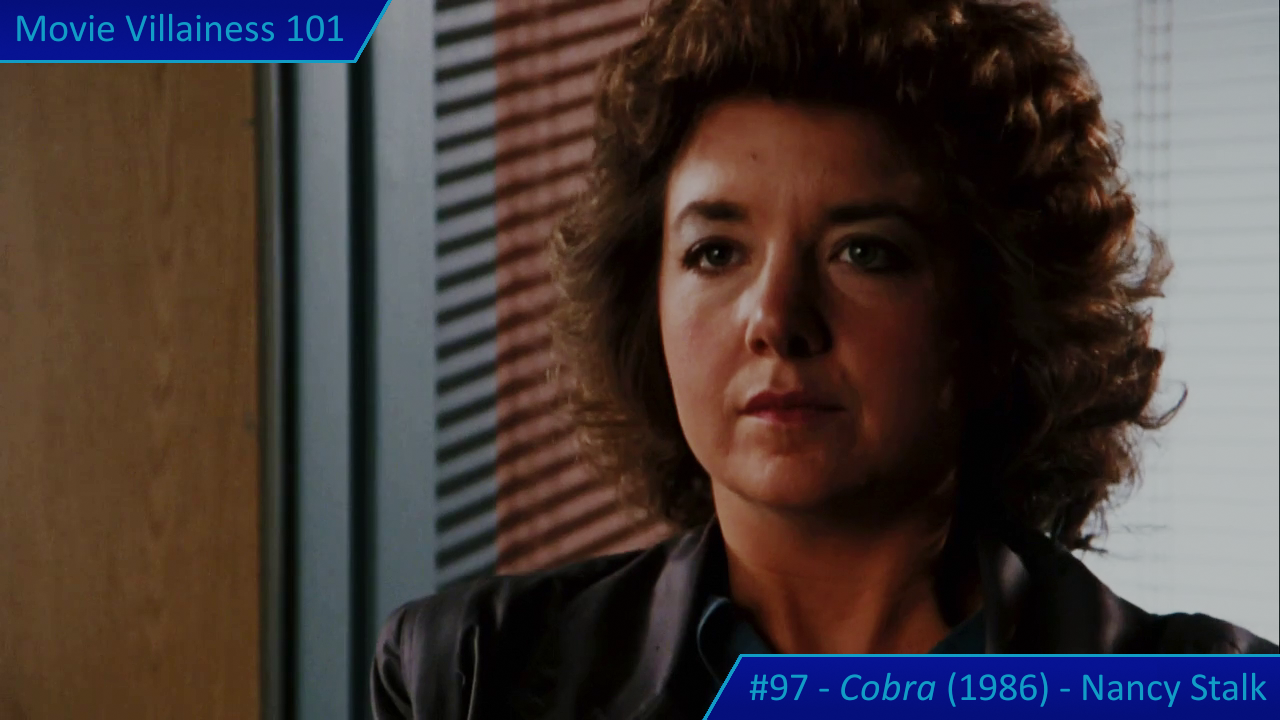
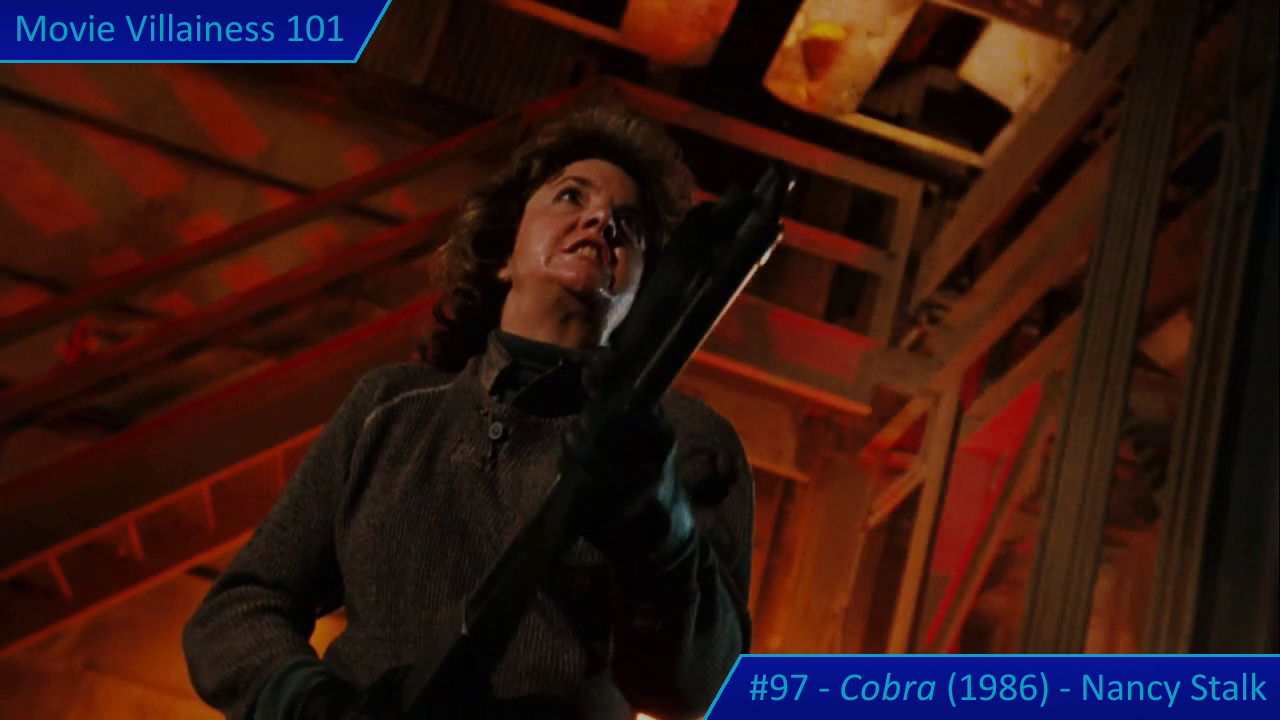
Nancy Stalk (Lee Garlington)

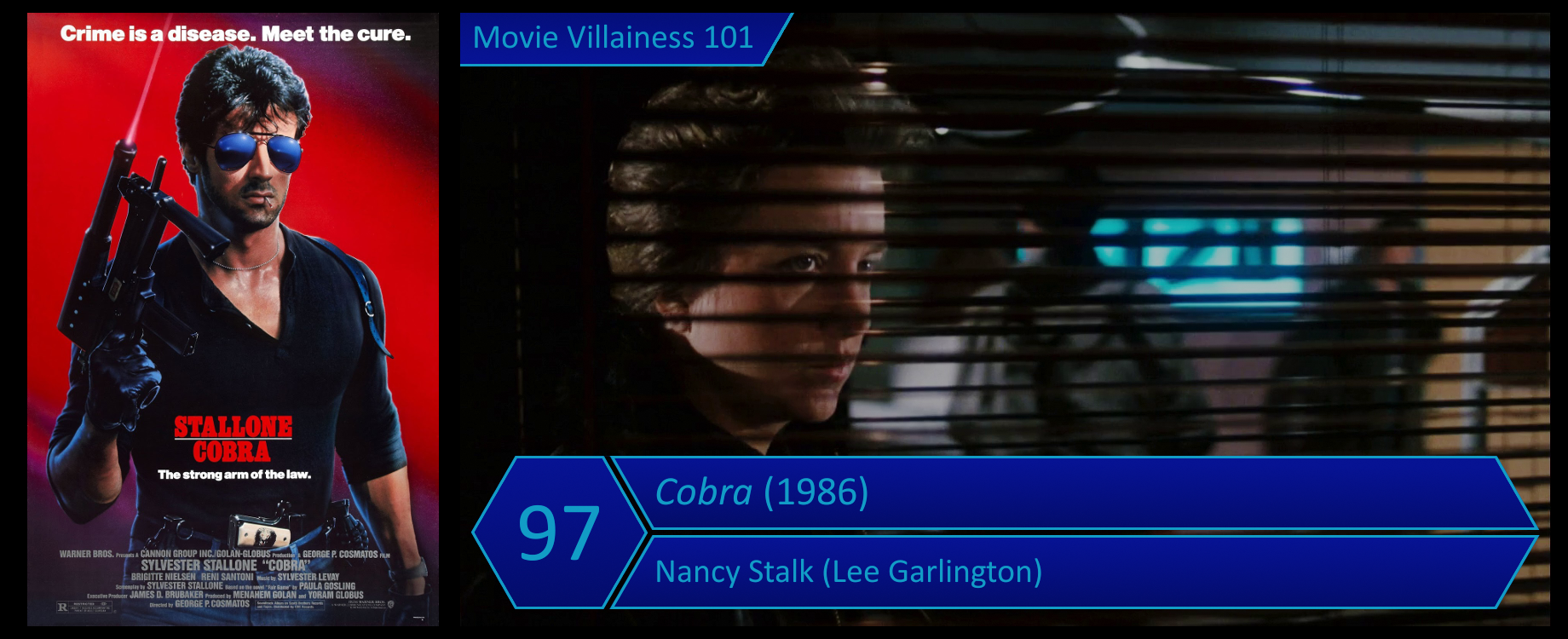
Cobra thinks there’s more than one killer. His boss thinks he’s off the mark. Guess who’s right, and we get two Night Slasher attacks in quick succession to validate the hero’s theory. Like many action movies, there’s a lone female in the stocking-masked gang, and that would be Nancy Stalk.

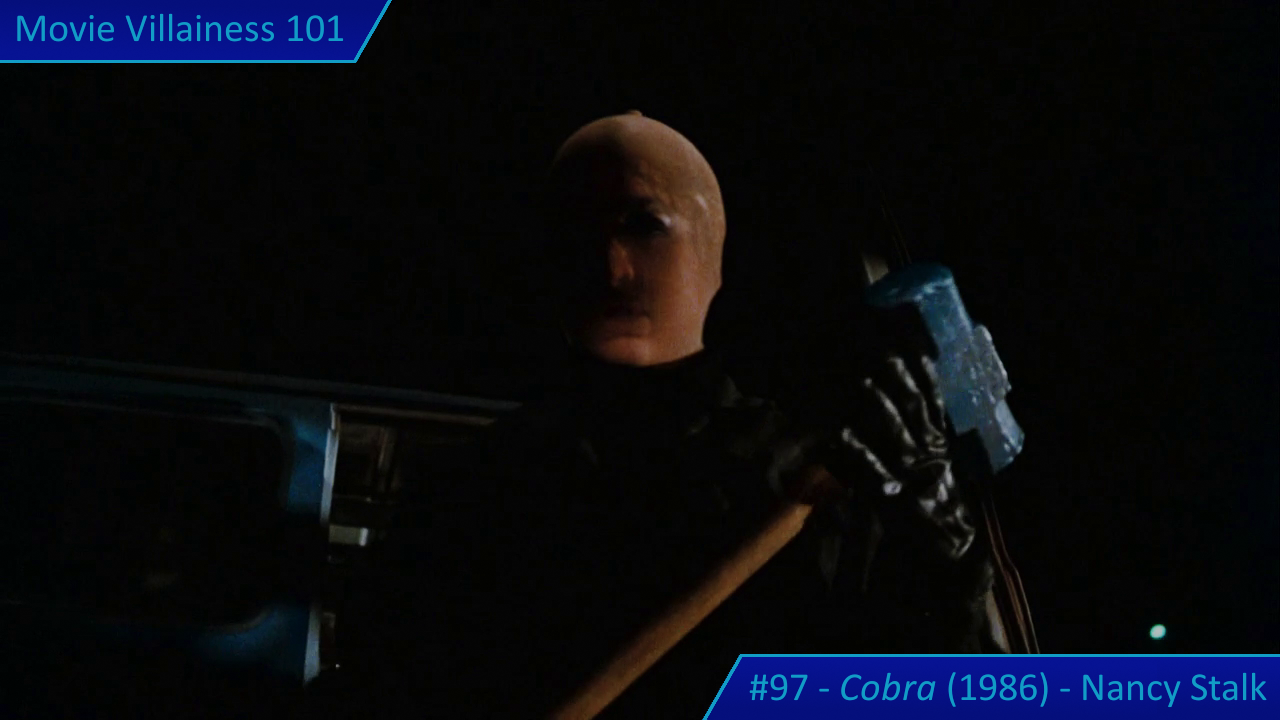
Just as psycho as the men, Nancy smashes a car windscreen with a sledgehammer in the first attack. For the second murder, she’s unmasked and distracts a female motorist while the Night Slasher sneaks up behind. As the villainess disposes of the body, a woman drives past and witnesses the crime in progress. Ingrid Knudsen (Brigitte Nielsen) is a fashion model, and her career is an excuse to show dancing scenes with robots (don’t ask) and a montage of Cobra following leads while Angel of the City plays in the background.

Despite having little screen time, Nancy Stalk comes across as brooding and dangerous. There’s a creepy scene where she flirts with the Night Slasher while he sharpens his oversized, spike-handled knife. An additional threat comes from the villainess’ reveal as a police officer whom Cobra and his partner trust implicitly, though it’s not clear why they’re so easily taken in. There’s obviously a mole in the department, and Cobra spies Nancy making suspicious telephone calls more than once. The villainess’ assigned role is an informant lurking in the background, with action mainly left to the Night Slasher and his biker army, but things improve for the finale.

After Cobra prepares for war and Nancy shows her true colours (which the cops should have seen coming), there’s a long shootout / chase scene. One helmeted biker has long hair, raising hopes of a secondary minor villainess, but the solitary female baddie rule applies. The motorcyclists don’t last long, and Cobra wipes out the gang single-handedly.

Nancy gets more action in the showdown, wielding a shotgun and chasing the terrified Ingrid through a steel mill. There’s the standard hero versus the remaining bad guys climax, but it’s obvious only the Night Slasher will put up a worthwhile fight in the inevitable last confrontation. At first, Nancy appears to get a rather lame death when Cobra shoots her in the back, but the villainess returns to disarm the hero (after a lengthy tough guy monologue!). Sadly, the resurrection is short-lived, and Nancy gets shot by the Night Slasher when Cobra uses her as a human shield.

Honourable Mentions: Criminal Gang Members

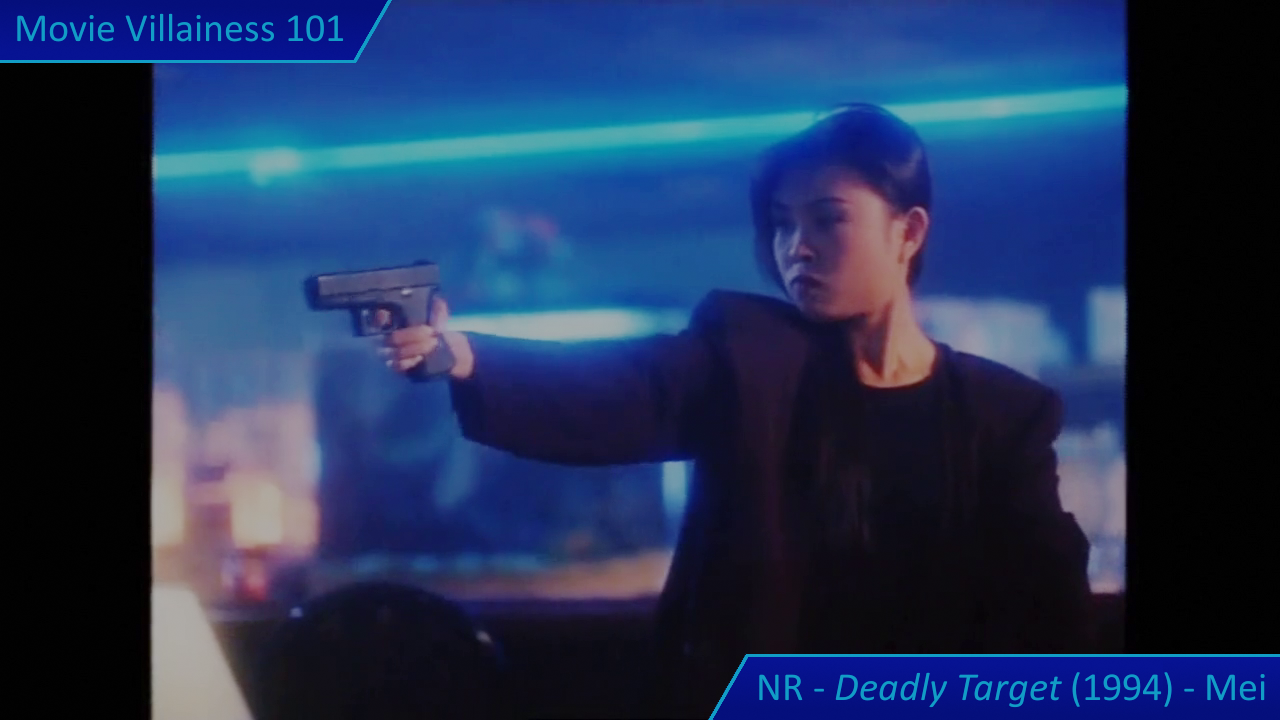
Deadly Target (1994) – Mei (Lydia Look)

Gary Daniels is another action star who always plays lone hero types, though his movies usually disappoint in the female villain department. This pedestrian flick has a Hong Kong cop (with no regard for police procedure) team up with an American counterpart to tackle an ambitious triad boss intent on wiping out the competition.

There’s a minor henchwoman in the opening scene, but she’s considered expendable by the main villain and dies within the first ten minutes. Mei is a more important criminal enforcer who murders rival gang members and anyone else who gets in her way. The villainess has some memorable scenes, notably a murderous, gun-toting rampage at a charity fundraiser. One guy takes cover behind an overturned table, but that offers no protection against Mei’s armour-piercing rounds.

Sadly, this is another villainess who peaks too soon. Casino dealer Diana Tang (Susan Byun) becomes romantically involved with the hero and predictably faces off with Mei in the climax. Despite no apparent martial arts background, she’s still able to defeat the villainess twice, during a home invasion and later in the climactic battle on a cargo ship. The fights are very unconvincing and feature cutaway shots of Daniels doing his thing before Diana finishes Mei after a brief struggle.

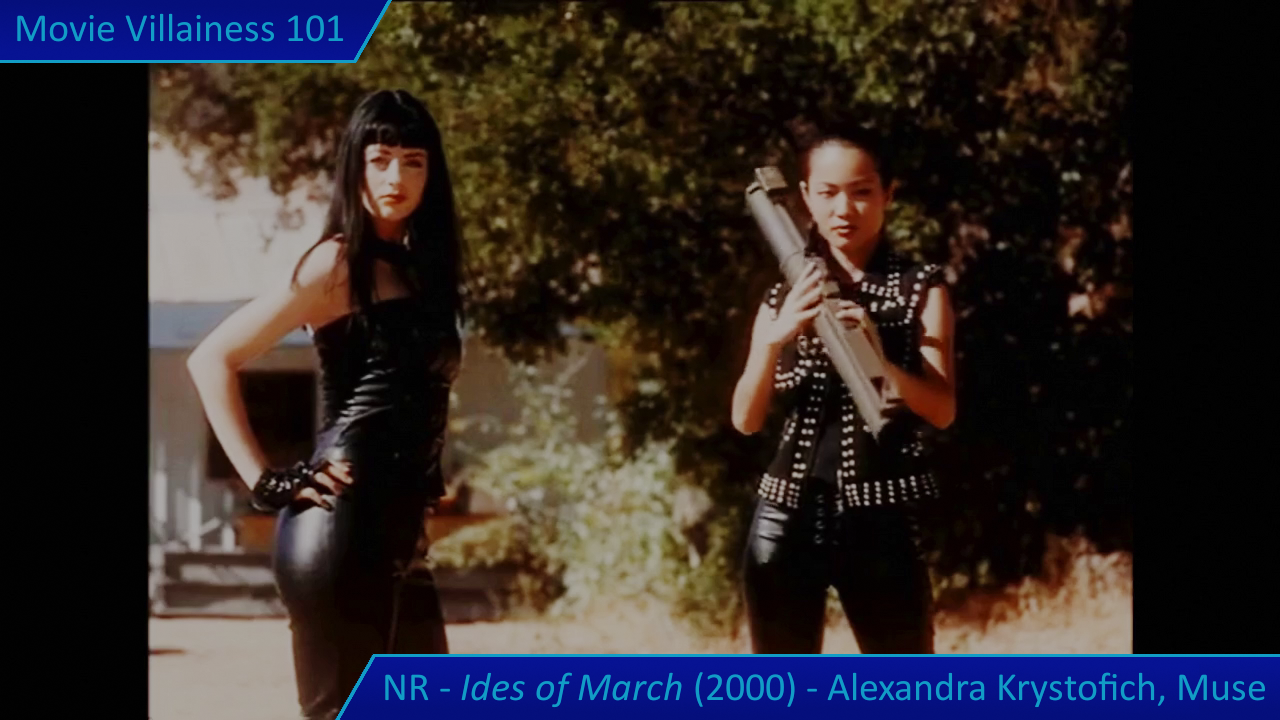
Ides of March (2000) – Alexandra Krystofich (Lydia Chin), Muse (Tracy Phillips)

Also known as Ultimate Target, this is another Gary Daniels vehicle that remained unreleased for many years until a version surfaced on YouTube. The trailer promised a lot of action and two female villains, but the end product was a slow-burning, dialogue-heavy yawnfest. For much of the runtime, Alexandra and Muse talk with other assassins around a table. The best way to experience this movie: fast-forward through the silly character introductions and unremarkable flashbacks to the final fight scene.

There we get the rocket launcher attack that made it into the trailer and Daniels’ encounter with the two hitwomen. Neither puts up a great struggle, but they certainly look the part as leather-clad killers. The hero is a superior martial artist and makes quick work of his outclassed foes, but the fight scene is fun while it lasts.

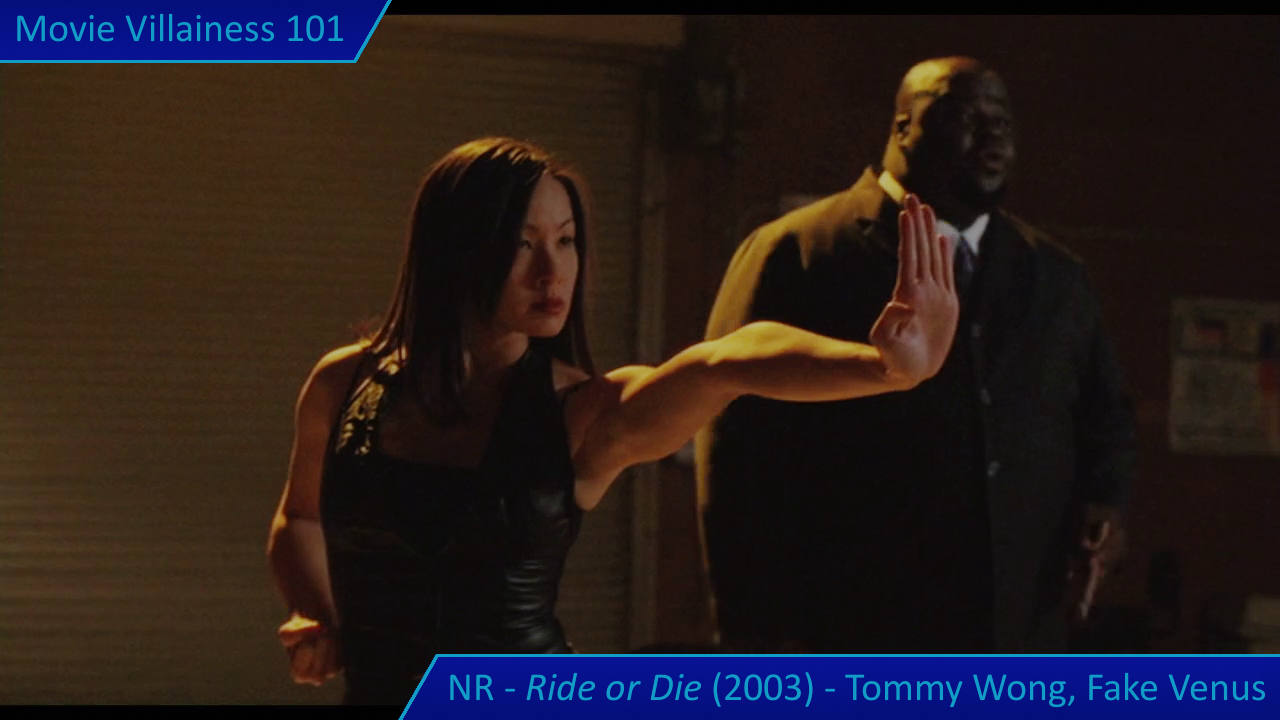
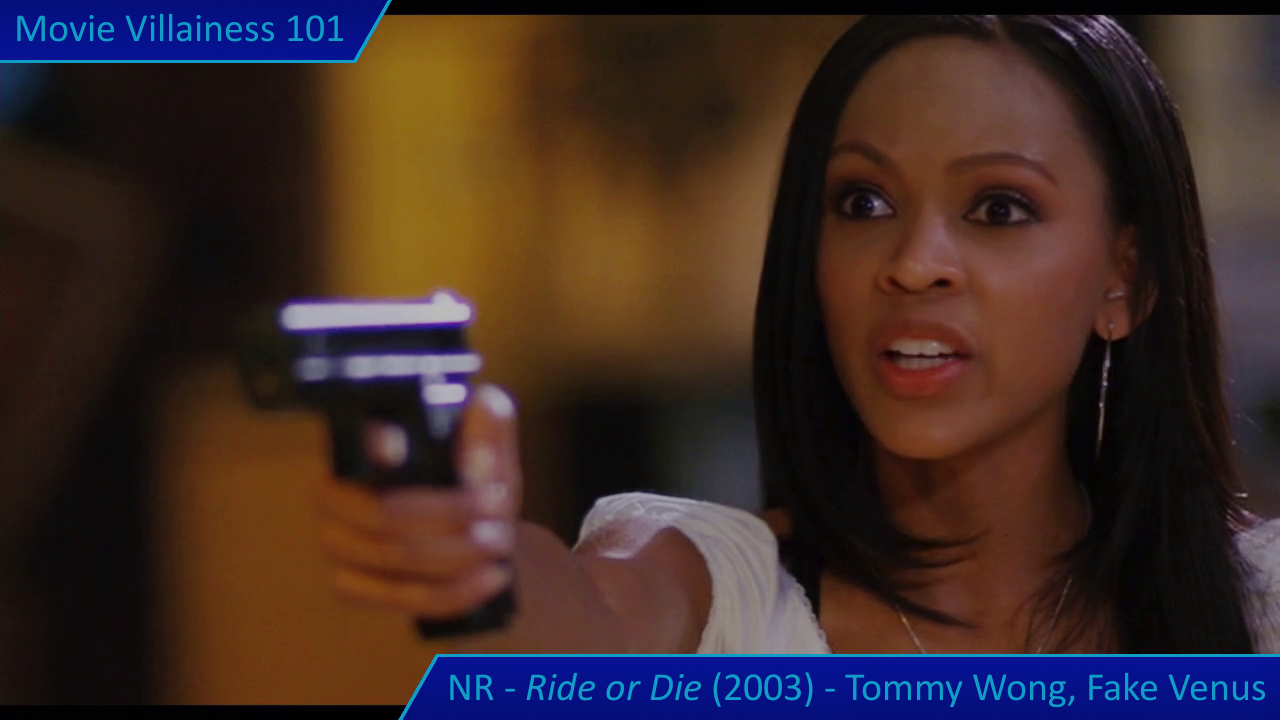
Ride or Die (2003) – Tommy Wong (Miranda Kwok), Fake Venus (Meagan Good)

Another cliché-ridden direct-to-video actioner (see a pattern here?), with Duane Martin as private investigator Conrad “Rad” McRae. Expect plenty of gun battles (with dual wielding the norm), disposable bad guys, explosions, and attractive female extras. Vivica A. Fox is tough-talking weapons specialist Lisa, and there are cameos by well-known B-movie actors, notably Daniel Dae Kim as a Triad boss and Gabrielle Union as a domino-masked woman.

Rad investigates the murder of rapper superstar friend and teams up with his widow Venus to take on a corrupt record producer who doesn’t even feign innocence. Tommy Wong gets a badass introduction as the henchwoman when she takes down the hero PI in a restaurant without breaking a sweat. Frustratingly, she disappears until a late showdown, when she returns clad in leather, but this time Rad easily bests her in the return fight.

Tommy wouldn’t earn an honourable mention by herself, but after surprise villain Venus – who’s not the widow – is revealed as a criminal mastermind, she disposes of the false big bad and turns her dual pistols (that cliche again) on Rad in the final shootout. After lots of gunfire and traded insults, Lisa finishes the treacherous woman off with explosive underwear in a rare moment of originality.

Movie Villainess 101 Rank #98

Carrie Fisher’s other memorable character – this one’s definitely NOT a princess

Movie

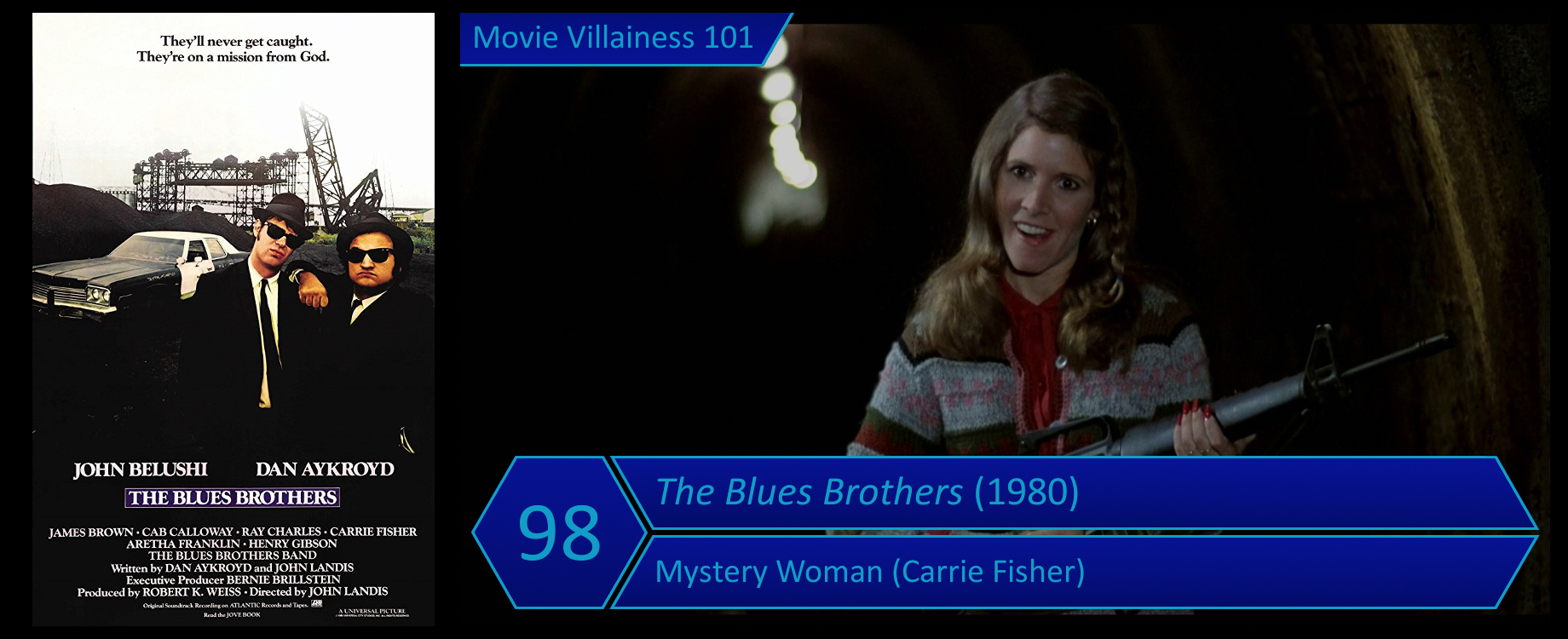
The Blues Brothers (1980)

Film buffs will always remember Carrie Fisher for the iconic role of Princess Leia in the Star Wars franchise. Besides starring in The Empires Strikes Back in 1980, she also played a mysterious female assassin in this classic comedy adventure.

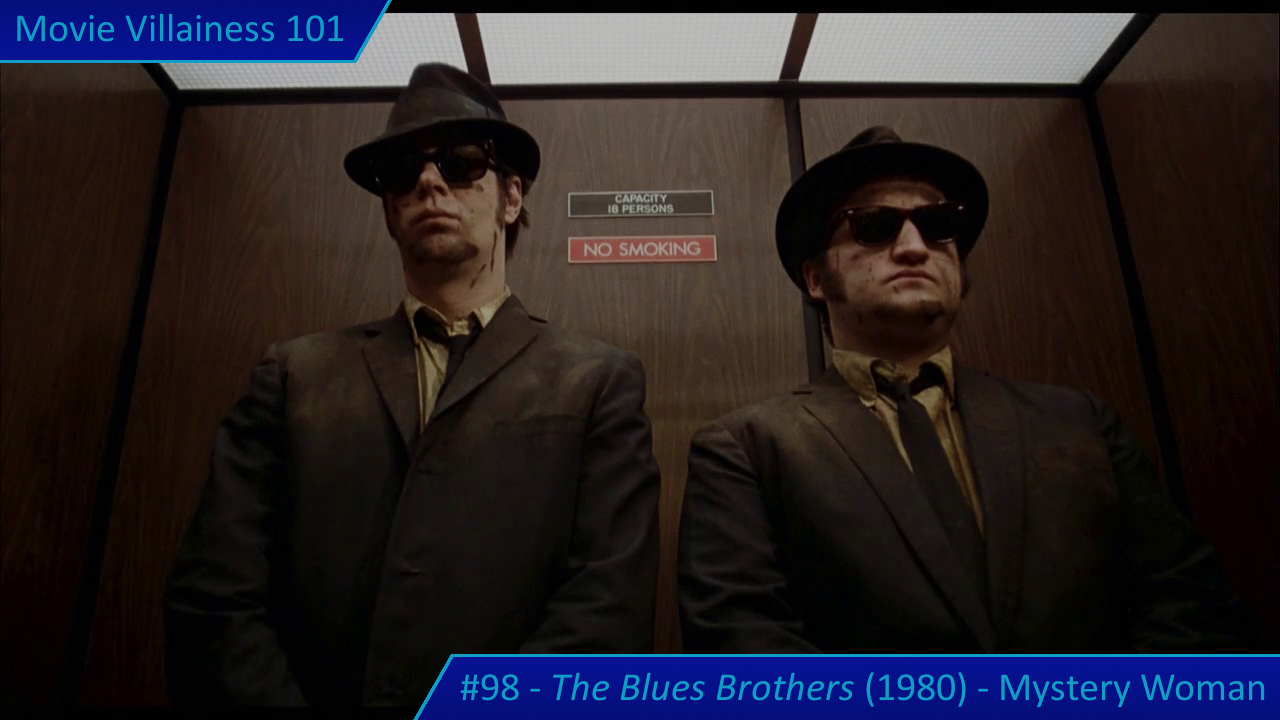
For those unfamiliar with the story, it’s a lighthearted musical about the title brothers, Jake and Elwood Blues. Played by John Belushi and Dan Aykroyd, they literally see the light and undertake a “Mission from God.” Their goal is to reform their old band and raise enough money to save an orphanage from closure. Dressed in matching black suits, hats, and dark glasses, the Blues could be mistaken for government agents, but these two are definitely anti-authority figures.

It’s not long before the brothers make enemies of the police. Bad news for Jake, only just released from prison. The list of vengeful foes grows after they steal a gig from a rival band and wreck a fascist group’s parade. By the end of the film, even the military has Jake and Elwood in its sights. Plenty of antagonists, but the Mystery Woman is the standout villain.

Villainess

Mystery Woman (Carrie Fisher)

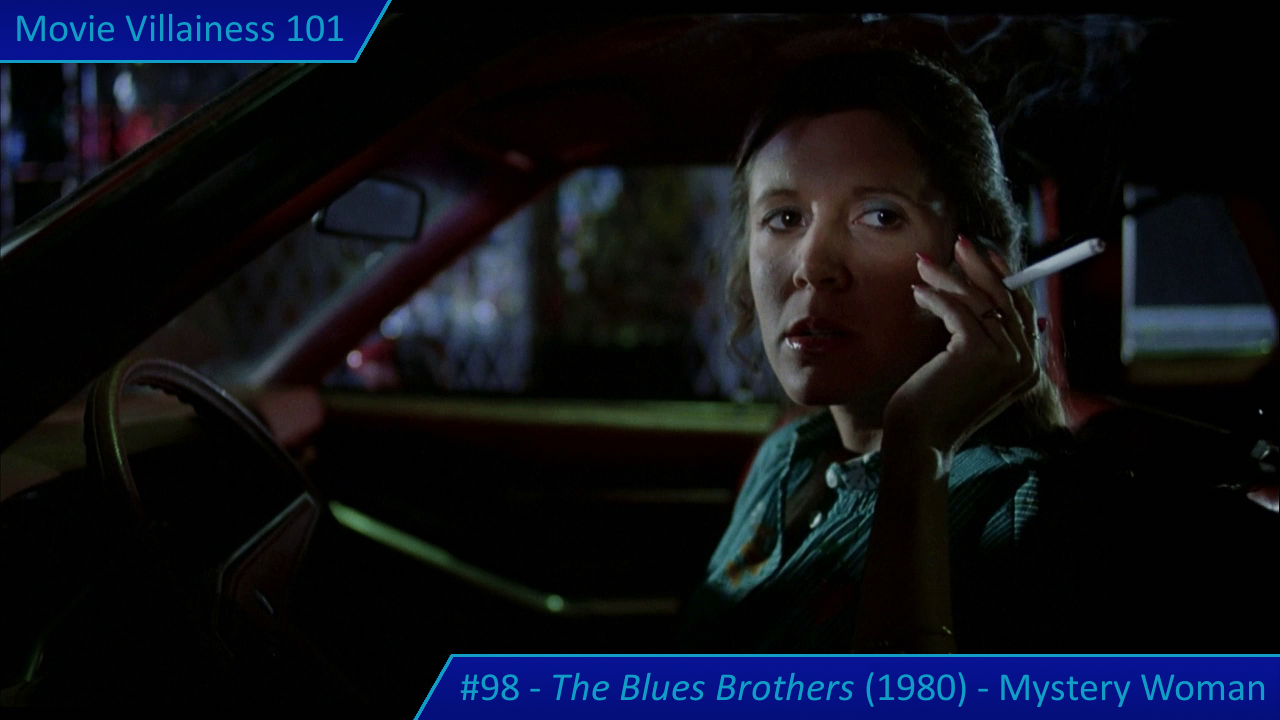
The character’s credited name is appropriate, as the assassin’s true identity is never revealed, although she gets an explanatory monologue near the end. Before that, the Mystery Woman makes it her personal mission to murder the two brothers. And it’s clear from the get-go that she’s really ticked off, because she doesn’t even bother with small arms and brings out the big guns straight away.

The cigarette-smoking villainess’ introduction sees her aim a rocket launcher and unleash a volley at the brothers while they’re on the steps of an apartment building. She misses the men somehow, but destroys the entrance and leaves the brothers buried in a pile of rubble. They dust themselves off, showing no concern as if this is perfectly normal. Maybe it is for these two, who seem to attract chaos wherever they go.

Murder attempts played for laughs become a recurring theme. As police raid the apartment, the Mystery Woman gives the brothers a loud wake-up call by detonating explosives, which causes the entire building to collapse. On a holy quest, the brothers are not about to be deterred by minor inconveniences like their apartment being reduced to a pile of bricks and scrap metal.

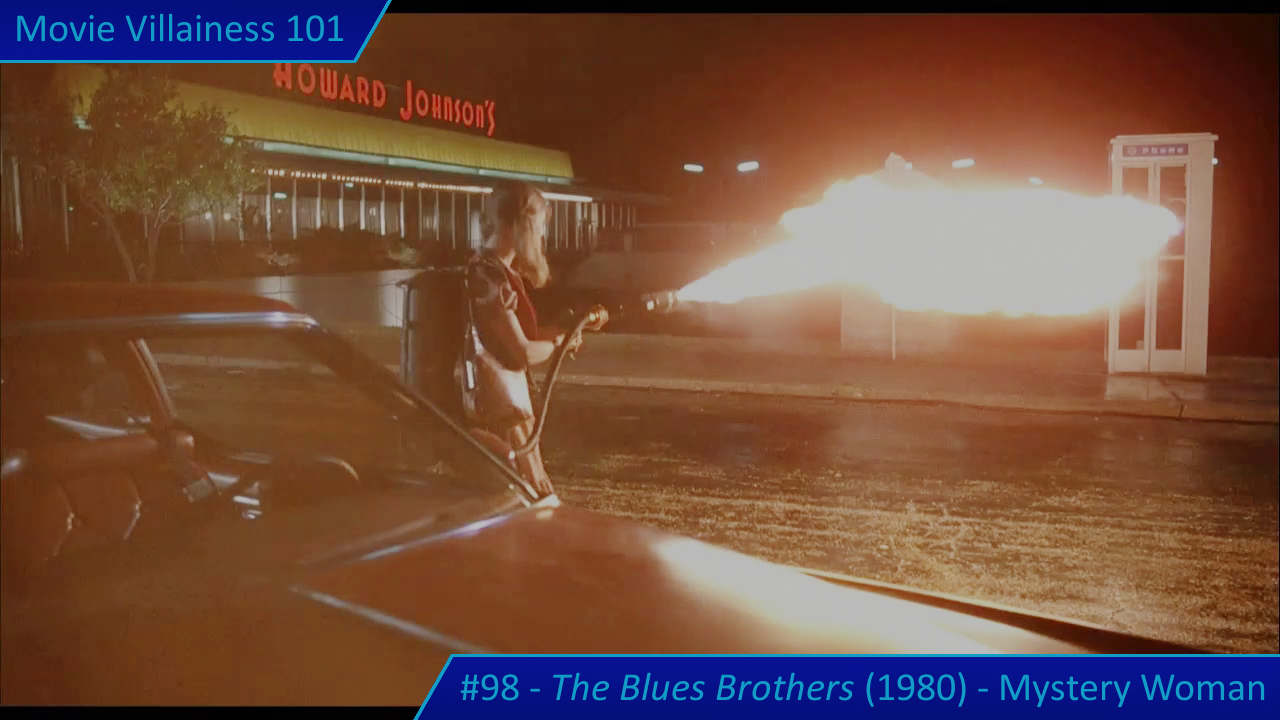
As you’ve probably gathered, the humour in the movie is very dark. This extends to the name of the salon where the female assassin works: Curl Up and Dye. There, she brushes up on her weapons knowledge, specifically an M-79 flamethrower. The Mystery Woman tries to roast the Blues alive as they make a call from a phone booth (back in the 1980s when they still had those), but only blows up a nearby propane tank. We then get a funny scene where the kiosk launches into the air and comes crashing down, providing the brothers with some loose change.

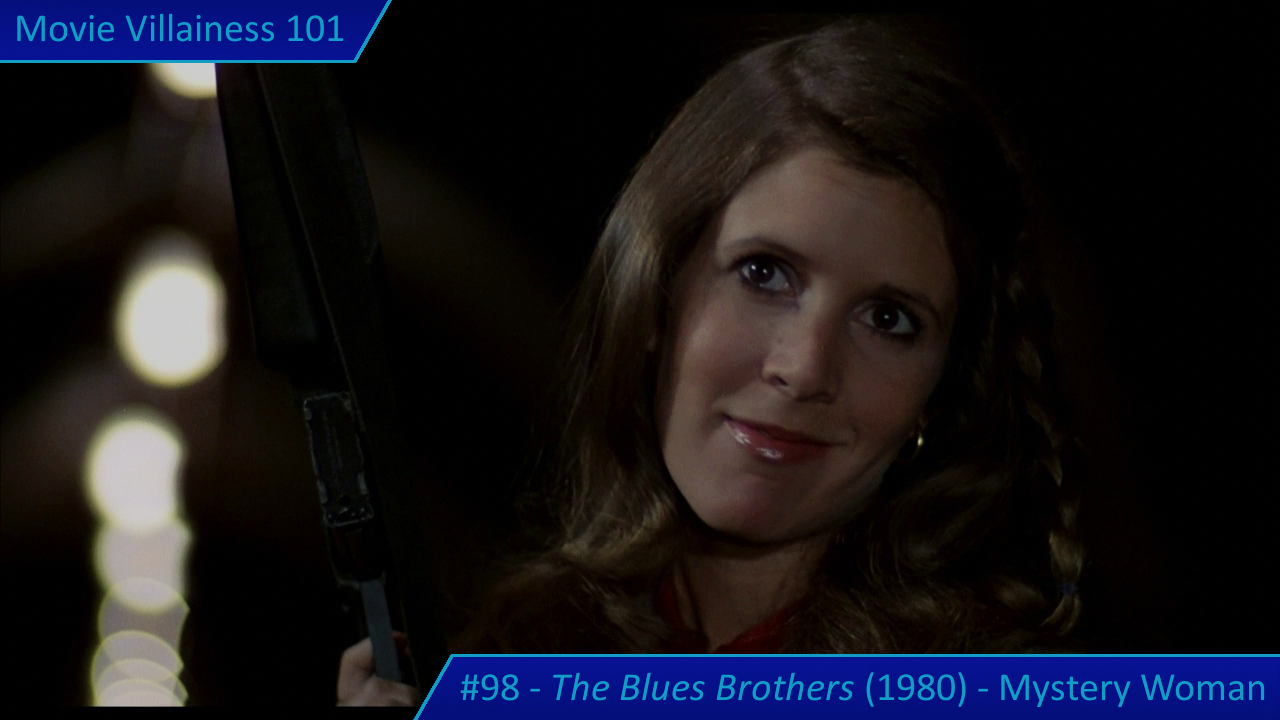
Unfortunately, that money is nowhere near enough to save an orphanage, so Jake and Elwood perform a well-advertised gig at a packed venue. And so the people after the anti-heroes – practically everyone by this point – know where to find them. The brothers sneak out through the basement, which deceives the boneheaded cops but not the Mystery Woman, who’s there waiting with an assault rifle and a motive rant.

Actually, it’s Jake who’s been her main target, and Elwood was collateral damage. It all stems from the assassin’s ex-lover standing her up at a wedding, and now she wants payback. Hell hath no fury like a woman scorned, as the saying goes.

Jake and the assassin kiss and make up before he promptly dumps her again by pushing her to the floor. This woman is not about to take another rejection lying down, and so chases after him. In her last appearance, the Mystery Woman fires wildly at the fleeing brothers as they drive off into the night.

Honourable Mentions: Notable Henchwomen

China White (1989) – Henchwoman (Saskia Van Rijswijk)

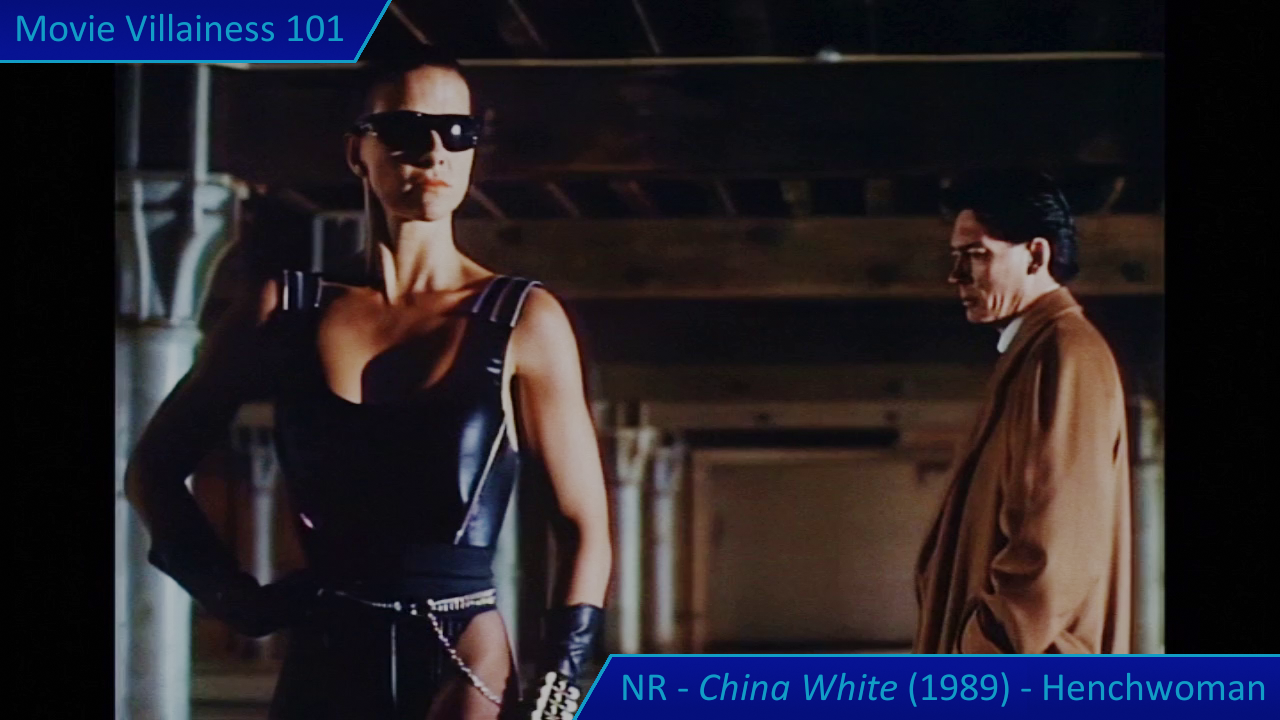
If I had to give an award for the best female villain entrance, it would go to the unnamed blonde brute in this rather generic 1980s action movie. As two guys are being interrogated by a ruthless crime boss (Billy Drago), a tall female in stiletto heels walks in, trampling broken glass underfoot. The camera then pans up to reveal a scary villainess wearing a short-sleeved leather top and sunglasses. She doesn’t need to say anything – it’s obvious what her role is.

Sadly, the movie is otherwise dull, though I located a DVD copy to give this henchwoman a deserved review. There are no heroes in this tale, just criminal gangs in Amsterdam and a high body count as hoodlums fight violently over territory. Before the last half hour, we see little of the Terminator-like bodyguard, who remains silent while the main villain schemes and threatens.

Characters in this film die in gruesome ways, and the henchwoman gets the best execution when she roughs up a surprisingly brave prisoner by kicking the bound man in the chest. That had to hurt, but he refuses to talk, so the villainess beheads him with a fire axe. While that scene alone earns an honourable mention, the climactic action set piece involves a shootout at the docks and the blonde’s desperate attempt to kill off a main character. When firearms don’t work, the tough woman resorts to martial arts, but it’s a rather brief fight even if she proves a resilient opponent. After so many brutal deaths, she deserved a better demise than a plunge into the ocean.

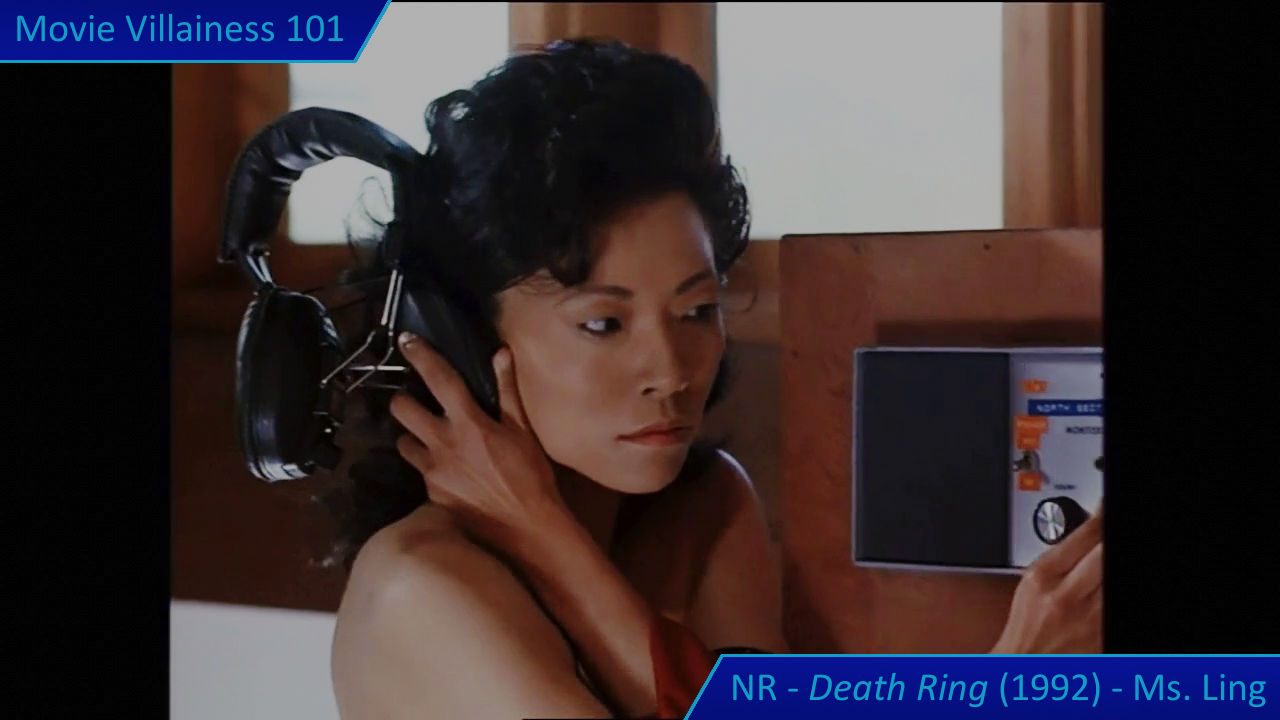
Death Ring (1992) – Ms Ling (Elizabeth Fong Sung)

This movie is easier to find, but sadly suffers from similar flaws as China White. The henchwoman to the main villain (Billy Drago again) appears to be a secretary at first, before she’s established as a competent martial artist. A promising start, but she only gets two tame fight scenes in the closing minutes.

Before that, Ms Ling is window dressing who does her best to look menacing. Often this involves handling weapons without actually using them, or passing them to other bad guys who like to hunt humans for sport. Yes, this is another one of those Most Dangerous Game type movies, probably the most copied scenario after Die Hard. Two beautiful blondes show up as sadistic assistants, but they have no dialogue and exist only to show the villain’s poor taste in women.

The males get the interesting stuff (machete, spear, garrote), while Ms Ling makes do with a pair of knuckle dusters. After screaming hysterically and mouthing some timid insults, she’s taken out by the hero’s girlfriend all too easily.

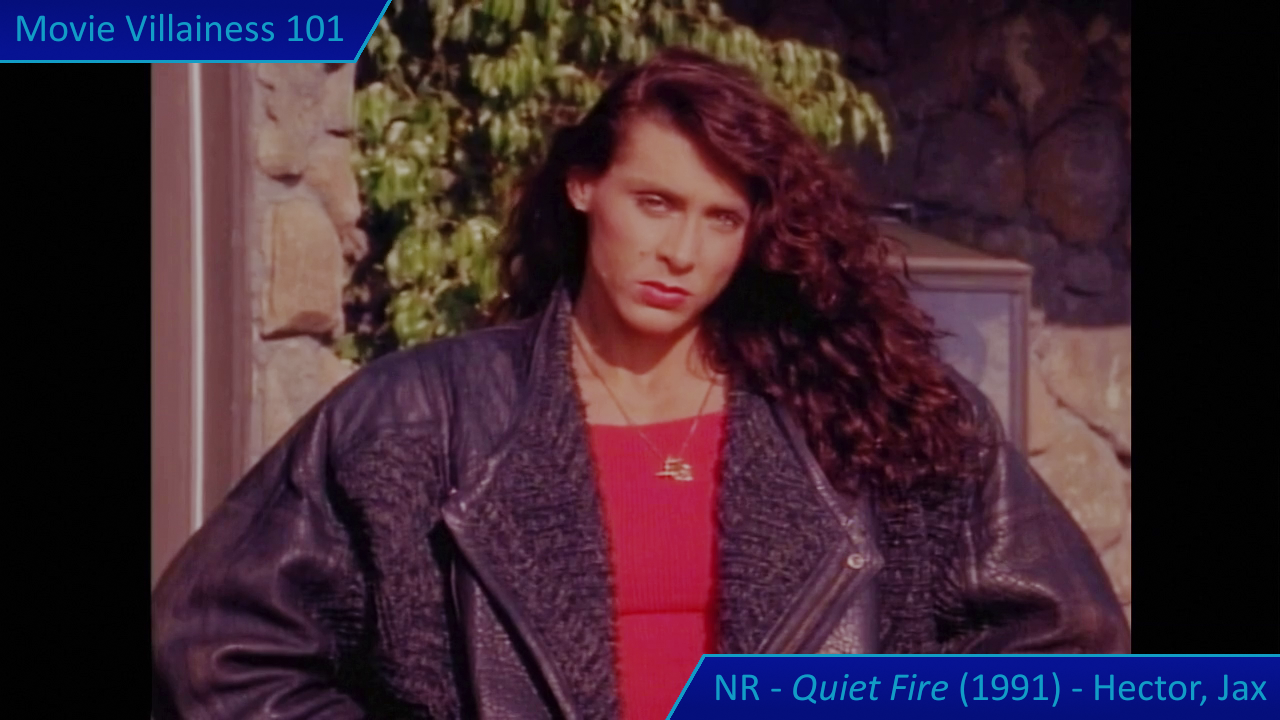
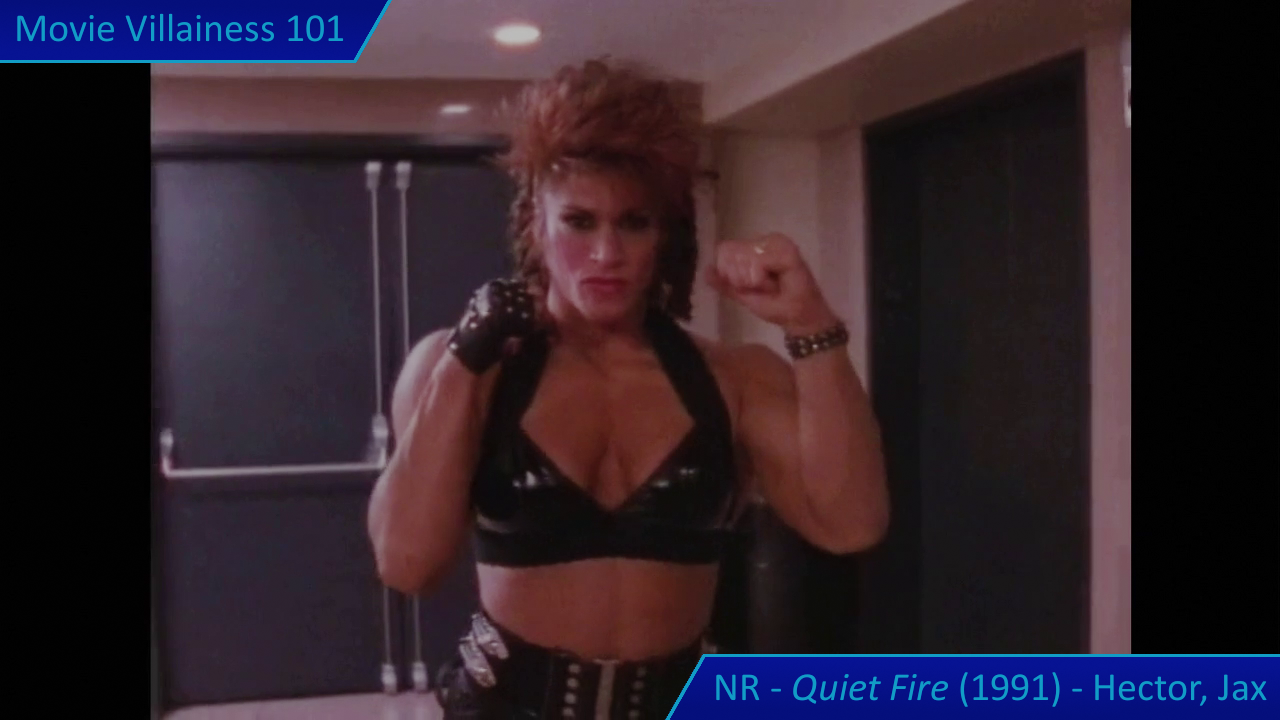
Quiet Fire (1991) – Hector (Dorothy Herndon), Jax (Laura Vukov)

Continuing the theme of under-used henchwomen (two in this case), this 1990s direct-to-video movie stars Lawrence Hilton-Jacobs as Vietnam vet Jesse Palmer, and real-life female bodybuilders as hired muscle that deserved far more screen time.

Quiet Fire includes every cliché in the book: a shady politician involved in arms deals, corrupt police officers on his payroll, a martial artist whose best friend dies just after passing on key information. Plenty of gun battles, explosions, and sexy women, and yes… even a standoff where the villain’s pistol is empty. A fight in front of electrical junction boxes… you already know how that will end.

After the local thugs fail to eliminate Jesse, the politician brings in outside help. Hector and Jax get an easy kill: a sleazy male assistant who’d messed up too many times. They then target the hero and his girlfriend and somehow miss with a sniper rifle despite having a clean shot. In an unexpected development, the girl is not kidnapped in exchange for the incriminating data, but murdered in a shootout.

Time for Jesse to go all ninja and tackle the problem. After he deals with some lesser thugs, Hector and Jax are the last obstacles between Jesse and the politician. Hector is disposed of with a throwing star, then it’s a fight with the leather-clad Jax. She dishes out a good beating to Jesse, but disappointingly goes down with a single punch. No kill, hero? This is the woman who assassinated the love of your life, remember?

Movie Villainess 101 Rank #99

Among Star Wars villainesses, Zam is the best of a mediocre bunch

Movie

Star Wars: Episode II – Attack of the Clones (2002)

If this were a series about male villains, Darth Vader – one of the most iconic bad guys in cinema history – would be top 10 material for sure. But since I’m reviewing female baddies, there are few to choose from in the Star Wars franchise. Discounting the miscellaneous women who’ve appeared as Imperial commanders and the like, I can think of only two.

Female leads have become more prominent in action movies over the past decade, and Star Wars follows this trend. Jyn Erso in Rogue One (2016) proved to be a fantastic heroine in the well-regarded spin-off prequel to Episode IV – A New Hope (1977). However, female villains remain a rare breed in this galaxy, and those that have featured are not especially memorable. A shout-out to Solo (2018) for including a masked rebel pirate who turns out to be a woman (with a voice disguiser, naturally), but she couldn’t be considered evil. There’s also a late reveal that a seemingly sweet companion is actually a Sith agent, but it’s a onetime appearance. So we’re still waiting for a true female badass.

Villainess

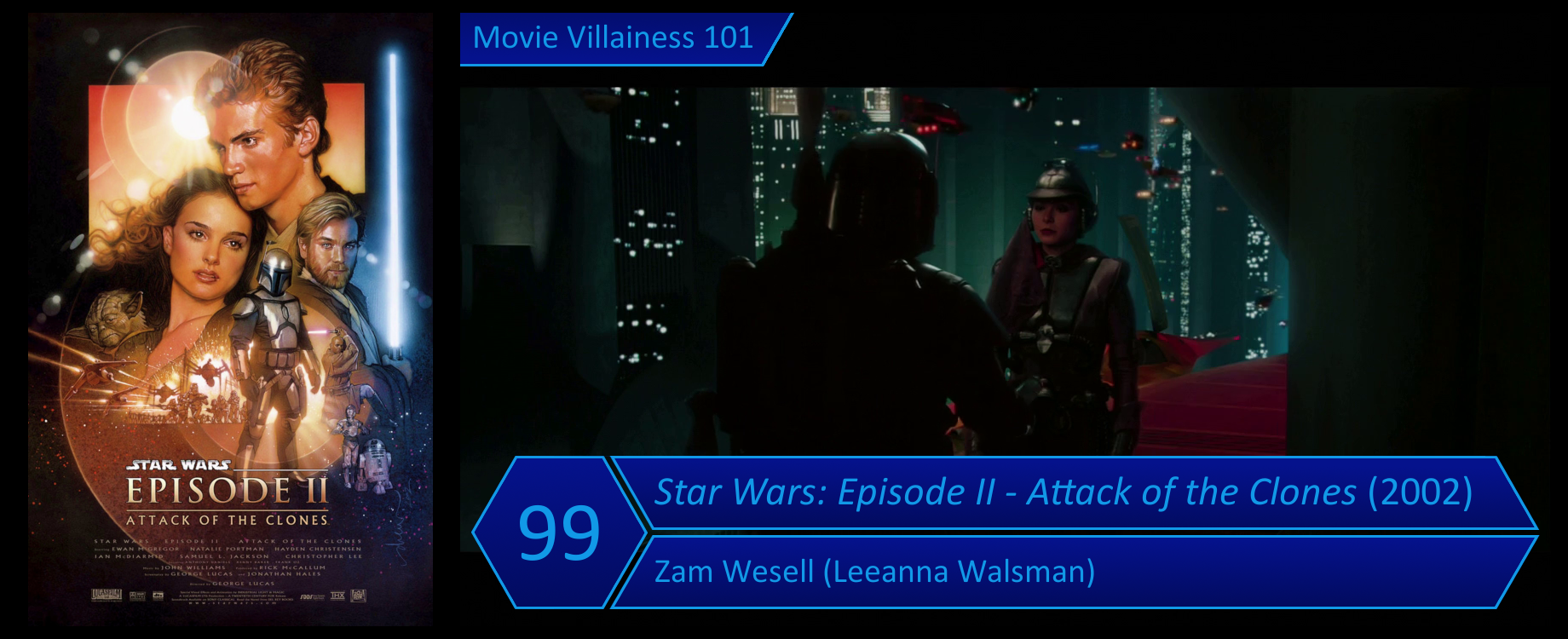
Zam Wesell (Leeanna Walsman)

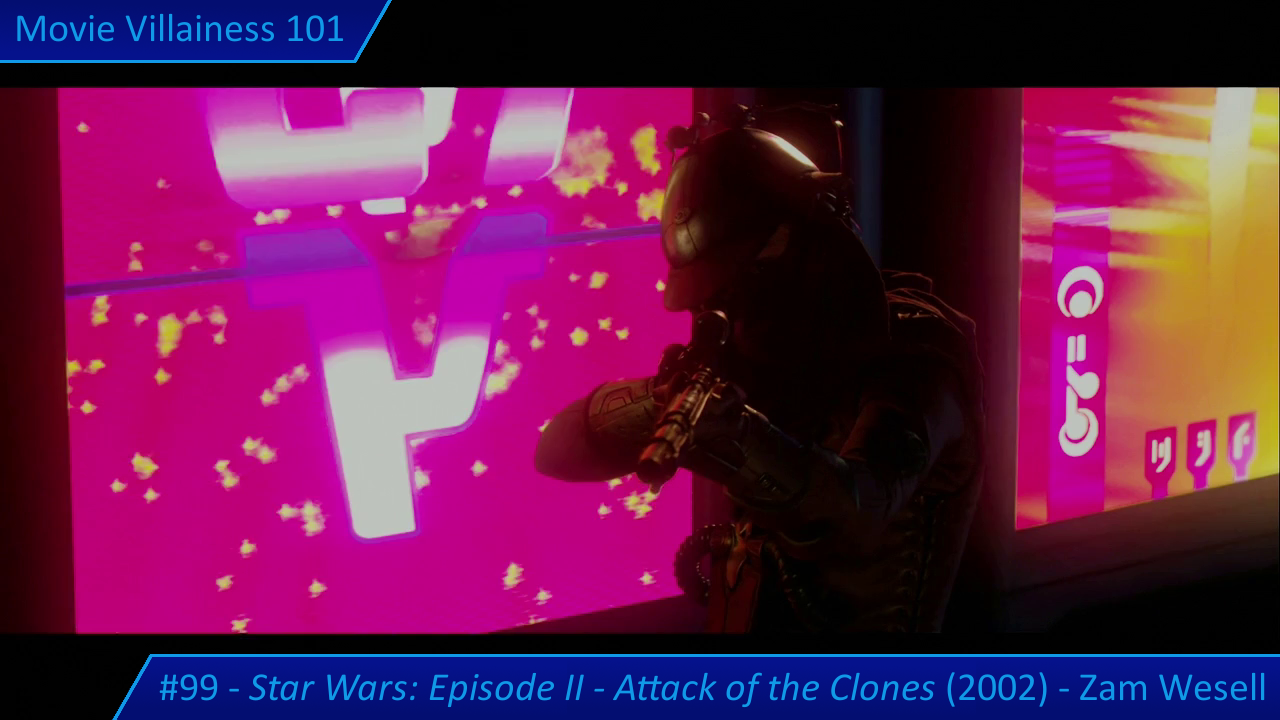
There’s not much competition for Star Wars villainesses, and Zam almost wins by default. That said, there are memorable scenes in Attack of the Clones, even though Zam is a minor character who only lasts the first quarter or so of the movie. Unfortunately, she’s then eliminated by an allegedly more important male villain.

Zam is a bounty hunter working for the bad guys who want to conquer the galaxy. No limit to their ambition, and anyone who’s seen the original trilogy will know they succeed. Which makes the heroes’ efforts moot, but they have to fill up three movies somehow and make it a struggle for the Dark Side. Technically, Zam works for Jango Fett, father of Boba from The Empire Strikes Back (1980), and she’s a footsoldier in it (presumably) for credits.

The villainess gets an explosive introduction when she attempts to assassinate Senator Padme Amidala on her arrival to Coruscant. When the bomb kills the Senator’s decoy instead, Jedi Master Obi-Wan Kenobi and his apprentice Anakin Skywalker are assigned to protect her. The mercs are not about to be deterred, and Jango orders his underling to “try something more subtle”. That means killing off Padme with poisonous, slithery worm-like things. I’m sure the creatures have a more ominous name in the Star Wars universe, but they’re never given one in the movie.

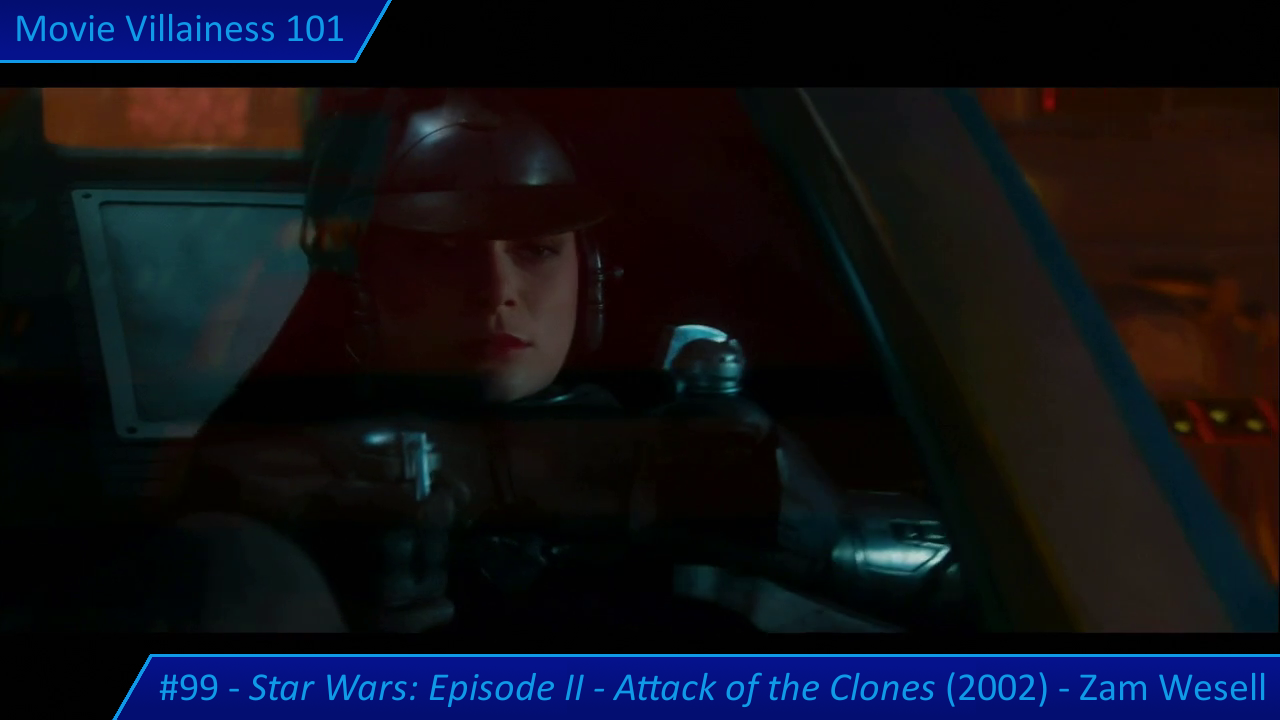
After the Jedi arrive in the nick of time to save the imperilled Senator – a habit of heroes – we’re treated to one of the best scenes in franchise history. The two main characters pursue the would-be assassin in an airborne speeder chase through a planet-covering capital city. This is especially memorable as their quarry proves to be slippery and dangerous, with Zam shooting Obi-Wan off a flying drone and performing daredevil moves as she attempts to give her pursuers the slip.

During the sky chase, Zam is revealed to be a changeling, a humanoid creature able to alter her appearance. After a crash landing, the final confrontation takes place in a bar. This sequence is disappointing as the villainess remains in the same human form throughout. I’m assuming changelings can take on any guise within limits, so I would have liked Zam to be more deceptive considering that Anakin has already seen her face.

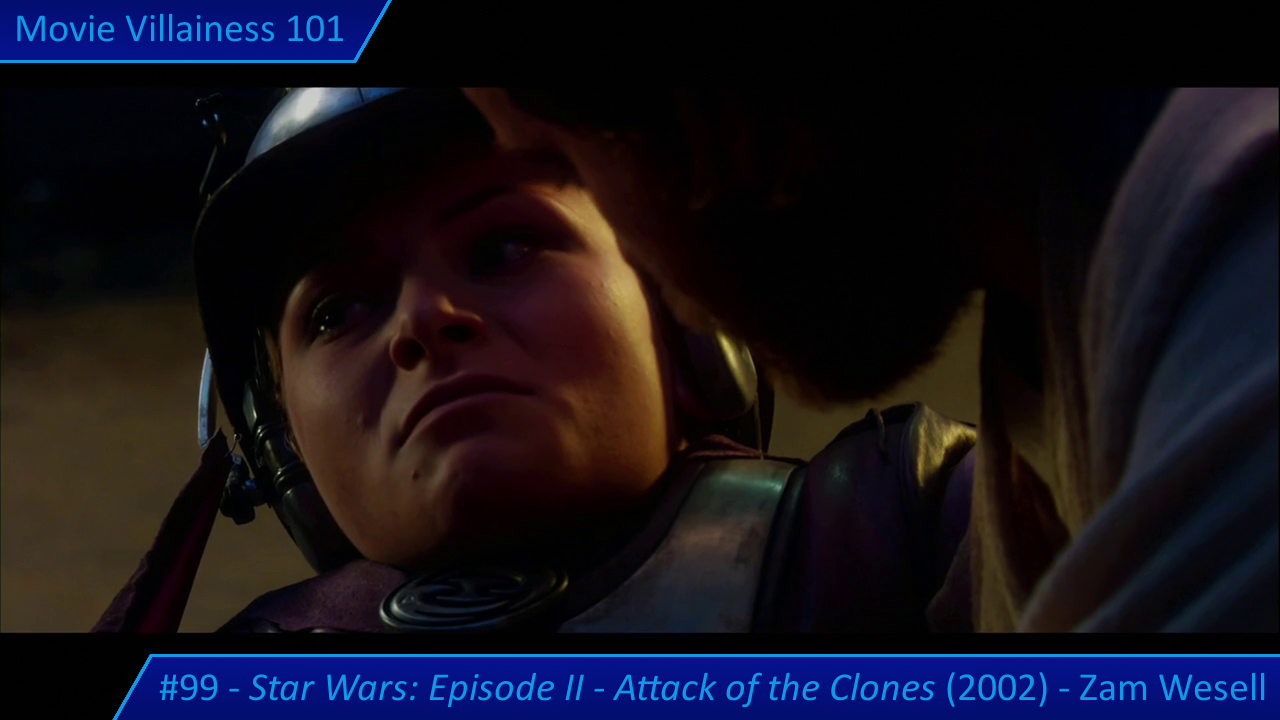
Instead, she foolishly goes after the master Jedi and gets cut down rather easily by his lightsaber. The villainess’ demise is okay, though nothing special. Just as she’s about to name her superior, a helmeted mercenary offs Zam with a toxic dart, and she reverts to her natural form. Before the Jedi can track the killer, he jetpacks off into the sky, setting up the main plot of the film.

Overall, I’ve ranked Zam low on my list because of her limited contribution. The role of women in this film series is worthy of discussion, but the wait for a notable female foe goes on. Until then, Aussie actress Leeanna Walsman can claim she’s played the best villainess in a Star Wars movie.

Honourable Mentions: Star Wars

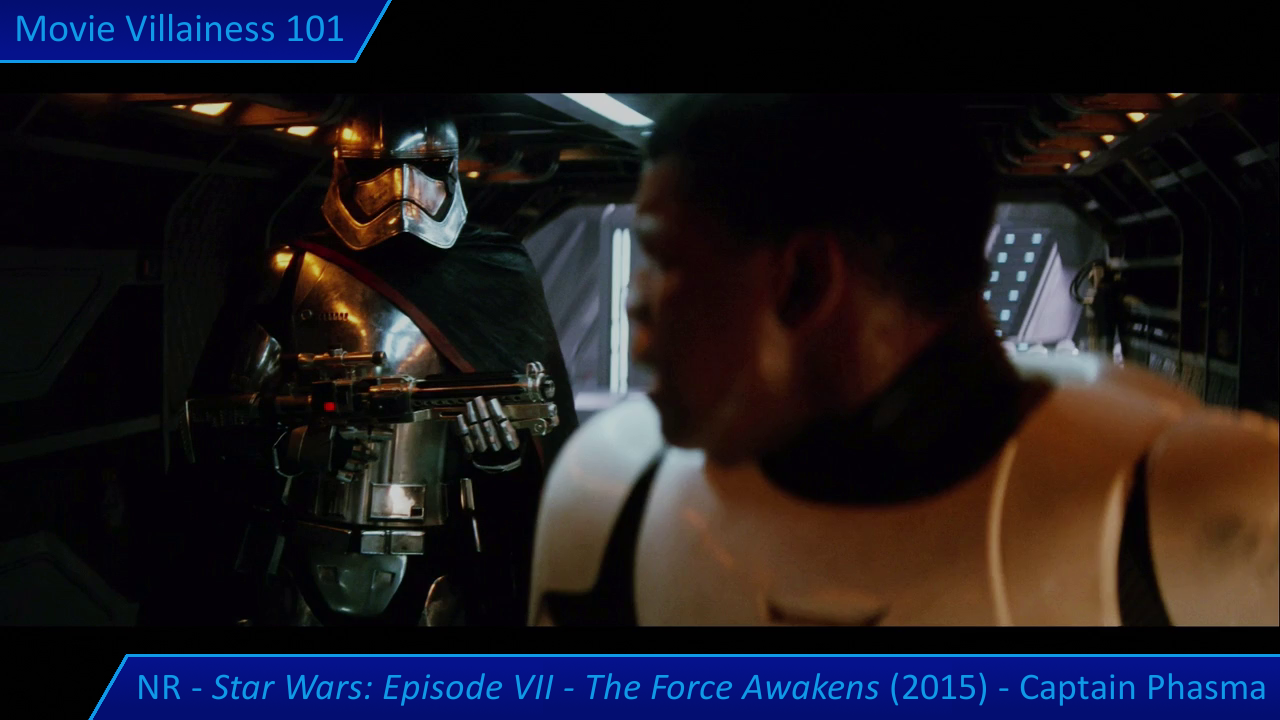
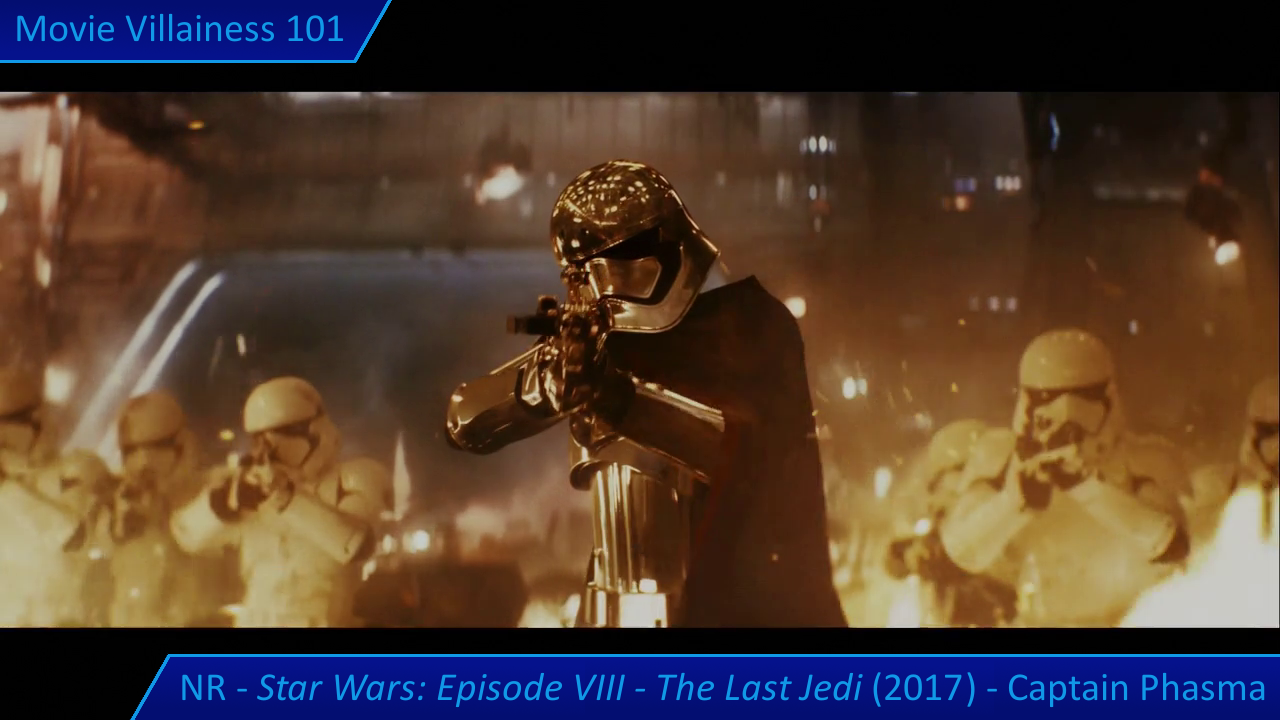
Star Wars: Episode VII – The Force Awakens (2015) – Captain Phasma (Gwendoline Christie)

Okay, so perhaps she’s not terrible, but people expected so much more from Gwendoline Christie as the statuesque silver stormtrooper. After her memorable stint as warrior woman Brienne of Tarth in Game of Thrones, fans understandably had high expectations. Then The Force Awakens was released in 2015, and we got to see Phasma do… well, not very much.

When she featured in Episode VII – and her appearances were fleeting – Phasma stood in the background and gave a few orders to her troops. Armoured eye candy is not what we expected. As for actual combat, there was none. Phasma gets captured by the heroes without a fight, and we’re left with a very unsatisfying off-screen resolution with her character thrown in a trash compactor (according to Han Solo).

Star Wars: Episode VIII – The Last Jedi (2017) – Captain Phasma (Gwendoline Christie)

The good news is Phasma sees some action in Episode VIII and didn’t get the off-screen death we all feared. Maybe the filmmakers resurrected her to avoid fan backlash?

This time, the silver-clad giantess poses a threat, though she’s absent for most of the film. Phasma engages in combat, fires blasters, and fights hand to hand with the hero Finn in an epic confrontation. Still, there are a lot of cutaways to CGI-heavy hero versus trooper battles, and the all-too easily defeated commander is jettisoned into space. Which left Star Wars and villainess fans wondering what might have been.

Two barely honourable mentions, and even that feels generous.

Movie Villainess 101 Rank #100


A movie with three endings – and all of them feature a villainess

Movie

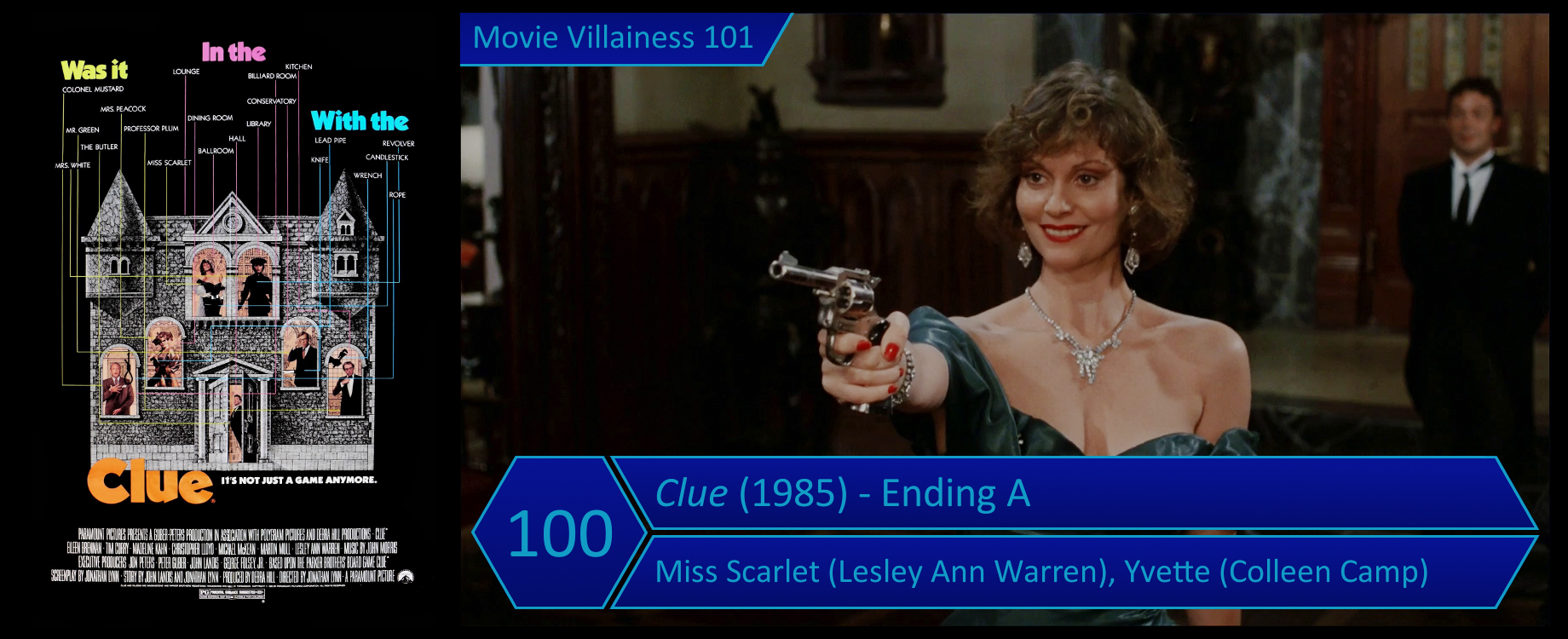
Clue (1985) – Ending A

Clue is the lowest-ranked entry on my list, but I consider all these villainess selections to be at least “superior”, and many didn’t make the final cut. The movie is loosely based on the classic whodunnit board game (known as Cluedo in the UK). Set in 1950s New England, events take place – like all good murder mysteries – in an isolated, spooky mansion. It’s a splendid setting, suitably spacious and creepy, with a multitude of secret passages and dark areas for potential killers to hide.

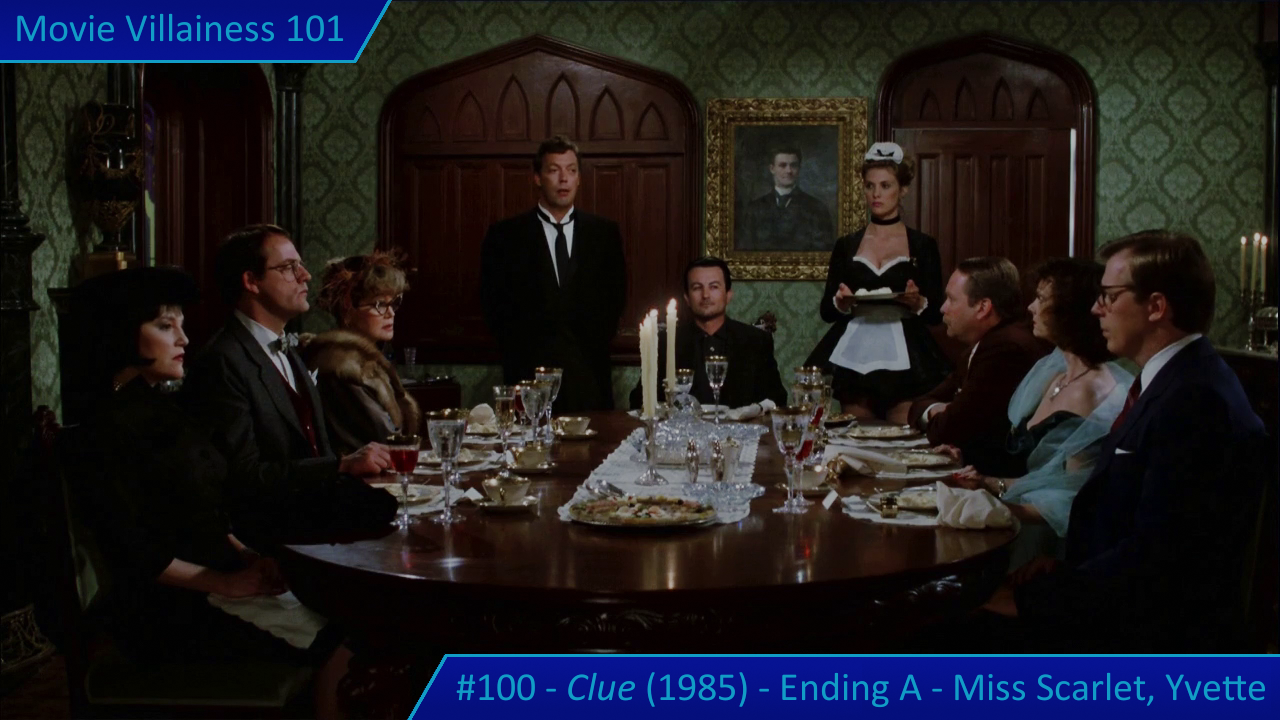
The story begins with six guests arriving. They use aliases that match the game characters from the classic American version: Mr Green, Colonel Mustard, Mrs Peacock, Professor Plum, Miss Scarlet, and Mrs White. All six have connections to Washington, D.C. and mysterious pasts they want to keep secret. Three staff members are also present: the butler Wadsworth, the maid Yvette, and an unnamed female cook. The hired helpers are as suspicious as the guests, and any of them could have murderous intent.

Shortly after dinner, it’s revealed a seventh guest named Mr Boddy is blackmailing the rest, and that the whole gathering is a setup arranged by Wadsworth to expose him. Things take a sinister turn when Mr Boddy presents the others with six weapons (also based on the board game) and makes a deadly proposal: that someone kill Wadsworth to keep the matter secret. Turns out this wasn’t the best plan, as the blackmailer ends up a victim. And it was a dumb move to switch off the lights, which the killer used to their advantage.

And so begins a rather chaotic and darkly comic murder mystery. Other nameless characters, such as the motorist and the cop, are introduced. For those counting, there are six “extras” that get bumped off, each in a different location with a unique weapon. This is a plot device to keep the six primary suspects on the table as potential killers, and to mix in some action amidst the snooping and bitter accusations.

The humour is hit and miss. Some of the better scenes have guests attempting to conceal the murderous goings-on from the visitors. The section where the suspects split into pairs to search the mansion works especially well. However, repetitive gags, such as Mr Green saying “I didn’t do it” whenever a body is discovered, become tedious after a while. There’s an overlong recap towards the end where Wadsworth enthusiastically recounts events in annoying detail, complete with overacting and high drama.While funny to start with, eventually you want the annoying butler to take his guests’ advice and just get on with it.

However, all this is preamble to the ending. Or rather, three endings. The ambiguous conclusion is what most viewers will remember the movie for. When released in cinemas, only one of the three different endings was shown. These were later edited together and separated by title cards for the home video version, and have since become known as endings A, B, and C based on the order.
Villainesses

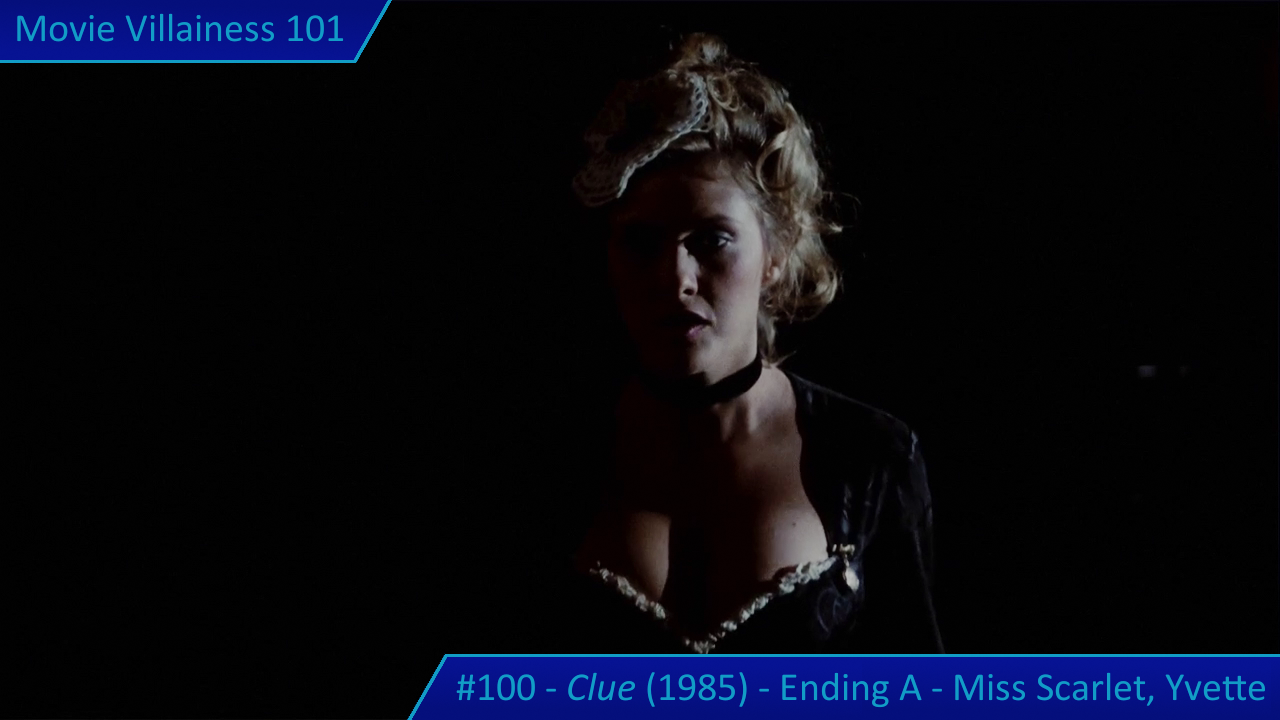
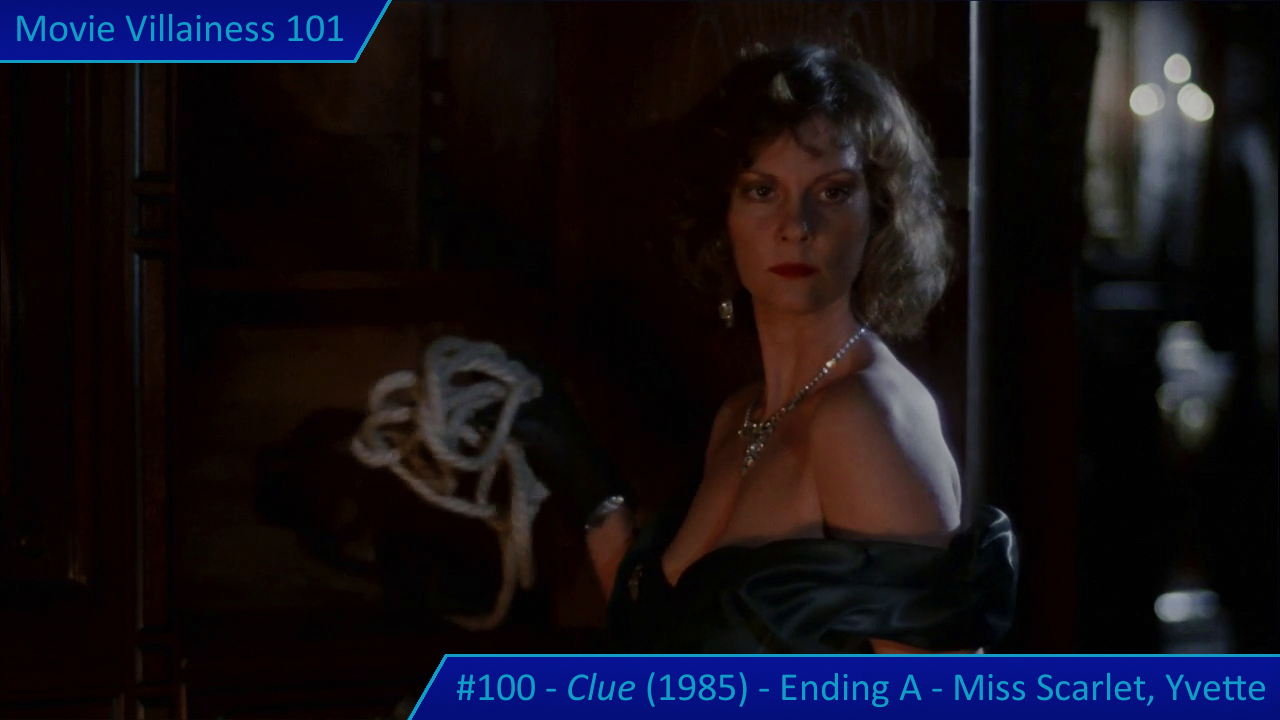
Miss Scarlet (Lesley Ann Warren), Yvette (Colleen Camp)

For villainess fans, the first ending is arguably the best. The motive and movements fit better than endings B and C, and the killers are exclusively female.

Ending A has Miss Scarlet as the main killer, with Yvette the maid as an accomplice who kills Mr Boddy and the cook. That’s before her scheming employer strangles her. Miss Scarlet also murdered the motorist, policeman, and a singing telegram girl, who were all revealed to be part of a complex blackmail plot. Miss Scarlet’s confessed motive is that she’s a proud capitalist. Yvette was uncovering the other guest’s secrets, which Miss Scarlet planned to sell. Except for the motorist, we get to sell all the murders re-enacted.

Police arrive in force to arrest Scarlet, but not before she takes part in possibly the best joke of the movie. This revolves (literally) around how many shots were fired during the movie, and whether any bullets remained in the gun. Turns out Miss Scarlet can count and Wadsworth can’t, as he discovers to his detriment when he proclaims the gun empty before shooting a chandelier. Oops!
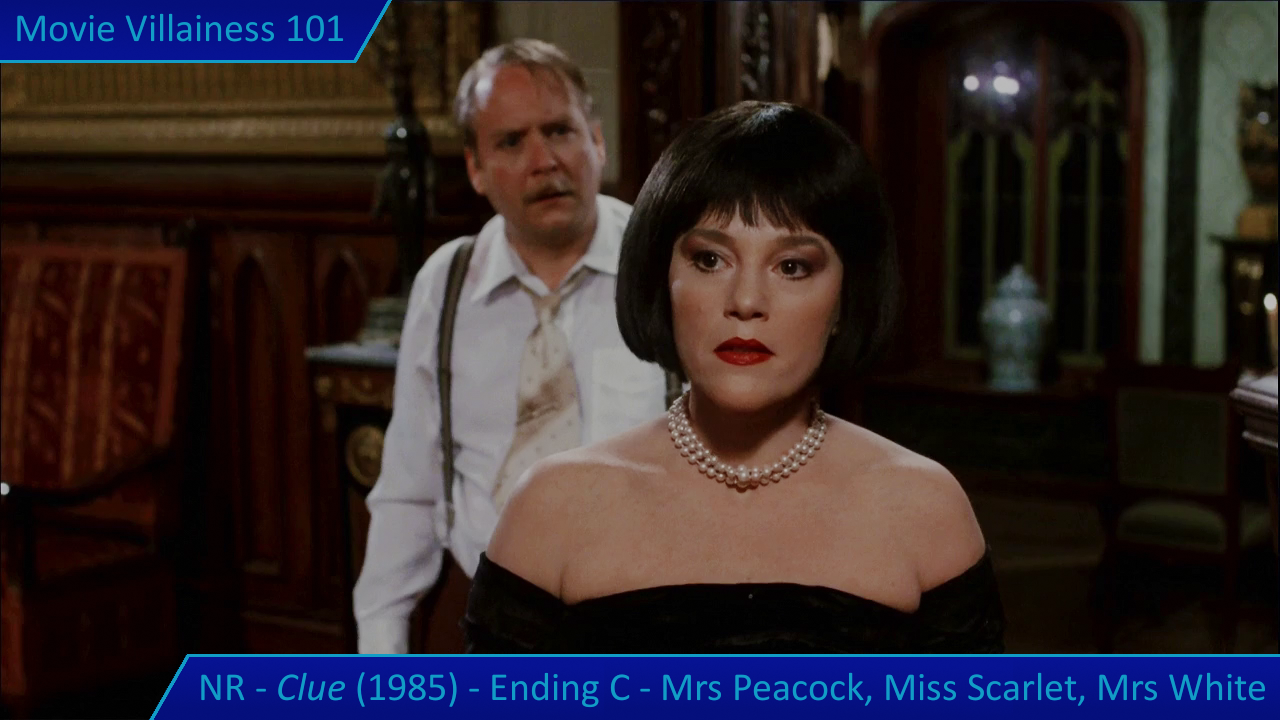
Honourable Mentions: Clue Endings

Unlike other reviews, the honourable mentions are from the same film, covering endings B and C. Villainess fans will be pleased to know all three conclusions have at least one female killer.

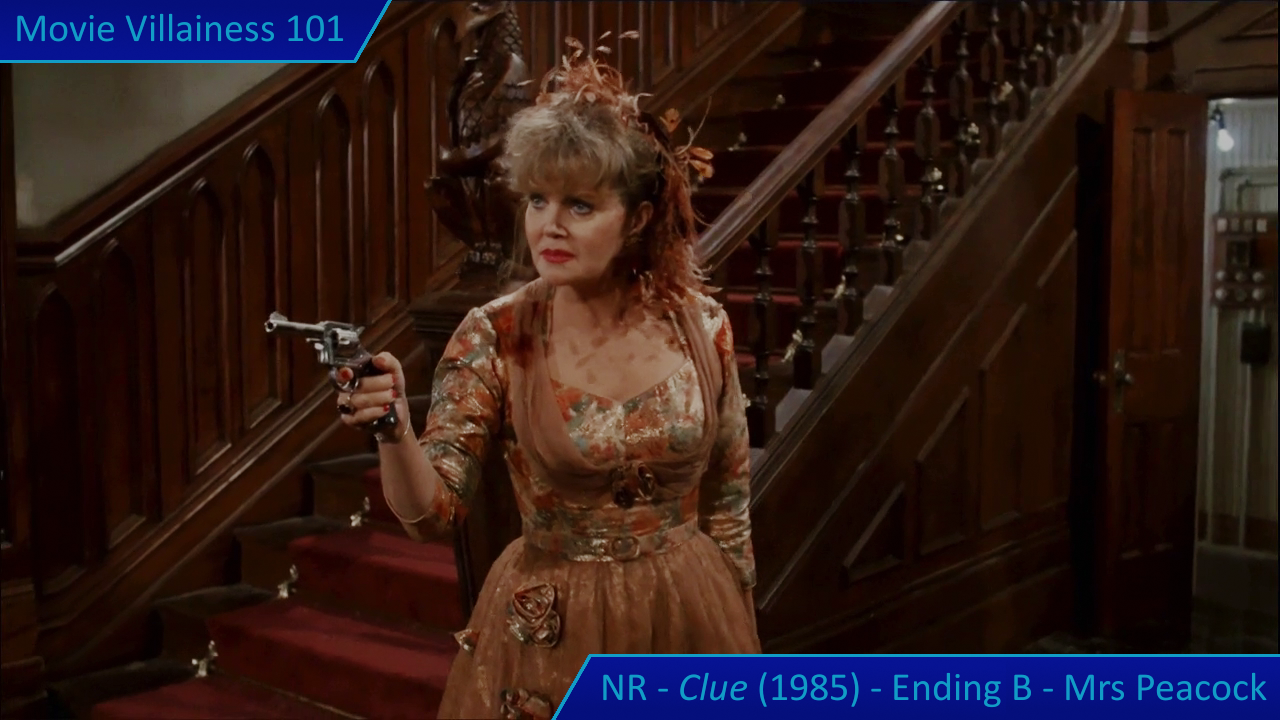
Clue (1985) – Ending B – Mrs Peacock (Eileen Brennan)

Ending B is the least satisfying, mainly because there’s only a single killer. Even for a comedy, this is not plausible given the number of murders and the need to avoid detection. And despite six victims, no murders are shown in flashback, unlike endings A and C. This makes ending B feel somewhat tacked on, as if it were filmed last and less effort was put into it.

After a lacklustre reveal, the best part is the villainess’ arrest when the police chief arrives disguised as an evangelist and boldly states “The Kingdom of Heaven is at hand!” That’s the cue for dramatic floodlights to switch on and a small army of cops to descend on Peacock to foil her escape. But overall, it’s a disappointing climax.

Clue (1985) – Ending C – Miss Scarlet (Lesley Ann Warren), Mrs Peacock (Eileen Brennan), Mrs White (Madeleine Kahn)

Ending C is the fan favourite, and often regarded as canon based on the “what really happened” title card. From a comedy perspective, it works well because it’s chaotic. In this resolution, all the guests except for one commit a murder, often to remove blackmail evidence. The exception is Mrs White, who strangles Yvette just because she annoyed her. Wadsworth reveals himself to be the real Mr Boddy and the mastermind behind the whole thing. Yes, the butler did it.

Unfortunately, the lack of a single main villainess makes it all feel unsatisfying, and the killings come across as random rather than meticulously planned. Ultimately, Mr Green is unveiled as an undercover FBI agent and takes down the real blackmailer in a brief shootout. Then the six killers are arrested together.