Movie Villainess 101 Rank #3

The greatest female villain and pre-title henchwoman in the Bond franchise are more than enough

Movie

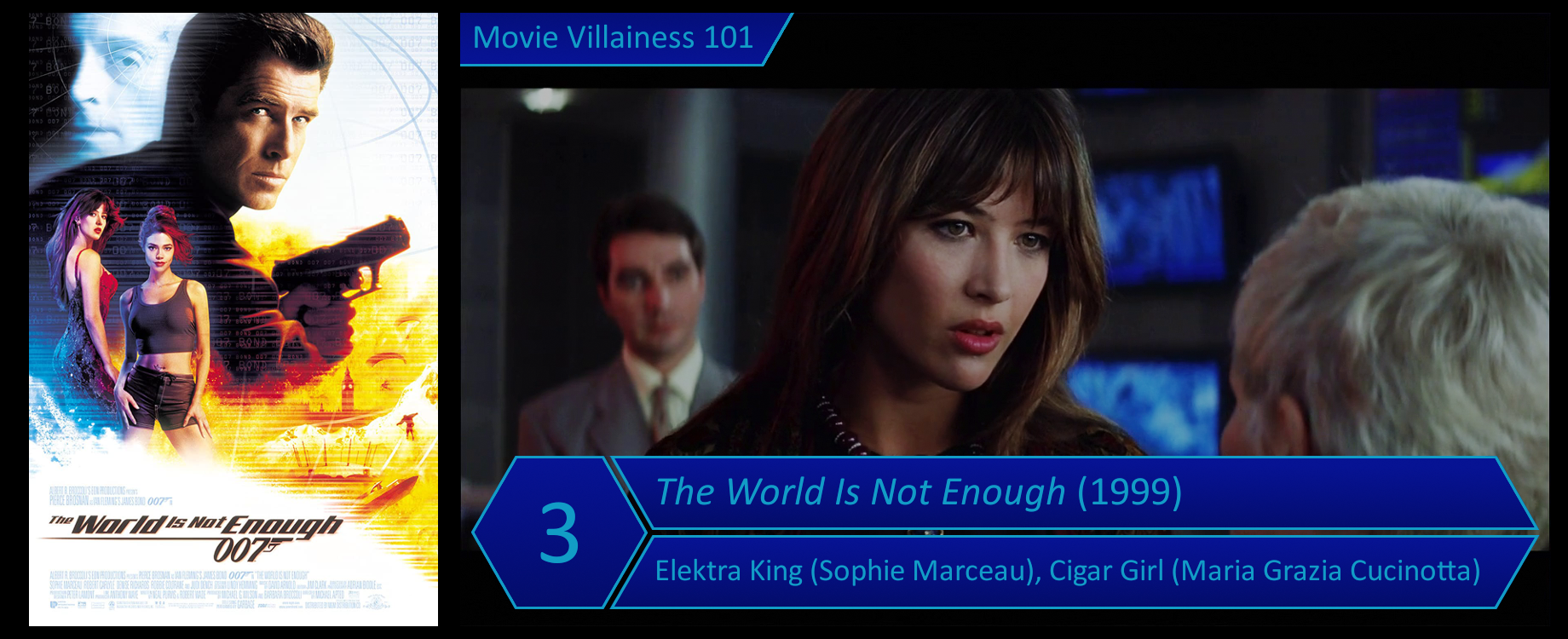
The World Is Not Enough (1999)

My GoldenEye discussion omitted one of the Brosnan films. That’s because the only female main villain in the Bond series deserves a goddess tier spot. As a bonus, we get the greatest pre-credits villainess, which almost makes up for the female baddie wilderness in the Daniel Craig era. In classic 007 fashion, the Cigar Girl assassin gets her own dedicated section. And it’s a logical review structure since Elektra doesn’t appear until after the title song.
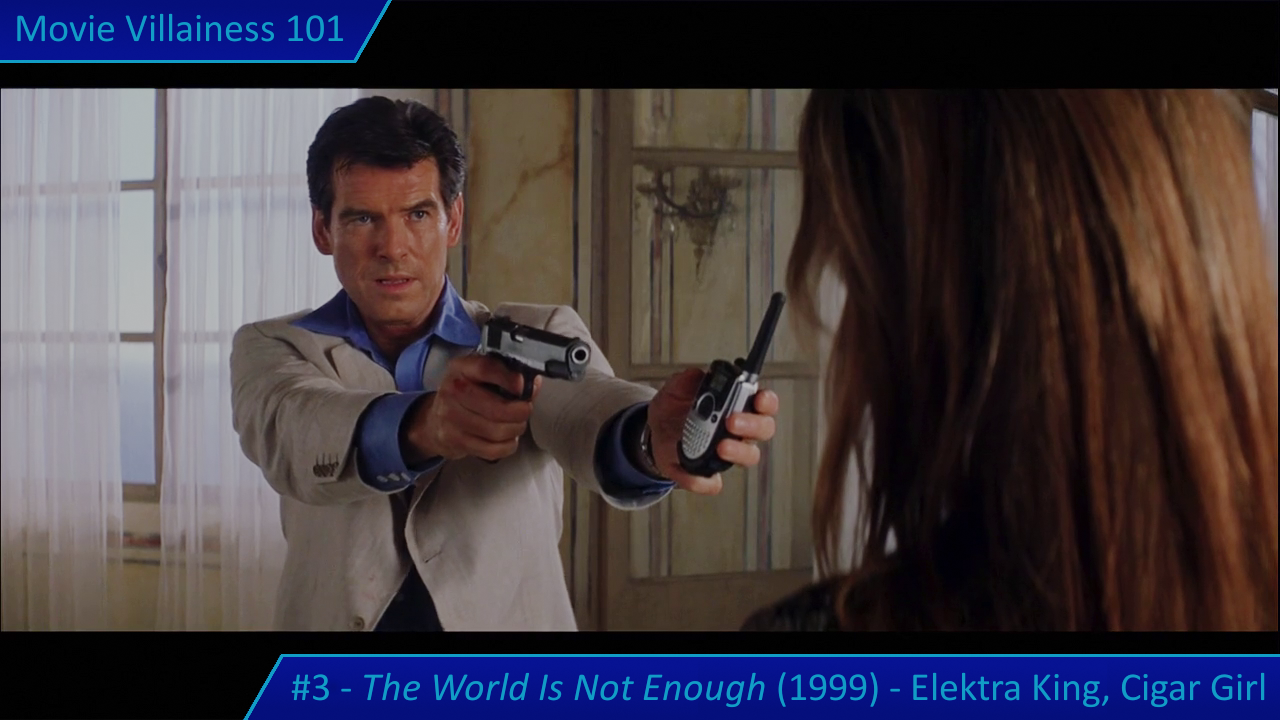
Brosnan films are relatively fun and escapist compared to what followed, but this entry has a more serious tone. Valentin Zukovsky (Robbie Coltrane) makes a welcome return as Bond’s reluctant ally, and the MI6 series regulars are also present. Sadly, this was Desmond Llewelyn’s last appearance as Q, but he passes the torch on to R (John Cleese) and delivers comic antics and gadget-testing chaos.

Action sequences are hit and miss, and the major set pieces – attacks by para-hawks and saw-blade helicopters, a gun battle in a missile silo, and the climax on a doomed submarine – fall flat compared to the spectacular opening. Still, this is a must-watch movie for any villainess fan, and the twist of having a Bond girl be the main baddie is a refreshing take. There’s also a good female: Denise Richards as nuclear physicist Christmas Jones. An excuse for bad jokes, but this is an entertaining outing.

Pre-Title Villainess

Cigar Girl (Maria Grazia Cucinotta)
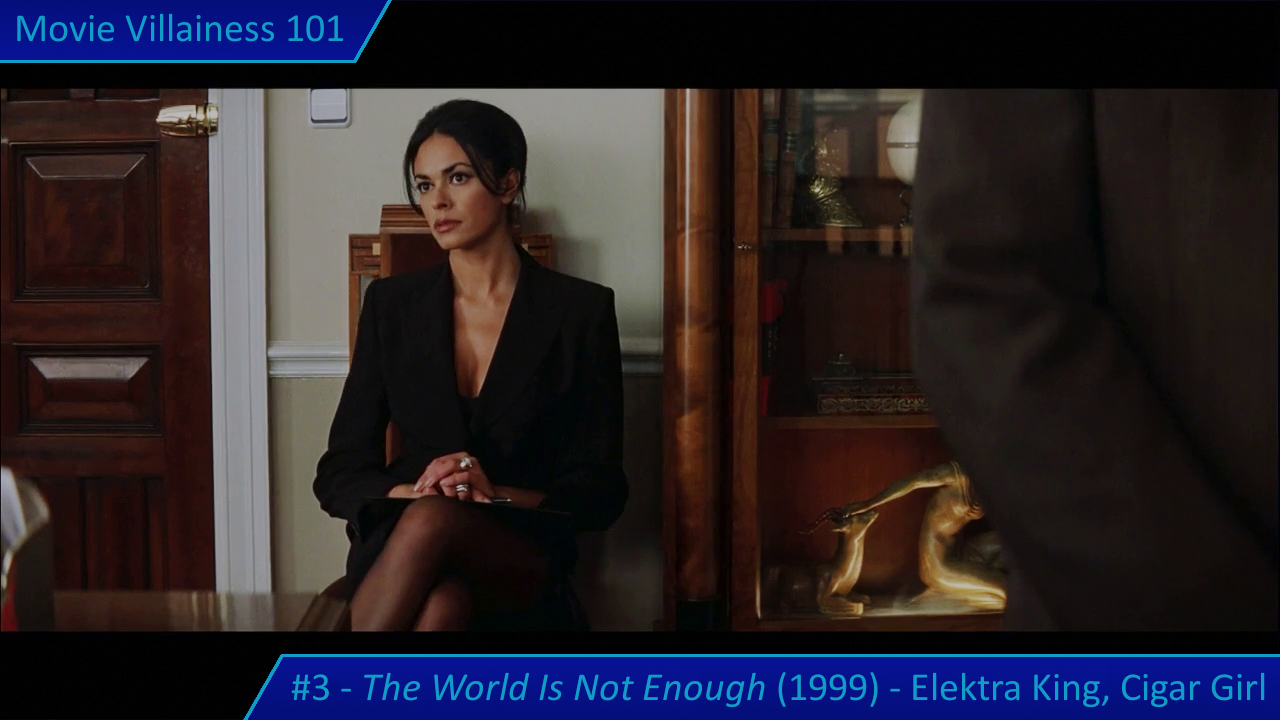
This epic opening gambit – and the longest before No Time to Die – begins in Bilbao, Spain, with Bond mincing words with a sleazy banker. A beautiful woman offers him a cigar (hence her nickname) and even gets a double entendre quip. Then it’s down to business with 007 demanding answers about a murdered MI6 agent. Things predictably turn nasty, and Bond makes quick work of some armed thugs. Too bad he forgets about the Cigar Girl, who eliminates the banker with a throwing knife.
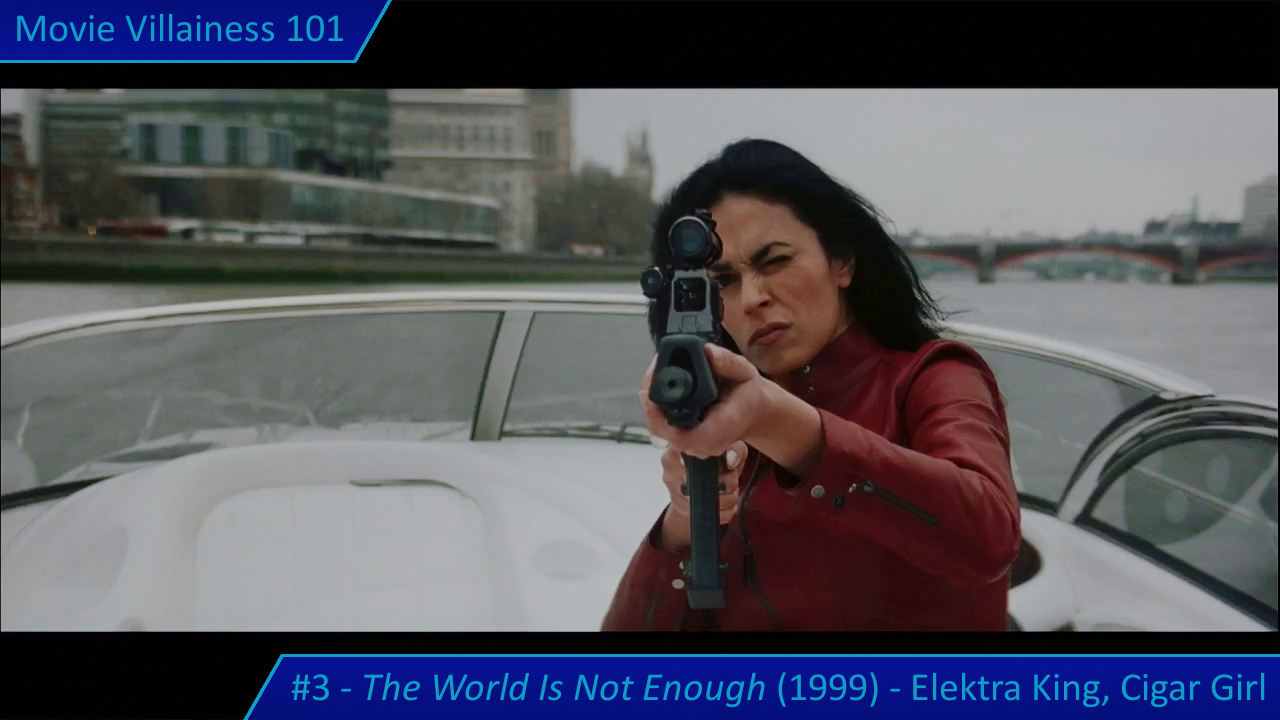
Trapped and unable to pursue the assassin, Bond makes a dramatic getaway with a suitcase of money with the help of a mystery sniper. This ensures 007 makes it safely back to London, where he’s introduced to Sir Robert King, an oil tycoon who won’t be with us much longer. The money is laced with explosives, and King’s lapel pin is a proximity trigger. With MI6 under attack, a familiar female foe returns, and this time it’s Bond in her laser sight.

The big chase along the River Thames has Bond in a gadget-equipped boat pursuing the Cigar Girl past famous landmarks, including the Houses of Parliament and the Millennium Dome. The elusive assassin is as skilled at piloting a boat as at murder. More than once she evades Bond by making sudden turns or cutting under a descending bridge. Bond submerges the boat to bypass the obstacle and straightens his tie. Remember when these movies were pure fun?
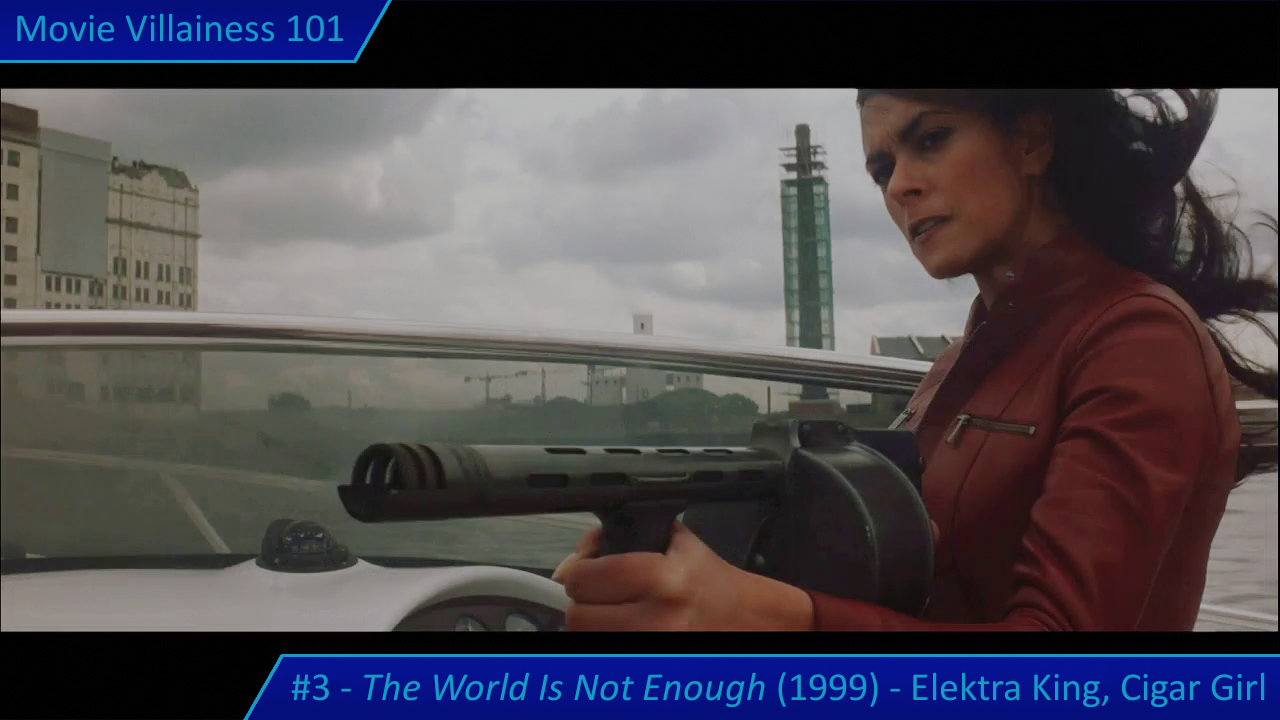
The Cigar Girl uses a machine gun, which is ineffective against the armoured Q-Boat, so she switches to a grenade launcher. Plenty of collateral damage and explosions, but Bond is never easy to get rid of. The villainess wrecks another boat and cuts 007 off, or so she thinks. Like all vehicle chases in Bond films, the hero finds a detour – a land ride through a street market, narrow alley, restaurant – back to the Thames.
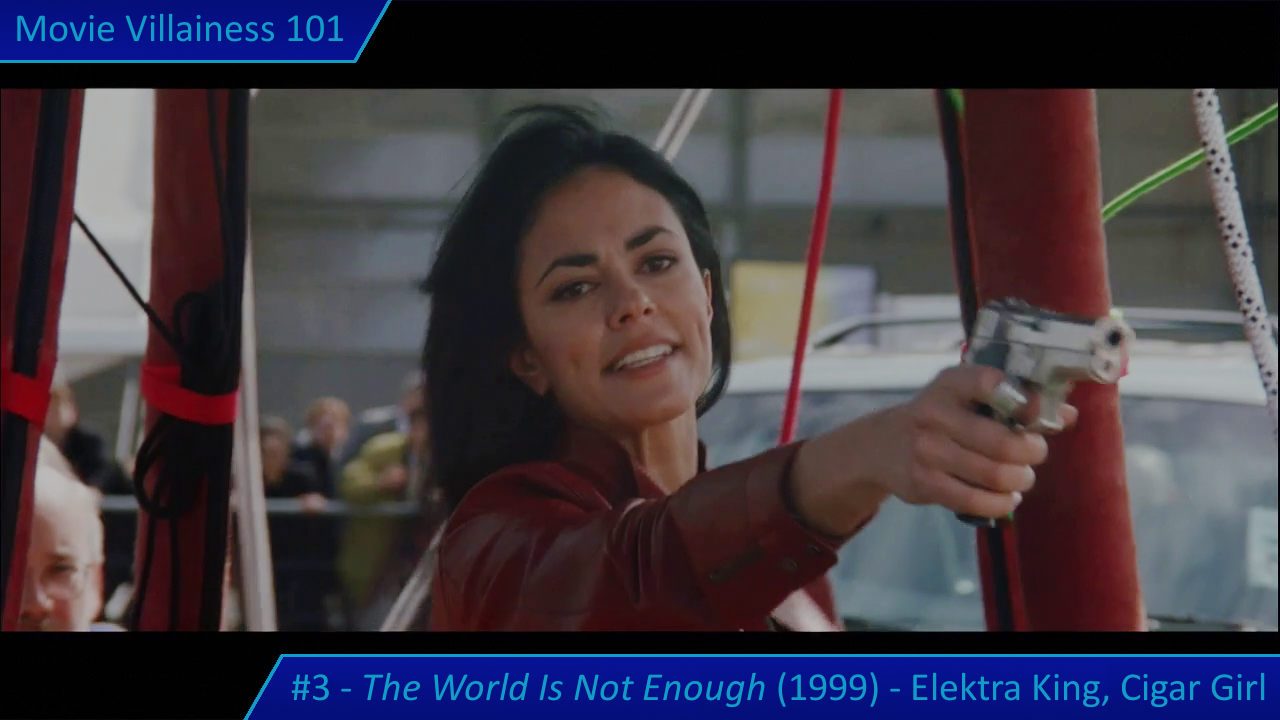
Bond launches torpedoes at the Cigar Girl, but she makes her own dramatic escape like any good pre-credits villain. Then she hijacks a hot-air balloon, and Bond leaps onto the mooring rope. Realising there’s no way out – and rejecting Bond’s offer of protection – the henchwoman blows up a gas tank. Bond drops to safety and the Millennium Dome does something useful by breaking his fall. This hitwoman and sequence could push for a ranking all by herself, but there’s plenty more female villainy to come.

Main Villainess

Elektra King (Sophie Marceau)
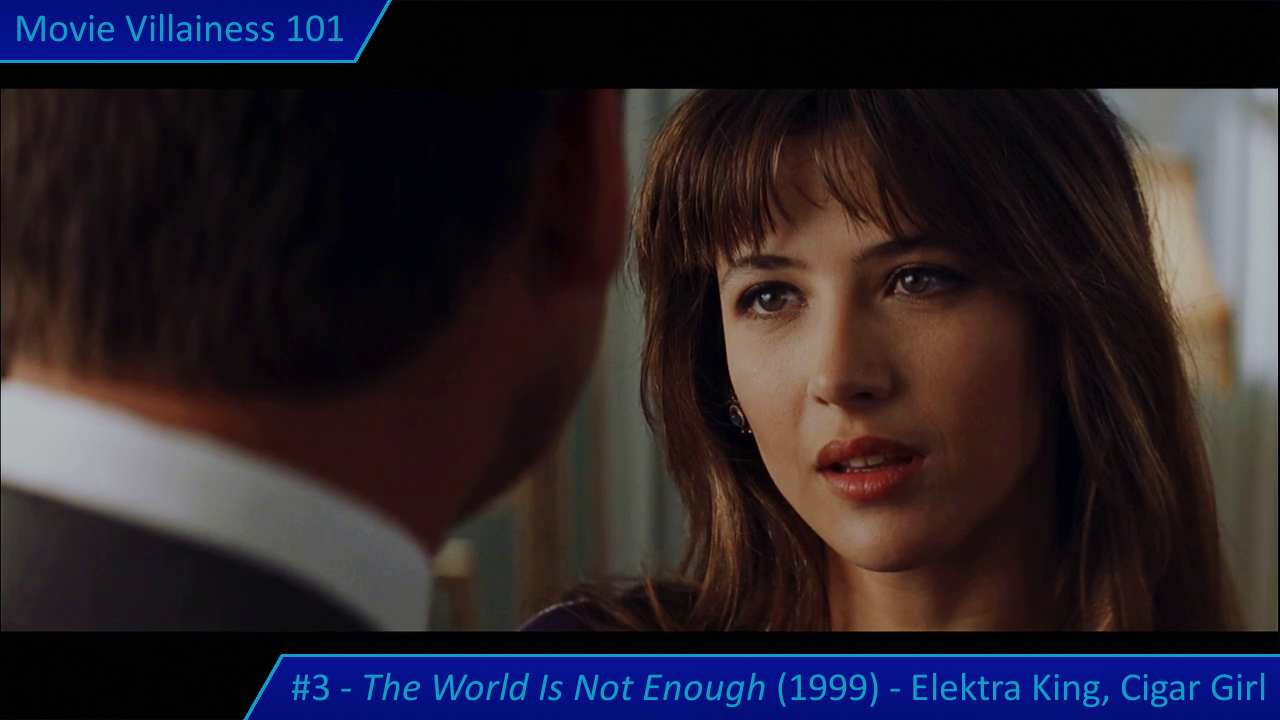
Straight after the title song, Elektra attends her father’s funeral. The first half of the movie sets her up as a traditional Bond girl whom the hero must protect. The main villain is implied to be Renard (Robert Carlyle), an anarchist who previously kidnapped Elektra and now appears to be targeting her again. King’s daughter has taken over his oil company and oversees a pipeline construction in Azerbaijan. Not the safest part of the world, and after Elektra and Bond are attacked by para-hawks while skiing in the mountains, the two become dangerously close.

Surprisingly, Bond doesn’t make love, and instead shows genuine concern when Elektra invites him to her luxurious Baku residence. There are plenty of dodgy-looking males around, including a tough henchman and the head of security, so no shortage of insider suspects. It turns out they are all working with Renard, but the mystery element works well. As a villain before the more serious Craig films, there’s a gimmick, in this case a bullet lodged in Renard’s brain which suppresses pain.
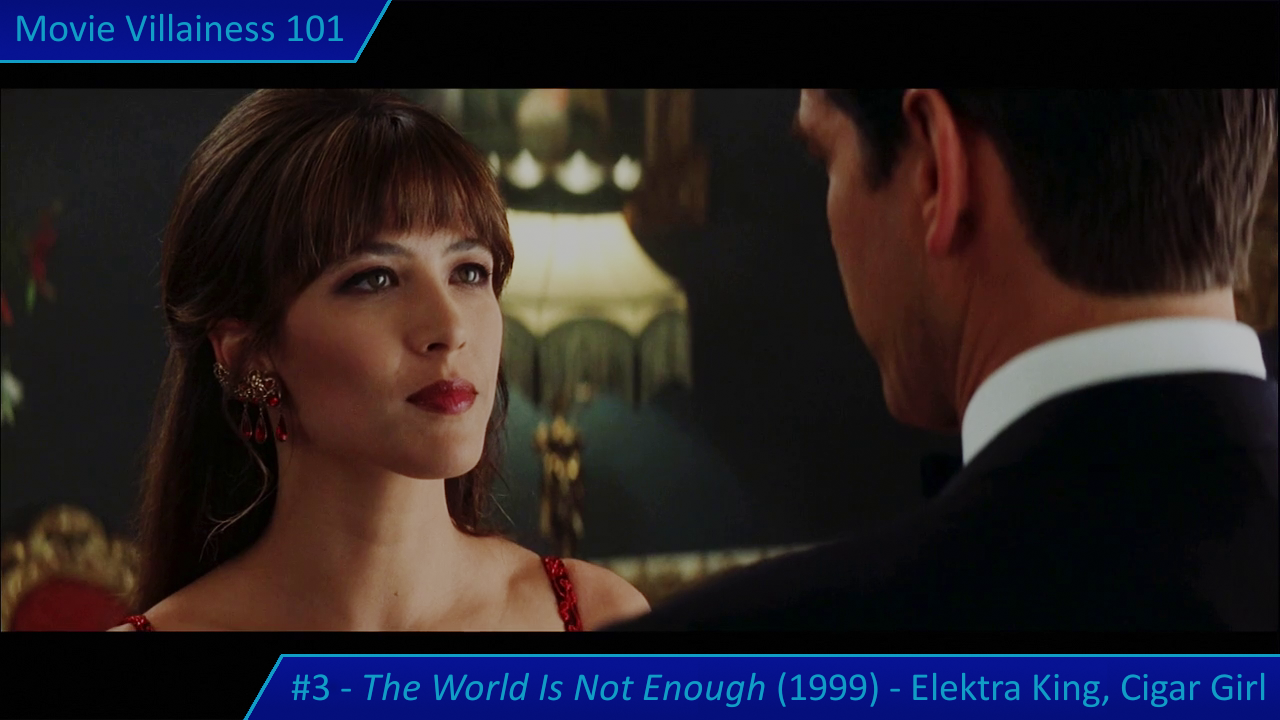
Determined to identify his attackers, Bond visits Valentin at a Russian mob casino. Everyone present, from the high rollers to the attractive female employees, is armed. Elektra shows up and acts recklessly, losing a million dollars on a high-card draw game. The first sign this woman may not be as innocent as she pretends, but Bond still beds her. That moral compunction didn’t last long, eh?

Bond’s investigation leads him to the pipeline construction site where the treacherous head of security learns the British spy has a licence to kill. A long plane ride later, Bond discovers a plot to steal a nuclear bomb from a missile silo. This is where we meet Christmas Jones, an improbable scientist who becomes an unlikely ally once Renard’s men open fire. She’s the reliable, non-screaming Bond girl who’s happy to help, even if bullets and explosions are not a usual day at the office.
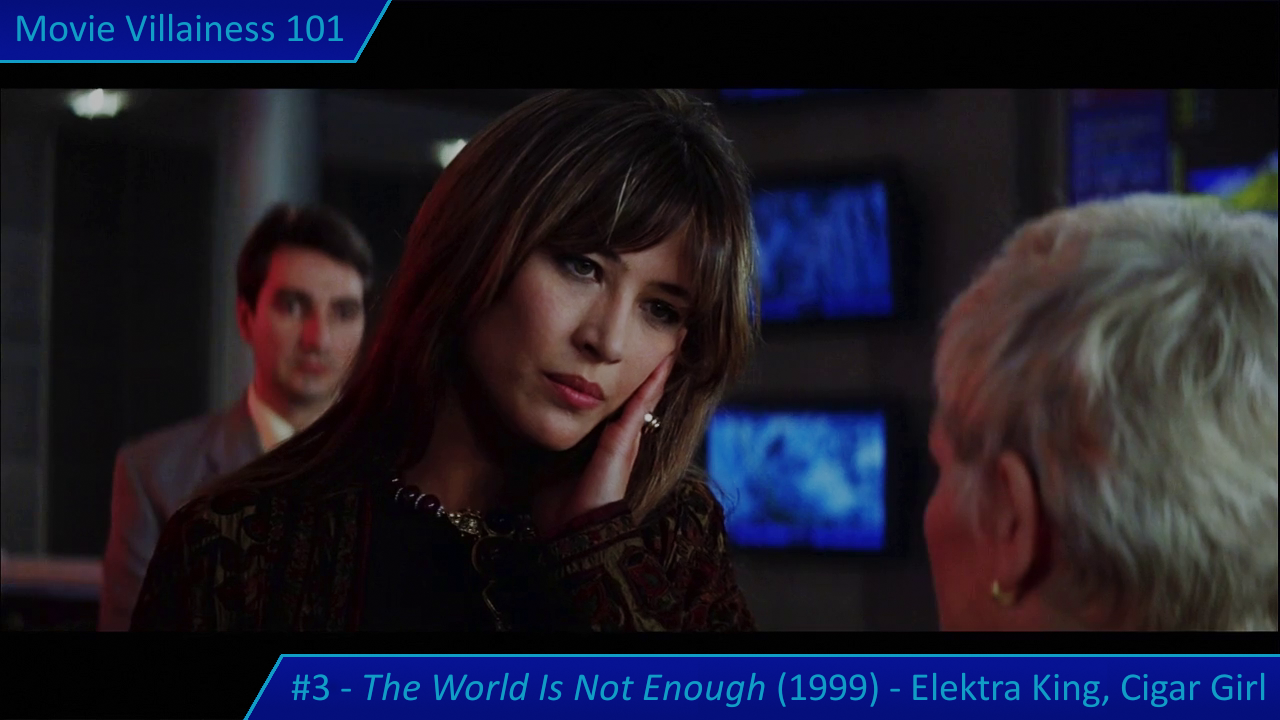
Despite Bond’s efforts, Renard escapes, and it’s revealed he plans to detonate a nuclear device in Elektra’s pipeline. With a second woman involved, it’s inevitable (in this era) that one girl will be bad. When Bond and Christmas discover only half the plutonium core is in the bomb, 007 makes a calculated choice to let the device explode. Believing her nemesis to be dead, Elektra reveals her true intent to M – present at the villainess’ request – by having the MI6 bodyguards killed. And we finally have a female main villain to celebrate.

Now we know Elektra is behind her father’s murder, it’s time to reveal the endgame. Bond questions Valentin and learns that the villainess and Renard have purchased an old nuclear submarine. Their plan: to create a meltdown, destroy Istanbul, and contaminate the surrounding sea. And Elektra’s pipeline will become the only viable oil supply in the region.

With so much wealth and power, no wonder this woman has a hold over Renard. The two have a sinister sex scene where she runs ice over her body and clearly enjoys inflicting psychological torture. Meanwhile, M is locked in a cell in Maiden’s Tower, but broadcasts a signal using a missile locator card (which Bond gave her earlier) and a clock battery.
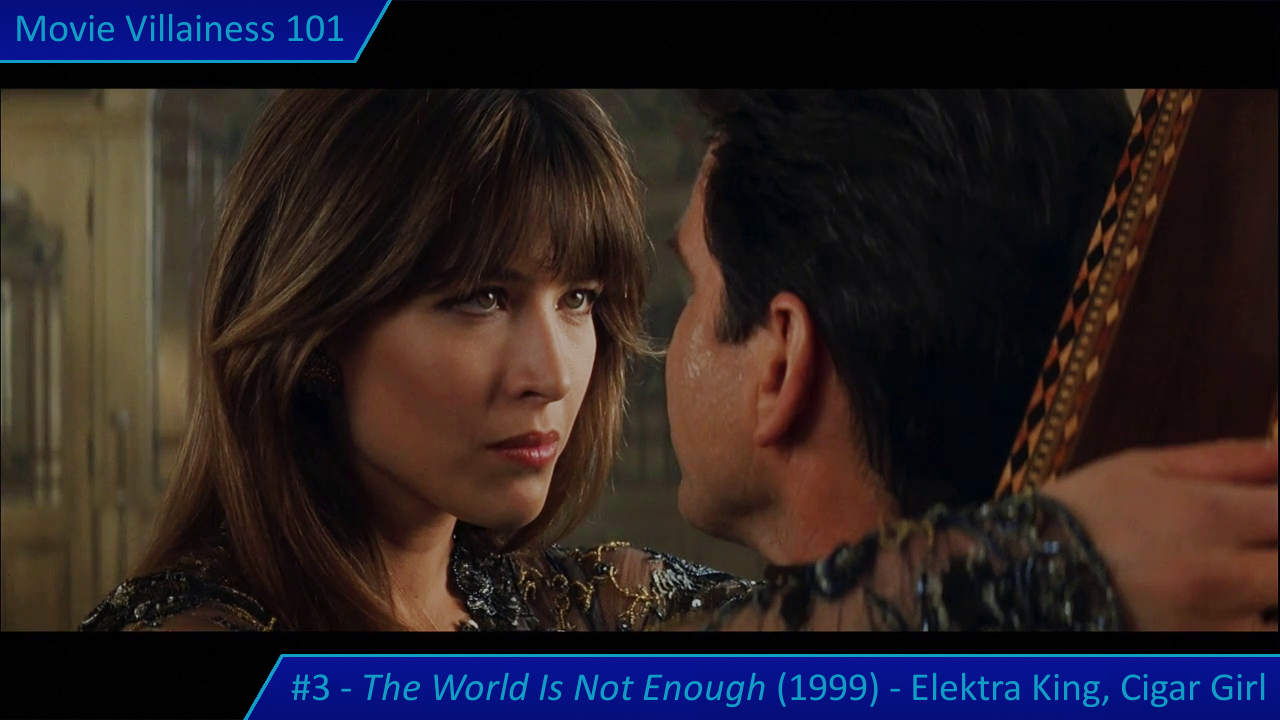
After an amusing scene where the heroes interrogate Valentin as he drowns in caviar, a gold-toothed henchman sells them out. Time for physical torture, and the villainess uses an antique chair and neck restraint to secure Bond. Perfect for strangling a man during a villainous motive rant, and an opportunity to drop the title, which is Bond’s family motto. The sadistic Elektra rapes Bond while he’s at her mercy and is enjoying her triumph until Valentin crashes the party.

If Bond was expecting a rescue, he shouldn’t have been so optimistic. Elektra shoots Valentin, and the Russian mobster – despite having a gun in his cane – targets a wrist restraint instead of the female villain. Perhaps a reference to their history, as the Russian acknowledges Bond in his dying moment. That’s enough for the hero to escape and chase Elektra up Maiden’s Tower.
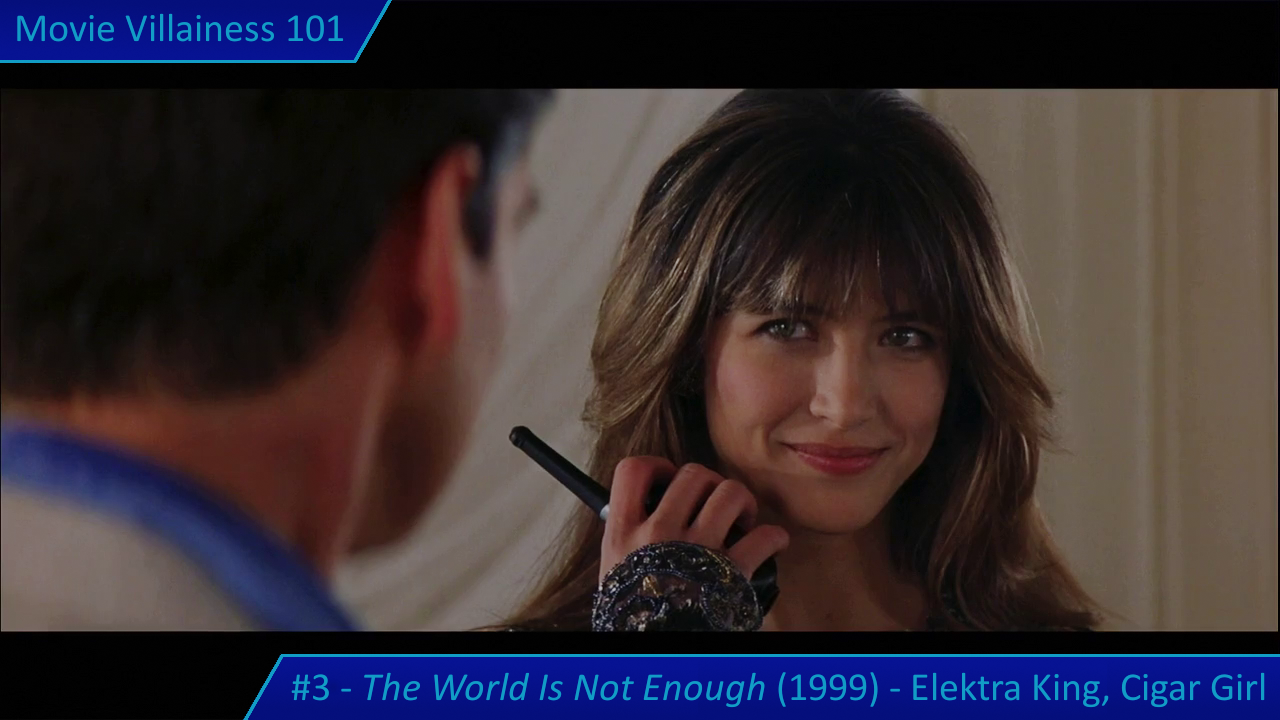
Disappointingly, she’s not the last villain to die, as there’s a lengthy sequence where Bond stops Renard melting down the submarine reactor. And then it’s the usual scenario of rescuing the Bond girl, who actually proves useful, and an old-style ending with a poor joke and M surprised by her top agent’s womanising.

Before the anticlimactic finale, Bond faces off with Elektra. She gets one of the best villain deaths: taunting the spy as he pursues her, before boasting he can’t kill a woman in cold blood. Turns out Bond has no problems with cold-blooded murder with evil women, though he shows regret afterward.

Honourable Mention / Discussions: Daniel Craig Bond Movies

Casino Royale (2006) – Valenka (Ivana Miličević)
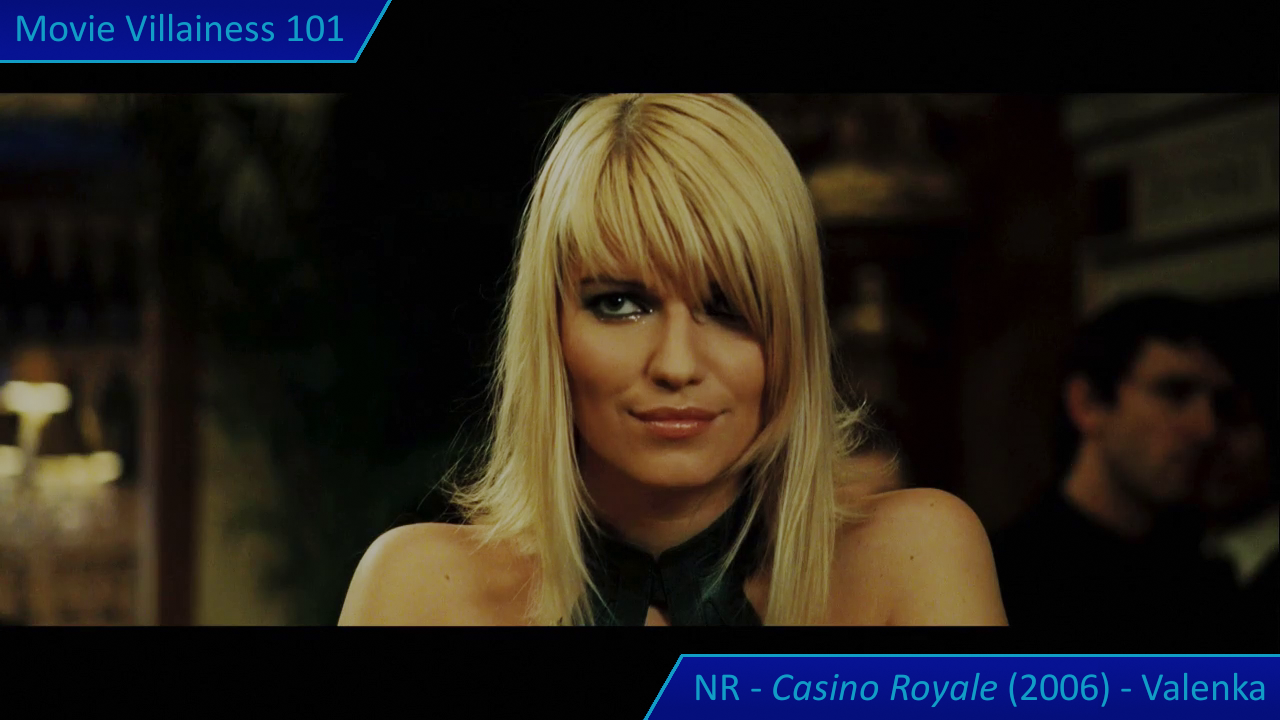
The sole honourable mention for this review goes to a mostly silent, sexy henchwoman who looks the part but doesn’t do much. And that faint praise sums up the lack of female villains in the Daniel Craig era.

The second Martin Campbell-directed reboot (after GoldenEye) is an origin story with a black and white prologue and a reckless 007. A long way from Connery’s suave secret agent. A back to basics approach, but there are action scenes aplenty, notably a free-run sequence across a construction site. The bad guy is Le Chiffre, a banker funding terrorists whom Bond must outwit in a high-stakes poker game at the titular Casino Royale. Judi Dench remains M, but with no Moneypenny or Q, Bond relies on actual spy work and resilience to complete his mission.
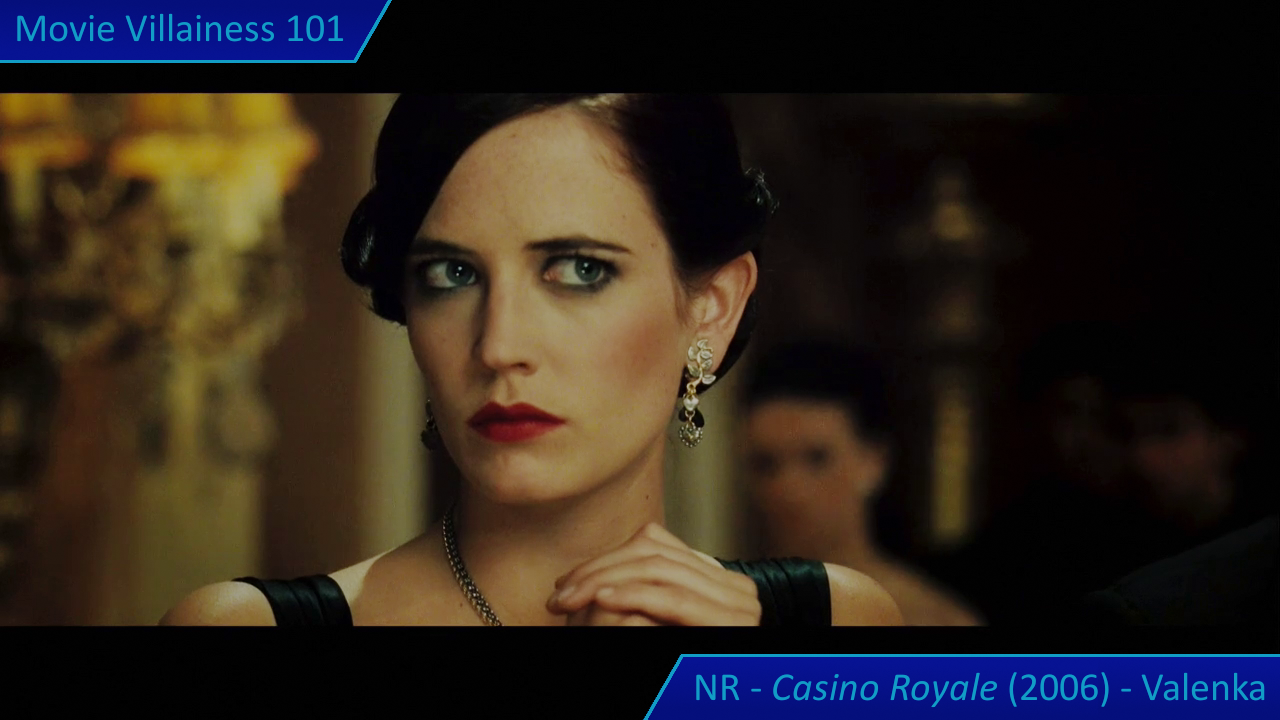
The main female character is Vesper Lynd, a treasury agent with the usual pun introduction, who later becomes a genuine love interest. Eva Green delivers a standout performance in the franchise, with real chemistry between her and Craig’s 007. Bond’s weakness for women makes him blind, and he doesn’t know Vesper is working with the shadowy organisation behind Le Chiffre. It’s eventually revealed that he had her boyfriend kidnapped to coerce her, so she’s a tragic character and not a true villain. But her death in the Venice finale is the most downbeat outcome since On Her Majesty’s Secret Service.

As for Valenka, she gets a sexy introduction and is present for Le Chiffre’s business dealings. Despite being attacked by a machete-wielding thug, she remains loyal and isn’t too bothered by violence when she’s not the target. Her best moment is poisoning Bond’s drink at Casino Royale, but she vanishes near the end. A scream implies Valenka is killed when Le Chiffre’s employers decide he’s no longer valuable. Get used to disappointment with this Bond – it only gets worse from here.

Quantum of Solace (2008)

The story is hard to follow in this weak outing, and the jump-cut action sequences are more likely to induce headaches than thrill. Add unnecessary, arty title cards whenever events shift to a new location, poor direction during exposition scenes, and a truly pathetic henchman, and the result is dire. A woman named Strawberry Fields (yes, really) gets coated in oil for her death scene as homage to the superior Goldfinger. Painful stuff.

Olga Kurylenko is Camille, a former Bolivian agent who allies with Bond. She handles herself well in the action scenes, notably a parachute escape from a crashing plane. Pity her vendetta is even less interesting than Bond’s quest to avenge Vesper. The climax in a desert hotel is messy, and the only plus point is brevity. Clocking in at 106 minutes, Quantum is the shortest Bond movie to date.

Skyfall (2012)
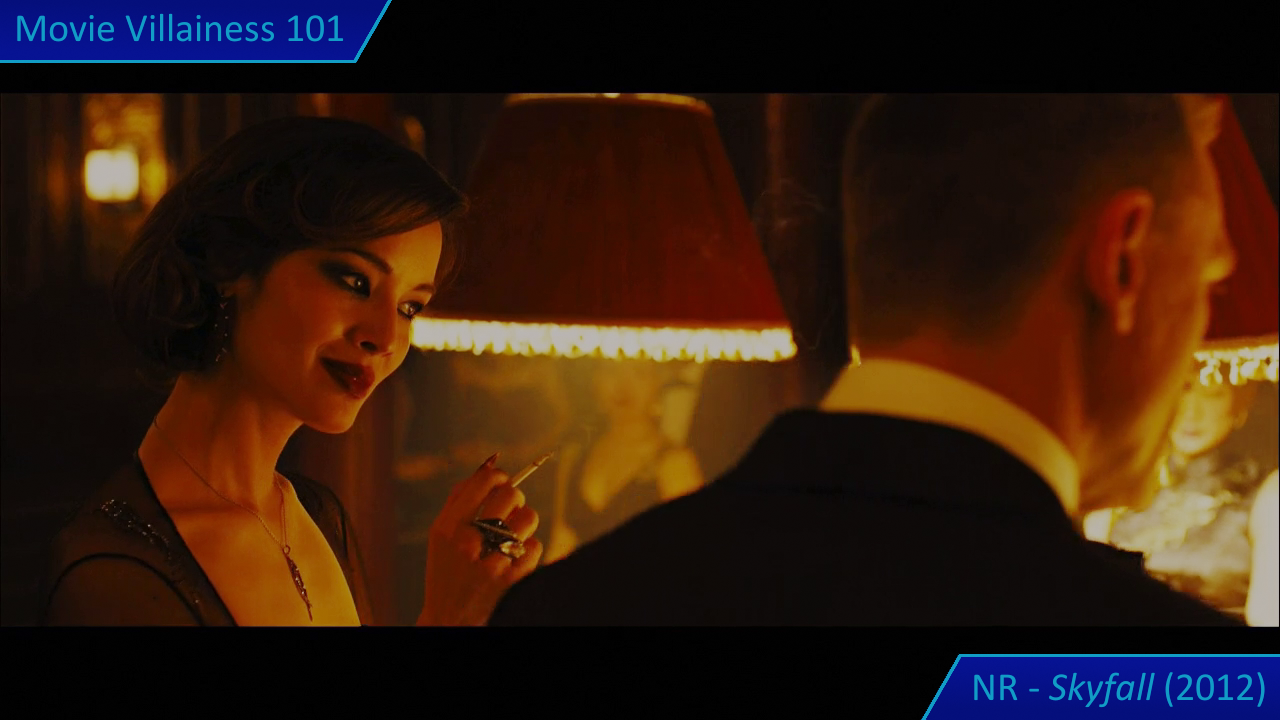
Craig’s third movie breaks with tradition by not giving us a true Bond girl. Judi Dench is M for the last time, with a more prominent role in the story and a great sendoff. Naomie Harris’ MI6 operative does more harm than good. More importantly, her name is Eve Moneypenny, an entirely different origin for the world’s most famous secretary. Q makes a comeback in the guise of a young boffin, though gadgets are limited to a palm reader, gun and radio.

The closest fit to the traditional female role is Sévérine (Bérénice Lim Marlohe), a former sex slave who is now a trophy girl and accomplice to the main villain Silva (Javier Bardem). He’s a former agent out for revenge against M, and the story is mainly set in the UK. Sévérine looks beautiful, matching the exotic locations of Shanghai and Macau. But like many ill-fated women in 007 movies, she romances the British spy before the villain disposes of her in theatrical fashion.

Skyfall is one of the better Bonds overall, perhaps because it doesn’t follow the established formula. The terrorist attacks on the London Underground and parliamentary hearing are well staged. The grand finale is a MacGyver-style final confrontation in Scotland as Bond dusts off a familiar Aston Martin. However, female antagonists are notably absent.

Spectre (2015)

The return of Ernst Stavro Blofeld (Christoph Waltz) and his evil organisation promised much, but delivered little. Mexico City during the Day of the Dead is a spectacular backdrop for an action-packed opening sequence, a helicopter stunt, and thousands of extras. Unfortunately, that’s the sole highlight. A shadowy Spectre conference, a car chase through Rome, and a train fight with a tough henchman should be exciting. They are not.

No female villains (again), and the leading lady Madeleine Swann (Léa Seydoux) has no chemistry with 007. Monica Bellucci appears – briefly – as the suicidal widow of a Spectre agent Bond killed in the teaser. He saves her life and seduces her for information, which ends with the most uncomfortable fling in the series.
Best not to mention the unnecessary twist about Bond’s guardian being Blofeld’s father, revealed in a painful exposition scene.

Add a tedious plot about intelligence control, a flat finale in the ruined MI6 building, and the hostage girlfriend ploy, and there’s little to get excited about. Need to cure insomnia? Spectre is the solution.

No Time to Die (2021)
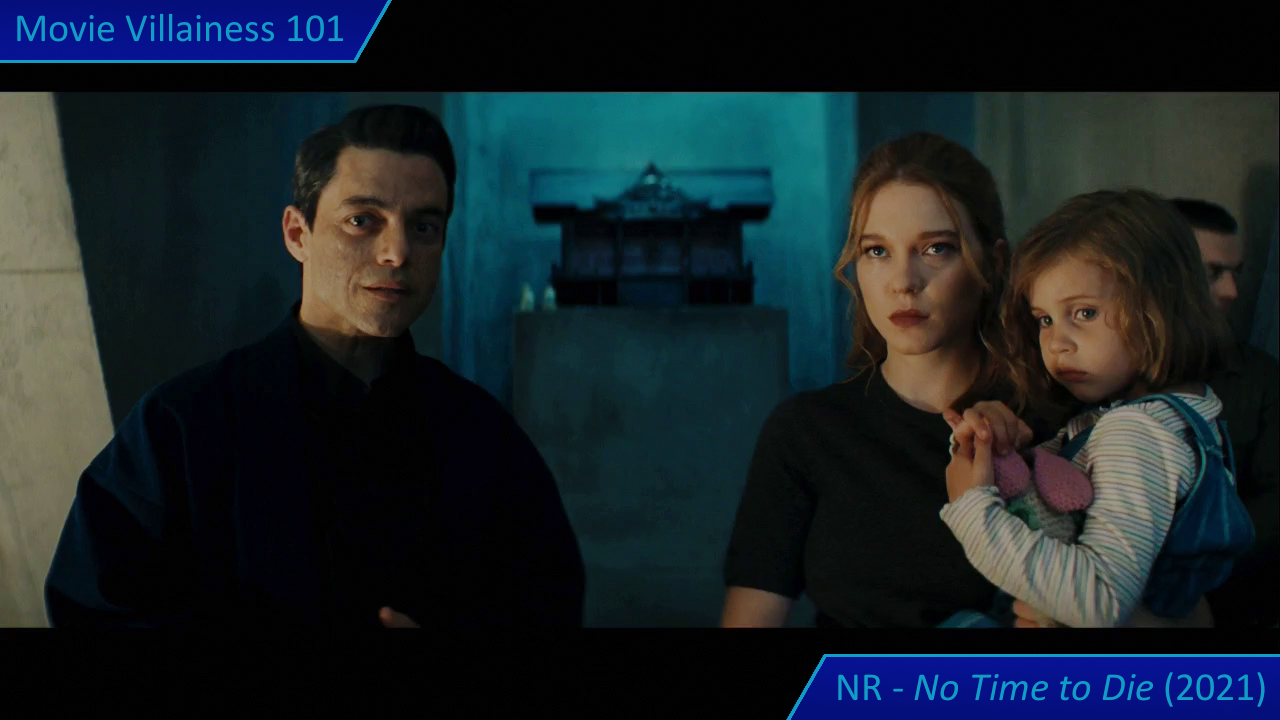
The producers remembered what the series is about: thrilling action and sensational women. Despite a family subplot and a weak villain scheme that bogs down the last act, it’s a fitting sendoff for Craig. In this one, nobody is safe. Major characters, including the dependable CIA ally Felix Leiter and Blofeld, are killed off, foreshadowing the controversial end when Bond dies in a missile strike. The rulebook has been well and truly torn up.

The longest pre-credits sequence to date begins with a flashback to Madeleine as a child before we shift to the present and Spectre agents come after Bond in Italy. A dejected Bond retires from MI6, and an agent named Nomi (Lashana Lynch) becomes the replacement 007. On a rogue CIA mission to recover a traitor scientist, Bond receives help from Paloma (Ana de Armas), a rookie operative who is surprisingly proficient. The best action woman in Craig’s tenure only appears for ten minutes, but Paloma isn’t a disappointment.

Nomi gets some badass moments too, but is overshadowed by Bond. Madeleine shoots some bad guys during a chase in Norway, but the story is about saving her – and Bond’s – child Mathilde. Safin (Rami Malek) is a decent enough foe, but is defeated too easily. Three major female characters, and no villainess. Let’s hope the next Bond actor gets to face some bad girls.
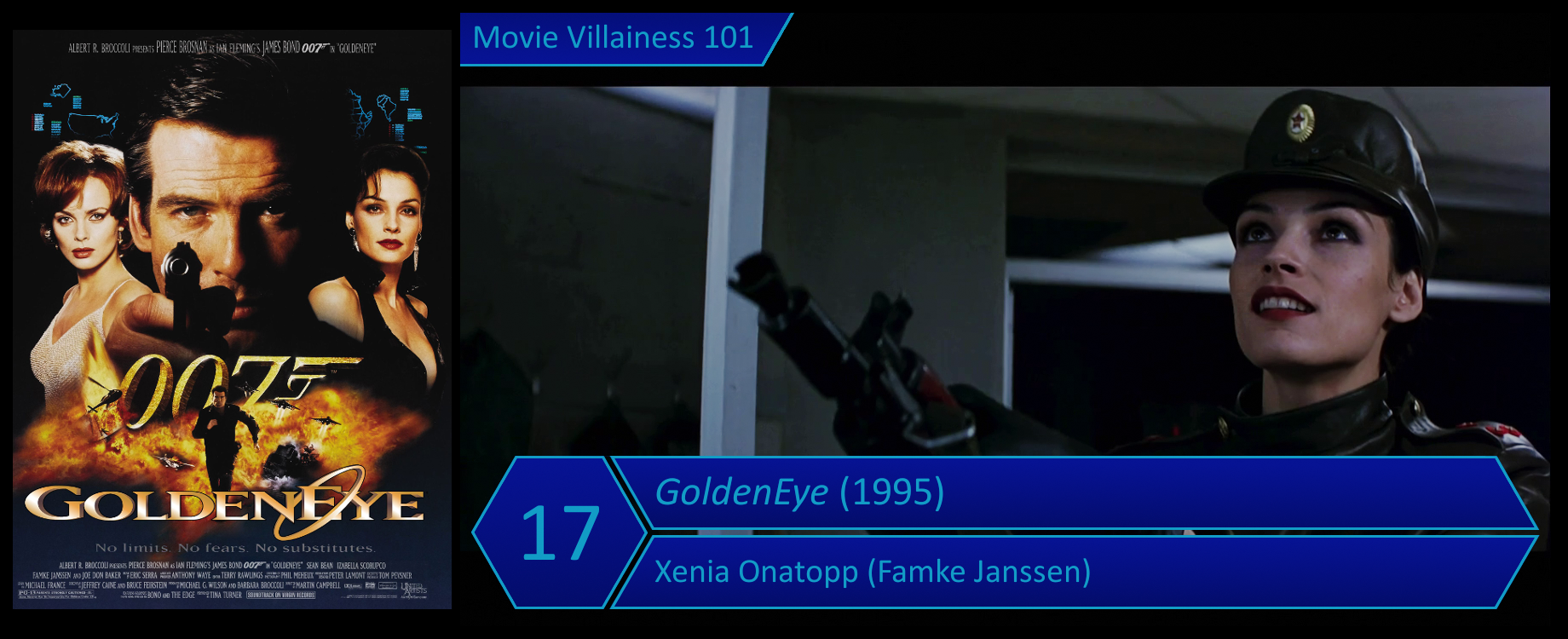
Movie Villainess 101 Rank #17

Don’t let this woman develop a crush on you, Mr. Bond

Movie

GoldenEye (1995)

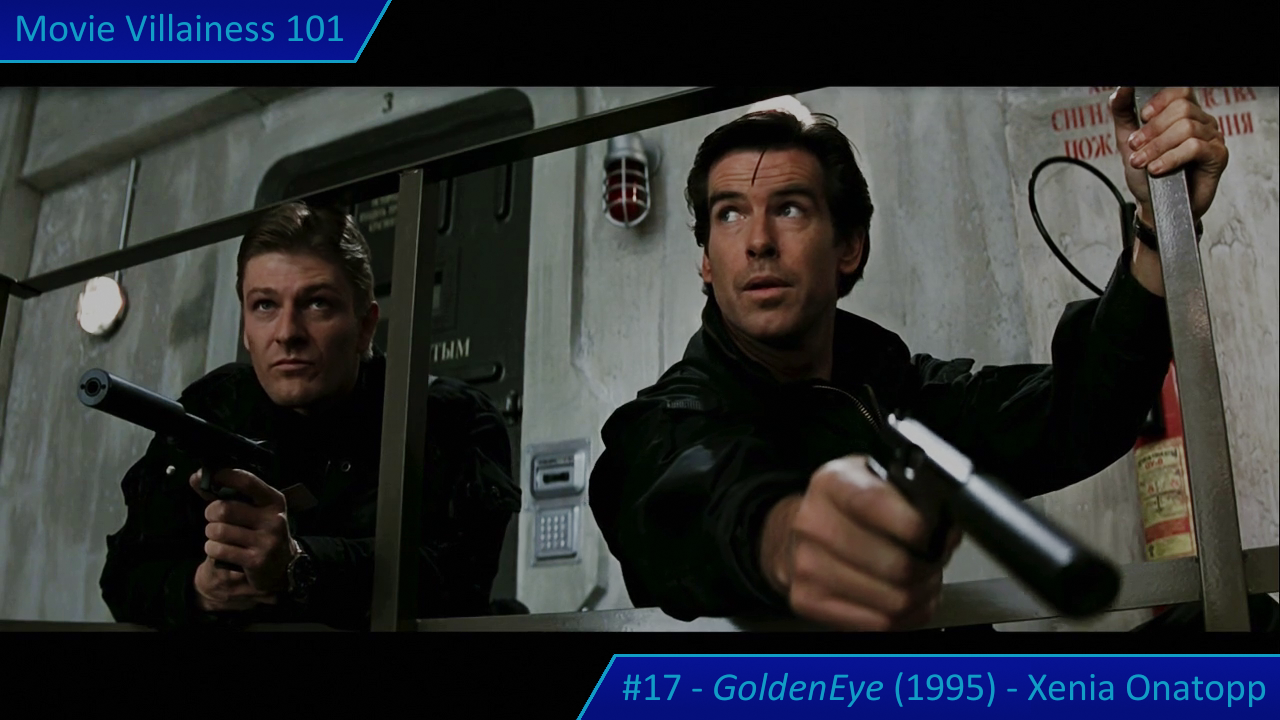
Pierce Brosnan’s four Bond movies were escapist material, which allowed for outlandish characters like a Georgian assassin who crushes men between her thighs. Xenia is the first villainess from the Brosnan era to make the top twenty. This was the golden age of evil Bond girls.

The change of leading man comes with a new supporting cast. There’s now a woman in charge of the 00 section, with Judi Dench in her first appearance as M. Samantha Bond is Moneypenny, and Q (Desmond Llewelyn) is a mainstay. Bond one-liners and crazy gadgets are included, and director Martin Campbell – helming his first franchise reboot – brings style to the frantic set pieces. Massive explosions, dramatic escapes, and impossible stunts are packed into two hours of entertainment.

By this point, filmmakers were experimenting with the tried and tested formula. Two surprise bad guys are thrown into the mix, though savvy viewers will guess both twists before they happen. A secret lair and army are standard for a Bond villain, but controlling a Russian satellite weapon requires technical genius. The female lead is Natalya Simonova (Izabella Scorupco). If we discount her, that leaves only the egotistical Boris Grishenko (Alan Cumming) as the insider.

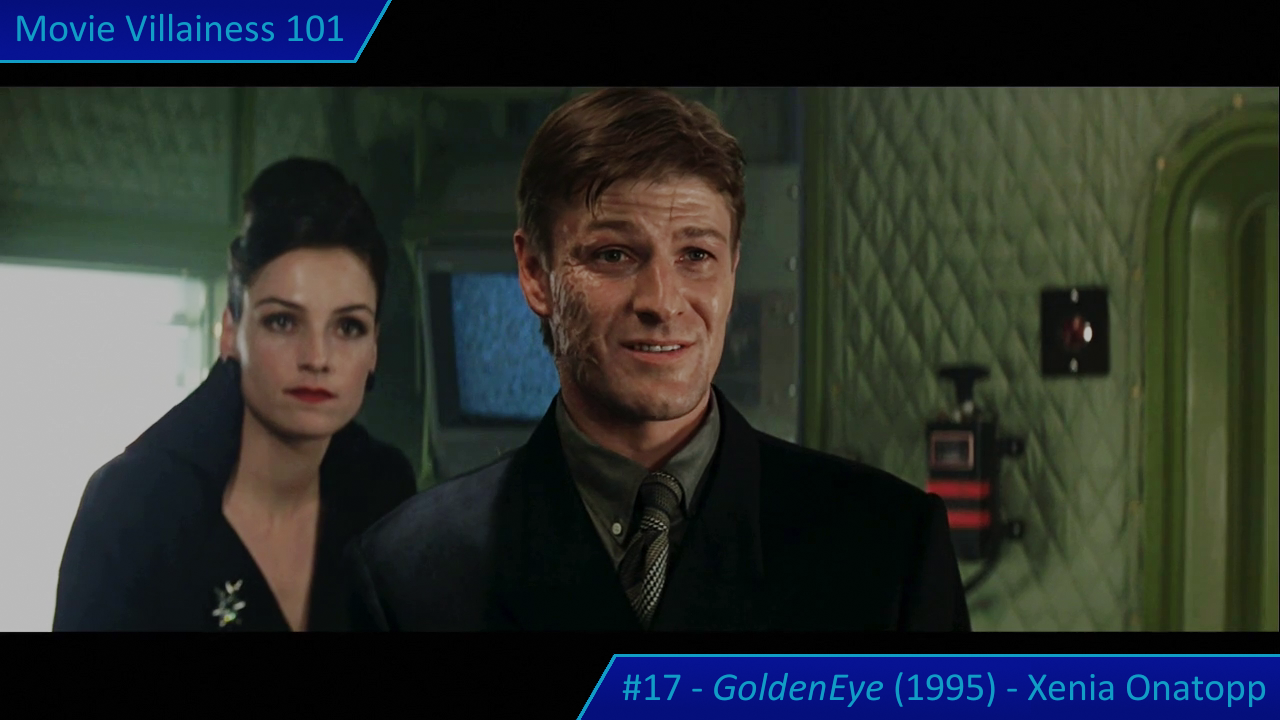
Besides introducing a new lead actor – with ambiguous camera angles before his grand reveal – the prologue assault on a Soviet chemical weapons lab gives us Sean Bean as 006 Alec Trevelyan. He is supposedly executed after the mission goes wrong, setting up a vendetta between 007 and Colonel Ourumov (Gottfried John). However, Bean is second on the credits and always plays bad guys, so it’s no shock he survives to become the main villain.

Xenia is the most physical female opponent Bond has ever faced. That covers sexual activity (not advisable with her) and getting beaten up by the hero. She can take a lot of punishment (and enjoys it) given her background as a Soviet fighter pilot.

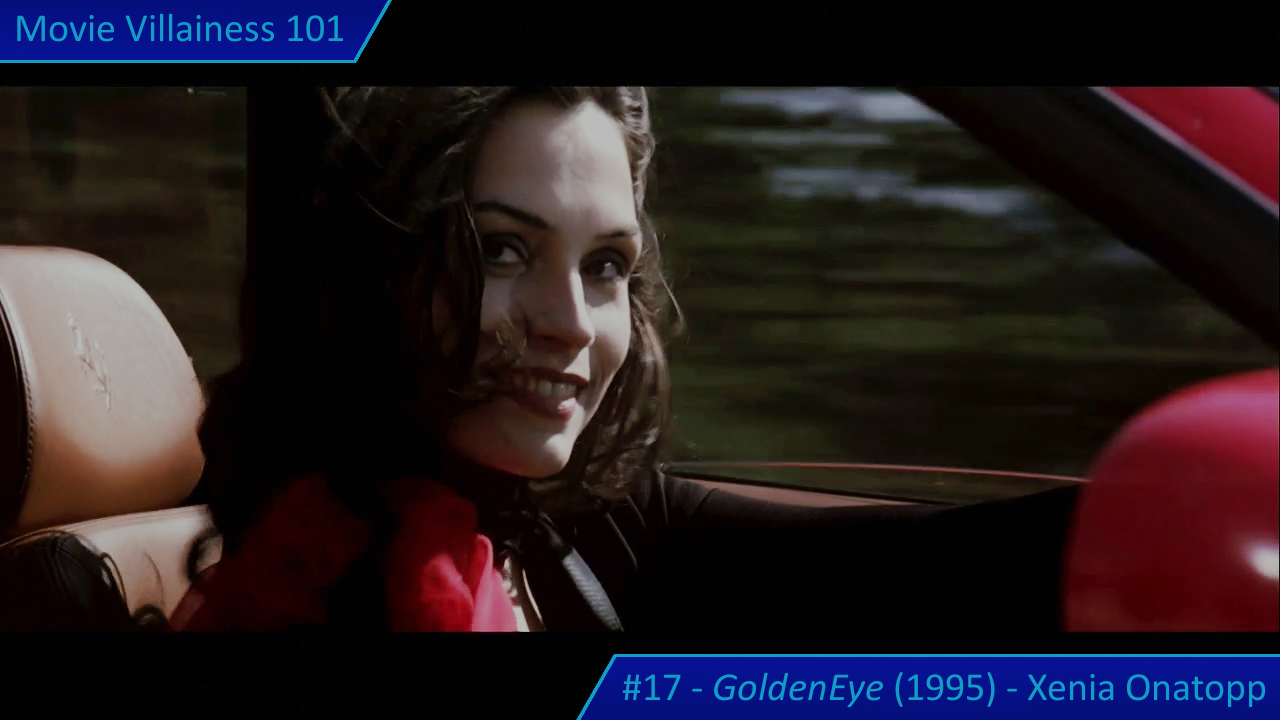
The villainess knows how to exploit male weaknesses. Her first appearance comes early when a female operative tests Bond’s driving skills. That goes how any fan would expect, with Bond flouting the rules and racing a mysterious brunette in a Ferrari. She’s an excellent driver herself, able to pull off swerving manoeuvres at high speed. There were several close calls before Bond wisely broke off the contest. And takes the safer option to romance his passenger.

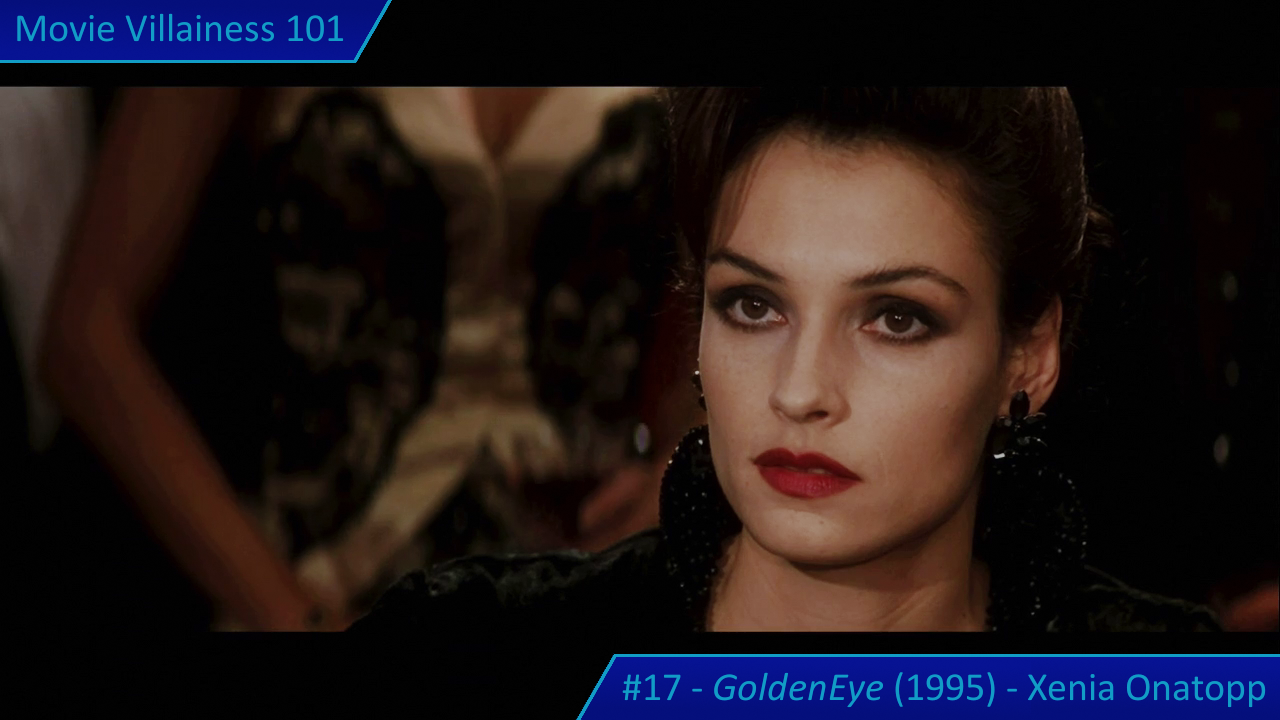
Bond catches up with Xenia at a Monte Carlo casino. She’s enjoying good luck at the baccarat table until the tuxedoed charmer shows up to change her fortune. The typical Bond introduction then follows, with names exchanged in classic style. Xenia has a date with an admiral, but Bond suspects something is amiss, so he has Moneypenny run a background check.

Not spending the night with Xenia turns out to be a smart move, since the assassin murders the admiral in bed with her signature thigh-crushing routine. When Bond discovers the body the next morning, it appears he died in ecstasy.

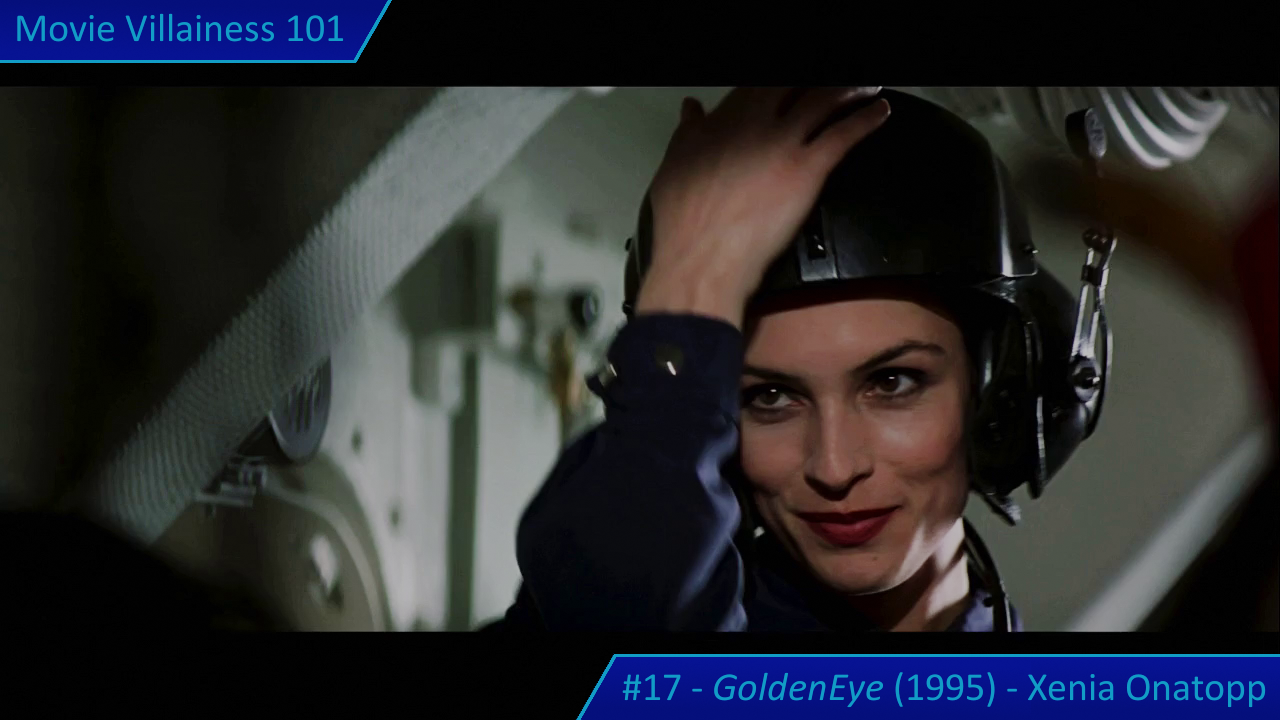
Xenia and her male accomplice use the officer’s stolen ID to board a French warship. The villainess murders two pilots to steal their flight jackets (and dark-tinted visor helmets), all to hijack a prototype helicopter. Bond arrives too late to stop them, and the detained hero can only watch as they escape.

Villainess

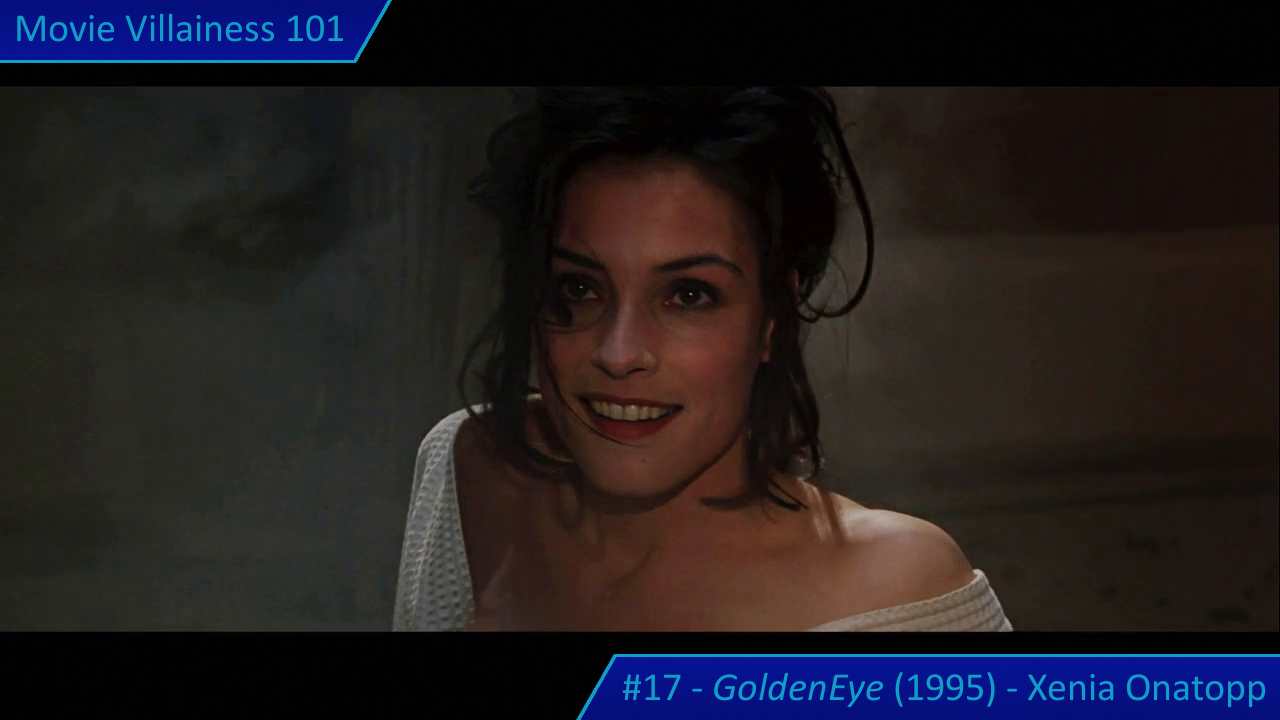
Xenia Onatopp (Famke Janssen)

Three murders in the opening half hour tell us Xenia is not a woman to trifle with. Ourumov – now a general – runs a weapons test at a remote Siberian facility, a ruse to steal the arming keys for a satellite-based electromagnetic pulse (EMP) weapon. Xenia slaughters the civilian staff with a submachine gun once they’ve outlived their usefulness, and even Ourumov looks uneasy at her enthusiasm for mass murder. The only survivor is computer programmer Natalya, who escapes the massacre through luck and ingenuity. As Bond women go, she’s at the more competent end of the spectrum.

We’re shown how devastating the stolen GoldenEye is when the villains fry the computers and cover their escape. Back in London, Bond watches the attack unfold on monitors, and Natalya is the only person who can identify the thieves. Of course, the person she contacts is the traitor, Boris. Natalya is already nervous when she arrives at an eerie church, and things get worse when she discovers her confidant is in league with Xenia.

Bond’s investigation takes him to St. Petersburg, where he receives help from CIA agent Jack Wade. Joe Don Baker is one actor to play multiple roles in the series, in a non-villainous role this time. The hero also forms an uneasy alliance with Russian mob boss Valentin Zukovsky (Robbie Coltrane).

Bond asks too many questions, a pet peeve of villains. So it’s time to send Xenia for a (literal) steamy encounter in the hotel sauna. This meeting is more intimate – a bizarre mix of verbal exchanges and rough sex. Xenia attempts to thigh-crush Bond, but he frees himself. The hero has had quite enough of the foreplay and demands to meet the boss.

Another gloomy meeting spot: a statue graveyard, where Bond knocks Xenia out and discovers the missing helicopter. The hero is surprised to see his old partner Alec alive, but soon realises he’s walked into a trap. But does Trevelyan kill Bond? No, he locks him and Natalya in the helicopter and sets off radar-guided missiles to destroy the evidence and the pesky secret agent. A stupid move that allows the heroes to escape the blast with an ejector seat.

The hero barely has time to argue his case to Natalya before the Russians show up. In the interrogation, she fingers Ourumov, but the villain frames Bond for the defence minister’s murder. Xenia is absent from the action that follows: a chase through an archive building where Natalya is recaptured. After a dramatic escape, Bond steals a tank to pursue the bad guys. A one-sided chase with Bond even more indestructible than usual.

After wrecking half of St. Petersburg, the hero tracks the villains to an old Soviet missile train. The armoured vehicle survives a cannon blast, but not a head-on collision with the tank. Bond has the upper hand against Trevelyan, but his foe knows his weaknesses and has Ourumov bring Natalya in as a bargaining chip. Now that the true villain has shown his face, the accomplice is expendable.

Trevelyan repeats his mistake by locking Bond in with Natalya and setting off an explosion. Didn’t he learn the first time? After another narrow escape and a loud bang, the heroes swap dreary Russia for sunny Cuba. We get romance on the beach and a more human Bond, but that’s only a brief interlude. The final confrontation takes place at a secret control facility hidden underwater. Everything is formulaic: gadgets, a resourceful female ally, close-quarters fights. But it’s worked for thirty years, so why change things?

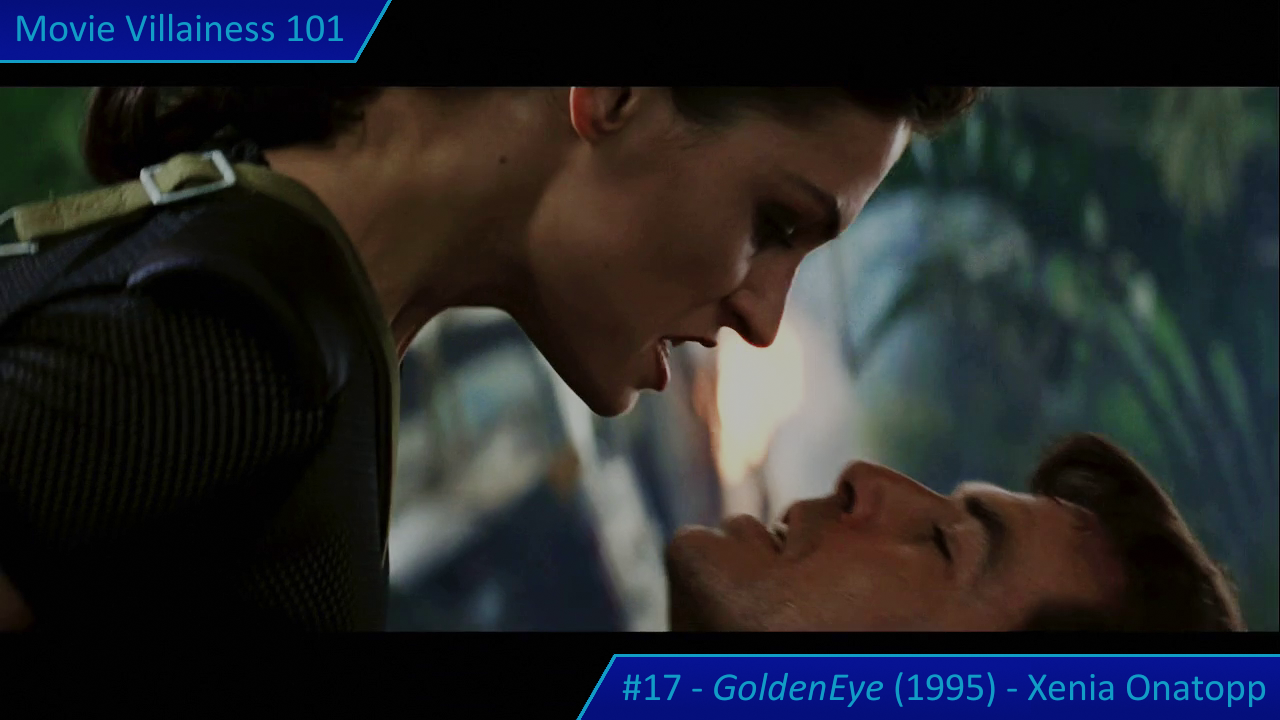
Bond’s last encounter with Xenia occurs in the jungle after his plane is shot down by a missile. With the hero dazed from the crash, the henchwoman descends on a rope from a helicopter and overpowers him. She’s armed, but wants to humiliate Bond, and squeezes him between her thighs. Natalya intervenes, but gets head-butted (if you’re watching the uncut version). After a quick struggle, Bond uses Xenia’s rifle to shoot the helicopter, and the villainess – still hooked to the rope – is crushed between two tree branches. A Bond one-liner to cap things off, but Xenia deserved a longer fight scene.

Honourable Mentions / Discussions: Timothy Dalton / Pierce Brosnan Bond Movies

The Living Daylights (1987)

Timothy Dalton plays a more serious Bond, but the fantastical plot elements remain. Locations are still exotic, the gadgets hi-tech, and the women beautiful, but villain ambitions are toned down somewhat. The grittier 007 films tend not to feature female foes, and even the leading lady – Maryam D’Abo as the cellist Kara Milovy – is incompetent and present for romance only.

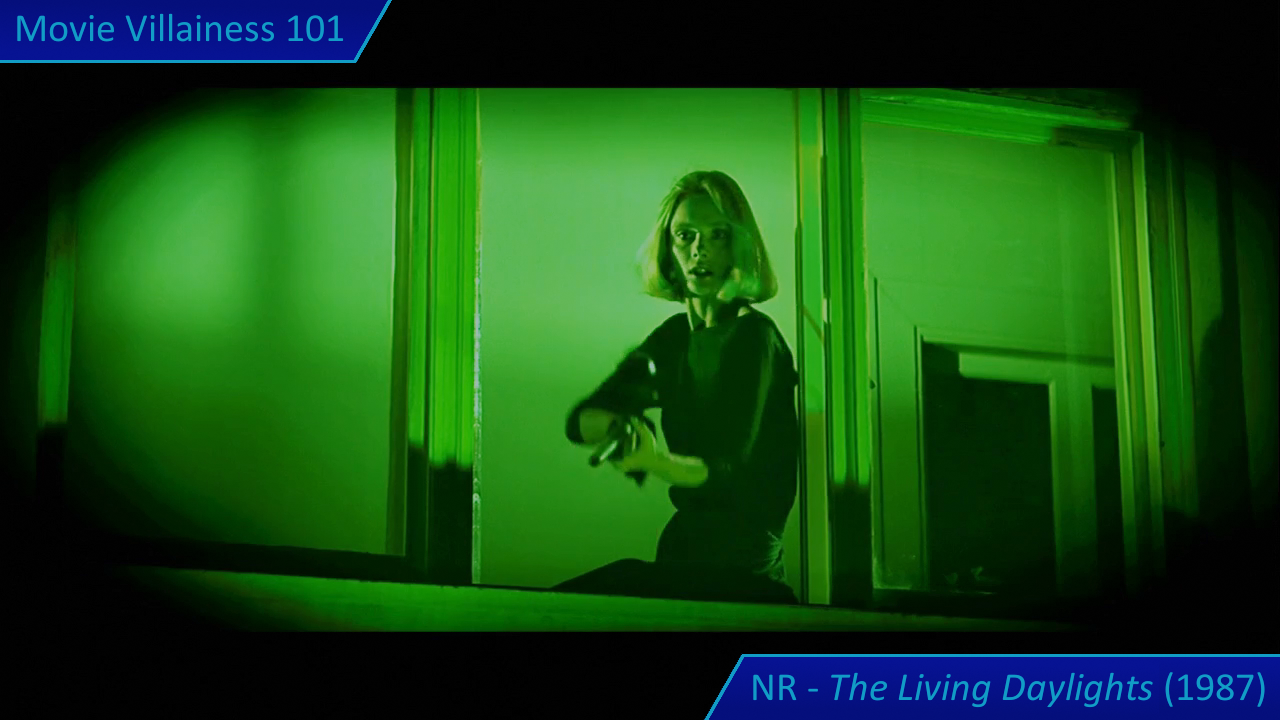
Kara gets an intriguing introduction, going from an innocent concert performer to a sniper whom Bond is reluctant to kill. This is later revealed to be a setup to fake a defection, and Kara is no weapons expert. When Bond asks Q to research female assassins, one muscular woman’s MO is strangulation by thighs. Foreshadowing for GoldenEye?

Other than Kara, the key players in this Cold War thriller are male, and the villains are some of the weakest in the series. The CIA uses Bond’s sexism against him by employing two beautiful agents, but besides trapping the hero, they are given little to do.

Licence to Kill (1989)

Dalton’s second and final entry dispensed with the humour and gave us a violent revenge thriller. James Bond goes rogue and seeks payback when drug dealer Franz Sanchez (Robert Davi) leaves Felix Leiter a hospitalised widower. The plot is not so outlandish, even if Sanchez runs a drug factory disguised as a temple. The trademark action and stunts are present, with a ten-minute tanker truck chase (as explosive as you might expect) to finish.

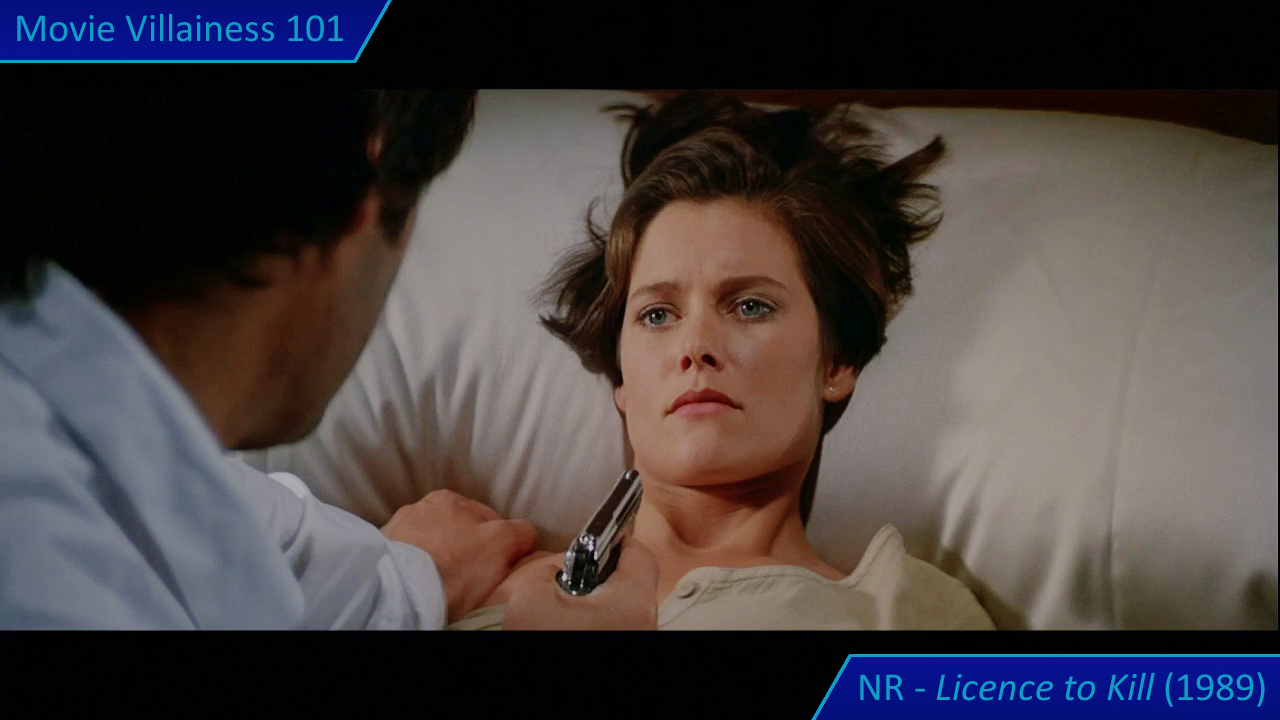
No henchwomen on show, but the female characters are stronger than expected. Pam Bouvier (Carey Lowell) is a competent lead who can handle herself in a fight. Absent for the first half, she makes a powerful impression in the second as an operative equal to 007. Most of the plot revolves around their infiltrating Sanchez’s organisation and turning the villains against each other. There’s an extended role for Q as an unlikely field agent, but ultimately this comes down to Bond versus the drug dealer.

Talisa Soto as the villain’s mistress Lupe is a more traditional Bond girl, but she proves a valuable ally. We get an unmasking scene after two Asian “ninja” narcotics agents – one female – capture Bond on a rooftop. Their interference messes up his plan to kill Sanchez, and the woman dies in a hail of bullets soon after.

Tomorrow Never Dies (1997)

An insane villain plans to start a war between two nuclear powers. Sound familiar? This time it’s the UK against China, and the bad guy is Elliot Carver, a media mogul who thinks global conflict will improve his ratings. After the era of fake news, this techno-thriller doesn’t seem so implausible. And there’s enough action, including a spectacular motorcycle chase in Saigon, to make this a watchable, if routine, adventure.

As the only Brosnan movie without a female villain, the enemies are fairly generic. Jonathan Pryce is a hammy foe who reveals his scheme too soon. For henchmen, he has a tough guy to do the fighting and a computer hacker for the technical stuff. Fortunately, the women are more interesting. Teri Hatcher is Carver’s wife, who had a previous relationship with Bond, and that suggests her life will end tragically.

China sends an agent of its own – Wai Lin – to investigate Carver’s network. She’s played by Hong Kong action star Michelle Yeoh, so does all the fighting and stunts you would expect. Other than a couple of moments of idiocy, she’s an effective secret agent. Her one-woman ninja army is a highlight during the otherwise weak climax on a stealth boat. She gets captured during the finale, and the romance feels awkward, but Wai Lin is among the best female leads.

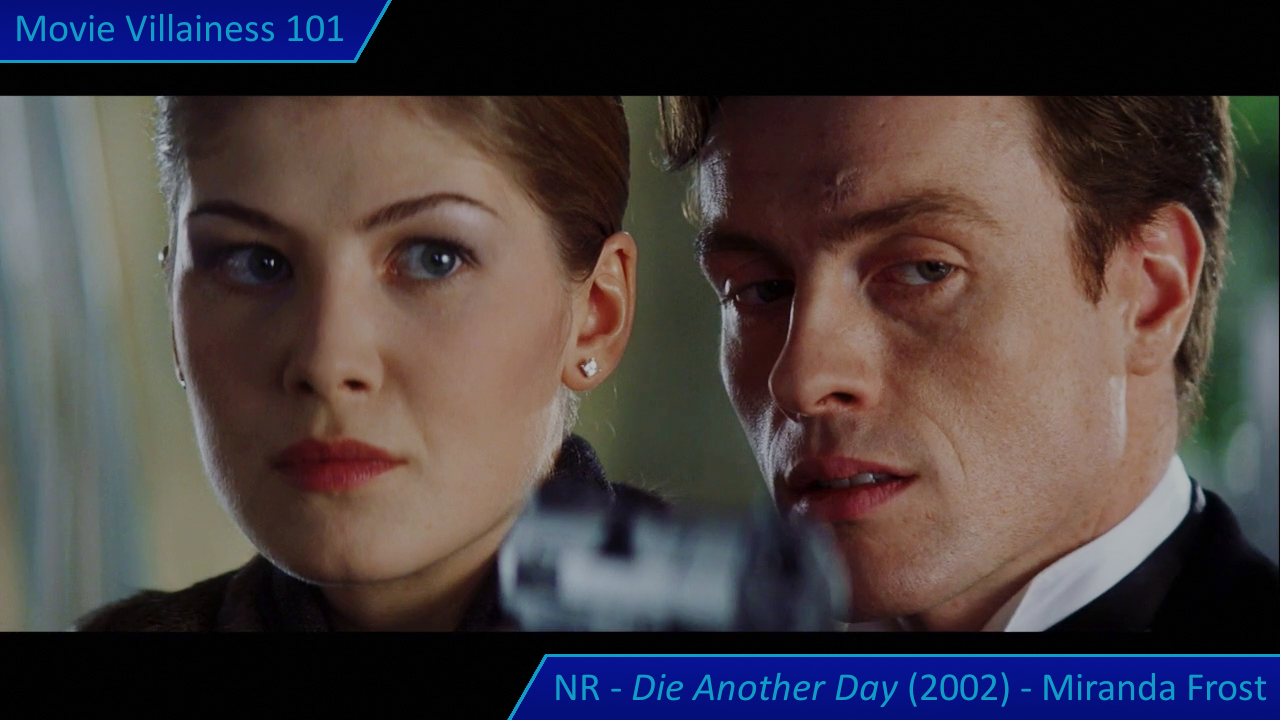
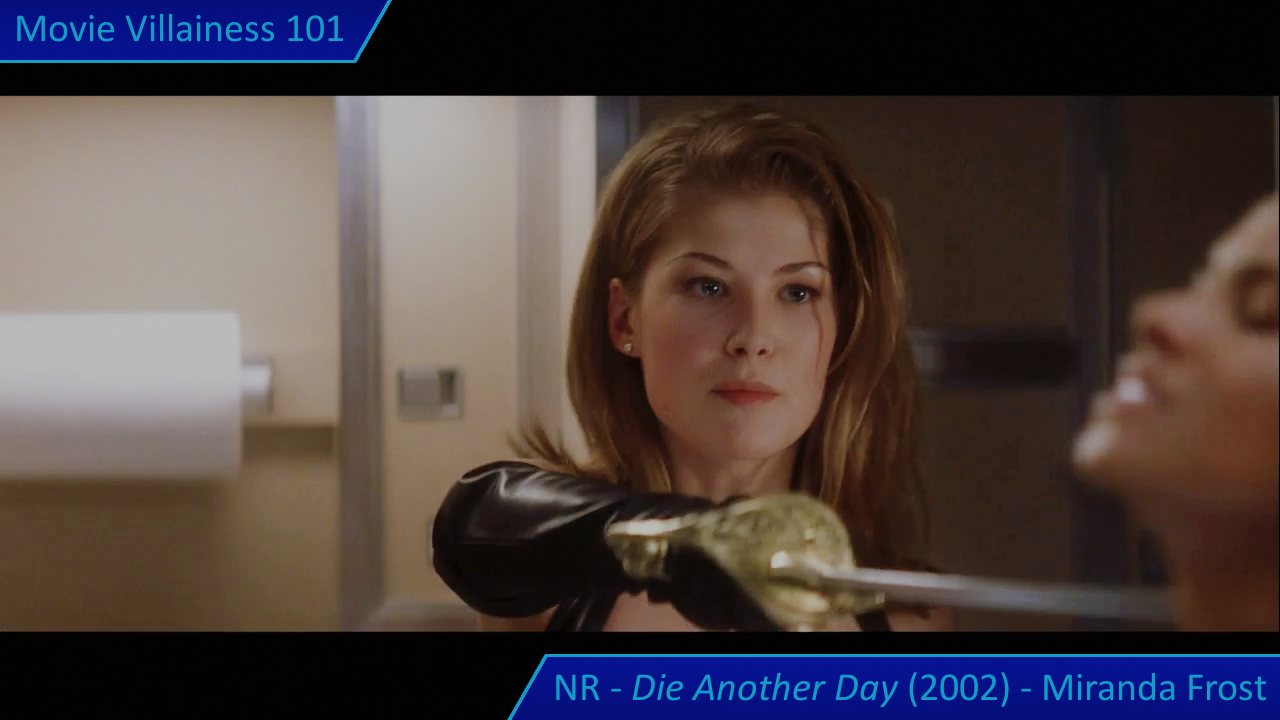
Die Another Day (2002) – Miranda Frost (Rosamund Pike)

Michelle Yeoh was slated to return for Brosnan’s final Bond outing, but she dodged the proverbial bullet by not appearing. The end product is a mess, with a watchable – though far-fetched – first half followed by a truly awful second half. The villain is a North Korean colonel obsessed with conquering the South by any means necessary. After his supposed death, he takes on the identity of British entrepreneur Gustav Graves (Toby Stephens) to complete his evil scheme.

The ability to replace human DNA and completely change one’s appearance seems believable compared to other elements. Such as an invisible car, a solar-powered ray satellite operated by a wrist computer, and electrified armour. Other than the fencing match between Bond and Graves that turns into a brutal sword fight, the film is overblown and ridiculous, even for 007.

Halle Berry is NSA agent Jinx, who becomes the main protagonist for some parts. This includes daring solo action and spouting awful puns. When she converses with Bond, it’s truly painful. A female Korean interrogator stings her prisoners with scorpion venom, but she only features in the prologue.

The main villainess is Miranda Frost, an MI6 operative working undercover as Graves’ publicist. In fact, she’s a double agent who betrayed Bond to the North Koreans. Frost is introduced as an Olympic champion fencer (complete with an unmasking scene). But when Bond confronts Grave in his ice palace (more silliness), he discovers his fellow agent is untrustworthy.

After Bond escapes and rescues Jinx (no surprises there), the two agents go after the villains. The climax takes place on a military aircraft with Bond battling Graves and his electric suit, while Jinx and Miranda have a sword duel. The skimpy outfits make the fight seem ludicrous, and Jinx completes Bond’s revenge mission. When he arrives to see Miranda already dead, he doesn’t look too happy.

Note: The “missing” third Brosnan film will be covered as a ranked villainess entry later

Movie Villainess 101 Rank #32

She’s got a personal one to settle

Movie

Final Score (2018)

It had to happen eventually. Ever since Die Hard in 1988, the formula of a lone hero against armed villains has been used in every conceivable scenario. Now the action has come to a football stadium. Americans might call it a soccer stadium, but doing that in East London is likely to get you a punch in the face (as Agent Cho learns the hard way).

Michael Knox (Dave Bautista) is a former soldier whose brother died following a questionable order. Now Mike wants to make amends with his niece Danii (Lara Peake). What better way to do that than to take her to a football match? Especially when that game is a high-profile European semi-final and West Ham United’s last match at the Boleyn Ground (or Upton Park). The team has now moved to London’s former Olympic Stadium, so producers could set off an explosion and do serious damage in the dramatic climax.

The villains are mercenaries led by Arkady (Ray Stevenson), a ruthless general who wants to find his supposedly dead brother, Dimitri (Pierce Brosnan). So badly he’s prepared to threaten the lives of thirty thousand people. The siblings were once leaders of a revolution in Sakovia (a fictional Soviet bloc country) and now Arkady wants to lead a second revolt. For once, the motive isn’t nuclear weapons or money. Everything else is formulaic, including the villains planting C4 explosives to mask their escape and Knox throwing a dead guy off the stadium roof to convince authorities the threat is real.

West Ham fans are so shocked at reaching a European semi-final they don’t notice the chaotic events happening around them. Gun-wielding baddies swarm the concourse, mobile phones go dead, the stadium is locked down. Even a bike chase and crazy stunt jump go ignored. To keep the crowd occupied, West Ham score two goals at convenient times.

It’s only when the hero runs onto the pitch to avert a disaster that anyone pays attention. Knox’s only allies are Steed, a police commander on the outside (competent for a change) and Faisal Kahn, a timid steward who provides comic relief. There’s some dark humour as Faisal acts the Middle Eastern terrorist to clear out hostile spectators.

Don’t think too hard unless you want the plot holes to cause a headache. Predictable, but that’s not necessarily a bad thing, as the movie delivers what action genre fans expect from a Die Hard clone. A gung-ho hero, nasty villains, fights in claustrophobic locations, and an unexpectedly great bad girl who leaves a lasting impression.

Villainess

Tatiana (Alexandra Dinu)

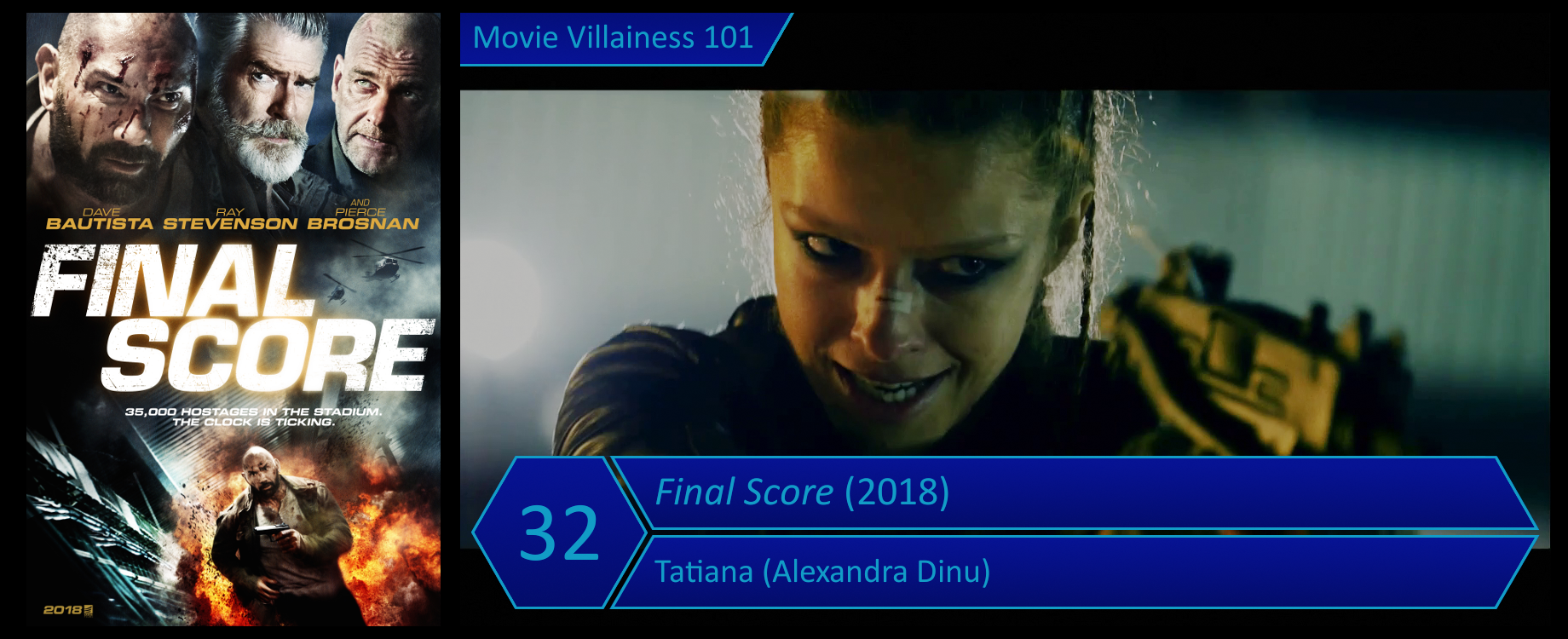
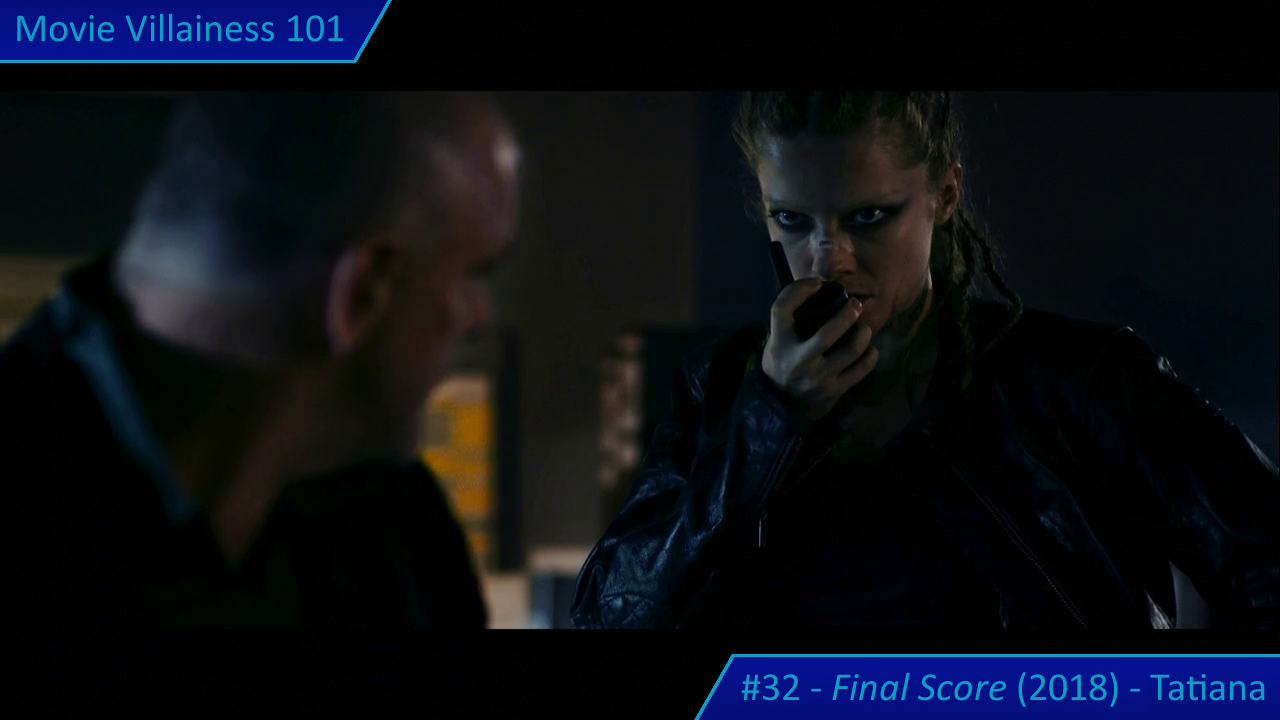
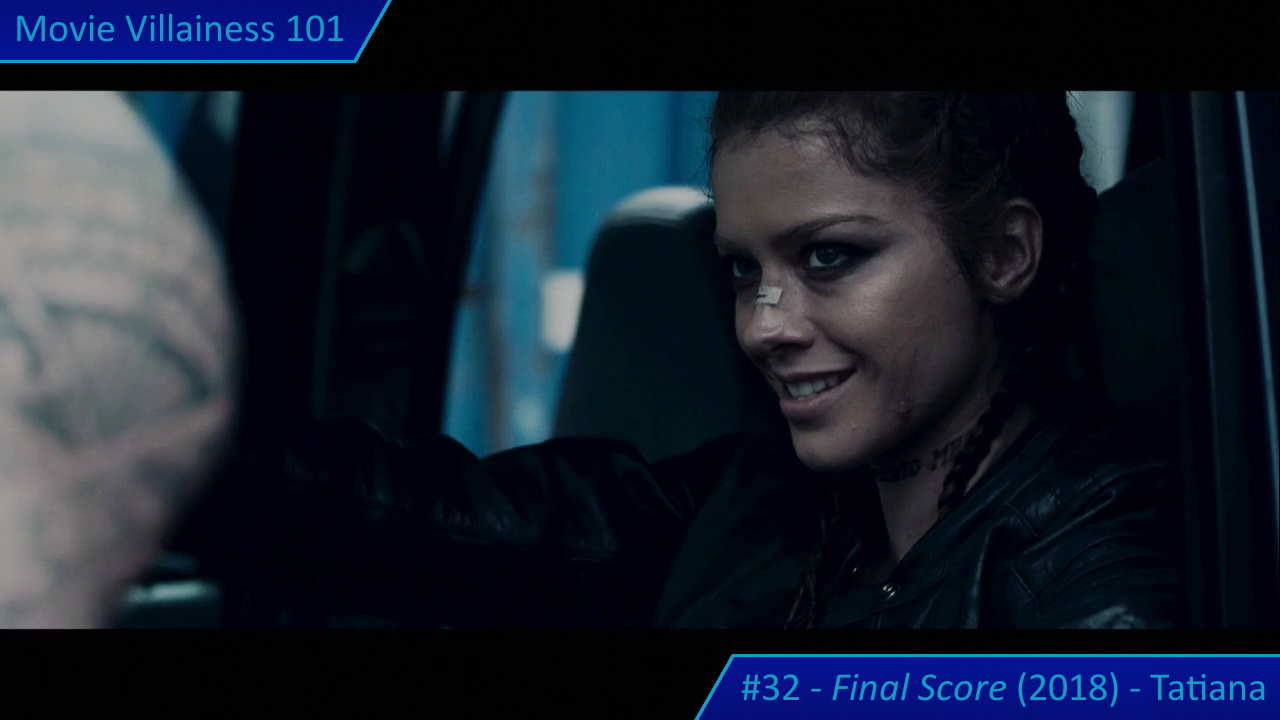
After a long series of disappointing henchwomen, it’s high time we had a female version of Karl from Die Hard, and that essentially sums up Tatiana. Arkady’s lieutenant doesn’t care about being attractive – this is a tattooed warrior with a cornrow haircut and acts every bit as mean as she looks. All that’s missing is a last woman standing scene, since Tatiana dies before the grand finale. At least she goes down fighting and has several run-ins with the hero and his niece. That’s enough to earn Tatiana legendary status.

This movie is the UK’s answer to Sudden Death (1995), with a lot of similar themes. Tatiana takes a leading role in the stadium takeover, infiltrating the ground as a paramedic (like in the Van Damme film, the terrorists disguise themselves as employees). Upon arrival, she guns down a security guard and innocent civilians in the police control room to quash any notion of resistance.

After Knox takes out a terrorist in an elevator (or should that be lift?), he gets a big fight in the kitchen. No killer penguin (she featured at #92), but the brute Vlad proves tough to take down. Eventually, Knox finishes the big guy off by dunking his head in boiling fat. This really ticks off Tatiana, since she and Vlad were lovers. In an explosion of rage, she smashes random items and demands to be the one who kills Knox. Getting Karl vibes yet?

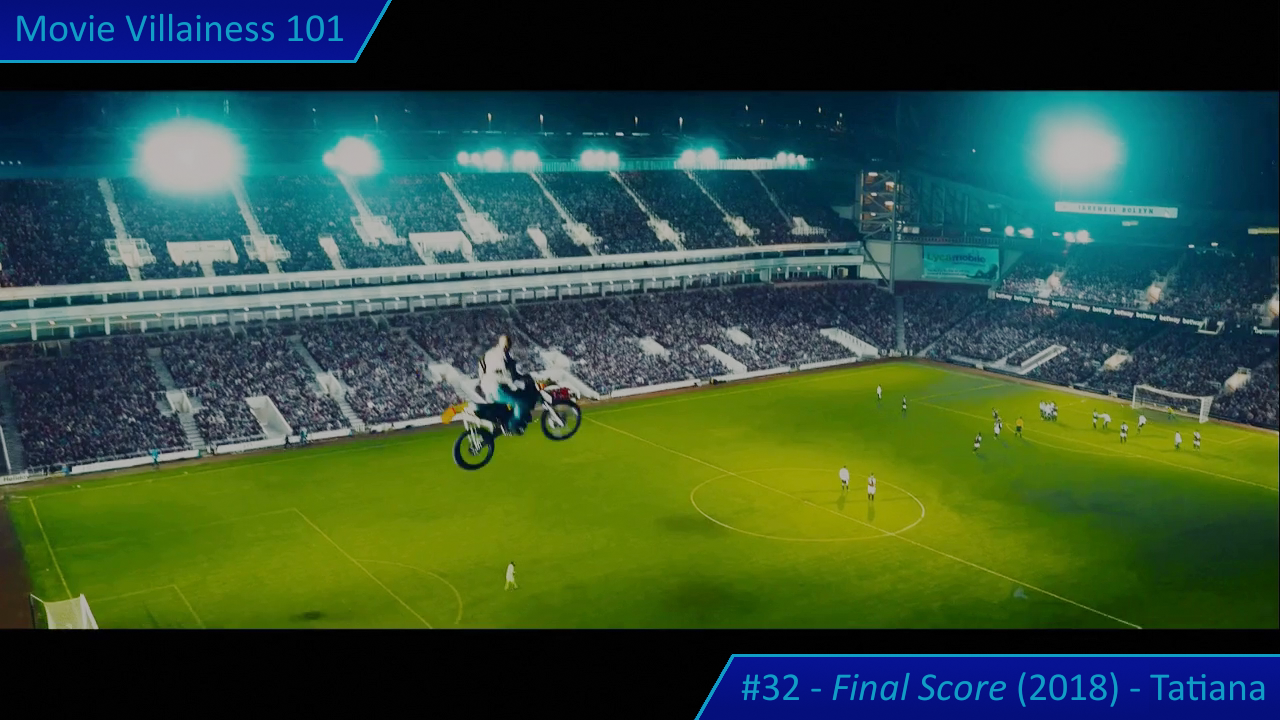
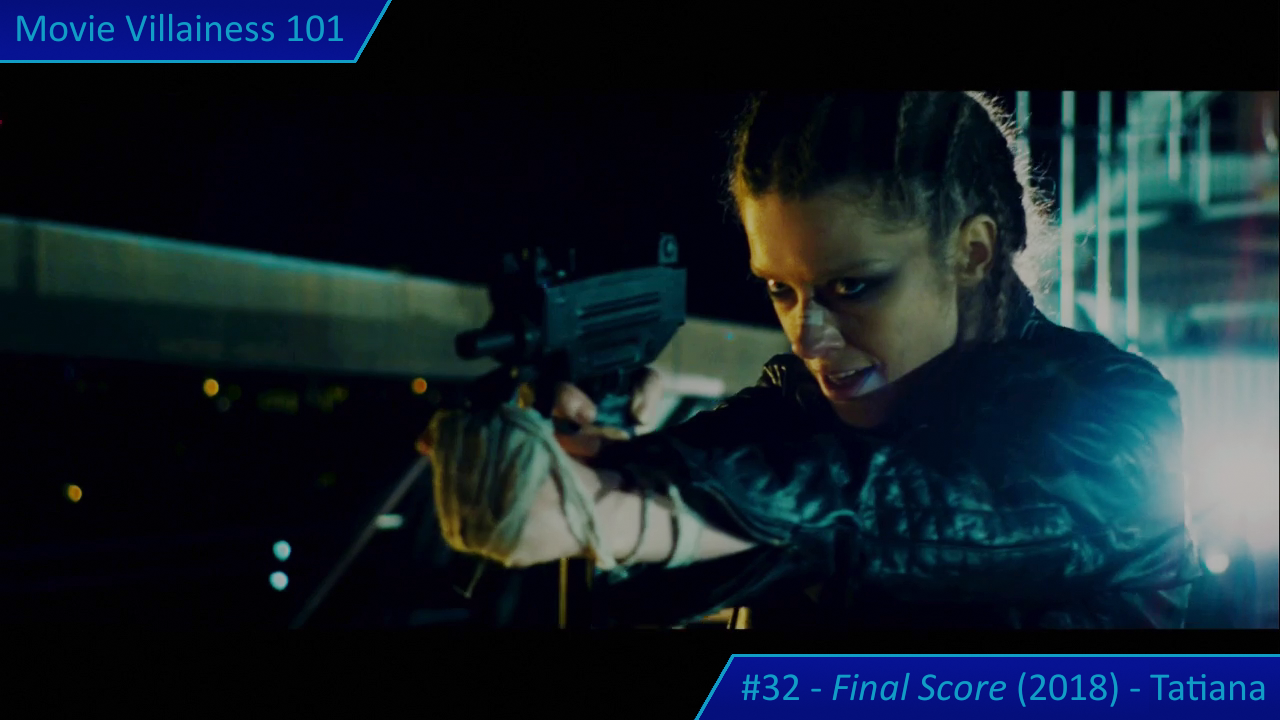
By now, Knox has tipped off the police and offers to rescue Dimitri before the villains find him. Time is of the essence since the stadium is rigged to explode when the match ends, so Knox grabs a motorcycle to speed things up. There are plenty of other bikes (indoors!), which is an excuse to have an action scene. Tatiana and her goons pursue Knox while stunned spectators wonder what’s going on. When her handgun proves ineffective, Tatiana swaps it for a submachine gun. Knox reaches the roof with her not far behind, though her aiming is predictably terrible. Much too early to have the crowd flee in panic, so how about a goal so people don’t notice the motorcycle jump overhead?

After Knox makes it to Dimitri, the villains up the ante by kidnapping Danii to use as a bargaining chip. Tatiana takes great pleasure in knocking out Faisal and torturing the hostage girl. Things are personal as far as she’s concerned. Knox agrees to trade Dimitri for Danii, leading to a prisoner exchange scene on the stadium roof. The villains plan to double-cross the heroes and detonate the explosives anyway (did you expect anything else?). But Knox chose the location wisely, as blinding floodlights hide his own deception: to take Dimitri’s place.

Knox takes down several mooks with the help of special forces. Then it’s the hero against Arkady, with Knox attempting to retrieve the “kill switch” to deactivate the bombs. This is when Tatiana joins the fight and gives him a good beating. He holds the villainess off, but the kill switch rolls off the roof. That’s a convenient time for Knox to grab a banner and do a swinging stunt. He reaches the device, but the henchwoman isn’t finished yet.

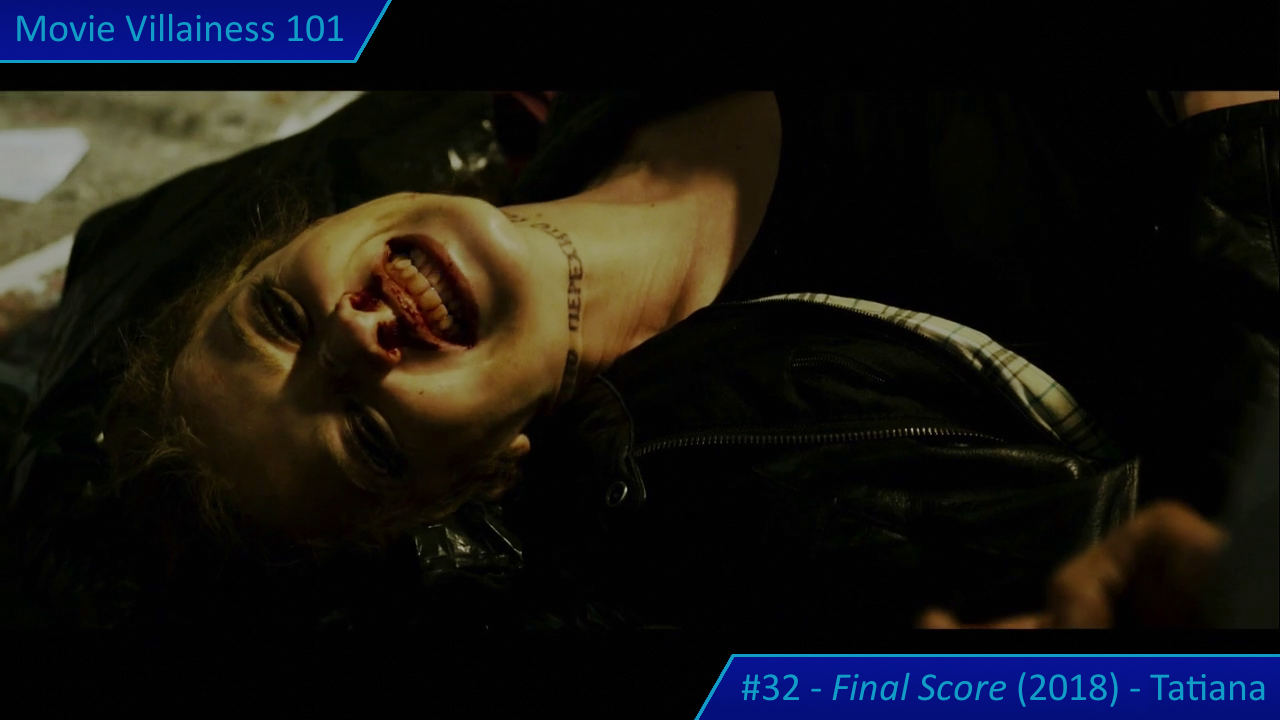
Tatiana’s final fight is rather brief (and somewhat disappointing), but still delivers excitement while it lasts. The knife-wielding villainess attacks Knox, but the hero gets the better of her, and they fall over the roof edge. The villainess is impaled on a metal bar, but gloats that the kill switch is fake before she dies. Of course, the hero saves the day, but Tatiana went out believing she’d won.

Honourable Mentions: Die Hard Scenario

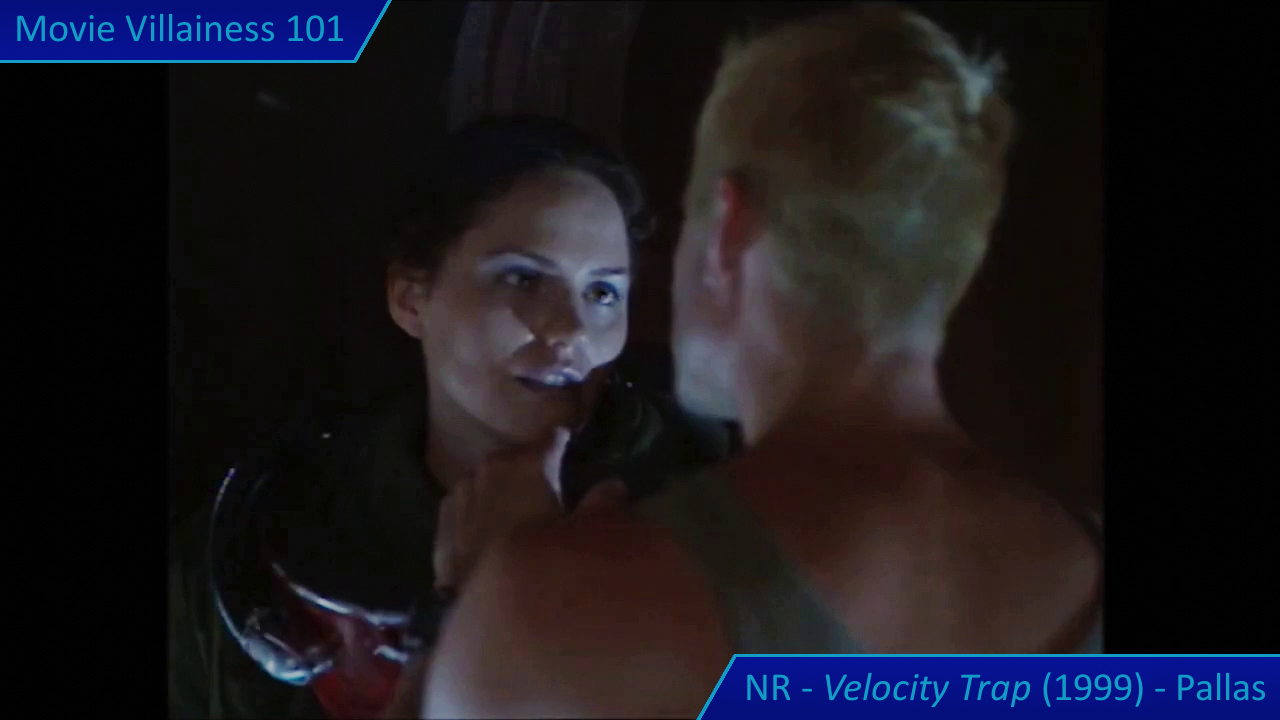
Velocity Trap (1999) – Pallas (Jorja Fox)

Yes, they’ve done Die Hard in space, too. One of the better futuristic variants, with Olivier Gruner as Stokes, a security officer framed by corrupt colleagues after an assassination. A female killer is involved in that plot, but after she detonates an explosive, we never see her again.

The first half of the film is mostly a stretched-out setup. Stokes is too honest to be bought off, and killing him would attract too much attention, so the conspirators assign their patsy to guard duty on a transport ship carrying 40 billion US dollars. That’s the intergalactic currency, and paper money is still apparently in use in the space age.

Before this subplot, we’re introduced to the main villains: Simmons (Ken Olandt) and his thrill-seeking wife, Pallas. Before she played Sara Sidle on CSI, Fox was a crazy henchwoman in this B-movie. Pallas likes to live dangerously, leaving it to the last second to escape an asteroid explosion. The purpose of the sabotage becomes clear later, when the transporter drops out of light speed. The “accident” is part of a plan to heist the money and destroy the evidence. Stokes – with the help of navigator Beth Sheffield (Alicia Coppola) – is the proverbial “fly in the ointment.”

The hijackers are light on manpower, probably because they expected no resistance. Besides the psycho husband/wife team, there’s a tough guy named Fallout, a tech whiz who gets no action, and a treacherous engineer who disabled the sentry guns. Fallout gets the honour of a major fight with Stokes before he’s incinerated by Sheffield. All the villains wear stylish body armour, and Pallas sports a feminine version that makes her “assets” stand out.

After a few onboard encounters, the heroes must take a shuttle ride in space. Pallas – really annoyed by now – comes after them in her own fighter craft. There’s an above-average chase with Pallas proving a worthy opponent. It’s disappointingly a vehicle confrontation, but the villainess evades the sentry guns (no small feat) and damages the heroes’ ship. Then she loses control and crashes into a support strut, which also takes out the engineer. A decent demise, better than the anticlimax that follows.

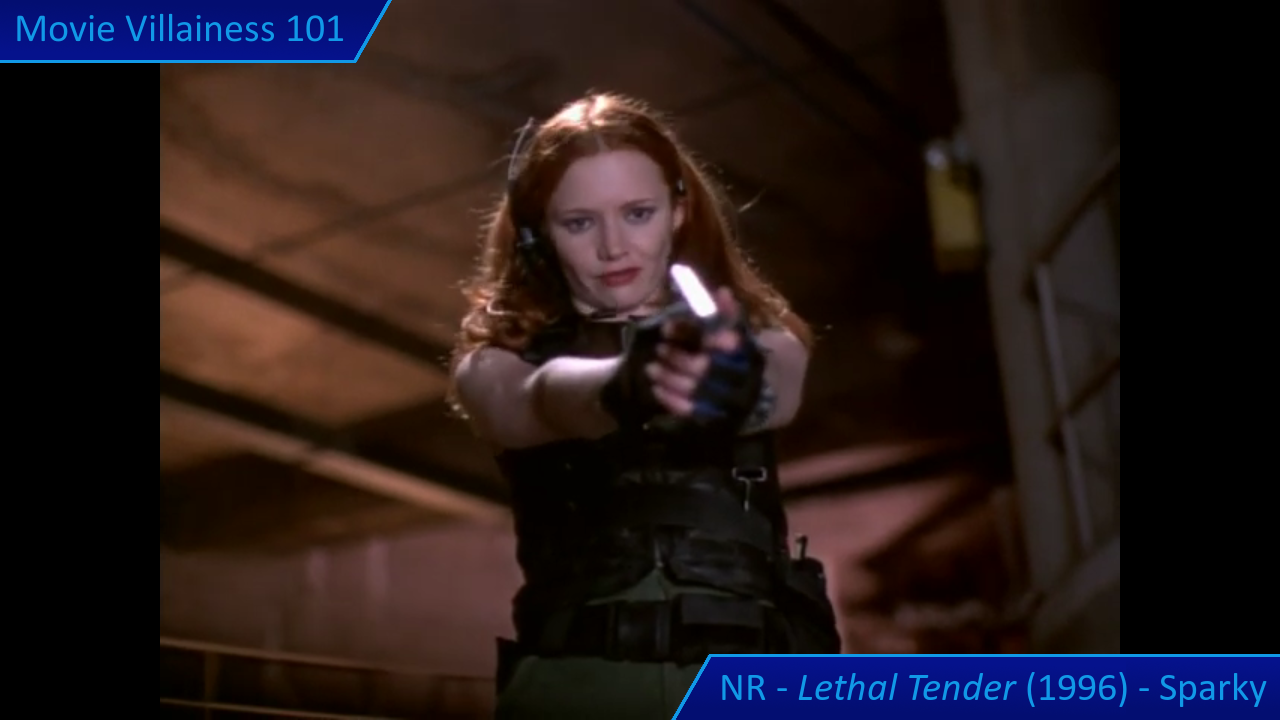
Lethal Tender (1996) – Sparky (Karyn Dwyer)

Die Hard in a water treatment plant, with Jeff Fahey as macho cop David Chase. Villains led by Montesi (Kim Coates) follow the standard playbook, taking hostages as a distraction while they steal bearer bonds. A scenario copied wholesale from the 1988 classic, but the above-average casting offsets the dull location.

Gary Busey is Turner – the same charismatic, dangerous bad guy he always plays. He double-crosses everyone and kills more criminals than the good guys. For added effect, Turner provides an unreliable narrator opening voice-over. Melissa (Carrie-Anne Moss from The Matrix series) is the love interest, but don’t expect a Trinity-level badass. She gets some action, but her role is mostly to provide technical information and get rescued by David.

The one female villain limit applies, but Sparky is a fiery redhead in a sleeveless leather jacket who doesn’t mind getting physical. The demolition specialist objects when Turner kills two unarmed civilians, but has no qualms slaughtering a special forces team with an assault rifle. When David is injured, Melissa fights Sparky and lands a few punches. Then the enraged villainess pulls a knife, and the hero shoots her in the back.

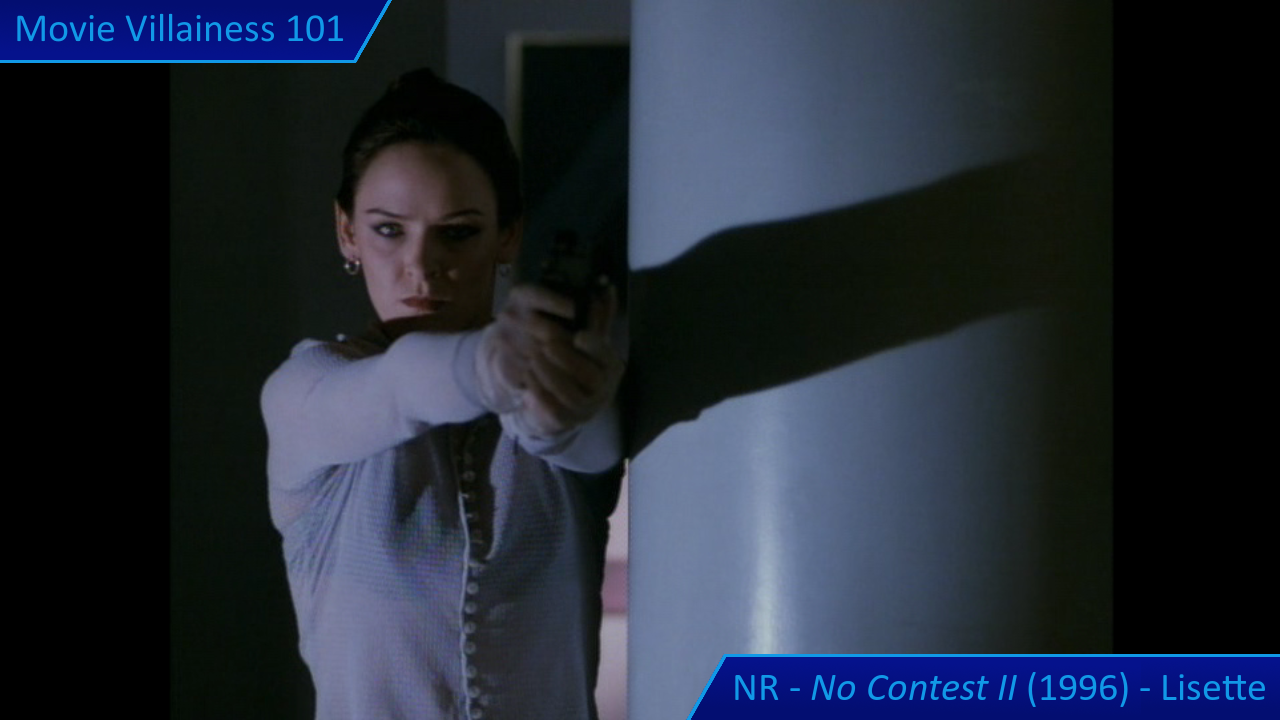
No Contest II (1996) (aka Face the Evil) – Lisette (Fiona Highet)

Shannon Tweed returns as martial arts actress Sharon Bell for this sequel that replaces a beauty contest with a museum for the Die Hard scenario. Criminals want a deadly Nazi nerve toxin hidden in a statue, and while Lance Henriksen does an innocent bystander act, it’s so obvious he’s the main villain that the reveal comes within the opening thirty minutes.

Production values are above average, and the 5’10’’ Tweed is convincing as an action heroine. This time, she has support from her sister, Bobbi (Jayne Heitmeyer). Everyone else is expendable, starting with the least important / likeable characters.

Lisette is the sole female baddie who dons surgical gloves to prepare the chemicals. Once Sharon becomes a threat, there’s a decent chase through the war-themed exhibit halls. Inventive props – barbed wire fences and hanging bamboo – provide background flavour to the gun-fu and kickboxing. Lisette is skilled enough to fight back and twirl a snapped-off wooden pole, but Sharon kicks her off-balance opponent onto the sharp object.

Another early exit (Lisette dies halfway through), but an honourable mention for a decent encounter with a semi-competent foe.