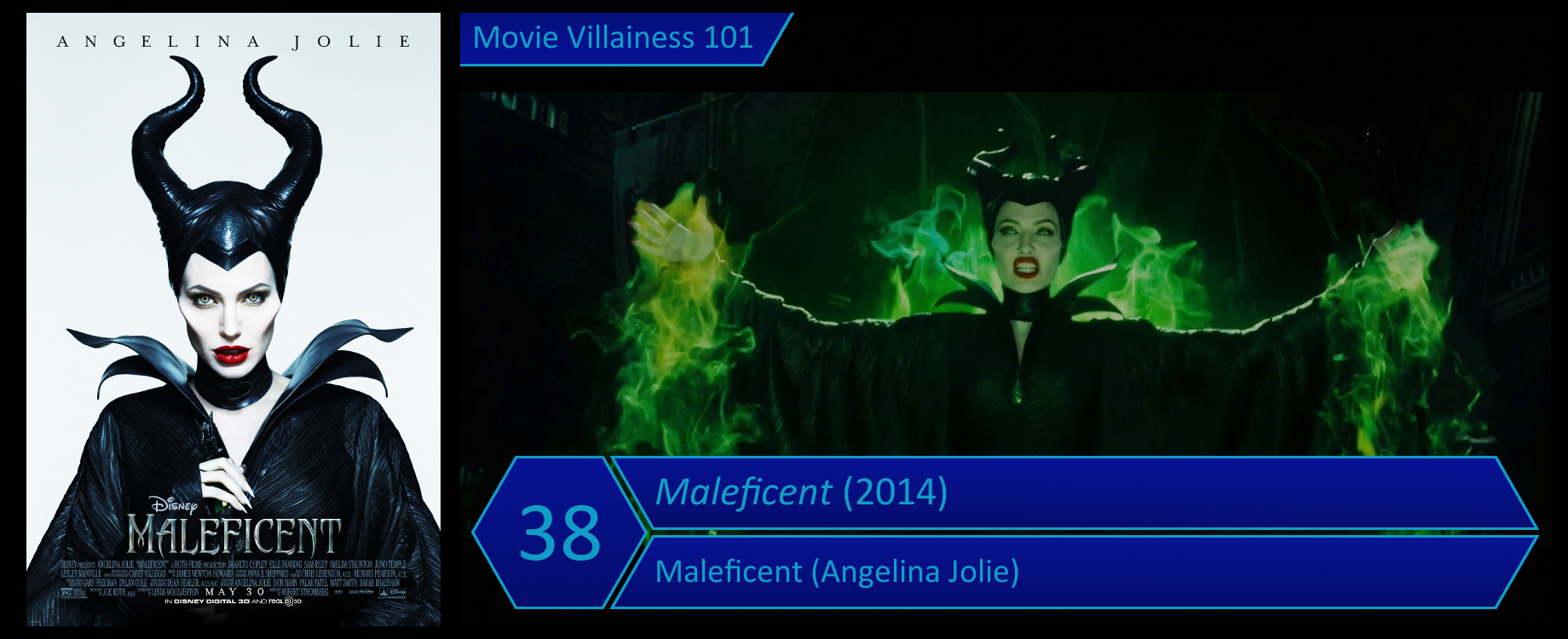
Movie
Maleficent (2014)
Ranking this villainess protagonist as legendary is a debatable decision because she’s an innocent girl for the prologue and the heroine for the entire last act. However, this live-action adaptation of Disney’s 1959 animated classic Sleeping Beauty is ultra-stylish, and its central character is too iconic to omit. For the villainous portion, Angelina Jolie has such a powerful screen presence that she – literally at times – lights up the somewhat basic redemption story.
In the old animated tale, Maleficent was a straight-up villainess, but here the chief baddie is Stefan (Sharlto Copley), a thief who befriends the titular fairy as a child. When humans invade the Moors (fairy territory), Maleficent and her magical army fight off the offensive. In desperation, the mortally wounded king offers his crown to anyone who slays the winged fairy who bested him. Stefan uses his past relationship to get close, but cannot kill his former lover, so he clips her wings as a trophy.
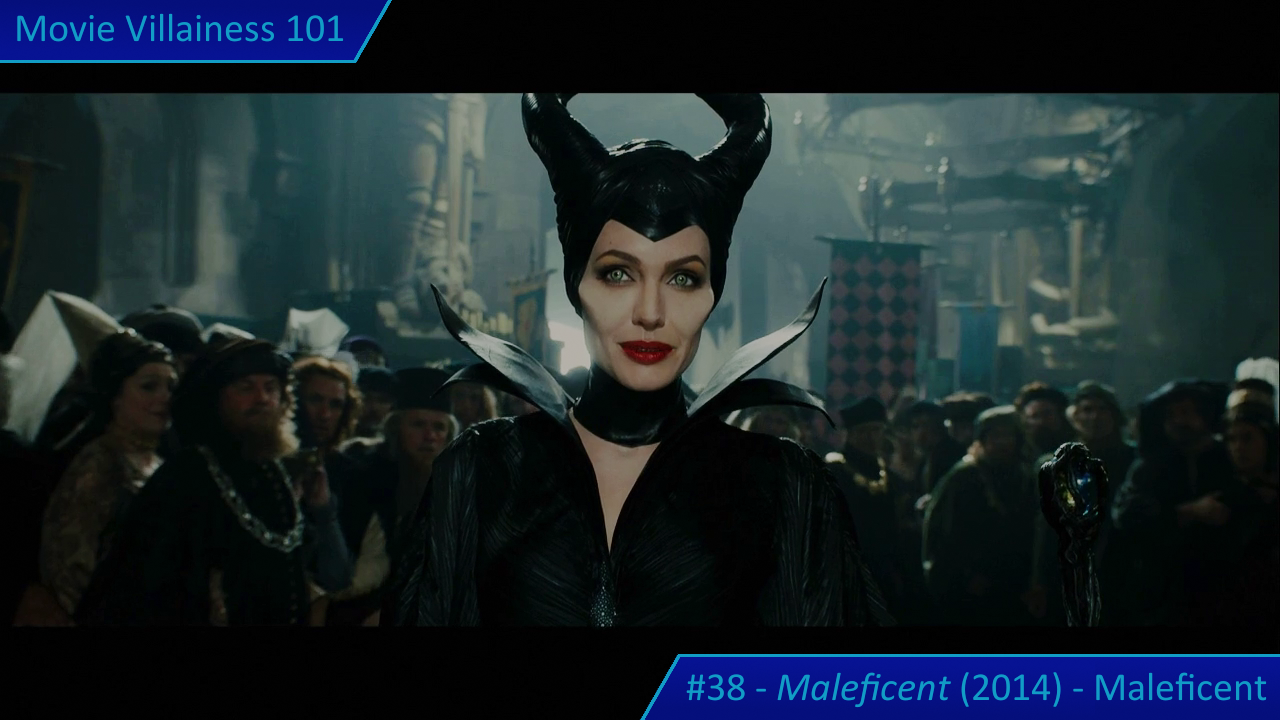
This sets Maleficent on her dark path, and soon she’s crafted a staff and developed a wicked green aura. To symbolise the transformation, the moors grow dark and gnarled tree branches create an impenetrable barrier between the fairy and human kingdoms. Now the villain of the story, Maleficent magically changes a raven into a man and gains a faithful servant in Diaval (Sam Riley).
Many elements from Sleeping Beauty feature: three bickering fairies, a handsome prince, and the beautiful and sweet Aurora (Elle Fanning). The fairytale landscape is captivating, with sprawling fields, towered castles and a variety of weird and wonderful creatures. But viewers expecting the story to unfold like the animated original will be surprised by key changes.
Villainess
Maleficent (Angelina Jolie)
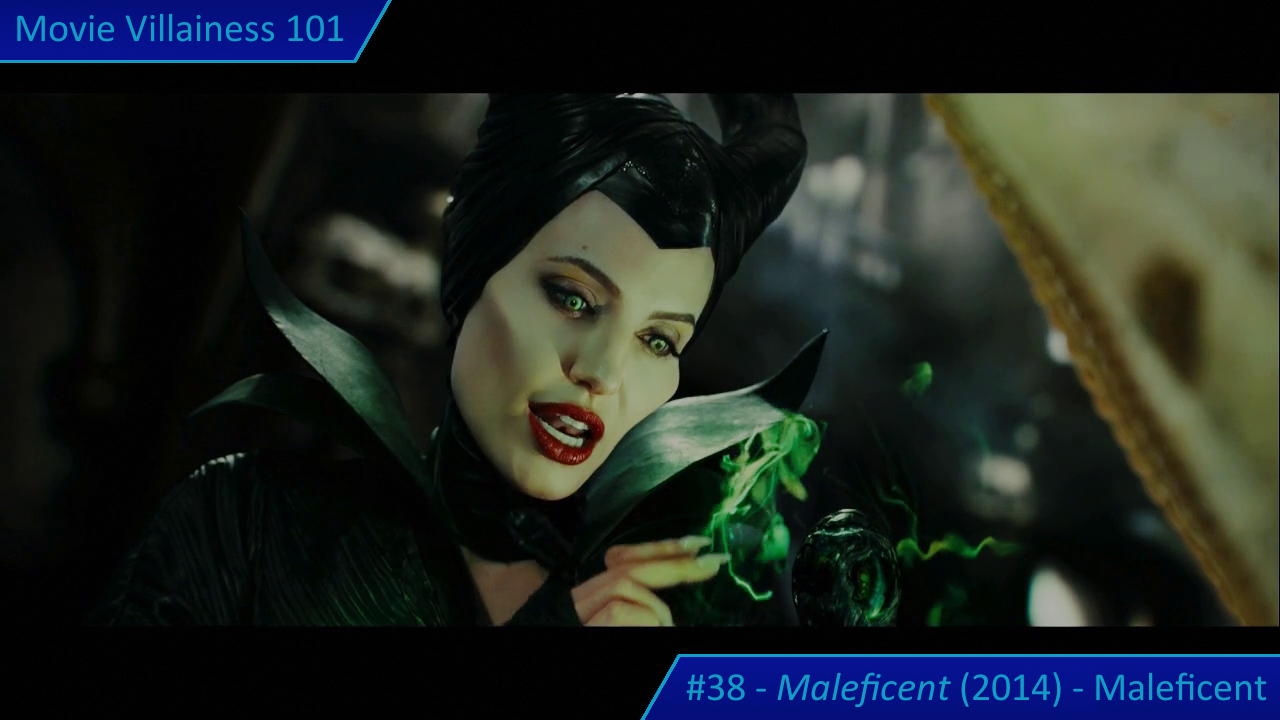
The birth of Aurora brings out the worst in Maleficent. During a celebration party, the black fairy visits the castle and bestows a gift. Actually, it’s a curse that Aurora shall prick her finger on a spinning wheel needle and then fall into an everlasting sleep. Heard of that one? The villainess gives a dramatic speech as green fire bursts from her. Stefan begs for mercy, so Maleficient decrees the curse won’t take effect until Aurora is sixteen. It can be broken… but only by true love’s kiss.
Stefan – obviously unaware that curses always happen – orders every spinning wheel in the kingdom burned and sends his army to assault the Moors. Fire has no effect on the wall of branches, and Maleficent’s magic wards off the lowly footsoldiers. For extra security, Stefan tasks the three fairies to guard Aurora and keep her away from the castle. Over sixteen years, the threesome morph into adults, but they are more interested in playing games and arguing than childcare.
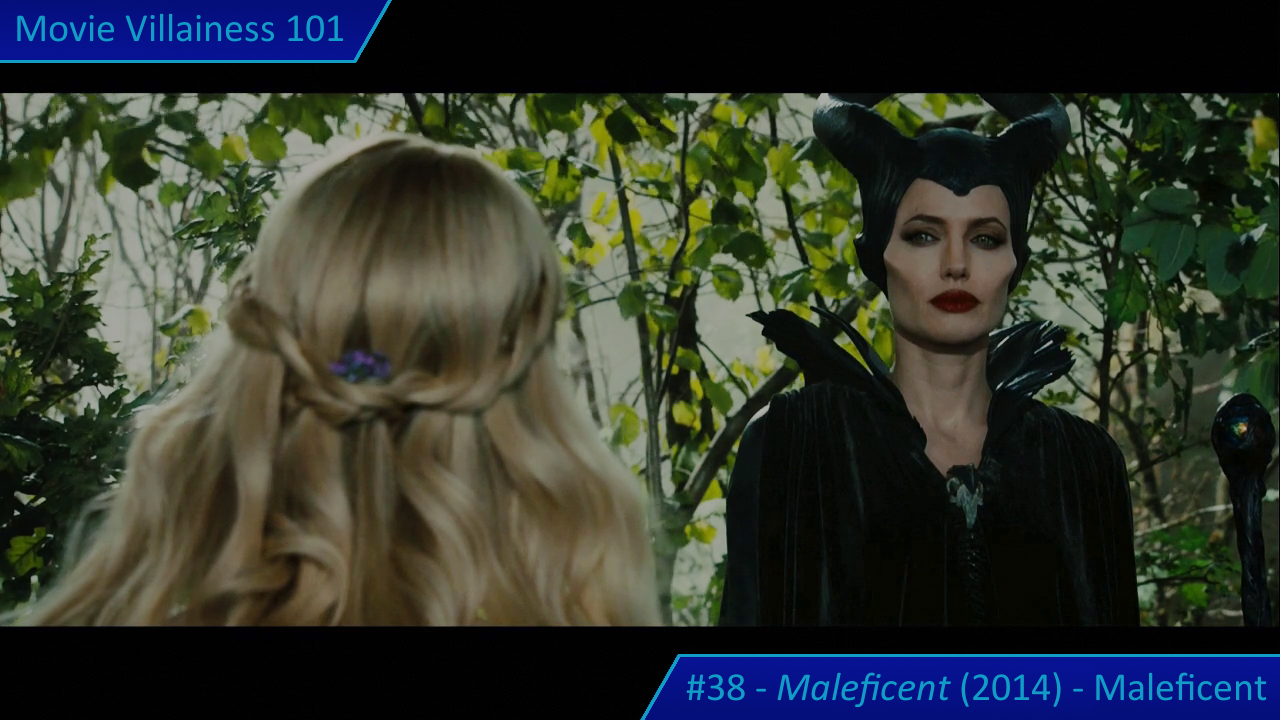
Maleficent and Diaval have a change of heart and keep the princess safe. Over time, the protagonist becomes fond of the girl, and the child regards Maleficent as her fairy godmother. The softened villainess is shocked at the notion, but Aurora’s sweetness and innocence inspire the curse’s creator to revoke it. Unfortunately, Maleficient’s own words – that the curse will last for all time – come back to haunt her.
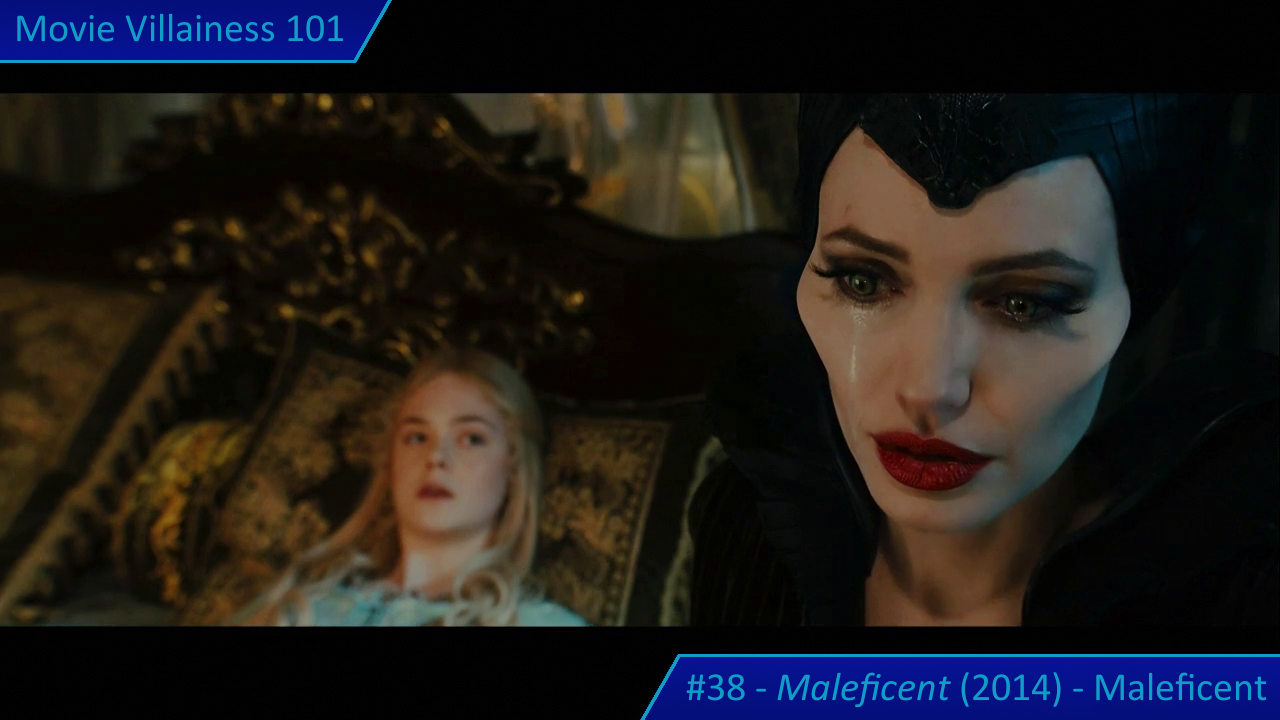
When Aurora learns the truth, she flees to the castle. Then the inevitable happens: a spindle reassembles, the girl pricks her finger, and drops into a magical sleep. Before all this, she met a prince, so Maleficent brings him to the castle hoping his kiss will break the curse. Unlike the animated tale, this doesn’t work as there’s no love between them. That’s when Maleficent visits the sleeping beauty seeking redemption and kisses her. Anyone care to guess what happens next? Yes, in this version, it’s Maleficent who truly loves Aurora, and the curse is duly lifted.
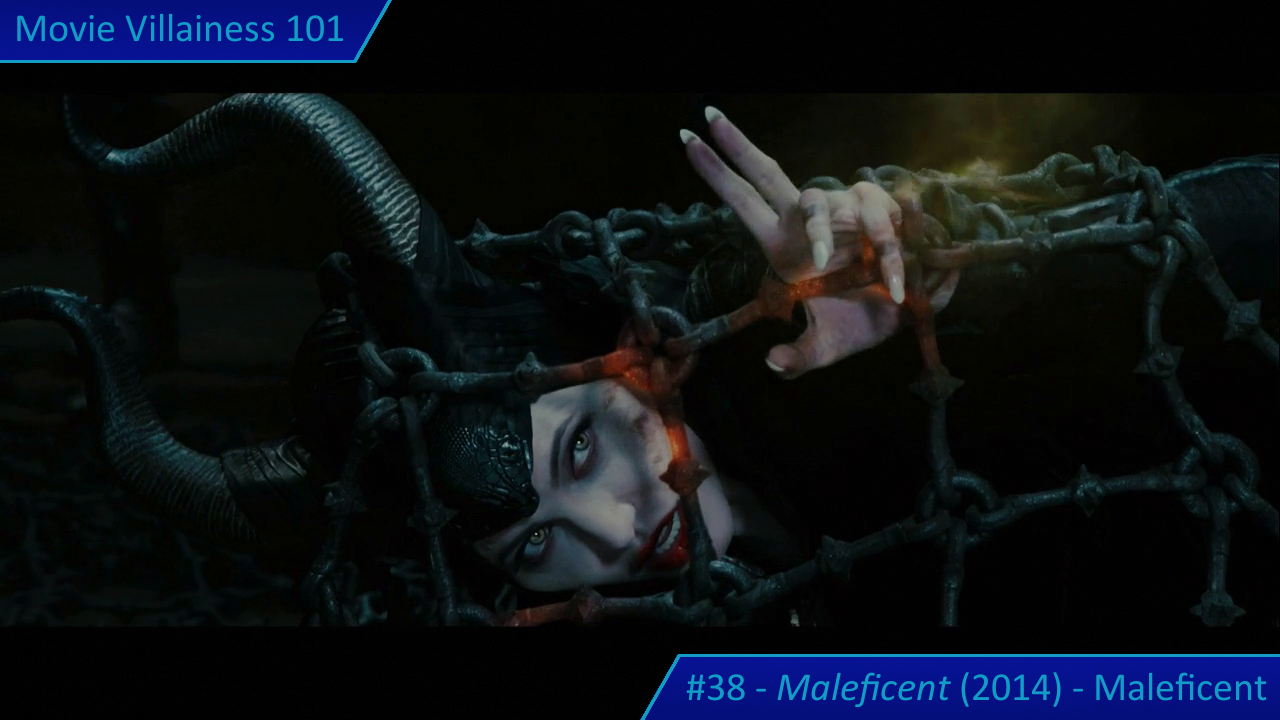
With the females united, Stefan’s troops drop a metal net over the anti-heroine. Since iron burns fairies, that’s not good, but before she falls unconscious, Maleficent transforms Diaval into a dragon. This leads to an epic clash of steel and magic, with armoured troops fighting the beast. While the guards are busy, Aurora smashes a display case to release Maleficent’s wings. They fly back to their owner, turning the tide of the battle. Maleficient shows the deposed king the mercy he deserves – none – and he falls from the castle parapet.
And everyone lives happily ever after… until the sequel, at least. That aspect of the fairytale was never going to change.
Honourable Mentions: Sleeping Beauty
Sleeping Beauty (1959) – Maleficent (Eleanor Audley – Voice)
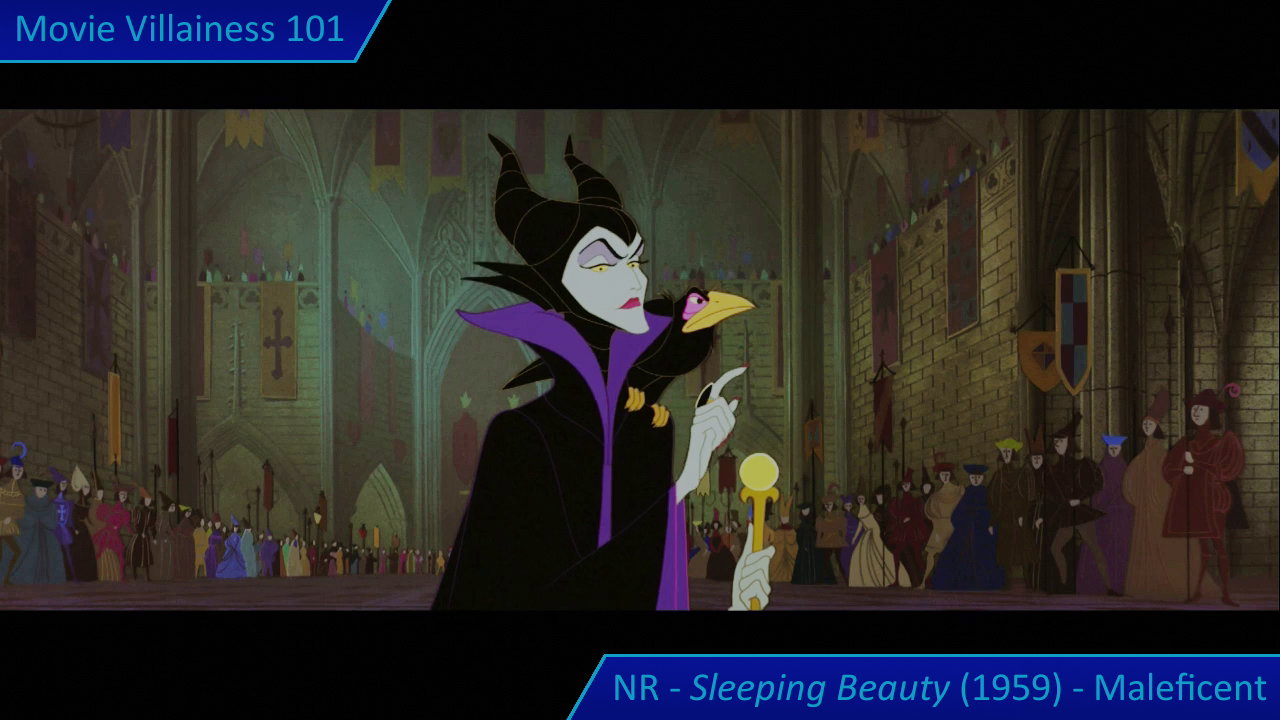
I’ve focused on live-action movies, but it’s only fitting to grant an honourable mention to one of Walt Disney’s best animated features. The classic tale is strictly good versus evil, so don’t expect any character development or grey moral areas.
Stefan is a noble king. Maleficent is a villain just because the story requires one, and there are many musical overtures. And comical moments as the three good fairies fight over the teen princess Aurora. Some key plot details are common with the live-action version, notably when Stefan orders every spinning wheel burned. And of course, Maleficent casts her diabolical curse on the infant.
As children’s entertainment, it’s not overlong at seventy-five minutes. Simplistic by today’s standards, but the animation is top-notch for the era. The highlights are Aurora being deceived into pricking her finger, and the duel between Prince Phillip and Maleficient. Or rather, the dragon she’s shapeshifted into. In the end, the dashing hero vanquishes the evil fairy, wakes his love with a kiss, and marries her. Of course, everyone lives happily ever after.
Maleficent: Mistress of Evil (2019) – Queen Ingrith (Michelle Pfeiffer)
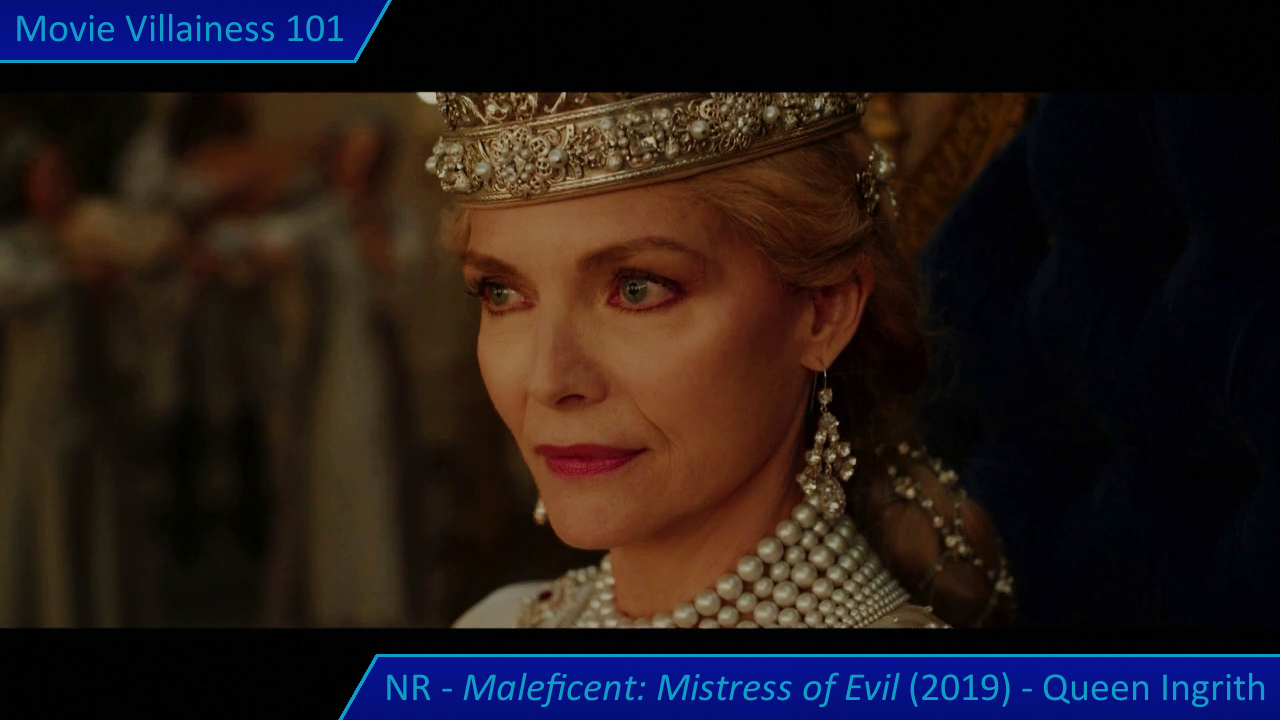
The sequel picks up five years later, and many characters return for another epic adventure. Newcomers include the prince’s parents: a peace-seeking king and a scheming queen mother.
Ingrith is so intent on conquering the Moors she frames Maleficent for cursing her husband. This instigates a bitter war between humans and fairies. Michelle Pfeiffer’s villainess has no moral ambiguity, but her backstory is not as interesting as Maleficent’s. A few tyrannical speeches on being a “strong” queen are all we get for motivation.
Ingrith and her gnome assistant harvest anti-fairy powder and stockpile iron weapons for their diabolical plot. The final battle – when we get there – is spectacular. A female guard captain shoots Maleficent with a crossbow contraption, but is then sidelined into shouting announcements and playing an organ. Admittedly, the pipes double as a powder-launching device, and the music accompanies the slaughter of fairies. But soldiers should be fighting.
A swarm of winged fairies joins Maleficent to assault Ingrith’s castle, only to be annihilated by the defences. The marriage of Aurora and the prince is a side story, and there’s some poor exposition about Maleficent being the last living descendant of a phoenix. That’s an excuse to resurrect her from the ashes and shield Aurora from the evil queen. You didn’t expect the central character to die so easily?
Despite the increased stakes, this instalment is a weaker effort. As a humorous touch, Maleficent transforms the defeated villainess into a goat, but that can’t disguise the inferior story.
 Action Girl Books