Movie Villainess 101 Rank #3

The greatest female villain and pre-title henchwoman in the Bond franchise are more than enough

Movie

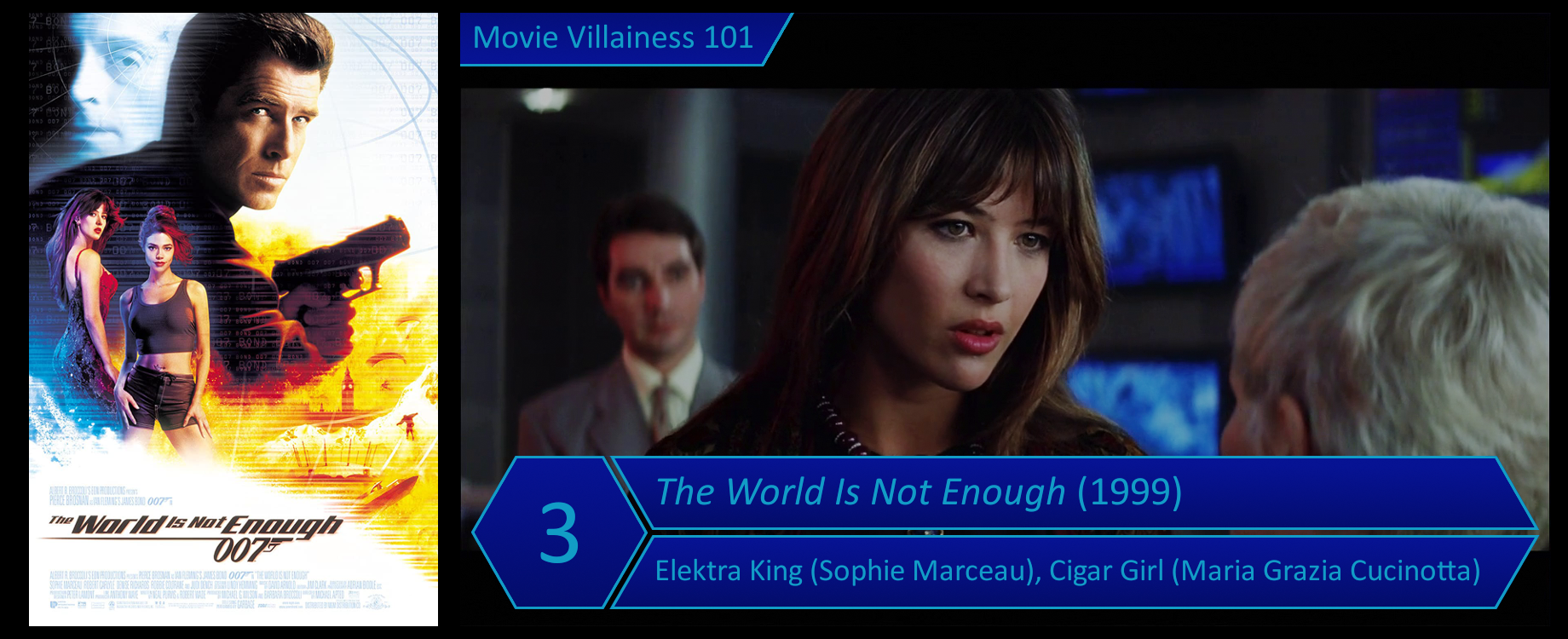
The World Is Not Enough (1999)

My GoldenEye discussion omitted one of the Brosnan films. That’s because the only female main villain in the Bond series deserves a goddess tier spot. As a bonus, we get the greatest pre-credits villainess, which almost makes up for the female baddie wilderness in the Daniel Craig era. In classic 007 fashion, the Cigar Girl assassin gets her own dedicated section. And it’s a logical review structure since Elektra doesn’t appear until after the title song.
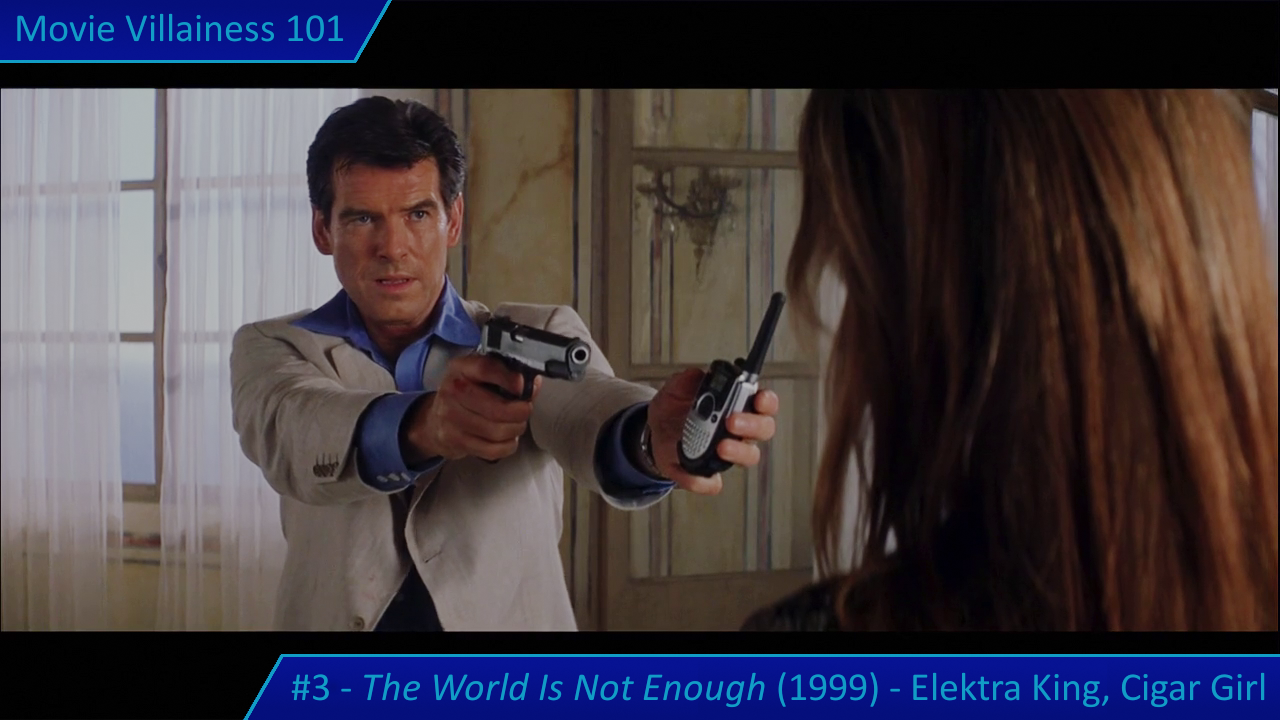
Brosnan films are relatively fun and escapist compared to what followed, but this entry has a more serious tone. Valentin Zukovsky (Robbie Coltrane) makes a welcome return as Bond’s reluctant ally, and the MI6 series regulars are also present. Sadly, this was Desmond Llewelyn’s last appearance as Q, but he passes the torch on to R (John Cleese) and delivers comic antics and gadget-testing chaos.

Action sequences are hit and miss, and the major set pieces – attacks by para-hawks and saw-blade helicopters, a gun battle in a missile silo, and the climax on a doomed submarine – fall flat compared to the spectacular opening. Still, this is a must-watch movie for any villainess fan, and the twist of having a Bond girl be the main baddie is a refreshing take. There’s also a good female: Denise Richards as nuclear physicist Christmas Jones. An excuse for bad jokes, but this is an entertaining outing.

Pre-Title Villainess

Cigar Girl (Maria Grazia Cucinotta)
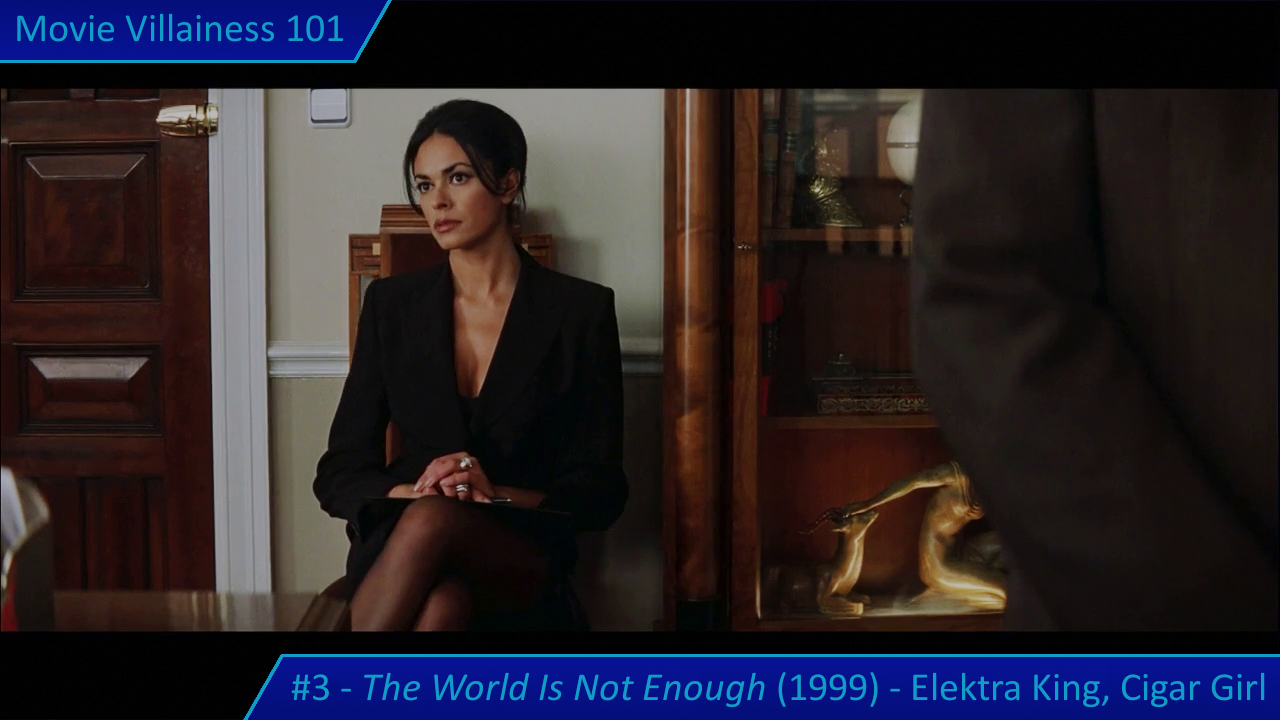
This epic opening gambit – and the longest before No Time to Die – begins in Bilbao, Spain, with Bond mincing words with a sleazy banker. A beautiful woman offers him a cigar (hence her nickname) and even gets a double entendre quip. Then it’s down to business with 007 demanding answers about a murdered MI6 agent. Things predictably turn nasty, and Bond makes quick work of some armed thugs. Too bad he forgets about the Cigar Girl, who eliminates the banker with a throwing knife.
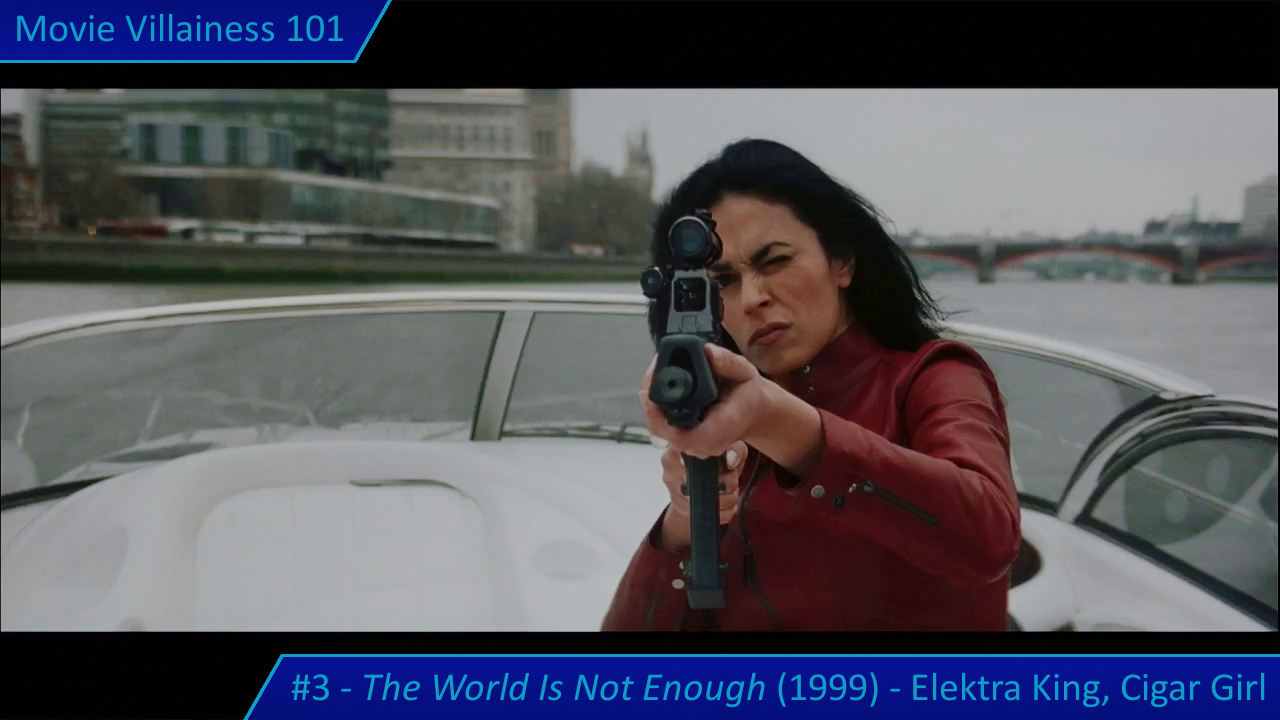
Trapped and unable to pursue the assassin, Bond makes a dramatic getaway with a suitcase of money with the help of a mystery sniper. This ensures 007 makes it safely back to London, where he’s introduced to Sir Robert King, an oil tycoon who won’t be with us much longer. The money is laced with explosives, and King’s lapel pin is a proximity trigger. With MI6 under attack, a familiar female foe returns, and this time it’s Bond in her laser sight.

The big chase along the River Thames has Bond in a gadget-equipped boat pursuing the Cigar Girl past famous landmarks, including the Houses of Parliament and the Millennium Dome. The elusive assassin is as skilled at piloting a boat as at murder. More than once she evades Bond by making sudden turns or cutting under a descending bridge. Bond submerges the boat to bypass the obstacle and straightens his tie. Remember when these movies were pure fun?
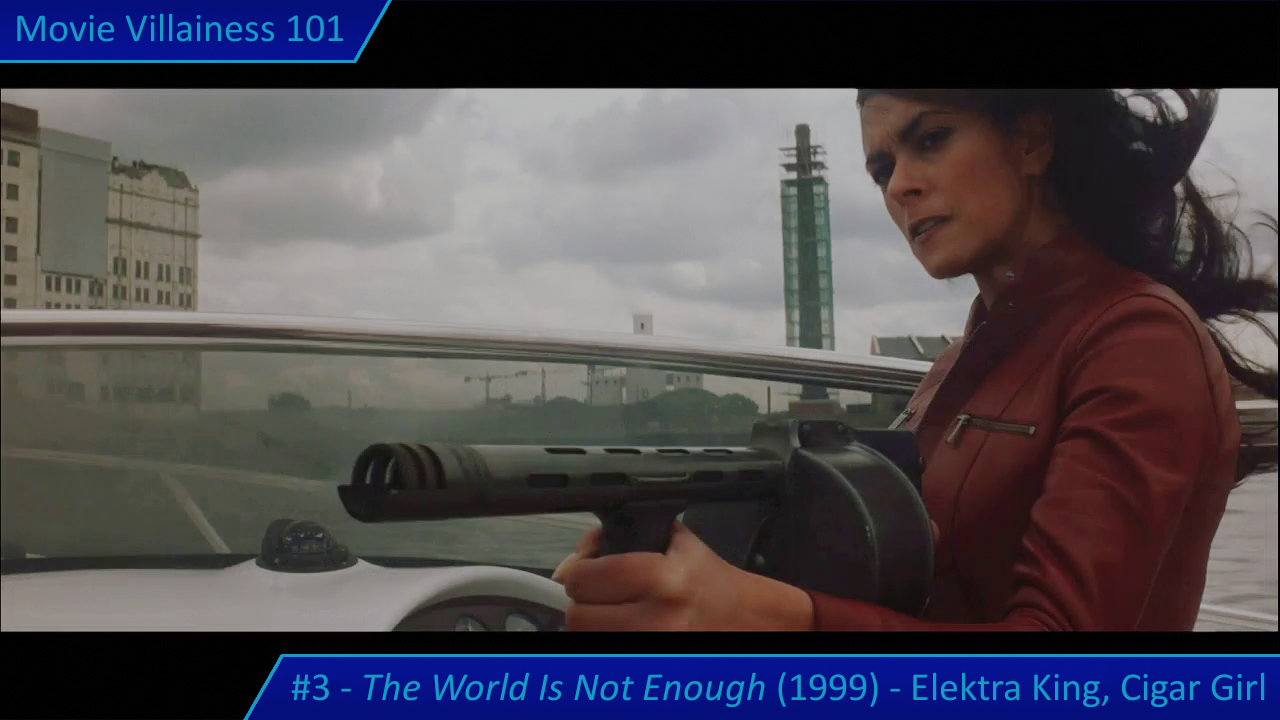
The Cigar Girl uses a machine gun, which is ineffective against the armoured Q-Boat, so she switches to a grenade launcher. Plenty of collateral damage and explosions, but Bond is never easy to get rid of. The villainess wrecks another boat and cuts 007 off, or so she thinks. Like all vehicle chases in Bond films, the hero finds a detour – a land ride through a street market, narrow alley, restaurant – back to the Thames.

Bond launches torpedoes at the Cigar Girl, but she makes her own dramatic escape like any good pre-credits villain. Then she hijacks a hot-air balloon, and Bond leaps onto the mooring rope. Realising there’s no way out – and rejecting Bond’s offer of protection – the henchwoman blows up a gas tank. Bond drops to safety and the Millennium Dome does something useful by breaking his fall. This hitwoman and sequence could push for a ranking all by herself, but there’s plenty more female villainy to come.

Main Villainess

Elektra King (Sophie Marceau)
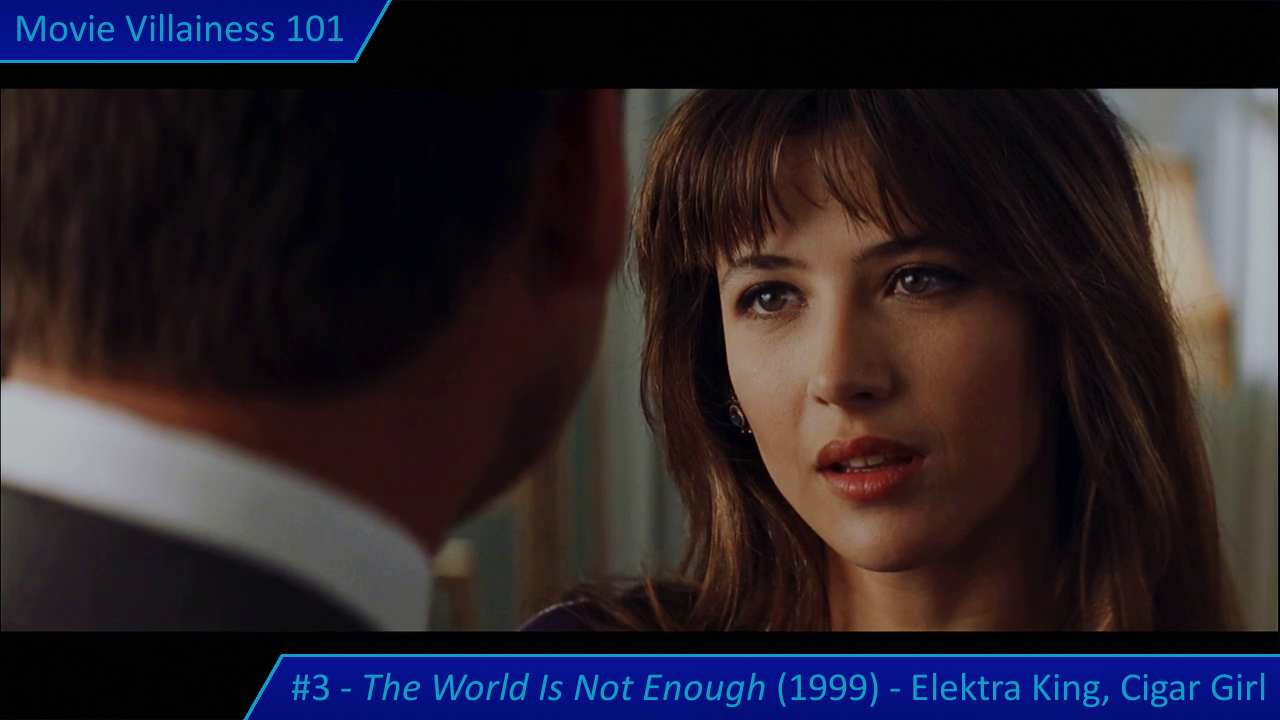
Straight after the title song, Elektra attends her father’s funeral. The first half of the movie sets her up as a traditional Bond girl whom the hero must protect. The main villain is implied to be Renard (Robert Carlyle), an anarchist who previously kidnapped Elektra and now appears to be targeting her again. King’s daughter has taken over his oil company and oversees a pipeline construction in Azerbaijan. Not the safest part of the world, and after Elektra and Bond are attacked by para-hawks while skiing in the mountains, the two become dangerously close.

Surprisingly, Bond doesn’t make love, and instead shows genuine concern when Elektra invites him to her luxurious Baku residence. There are plenty of dodgy-looking males around, including a tough henchman and the head of security, so no shortage of insider suspects. It turns out they are all working with Renard, but the mystery element works well. As a villain before the more serious Craig films, there’s a gimmick, in this case a bullet lodged in Renard’s brain which suppresses pain.
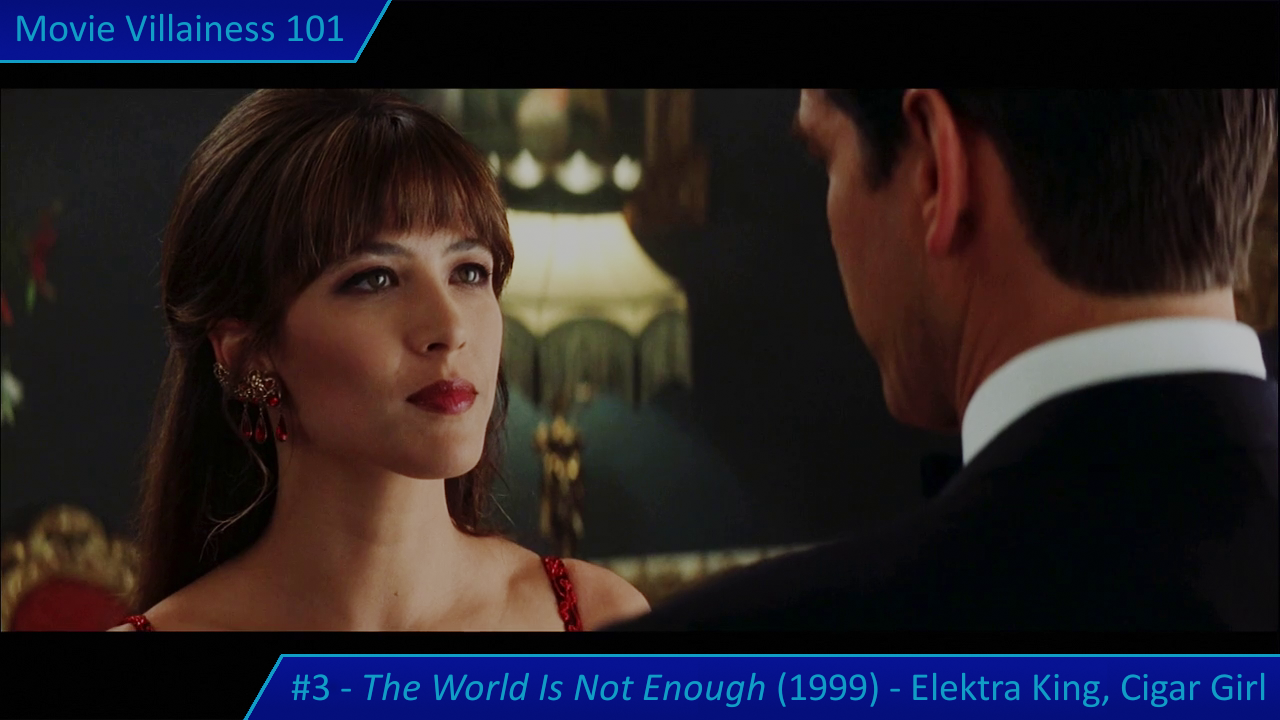
Determined to identify his attackers, Bond visits Valentin at a Russian mob casino. Everyone present, from the high rollers to the attractive female employees, is armed. Elektra shows up and acts recklessly, losing a million dollars on a high-card draw game. The first sign this woman may not be as innocent as she pretends, but Bond still beds her. That moral compunction didn’t last long, eh?

Bond’s investigation leads him to the pipeline construction site where the treacherous head of security learns the British spy has a licence to kill. A long plane ride later, Bond discovers a plot to steal a nuclear bomb from a missile silo. This is where we meet Christmas Jones, an improbable scientist who becomes an unlikely ally once Renard’s men open fire. She’s the reliable, non-screaming Bond girl who’s happy to help, even if bullets and explosions are not a usual day at the office.
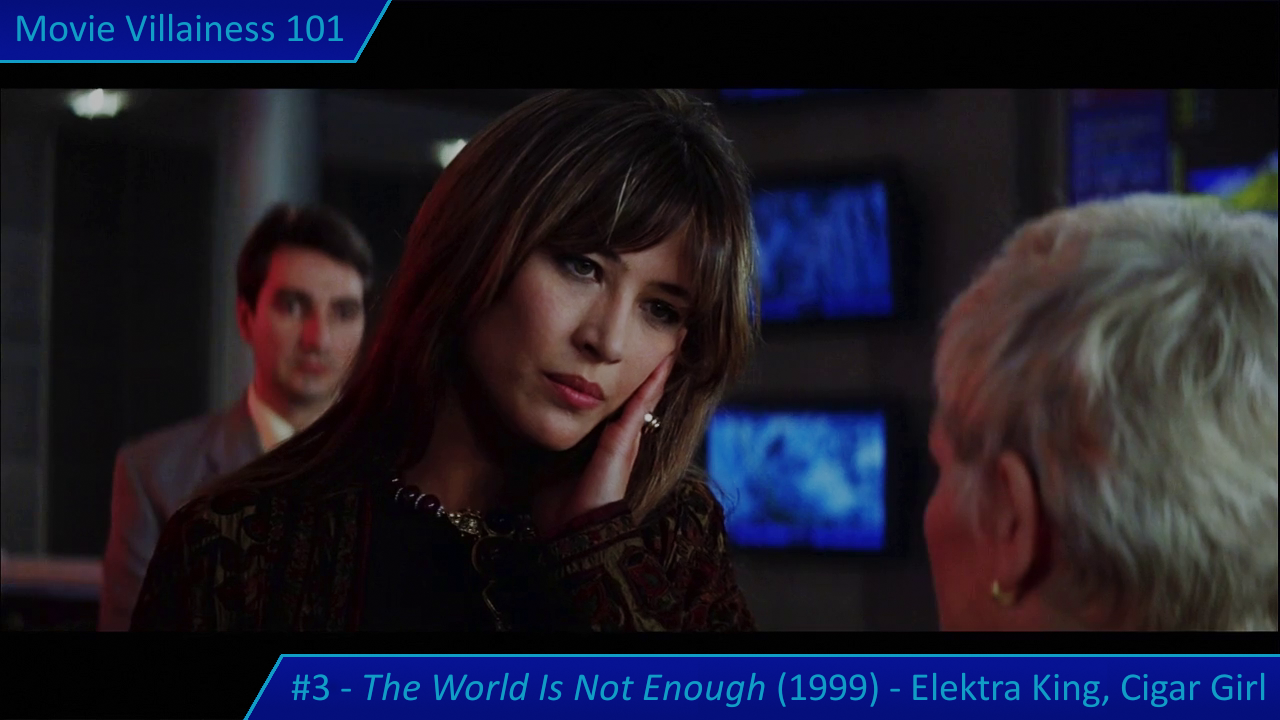
Despite Bond’s efforts, Renard escapes, and it’s revealed he plans to detonate a nuclear device in Elektra’s pipeline. With a second woman involved, it’s inevitable (in this era) that one girl will be bad. When Bond and Christmas discover only half the plutonium core is in the bomb, 007 makes a calculated choice to let the device explode. Believing her nemesis to be dead, Elektra reveals her true intent to M – present at the villainess’ request – by having the MI6 bodyguards killed. And we finally have a female main villain to celebrate.

Now we know Elektra is behind her father’s murder, it’s time to reveal the endgame. Bond questions Valentin and learns that the villainess and Renard have purchased an old nuclear submarine. Their plan: to create a meltdown, destroy Istanbul, and contaminate the surrounding sea. And Elektra’s pipeline will become the only viable oil supply in the region.

With so much wealth and power, no wonder this woman has a hold over Renard. The two have a sinister sex scene where she runs ice over her body and clearly enjoys inflicting psychological torture. Meanwhile, M is locked in a cell in Maiden’s Tower, but broadcasts a signal using a missile locator card (which Bond gave her earlier) and a clock battery.
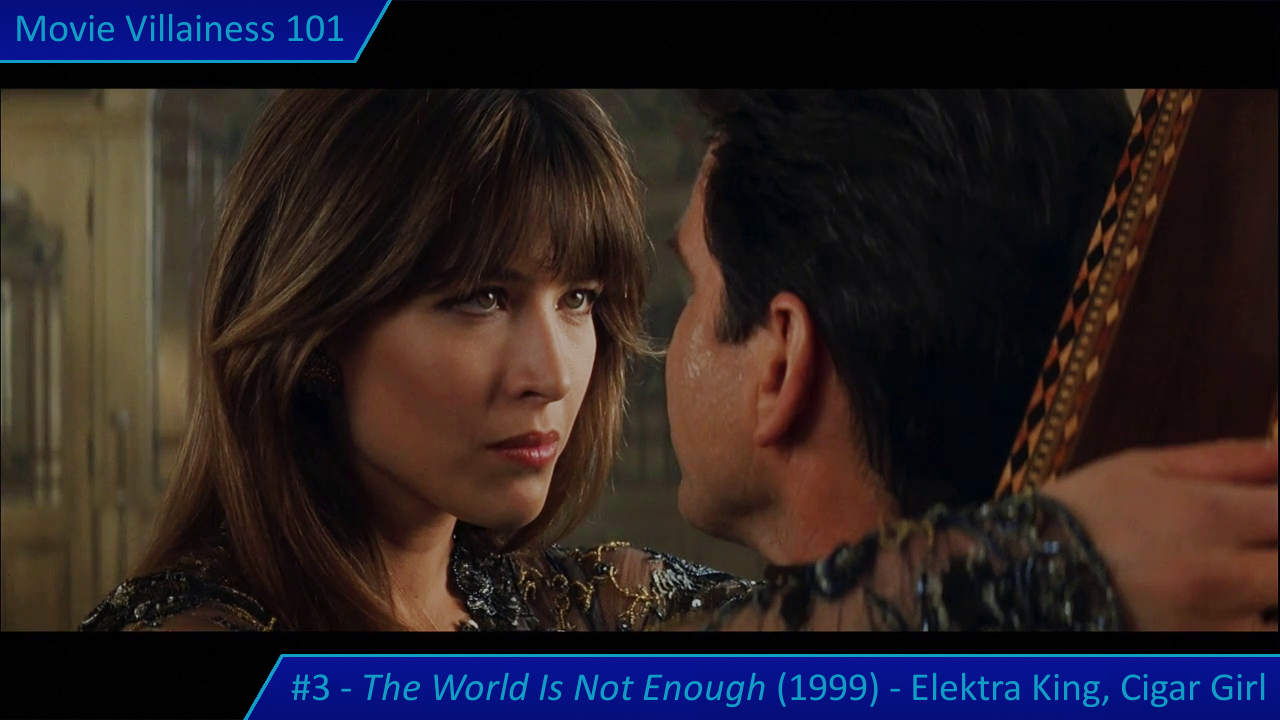
After an amusing scene where the heroes interrogate Valentin as he drowns in caviar, a gold-toothed henchman sells them out. Time for physical torture, and the villainess uses an antique chair and neck restraint to secure Bond. Perfect for strangling a man during a villainous motive rant, and an opportunity to drop the title, which is Bond’s family motto. The sadistic Elektra rapes Bond while he’s at her mercy and is enjoying her triumph until Valentin crashes the party.

If Bond was expecting a rescue, he shouldn’t have been so optimistic. Elektra shoots Valentin, and the Russian mobster – despite having a gun in his cane – targets a wrist restraint instead of the female villain. Perhaps a reference to their history, as the Russian acknowledges Bond in his dying moment. That’s enough for the hero to escape and chase Elektra up Maiden’s Tower.
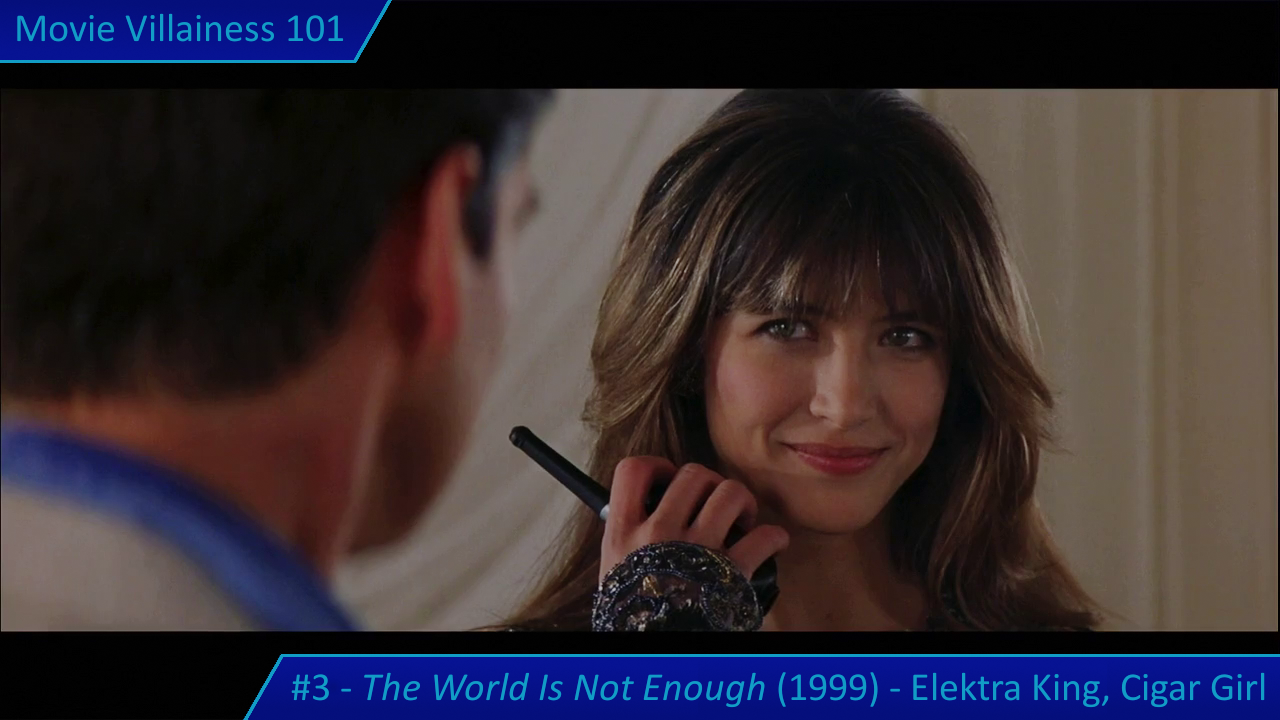
Disappointingly, she’s not the last villain to die, as there’s a lengthy sequence where Bond stops Renard melting down the submarine reactor. And then it’s the usual scenario of rescuing the Bond girl, who actually proves useful, and an old-style ending with a poor joke and M surprised by her top agent’s womanising.

Before the anticlimactic finale, Bond faces off with Elektra. She gets one of the best villain deaths: taunting the spy as he pursues her, before boasting he can’t kill a woman in cold blood. Turns out Bond has no problems with cold-blooded murder with evil women, though he shows regret afterward.

Honourable Mention / Discussions: Daniel Craig Bond Movies

Casino Royale (2006) – Valenka (Ivana Miličević)
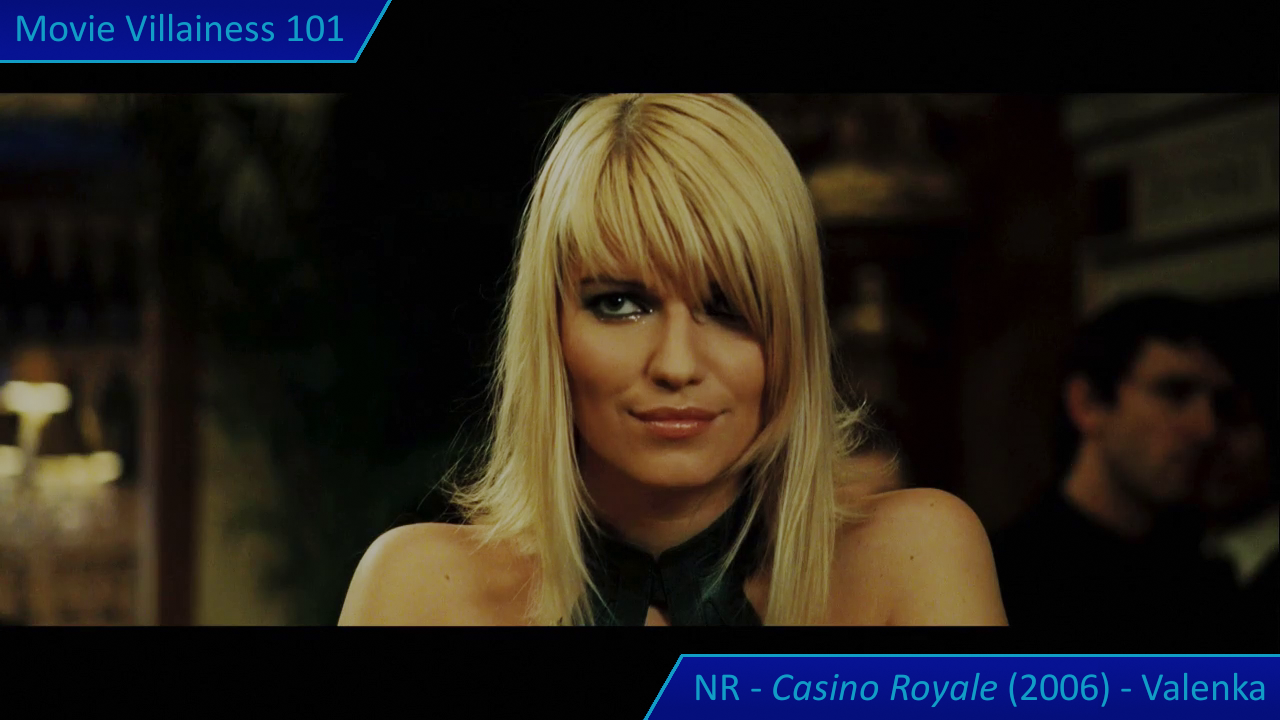
The sole honourable mention for this review goes to a mostly silent, sexy henchwoman who looks the part but doesn’t do much. And that faint praise sums up the lack of female villains in the Daniel Craig era.

The second Martin Campbell-directed reboot (after GoldenEye) is an origin story with a black and white prologue and a reckless 007. A long way from Connery’s suave secret agent. A back to basics approach, but there are action scenes aplenty, notably a free-run sequence across a construction site. The bad guy is Le Chiffre, a banker funding terrorists whom Bond must outwit in a high-stakes poker game at the titular Casino Royale. Judi Dench remains M, but with no Moneypenny or Q, Bond relies on actual spy work and resilience to complete his mission.
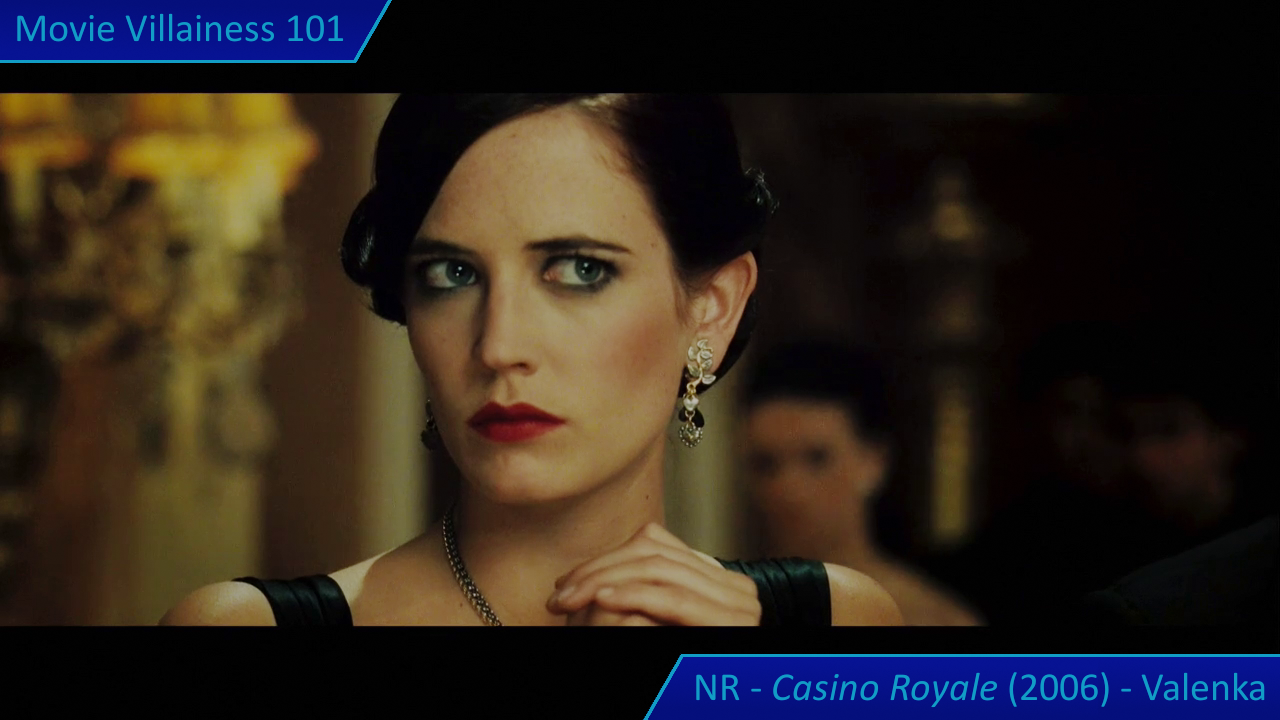
The main female character is Vesper Lynd, a treasury agent with the usual pun introduction, who later becomes a genuine love interest. Eva Green delivers a standout performance in the franchise, with real chemistry between her and Craig’s 007. Bond’s weakness for women makes him blind, and he doesn’t know Vesper is working with the shadowy organisation behind Le Chiffre. It’s eventually revealed that he had her boyfriend kidnapped to coerce her, so she’s a tragic character and not a true villain. But her death in the Venice finale is the most downbeat outcome since On Her Majesty’s Secret Service.

As for Valenka, she gets a sexy introduction and is present for Le Chiffre’s business dealings. Despite being attacked by a machete-wielding thug, she remains loyal and isn’t too bothered by violence when she’s not the target. Her best moment is poisoning Bond’s drink at Casino Royale, but she vanishes near the end. A scream implies Valenka is killed when Le Chiffre’s employers decide he’s no longer valuable. Get used to disappointment with this Bond – it only gets worse from here.

Quantum of Solace (2008)

The story is hard to follow in this weak outing, and the jump-cut action sequences are more likely to induce headaches than thrill. Add unnecessary, arty title cards whenever events shift to a new location, poor direction during exposition scenes, and a truly pathetic henchman, and the result is dire. A woman named Strawberry Fields (yes, really) gets coated in oil for her death scene as homage to the superior Goldfinger. Painful stuff.

Olga Kurylenko is Camille, a former Bolivian agent who allies with Bond. She handles herself well in the action scenes, notably a parachute escape from a crashing plane. Pity her vendetta is even less interesting than Bond’s quest to avenge Vesper. The climax in a desert hotel is messy, and the only plus point is brevity. Clocking in at 106 minutes, Quantum is the shortest Bond movie to date.

Skyfall (2012)
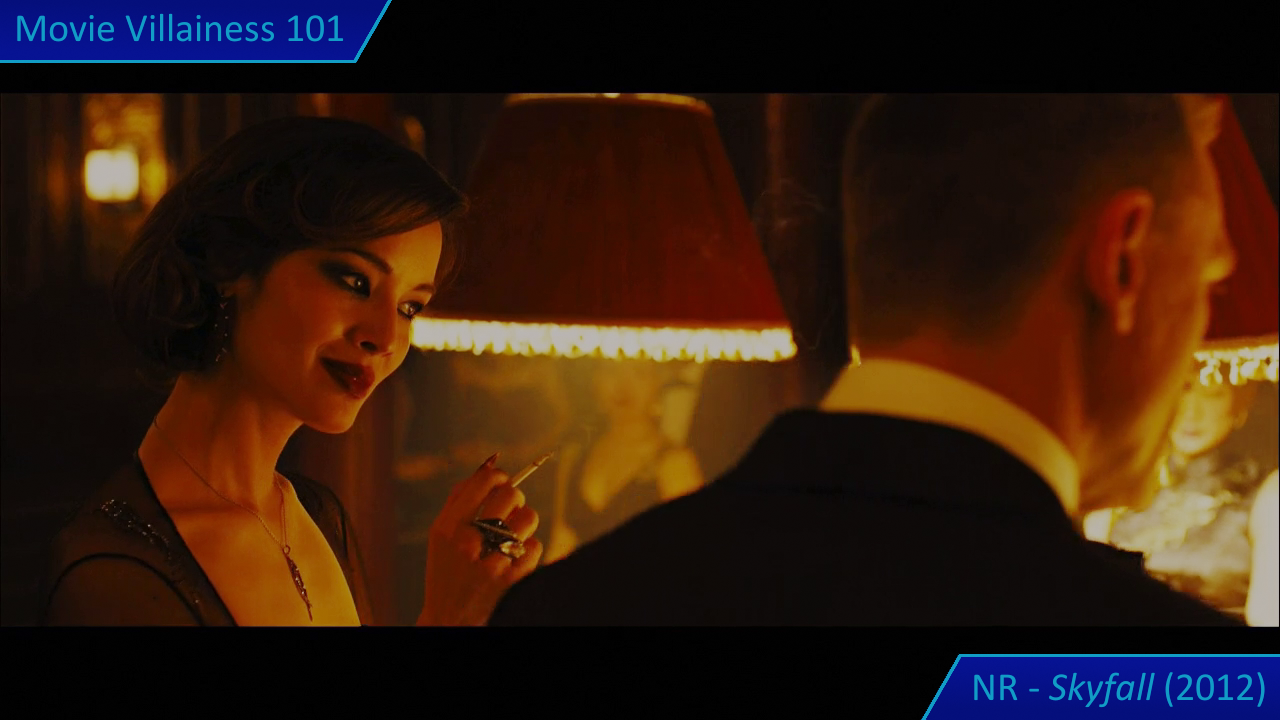
Craig’s third movie breaks with tradition by not giving us a true Bond girl. Judi Dench is M for the last time, with a more prominent role in the story and a great sendoff. Naomie Harris’ MI6 operative does more harm than good. More importantly, her name is Eve Moneypenny, an entirely different origin for the world’s most famous secretary. Q makes a comeback in the guise of a young boffin, though gadgets are limited to a palm reader, gun and radio.

The closest fit to the traditional female role is Sévérine (Bérénice Lim Marlohe), a former sex slave who is now a trophy girl and accomplice to the main villain Silva (Javier Bardem). He’s a former agent out for revenge against M, and the story is mainly set in the UK. Sévérine looks beautiful, matching the exotic locations of Shanghai and Macau. But like many ill-fated women in 007 movies, she romances the British spy before the villain disposes of her in theatrical fashion.

Skyfall is one of the better Bonds overall, perhaps because it doesn’t follow the established formula. The terrorist attacks on the London Underground and parliamentary hearing are well staged. The grand finale is a MacGyver-style final confrontation in Scotland as Bond dusts off a familiar Aston Martin. However, female antagonists are notably absent.

Spectre (2015)

The return of Ernst Stavro Blofeld (Christoph Waltz) and his evil organisation promised much, but delivered little. Mexico City during the Day of the Dead is a spectacular backdrop for an action-packed opening sequence, a helicopter stunt, and thousands of extras. Unfortunately, that’s the sole highlight. A shadowy Spectre conference, a car chase through Rome, and a train fight with a tough henchman should be exciting. They are not.

No female villains (again), and the leading lady Madeleine Swann (Léa Seydoux) has no chemistry with 007. Monica Bellucci appears – briefly – as the suicidal widow of a Spectre agent Bond killed in the teaser. He saves her life and seduces her for information, which ends with the most uncomfortable fling in the series.
Best not to mention the unnecessary twist about Bond’s guardian being Blofeld’s father, revealed in a painful exposition scene.

Add a tedious plot about intelligence control, a flat finale in the ruined MI6 building, and the hostage girlfriend ploy, and there’s little to get excited about. Need to cure insomnia? Spectre is the solution.

No Time to Die (2021)
The producers remembered what the series is about: thrilling action and sensational women. Despite a family subplot and a weak villain scheme that bogs down the last act, it’s a fitting sendoff for Craig. In this one, nobody is safe. Major characters, including the dependable CIA ally Felix Leiter and Blofeld, are killed off, foreshadowing the controversial end when Bond dies in a missile strike. The rulebook has been well and truly torn up.

The longest pre-credits sequence to date begins with a flashback to Madeleine as a child before we shift to the present and Spectre agents come after Bond in Italy. A dejected Bond retires from MI6, and an agent named Nomi (Lashana Lynch) becomes the replacement 007. On a rogue CIA mission to recover a traitor scientist, Bond receives help from Paloma (Ana de Armas), a rookie operative who is surprisingly proficient. The best action woman in Craig’s tenure only appears for ten minutes, but Paloma isn’t a disappointment.

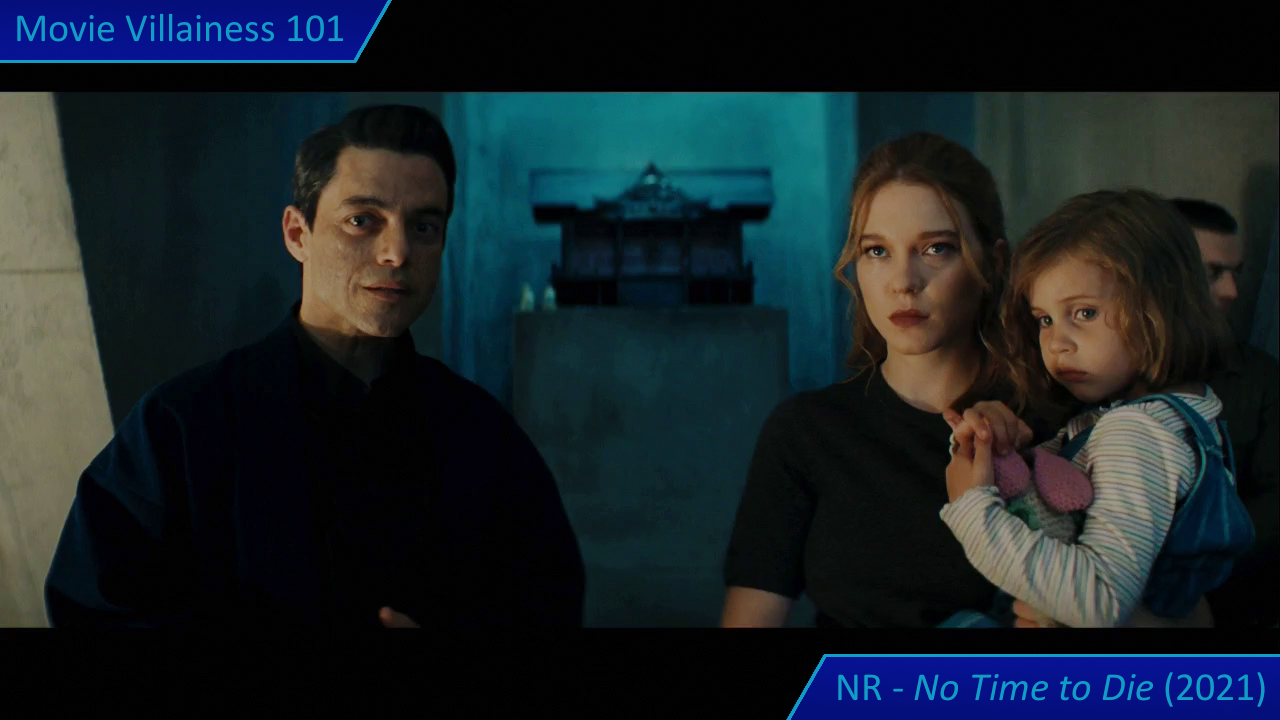
Nomi gets some badass moments too, but is overshadowed by Bond. Madeleine shoots some bad guys during a chase in Norway, but the story is about saving her – and Bond’s – child Mathilde. Safin (Rami Malek) is a decent enough foe, but is defeated too easily. Three major female characters, and no villainess. Let’s hope the next Bond actor gets to face some bad girls.
Movie Villainess 101 Rank #48

Max Zorin prefers female muscle – until she becomes expendable

Movie

A View to a Kill (1985)

My original draft included three James Bond films, with the rest covered as honourable mentions and discussions. On reflection, I added this entry from the Roger Moore era. Since he holds the record (seven) for official bond movies, there’s plenty of material to discuss. May Day is an iconic villainess worthy of a mid-place ranking, even if she switches allegiance in the last act.

Many regard Moore’s final outing as substandard, though I’ve always found it underrated. It’s possible I’m biased by a masked villainess, the only true one in the series. Stacy Sutton (Tanya Roberts) is arguably a weak “Bond girl”, but nowhere near as annoying as Mary Goodnight in Golden Gun. In the movie’s defence, the story is okay, and the chief villain, Max Zorin, is great. What do you expect when he’s played by Christopher Walken?

The plot is a retread of Goldfinger, except Zorin wants to corner the market on computer microchips instead of gold bullion. He plans to wipe out the competition – Silicon Valley, in this case – and Bond is the only person who can stop him. Zorin is an ex-KGB operative, but has severed ties with the Motherland. His former comrades aren’t too happy about this, and send agent Pola Ivanova (Fiona Fullerton) to investigate. Pola is a fine female antagonist and deserved more screen time, but we get a decent wetsuit / espionage scene and reveal before her premature exit.

Moore had played Bond for 12 years by 1985, which shows in some action scenes with obvious stunt doubles. This might explain why May Day and the hero never have a true confrontation, as defeating a tough henchwoman in a straight-up fight would be unconvincing. If one villainess isn’t enough, Zorin also has two female assistants in Jenny Flex and Pan Ho, though they are limited to support roles. Rumour has it that Jenny was the head of security in the original script, before she was ousted by the male Scarpine. A pity, but they didn’t diminish the female role that really mattered.

Villainess

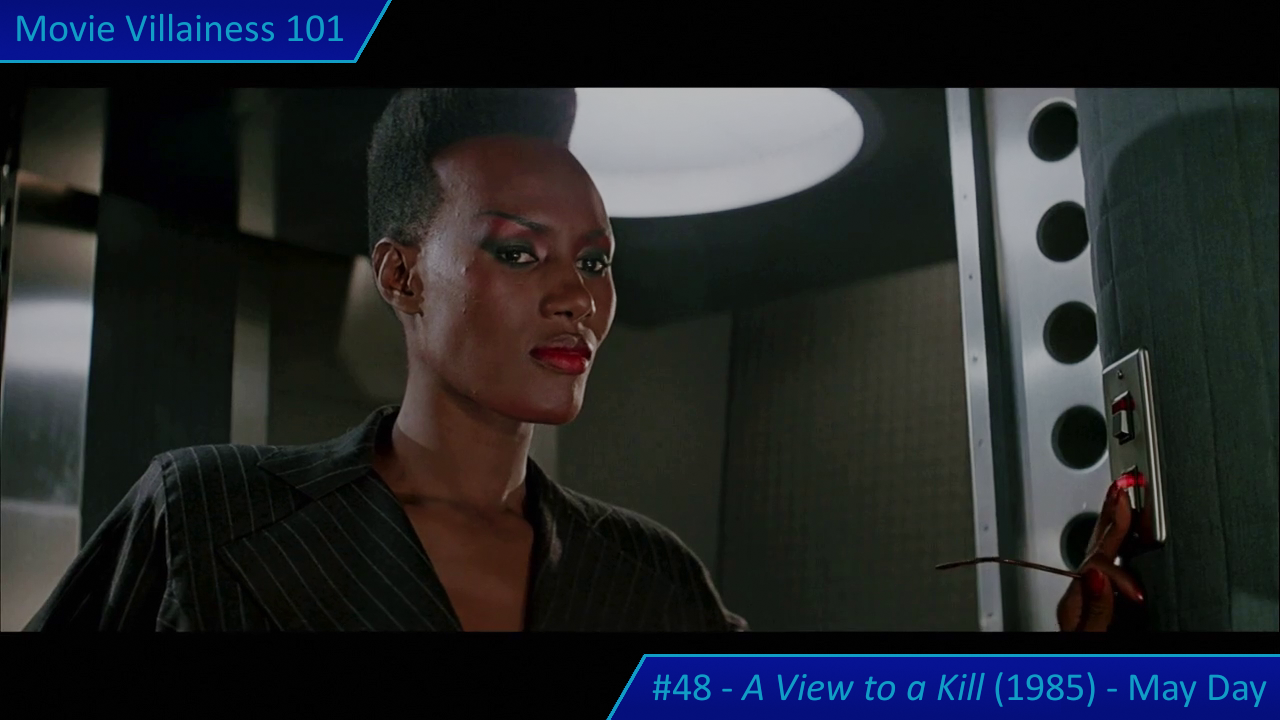
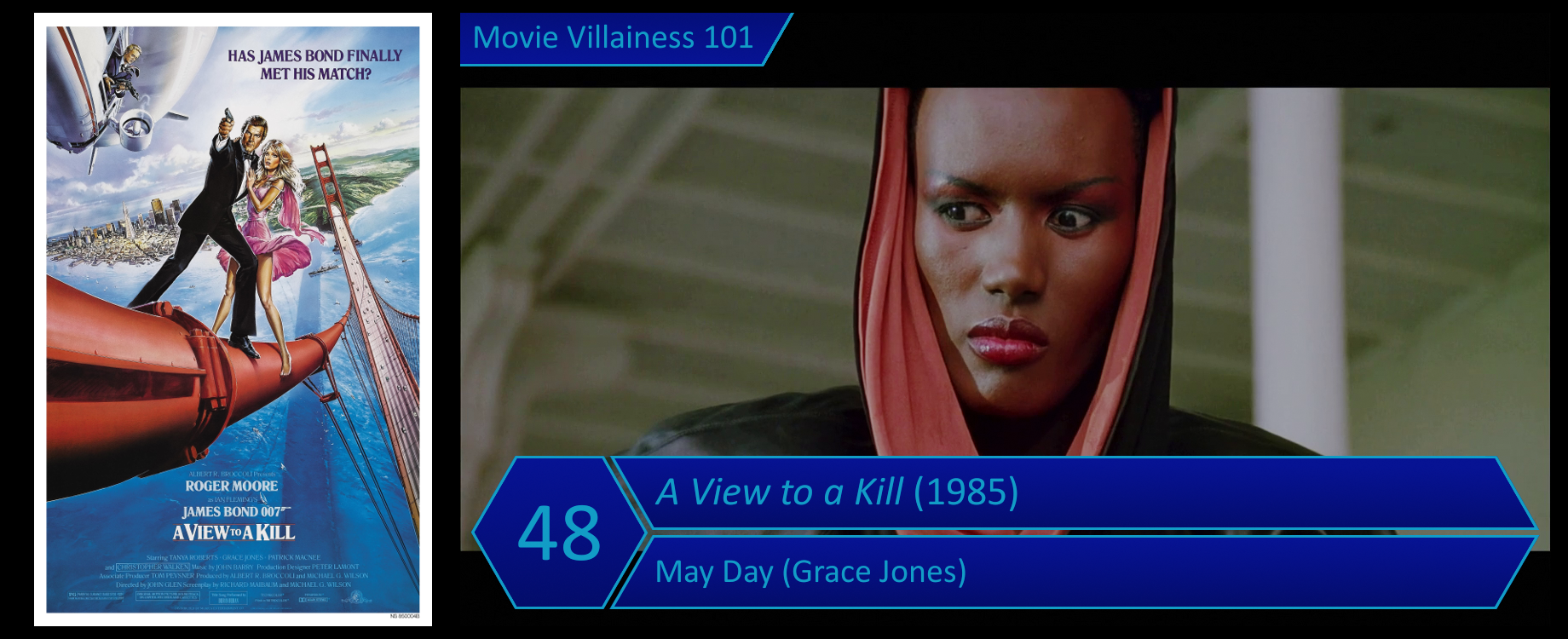
May Day (Grace Jones)

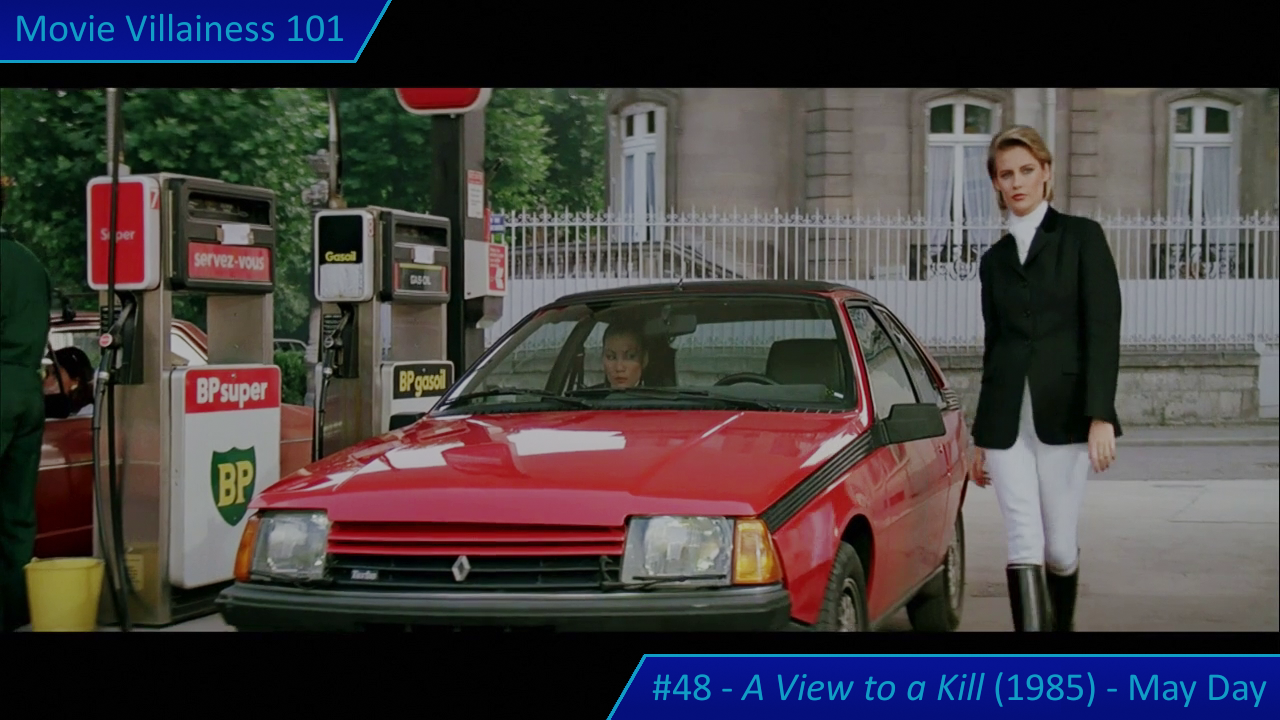
Like Fiona Volpe from Thunderball, May Day assassinates a man in front of Bond and later unmasks herself. Before that, she’s introduced as Zorin’s red-dressed right-hand woman and shows her strength by taming a wild horse. The muscular badass then pulls off an elaborate kill at the Eiffel Tower, using a fishing rod and poison-tipped artificial fly to murder a nosy detective. Was smuggling in a normal weapon too difficult? But the stage singer act and masked assistant provide perfect cover.

Unlike Fiona, Bond chases this assassin, but his quarry traps his ankles with fishing line to buy valuable time. The killer seems to run into a dead end as Bond chases them to the top of the Paris landmark. That’s when she uses a parachute to escape, prompting a hasty descent and pursuit through the city streets. Bond destroys a lot of property – and the car he’s stolen – and ruins a wedding. It’s all for naught since May Day escapes with Zorin in a speedboat. We then get the villainous reveal, complete with an insane laugh.

May Day is not the usual femme fatale, though she mounts Bond in a bizarre sexual encounter. A skilled martial artist, but the closest she gets to direct combat is subduing a clumsy Soviet agent on an offshore platform. And a late encounter where the villainess rips off Stacy’s leggings.

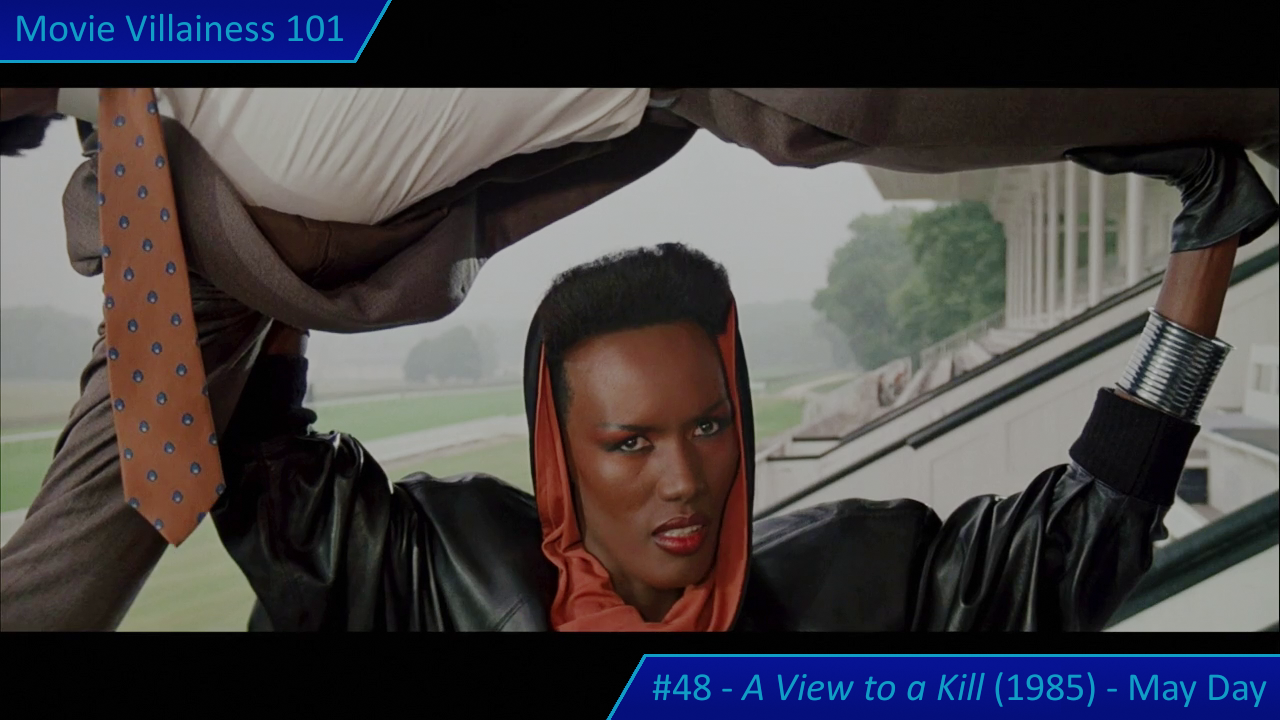
Whenever people get too close to uncovering Zorin’s plans, it’s May Day’s job to eliminate them. That’s the fate of Sir Godfrey Tibbet (Patrick Macnee), an ally of Bond, who the henchwoman strangles at a carwash. Zorin attempts to eliminate 007 by knocking him out and sinking his car in a lake. His failed effort doesn’t go down well with the KGB, and May Day shows her strength again by lifting a man. As Bond comments, she must take some vitamins.

The Russian survives, but Zorin’s business associate isn’t so lucky. When he refuses to go along with the psychotic villain’s plan, he instructs May Day to “provide him with a drink.” This is an instruction to the villainess to drop the man into the Pacific Ocean from a blimp.

Grace Jones looks the part and has a close encounter with Bond at Zorin’s French estate before the action shifts to California. Stacy, introduced earlier, becomes Bond’s companion in stopping the insane scheme. He receives help from a CIA colleague, but that man gets the “car back seat” assassin treatment. Compared to a formidable woman like May Day, Stacy is a much weaker female, and often the traditional screaming damsel in distress.

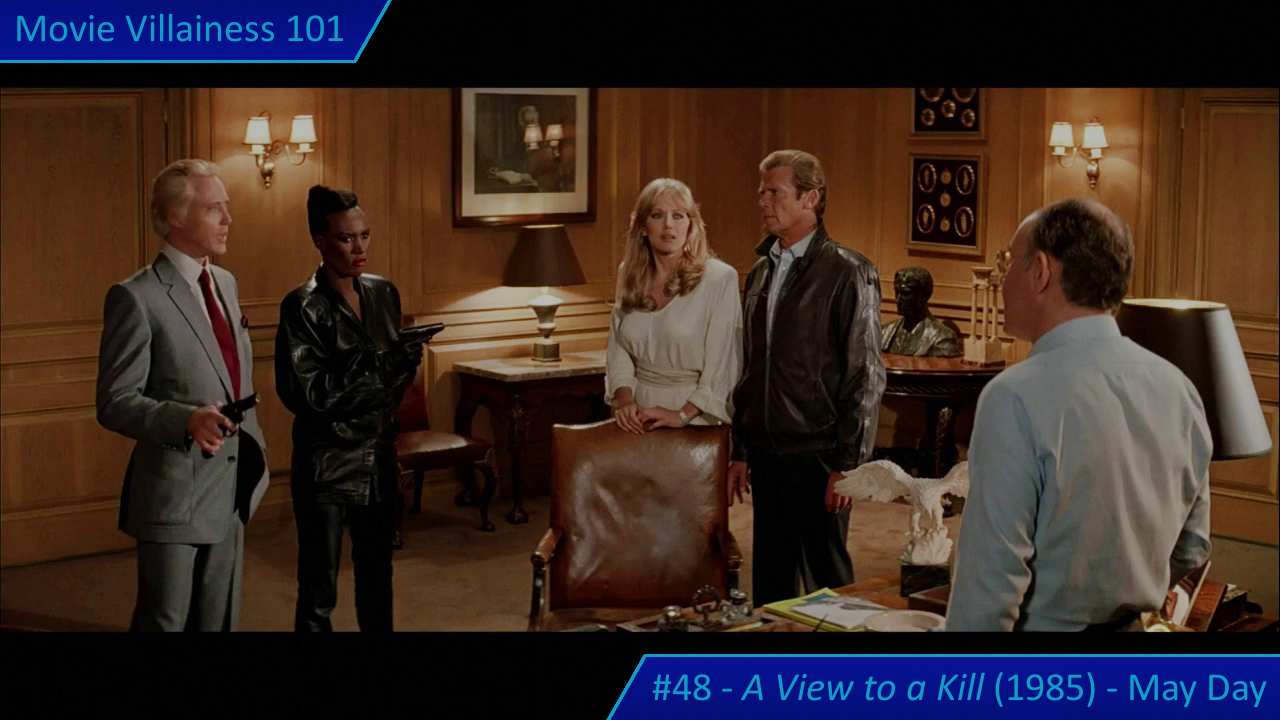
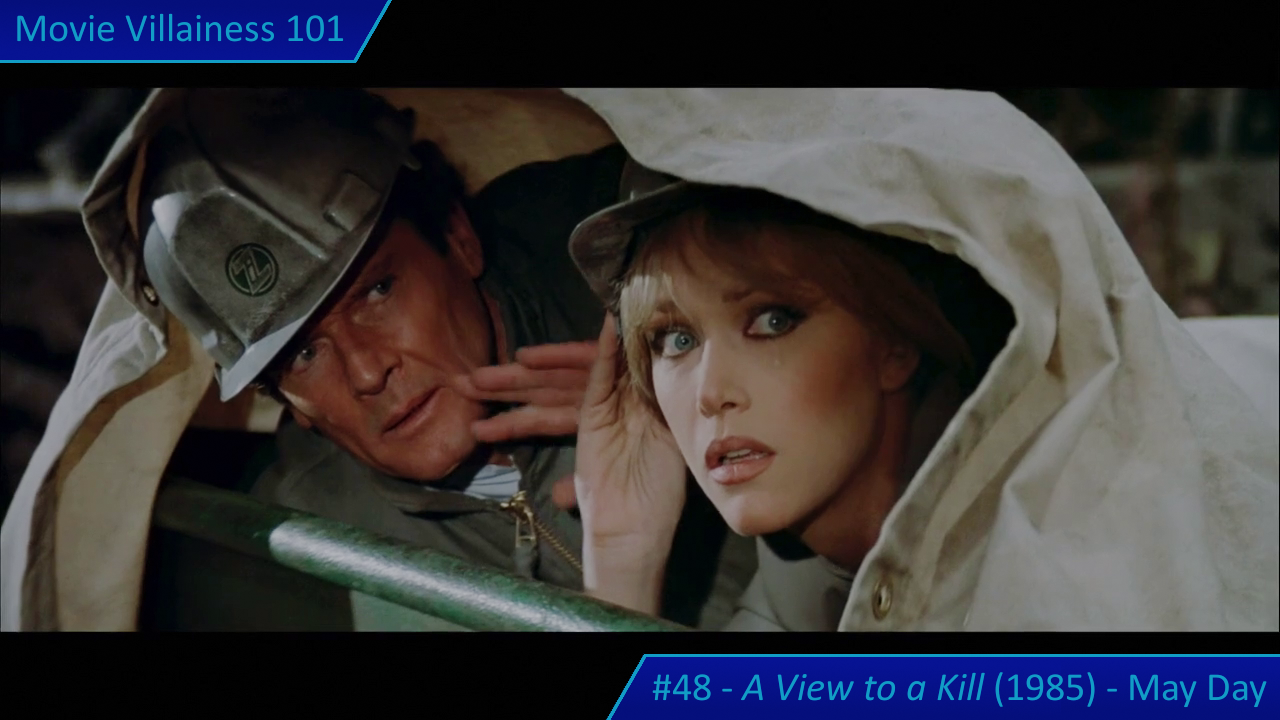
The finale takes place at a supposedly abandoned mine, where Zorin plans to trigger an unnatural flood disaster. As a geologist, Stacy provides exposition before she and Bond are discovered. Cut to a chase scene with May Day, Jenny Flex and Pan Ho pursuing the heroes through a maze of darkened tunnels. Too bad Zorin doesn’t value their services enough to keep them around. He floods the mine without warning, and he and Scarpine finish the survivors with submachine guns.

This betrayal comes at a convenient moment for Bond, since the henchwoman had him within reach. She learns the hard way that Zorin never loved her. Jenny and Pan perish in the flood, but a tough cookie like May Day isn’t so easily killed.

The repentant killer assists Bond by hoisting the booby-trapped bomb onto a mine cart. The handbrake is faulty, which gives May Day the perfect opportunity for redemption. Such a great henchwoman switching sides is annoying, but the look on Zorin’s face as she scuppers his plans is priceless. Her final defiant stare makes this one of the best death scenes in the series.

Honourable Mentions / Discussions: Roger Moore Bond Movies

Live and Let Die (1973) – Rosie (Gloria Hendry)

Moore’s first Bond film is best remembered for its occult and blaxploitation themes, and perhaps Clifton James as redneck sheriff J.W. Pepper. After three nondescript men are assassinated, we’re still waiting to see the hero, but his introduction comes after the title song. Then we get a jokey mission briefing at Bond’s London residence. The action livens up later, but some sequences are overlong, notably a speedboat chase in the Louisiana Bayou that lasts nearly fifteen minutes.

Female characters in the Moore era are antagonists with a heart or treacherous beauties. The tarot fortune teller Solitaire (Jane Seymour) is a mysterious and interesting character, narrating Bond’s arrival in New York to investigate the recent murders. She follows a predictable path, falling in love with Bond – and losing her psychic powers as a consequence. For the showdown on the fictional island of San Monique, she’s another girl in need of rescue.

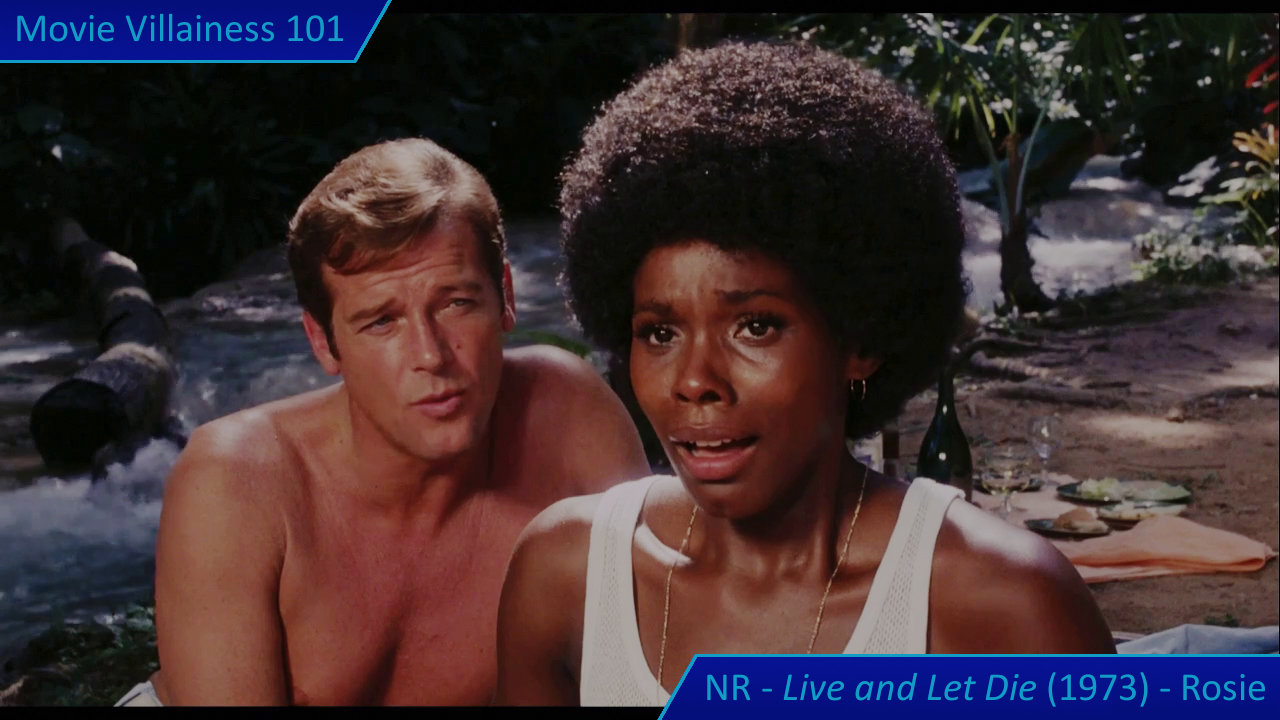
Yaphet Kotto plays a dual role as a crooked diplomat and crime lord. The villain has a weird assortment of henchmen, including a hard-to-kill voodoo priest and the hook-armed Tee Hee. There’s also a forgettable femme fatale in Rosie, a double agent who acts incompetent and scared to deceive Bond. Except it’s not really an act because Rosie is as timid post-reveal. Bond susses her out after a cryptic tarot card hint, but she made so many mistakes her treachery was obvious. The baddies reward failure as you might expect, and eliminate Rosie after she ceases to be useful.

The Man with the Golden Gun (1974)

One of the weaker 007 entries, this starts with another Bond-less pre-credit sequence and doesn’t get any better. The sole bright spot is Francisco Scaramanga, the title villain played by Christopher Lee. He’s an assassin who charges one million dollars per hit, a lot of money in 1974.

Misplaced attempts at humour include an unwelcome return for J.W. Pepper from Live and Let Die. Watching a racist shout unpleasantries towards the Bangkok population is uncomfortable these days. The midget Nik Nak offers comic relief encounters instead of a genuine threat.

Mary Goodnight (Britt Ekland) is the most demeaning woman in the series. Allegedly, she’s a secret agent, but goes through the entire movie doing nothing useful. She gets locked in a closet, stuck in a flying car, and spends the last act in a bikini. The bumbling bimbo even triggers a laser weapon when she presses a button with her backside (!). Maud Adams, who’d later star in Octopussy, plays the assassin’s mistress who hires Bond to kill him. Like many supporting females, she winds up dead halfway through.

The Spy Who Loved Me (1977) – Naomi (Caroline Munro)

Moore’s third effort has an exciting teaser, which sets the bar for all that followed. The ski chase, stunt jump off a cliff, and Union Jack parachute are iconic, still impressive decades later. It’s a brilliant setup, and we also get Sue Vanner as the unnamed “log cabin girl”, a Soviet agent.

The titular spy is Major Anya Amasova (Barbara Bach), a refreshingly liberated woman for Bond to spar with. She is equally adept at opportune quips and gadgetry as 007, and the two form a reluctant alliance to investigate missing nuclear submarines. Their romance sours when Anya discovers Bond killed her lover on a previous mission, but she’s eventually won over by his charm. The Russian is capable, but still needs to be rescued a few times, notably in the finale where she’s held prisoner in a skimpy outfit.

The main villain, Karl Stromberg, is a madman bent on global nuclear destruction to create a new world beneath the sea. He has two elaborate aquatic lairs: a tanker and a submersible base, appropriately named Atlantis. The latter comes with a shark pool for disposing of suspected traitors. Besides a jumpsuit-clad army, he has a reliable henchman: the steel-toothed giant Jaws (Richard Kiel).

Regarded as one of the series’ best, the film excels in “expected male is a female” reveals. The camera focuses on Anya’s male lover before she’s confirmed as the top Soviet agent. A sub commander is shocked the major is a woman, and she almost hides her gender from Stromberg’s goons before they unmask her.

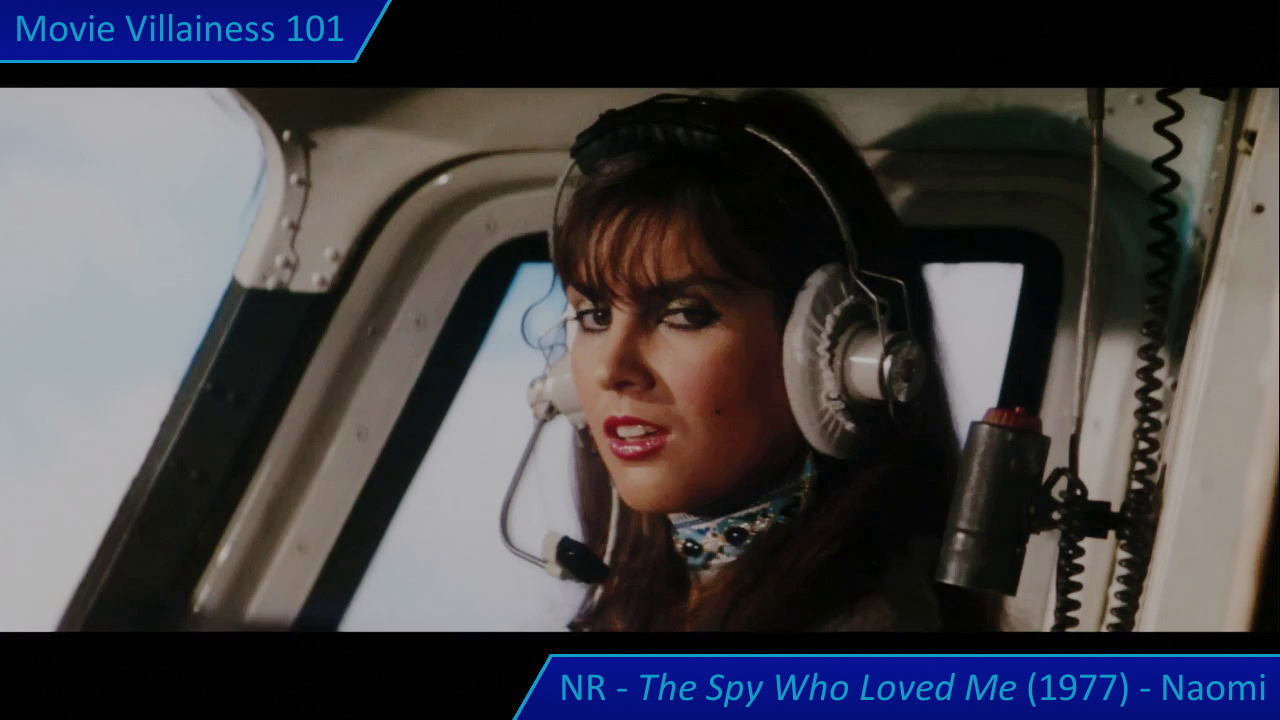
The best reveal goes to the villainess Naomi (Caroline Munro) during a car chase in Sardinia. In her earlier scenes, she was eye candy with brief dialogue. Now she’s a deadly henchwoman piloting a helicopter. She proves more elusive and dangerous than some female assassins, prompting Bond to drive his vehicle off a pier. Fortunately, the car is a Q-Branch special and converts into a submarine. It’s also equipped with a surface-to-air missile for disposing of troublesome threats.

Moonraker (1979)

James Bond meets Star Wars to produce a climactic space laser battle that’s far-fetched even for this franchise. There are some serious scenes on Earth beforehand, starting with a space shuttle hijack and the now mandatory pre-title action sequence. A femme fatale poses as a stewardess, only to reveal herself as a baddie after kissing the hero. She gets forgotten after a brief dialogue exchange, but the skydiving fight and stunt work make up for it.

The villainous Drax (Michael Lonsdale) and his henchmen try various methods to eliminate Bond. This includes sabotaging a takeoff simulator, a Venetian glassworks fight, and a bizarre canal chase. That ends with a gondola converting to a hovercraft while animals watch in amazement.

Females are well represented. Bond’s ally is CIA agent Holly Goodhead, who fits the mysterious woman with her own agenda template. Drax is an equal opportunity employer with as many women as men among his yellow jump suited mooks. But since the villain’s goal is to wipe out humanity and start over, it’s advisable to have breeding capability.

Some white-dressed “perfect females” show their evil side when they lure Bond to a converted ancient temple and dump him in a pool with a huge python. Bond borrowed a poison pen from Holly earlier and kills the reptile, which upsets the sadistic onlookers.

All the major encounters are between men. But counting minor roles, Moonraker holds the record for the number of female villains in a Bond movie.

For Your Eyes Only (1981)

Follow-ups to an outlandish 007 movie are usually grounded in realism. So this is a serious entry with some cartoonish scenes, such as “Blofeld” (not officially him due to rights issues) being dropped down a chimney.

Villainesses are nonexistent in grittier films, with women not involved in the action. However, the movie has a tough leading lady in Melina Havelock, a Greek beauty who helps Bond to locate a sunken spy ship.

Not one to be sidelined, this crossbow-wielding woman is out to avenge her murdered parents. Melina gets a nice unmasking scene after she saves Bond from a pursuing henchman. In the hilltop monastery assault (the last action set piece), she’s a silent and deadly killer. In another universe, Melina could have been a formidable foe, but after the Mary Goodnight travesty, we’ll settle for a competent ally.

Octopussy (1983) – Magda (Kristina Wayborn)

Moore’s penultimate film has the secret agent pursue a jewellery smuggling ring to India. The real action begins when he uncovers a plot by a rogue Soviet general to detonate a nuclear bomb on a NATO airbase. The chief villain is Kamal Khan (Louis Jordan), who’s in partnership with an all-female crime organisation led by the title Octopussy (Maud Adams).

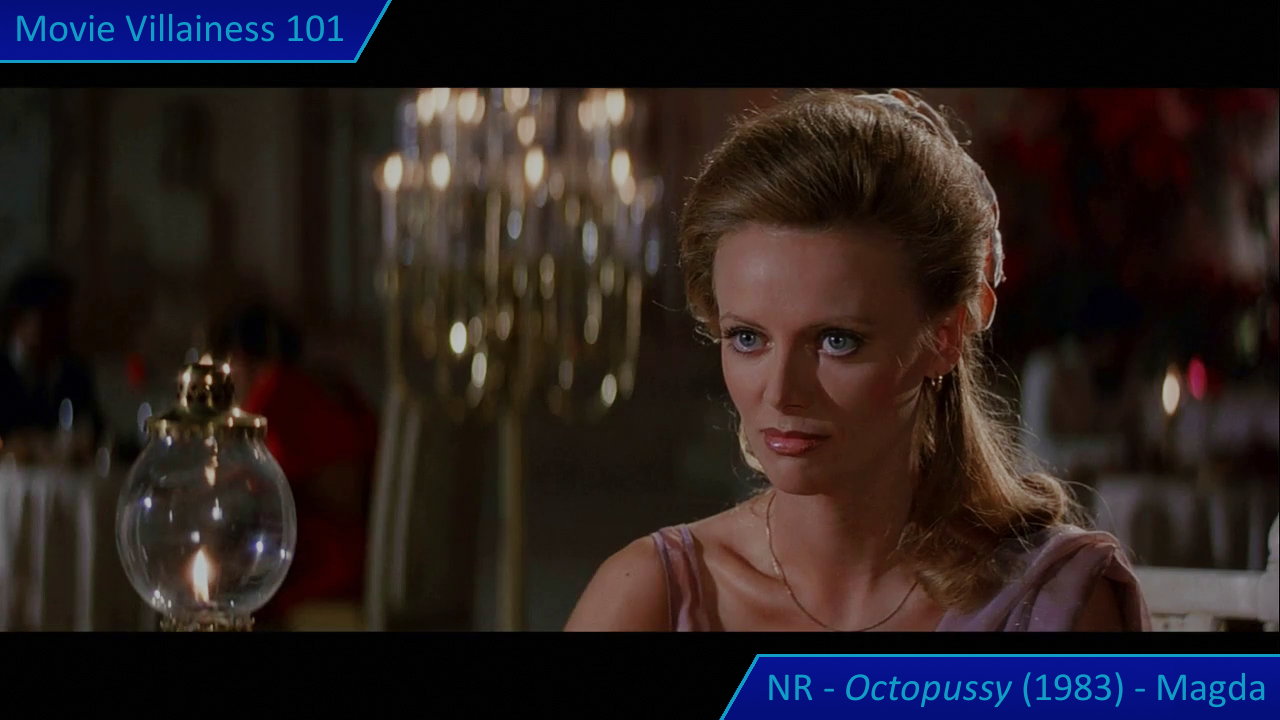
Besides his tough bodyguard Gobinda, Kamal is also assisted by a duplicitous woman named Magda. She has more than one verbal joust with Bond, but her best moment is when she steals a Fabergé egg from a hotel room and escapes over his balcony using a long trailing dress as a makeshift rope. Of course, 007 anticipated this and planted a listening device.

The cat-and-mouse game between Bond and Magda goes on throughout the film, though she ends up fighting for the good guys in the end. She’s a skilled martial artist during the climax when her circus troupe attacks Kamal’s palace residence.

Octopussy has an interesting backstory, and Maud Adams survives the whole movie this time. Naturally, she gets captured by Kamal and Gobinda after they double-cross her and has to be rescued by the hero. Two interesting female roles, and Magda – because of her icy attitude when helping Kamal – just about qualifies as a redeemed villainess.

Movie Villainess 101 Rank #70

Resisting the charm of Connery’s Bond is quite a feat – well done, Fiona

Movie

Thunderball (1965)

James Bond movies have a winning formula: action, romance, and humour. Over the decades these films have delivered, except for the occasional misfire. Every iconic hero needs worthy adversaries, however, and there have been many standouts in the series. Including females.

If I ranked my favourite female villains, there could easily be half a dozen entries from the Bond franchise. Since I’m aiming for balance, I’ve chosen four “headliners” and will cover the other films as honourable mentions and discussions. Fiona Volpe is my lowest-ranked pick, and this review also summarises the Sean Connery Bond films and George Lazenby’s solo outing.

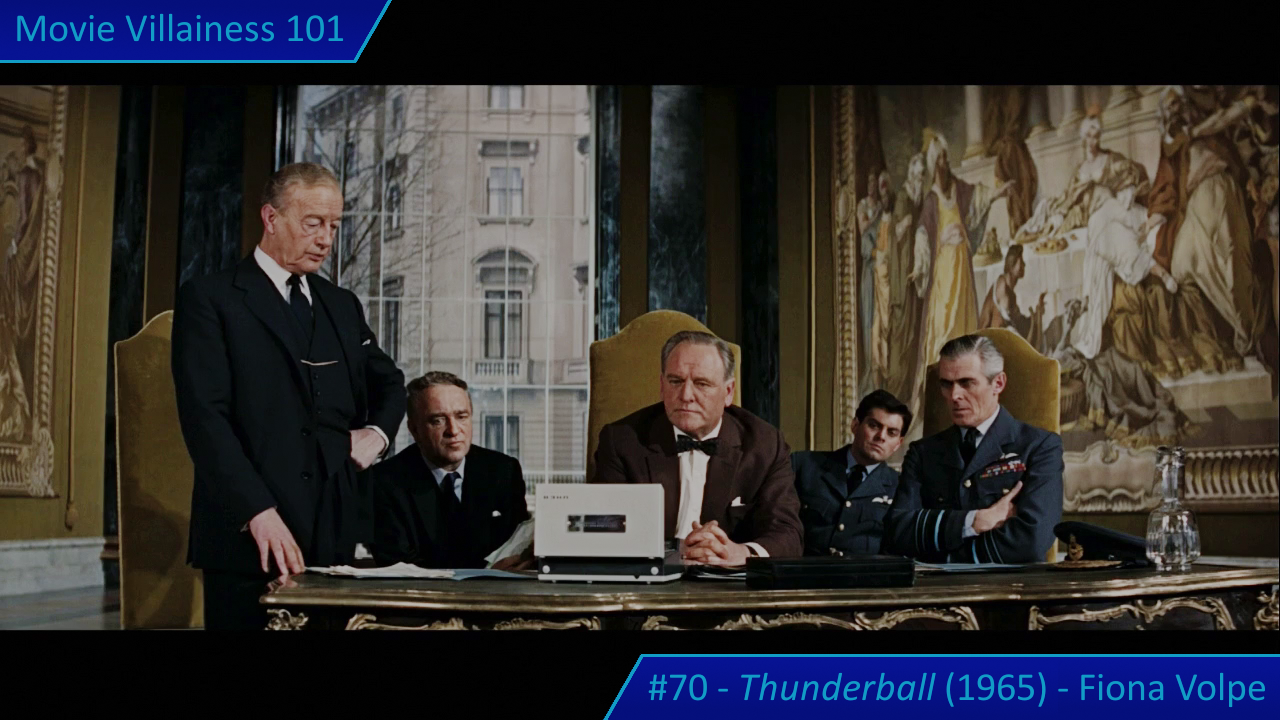
The plot of Thunderball is generic, involving the theft of nuclear weapons by a criminal organisation and a ransom demand. Main bad guy, Blofeld, holds conferences with electric chairs in case his underlings should fail or betray him. These plot elements will be familiar to anyone who’s seen Austin Powers, where the tropes were spoofed. Bond stumbles across the fiendish plan by accident whilst recuperating at a clinic, and embarks on a mission to save the world. That scenario seems to recur a lot.

The movie is infamous for ambitious and overlong underwater sequences. With the slowdown, this is a poor setting for action set pieces. The last act – a battle between henchmen in black scuba gear and the goodies in orange – is a boring drag. Thankfully, the villainess’ scenes all take place on dry land.

Villainess

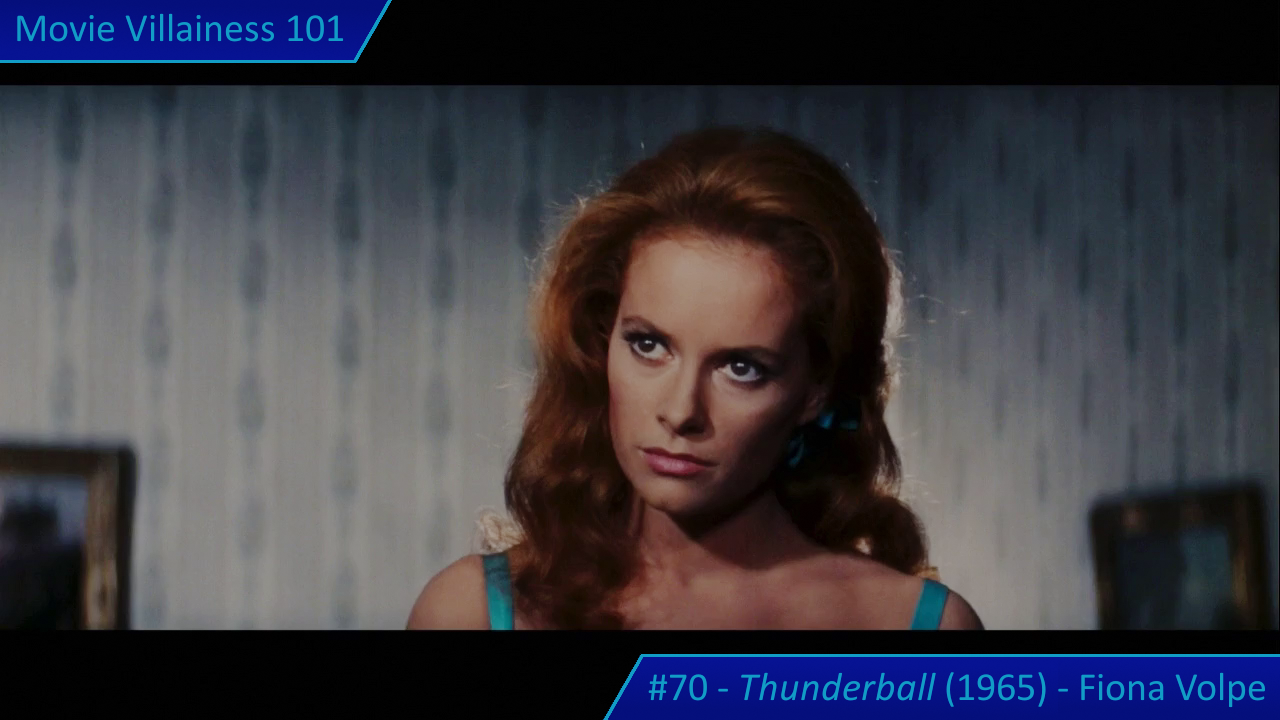
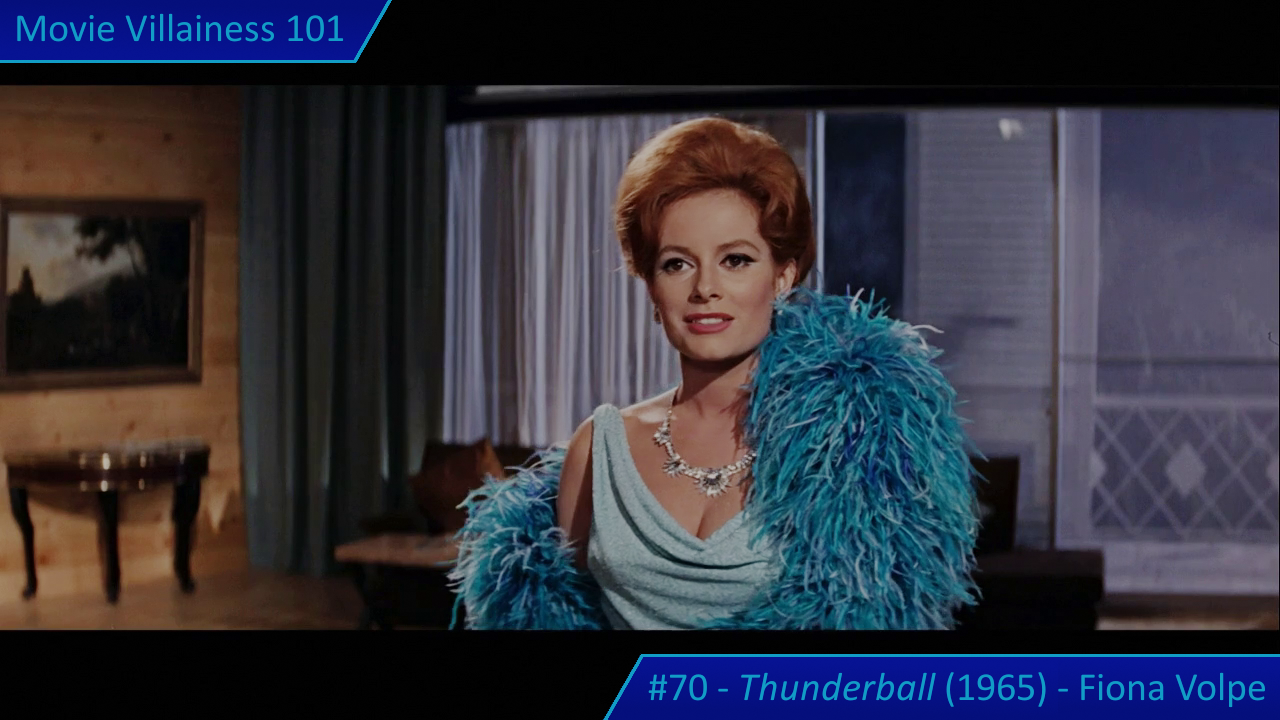
Fiona Volpe (Luciana Paluzzi)

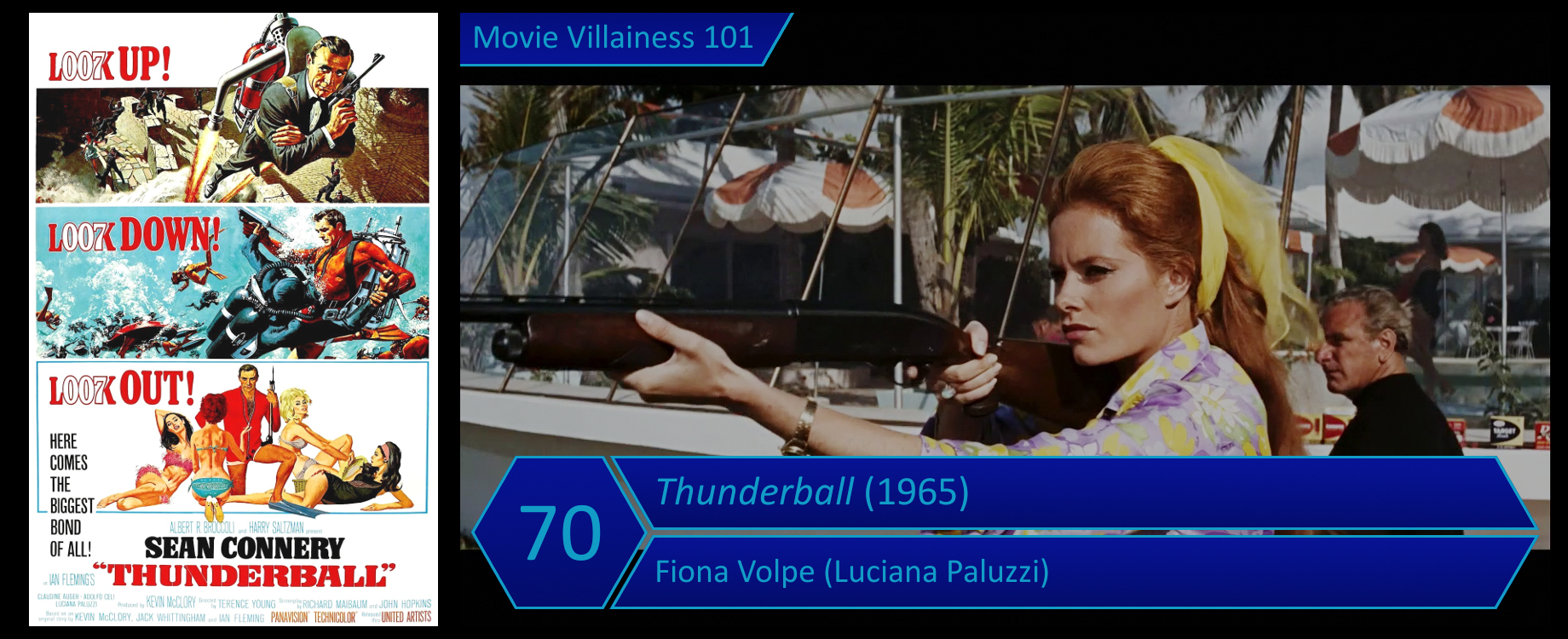
While the main villains are faceless Blofeld and Largo (Adolfo Celi), Fiona is almost his equal with a major role in Spectre’s evil scheme. In an early scene with an accomplice who’s too greedy for his own good, she comes across as a no-nonsense authority figure. This is moments after she plays the femme fatale with an airman she lures into a deadly trap.

Fiona’s talents extend to assassination when Blofeld orders a man killed as punishment for failure. Fiona does the deed in style, intervening as her quarry pursues Bond’s Aston Martin DB5. Not to be outdone, the female killer has her own gadget vehicle: a motorcycle fitted with rocket launchers. Those make quick work of her target. Not long afterwards, there’s a decent reveal where the helmeted biker is revealed as Fiona. But it was almost certainly a stunt double for “her” earlier scenes.

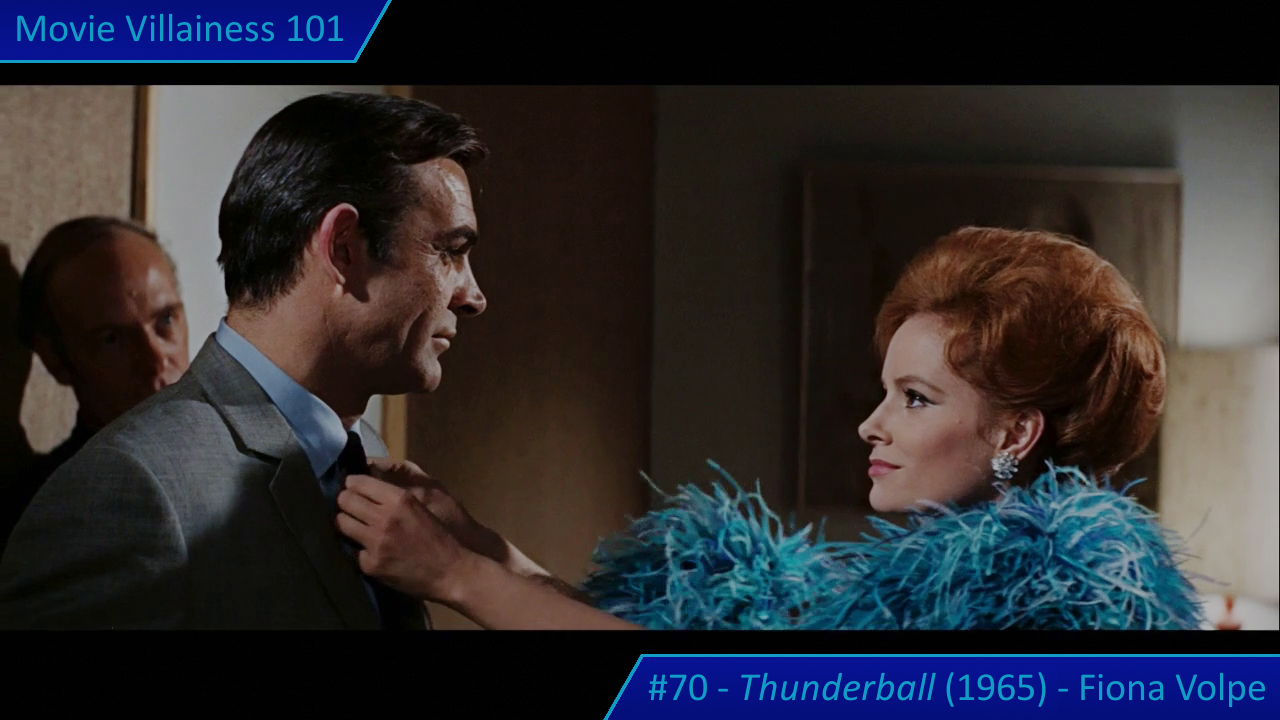
Fiona and Bond don’t meet until the halfway point, when she picks the stranded agent up and gives him a high-speed ride. The villainess is daring in this sequence, openly displaying her Spectre ring. Later on, she seduces Bond and brags she’s immune to his charms. And unlike Pussy Galore in Goldfinger, there’s no final act shift of allegiance this time around. Fiona even makes the point in a defiant speech.

After Bond escapes Largo’s henchmen, the final encounter takes place in a bar during Mardi Gras. Bond hides by dancing with a female patron, but Fiona soon takes the woman’s place. She intends it to be his last fling and has a concealed henchman ready to shoot Bond in the back. However, the hero expects this move and pivots Fiona around at the last instant, so it’s her shot instead. Cold-blooded execution of female villains would come much later in the series, but we’re still treated to a one-liner.

Honourable Mentions / Discussion: Sean Connery / George Lazenby Bond Movies

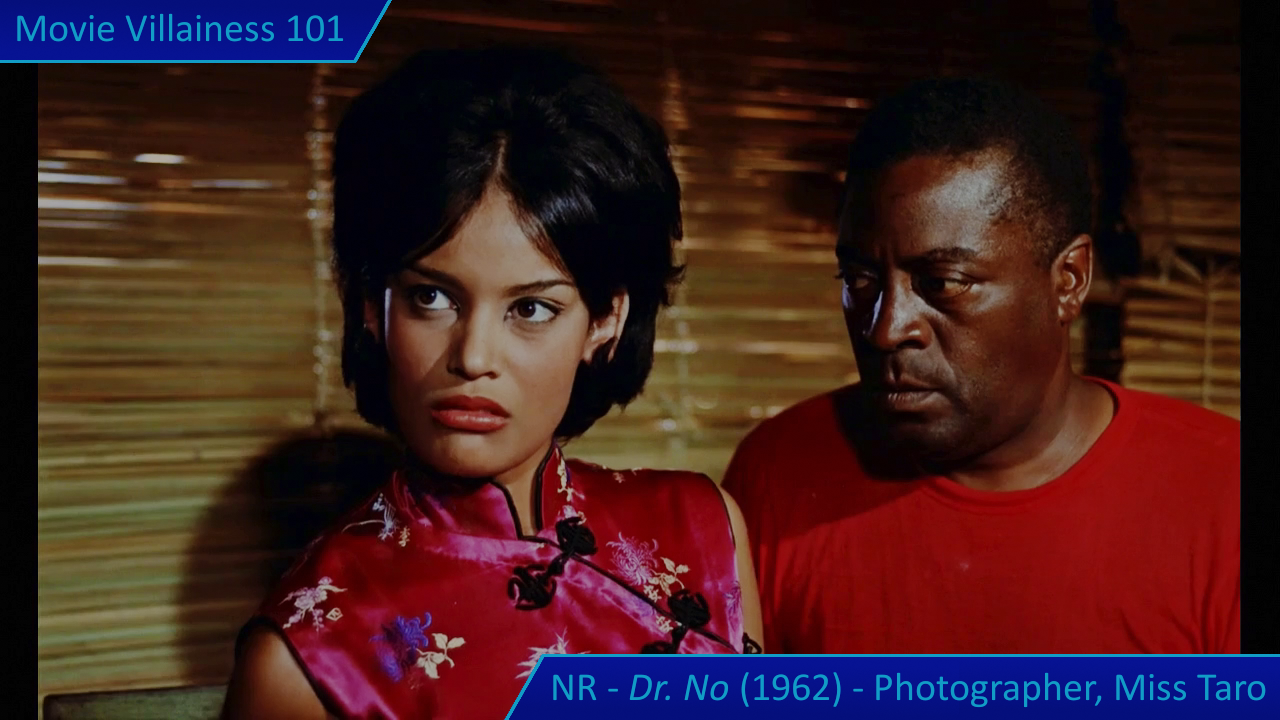
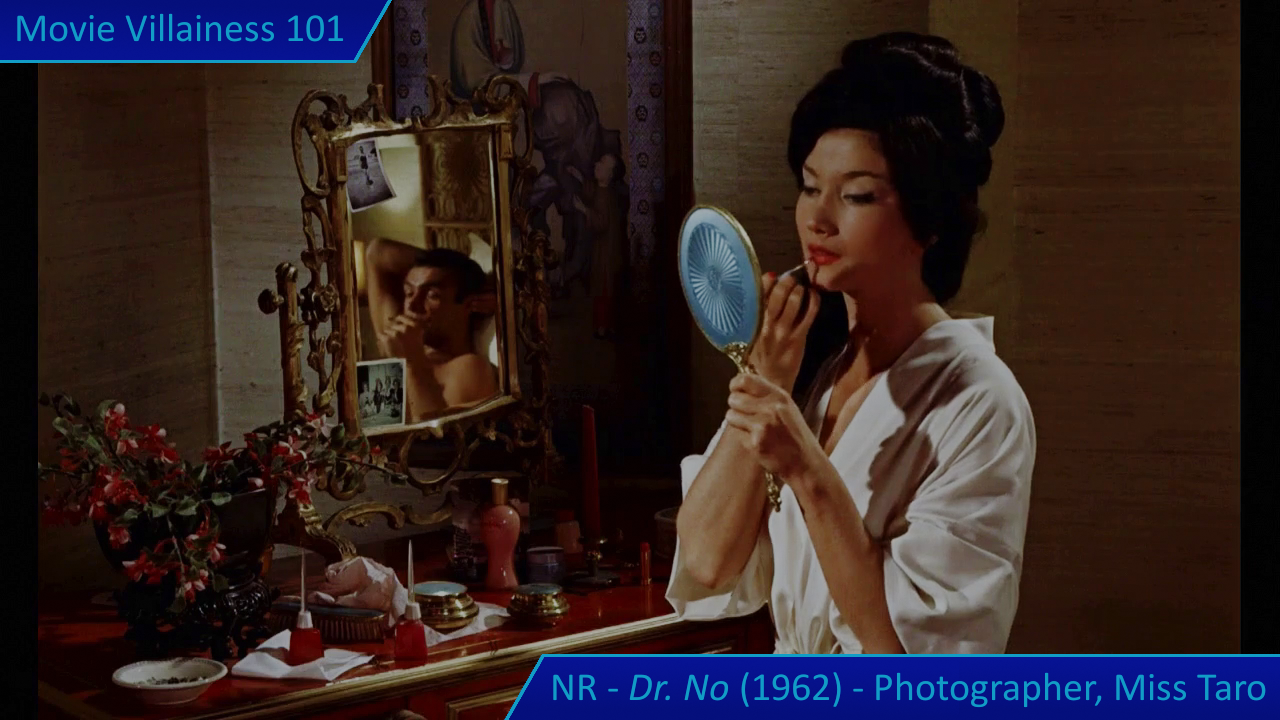
Dr. No (1962) – Photographer (Marguerite LeWars), Miss Taro (Zena Marshall)

The first official Bond movie set the tone for those that followed. Dastardly villains operate from elaborate lairs, and women are beautiful, seductive, and frequently dangerous. The weakest of Connery’s films from a villainess perspective, but there are two female foes worth a mention.

Marguerite LeWars has the honour of playing the first-ever Bond villainess, though the photographer is never named. A freelancer working for a mysterious enemy, this woman shows her evil side by licking a lightbulb after snapping shots of Bond in Kingston, Jamaica. When caught, the photographer refuses to talk, even when Bond’s allies threaten to break her arm. She even smashes a lightbulb in her questioner’s face, drawing blood. Tough cookie, this one.

Miss Taro is a more traditional femme fatale, relying on her sexy voice to deceive the spy. That might have been more effective if he hadn’t caught her eavesdropping. Still, Bond never turns down an opportunity to bed a beautiful woman, even one with dark intentions. Of course, the hero merely bides his time – and enjoys himself – until the authorities arrive.

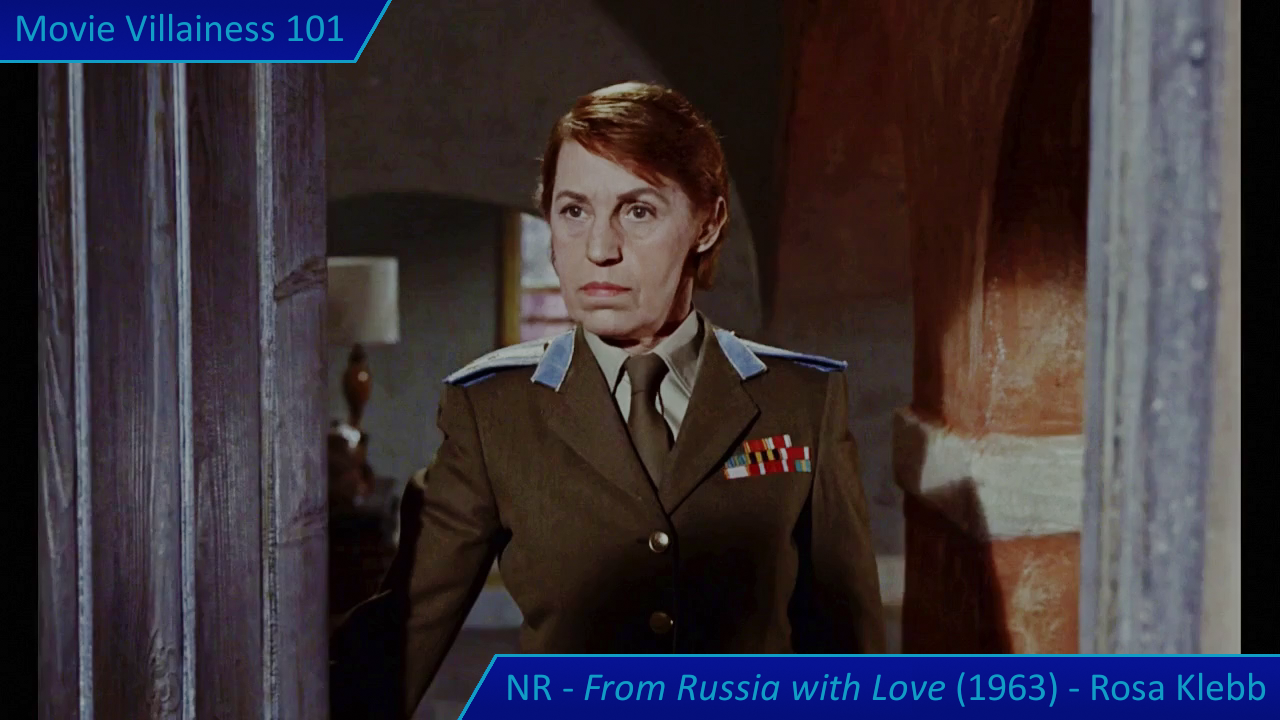
From Russia with Love (1963) – Rosa Klebb (Lotte Lenya)

The second film has the series’ first major villainess, even if she answers to Blofeld. The notorious man with the white cat is still faceless at this point, leaving Klebb and henchman Red Grant to do Spectre’s dirty work.

Klebb lost out to Fiona Volpe when I selected my pick from the early Bonds, but she makes a sinister spy. Her character is manipulative and controlling, especially with Bond girl Tatiana Romanova. Though prominent early in the movie, Klebb vanishes for the middle act, only to return and stab a fellow operative with a poisoned blade concealed in her shoe.

Her attempt to kill Bond doesn’t go so well, resulting in a poorly staged fight. After Tatiana shoots the villainess, Bond utters a darkly humourous one-liner, a trait that would continue throughout the series.

Goldfinger (1964)

The first truly extravagant movie in the franchise, there are many iconic elements, notably a charismatic title villain and his henchman Oddjob (don’t forget the killer hat). There’s also an epic finale at Fort Knox, where an all-female pilot squadron takes out tens of thousands of US troops with nerve gas.

Other minor villainesses include a treacherous beauty in the pre-credits sequence and an old lady guarding a checkpoint (who’s handy with a machine gun). A female sniper makes an appearance and takes a potshot at Bond. She’s after Goldfinger, but misses by some distance, only to meet her end shortly afterward.

The main female character is Pussy Galore, the villain’s personal pilot. A damn good one (in her words) and a judo expert. Bond still overpowers the feisty woman, seduces her, and converts her to the cause of good. So she exchanges the deadly nerve gas for a harmless alternative, and Goldfinger – while a classic movie – is not the best from a villainess perspective.

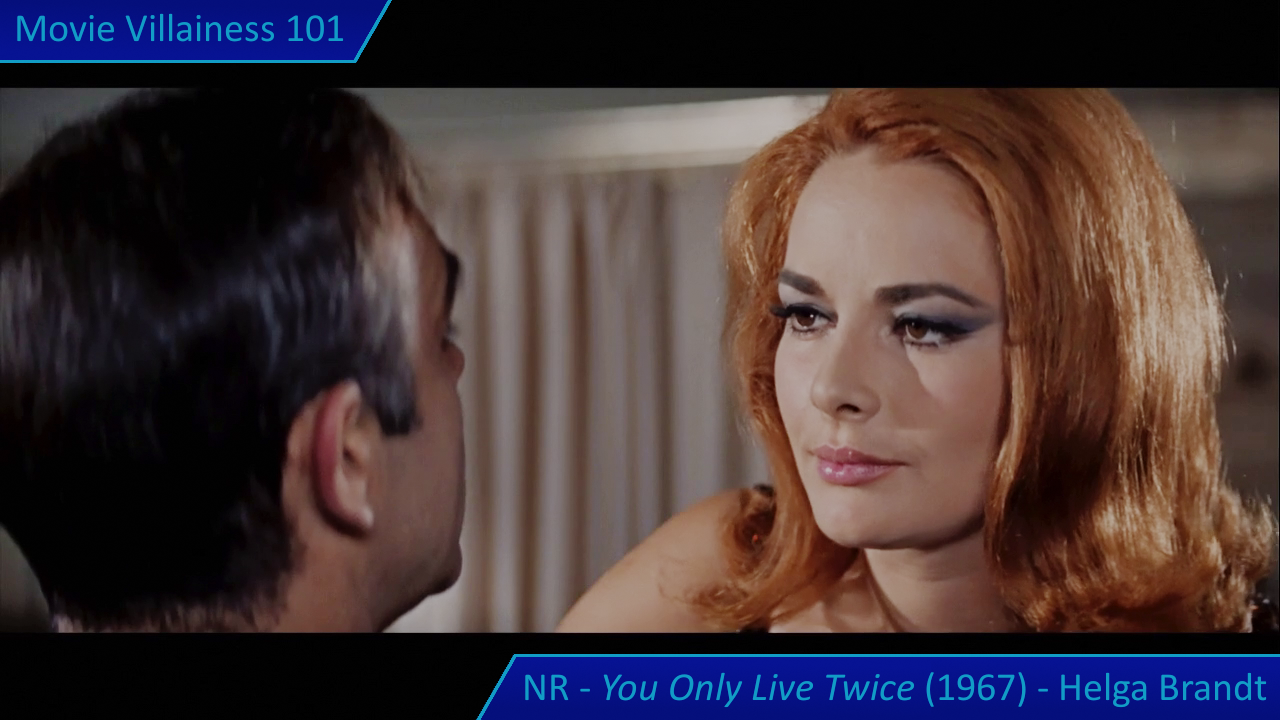
You Only Live Twice (1967) – Helga Brandt (Karin Dor)

This movie takes Bond to Japan, but he displays the same weakness towards women. Almost getting killed by a Chinese agent in the pre-title sequence doesn’t dampen his enthusiasm for Oriental females. In fairness, the “assassination” was staged to fake Bond’s death.

Blofeld returns, this time played by Donald Pleasance. The minor villains include businessman Osato and Spectre number eleven, Helga Brandt. After the henchwoman seduces Bond in a cabin, she traps him in a crashing aircraft and bails out mid-flight. Any 007 fan will know that elaborate attempts will fail, and what that means for Spectre operatives. Here, Blofeld feeds Helga to his piranha fish.

A gruesome death to frighten Osato (not that he succeeds either), followed by a ninja commando raid in a spectacular volcano lair. Some good girl action, but no female villains, unfortunately.

On Her Majesty’s Secret Service (1969) – Irma Bunt (Ilse Steppat)

George Lazenby starred as James Bond for the first and only time in a movie most famous for its tragic finale. Telly Savalas is Blofeld, with Irma as his main henchwoman. This lady comes across as a strict, bossy type and wouldn’t look out of place as a school headmistress. Many of her scenes take place in a Swiss Alpine clinic where Bond frolics with female patients, arguably the weakest part of the movie.

After a slow buildup, things kick into gear about halfway through with some great action sequences on the snowy slopes. For the descent, Blofeld leads the pursuit, but Irma takes over with a secondary team after Bond reaches the presumed safety of a village. Don’t be so naïve, 007 – it’s never that easy to escape.

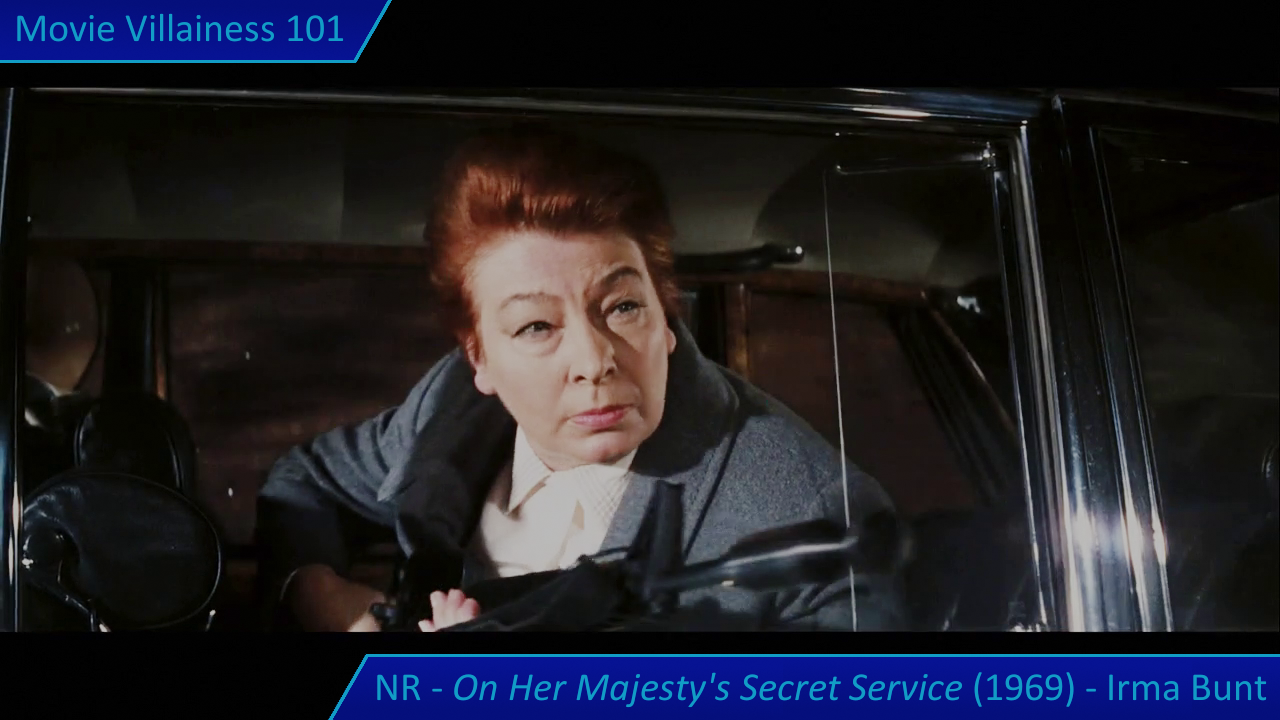
Irma is overshadowed by Diana Rigg as the ill-fated Teresa Bond. The hero’s fling blossoms into genuine romance, and the lovers tie the proverbial knot. Most aficionados know how this story ends – with an injured Blofeld and Irma tracking the couple down. Since the main bad guy is injured, the henchwoman fires the fatal shot, a single wicked act that makes her a notable villainess in the franchise.

Diamonds Are Forever (1971) – Bambi (Lola Larson), Thumper (Trina Parks)

After the downer ending to Lazenby’s brief tenure, Bond entered the 1970s with this campy entry. Charles Gray is a much softer Blofeld with hair. He’s obsessed with world domination, and so scared of Bond’s vendetta that he’s got multiple doubles. Tiffany Case is among the weaker Bond girls, reduced to little more than a bimbo by the time the credits roll.

Diamonds Are Forever is best remembered for its secondary villains. There’s a great elevator fight between Bond and a smuggler, and a humorous pair of hitmen in Wint and Kidd. They have a thing for trading one-liners after they kill someone.

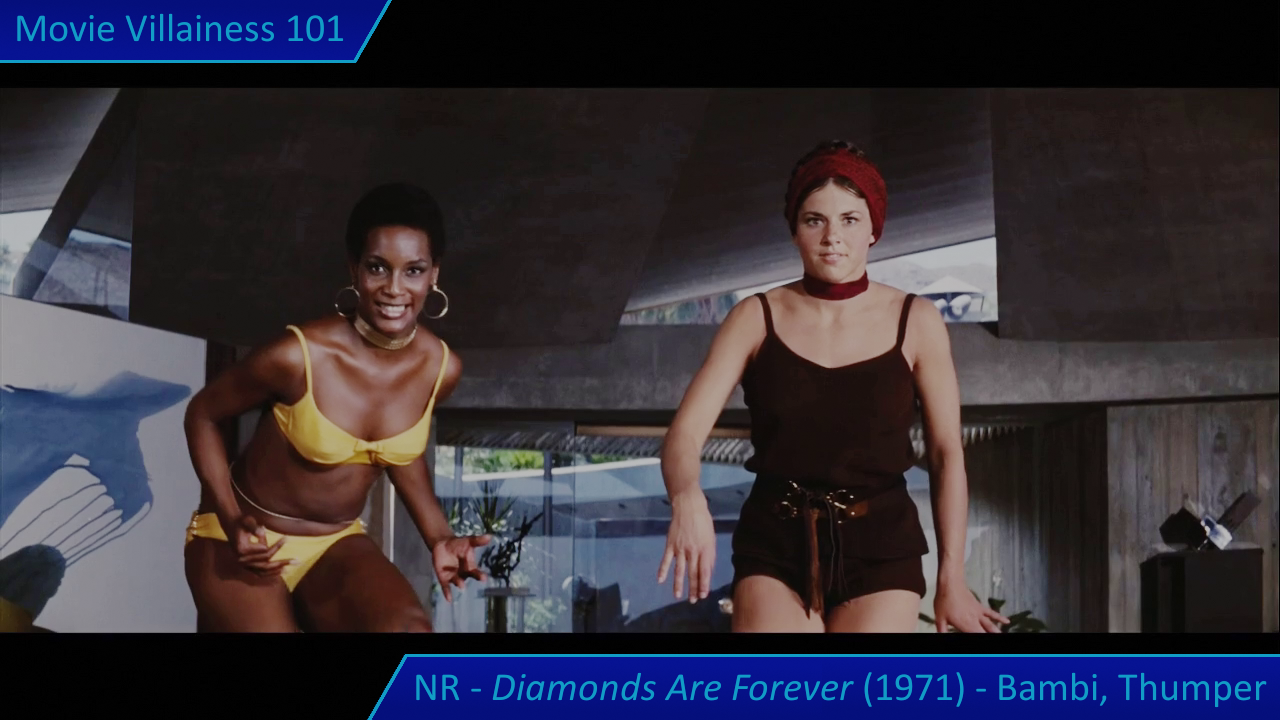
For villainess fans, two physical bodyguards in Bambi and Thumper, and like everything else in this movie, their scenes ooze camp. This is Bond’s first proper fight with female opponents, but the ending is weak. The two women dunk Bond in their swimming pool, only to be easily overpowered moments later.

Never Say Never Again (1983) – Fatima Blush (Barbara Carrera)

Sean Connery returned for this unofficial remake of Thunderball. He shouldn’t have, because the updated version is inferior in almost every respect. The characters are unimpressive, with no official series actors present. Edward Fox is a comical version of M who’s dreadfully out of place, Max Von Sydow is a lacklustre Blofeld, and Rowan Atkinson has a terrible cameo as a hapless diplomat.

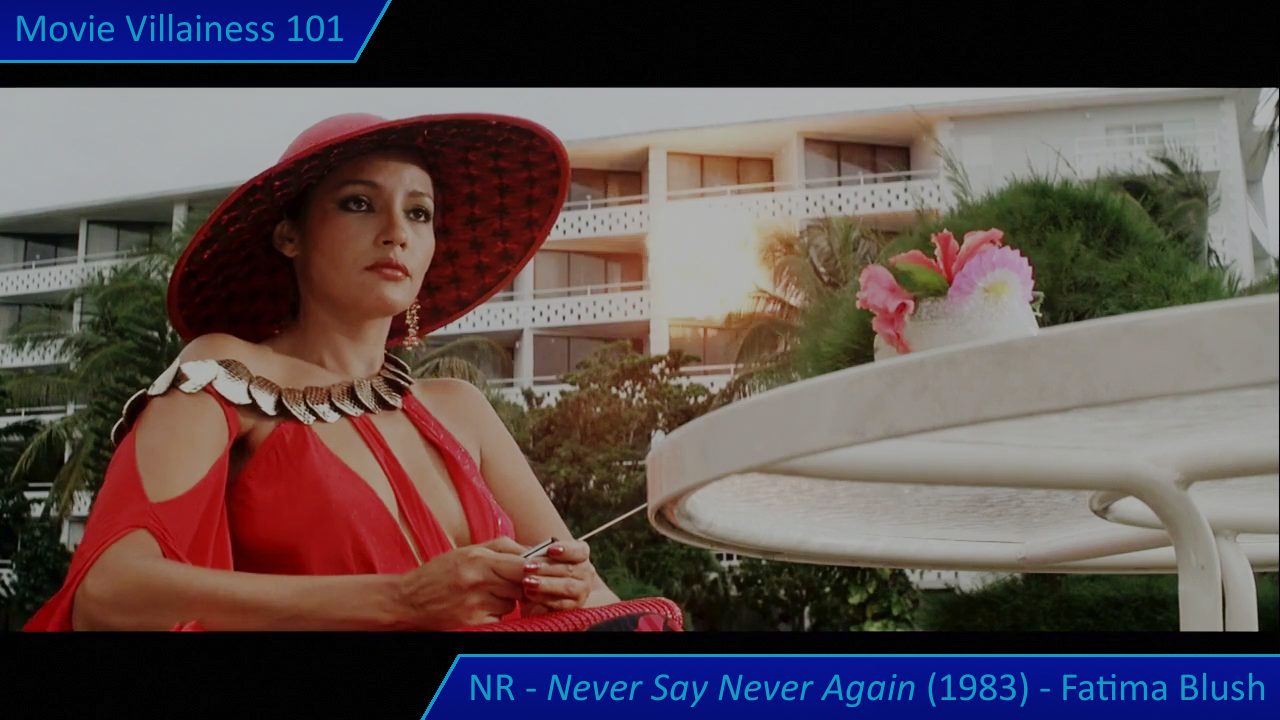
For the villainess, we have Barbara Carrera as the poor woman’s Fiona Volpe. Her first assassination – throwing a snake into a man’s car – is a pale imitation of the biker/rocket original. Carrera overacts in nearly every scene, giggling whilst wearing increasingly ridiculous outfits. She fails multiple times to kill Bond, using truly bizarre methods (remote controlled sharks, anyone?). In the end, Bond defeats her with an exploding pen with about forty-five minutes to go. Normally, such a premature exit would be disappointing, but it’s a relief here.