Movie
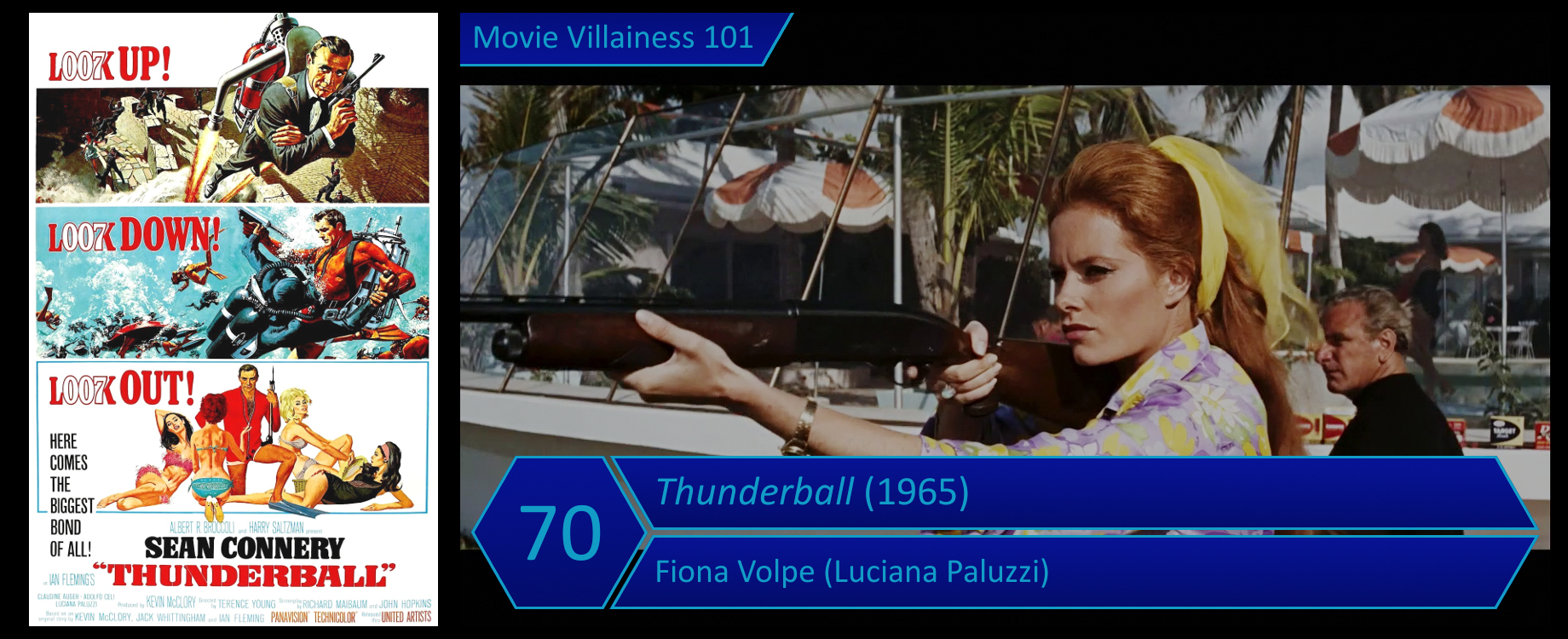
Thunderball (1965)
James Bond movies have a winning formula: action, romance, and humour. Over the decades these films have delivered, except for the occasional misfire. Every iconic hero needs worthy adversaries, however, and there have been many standouts in the series. Including females.
If I ranked my favourite female villains, there could easily be half a dozen entries from the Bond franchise. Since I’m aiming for balance, I’ve chosen four “headliners” and will cover the other films as honourable mentions and discussions. Fiona Volpe is my lowest-ranked pick, and this review also summarises the Sean Connery Bond films and George Lazenby’s solo outing.
The plot of Thunderball is generic, involving the theft of nuclear weapons by a criminal organisation and a ransom demand. Main bad guy, Blofeld, holds conferences with electric chairs in case his underlings should fail or betray him. These plot elements will be familiar to anyone who’s seen Austin Powers, where the tropes were spoofed. Bond stumbles across the fiendish plan by accident whilst recuperating at a clinic, and embarks on a mission to save the world. That scenario seems to recur a lot.
The movie is infamous for ambitious and overlong underwater sequences. With the slowdown, this is a poor setting for action set pieces. The last act – a battle between henchmen in black scuba gear and the goodies in orange – is a boring drag. Thankfully, the villainess’ scenes all take place on dry land.
Villainess
Fiona Volpe (Luciana Paluzzi)
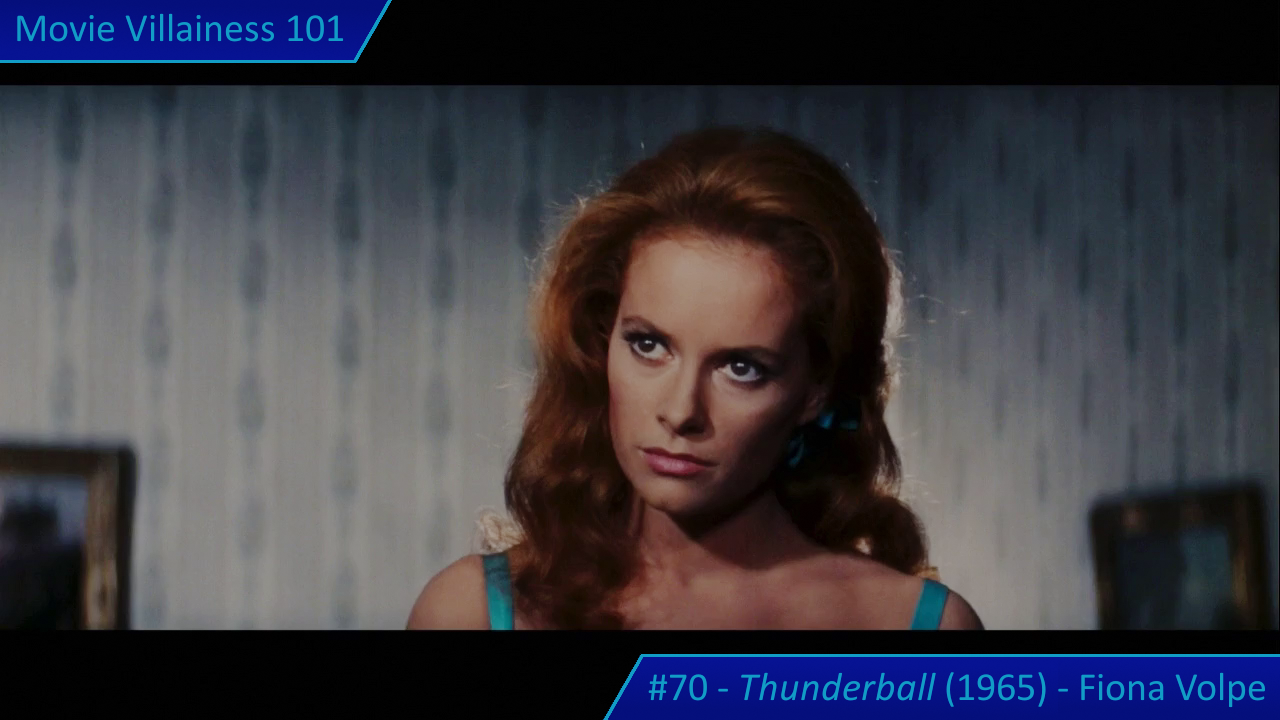
While the main villains are faceless Blofeld and Largo (Adolfo Celi), Fiona is almost his equal with a major role in Spectre’s evil scheme. In an early scene with an accomplice who’s too greedy for his own good, she comes across as a no-nonsense authority figure. This is moments after she plays the femme fatale with an airman she lures into a deadly trap.
Fiona’s talents extend to assassination when Blofeld orders a man killed as punishment for failure. Fiona does the deed in style, intervening as her quarry pursues Bond’s Aston Martin DB5. Not to be outdone, the female killer has her own gadget vehicle: a motorcycle fitted with rocket launchers. Those make quick work of her target. Not long afterwards, there’s a decent reveal where the helmeted biker is revealed as Fiona. But it was almost certainly a stunt double for “her” earlier scenes.
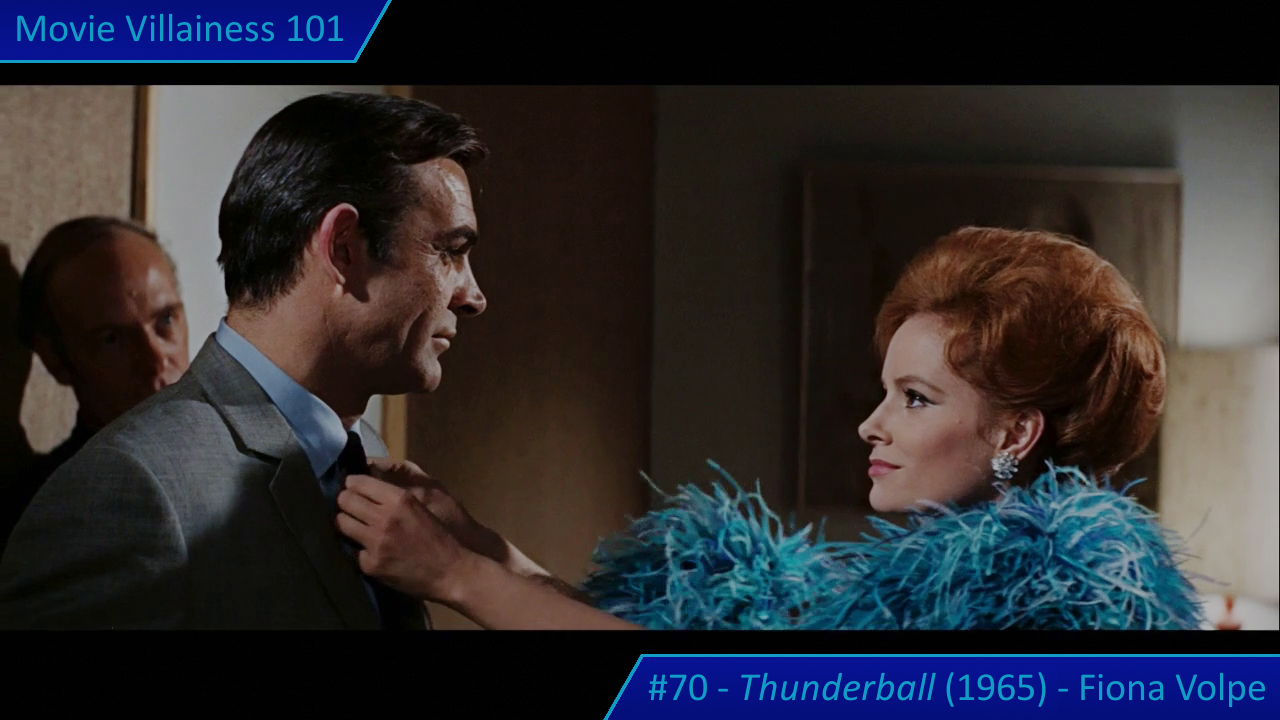
Fiona and Bond don’t meet until the halfway point, when she picks the stranded agent up and gives him a high-speed ride. The villainess is daring in this sequence, openly displaying her Spectre ring. Later on, she seduces Bond and brags she’s immune to his charms. And unlike Pussy Galore in Goldfinger, there’s no final act shift of allegiance this time around. Fiona even makes the point in a defiant speech.
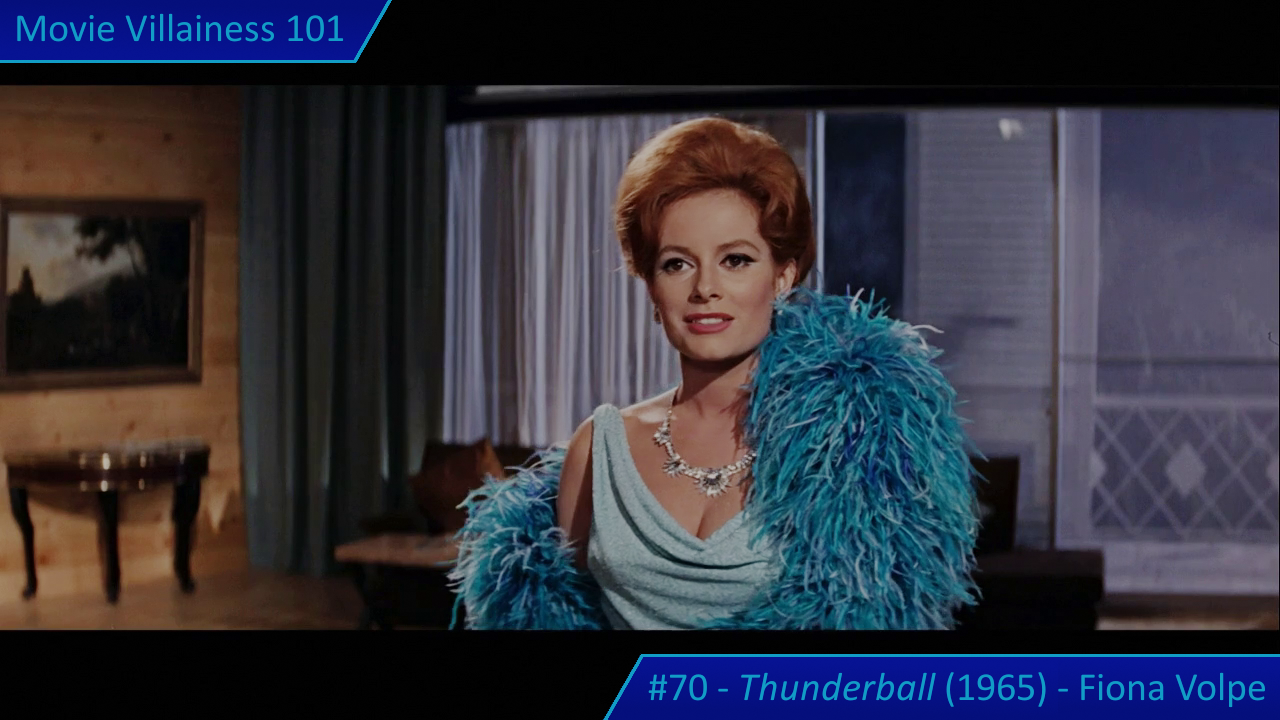
After Bond escapes Largo’s henchmen, the final encounter takes place in a bar during Mardi Gras. Bond hides by dancing with a female patron, but Fiona soon takes the woman’s place. She intends it to be his last fling and has a concealed henchman ready to shoot Bond in the back. However, the hero expects this move and pivots Fiona around at the last instant, so it’s her shot instead. Cold-blooded execution of female villains would come much later in the series, but we’re still treated to a one-liner.
Honourable Mentions / Discussion: Sean Connery / George Lazenby Bond Movies
Dr. No (1962) – Photographer (Marguerite LeWars), Miss Taro (Zena Marshall)
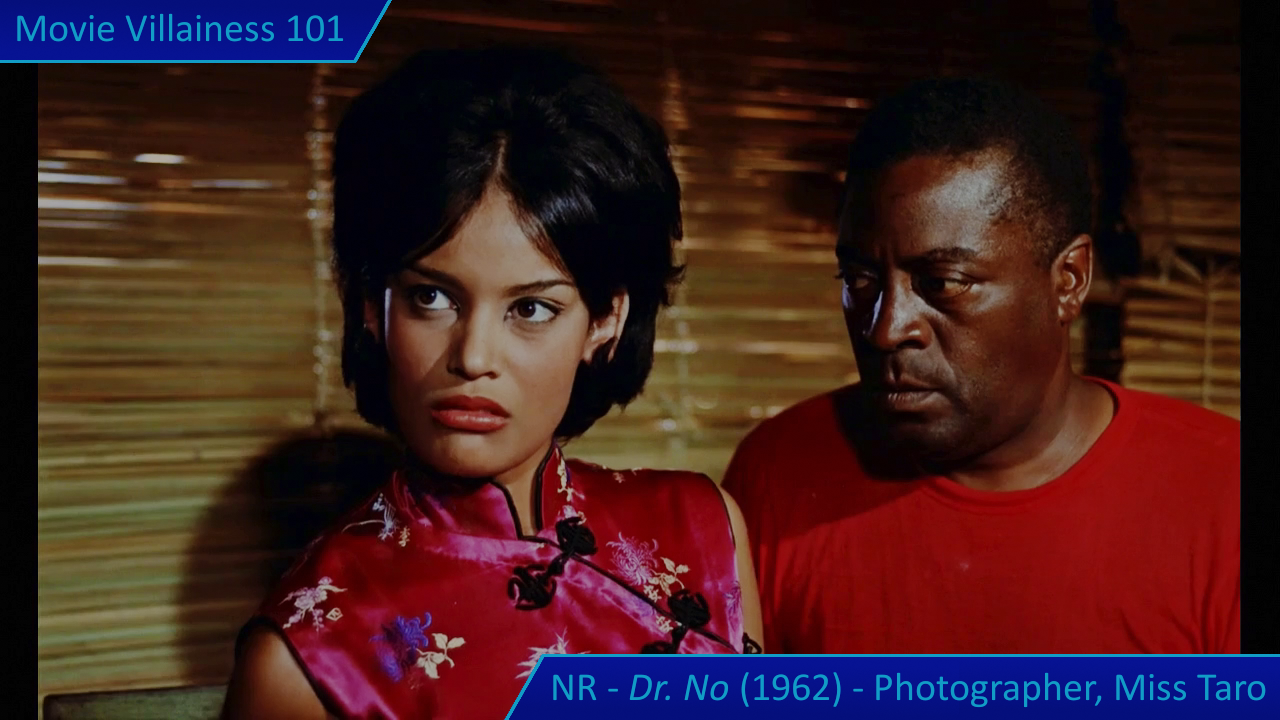
The first official Bond movie set the tone for those that followed. Dastardly villains operate from elaborate lairs, and women are beautiful, seductive, and frequently dangerous. The weakest of Connery’s films from a villainess perspective, but there are two female foes worth a mention.
Marguerite LeWars has the honour of playing the first-ever Bond villainess, though the photographer is never named. A freelancer working for a mysterious enemy, this woman shows her evil side by licking a lightbulb after snapping shots of Bond in Kingston, Jamaica. When caught, the photographer refuses to talk, even when Bond’s allies threaten to break her arm. She even smashes a lightbulb in her questioner’s face, drawing blood. Tough cookie, this one.
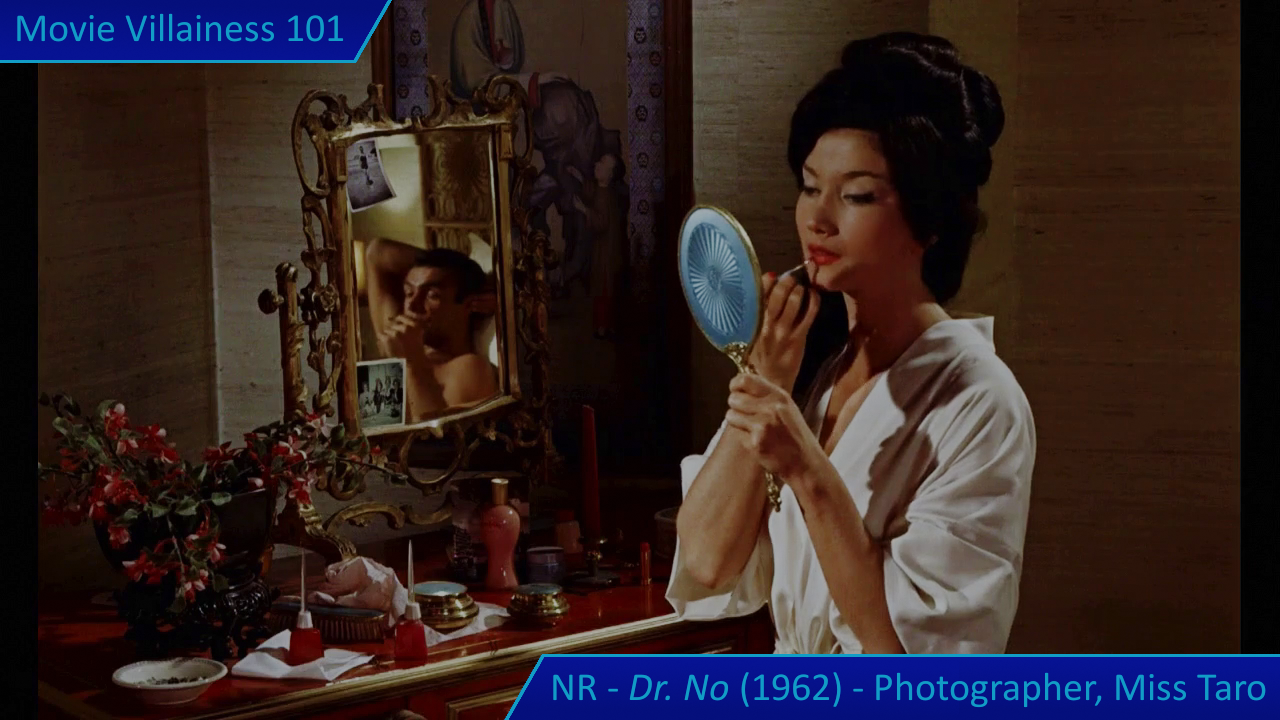
Miss Taro is a more traditional femme fatale, relying on her sexy voice to deceive the spy. That might have been more effective if he hadn’t caught her eavesdropping. Still, Bond never turns down an opportunity to bed a beautiful woman, even one with dark intentions. Of course, the hero merely bides his time – and enjoys himself – until the authorities arrive.
From Russia with Love (1963) – Rosa Klebb (Lotte Lenya)
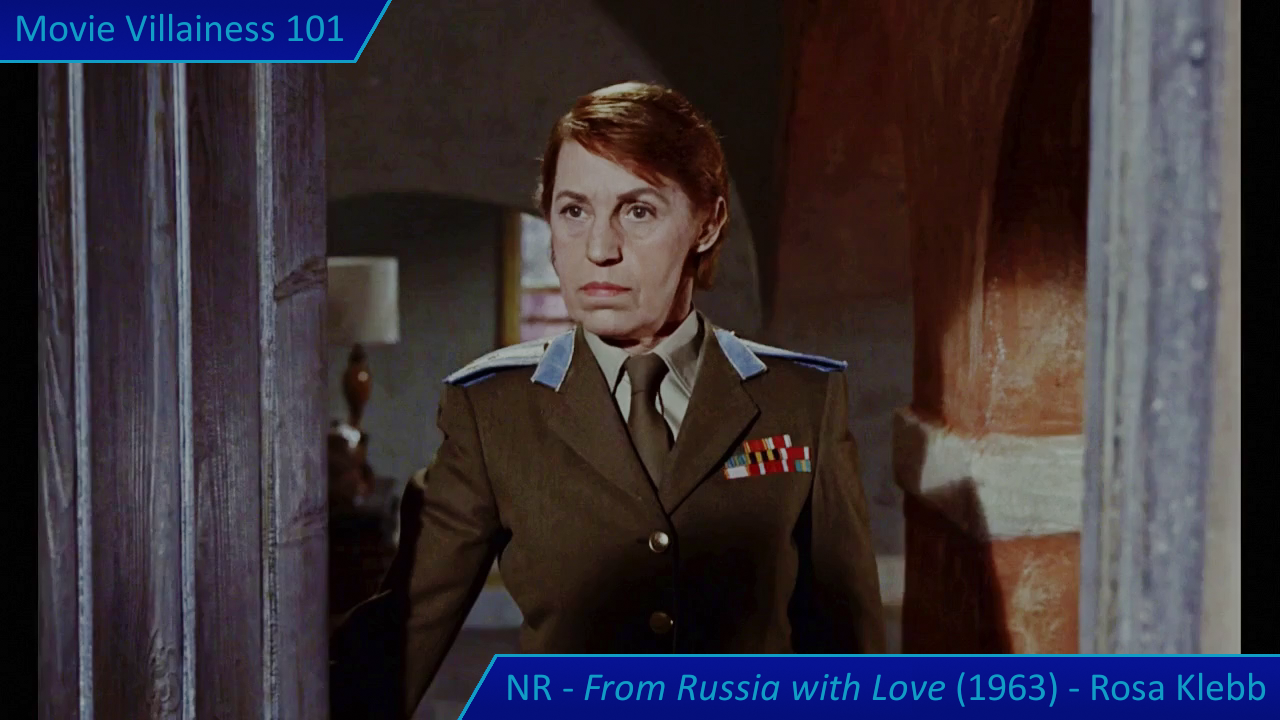
The second film has the series’ first major villainess, even if she answers to Blofeld. The notorious man with the white cat is still faceless at this point, leaving Klebb and henchman Red Grant to do Spectre’s dirty work.
Klebb lost out to Fiona Volpe when I selected my pick from the early Bonds, but she makes a sinister spy. Her character is manipulative and controlling, especially with Bond girl Tatiana Romanova. Though prominent early in the movie, Klebb vanishes for the middle act, only to return and stab a fellow operative with a poisoned blade concealed in her shoe.
Her attempt to kill Bond doesn’t go so well, resulting in a poorly staged fight. After Tatiana shoots the villainess, Bond utters a darkly humourous one-liner, a trait that would continue throughout the series.
Goldfinger (1964)
The first truly extravagant movie in the franchise, there are many iconic elements, notably a charismatic title villain and his henchman Oddjob (don’t forget the killer hat). There’s also an epic finale at Fort Knox, where an all-female pilot squadron takes out tens of thousands of US troops with nerve gas.
Other minor villainesses include a treacherous beauty in the pre-credits sequence and an old lady guarding a checkpoint (who’s handy with a machine gun). A female sniper makes an appearance and takes a potshot at Bond. She’s after Goldfinger, but misses by some distance, only to meet her end shortly afterward.
The main female character is Pussy Galore, the villain’s personal pilot. A damn good one (in her words) and a judo expert. Bond still overpowers the feisty woman, seduces her, and converts her to the cause of good. So she exchanges the deadly nerve gas for a harmless alternative, and Goldfinger – while a classic movie – is not the best from a villainess perspective.
You Only Live Twice (1967) – Helga Brandt (Karin Dor)

This movie takes Bond to Japan, but he displays the same weakness towards women. Almost getting killed by a Chinese agent in the pre-title sequence doesn’t dampen his enthusiasm for Oriental females. In fairness, the “assassination” was staged to fake Bond’s death.
Blofeld returns, this time played by Donald Pleasance. The minor villains include businessman Osato and Spectre number eleven, Helga Brandt. After the henchwoman seduces Bond in a cabin, she traps him in a crashing aircraft and bails out mid-flight. Any 007 fan will know that elaborate attempts will fail, and what that means for Spectre operatives. Here, Blofeld feeds Helga to his piranha fish.
A gruesome death to frighten Osato (not that he succeeds either), followed by a ninja commando raid in a spectacular volcano lair. Some good girl action, but no female villains, unfortunately.
On Her Majesty’s Secret Service (1969) – Irma Bunt (Ilse Steppat)
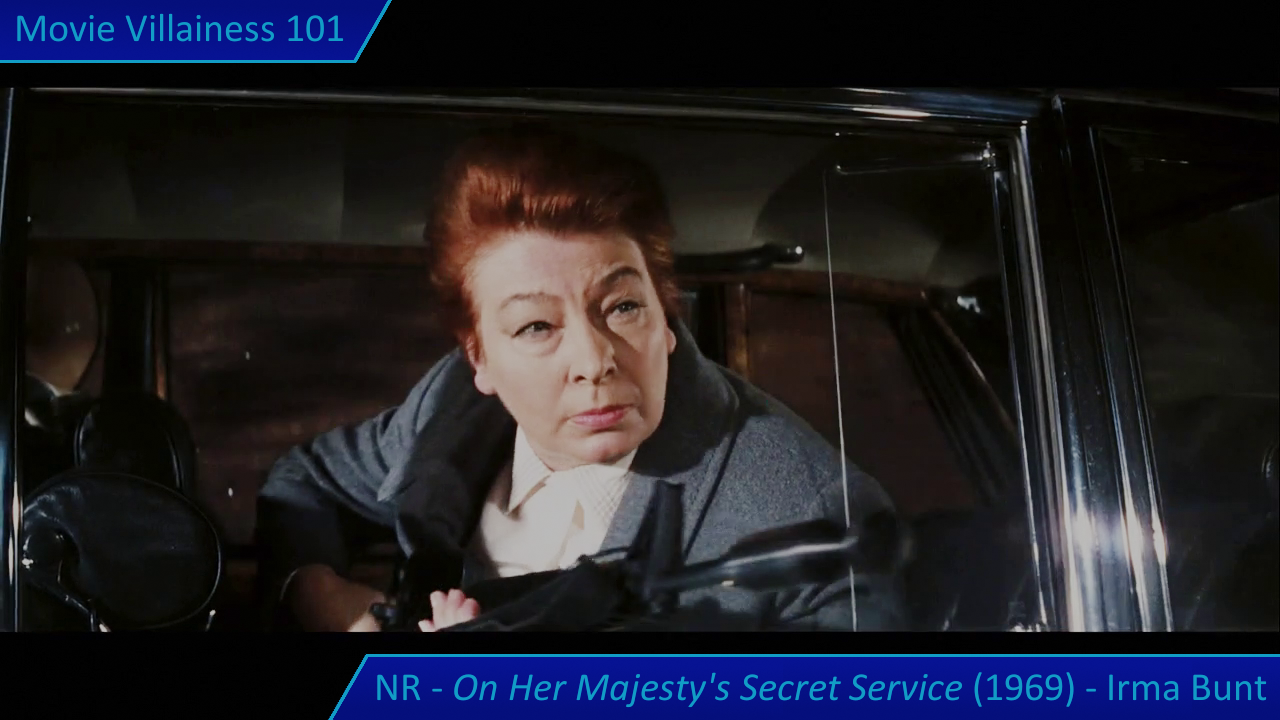
George Lazenby starred as James Bond for the first and only time in a movie most famous for its tragic finale. Telly Savalas is Blofeld, with Irma as his main henchwoman. This lady comes across as a strict, bossy type and wouldn’t look out of place as a school headmistress. Many of her scenes take place in a Swiss Alpine clinic where Bond frolics with female patients, arguably the weakest part of the movie.
After a slow buildup, things kick into gear about halfway through with some great action sequences on the snowy slopes. For the descent, Blofeld leads the pursuit, but Irma takes over with a secondary team after Bond reaches the presumed safety of a village. Don’t be so naïve, 007 – it’s never that easy to escape.
Irma is overshadowed by Diana Rigg as the ill-fated Teresa Bond. The hero’s fling blossoms into genuine romance, and the lovers tie the proverbial knot. Most aficionados know how this story ends – with an injured Blofeld and Irma tracking the couple down. Since the main bad guy is injured, the henchwoman fires the fatal shot, a single wicked act that makes her a notable villainess in the franchise.
Diamonds Are Forever (1971) – Bambi (Lola Larson), Thumper (Trina Parks)
After the downer ending to Lazenby’s brief tenure, Bond entered the 1970s with this campy entry. Charles Gray is a much softer Blofeld with hair. He’s obsessed with world domination, and so scared of Bond’s vendetta that he’s got multiple doubles. Tiffany Case is among the weaker Bond girls, reduced to little more than a bimbo by the time the credits roll.
Diamonds Are Forever is best remembered for its secondary villains. There’s a great elevator fight between Bond and a smuggler, and a humorous pair of hitmen in Wint and Kidd. They have a thing for trading one-liners after they kill someone.
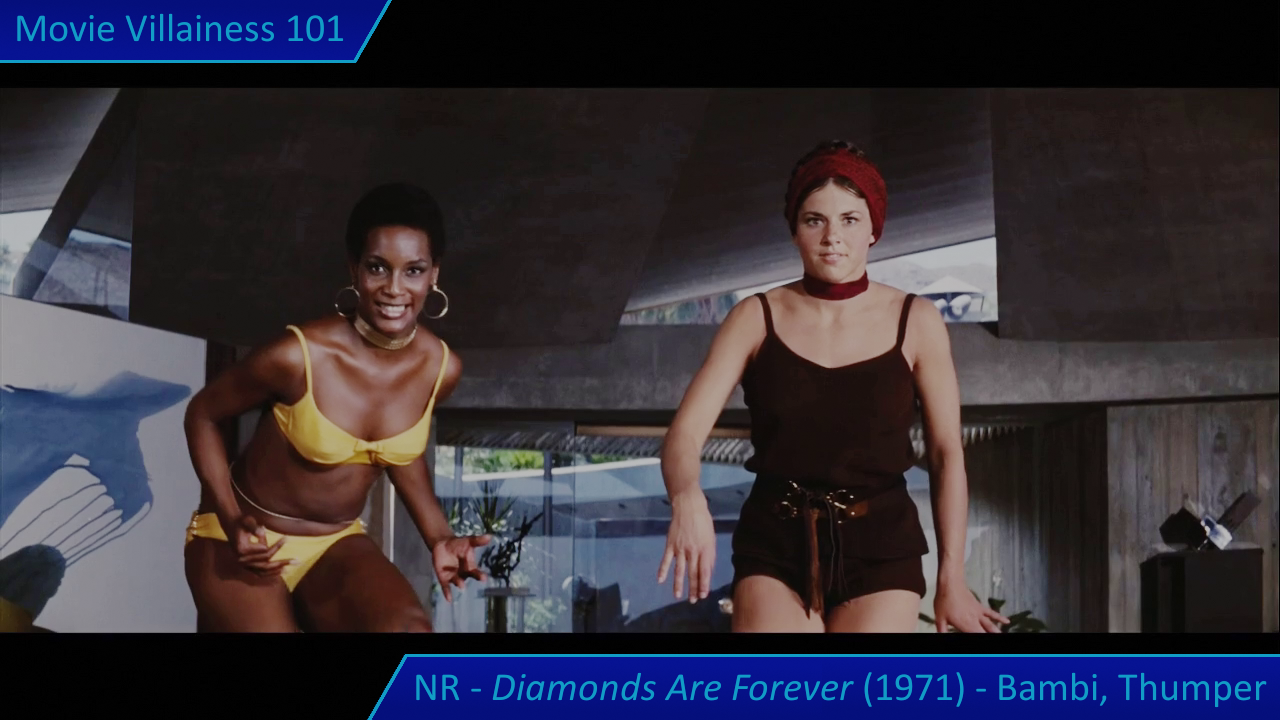
For villainess fans, two physical bodyguards in Bambi and Thumper, and like everything else in this movie, their scenes ooze camp. This is Bond’s first proper fight with female opponents, but the ending is weak. The two women dunk Bond in their swimming pool, only to be easily overpowered moments later.
Never Say Never Again (1983) – Fatima Blush (Barbara Carrera)
Sean Connery returned for this unofficial remake of Thunderball. He shouldn’t have, because the updated version is inferior in almost every respect. The characters are unimpressive, with no official series actors present. Edward Fox is a comical version of M who’s dreadfully out of place, Max Von Sydow is a lacklustre Blofeld, and Rowan Atkinson has a terrible cameo as a hapless diplomat.
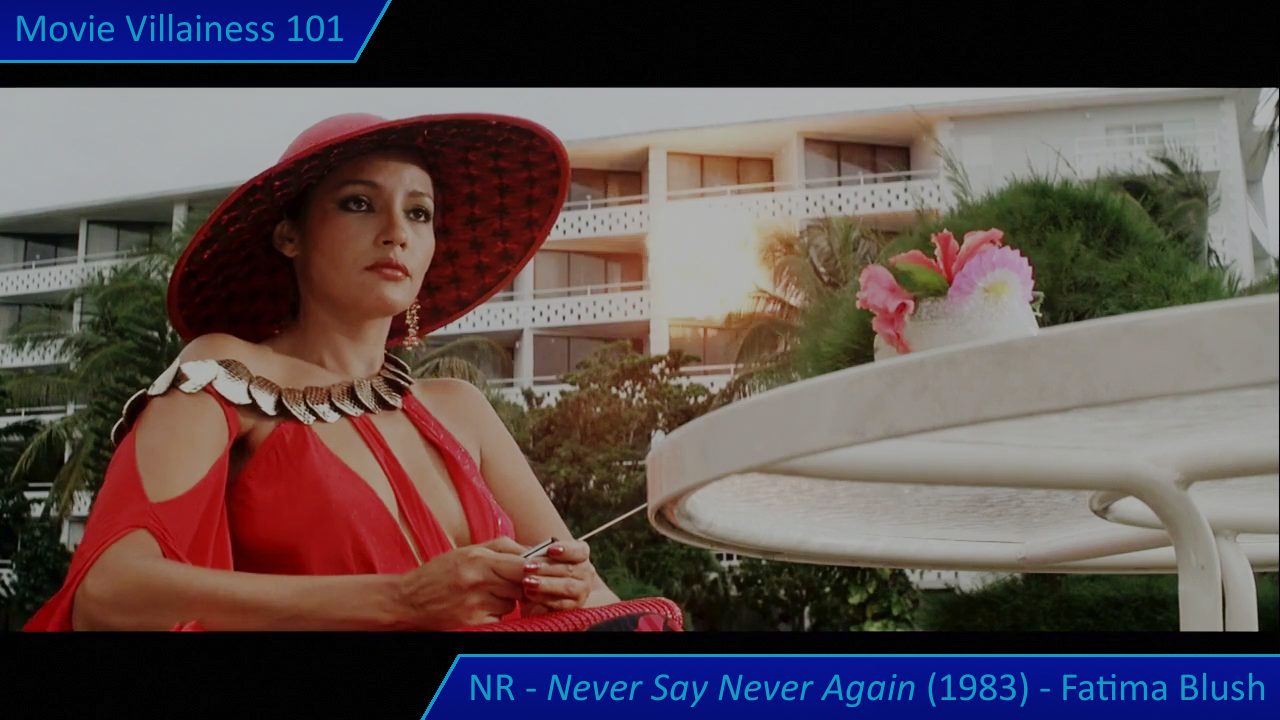
For the villainess, we have Barbara Carrera as the poor woman’s Fiona Volpe. Her first assassination – throwing a snake into a man’s car – is a pale imitation of the biker/rocket original. Carrera overacts in nearly every scene, giggling whilst wearing increasingly ridiculous outfits. She fails multiple times to kill Bond, using truly bizarre methods (remote controlled sharks, anyone?). In the end, Bond defeats her with an exploding pen with about forty-five minutes to go. Normally, such a premature exit would be disappointing, but it’s a relief here.
 Action Girl Books