
Movie
Tuno Negro (2001)
Also known as Black Serenade, this Spanish slasher has all the elements you expect from teen horror. An attractive lead, gory murders, minor characters as suspects. Plus practical jokes, and the inevitable false scares where other students dress like the killer. Tuno Negro benefits from its European setting, with Spanish buildings as an eerie backdrop for the murders. It’s an appreciable change from the usual American university, and a killer targeting students who fail exams is an interesting angle.

The prologue in Alcala sets up the plot, with a young woman contacted by someone calling themselves the Dark Minstrel. With a creepy name like that, she should log off and call it a night. But like all introductory females, she does the stupid thing and continues chatting until the Minstrel reveals that they know everything about her. Through a remote camera, the terrified girl is shown a green-tinted view of her residence – time delayed by a couple of minutes – that ramps up the tension.
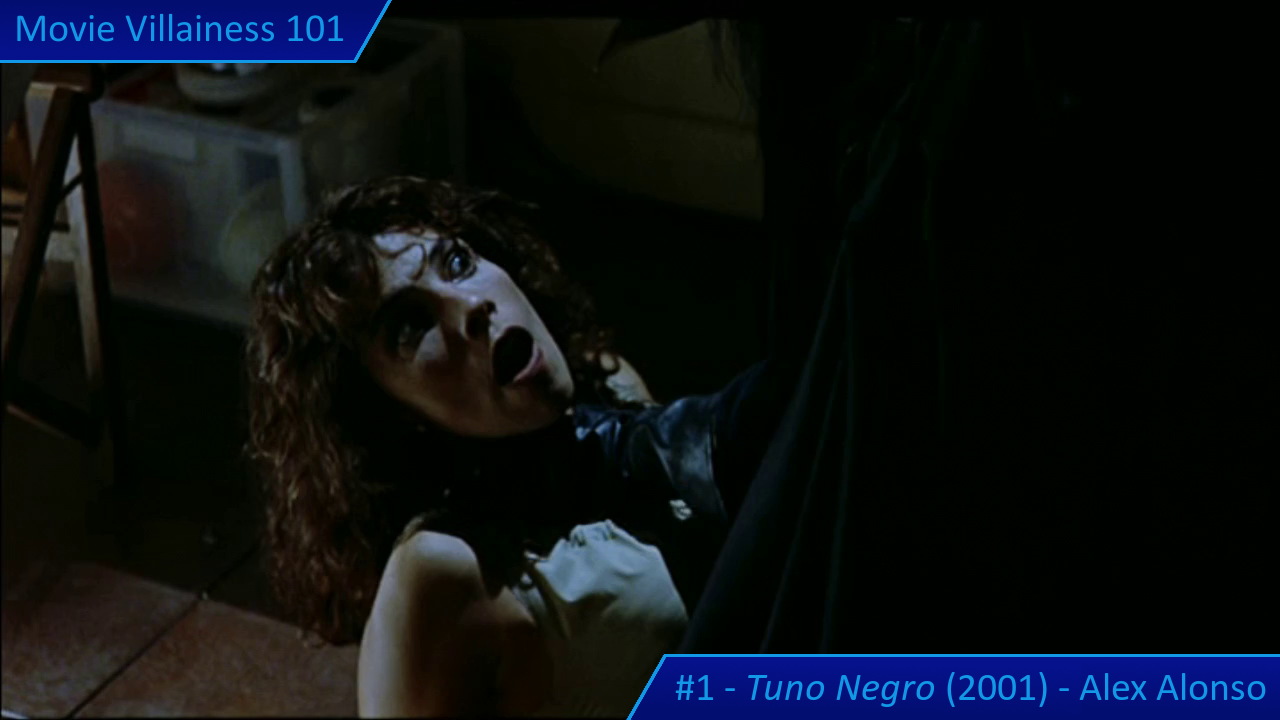
After some aggressive verbal exchanges, the Minstrel sneaks into the student’s room and attacks. Thanks to a disturbance outside, the victim escapes. The corridors are deserted, leading to a chase through dark rooms. Everyone is at a graduation event with traditional Spanish music, so nobody hears the young woman flee to the chapel. The Dark Minstrel sneaks up on her, and we get our first look at the creepy rough-skin mask before the victim pulls it away. The attacker’s face isn’t seen by viewers, but the woman clearly recognises them. A scream brings everyone running, ending with a false scare where two students have sex. Then the victim’s roommate spots the body suspended above.
The action shifts to Salamanca, another town with historic buildings galore. The first time we see the protagonist, Alejandra (Alex for short) she arrives at a deserted student dorm in a thunderstorm. An ideal time for a practical joker to fake a minstrel attack. Like other surprise villainess reviews, this comes with a spoiler alert, so readers already know Alex is the killer. However, the film does a great job with deception, setting her up as the main character viewers will expect to be the final girl. Even this early on, there are clues this woman is cold and calculating, with little patience for student pranks.
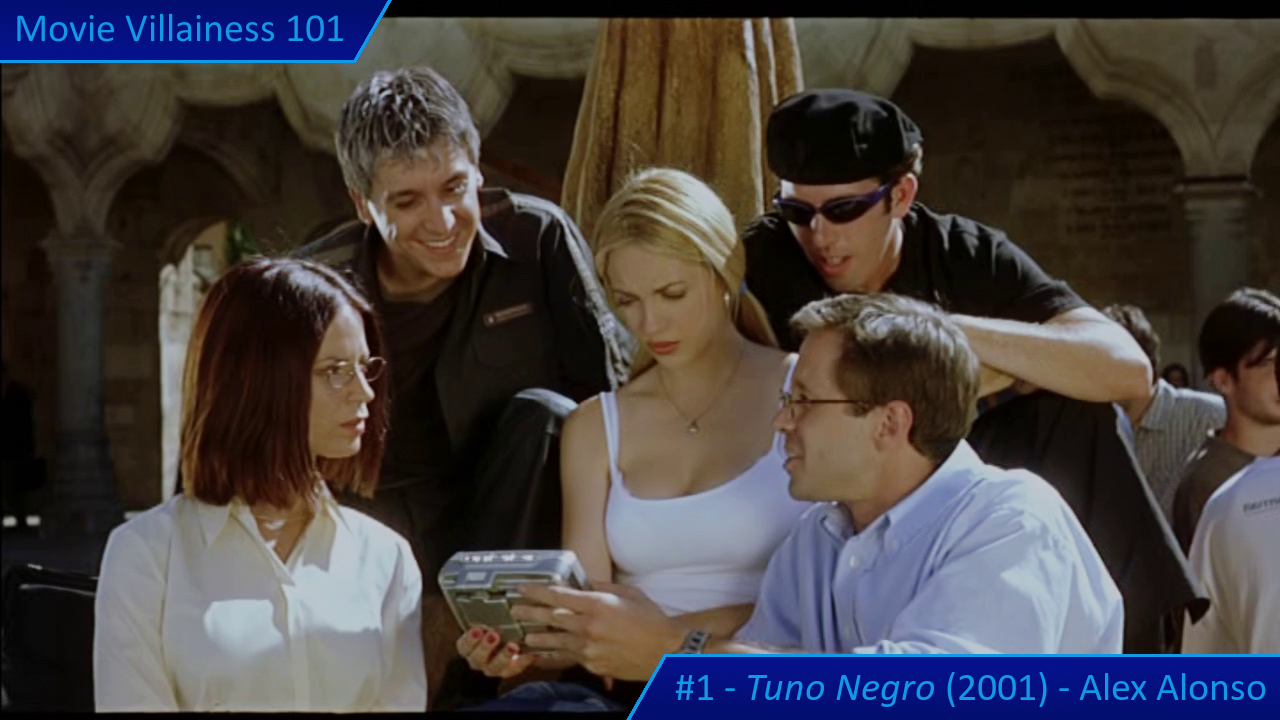
Plenty of men are potential suspects. These include criminology student Fonseca, who’s obsessed with the dark minstrel case, an urban legend nobody believes is real. The womanising Edu sees women as trophies, a lecturer obsessed with history is also dean of the creepy cathedral, and a police detective has a dark side. These are red herrings, but Alex casts suspicion on them while appearing an innocent heroine. She even set up a computer chat that reacts to her voice. This makes her the conduit to the killer, to throw everyone off the trail, and her amateur sleuthing diverts attention to others.
A clever murderess, and knowing the eventual outcome doesn’t affect enjoyment on repeat viewings. Since it’s great to watch the villainess set everything – and everyone – up.
Villainess
Alex Alonso (Silke)

Once the character introductions are done, it’s time for a murder to liven things up. This comes at a wedding celebration where students perform a classic song while the murderer offs a woman in the restroom. Nowhere is safe from the Dark Minstrel, and we see the masked killer in close-up bashing the victim’s head with a mandolin. Some mischievous students sneak into the women’s bathroom and record the murder without realising it. What they think are sexual groans are really whimpers as the killer repeatedly stabs the victim to death.
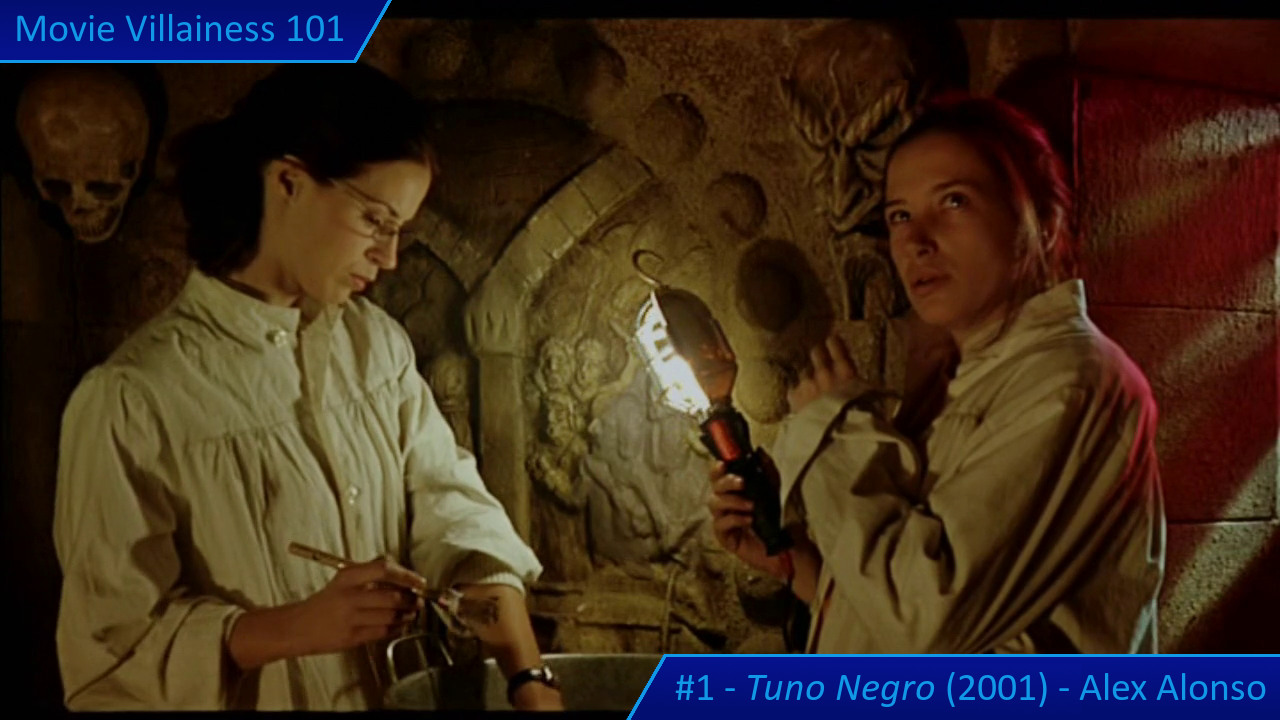
Get used to gory knife kills, as there are plenty more. After committing the foul deed, the killer paints a symbol in blood on the wall that represents the word “Victor”, a tradition from the 1400s that suggests an obsession with historic minstrels. Alex visits the cathedral chapel and convinces the dean to let her write a thesis on the topic. Stone sculptures show a secret society of masked men burned alive by the Spanish Inquisition, but the dean hints at a secret hidden in the artwork. The film spans an academic year, so when Alex isn’t murdering people or planting false leads, there’s ample time to solve a mystery.
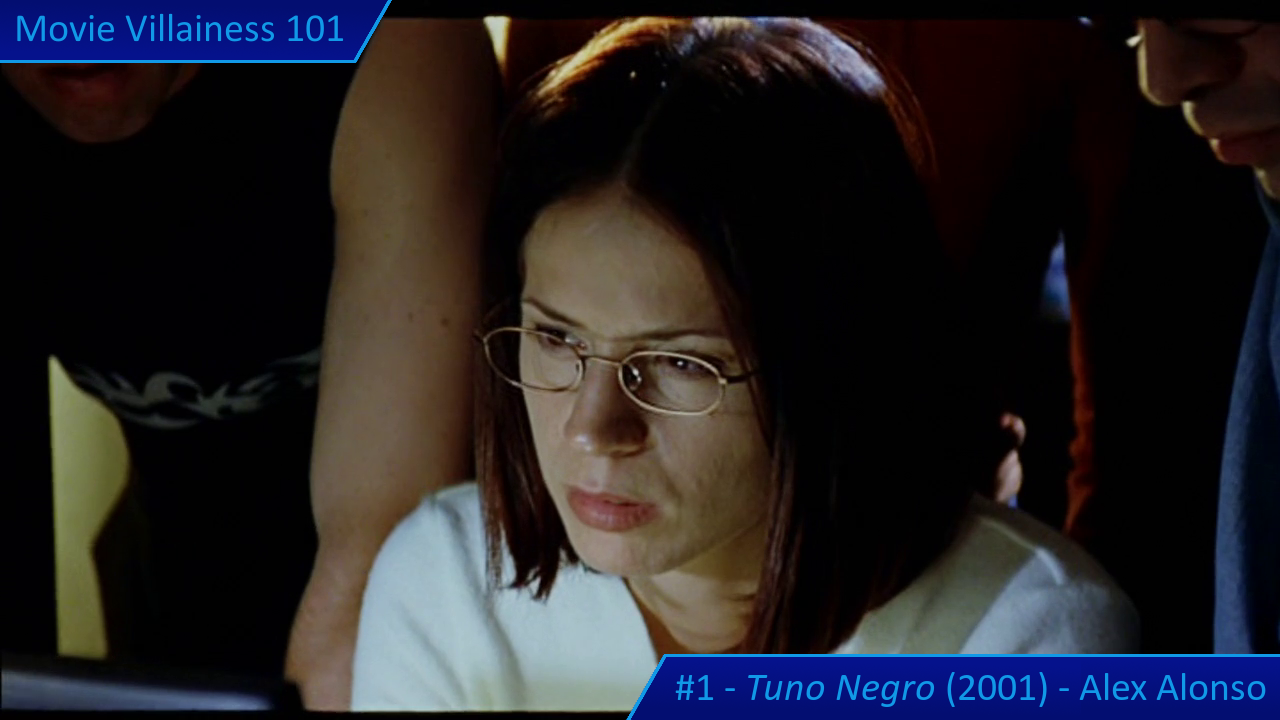
Alex as the killer protagonist is one of those rare twists that makes perfect sense and seems obvious in hindsight. Many clues are presented, from Alex looking unhappy at other students cheating, her keen interest in minstrels, and a woman always at the centre of events. And a reveal partway through when another student attacks Alex, only to get beaten up by a skilled martial artist. Cut to a kickboxing ring where she trains, and even spars with the investigating cop. The femme fatale flirts with students and manipulates them into thinking they’re using her when it’s the other way around.
Kill scenes often have the dark minstrel slash underperforming students – and anyone who gets in the way – with a long serrated blade. Unimaginative mostly, but the minstrel’s all-black outfit befits a slasher and conceals the murderer’s gender. While one can never be sure, it appears the actual actress – or at least a convincing stunt double – plays the killer.
There’s an impressive sequence in a morgue when a student cheats in a medical exam by reading instructions off a corpse. She gets surprised by pranksters, only for the actual killer to attack them. Numbers are no advantage against a trained opponent with a weapon. Sadly, the three murders take place off-screen – with only the aftermath shown – but we see the murderer kill a nosy doctor. Another victory symbol, but the surviving students are happy to stick around for final exams.
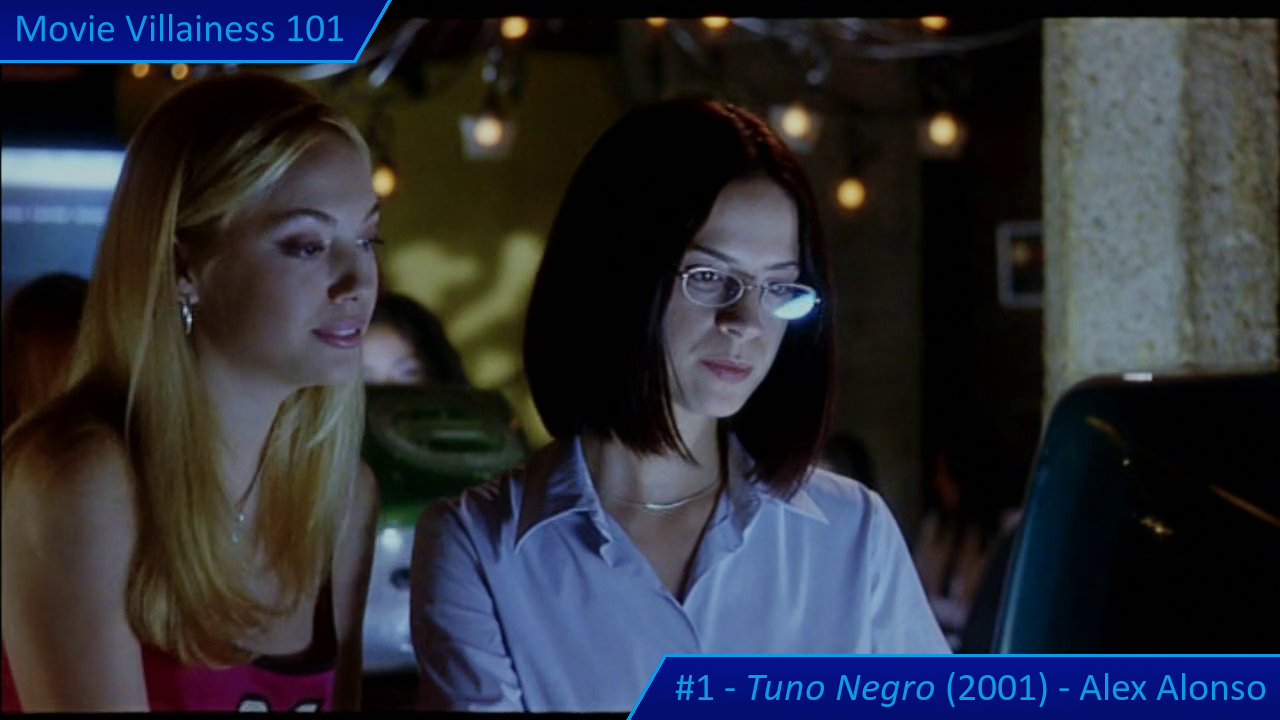
Next on the minstrel’s list is the perennial failure nicknamed Scorpion, who prefers to deal drugs than study. After taking some hallucinogenic concoction, the minstrel pays a visit to his shadowy den. There’s terrible CGI as Scorpion’s bloody arm morphs into a snake while the killer stands over him. Then more imaginary reptiles burst from his chest during the fatal stabbing that follows.
With the suspect list dwindling, it’s time for final semester exams. Alex spots other students cheating, and no doubt compiles a list of potential targets. The lecturers are canny and notice a woman named Michelle reading answers from a folded paper up her leg. Edu tries to switch his exam paper, but the dean catches him out by trimming the real test papers short. And Fonesca hands in a blank sheet, a deliberate fail as he hopes to ensnare the killer.
The murderer “contacts” Alex (or so the others think) via the chat page and shows images of stalking Michelle through the city. A perfect setup to create an alibi as a fellow student watches events unfold. Alex follows the phantom minstrel through Salamanca and the busy evening crowds, arriving at a courtyard where Michelle is tied up inquisition-style. Alex – alone with her victim – watches as fire trails spread and ignite the funeral pyre.

Edu inadvertently helps Alex solve the cathedral mystery, and she discovers that the historic minstrels escaped their punishment. After passing the dean’s challenge, Alex hands him a gift to open later. All this leads into the finale after the police discover the images transmitted during Michelle’s murder were pre-recorded. The cop is convinced there are multiple killers because it seems impossible for one person to pull this off. Thankfully, this is another red herring, and the murderer – the woman nobody suspects – is intelligent enough to operate alone.
With the men suspecting each other, the masked killer wipes out the weak students in the creepy cathedral. Fonseca and Edu are at each other’s throats until they hear Alex scream. They get separated, and Fonseca discovers a hanging woman. However, it’s not Alex but her assistant Sandra who’s the victim. Turns out hiring a lookalike and giving her similar work clothes was a ploy to create a decoy.

The killer pours gasoline over Fonseca and jumps down acrobatically from above. The terrified man demands to know who the minstrel is, and she promptly unmasks herself. His earlier claim that females couldn’t be psychopaths is debunked, and he screams in frustration. At Alex’s mercy, she takes pleasure in setting him aflame and watching him burn. Alex replaces her mask to escape the watching Edu and uses the scream trick again to lure him into a fatal encounter. Edu doesn’t notice the now unmasked Alex is dressed like the dark minstrel, and is truly surprised when she stabs him. Ignorance kills, indeed.
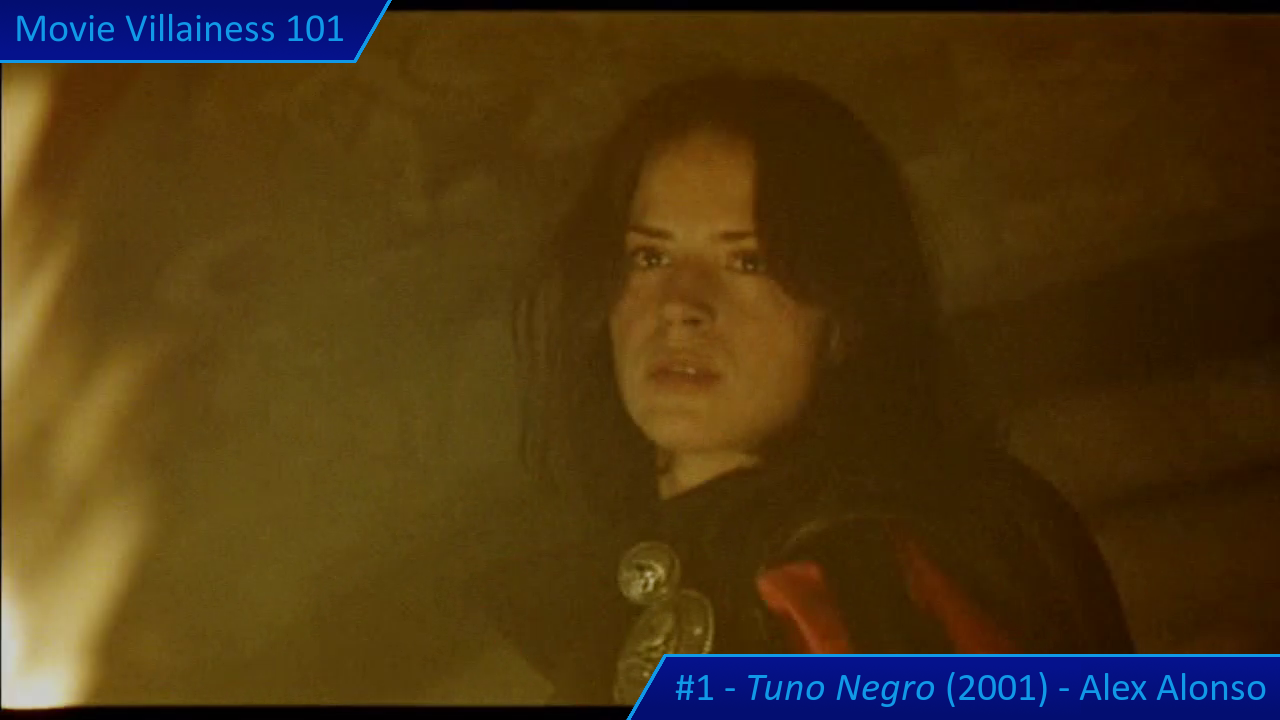
The police are also on the scene and still believe there is more than one culprit. The chief investigator’s partner is so terrified by now he guns down everyone dressed like a dark minstrel. This results in a bloodbath as the main cop confronts the masked killer. Already established as a superior martial artist, she easily betters him. After a lengthy fight, the masked Alex lets the guy live, presumably because he’s impressed her. Lucky him! The cathedral’s secret passage proves handy for a getaway, though Alex unmasks herself one last time to prevent the cop shooting her.
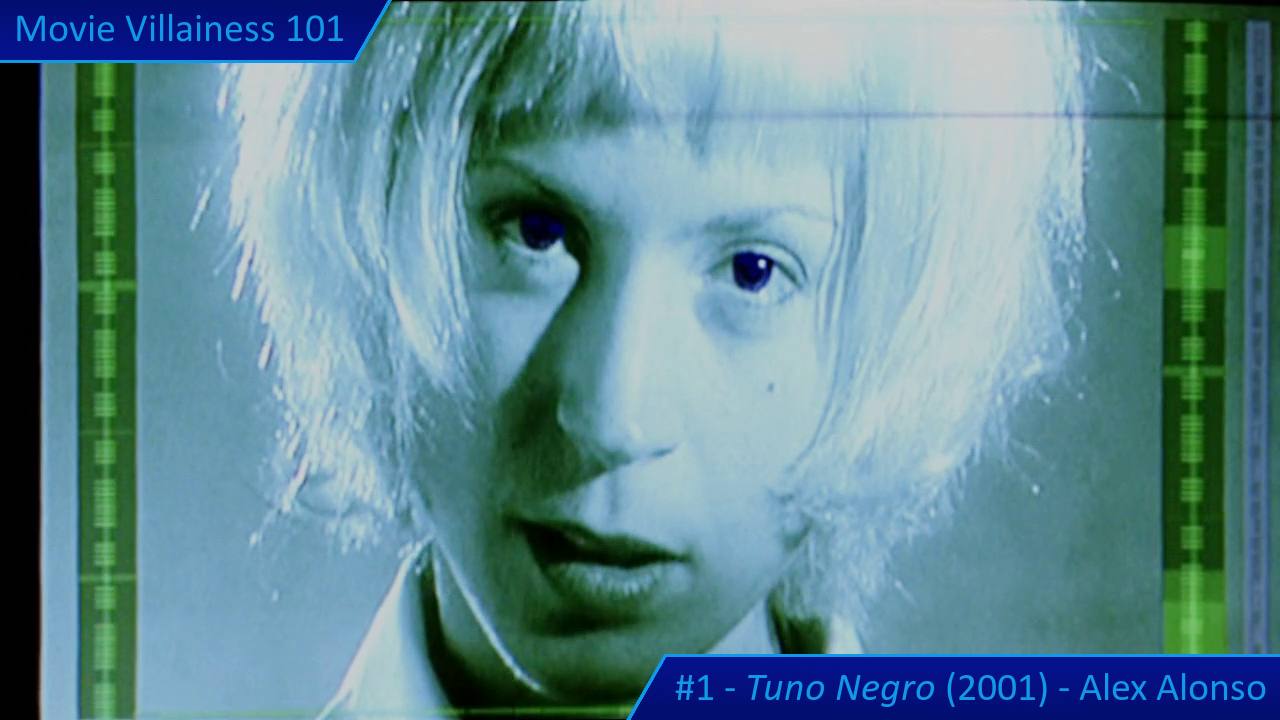
It’s revealed that the real Alejandra is dead and the fake Alex adopted her persona, so the killer’s true identity remains a mystery. The dean’s gift is a recorded video message from the minstrel who’s changed her appearance. Her stated motive is simply to wipe out weak students, which she sees as her calling. No revenge or childhood trauma, so a refreshingly unique background for the female psycho.
There are ten criteria I think make a great villainess. Intriguing backstory and setting, a spectacular entrance, memorable outfit, physical prowess, high intelligence, kill scenes, acting and dialogue, reveal / twist, exciting climax, and a victorious conclusion. While individual female villains may beat “Alex” in some categories, she’s the greatest overall villain I’ve ever seen. And a deserved top ranking.
 Action Girl Books