Movie
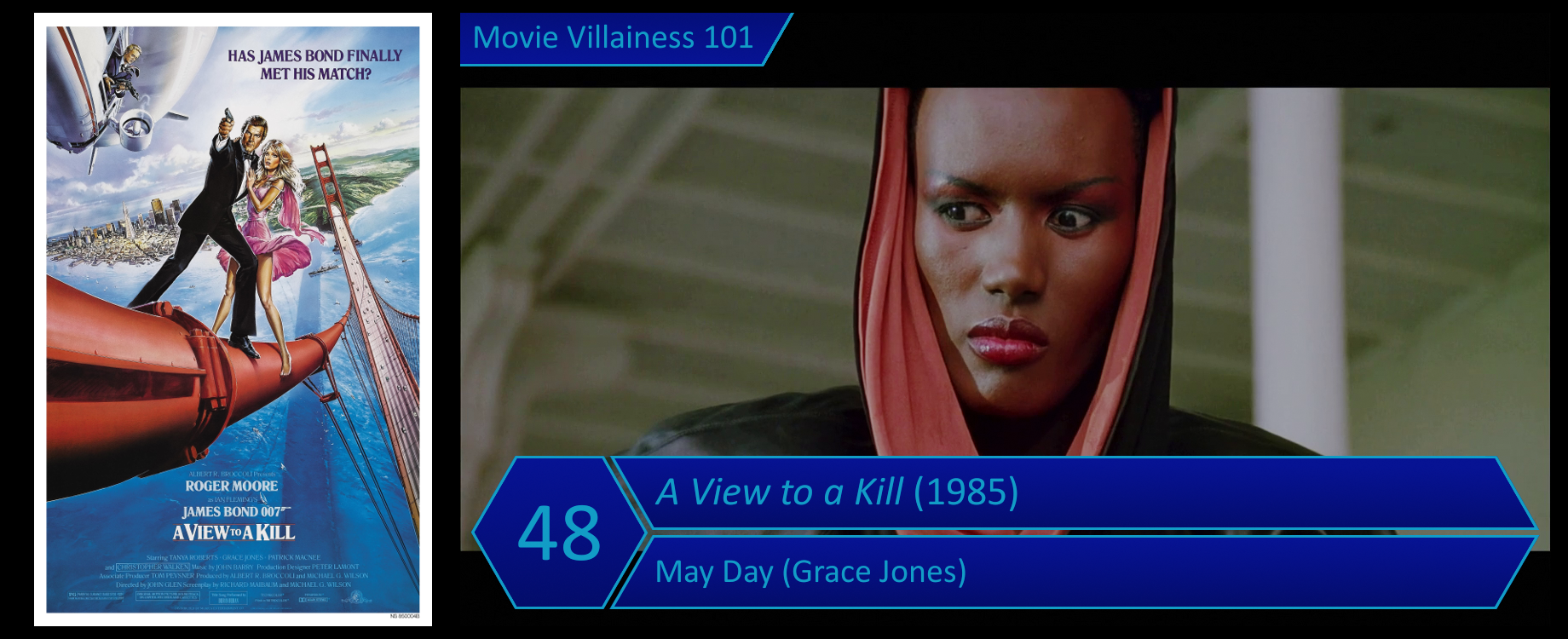
A View to a Kill (1985)
My original draft included three James Bond films, with the rest covered as honourable mentions and discussions. On reflection, I added this entry from the Roger Moore era. Since he holds the record (seven) for official bond movies, there’s plenty of material to discuss. May Day is an iconic villainess worthy of a mid-place ranking, even if she switches allegiance in the last act.
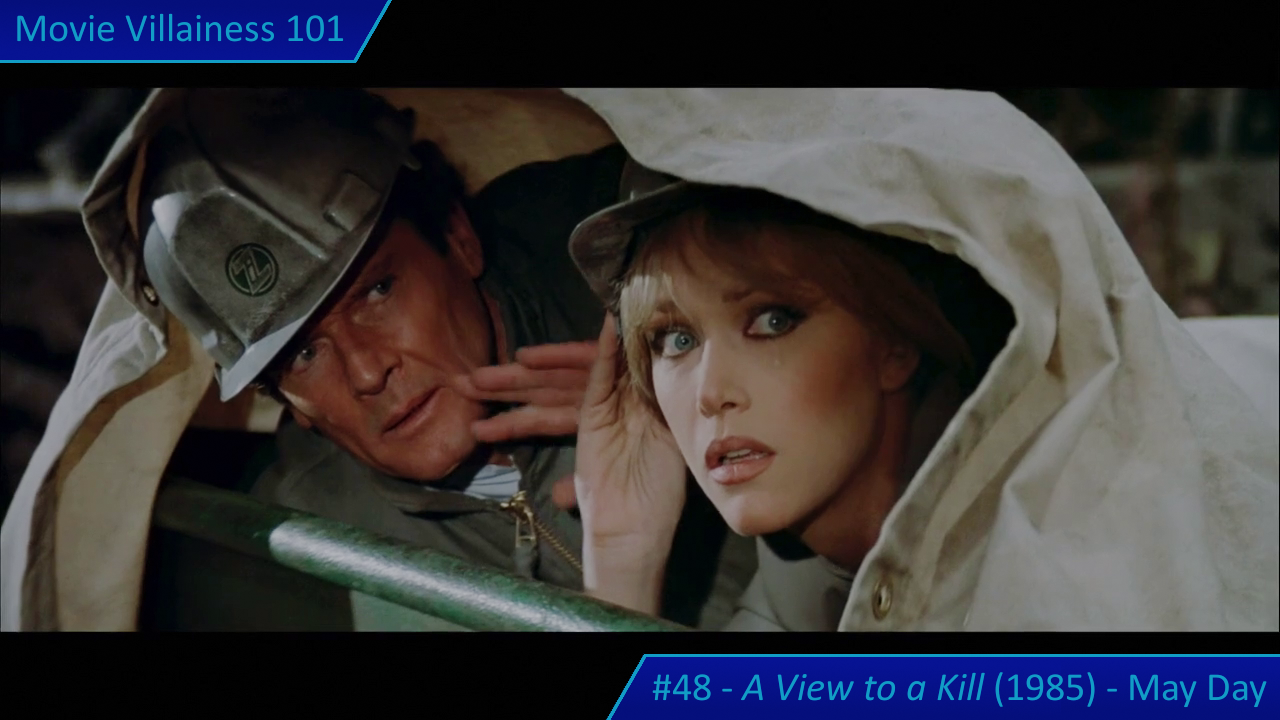
Many regard Moore’s final outing as substandard, though I’ve always found it underrated. It’s possible I’m biased by a masked villainess, the only true one in the series. Stacy Sutton (Tanya Roberts) is arguably a weak “Bond girl”, but nowhere near as annoying as Mary Goodnight in Golden Gun. In the movie’s defence, the story is okay, and the chief villain, Max Zorin, is great. What do you expect when he’s played by Christopher Walken?
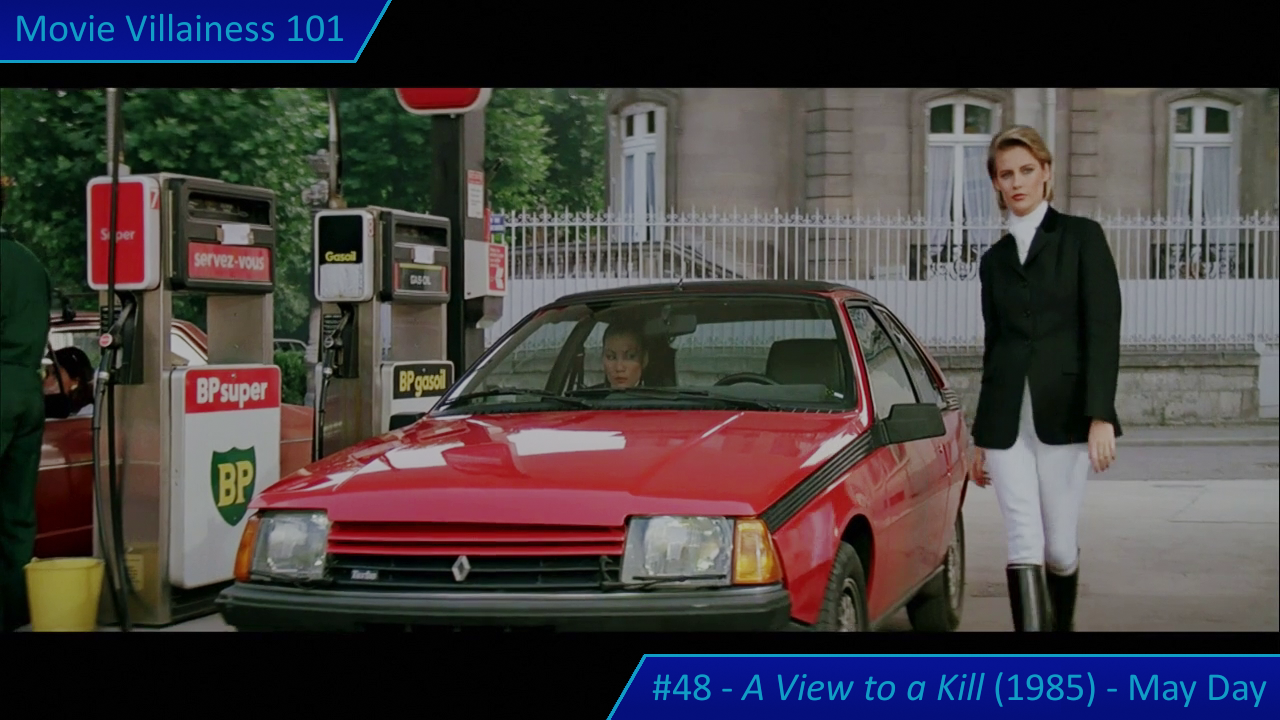
The plot is a retread of Goldfinger, except Zorin wants to corner the market on computer microchips instead of gold bullion. He plans to wipe out the competition – Silicon Valley, in this case – and Bond is the only person who can stop him. Zorin is an ex-KGB operative, but has severed ties with the Motherland. His former comrades aren’t too happy about this, and send agent Pola Ivanova (Fiona Fullerton) to investigate. Pola is a fine female antagonist and deserved more screen time, but we get a decent wetsuit / espionage scene and reveal before her premature exit.
Moore had played Bond for 12 years by 1985, which shows in some action scenes with obvious stunt doubles. This might explain why May Day and the hero never have a true confrontation, as defeating a tough henchwoman in a straight-up fight would be unconvincing. If one villainess isn’t enough, Zorin also has two female assistants in Jenny Flex and Pan Ho, though they are limited to support roles. Rumour has it that Jenny was the head of security in the original script, before she was ousted by the male Scarpine. A pity, but they didn’t diminish the female role that really mattered.
Villainess
May Day (Grace Jones)
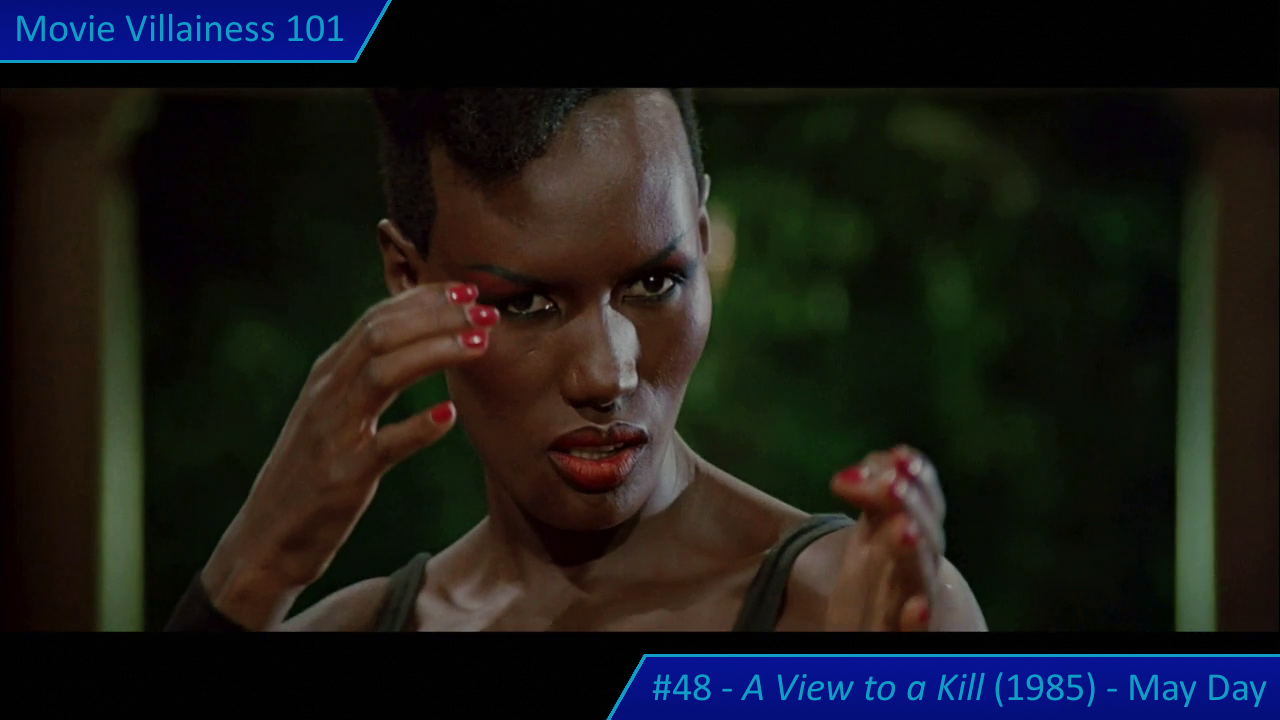
Like Fiona Volpe from Thunderball, May Day assassinates a man in front of Bond and later unmasks herself. Before that, she’s introduced as Zorin’s red-dressed right-hand woman and shows her strength by taming a wild horse. The muscular badass then pulls off an elaborate kill at the Eiffel Tower, using a fishing rod and poison-tipped artificial fly to murder a nosy detective. Was smuggling in a normal weapon too difficult? But the stage singer act and masked assistant provide perfect cover.
Unlike Fiona, Bond chases this assassin, but his quarry traps his ankles with fishing line to buy valuable time. The killer seems to run into a dead end as Bond chases them to the top of the Paris landmark. That’s when she uses a parachute to escape, prompting a hasty descent and pursuit through the city streets. Bond destroys a lot of property – and the car he’s stolen – and ruins a wedding. It’s all for naught since May Day escapes with Zorin in a speedboat. We then get the villainous reveal, complete with an insane laugh.
May Day is not the usual femme fatale, though she mounts Bond in a bizarre sexual encounter. A skilled martial artist, but the closest she gets to direct combat is subduing a clumsy Soviet agent on an offshore platform. And a late encounter where the villainess rips off Stacy’s leggings.
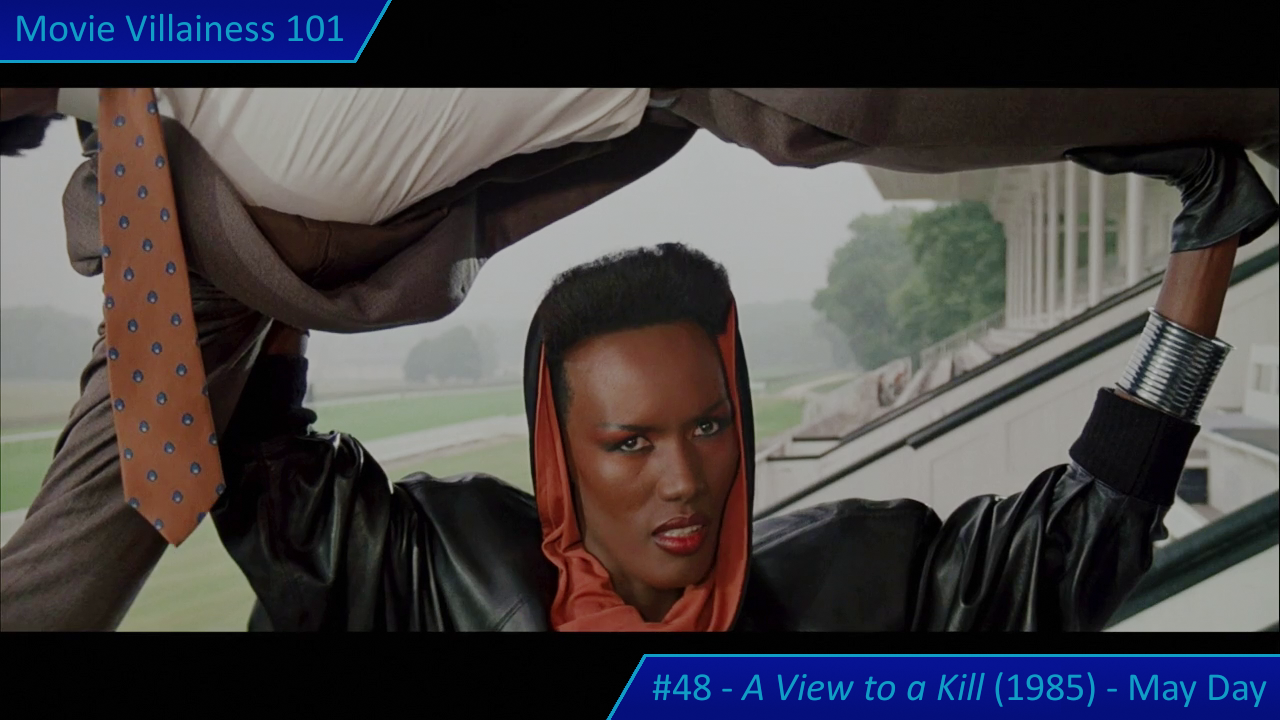
Whenever people get too close to uncovering Zorin’s plans, it’s May Day’s job to eliminate them. That’s the fate of Sir Godfrey Tibbet (Patrick Macnee), an ally of Bond, who the henchwoman strangles at a carwash. Zorin attempts to eliminate 007 by knocking him out and sinking his car in a lake. His failed effort doesn’t go down well with the KGB, and May Day shows her strength again by lifting a man. As Bond comments, she must take some vitamins.
The Russian survives, but Zorin’s business associate isn’t so lucky. When he refuses to go along with the psychotic villain’s plan, he instructs May Day to “provide him with a drink.” This is an instruction to the villainess to drop the man into the Pacific Ocean from a blimp.
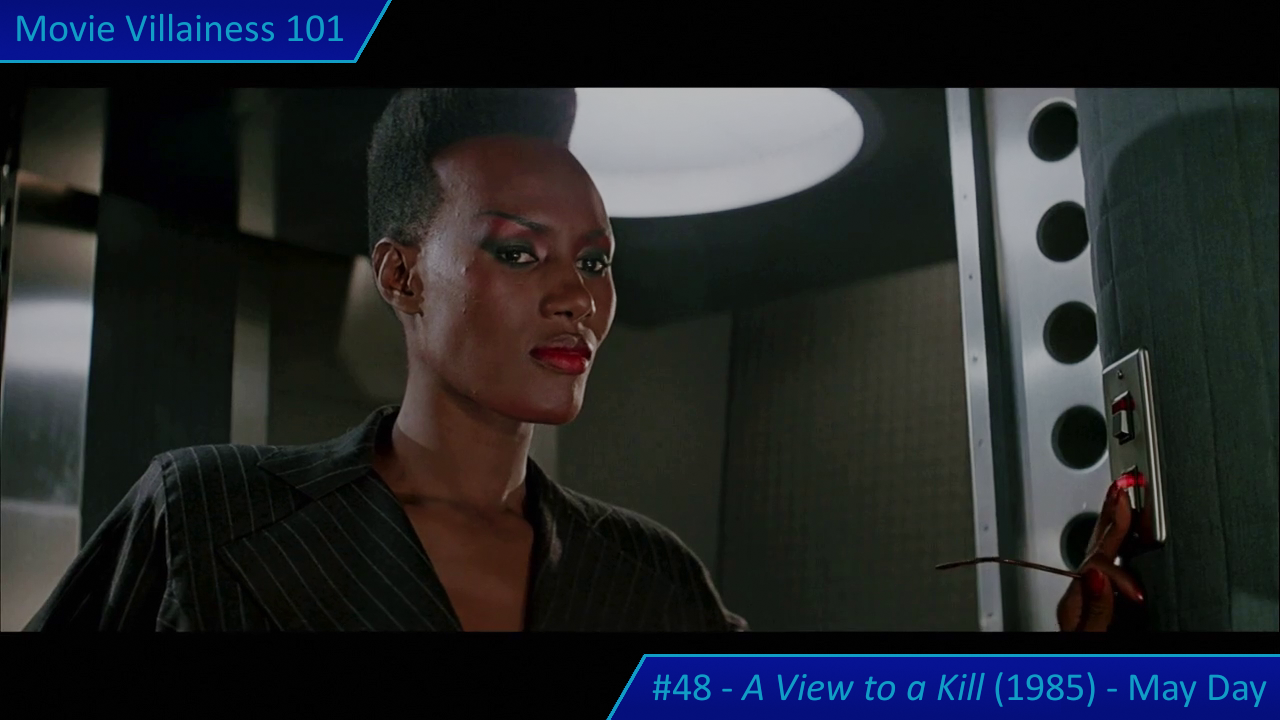
Grace Jones looks the part and has a close encounter with Bond at Zorin’s French estate before the action shifts to California. Stacy, introduced earlier, becomes Bond’s companion in stopping the insane scheme. He receives help from a CIA colleague, but that man gets the “car back seat” assassin treatment. Compared to a formidable woman like May Day, Stacy is a much weaker female, and often the traditional screaming damsel in distress.
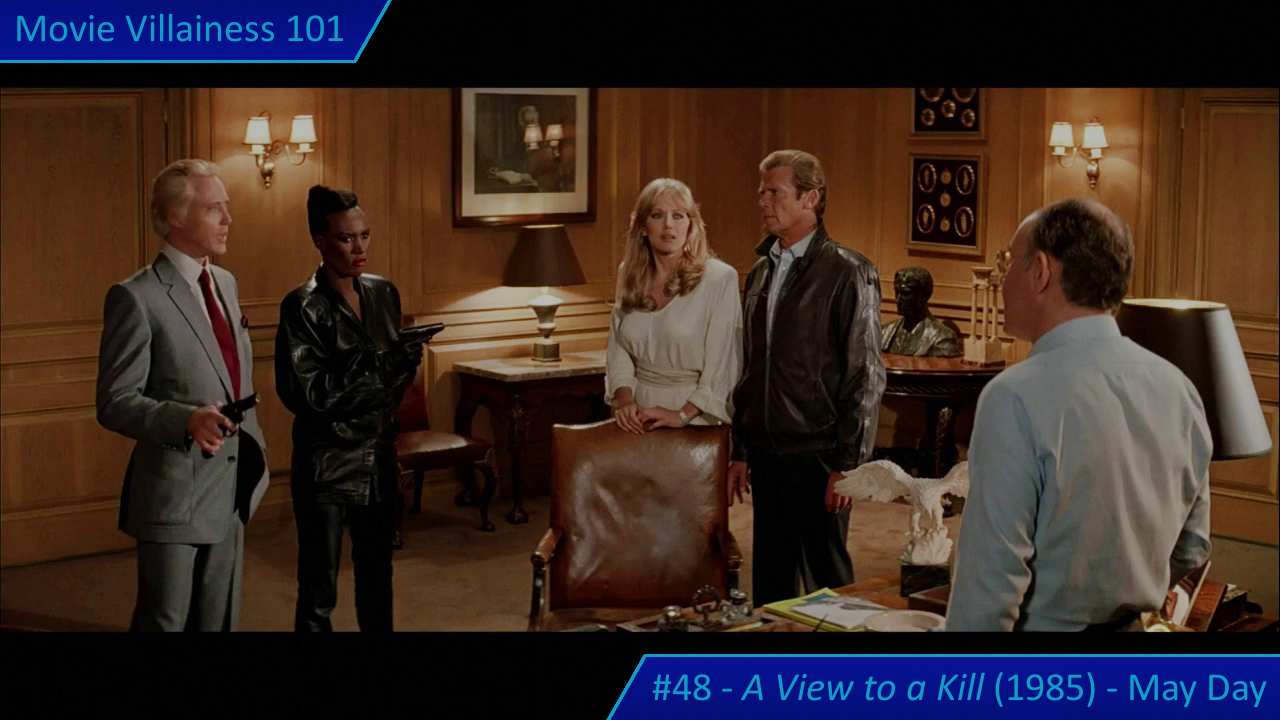
The finale takes place at a supposedly abandoned mine, where Zorin plans to trigger an unnatural flood disaster. As a geologist, Stacy provides exposition before she and Bond are discovered. Cut to a chase scene with May Day, Jenny Flex and Pan Ho pursuing the heroes through a maze of darkened tunnels. Too bad Zorin doesn’t value their services enough to keep them around. He floods the mine without warning, and he and Scarpine finish the survivors with submachine guns.
This betrayal comes at a convenient moment for Bond, since the henchwoman had him within reach. She learns the hard way that Zorin never loved her. Jenny and Pan perish in the flood, but a tough cookie like May Day isn’t so easily killed.
The repentant killer assists Bond by hoisting the booby-trapped bomb onto a mine cart. The handbrake is faulty, which gives May Day the perfect opportunity for redemption. Such a great henchwoman switching sides is annoying, but the look on Zorin’s face as she scuppers his plans is priceless. Her final defiant stare makes this one of the best death scenes in the series.
Honourable Mentions / Discussions: Roger Moore Bond Movies
Live and Let Die (1973) – Rosie (Gloria Hendry)
Moore’s first Bond film is best remembered for its occult and blaxploitation themes, and perhaps Clifton James as redneck sheriff J.W. Pepper. After three nondescript men are assassinated, we’re still waiting to see the hero, but his introduction comes after the title song. Then we get a jokey mission briefing at Bond’s London residence. The action livens up later, but some sequences are overlong, notably a speedboat chase in the Louisiana Bayou that lasts nearly fifteen minutes.
Female characters in the Moore era are antagonists with a heart or treacherous beauties. The tarot fortune teller Solitaire (Jane Seymour) is a mysterious and interesting character, narrating Bond’s arrival in New York to investigate the recent murders. She follows a predictable path, falling in love with Bond – and losing her psychic powers as a consequence. For the showdown on the fictional island of San Monique, she’s another girl in need of rescue.
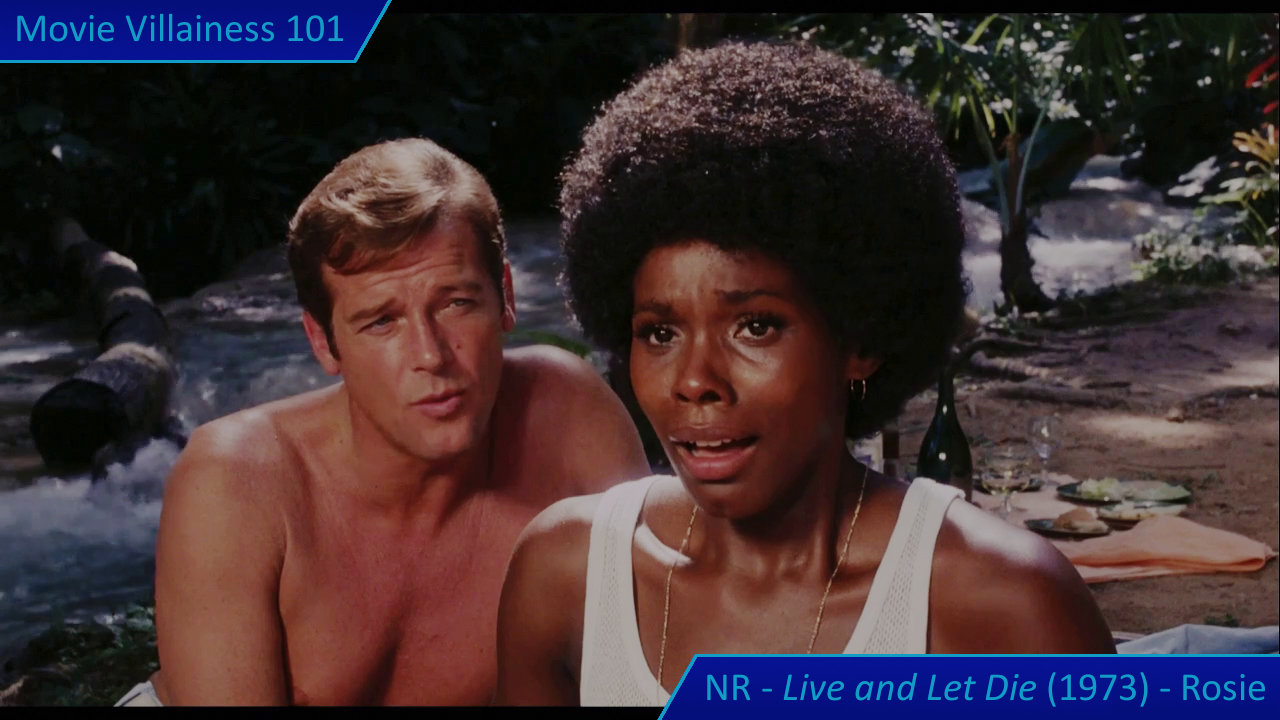
Yaphet Kotto plays a dual role as a crooked diplomat and crime lord. The villain has a weird assortment of henchmen, including a hard-to-kill voodoo priest and the hook-armed Tee Hee. There’s also a forgettable femme fatale in Rosie, a double agent who acts incompetent and scared to deceive Bond. Except it’s not really an act because Rosie is as timid post-reveal. Bond susses her out after a cryptic tarot card hint, but she made so many mistakes her treachery was obvious. The baddies reward failure as you might expect, and eliminate Rosie after she ceases to be useful.
The Man with the Golden Gun (1974)
One of the weaker 007 entries, this starts with another Bond-less pre-credit sequence and doesn’t get any better. The sole bright spot is Francisco Scaramanga, the title villain played by Christopher Lee. He’s an assassin who charges one million dollars per hit, a lot of money in 1974.
Misplaced attempts at humour include an unwelcome return for J.W. Pepper from Live and Let Die. Watching a racist shout unpleasantries towards the Bangkok population is uncomfortable these days. The midget Nik Nak offers comic relief encounters instead of a genuine threat.
Mary Goodnight (Britt Ekland) is the most demeaning woman in the series. Allegedly, she’s a secret agent, but goes through the entire movie doing nothing useful. She gets locked in a closet, stuck in a flying car, and spends the last act in a bikini. The bumbling bimbo even triggers a laser weapon when she presses a button with her backside (!). Maud Adams, who’d later star in Octopussy, plays the assassin’s mistress who hires Bond to kill him. Like many supporting females, she winds up dead halfway through.
The Spy Who Loved Me (1977) – Naomi (Caroline Munro)
Moore’s third effort has an exciting teaser, which sets the bar for all that followed. The ski chase, stunt jump off a cliff, and Union Jack parachute are iconic, still impressive decades later. It’s a brilliant setup, and we also get Sue Vanner as the unnamed “log cabin girl”, a Soviet agent.
The titular spy is Major Anya Amasova (Barbara Bach), a refreshingly liberated woman for Bond to spar with. She is equally adept at opportune quips and gadgetry as 007, and the two form a reluctant alliance to investigate missing nuclear submarines. Their romance sours when Anya discovers Bond killed her lover on a previous mission, but she’s eventually won over by his charm. The Russian is capable, but still needs to be rescued a few times, notably in the finale where she’s held prisoner in a skimpy outfit.
The main villain, Karl Stromberg, is a madman bent on global nuclear destruction to create a new world beneath the sea. He has two elaborate aquatic lairs: a tanker and a submersible base, appropriately named Atlantis. The latter comes with a shark pool for disposing of suspected traitors. Besides a jumpsuit-clad army, he has a reliable henchman: the steel-toothed giant Jaws (Richard Kiel).
Regarded as one of the series’ best, the film excels in “expected male is a female” reveals. The camera focuses on Anya’s male lover before she’s confirmed as the top Soviet agent. A sub commander is shocked the major is a woman, and she almost hides her gender from Stromberg’s goons before they unmask her.
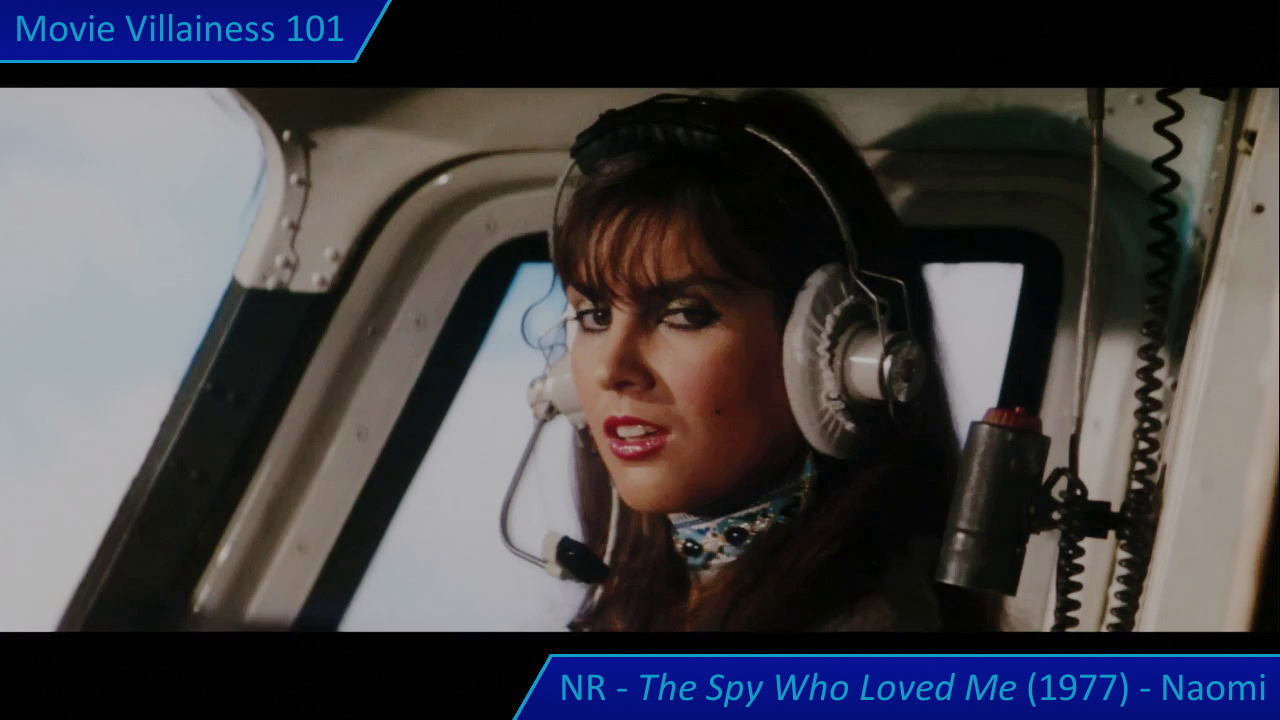
The best reveal goes to the villainess Naomi (Caroline Munro) during a car chase in Sardinia. In her earlier scenes, she was eye candy with brief dialogue. Now she’s a deadly henchwoman piloting a helicopter. She proves more elusive and dangerous than some female assassins, prompting Bond to drive his vehicle off a pier. Fortunately, the car is a Q-Branch special and converts into a submarine. It’s also equipped with a surface-to-air missile for disposing of troublesome threats.
Moonraker (1979)

James Bond meets Star Wars to produce a climactic space laser battle that’s far-fetched even for this franchise. There are some serious scenes on Earth beforehand, starting with a space shuttle hijack and the now mandatory pre-title action sequence. A femme fatale poses as a stewardess, only to reveal herself as a baddie after kissing the hero. She gets forgotten after a brief dialogue exchange, but the skydiving fight and stunt work make up for it.
The villainous Drax (Michael Lonsdale) and his henchmen try various methods to eliminate Bond. This includes sabotaging a takeoff simulator, a Venetian glassworks fight, and a bizarre canal chase. That ends with a gondola converting to a hovercraft while animals watch in amazement.
Females are well represented. Bond’s ally is CIA agent Holly Goodhead, who fits the mysterious woman with her own agenda template. Drax is an equal opportunity employer with as many women as men among his yellow jump suited mooks. But since the villain’s goal is to wipe out humanity and start over, it’s advisable to have breeding capability.
Some white-dressed “perfect females” show their evil side when they lure Bond to a converted ancient temple and dump him in a pool with a huge python. Bond borrowed a poison pen from Holly earlier and kills the reptile, which upsets the sadistic onlookers.
All the major encounters are between men. But counting minor roles, Moonraker holds the record for the number of female villains in a Bond movie.
For Your Eyes Only (1981)
Follow-ups to an outlandish 007 movie are usually grounded in realism. So this is a serious entry with some cartoonish scenes, such as “Blofeld” (not officially him due to rights issues) being dropped down a chimney.
Villainesses are nonexistent in grittier films, with women not involved in the action. However, the movie has a tough leading lady in Melina Havelock, a Greek beauty who helps Bond to locate a sunken spy ship.
Not one to be sidelined, this crossbow-wielding woman is out to avenge her murdered parents. Melina gets a nice unmasking scene after she saves Bond from a pursuing henchman. In the hilltop monastery assault (the last action set piece), she’s a silent and deadly killer. In another universe, Melina could have been a formidable foe, but after the Mary Goodnight travesty, we’ll settle for a competent ally.
Octopussy (1983) – Magda (Kristina Wayborn)
Moore’s penultimate film has the secret agent pursue a jewellery smuggling ring to India. The real action begins when he uncovers a plot by a rogue Soviet general to detonate a nuclear bomb on a NATO airbase. The chief villain is Kamal Khan (Louis Jordan), who’s in partnership with an all-female crime organisation led by the title Octopussy (Maud Adams).
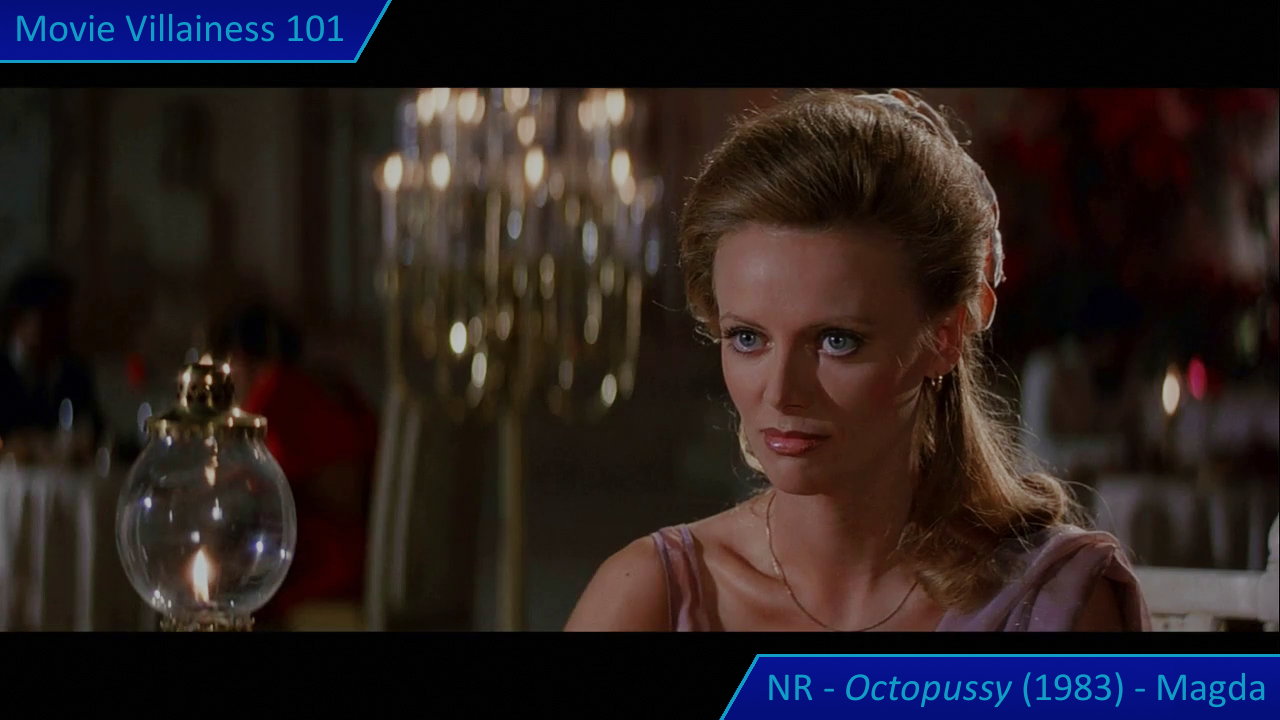
Besides his tough bodyguard Gobinda, Kamal is also assisted by a duplicitous woman named Magda. She has more than one verbal joust with Bond, but her best moment is when she steals a Fabergé egg from a hotel room and escapes over his balcony using a long trailing dress as a makeshift rope. Of course, 007 anticipated this and planted a listening device.
The cat-and-mouse game between Bond and Magda goes on throughout the film, though she ends up fighting for the good guys in the end. She’s a skilled martial artist during the climax when her circus troupe attacks Kamal’s palace residence.
Octopussy has an interesting backstory, and Maud Adams survives the whole movie this time. Naturally, she gets captured by Kamal and Gobinda after they double-cross her and has to be rescued by the hero. Two interesting female roles, and Magda – because of her icy attitude when helping Kamal – just about qualifies as a redeemed villainess.

