Author / Publisher of Novels featuring strong female characters (heroines and villainesses alike). Also compile articles of interest regarding other media (movies, games) with these characters
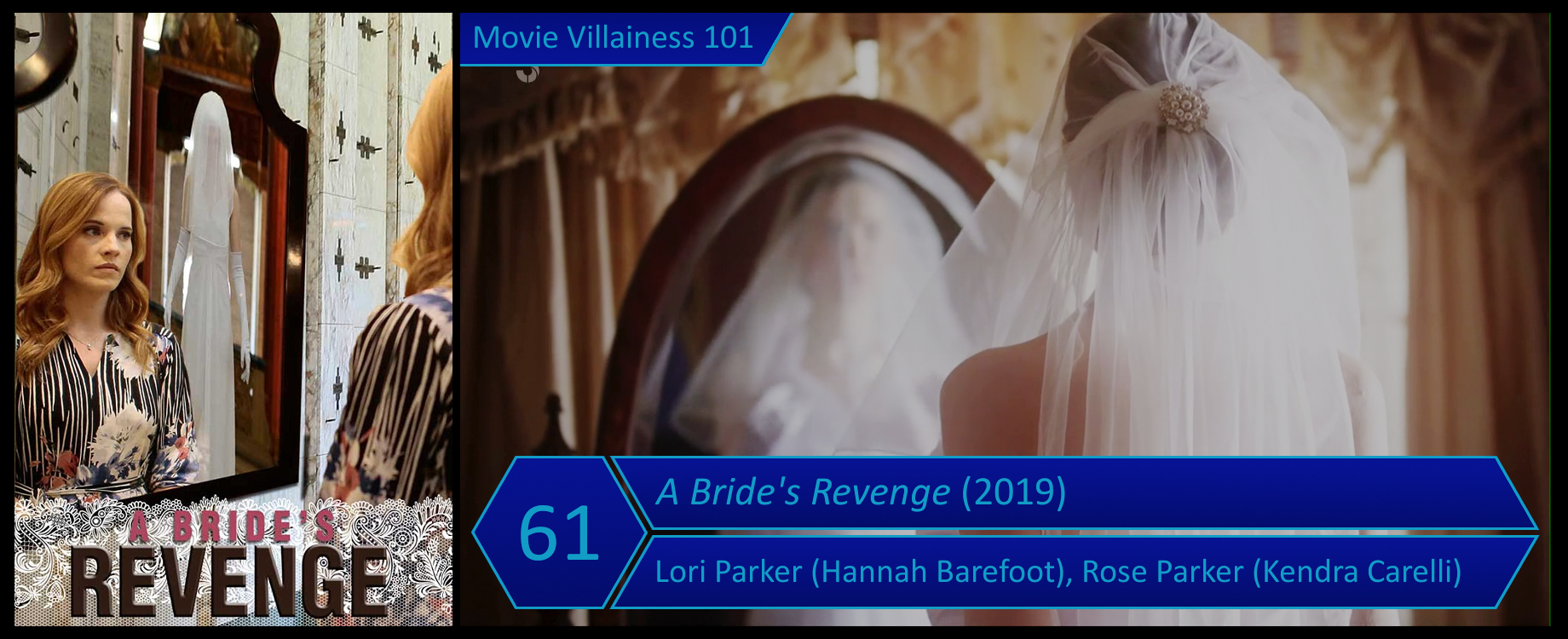
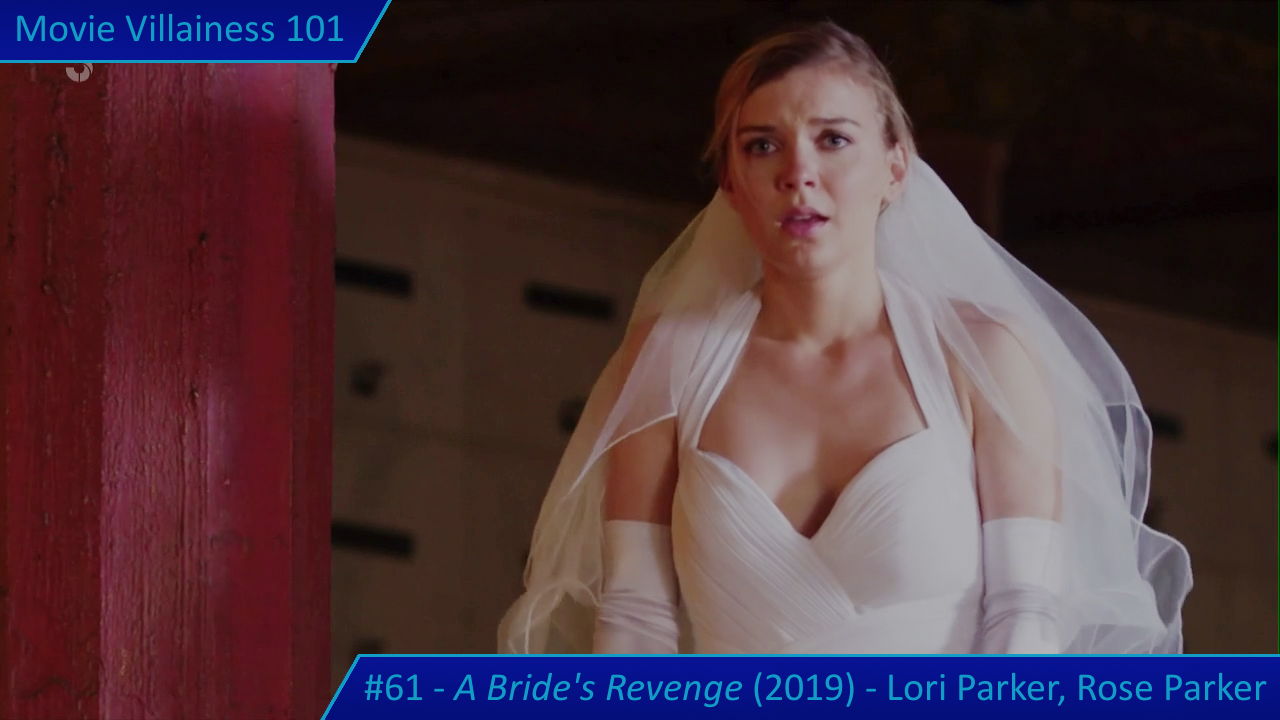
As you’ve probably gathered, this is a Lifetime movie about… a bride seeking revenge. Technically, Lori is a former bride dumped on her wedding day after the groom, Ian, decided she was too psycho to marry. It’s no shock she goes over the edge and stalks Ian’s new fiancée Miya. While wearing a bridal gown, no less.
There are several positives that elevate this above standard Lifetime fare, enough to earn a ranking slot. The tempo remains high, and within the opening five minutes we’re treated to a cancelled wedding, a creepy mock invitation, and a knife-wielding female stalker dressed in white. The obvious suspect has an alibi for the attacks, which implies an accomplice. Since the antagonist’s face is masked by a veil and Miya works in a salon with two female assistants, both women are potential suspects.
The film’s main issues are its weak climax and finding a decent copy in the UK. Too obscure for a physical release, and while the movie has aired in the Channel 5 afternoon slot, the early screening time means censors edit out more graphical parts. For A Bride’s Revenge, this includes knife shots (but not the detective referring to the weapon!), Lori bashing her head against a mirror, and Miya getting bludgeoned with a brick. All the exciting bits. Fortunately, Johnson Production Group has uploaded an unedited version on YouTube.
Villainesses
Lori Parker (Hannah Barefoot), Caroline / Rose Parker (Kendra Carelli)
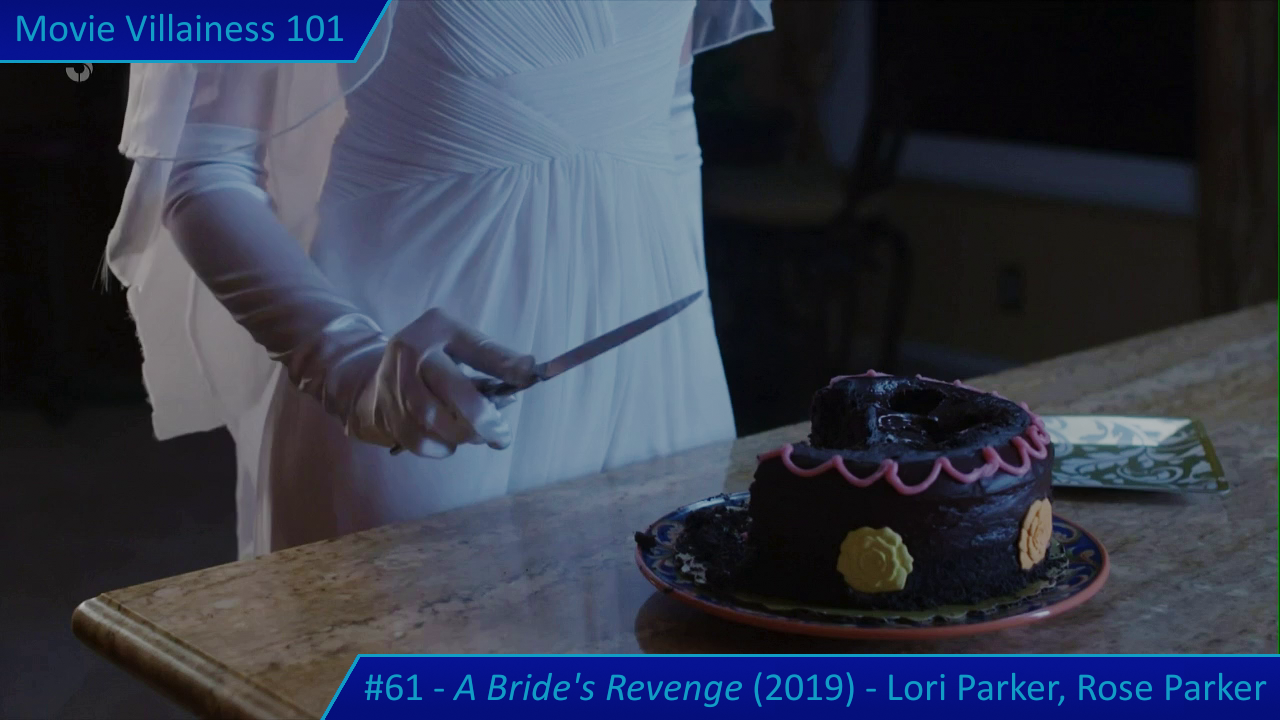
There’s no doubt who the main villain is, with Lori acting completely psycho from her first scene. She does all the crazy woman stuff required: taunting the heroine, loony-eyed stares, self-harm, and threatening her boyfriend just because. Lori somehow convinces the police Miya is insane thanks to a doppelgänger bride / accomplice. The outfit is an original take and contributes to the eerie stalking sequences. Nothing like a woman in long white gloves and a trailing dress sticking a knife into a wedding cake. Before she offs her victim, in this case Ian’s mother.
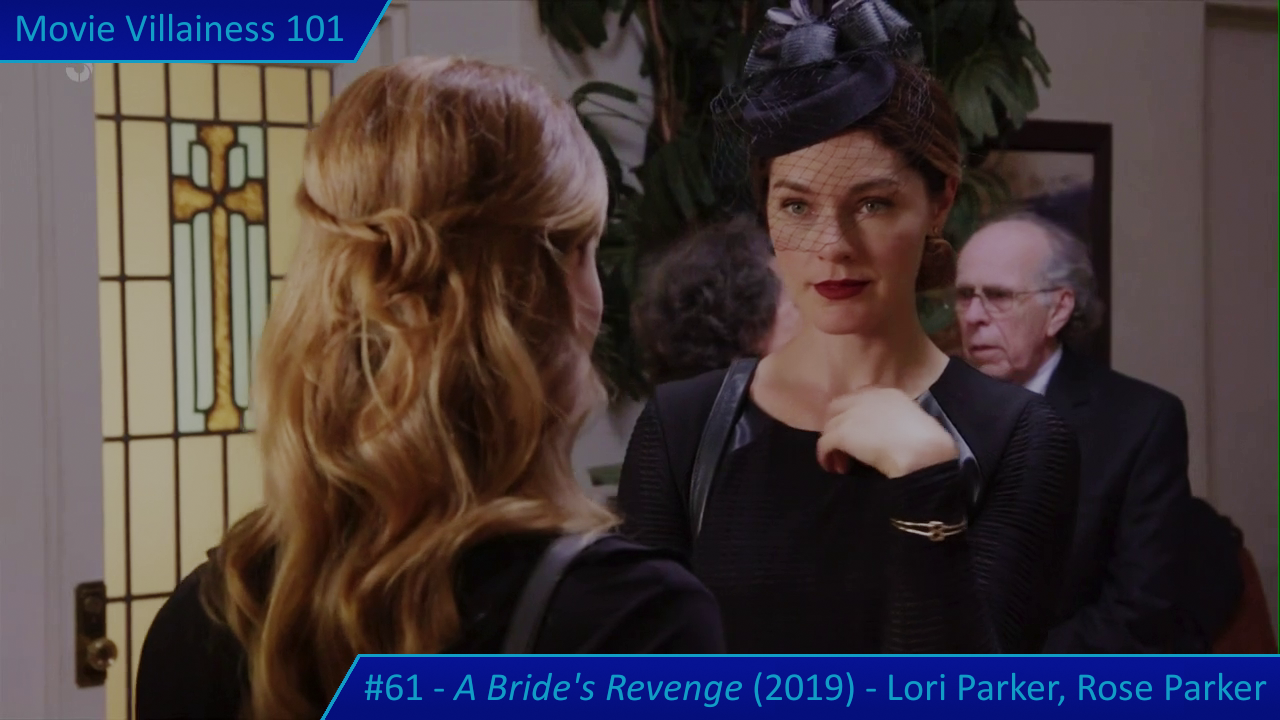
Hannah Barefoot knows what’s required for this type of movie and provides multiple insane rants to keep viewers entertained. Lori’s best moment comes at the mother’s funeral when she adds salt to Miya’s wounds and then accuses her of being unstable.
Besides the bridal gown, Lori wears a more traditional evil black outfit when she kills the family dog (!) and makes an unfriendly hospital visit to murder a patient. Enough to cause Miya’s relationship to deteriorate, but fortunately Ian sees Lori is the truly crazy one. His suspicions are confirmed when his ex-girlfriend injures herself in front of him. After Miya digs up information about a suspected arson that killed Lori’s parents. Yes, there’s a crazy backstory, like always.
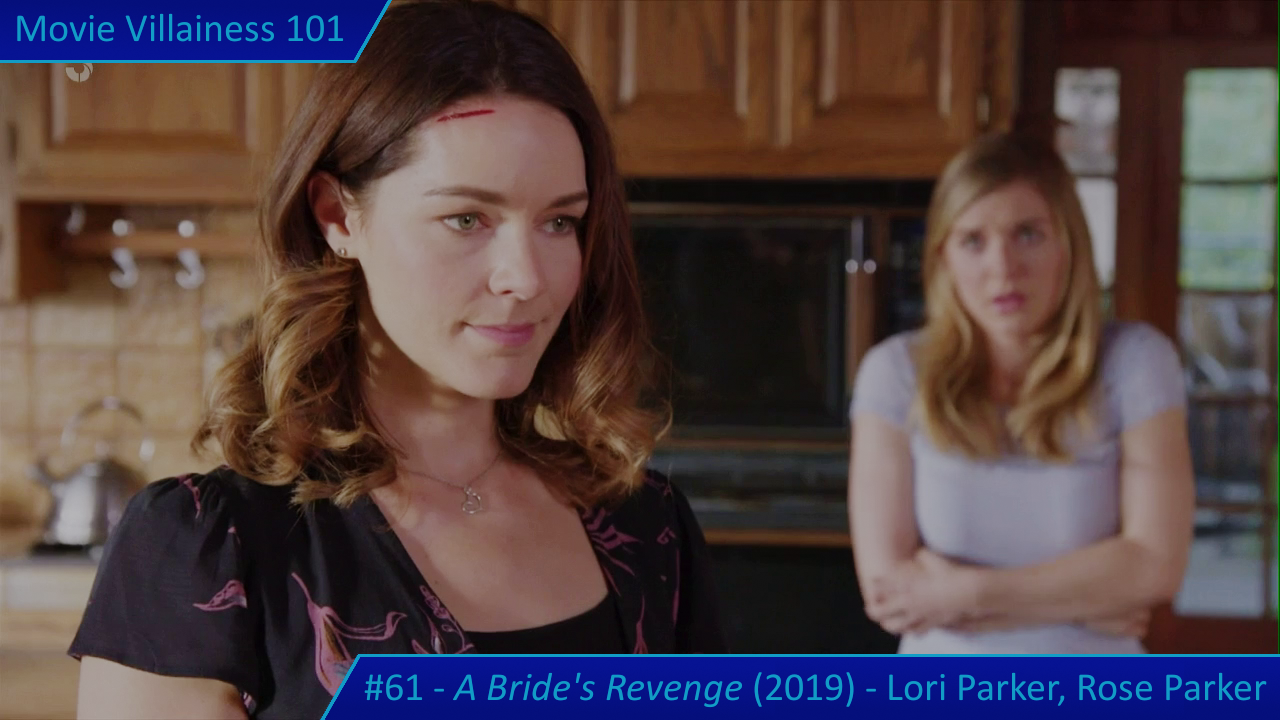
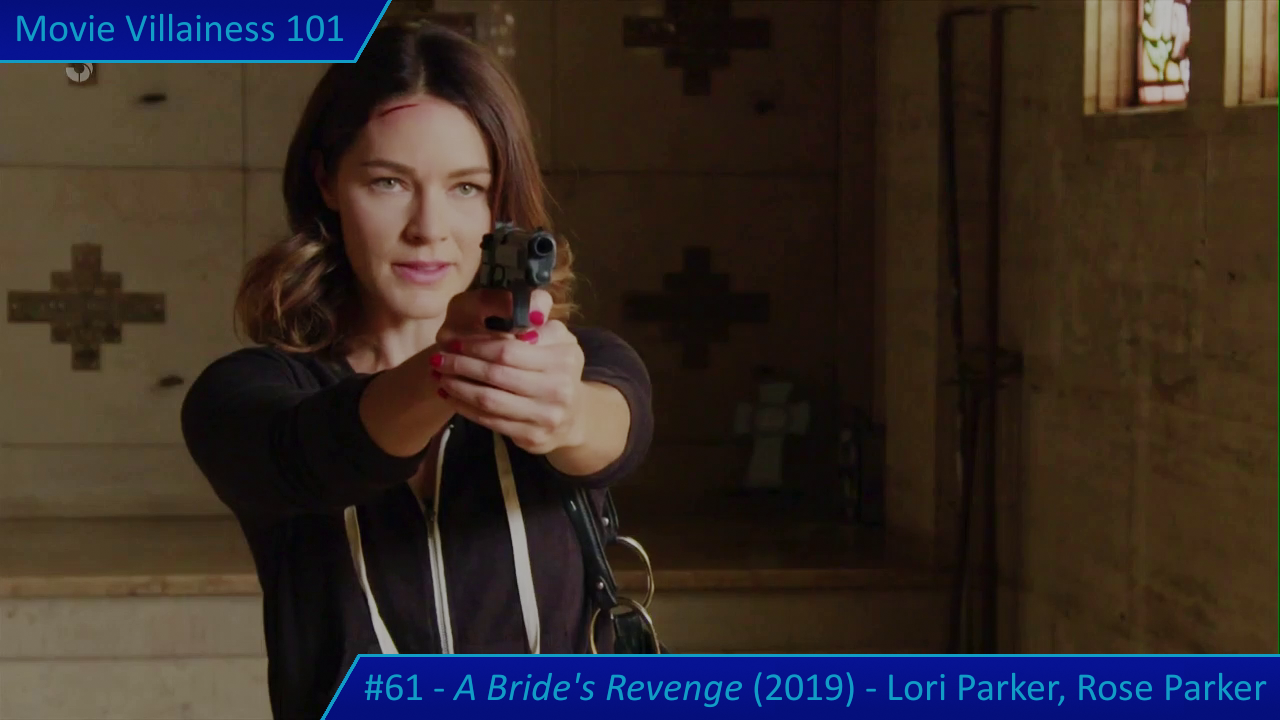
It’s revealed that Lori has a sister named Rose, which explains her alibi for the earlier bride attacks. Suspicion falls on Miya’s friend Sandra after she shows off rose-tattooed fingernails, but nobody will be surprised this is a red herring. Lori’s actual sister/accomplice is the other coworker, Caroline. This all leads to a showdown at Lori’s house, where the psycho siblings capture Miya.
The finale takes place in a creepy mausoleum. Lori is suitably menacing and jealous during this encounter, demanding Ian commit suicide in front of his mother’s crypt, but the villains are both defeated easily. The accomplice is shot in the back during a struggle. And Lori? She falls down a short flight of steps and breaks her neck before reaching the bottom.
Honourable Mention: Masked Lifetime Villainesses
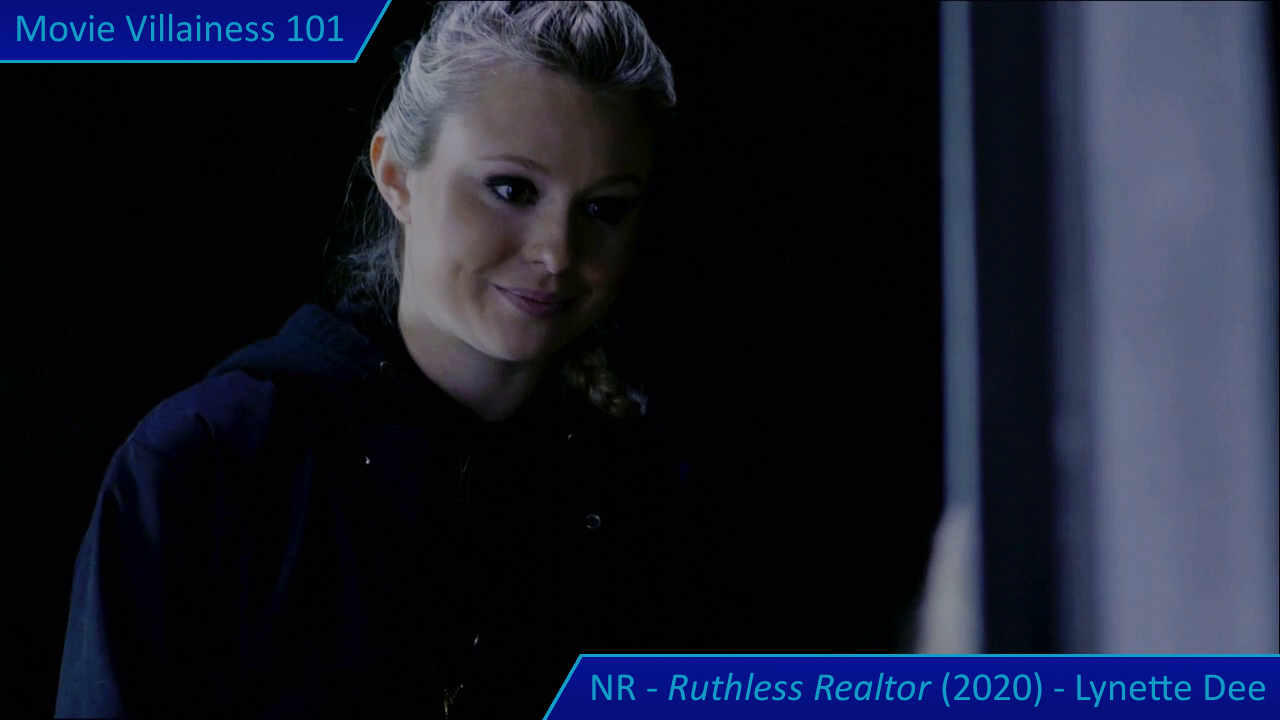
Ruthless Realtor (2020) – Lynette Dee (Alexandra Peters)
This Lifetime thriller also benefits from good pacing and a great masked outfit for its villainess. The psycho’s wardrobe is all black, with a creepy gas mask that resembles something from the First World War. Her attire allows for stunt double use in the opening beat-down scene. No skimping on action – it comes across as brutal.
The prime suspect is the realtor of the title: Christy Burson as Meg Atkins. It turns out she isn’t so ruthless, just a disturbed young woman set up by the actual killer, Lynette. An obvious plot twist, given that the attacker uses chemicals to kill her victims and Lynette works in a pharmacy. Plus, she seems really interested in the property her parents once lived in, and is very disappointed when Meg sells the house to another couple.
After the opening, action is sparse, but for once the police are useful. That’s no consolation to the officer guarding the property, who becomes the standard mid-film victim to ramp up tension. Maybe this guy should have been the stereotypical useless cop after all.
The ending sequence is eerie for a TV movie, as Lynette uses a sledgehammer to break down a basement wall and reveal the skeletal remains of her parents. As a bonus, we get three unmasking scenes: one real-time and two more in flashbacks. The struggle that follows the lengthy monologue is melodramatic, and the villainess is taken out a bit too easily. But nowhere near as tame a finale as Lori’s.
One thing’s for sure: this villainess isn’t about to die easy
Movie
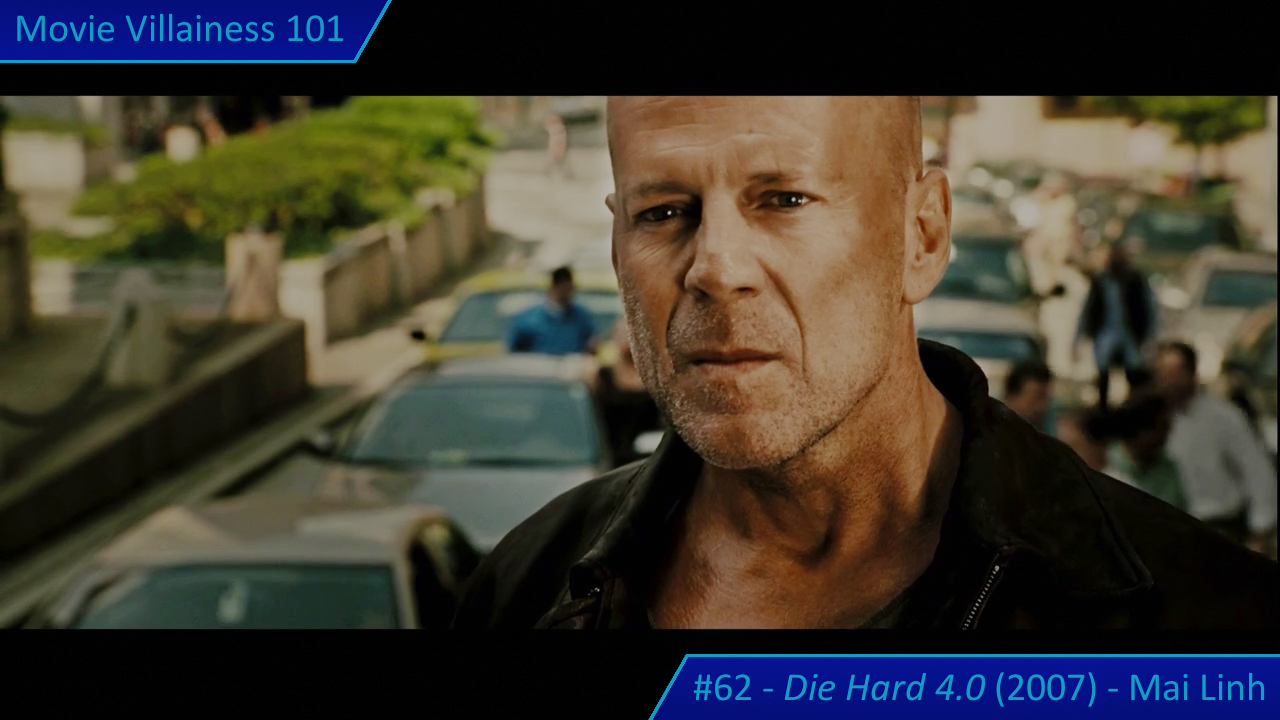
Die Hard 4.0 (2007) (aka Live Free or Die Hard)
With all the Die Hard clones on my list, it’s only fair to include the series that started it all. The franchise is better than some for female villains, but the first two movies – the original 1988 action classic and its 1990 sequel – pitted the hero John McClane against only male baddies. However, the other three entries featured villainesses worth mentioning.
By the time McClane made it to 4.0 – Live Free or Die Hard to American audiences – he’d battled terrorists (or thieves masquerading as them) in a Los Angeles skyscraper, Dulles Airport in Washington DC, and New York City. With events escalating to ever grander proportions and John perpetually in “the wrong place at the wrong time”, it’s no wonder he’s gone bald. To make matters worse, villains have become technically savvy, and McClane is… old school to say the least.
A group of cyber-terrorists hacks into the US government systems to cause chaos over the Independence Day weekend. Being villains, they eliminate underlings once they’ve served their purpose, and so the American teenage hacking population takes quite a dent. One guy (Justin Long) survives, and by chance McClane is the cop bringing him in for questioning. This veteran is an excellent ally to have on your side, even if he isn’t computer literate.
The baddies led by Thomas Gabriel (Timothy Olyphant) aren’t especially memorable, but the action comes thick and fast. A little too thick in the final sequence, which sees the hero targeted by a fighter jet (!). An entire highway is demolished, but John miraculously survives to say his trademark sendoff line.
Villainess
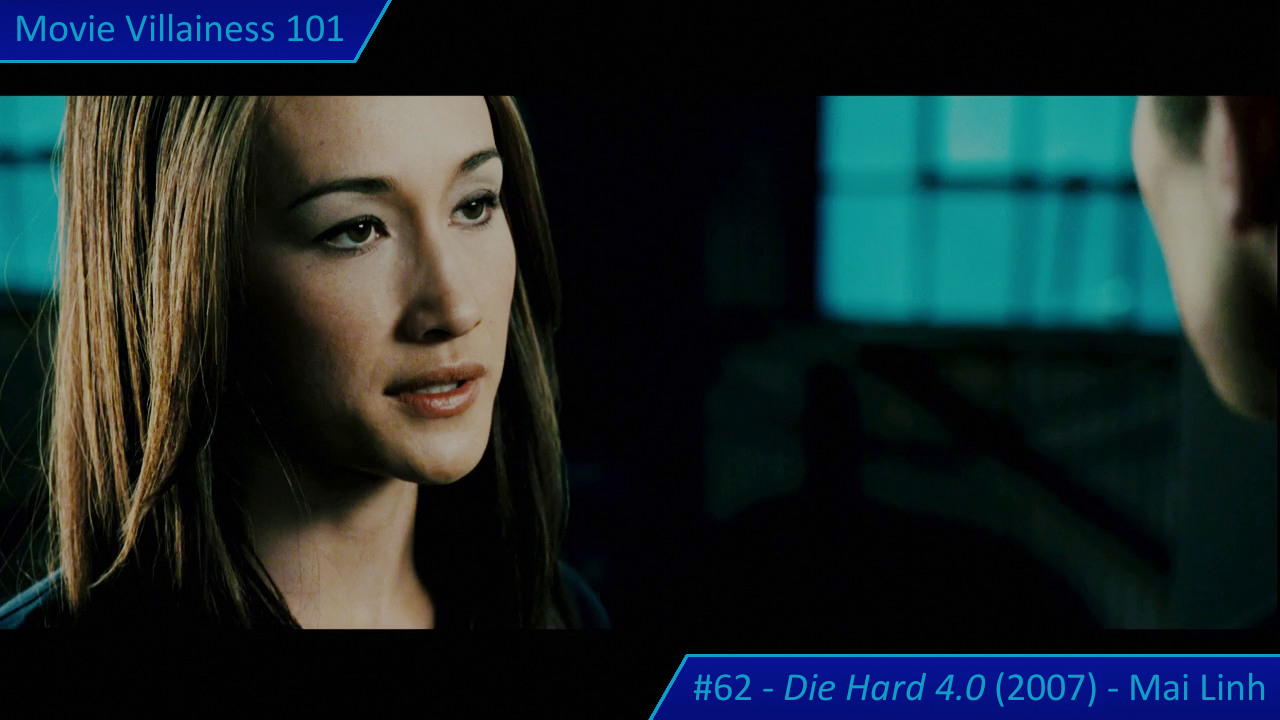
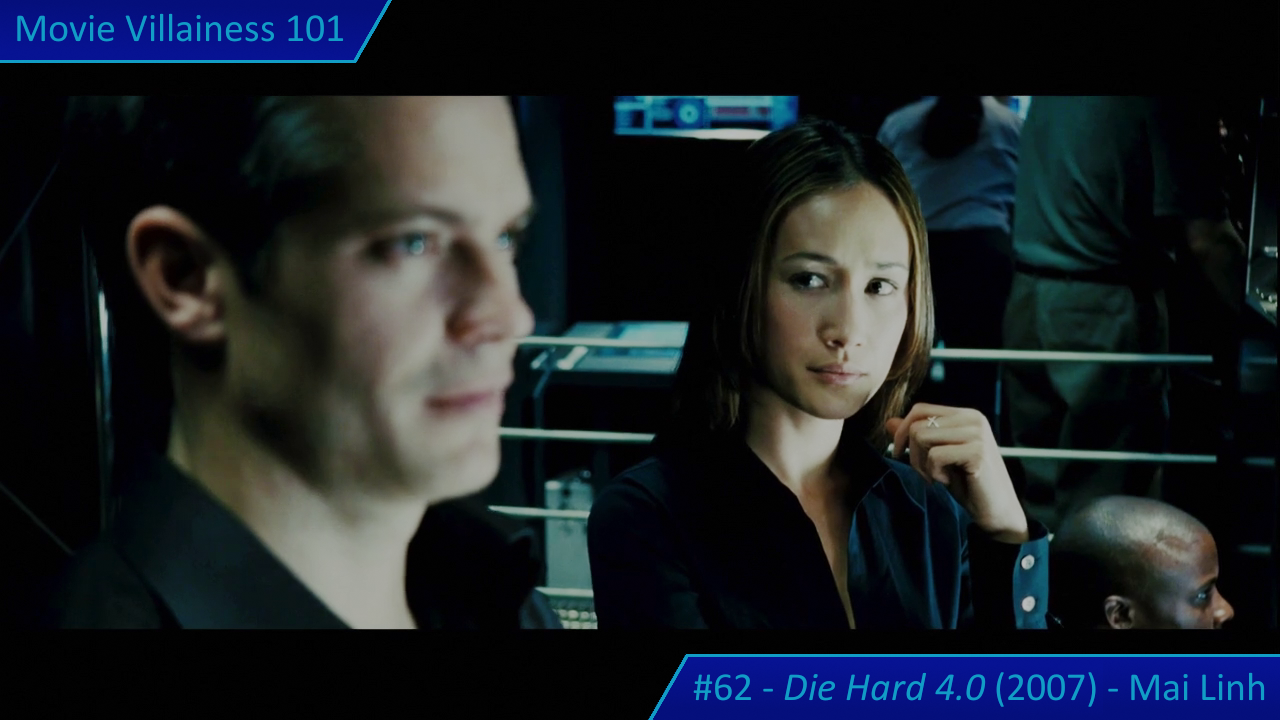
Mai Linh (Maggie Q)
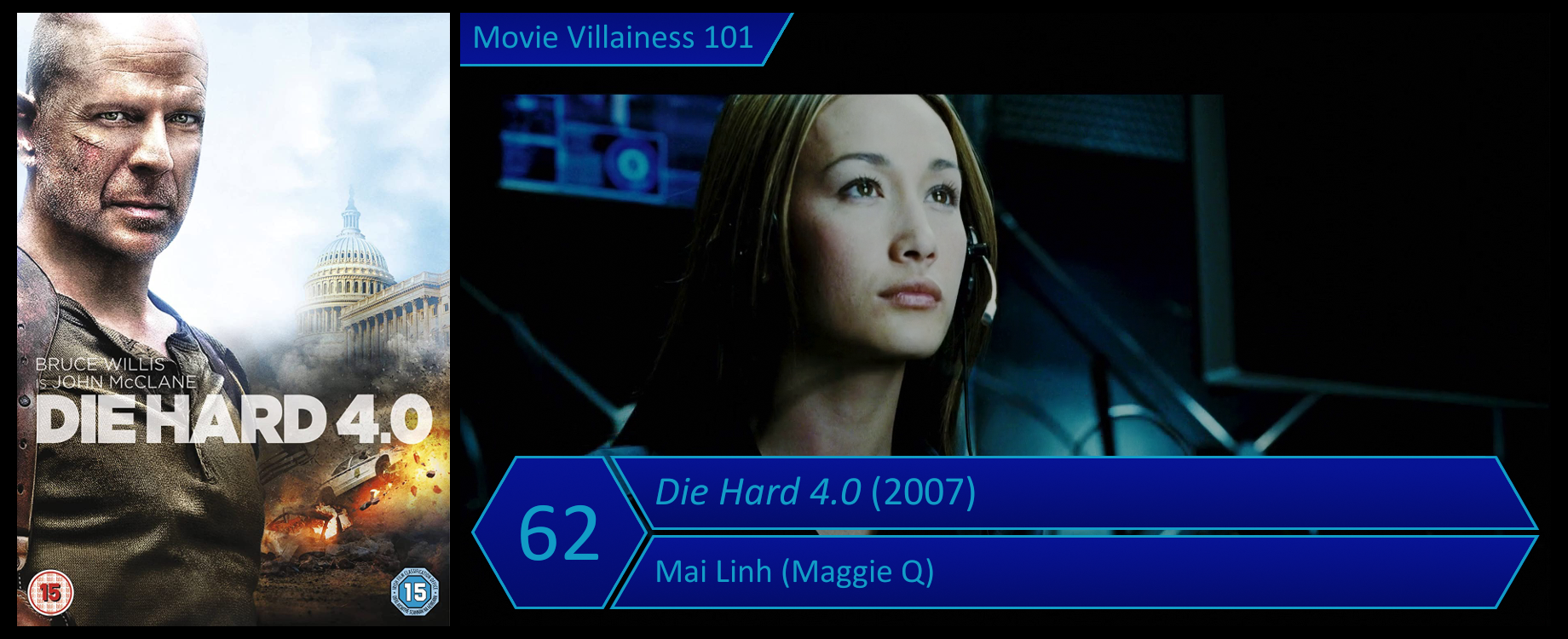
The female villains in the third and fifth instalments had their moments, but their contributions were disappointing. And while the bad girl in 4.0 is seen off 60% of the way through, the Asian hacker and martial arts expert Mai Linh is the most formidable of the bunch. Plus, she proves very hard to kill, which is always a bonus.
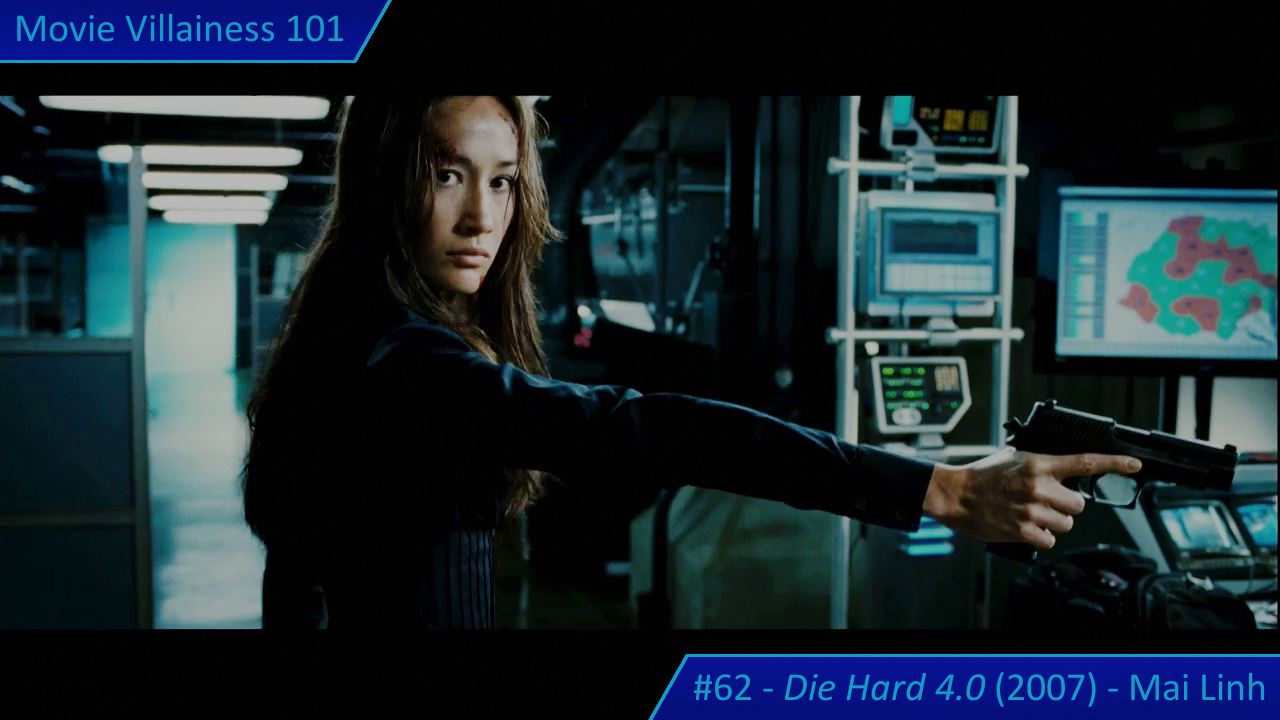
Early indications aren’t promising, with Mai wearing headphones doing generic techie stuff. After sitting on the sidelines for the first half hour, Gabriel sends his lover / lieutenant to lead an assault on a utility control station. The villainess poses as an FBI agent, which conveniently gives her the excuse to wear body armour. She shows her ruthlessness by executing on-site personnel with a silenced pistol. And when she beats down a gate guard, that’s a good sign of things to come.
Not long after the raid, McClane and his sidekick show up to investigate. John has no trouble eliminating Mai’s mooks, but the boss lady soon turns the tables and gives him a proper battle. This is pleasantly brutal, and the hero shows his foe the lack of respect she deserves. He even tears out a lock of hair as he knocks her out. Perhaps he should have killed her though, because Mai soon recovers and kicks McClane through a window.
While the villainess strong-arms the hacker into compliance, the hero returns in an SUV (!) and drives himself and the villainess into an elevator shaft. Even that doesn’t stop this woman, because she climbs back up and fights McClane in the vehicle. Eventually – after a few advantage shifts – the hero escapes his predicament and sends the persistent henchwoman plummeting to her explosive doom. One of the better male vs. female fights on the list, enough to elevate Mai to the middle tier.
Honourable Mentions: Die Hard Series and Clones
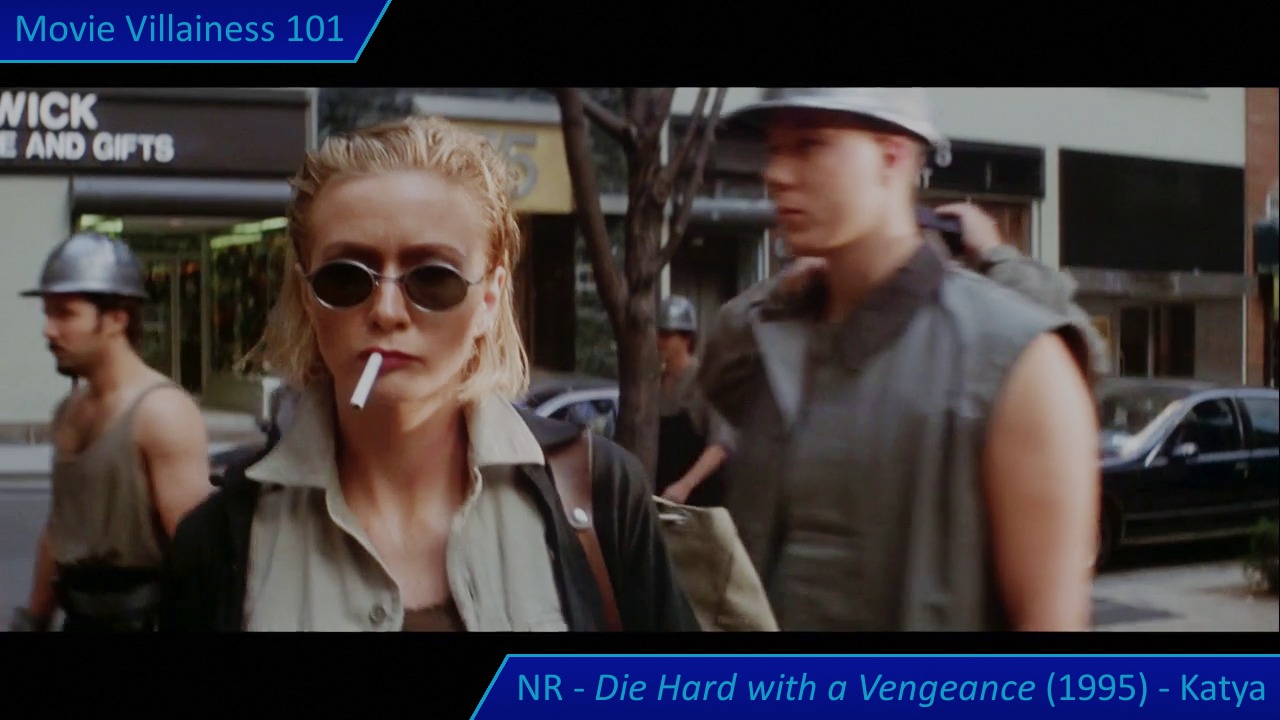
Die Hard with a Vengeance (1995) – Katya (Sam Phillips)
After two serious action movies, the series broke with tradition by opting for a revenge plot (or so it seems at first) and a more humorous outing. Samuel L. Jackson provides comic relief as Zeus Carver, which makes this entry a fan favourite. The cops are actually intelligent, even though the main villain – Jeremy Irons as Simon Gruber – is even smarter.
Like almost all Die Hard villain plots, this is ultimately about a heist. In this case, the theft of gold bullion from the Federal Reserve Bank. The mute villainess Katya gets a brutal introduction when she drills her way into the vault and slices up a guard. After that, she mostly stays in the background until the climax. It turns out she’s the lover of the tough henchman and in a secret relationship with Simon. Guess she likes the main baddie more, since she murders his competition during a double-cross.
After a brief, non-explicit love scene, Katya pilots Gruber’s chopper during the showdown against the heroes. She’s incinerated after McClane brings down a power line, a great send-off capped by that trademark line.
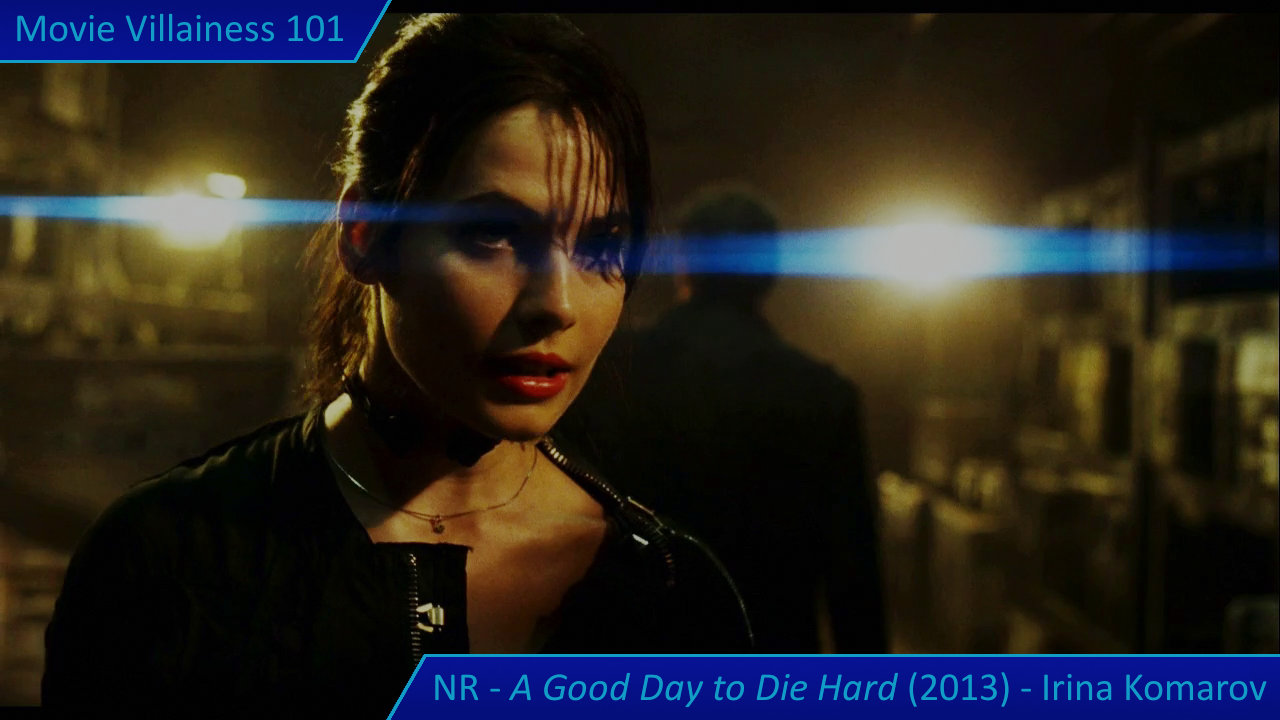
A Good Day to Die Hard (2013) – Irina Komarov (Yulia Snigir)
The final Die Hard film has the shortest runtime at approximately 95 minutes, which is merciful because it all feels tired and pedestrian. This time around, McClane is in Mother Russia to help his estranged son and – to nobody’s surprise – things soon get messy. John Junior is a spy on a mission to liberate a political prisoner, and the man’s daughter Irina is working with the baddies.
The prisoner ends up being a villain too, and plans to steal enriched uranium from a secret vault in Chernobyl. The plot is just as stupid as it sounds, and Irina doesn’t feature much until the end. There she finally gets to dress in black, shoot a gun, and pilot a gunship. Another helicopter showdown to finish things off, and Irina gets the honour of being the last main villain of the franchise. A pity her death is an unsatisfying suicide crash, a failed last-ditch effort to eliminate those troublesome McClanes.
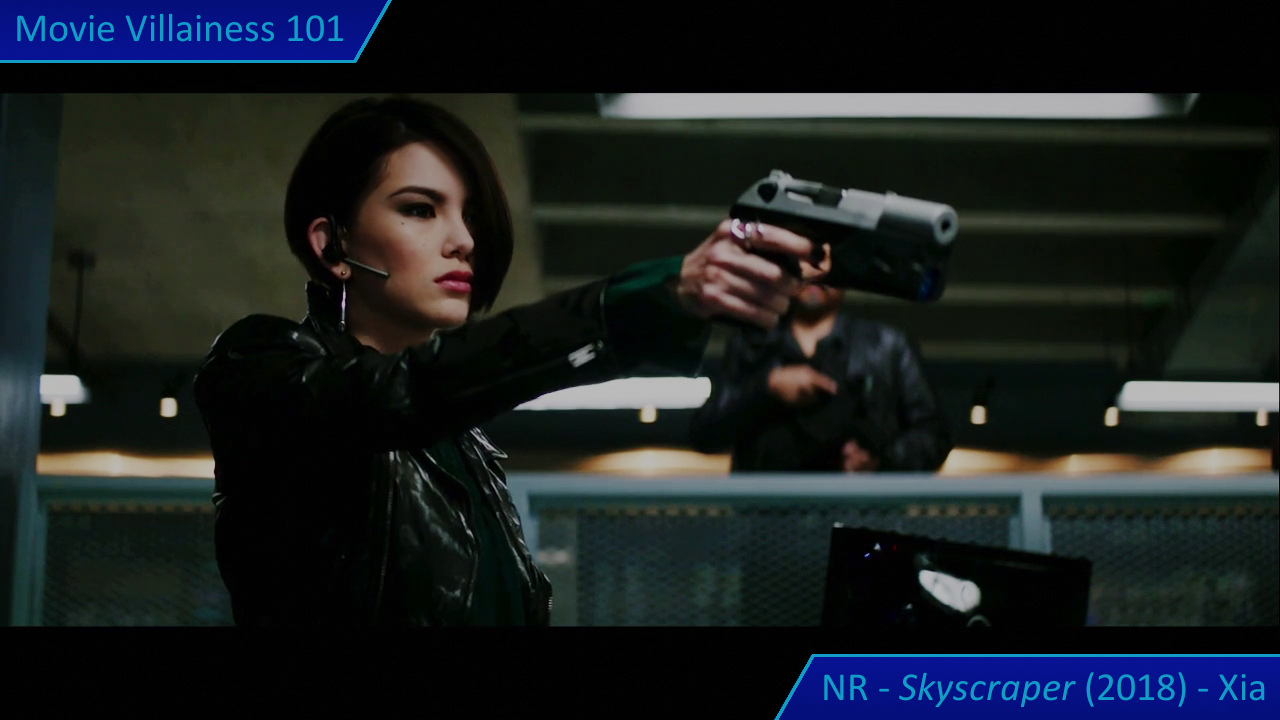
Skyscraper (2018) – Xia (Hannah Quinlivan)
Almost every setting has been used for “Die Hard on an X” films, and some have even dared to reuse the lone hero in an office building plot. In fact, there are two films called Skyscraper. One had Anna Nicole Smith in the lead and was expectedly awful, so won’t be discussed further. The other starred Dwayne Johnson as an ex-hostage negotiator turned safety inspector, who uses his artificial leg in inventive ways.
A group of criminals sets the world’s tallest building on fire, forcing the hero to battle them and rescue his trapped family. Plenty of clichés abound, but the blend of Die Hard and The Towering Inferno (1974) is original enough to maintain the viewer’s interest. The movie is not overlong and packed with stunts, and there’s a decent (if under-used) female baddie in the mercenary Xia.
The villainess’ best scenes are early on, where she murders scores of people with a silenced pistol and knocks out the hero. After that, she’s mostly absent, and never sets foot in the title skyscraper. The hero’s wife and Xia have a catfight that’s very brief, and the villainess gets arrested. That’s right – not even a deserved karmic death for this cold-blooded killer. She’s the only baddie to survive, which smacks of double gender standards.
James Patterson’s Women’s Murder Club novels were adapted for ABC TV in the late 2000s, but before that, the first book got the NBC miniseries treatment. Inspector Lindsay Boxer (Tracy Pollan) and her partner investigate the murder of a high-profile groom and his bride shortly after their wedding. Initial enquiries lead to inevitable dead ends, then Lindsay discovers the deceased couple are missing their rings, and a serial killer is only just getting started.
Other main characters are an assistant district attorney, a newspaper reporter, and a medical examiner. The four women create an informal discussion group (the murder club) and set about solving the crimes. The killer bumps off three unlucky couples before Lindsay uncovers a solid lead. This leads her to crime author Nicholas Jenks (Robert Patrick), who becomes the prime suspect.
All the physical evidence points to him, as does footage of a bearded male recorded at a brutal nightclub slaying. Following his arrest, fresh evidence suggests Jenks is being framed by a female killer. As expected from a Patterson crime novel, there are many twists before the resolution.
A dull subplot involves Boxer’s worsening blood disorder and doesn’t add much to the story. The romance with her partner is mostly predictable, but plays an important role later on.
Villainess
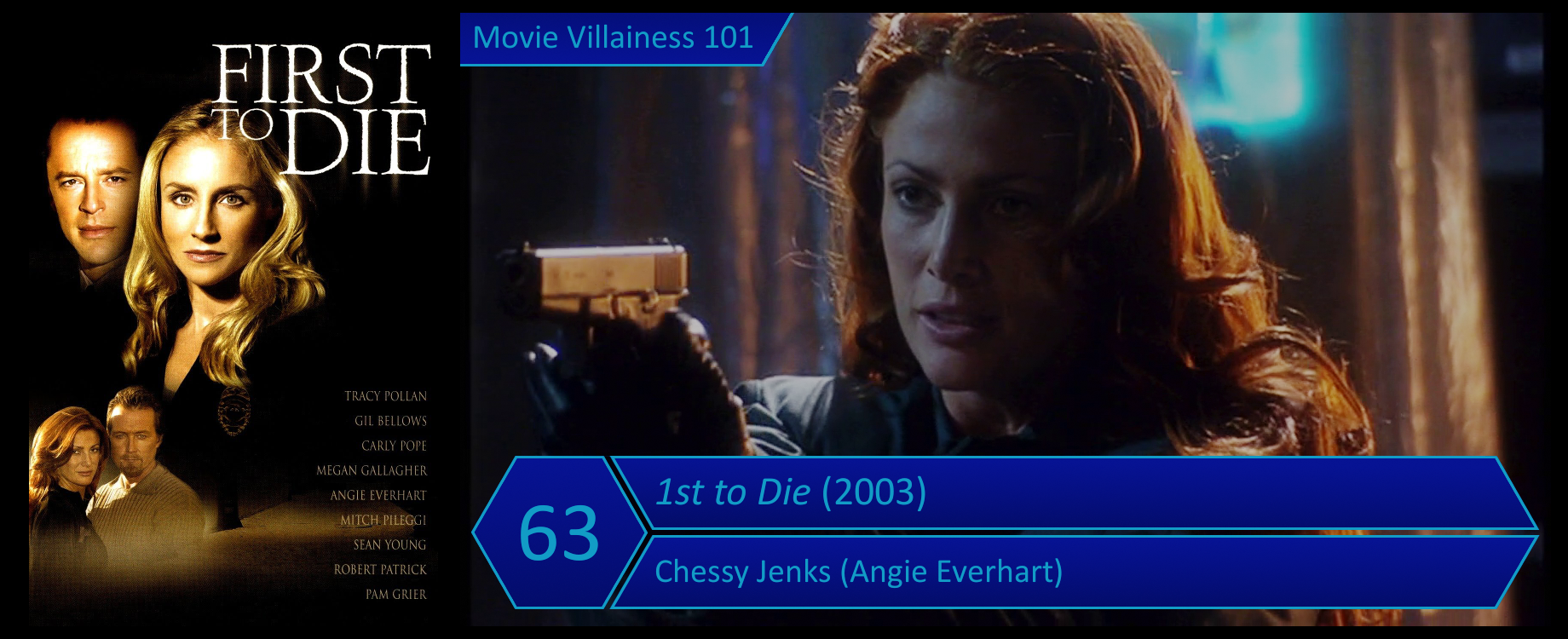
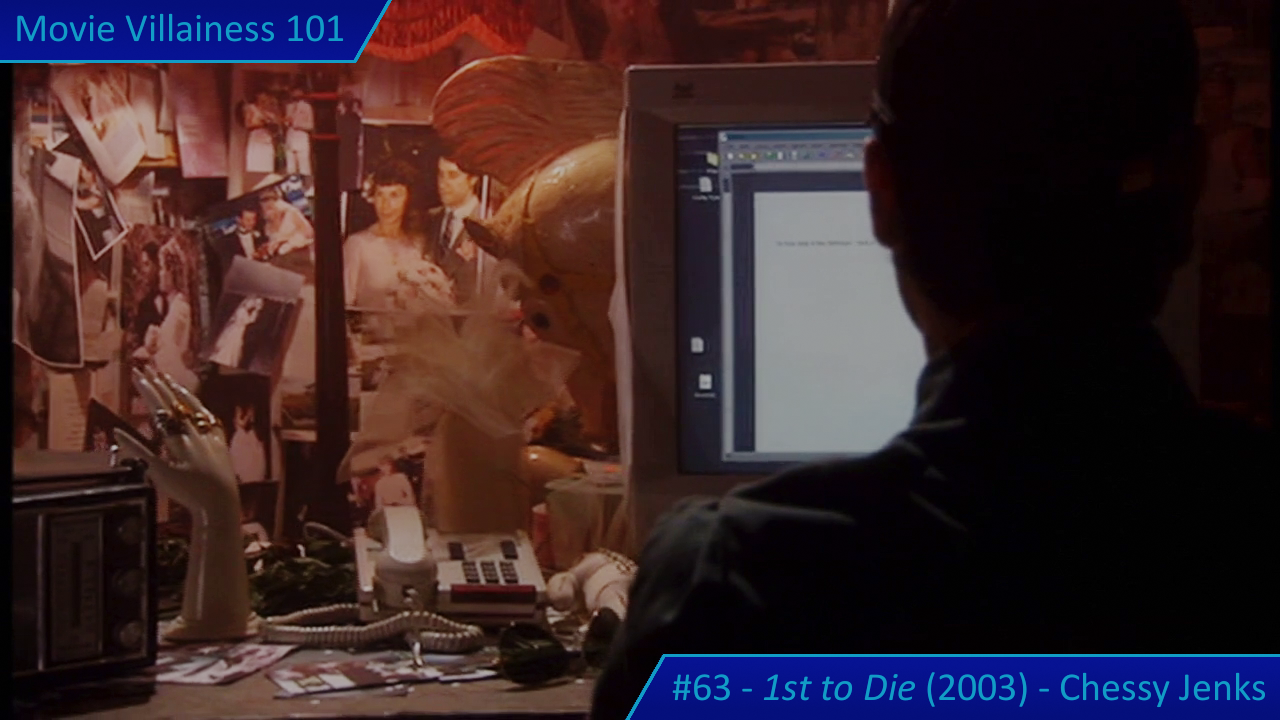
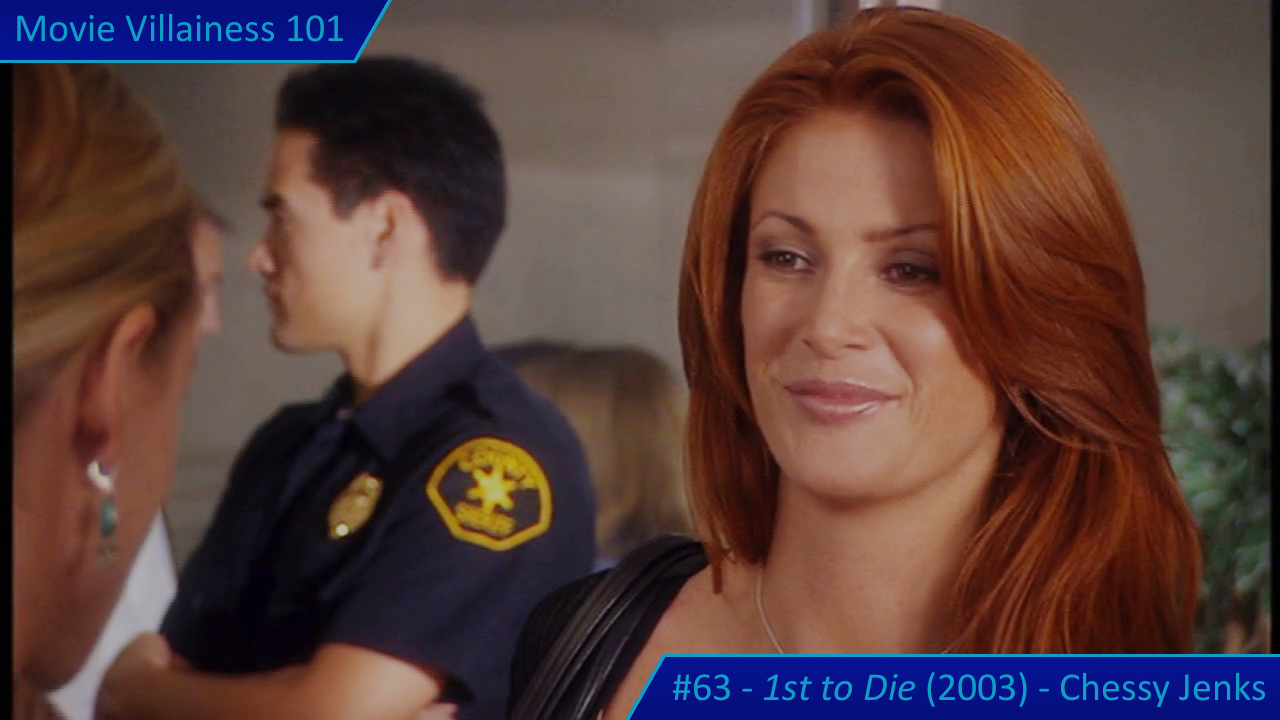
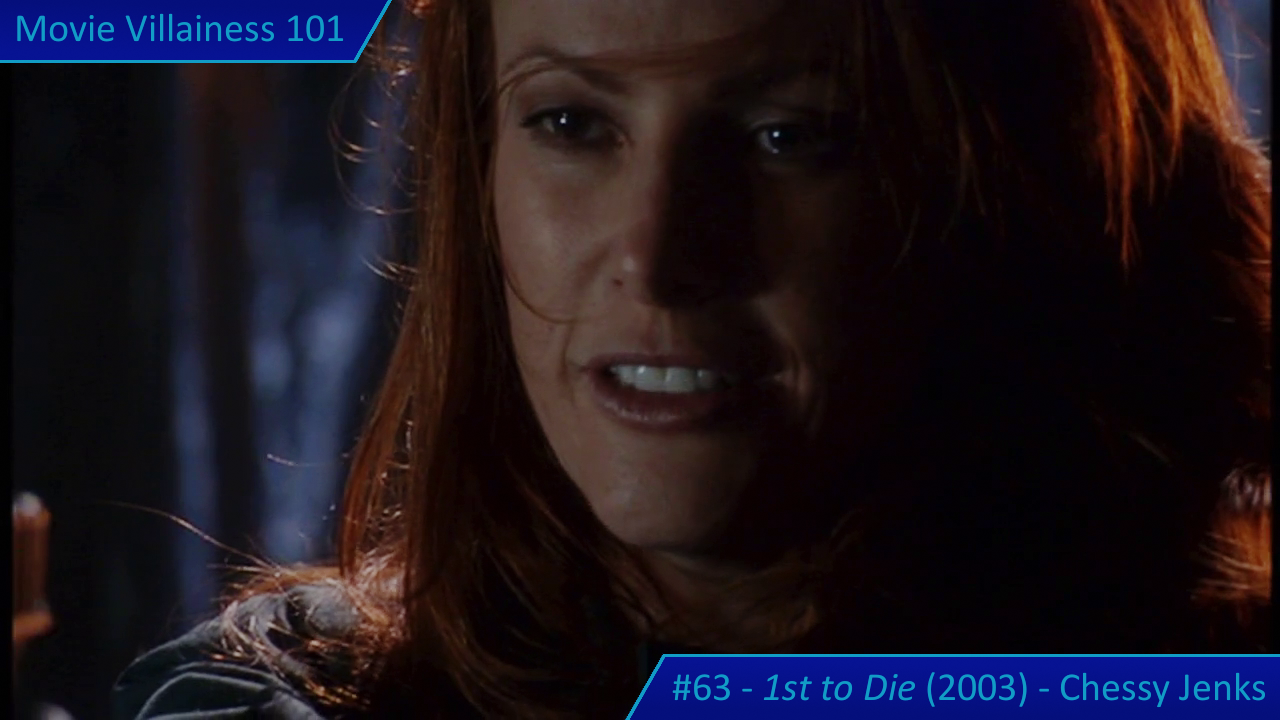
Chessy Jenks (Angie Everhart)
Chessy has little dialogue and is often a beautiful background figure whenever the police question Jenks. His fitness instructor ex-wife becomes a suspect when the club realises they’re after a female perpetrator. However, she turns up dead after Jenks escapes police custody.
The final showdown (for Chessy, at least) has Jenks and the police confronting her in a museum. There’s a very good unmasking scene as the murderess removes a well-designed prosthetic face. Chessy’s background in makeup allowed her to impersonate her husband effectively, and – for once – they didn’t swap actors halfway through the reveal scene. There’s some minimal action before Chessy is killed in a shootout that also claims the life of Boxer’s lover.
Since there are ten minutes left, viewers assuming a final twist will be right, and it’s expected the Robert Patrick character ends up being the villain. The revelation is that he controlled Chessy into committing the murders, which is far-fetched as anyone that unstable would make a poor proxy. Boxer finishes the baddie off in a bruising confrontation that she barely survives. Too bad they didn’t include more action for the wife.
Honourable Mentions: Male Disguises
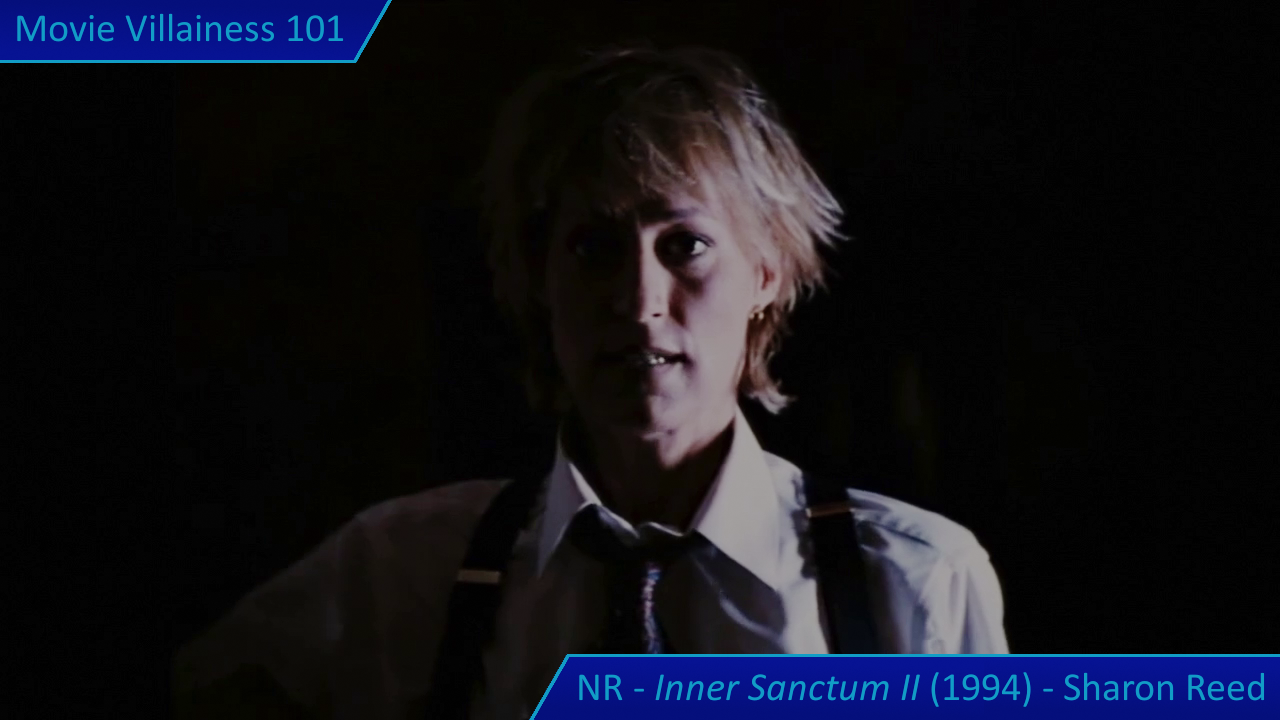
Inner Sanctum II (1994) – Sharon Reed (Sandahl Bergman)
A murder mystery whose solution should be obvious from the outset. Does Sandahl Bergman ever not play a villainess? This sequel to Inner Sanctum (1991) has some decent kills, but all the action is reserved for the final half-hour. Abundant sex in this erotic thriller, but only one scene I’d class as overlong and softcore, so it’s still eligible for inclusion.
The heroine – who killed her treacherous husband in the first movie – is having nightmares about zombie hubby screwing her sister Sharon. Yes, there’s some weird stuff here. Her live-in nurse and family do their best to look suspicious, and a time-filler side plot about a secret fortune pads out the film until things get interesting.
In the space of about 20-30 minutes, there are four murders and a meat hook-wielding “zombie” stalker who unmasks herself as Sharon. A decent catfight follows, ending with the murderess pushed through a high window. Had the first two-thirds been that thrilling, this could have earned a ranking spot, but it’s too little too late.
NetForce (1999) – The Selkie (Odile Broulard)
Based on a Tom Clancy novel, this is – you guessed it – a techno-thriller about a US cybersecurity force. The antagonists: a criminal group attempting to destroy the Internet. As you’ve probably gathered, the computers in this movie bear no resemblance to real life. Virtual reality sessions take place in actual locations, and the hero converses with a digital AI “ghost” of his murdered boss. Naturally, the enemy hacker has no trouble breaching White House security.
There are two female villains. One is rarely seen and lets her male counterparts do all the shooting. Her only noteworthy scene is when she’s part of an assault team wearing gas masks, before she dies in an explosion.
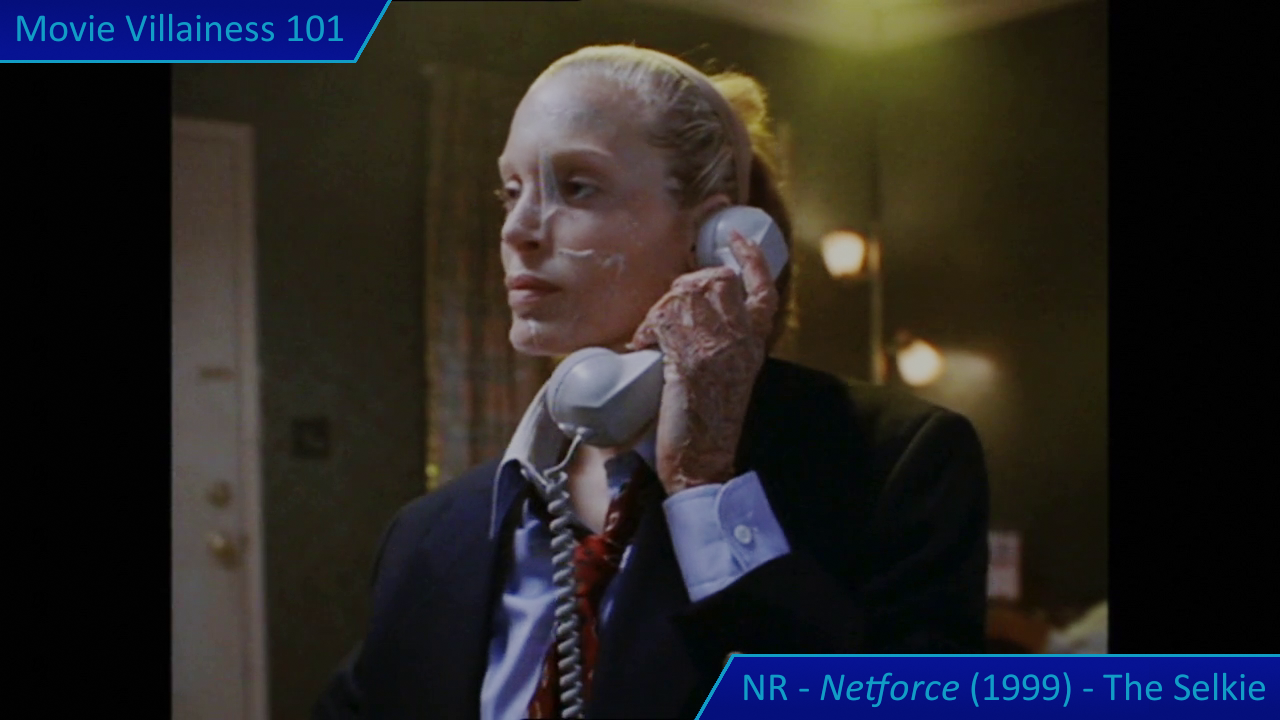
The other villainess is more interesting: an assassin and mistress of disguise, who makes several attempts on the main character’s life. Early on, she infiltrates a hotel suite as a hooker to bump off a mafia don. To escape, she wears a male prosthetic mask that’s surprisingly realistic. She later impersonates the heroine, but the last fight is tame, and the disoriented hero defeats a supposedly professional killer.
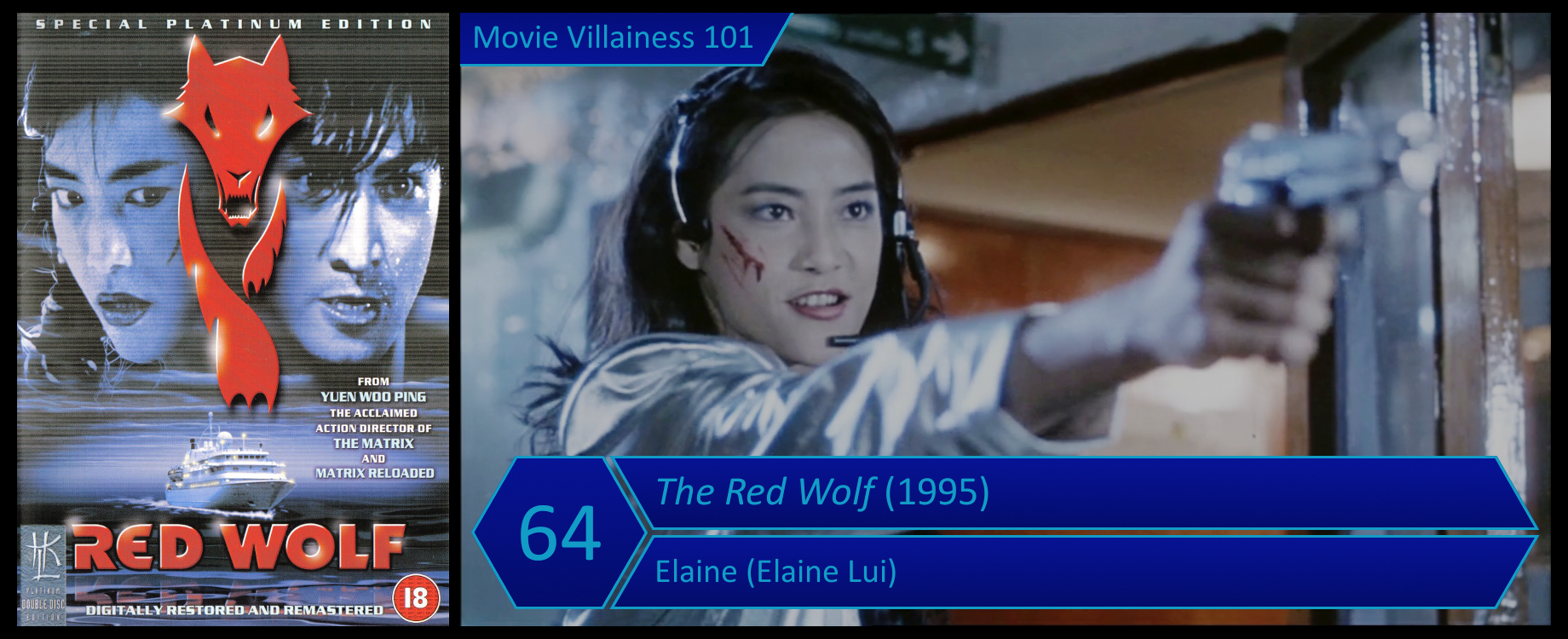
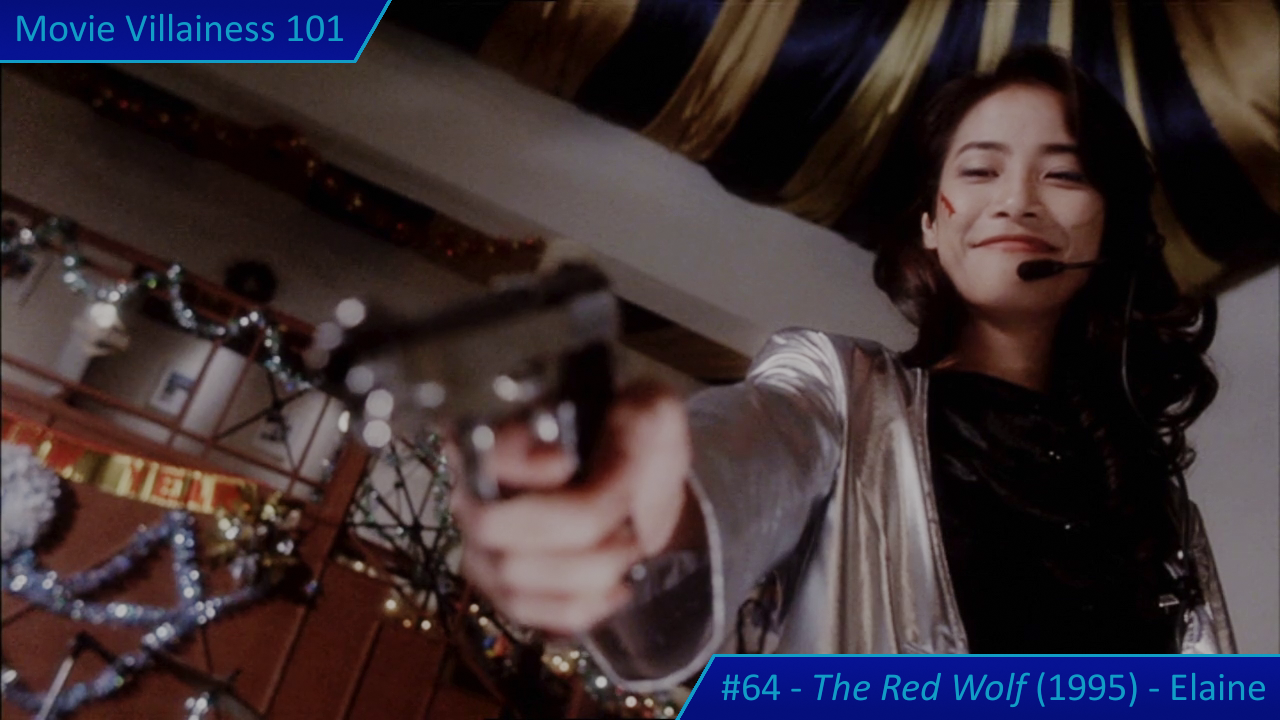
Another Die Hard scenario, set on a cruise liner with Hong Kong action for added spice. The hero is an ex-cop turned security guard (Kenny Ho), and his backup is Christy Chung as a pickpocket turned reluctant sidekick. She’s the early antagonist who shows her good side by returning a stolen wedding ring, but then the terrorists – led by a treacherous first officer and singer Elaine – make their move.
The bad guys are after uranium locked in a safe. It’s not explained why that would be on a cruise liner, and this entire plot is abandoned after a power cut stops a hacker in his tracks. So much for that, then. The Red Wolf has a ludicrously high body count, with scores of hostages mowed down by the trigger-happy terrorists. These guys prefer to use prisoners for target practice instead of bargaining chips.
Action scenes vary from routine to imaginative, and the hero utilises the environment to his advantage. There’s some comedy mixed in, notably when the pickpocket sings in a dressing room, only to be disturbed by the villains. She puts on a wig and pretends to be a bust (!) – bonus points for originality.
The movie is chaotic, but the fast pacing and above-average fights make for an entertaining diversion.
Villainess
Elaine (Elaine Lui)
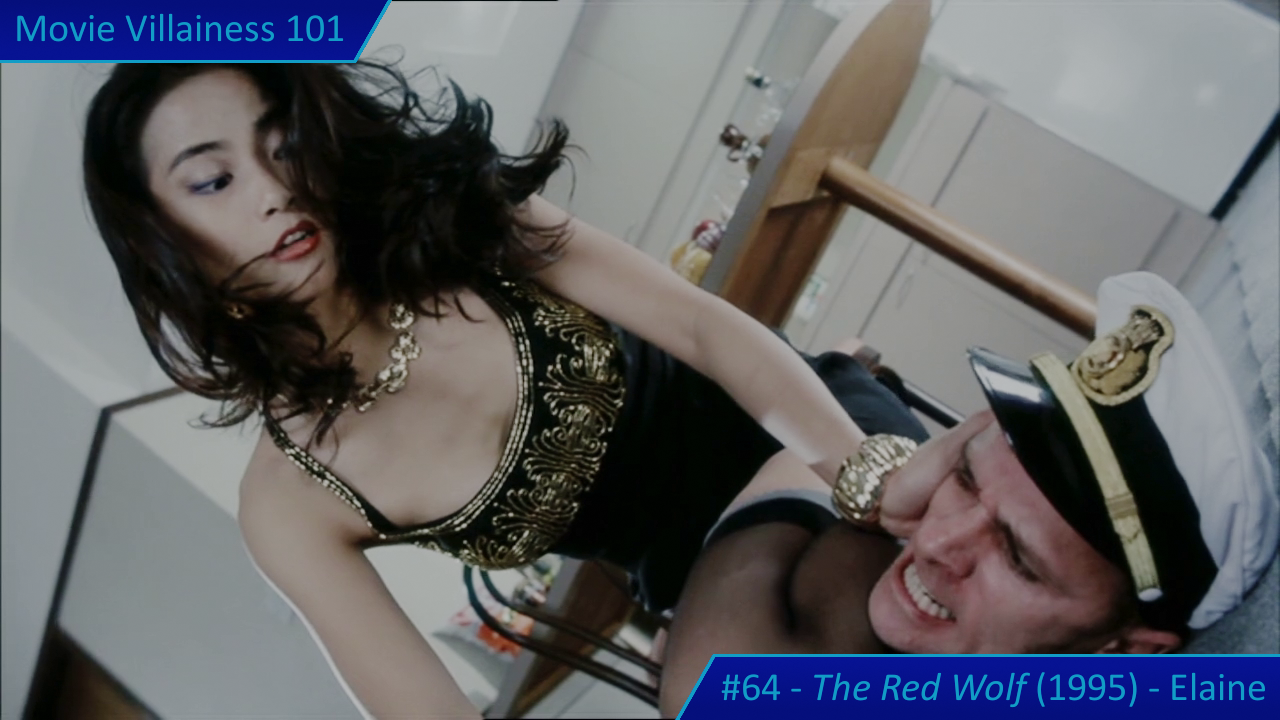
The villainess first shows up as a ballroom singer, and is quite good, though this lady prefers beating people up and killing them. Her first victim is a ship’s officer who has the safe keycard. Elaine plays the typical femme fatale, then burns his wrist with a cigarette and easily overpowers him… and clearly enjoys it.
If the villains were hoping to be discreet, killing people indiscriminately wasn’t the best approach. They’re soon discovered by the cop and pickpocket, who team up to battle the hijackers. After a hectic shootout, the cop literally bursts into the ballroom through a high window… and that’s when Elaine drops the nice girl act and goes all psycho.
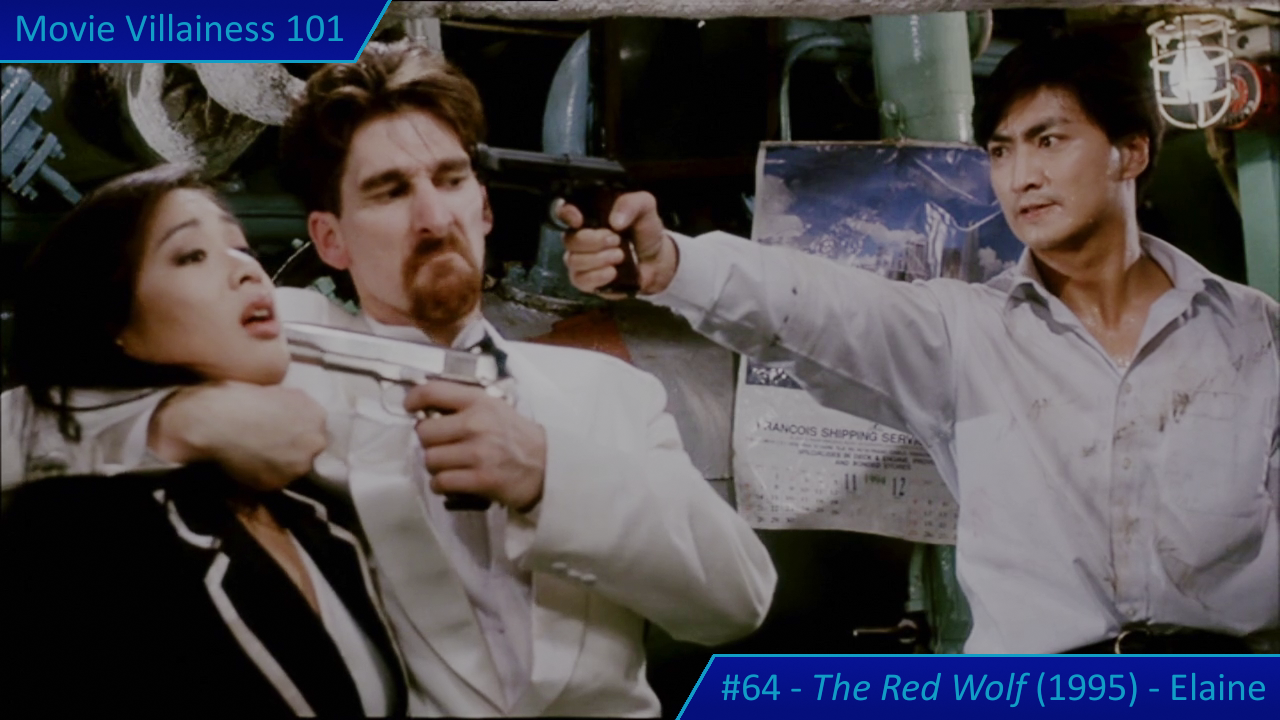
One of her meanest scenes is where she shoots a guy having a heart attack for pure amusement. It’s the newlyweds from earlier, and the bride is gunned down during an ill-advised revenge attack. Amid all this, Elaine finds time to threaten a distraught woman with broken glass. Another shootout follows as the psychopathic woman chases fleeing hostages on the decks.
The inevitable happens, and the pickpocket faces Elaine in a fight. Lots of weapons are used, and there’s a comical tone shift that doesn’t quite work. Ultimately, the villainess is covered in paint, which the heroine sets alight. The on-fire Elaine screams, and her prolonged death scene goes on far too long (even though this bad girl deserves a horrible death).
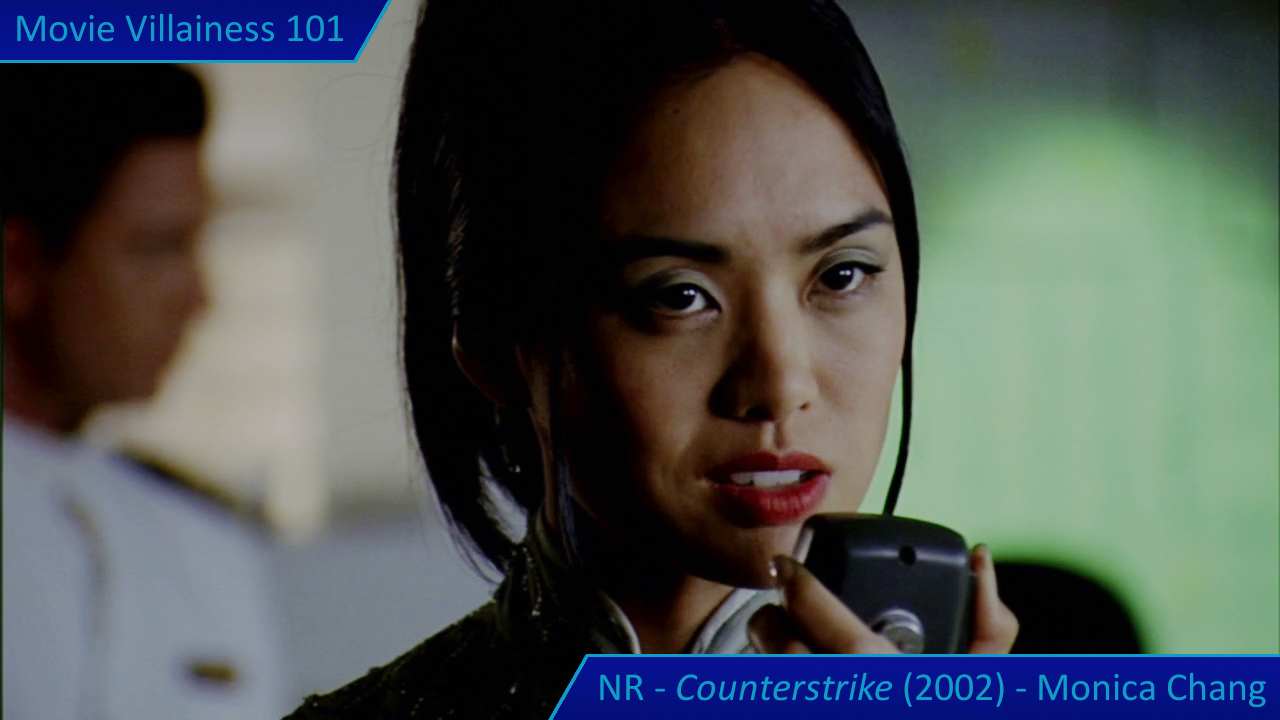
Another Asian villainess in this TBS Superstation-produced movie, also set on a cruise ship. The Taiwanese bad girl and her associates are after nuclear launch codes and attack a summit during the US and China. Up against them are two brothers who (yawn) don’t get along, one a secret service agent and the other with the ATF.
It’s a while until Monica’s reveal, and then she only kills one guy during the entire film. Since she’s an actress who battled the leading lady / hero’s girlfriend earlier, it’s no surprise the women duke it out during the finale. The karate fight is not well choreographed, and TV movie limitations show through. At least this section doesn’t have annoying fade to black transitions.
The good girl sees off the villainess by throwing her over a guardrail. Other than that part, there’s nothing special to see, and it’s all pretty forgettable.
Final Voyage (1999) – Max (Claudia Christian)
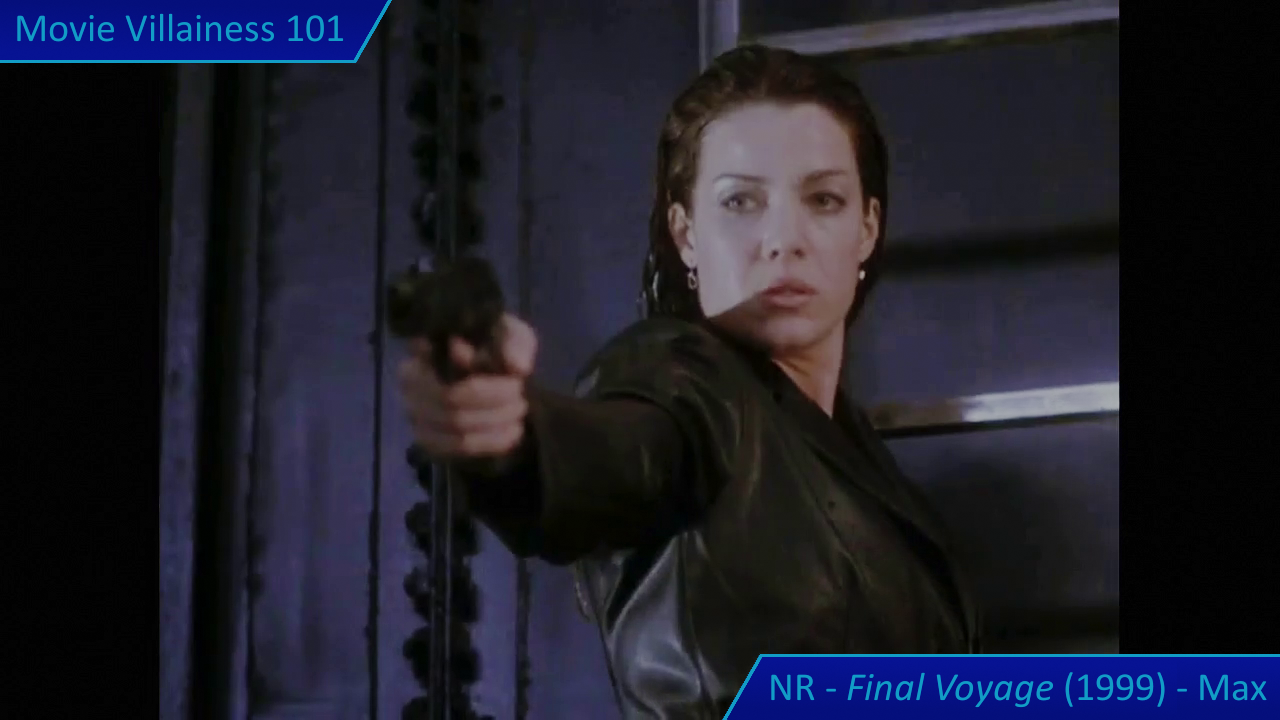
This is another actioner from the director of Demolition High (covered at #86), but while we get a villainess in leather, Max is unfortunately no Tanya. The heroes are a bodyguard and a spoilt rich woman, who must deal with Ice-T’s hijackers who’ve targeted – you guessed it – a cruise ship vault.
The villainess’ introduction is impressive, seen in silhouette as she bumps off two crew members below deck. Several executions follow, all supplemented with cold-blooded dialogue. Anyone expecting a good showdown should prepare for disappointment. There are a few brief shootouts and a pathetic fight with the heroine. After murdering over half a dozen crewmen, taking out a rich brat is apparently too difficult.
The Goddess of Death was never going to show mercy
Movie
Thor: Ragnarok (2017)
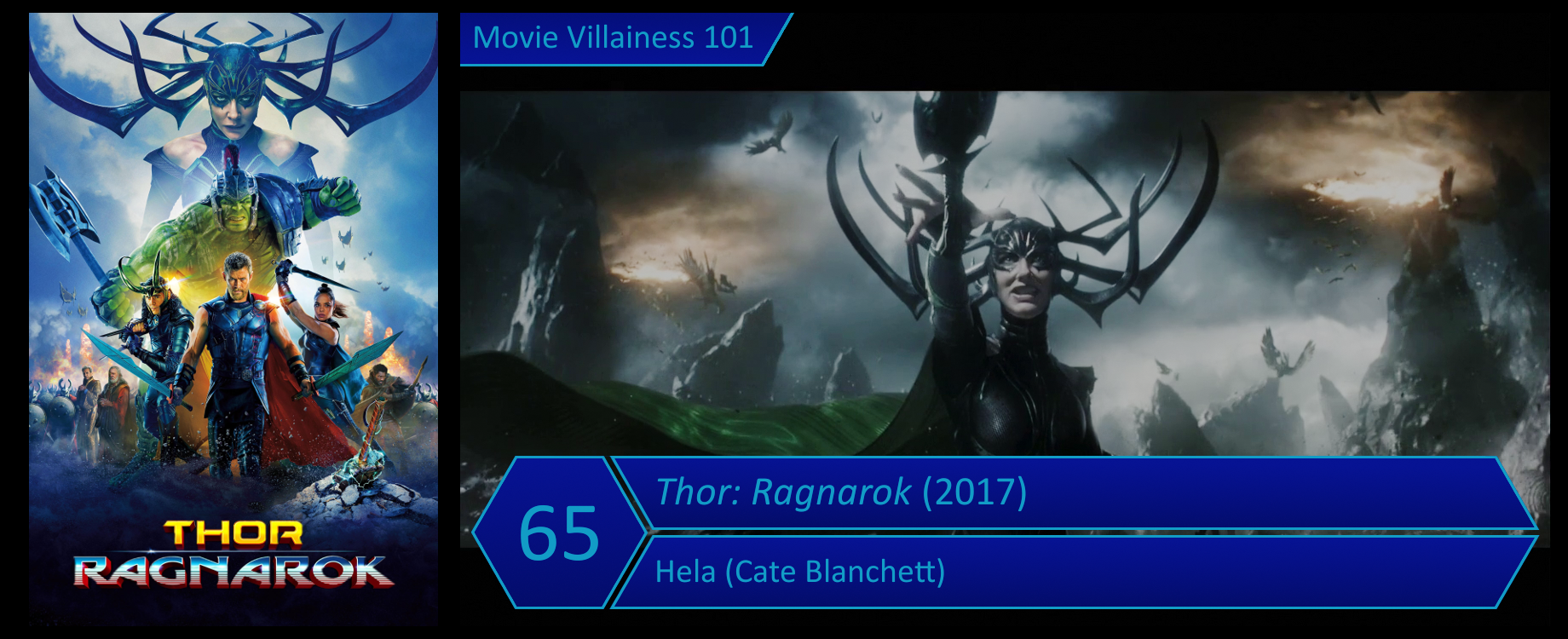
Man of Steel and the DC Universe were covered earlier, so it’s only fair to include an entry from the Marvel Cinematic Universe (MCU). The X-Men movies feature a plethora of female baddies, but that’s a separate franchise and earns a much higher ranking spot. In the MCU, Hela stands out as a notable villainess.
Ragnarok is the third Thor-led movie, though he played a prominent role in two Avengers crossover films. The hero’s treacherous brother Loki is up to no good again, and a cataclysmic plot begins when their aging father Odin passes away.
Besides the main antagonist, Thor battles two secondary foes. The first is a fiery horned demon, whom he defeats in the prologue, and the second is the self-proclaimed grandmaster of a “junkyard” planet. Thor is stranded there for the entire middle third. It’s this segment that is most disappointing, as Jeff Goldblum’s villain is pitiful. As with other Marvel films, another big-name hero shows up. On this occasion, it’s Dr Banner / the Hulk who battles Thor in a vast arena before joining forces.
Ragnarok introduces Valkyrie, who (unsurprisingly) is a female Asgardian warrior turned bounty huntress. Her character arc is predictable. She progresses from Thor’s foe to his reluctant helper, then to an all-action heroine by the finale.
Villainess
Hela (Cate Blanchett)
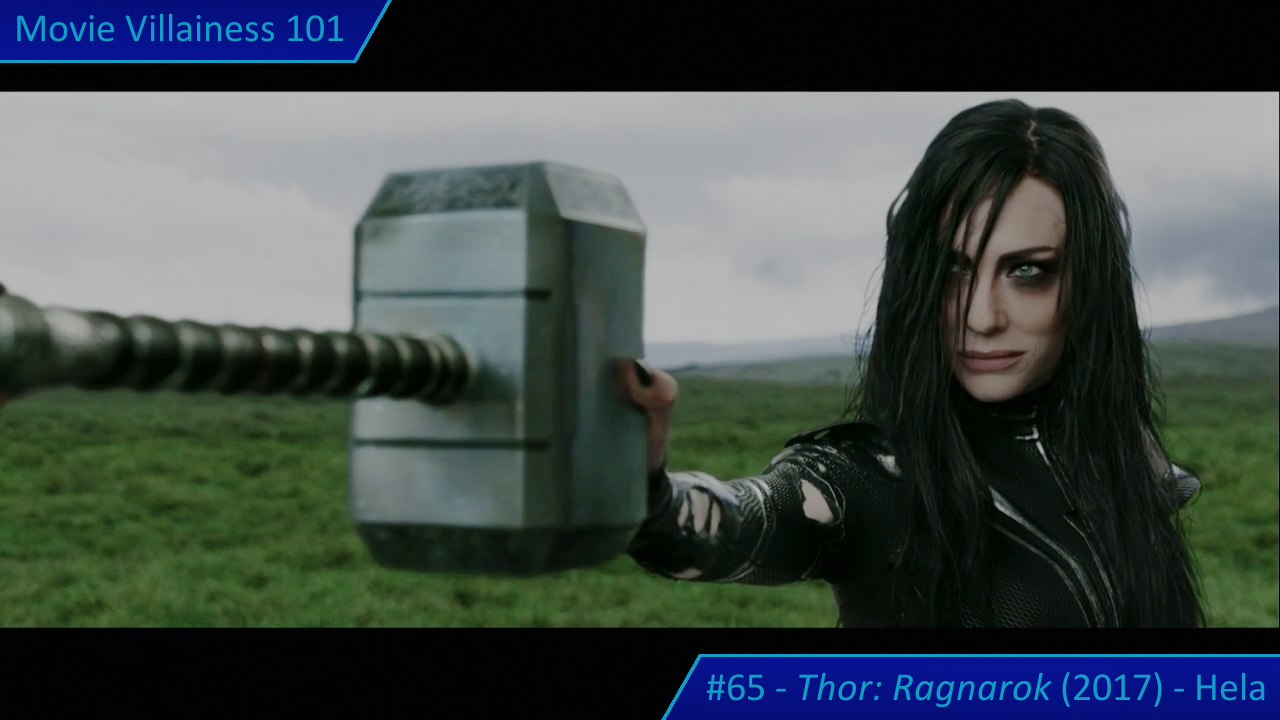
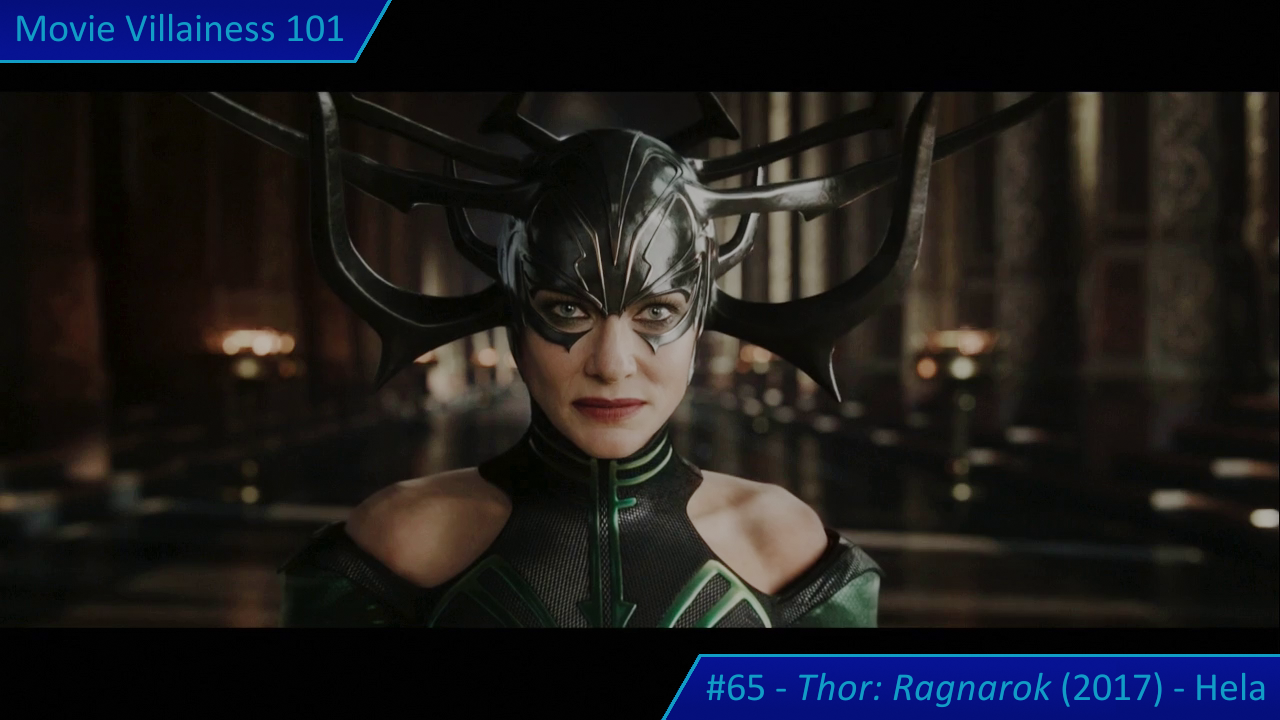
Any woman called the Goddess of Death is likely to rack up the kills, and Hela doesn’t disappoint. Not daunted by Asgard’s army, she massacres them solo to prove how powerful she is. Before the wipeout, Hela claims an even greater scalp when she destroys Thor’s legendary hammer Mjolinir bare handed. After such an iconic first encounter, it was always going to go downhill.
While Thor is stuck on planet junkyard, Hela does bad girl stuff. This includes raising an undead army from the crypt beneath Asgard’s palace and taking a pet giant wolf for company. Hela narrates her own backstory over camera shots of painted murals. This is mostly about how she and her father, Odin, conquered other realms before he became an advocate of peace. A flashback from Valkyrie shows the warrior women defeated by the evil tyrant in a battle long ago.
Thor returns to Asgard, and it’s God of Thunder against Goddess of Death. Their fights live up to the billing, with plenty of barbed dialogue from Hela. She even cuts out Thor’s eye before they’re through. To defeat his powerful foe, Thor has Loki summon the demon (remember him from the prologue?), which destroys Asgard and the villainess along with it. So, the result is Hela taken out by a third party, but she manages a Pyrrhic victory.
Honourable Mentions: Marvel Cinematic Universe
Black Widow (2021) – Antonia / Taskmaster (Olga Kurylenko)
Marvel’s Phase Four has left fans unimpressed, and this is another mediocre entry. The promising setup focuses on a young Black Widow, her sister, and an all-female team of black-clad assassins. Add a masked villain – Taskmaster – and this should be a winner.
Too bad the family drama bogs down the middle third. When a mind-controlled pig is the most interesting part, there are serious problems. Eventually, the filmmakers realise this is supposed to be an action movie, and we get an epic climax on a floating sky base.
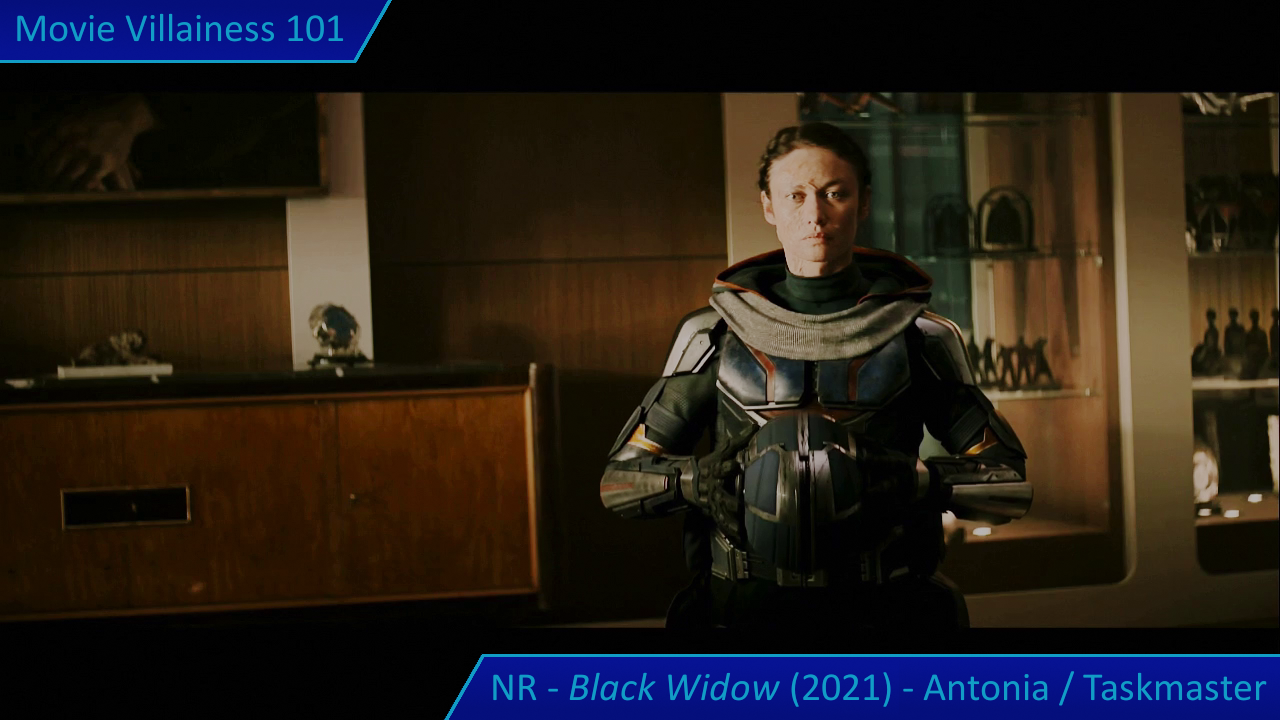
If you’re hoping for a great reveal, get ready for disappointment. Taskmaster is a badly scarred woman we don’t recognise, so it’s kind of Black Widow to tell us she’s the big bad’s daughter. All very uninspired, and the last fight is unimpressive, making this a disappointing solo outing.
Ant-Man and the Wasp (2018) – Ava / Ghost (Hannah John-Kamen)
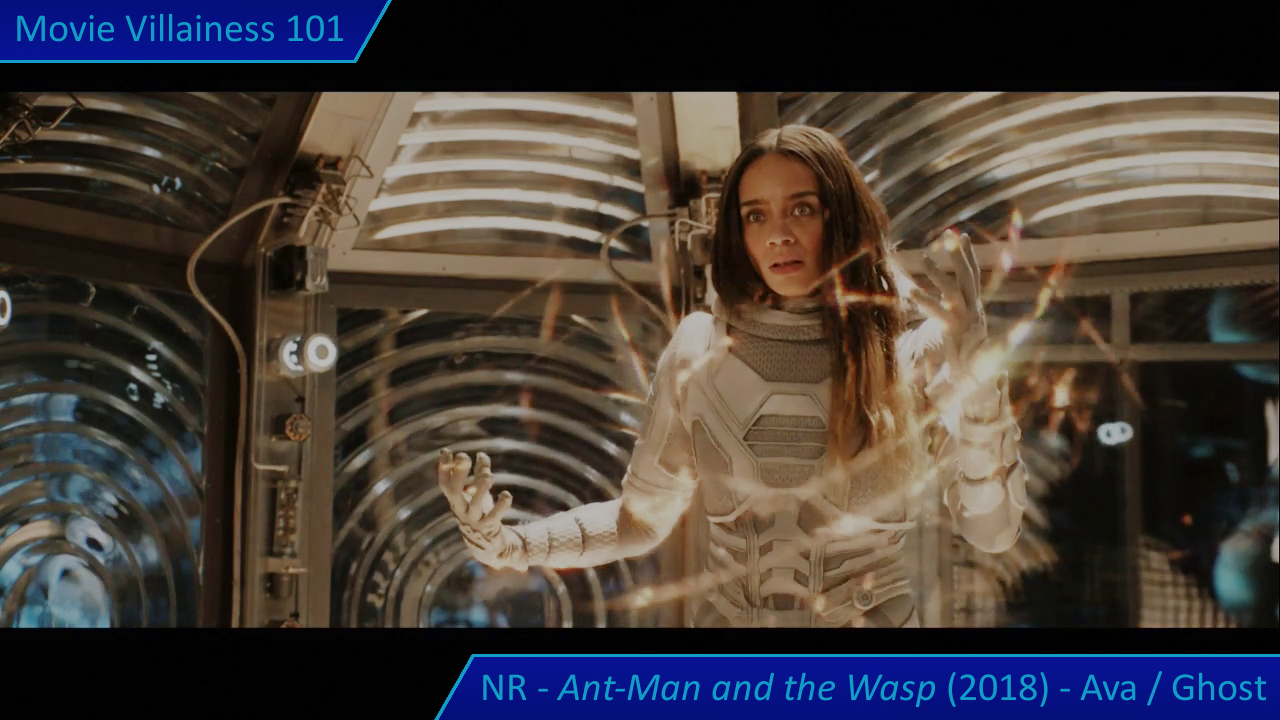
Ghost is another Marvel masked adversary who possesses the ability to phase through solid objects. While her reveal is expected given the publicity around her character, the backstory is much better this time. Ava has a moral standpoint, since she was experimented on as a child. Now she’s seeking a cure for her condition, which brings her into conflict with the heroes.
With a combination of fighting skills, interesting powers, and character development, Ghost is a worthy addition to Marvel’s villainess roster. Some action is repetitive, with far too many shrinking and enlargement scenes, but there’s plenty to enjoy.
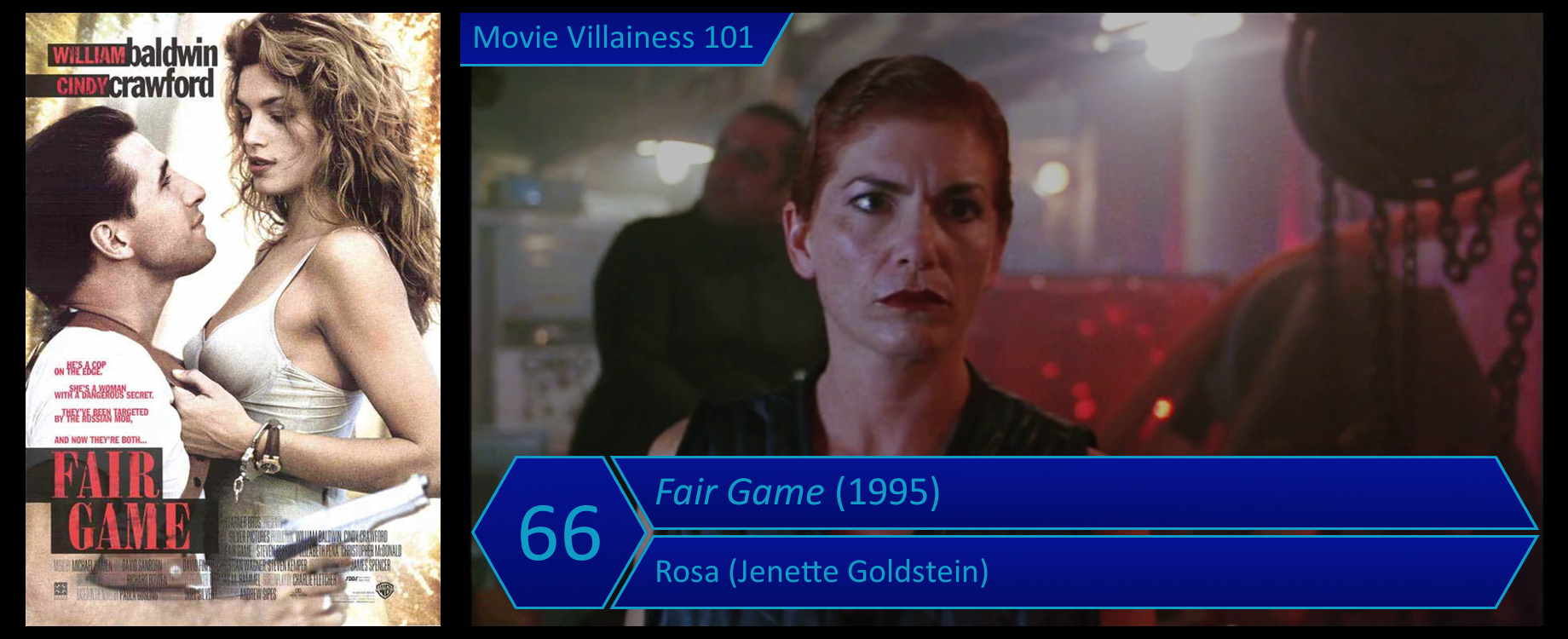
This is the second movie adaptation of Paula Gosling’s novel to make my list. Cobra (1986) has a lower-ranked entry at #97 – and a different plot, though both feature women in peril. Best known for starring Cindy Crawford as the lead and being a box office flop, this is a routine actioner. But 1990s movies are a reliable source of female villains, and Fair Game doesn’t disappoint.
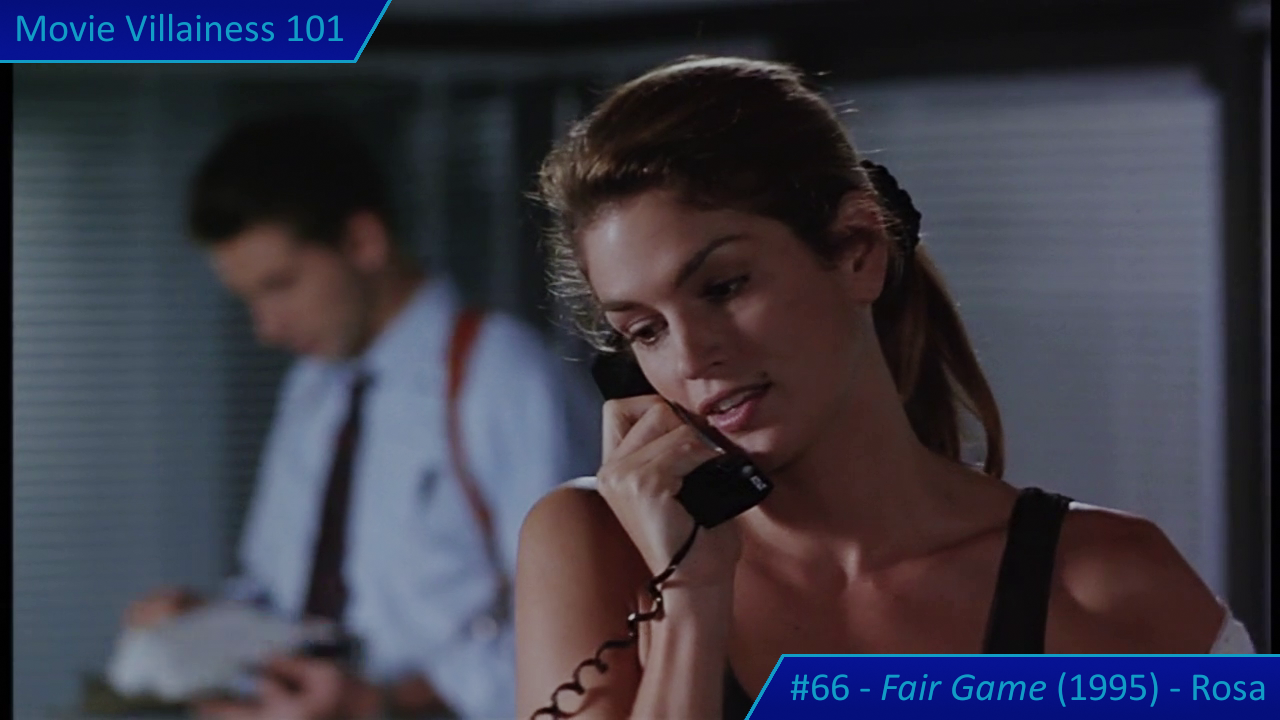
Crawford plays Kate McQuean, a civil case lawyer who stumbles across a plot by ex-KGB operatives to pull off an electronic bank heist. Obviously they’re not keen on nosy women poking around, so they blow up Kate’s luxury apartment. Except she escapes unscathed (imagine that!).
Then a cop (William Baldwin) gets involved and becomes a one-man protection team. Of course, there’s an ex-girlfriend he’s fallen out with, which leaves him free to romance Kate, so it’s no surprise we’re treated to a sex scene before the climax.
Hollywood loves to use Russian bad guys, and Steven Berkoff hams it up as the main villain with his usual thick accent. His henchmen are technically savvy, which maintains tension in the deadly cat-and-mouse game. Not a great movie, but serviceable enough as light entertainment and better than its reputation suggests.
Villainess
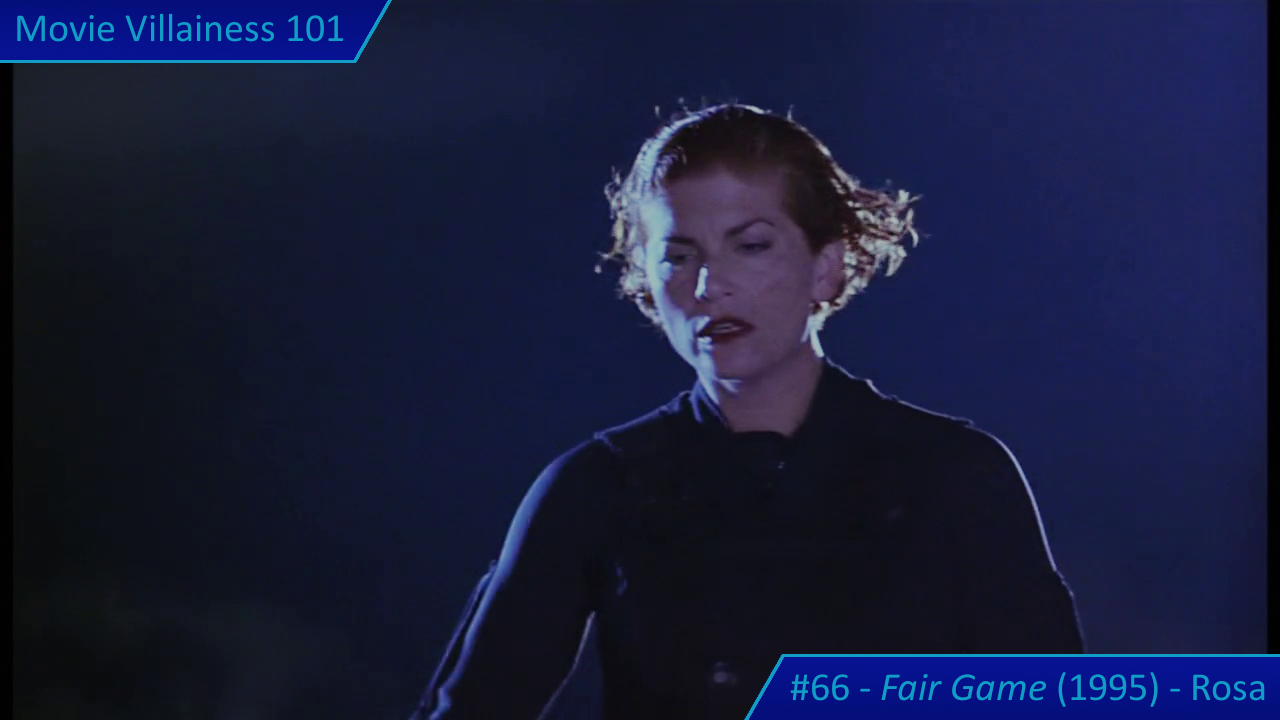
Rosa (Jenette Goldstein)
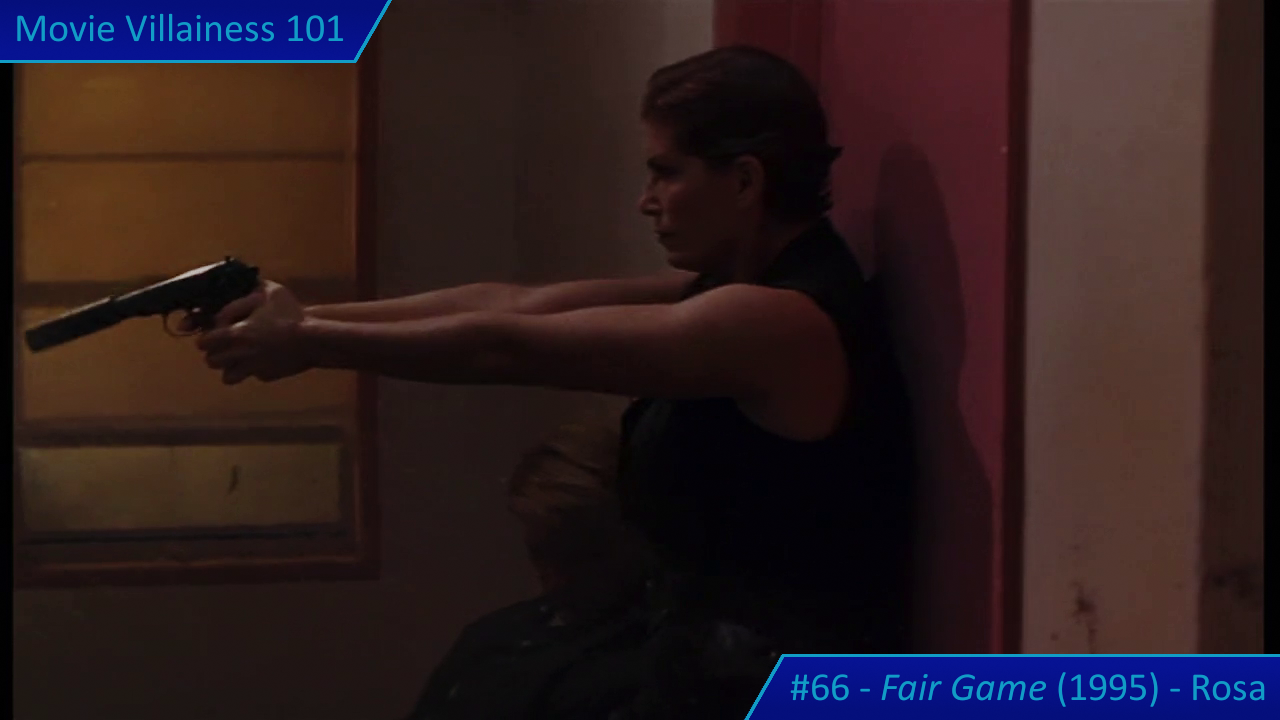
Better known as the tough cookie Private Vasquez from Aliens, Goldstein plays a villainous brute in this one. She spends most of her screen time either looking menacing in the background (which she does well) or in a hi-tech van while the Russian technical whiz does his thing.
Rosa gets some early action after the Russians track Kate and her bodyguard to a “safe” house. The police make the mistake of ordering pizzas with her credit card, giving Rosa the chance to impersonate a delivery woman and murder a detective with a silenced pistol. Naturally, the hero proves more difficult to take out, so there’s a lengthy shootout with Rosa and her goons. The villainess shows her toughness by kicking in a door and surviving while her team is wiped out.
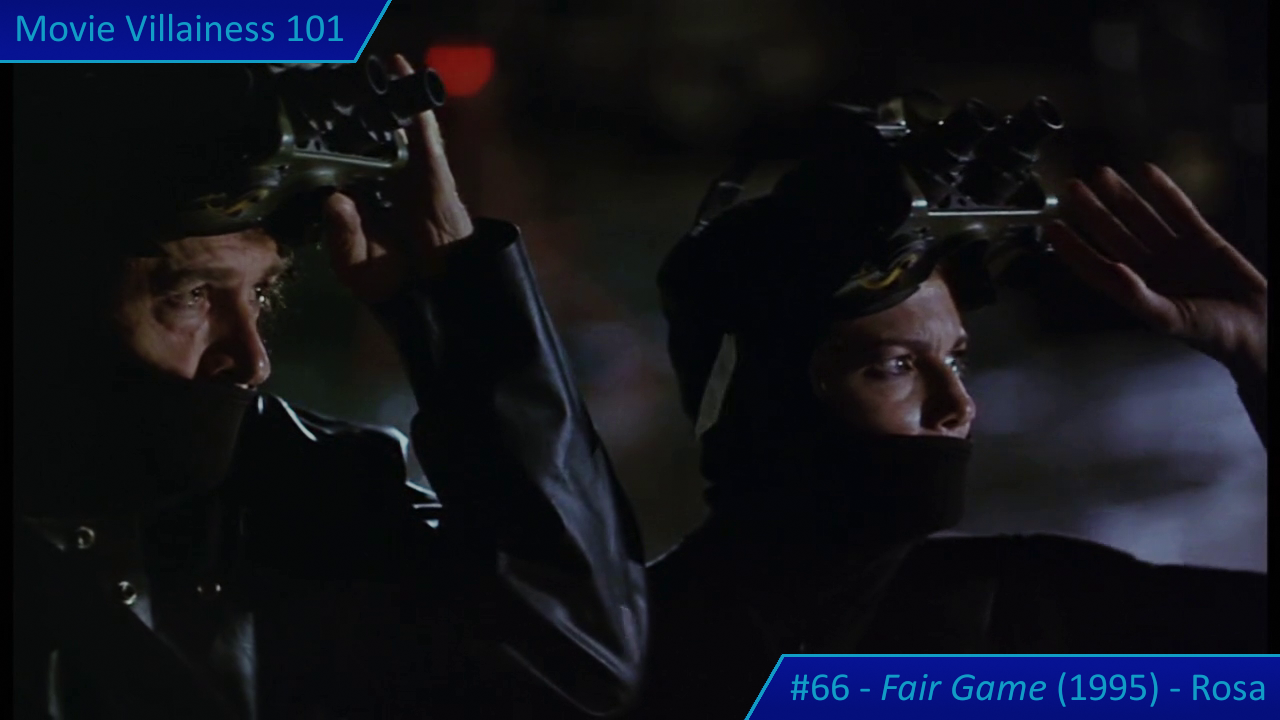
It’s a while before Rosa returns to the fray, but she beats up a nerdy sales guy who assisted Kate. Hardly a worthy opponent for a woman of her prowess. Thankfully, Rosa offers Baldwin his hardest fight of the film in the final act. When she and a mook attempt to eliminate the pesky annoyance while wearing all-black commando gear, the hero guns them down after surprising them.
If he thought it would be that easy, Rosa had the foresight to wear a bulletproof vest. This leads into a moderately lengthy fight, with Rosa proving more than a match for her male opponent. She gives him quite a beating before he responds in kind. They made villainesses tough in the 1990s, so Rosa shrugs off these attacks and turns the tables. Despite her having a gun and knife, the cop defeats her, leaving one wishing for a slightly better demise – though I’ve seen far worse.
Honourable Mentions: Tough Assassins and Mercenaries
This two-part sci-fi miniseries was later released as a three-hour movie on DVD. As is typical for this sort of film, fiction overrides science, with a “story” about some nonsensical plot to create tidal waves in the Atlantic. Cue poor special effects and an overlong potboiler that could have been told in half the runtime.
The heroes are two scientists (gender-balanced, of course), and the businessman villain hires assassins to stop their investigation. One hitter is a six-foot she-hulk (Wiseman should have got more roles like this) who shows up at a remote cabin to battle the hero. He struggles to even hurt her as the muscle woman shrugs off his timid attacks, and it takes makeshift weapons to take this foe out. Only a couple of minutes of screen time, but one of the few highlights for sure.
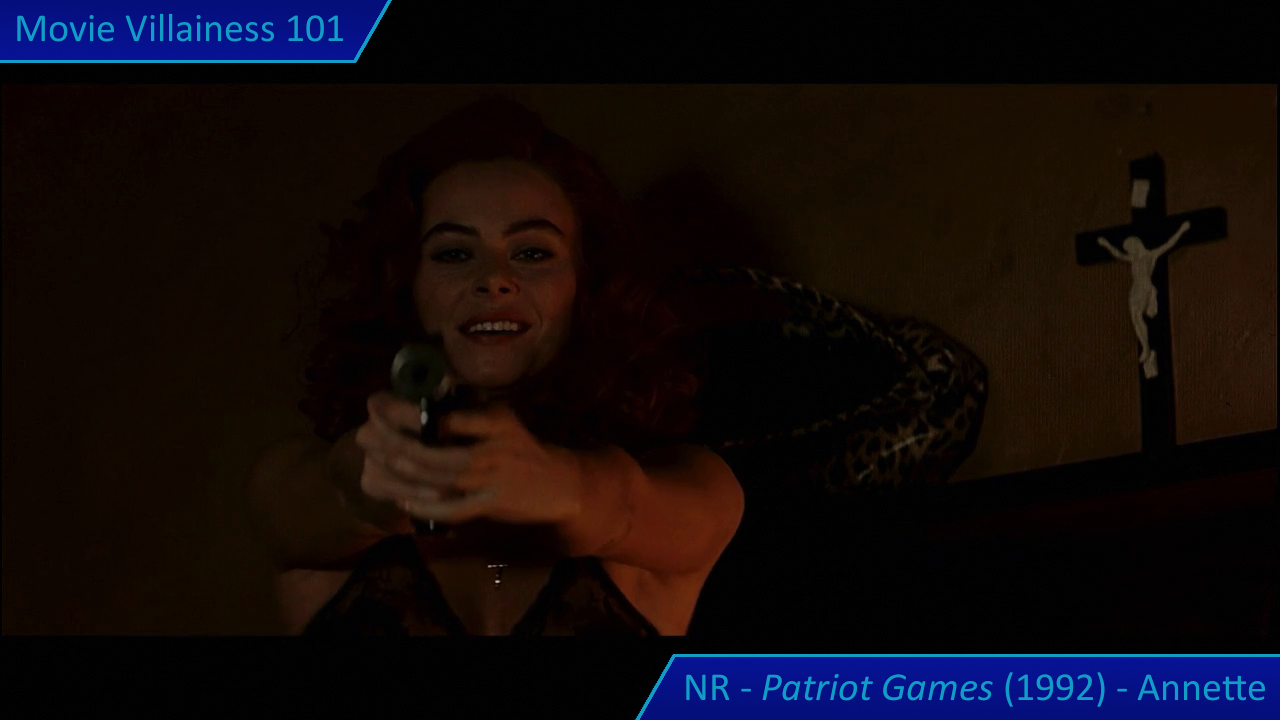
Patriot Games (1992) – Annette (Polly Walker)
Less of a toughie and more of a femme fatale, Annette is a member of an IRA splinter group up against Tom Clancy’s hero Jack Ryan (Harrison Ford in the first of two outings). After he stops an assassination attempt on the British royal family and kills the group leader’s brother, he and his own family become targets.
Action shifts between Britain and America (with some scenes in Africa), and Annette is mostly in the background. The villainess is a brunette but disguises herself as a redhead for spy work. Her best scene is an early hit on an IRA idealist, whom she bumps off after sex. After that, she drives vehicles and becomes the hero’s most important lead, before a showdown raid on Ryan’s home.
Like Rosa, the villainess wears commando gear, but the closest thing to a fight is getting knocked out by Ryan’s wife. Don’t expect a grand finale – she goes out tamely after the vengeful main villain turns against his own team.
Another late female baddie reveal, but this is an ordinary revenge tale about a family man hunting the psycho trucker who killed his son. No surprise that the father (Stacy Keach) and his lad argued just before the tragedy, and now the hero wants to make amends.
Also known as Revenge on the Highway, the film is based on the true story of Claude Samms, and the production is dedicated to his son, Paul. Some plot elements are almost certainly dramatised, but the setting and villainess are relatively unique. Sadly, the title is only available on VHS, but image quality doesn’t matter for a text review.
Much of the movie focuses on Claude’s relationship with his wife, which becomes strained as his quest for justice turns into a personal obsession. Frustrated with the police, Claude takes justice into his own hands. In his anger, he nearly shoots an innocent man before he comes to his senses. Then, Claude gets a breakthrough when a witness to an earlier murder comes forward.
While early action is lacking, the finale is enjoyable. An extended truck duel between Claude and his nemesis lasts over ten minutes. Since the movie predates the CGI era, there’s impressive stunt work, and plenty of tire screeching and explosions in the satisfying climax.
Villainess
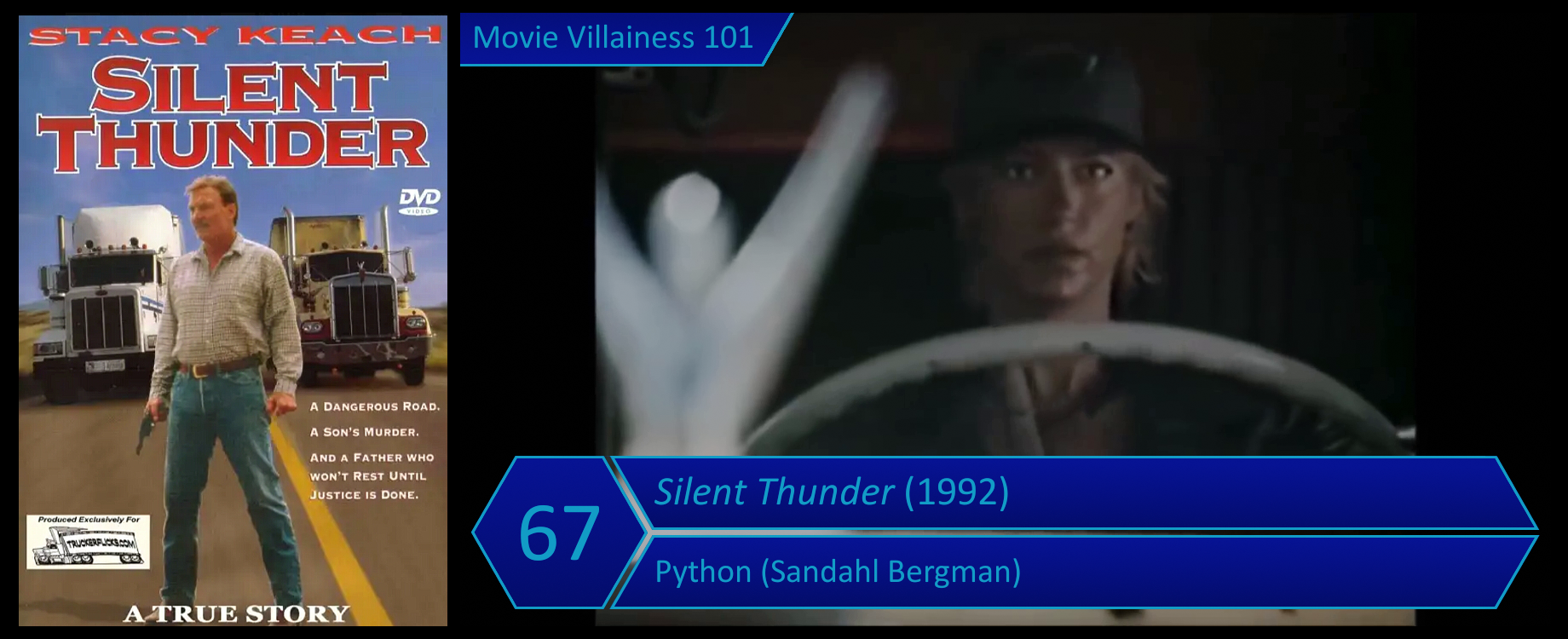
Python (Sandahl Bergman)
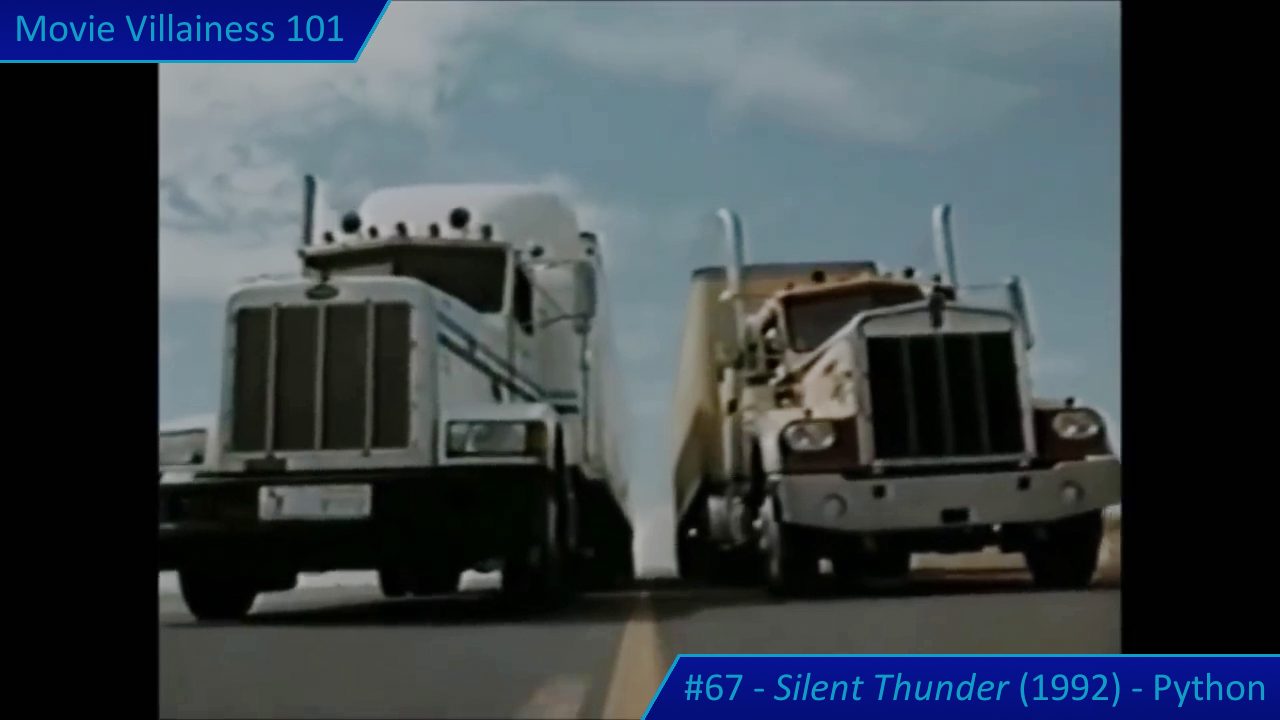
The villain isn’t fully shown until the last fifteen minutes, with most shots focusing on their distinctive yellow truck or partial facial features. The deep-voiced antagonist – known only by their handle, Python – enjoys causing fatal motor accidents. One couple narrowly escape in the pre-credits scene, before a woman and her car are completely incinerated partway through.
Anyone familiar with “disguise a woman as a man” movie trick will suspect the psycho is female. As an extra hint for villainess fans, Sandahl Bergman is listed in the credits. She always plays someone bad and hasn’t shown her face with twenty minutes to go. Which means…
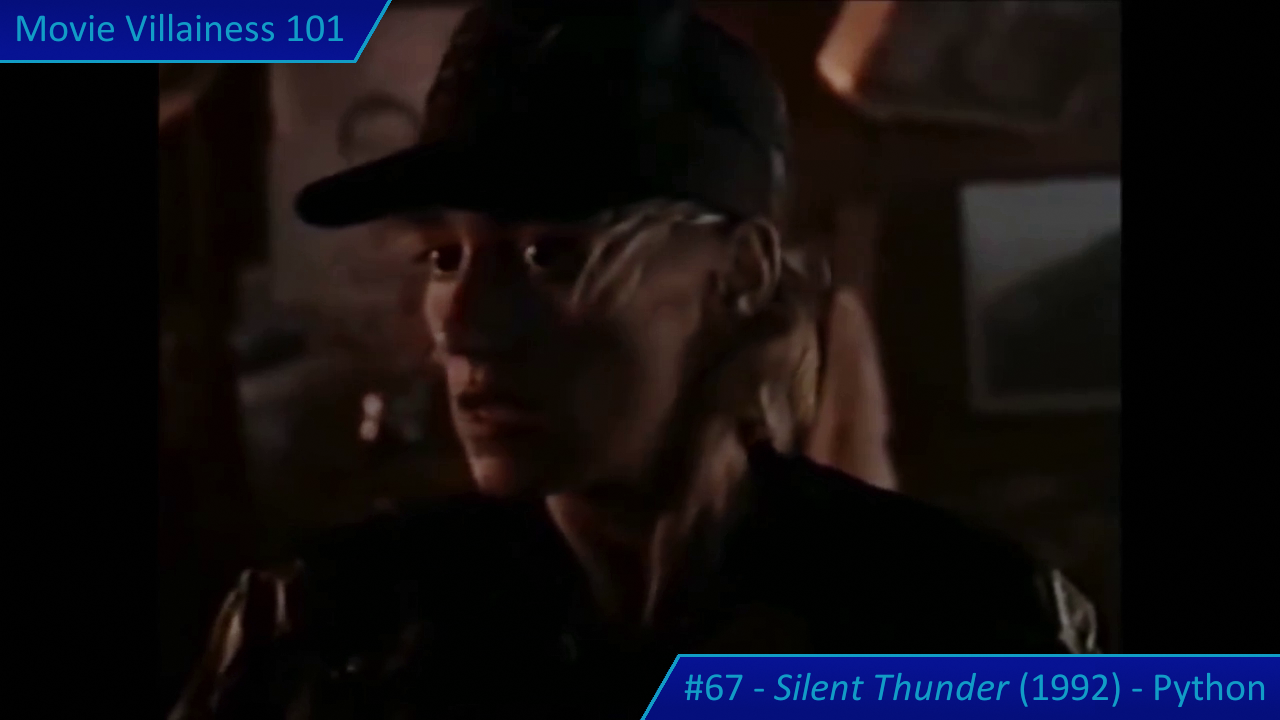
After the lady trucker reveals herself, she confronts Claude in a seedy bar. The male regulars start out on Python’s side, but they abandon her after she smashes a bottle and threatens to slash Claude. Seems violence is okay for these guys, but murder isn’t on the agenda. After that, it’s truck against truck as the hero and villainess go tire to tire in an epic last encounter. This livens up the movie, which had been pedestrian before that.
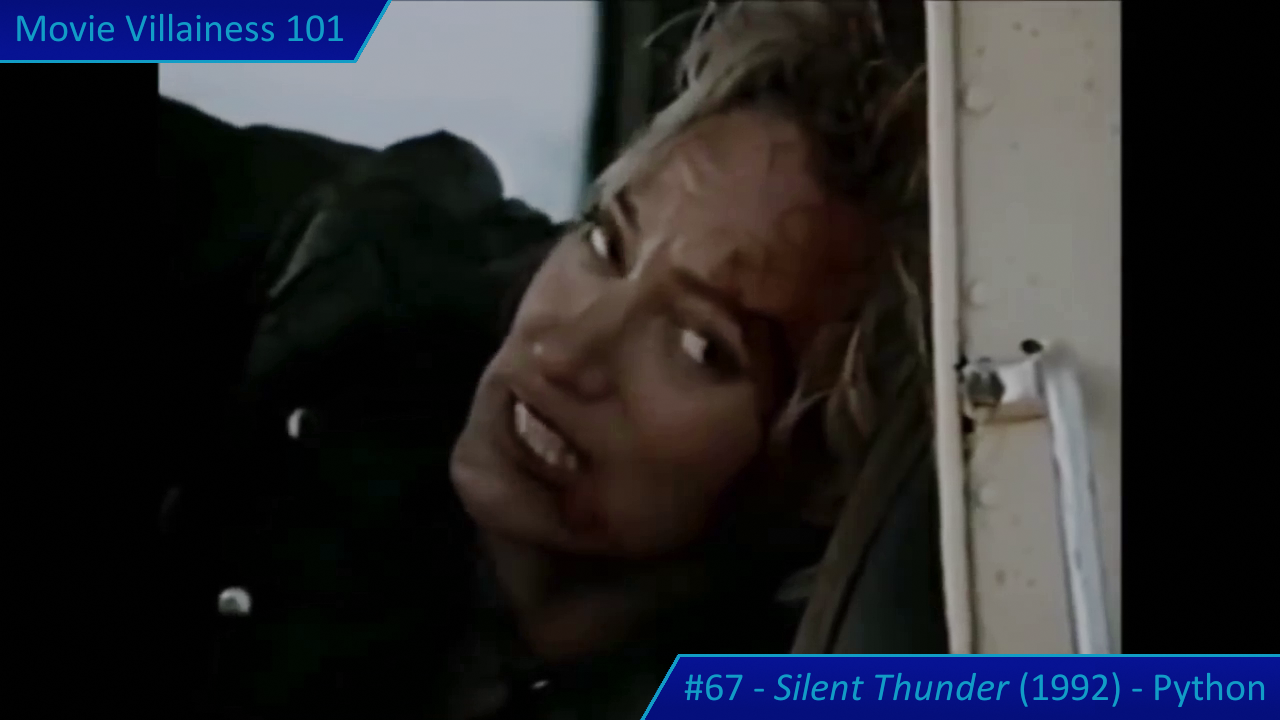
Python smirks and laughs while causing carnage, with Claude equal to the challenge. One destructive scene has the villainess and her juggernaut truck crash through a police barricade, leaving burning cars and chaos in her wake. After a prolonged road chase, both drivers ditch their trailers for the last stretch. Claude gives the villainess a taste of her own medicine, causing an accident of his own as he topples the opposing vehicle. In the climactic scene, Claude stands over the wounded Python and shows no sympathy for her plight.
Honourable Mention: Natural Disguised Voices
Serial Cops (1997) – Rachel Quinn / Alone (Terri Hawkes)
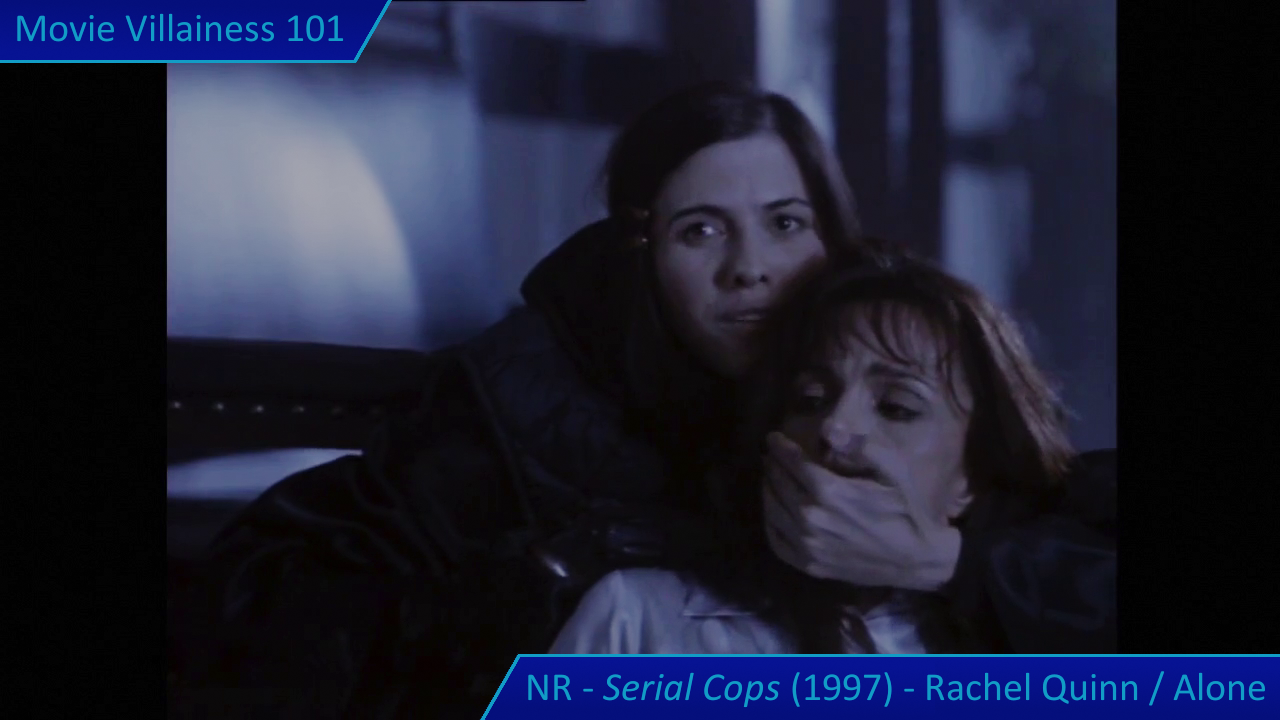
Also known as Papertrail and Trail of a Serial Killer, this mystery thriller features another deep-voiced female psycho. It’s a fairly average tale livened up by tense physical encounters between the hero and the hooded murderer.
Much of the plot centres around a psychiatrist and her therapy group, all of whom are potential suspects. Both the lady doctor and the cop are taunted by the killer – known only as Alone – who mutilates their victims and makes things personal.
The ending is a cop-out, with a previously unseen woman revealed as the murderer. Before that, she’d “appeared” as a faceless caller phoning in during the therapy sessions. After that non-twist and a dull chase through a darkened building, viewers hoping for some improvement will be disappointed. In a weak confrontation, the cop dispatches the villainess with a single shot. An honourable mention for some decent kill sequences, but there’s little else to recommend here.
From screaming victim to heroine – dying repeatedly does that to a girl
Movie
Happy Death Day (2017)
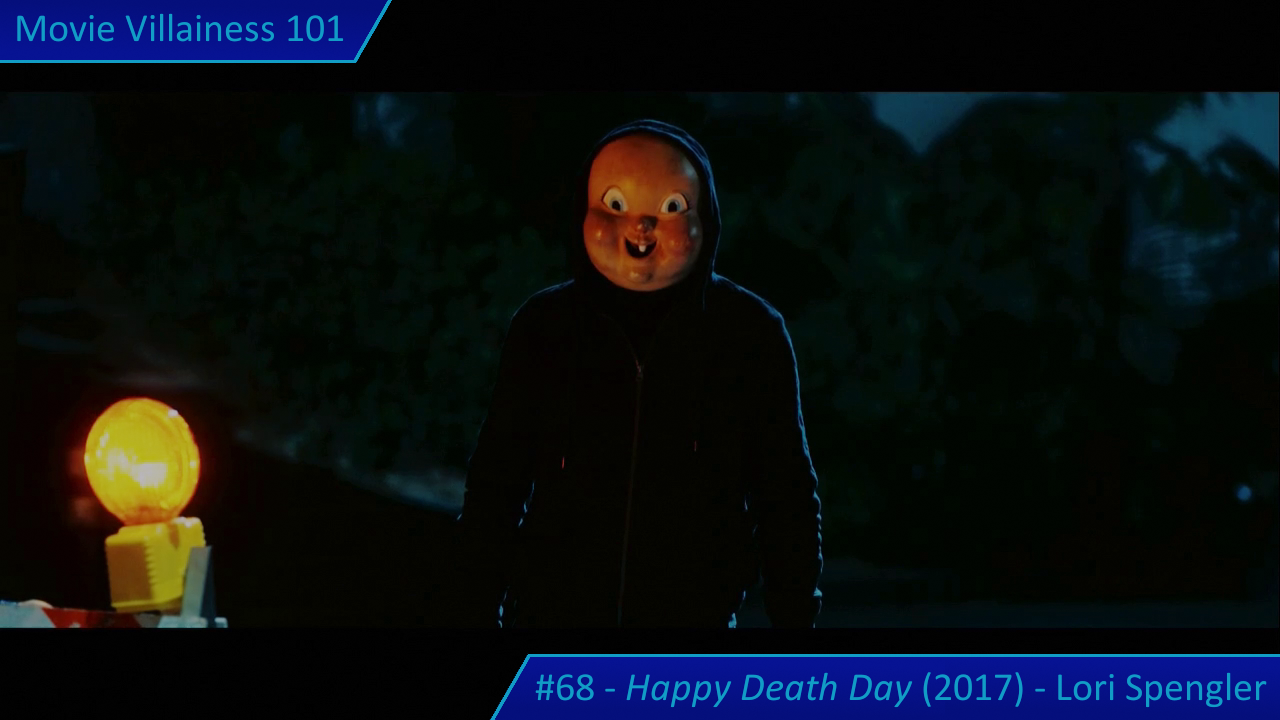
Teen slasher movies have been done to death (pardon the obvious cliché), so it’s always welcome when someone injects a dose of originality. This 2017 film mixed familiar genre staples (girl in peril, masked killer, everybody a suspect) with the time loop plotline from Groundhog Day (1993). The resulting crossover had the heroine Tree reliving (and dying) the same day until she solved her own murder.
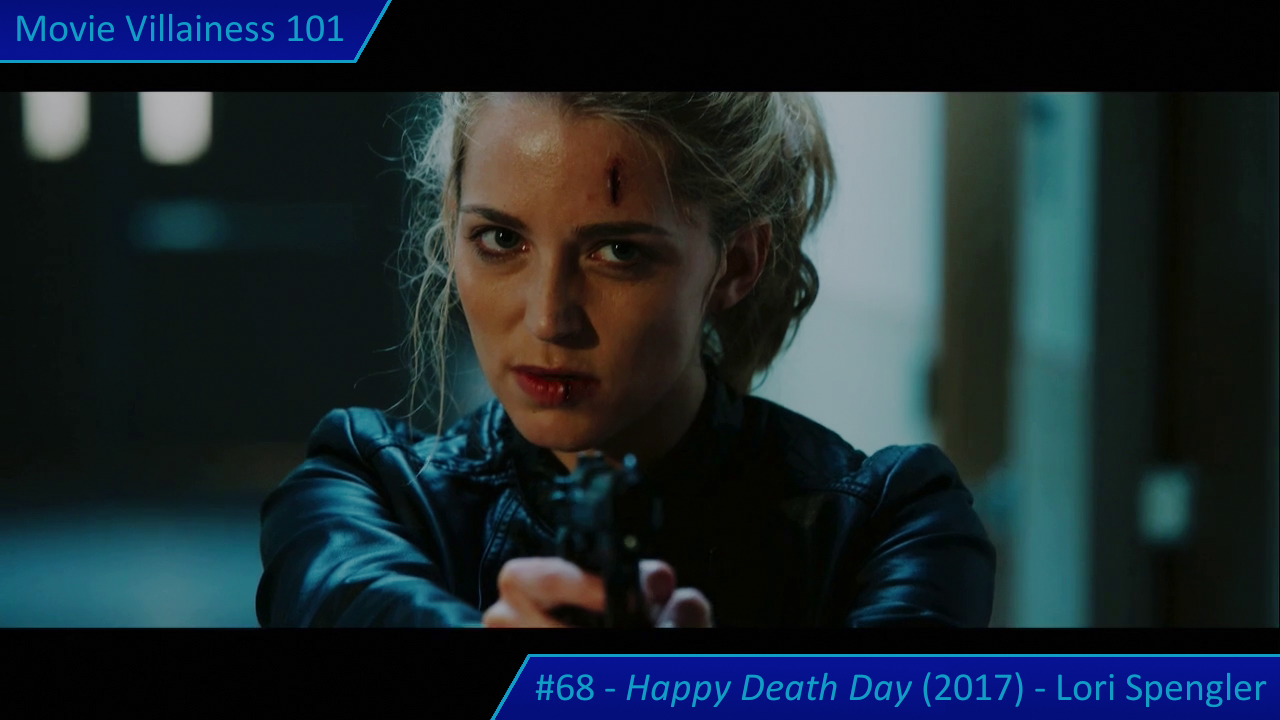
This setup allows Tree to meet many sticky ends at the hands of the mascot-masked psycho, instead of the plot immunity normally afforded to final girls. One nice element was Tree’s progression from hapless screaming victim to determined investigator, and then to leather-clad badass by the finale.
It takes a dozen minutes – with plenty of exposition – before the first kill, when Tree stupidly wanders into a darkened tunnel to investigate a music box. Only to get knifed by the murderer. The heroine goes through a period of denial before she wises up and avoids the death trap. Taking refuge at a party isn’t a bad idea, but it doesn’t save her from a second skewering.
Many characters are presented as potential killers, including boyfriends and sorority girls. Tree crosses most off her suspect list, usually when she sees them (or their body) at the same time as the murderer. There’s an attempt to pin the killings on a crazy serial killer, but it’s not hard to figure out he’s just a red herring and who the real psycho is. Despite the predictable outcome, this is an entertaining romp with a nice twist on the usual slasher affair.
Villainess
Lori Spengler (Ruby Modine)
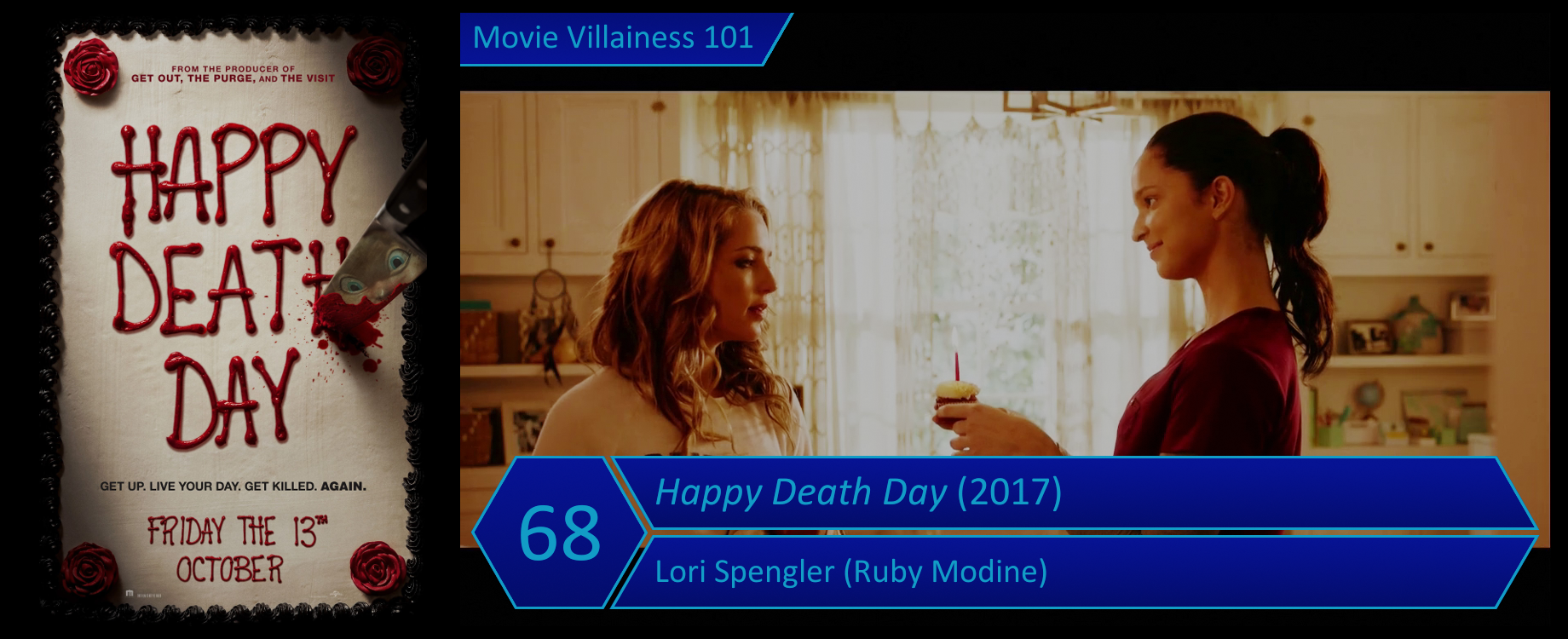
The girl behind the mask turns out to be Tree’s roommate, Lori. She conveniently works at the hospital where the serial killer was a patient, making him an ideal patsy. Seasoned horror fans will peg Lori as the killer long before the reveal, given her open hostility to Tree. Her motive is a wacky mix of jealousy over Tree’s affair with a doctor / teacher and “just because”.
Despite the insane monologue, Lori’s kills are inventive. Besides basic stabbings, Tree is drowned in a fountain and incinerated in a flaming police car before she figures out the mystery. The villainess’ initial plan was to poison her victim with a birthday cupcake, but Tree doesn’t eat it until she thinks she’s won. Then the day repeats, and she realises the nutcase male isn’t the killer.
There’s a decent deduction speech with Lori unmasked as the villainess, and the climax is suitably crazy. Tree and Lori have a massive dorm room fight, which culminates when Tree grabs a light fixture and swing kicks the murderess through a window.
Honourable Mentions: Teen Slashers
Happy Birthday to Me (1981) – Ann Thomerson (Tracey Bregman)
A more traditional slasher flick from the early 1980s, and a quirky one. The varied kill scenes include a scarf thrown into a spinning bike wheel and, most infamously, a shish-kebab through the mouth. Production values are higher than usual for teen horror, too.
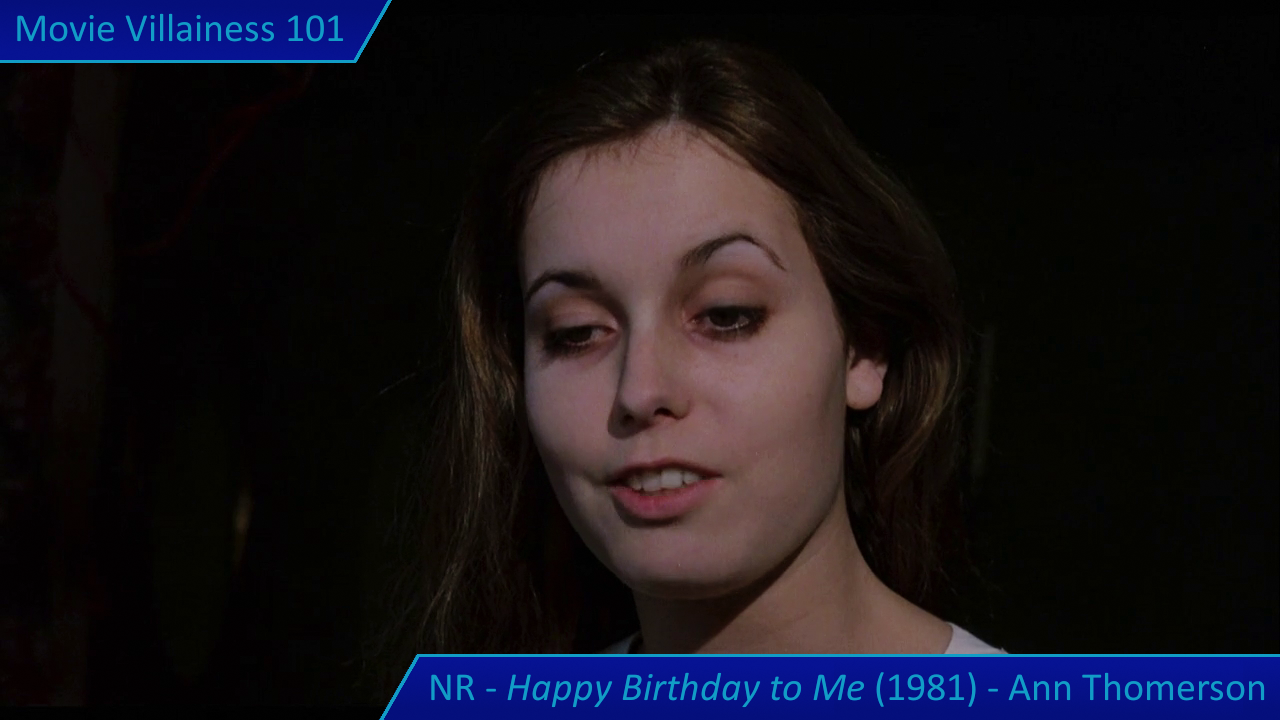
The main character is Ginny, a girl with a traumatic past. About two-thirds of the way through, she’s revealed as the killer. Or so it seems, since the actual murderer is her friend Ann wearing a latex mask. This is a cop-out, as the lead actress plays the role prior to the reveal. The motive is a confusing revenge tale about a birthday party years ago, Ann being half-sister to Ginny, and an affair with Ginny’s father.
The climax is completely out there, with dead bodies arranged around a birthday party table. After such a bizarre setup, it’s disappointing that the struggle between Ginny and Ann is brief. This ends with Ann stabbed in the chest and Ginny with plenty of explaining to do.
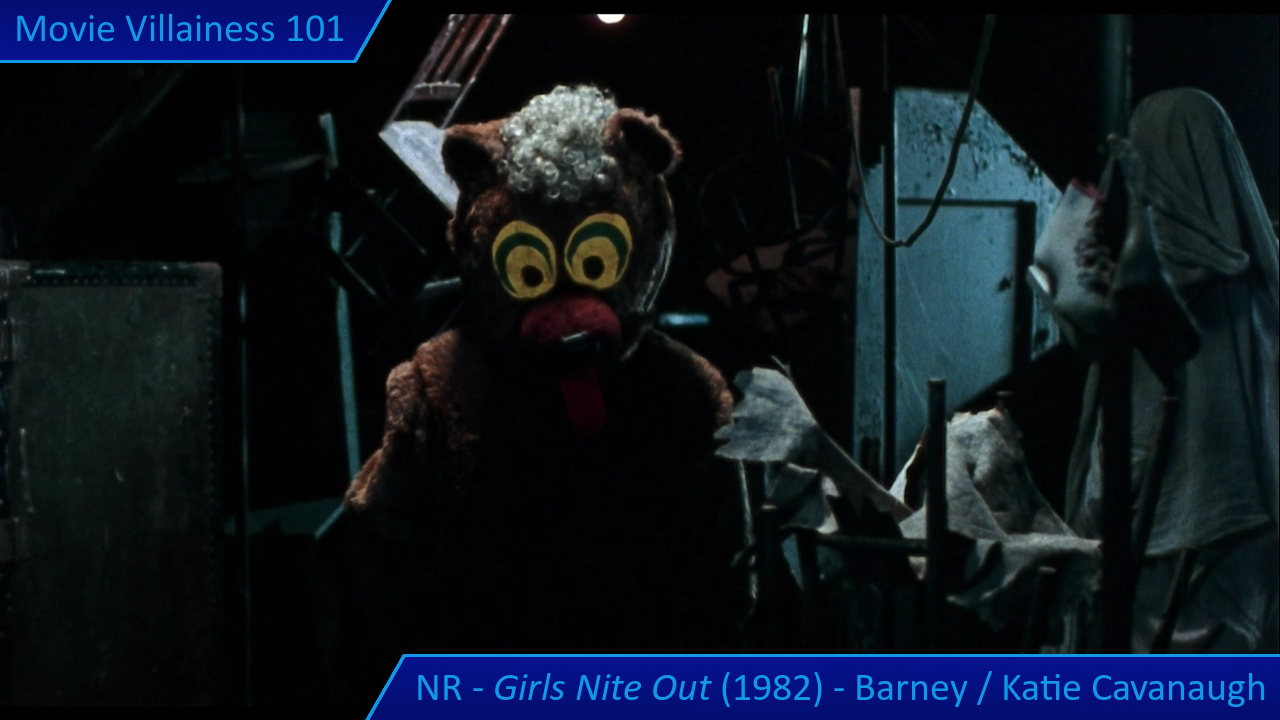
Another psycho dressed as a university mascot is the highlight of this 1980s slasher (also known as The Scaremaker). An inmate at the local nuthouse commits suicide, inspiring an unknown killer to “borrow” the bear costume (after they stab the owner), attach razor claws to the furry gloves, and turn a scavenger hunt into a student hunt. On the dark campus, the teens are easy pickings.
Production values are high for the era, with an impressive college arena scene and dozens of extras when the police are finally called. Before that, the killer phones the student radio station and whispers about whores in a cackling, gender-neutral voice. The head of security dismisses it as a prank (surprise!) until he connects the murders to the dead inmate’s twin sister.
The cafeteria lady is the killer, suffering from a split personality. A creepy outfit and some eerie kill scenes are undone by the “resolution” that resolves nothing. The security guard confronts the insane slasher, who opens a freezer to reveal the body of her brother wearing a bear claw.
After that “what the hell” moment, the credits roll, leaving Barney’s fate ambiguous. Where’s a gutsy final girl confrontation when you need one? Honourable mention for the bear, shame about the ending.
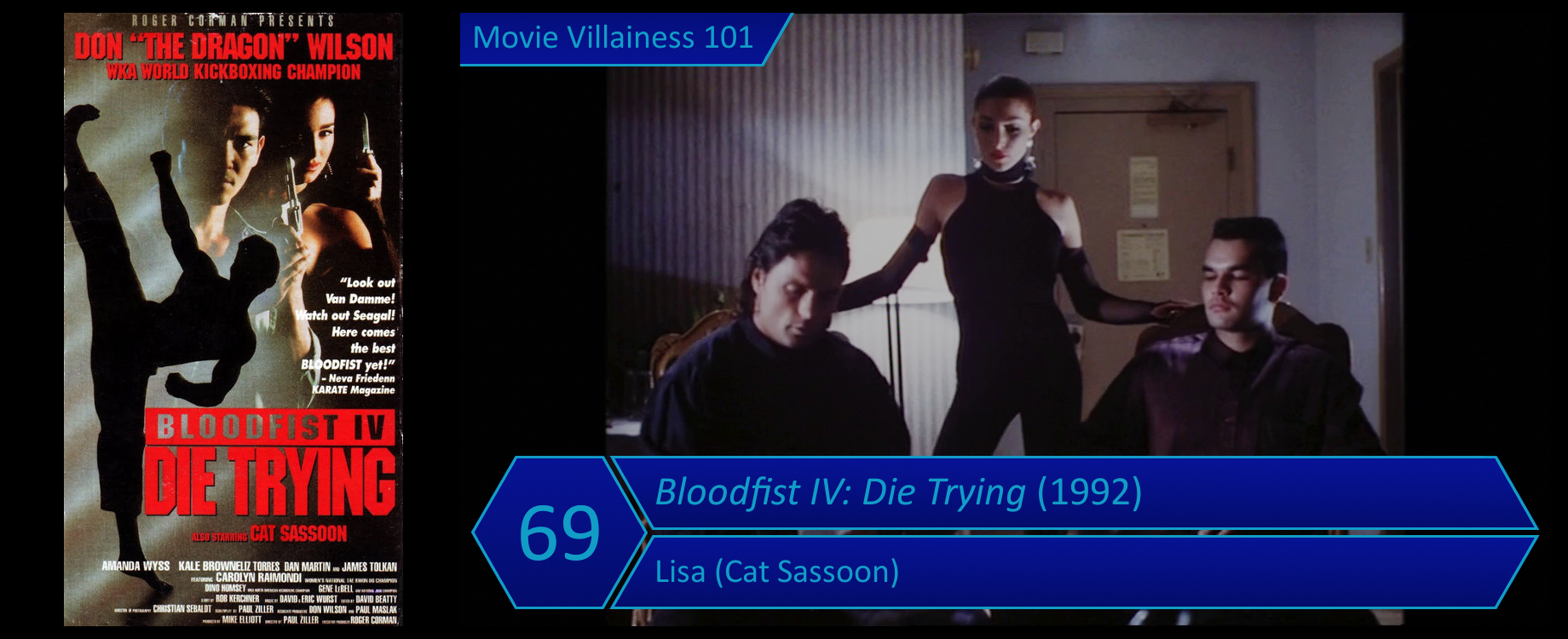
This 1990s action flick stars Don “The Dragon” Wilson, a B-movie regular who often headlined mid-budget productions. Several of his films featured female villains, though most were forgettable. The henchwomen were usually defeated easily with little screen time, so this entry in the Bloodfist series is a welcome exception.
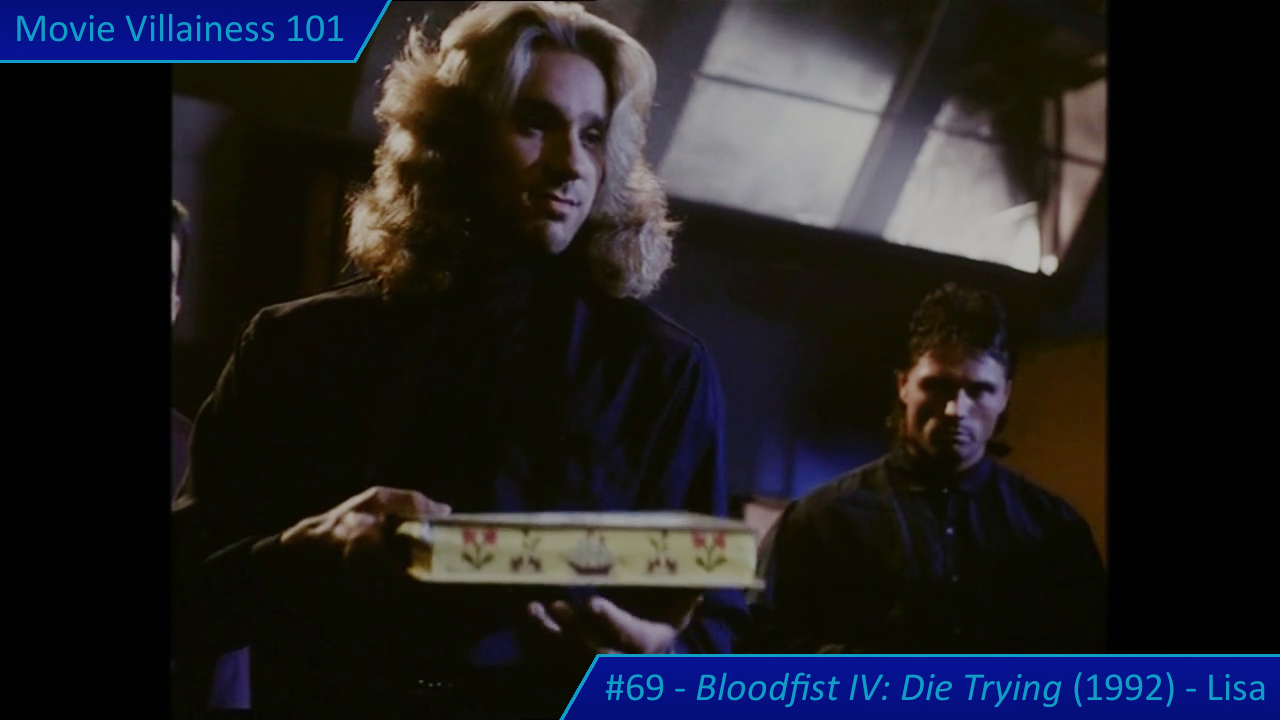
The plots of the six entries are mostly unconnected. This one has Wilson’s character, a repo man called Danny, pursued by criminals after he repossesses a car containing a box of Easter chocolates. The villains really want their property back, so they show up at Danny’s office and massacre his colleagues. No, these guys aren’t worried about snacks, but want the nuclear triggers hidden inside.
Various people take an interest in Danny, including the police, the FBI, and two shady CIA agents with their own agenda. The storyline then becomes confusing with the various groups working against each other, and many people impersonating someone else.
Villainess
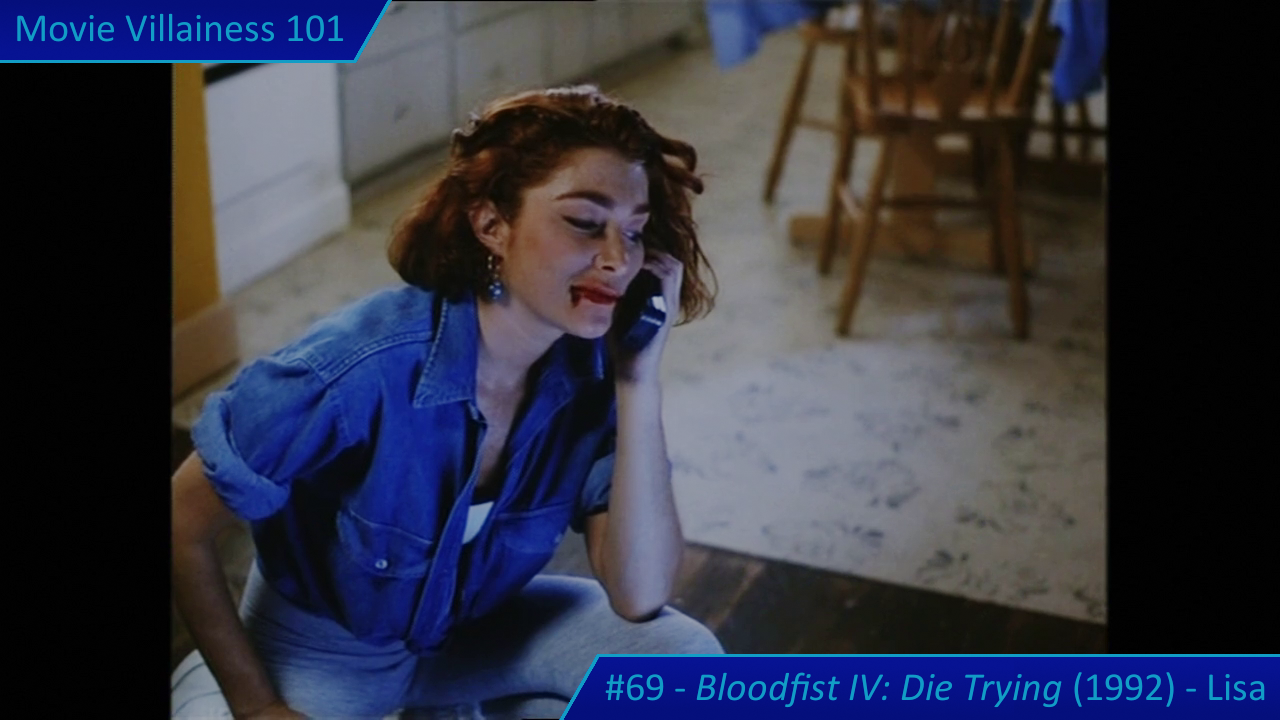
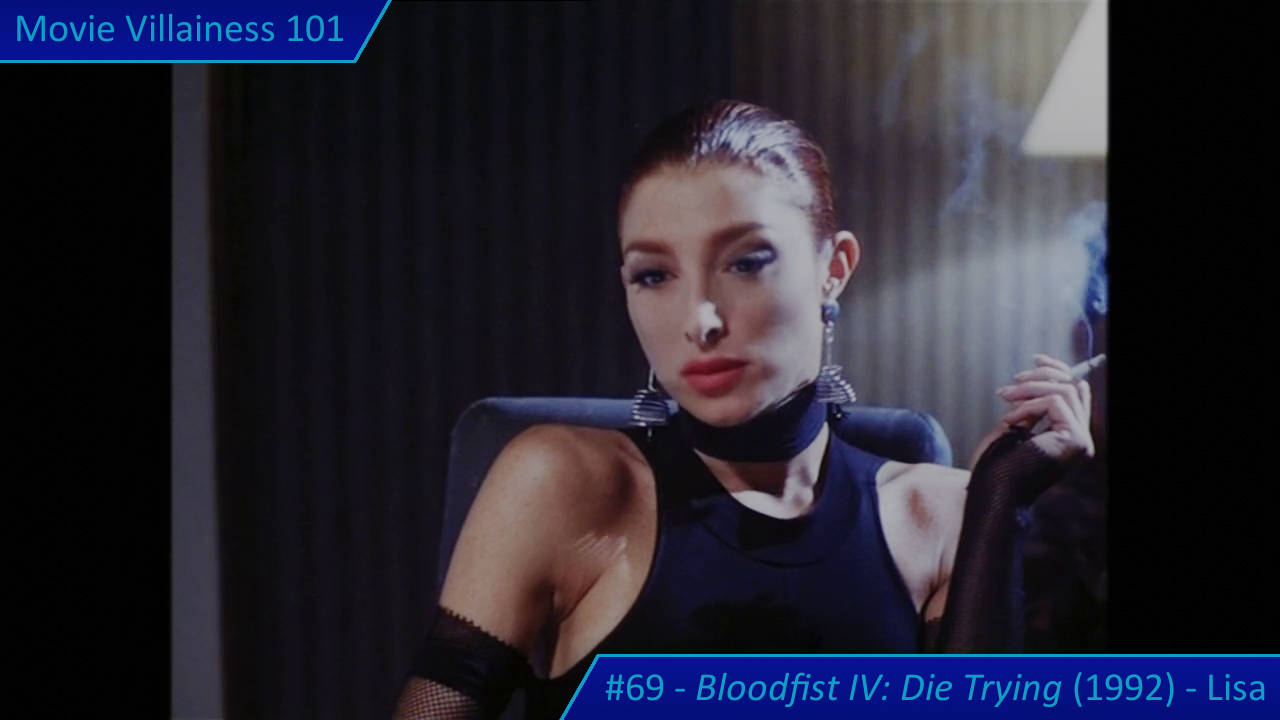
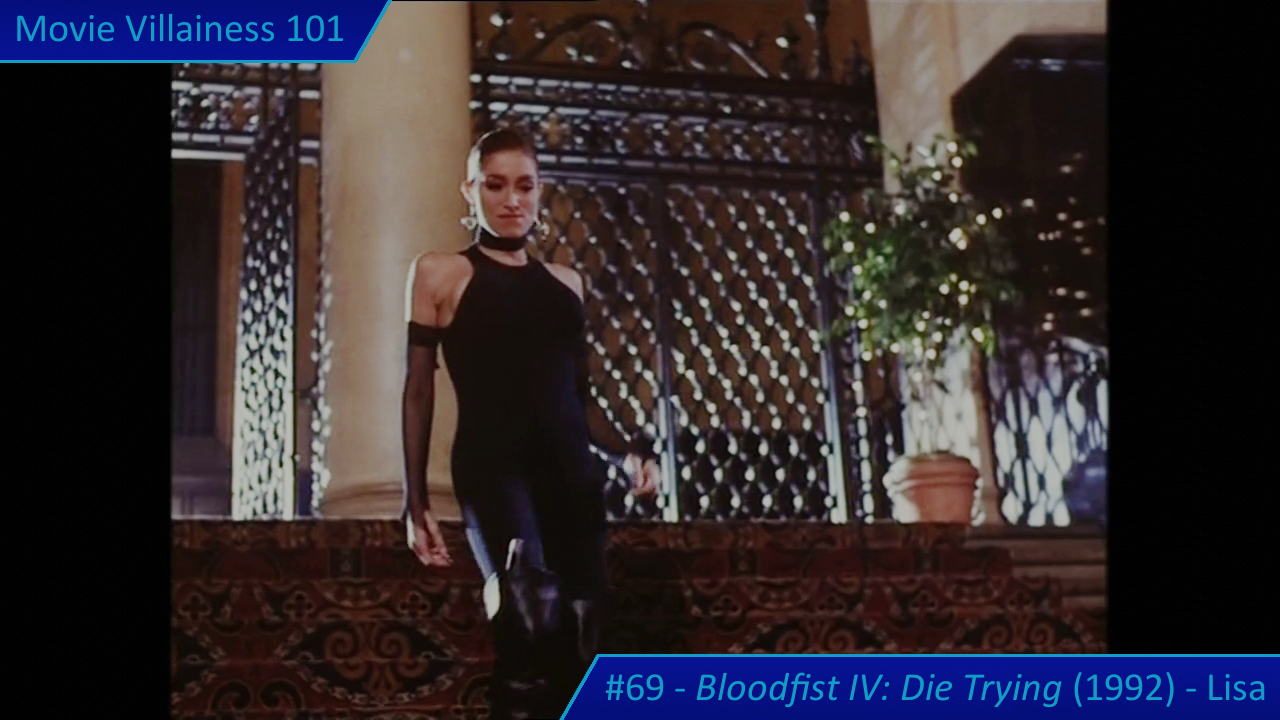
Lisa (Cat Sassoon)
One of those charades involves a woman masquerading as a babysitter. Danny thinks she’s harmless until he discovers the body of the real babysitter in a closet. This leads to the first fight sequence between Wilson and Sassoon. The martial artist villainess switches between kicks and uses improvised weapons. Eventually, the two fighters wrestle over a hot electrical hob, which burns Lisa’s wrist, and Danny knocks her out.
Then the police show up and assume Danny is the bad guy. Lisa takes advantage and kicks the gun out of his hands. He’s able to escape with an acrobatic dive through a window before the woman takes out the shell-shocked cops with lethally accurate headshots. As introductions go, it’s impressive.
Disappointingly, Lisa vanishes after that encounter, and most of the middle act revolves around Danny’s attempts to evade the authorities and track down the bad guys. Several B-movie stars appear, including James Tolkan (Mr Strickland from Back to the Future) and Gary Daniels.
When Lisa returns, she’s dressed in a suitably evil black outfit and smokes a cigarette. Cat Sassoon comes across as menacing, so it’s unfortunate the actress died at a young age. Lisa shows her ruthlessness after two henchmen recover the wrong box of chocolates. Instead of her fists, the villainess uses a switchblade to cut the throats of the lackeys with one swipe.
After that double execution, it’s the restaurant finale. Lisa tries to kill a woman Danny’s working with, but her burn marks give her away, and the villainess gets sprayed with mace before she can strike. After Danny destroys the triggers (which really annoys the bad guys), he encounters Lisa for the last time. In a one-sided affair, she pummels him with kicks, including a rather painful one to the crotch!
Promising, until Danny turns the tables and knocks Lisa out in bland and unimpressive fashion. A disappointing end, but Lisa’s screen presence and the babysitter fight land her a ranking spot.
Honourable Mentions: Bloodfist Series
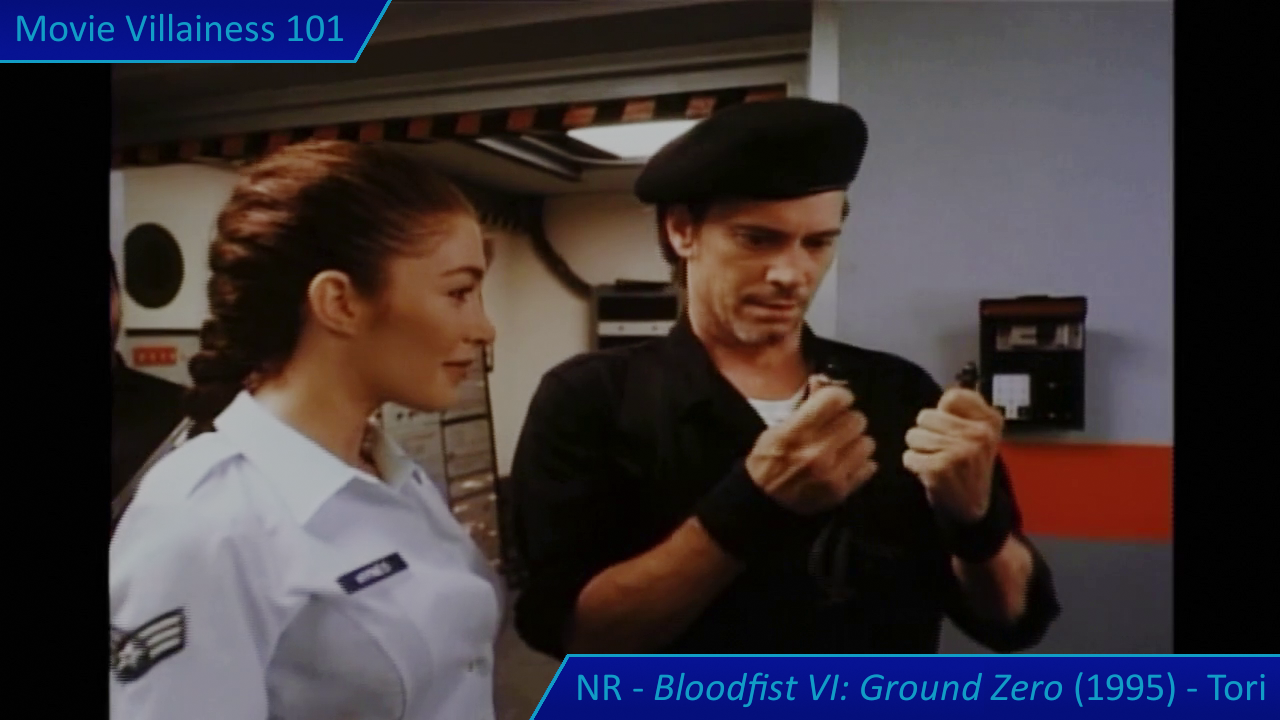
Bloodfist VI: Ground Zero (1995) – Tori (Cat Sassoon)
Cat played another villainess in the series: a traitor officer working with terrorists to steal – you guessed it – nuclear weapons. Don Wilson’s character is a military courier who must stop them. Viewers hoping for a repeat of Cat’s impressive displays in IV will be disappointed. No martial arts, which is a waste, but this woman is ruthless and trigger-happy.
After Wilson thins the terrorist ranks, Tori gains the upper hand by equipping night vision goggles and shooting a power relay. This plunges the underground bunker into deep red as emergency lights come on. A clever tactic, but it makes the action scenes difficult to follow until Wilson outsmarts the henchwoman by blinding her. Once again, he knocks Cat’s character out with a single punch, and it’s not even on screen.
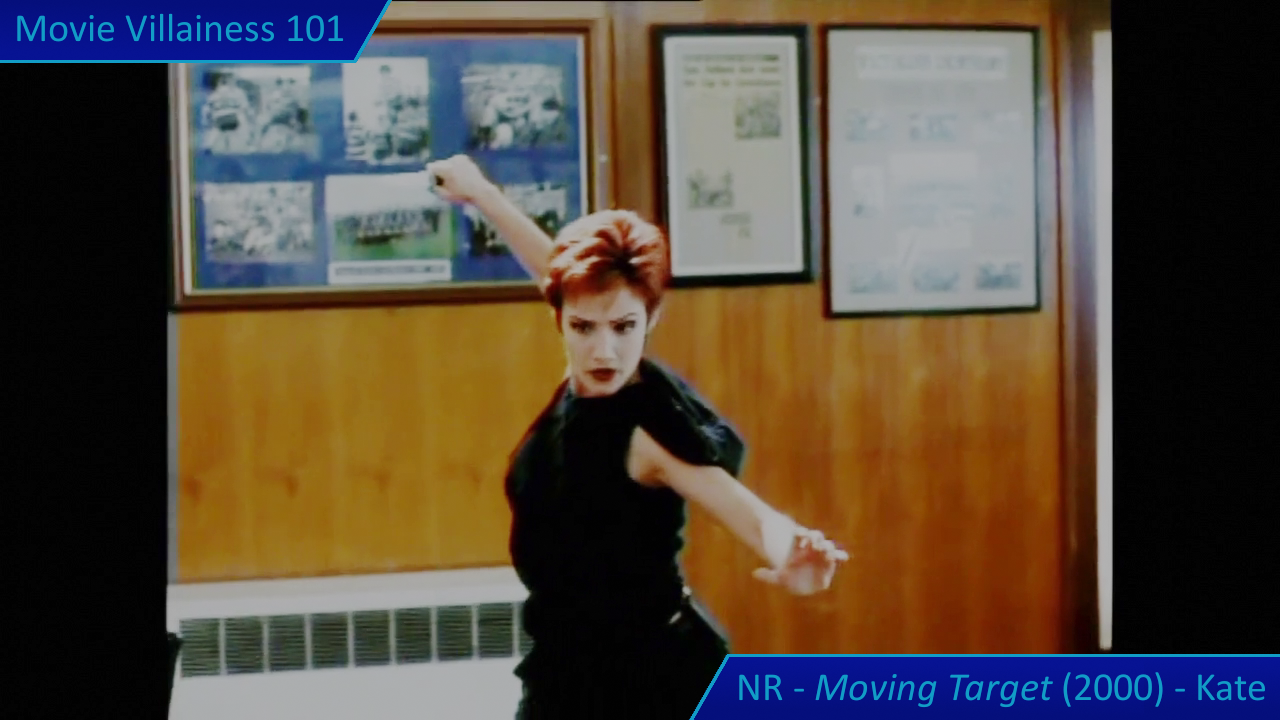
Moving Target (2000) – Kate (Lisa Duane)
Bloodfist IV was remade and set in Ireland, with all the picturesque scenery that implies. This could be called a copy, with identical situations and dialogue to the original. Many elements are familiar: an overweight detective, a CIA agent duo, and a staff room massacre. Wilson is a tourist caught up in events when he purchases a six-pack of beer. Want to guess what’s hidden inside?
The bad guys aren’t as memorable, with an unknown replacing Gary Daniels and the redhead Kate instead of Lisa. She’s an inferior martial artist, and only impresses in the double execution by knife scene. Yes, that’s repeated here too. Her opening fight – in disguise as a hotel maid – is over in a minute with barely any combat. Her final encounter with Wilson is not much better, and we get a single knockout blow even tamer than Lisa’s.
Resisting the charm of Connery’s Bond is quite a feat – well done, Fiona
Movie
Thunderball (1965)
James Bond movies have a winning formula: action, romance, and humour. Over the decades these films have delivered, except for the occasional misfire. Every iconic hero needs worthy adversaries, however, and there have been many standouts in the series. Including females.
If I ranked my favourite female villains, there could easily be half a dozen entries from the Bond franchise. Since I’m aiming for balance, I’ve chosen four “headliners” and will cover the other films as honourable mentions and discussions. Fiona Volpe is my lowest-ranked pick, and this review also summarises the Sean Connery Bond films and George Lazenby’s solo outing.
The plot of Thunderball is generic, involving the theft of nuclear weapons by a criminal organisation and a ransom demand. Main bad guy, Blofeld, holds conferences with electric chairs in case his underlings should fail or betray him. These plot elements will be familiar to anyone who’s seen Austin Powers, where the tropes were spoofed. Bond stumbles across the fiendish plan by accident whilst recuperating at a clinic, and embarks on a mission to save the world. That scenario seems to recur a lot.
The movie is infamous for ambitious and overlong underwater sequences. With the slowdown, this is a poor setting for action set pieces. The last act – a battle between henchmen in black scuba gear and the goodies in orange – is a boring drag. Thankfully, the villainess’ scenes all take place on dry land.
Villainess
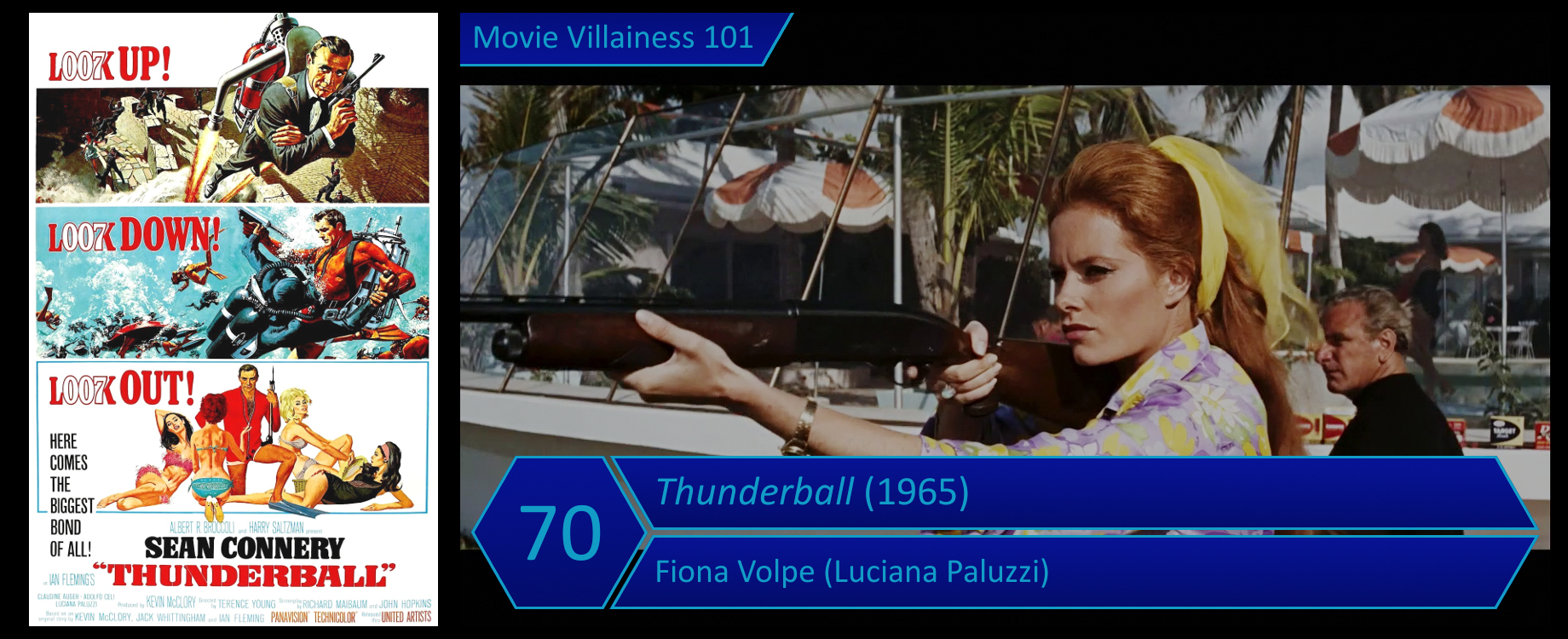
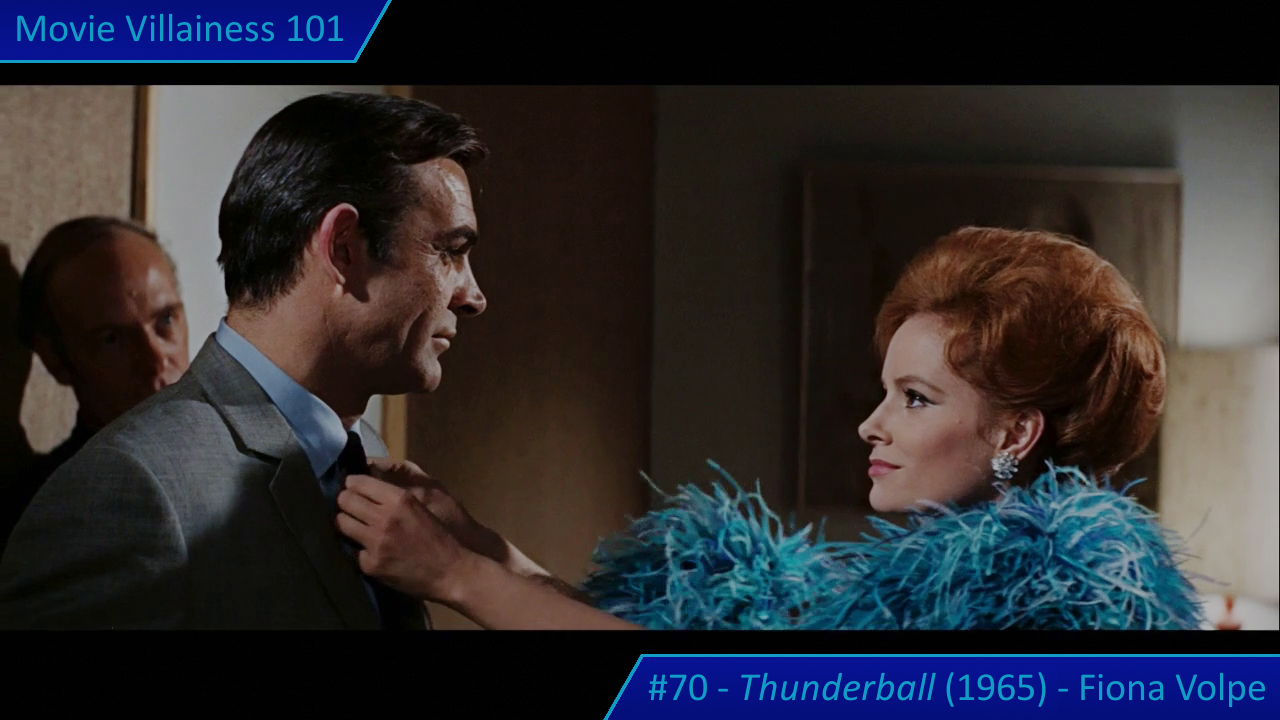
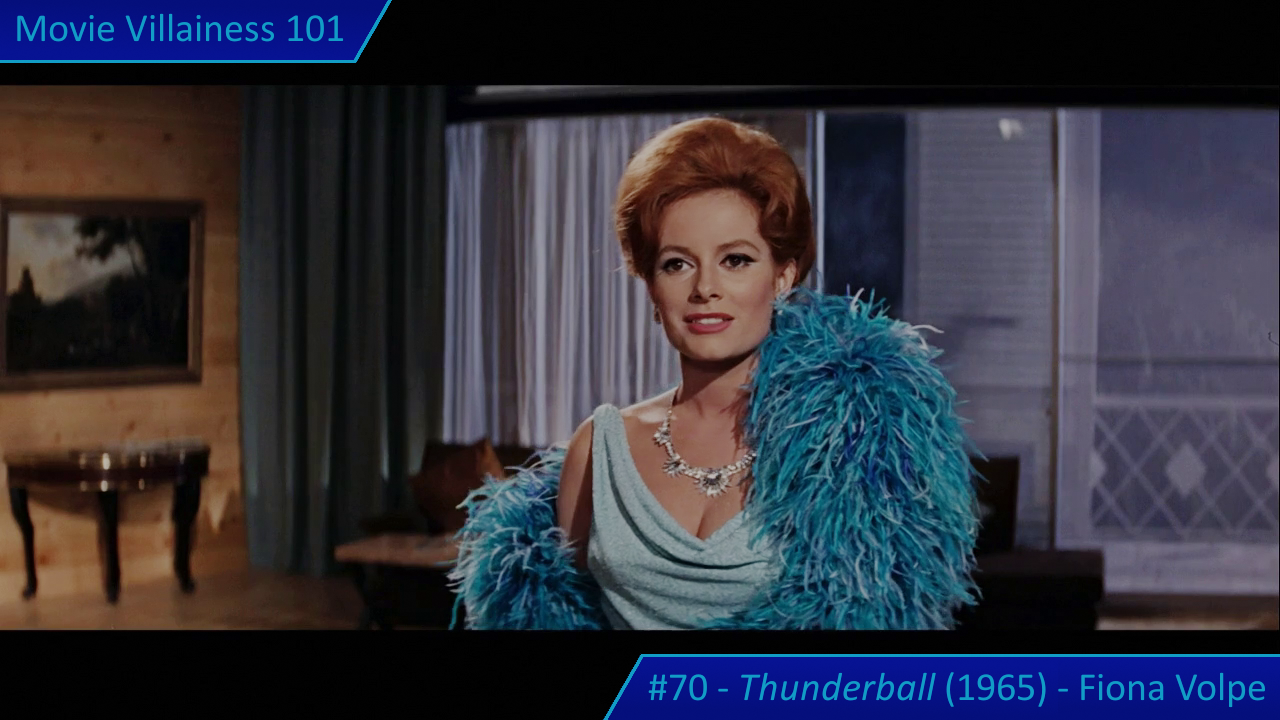
Fiona Volpe (Luciana Paluzzi)
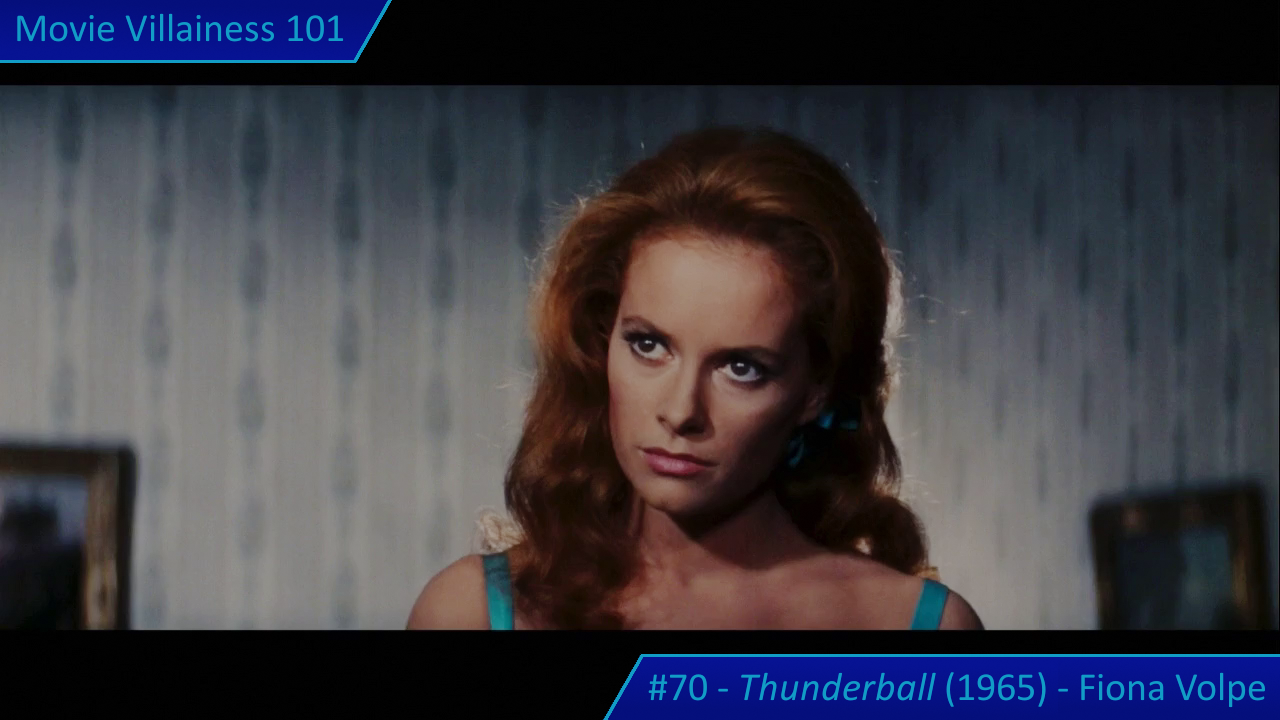
While the main villains are faceless Blofeld and Largo (Adolfo Celi), Fiona is almost his equal with a major role in Spectre’s evil scheme. In an early scene with an accomplice who’s too greedy for his own good, she comes across as a no-nonsense authority figure. This is moments after she plays the femme fatale with an airman she lures into a deadly trap.
Fiona’s talents extend to assassination when Blofeld orders a man killed as punishment for failure. Fiona does the deed in style, intervening as her quarry pursues Bond’s Aston Martin DB5. Not to be outdone, the female killer has her own gadget vehicle: a motorcycle fitted with rocket launchers. Those make quick work of her target. Not long afterwards, there’s a decent reveal where the helmeted biker is revealed as Fiona. But it was almost certainly a stunt double for “her” earlier scenes.
Fiona and Bond don’t meet until the halfway point, when she picks the stranded agent up and gives him a high-speed ride. The villainess is daring in this sequence, openly displaying her Spectre ring. Later on, she seduces Bond and brags she’s immune to his charms. And unlike Pussy Galore in Goldfinger, there’s no final act shift of allegiance this time around. Fiona even makes the point in a defiant speech.
After Bond escapes Largo’s henchmen, the final encounter takes place in a bar during Mardi Gras. Bond hides by dancing with a female patron, but Fiona soon takes the woman’s place. She intends it to be his last fling and has a concealed henchman ready to shoot Bond in the back. However, the hero expects this move and pivots Fiona around at the last instant, so it’s her shot instead. Cold-blooded execution of female villains would come much later in the series, but we’re still treated to a one-liner.
Honourable Mentions / Discussion: Sean Connery / George Lazenby Bond Movies
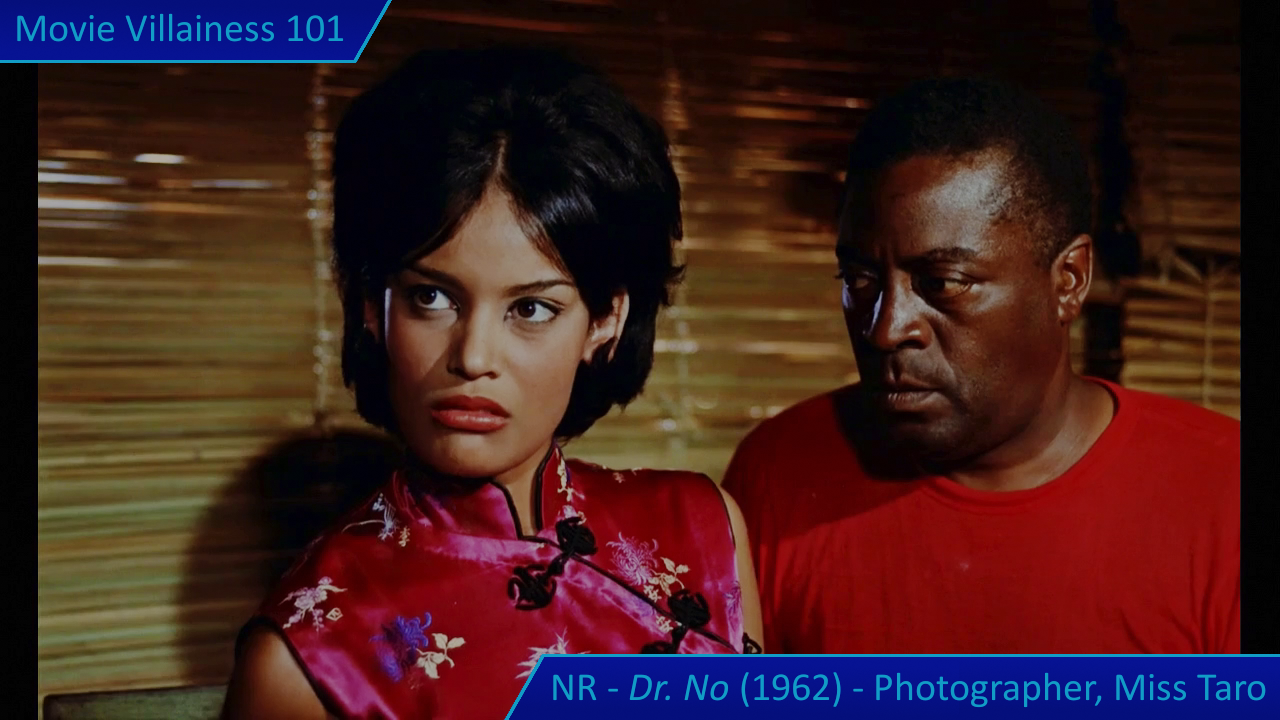
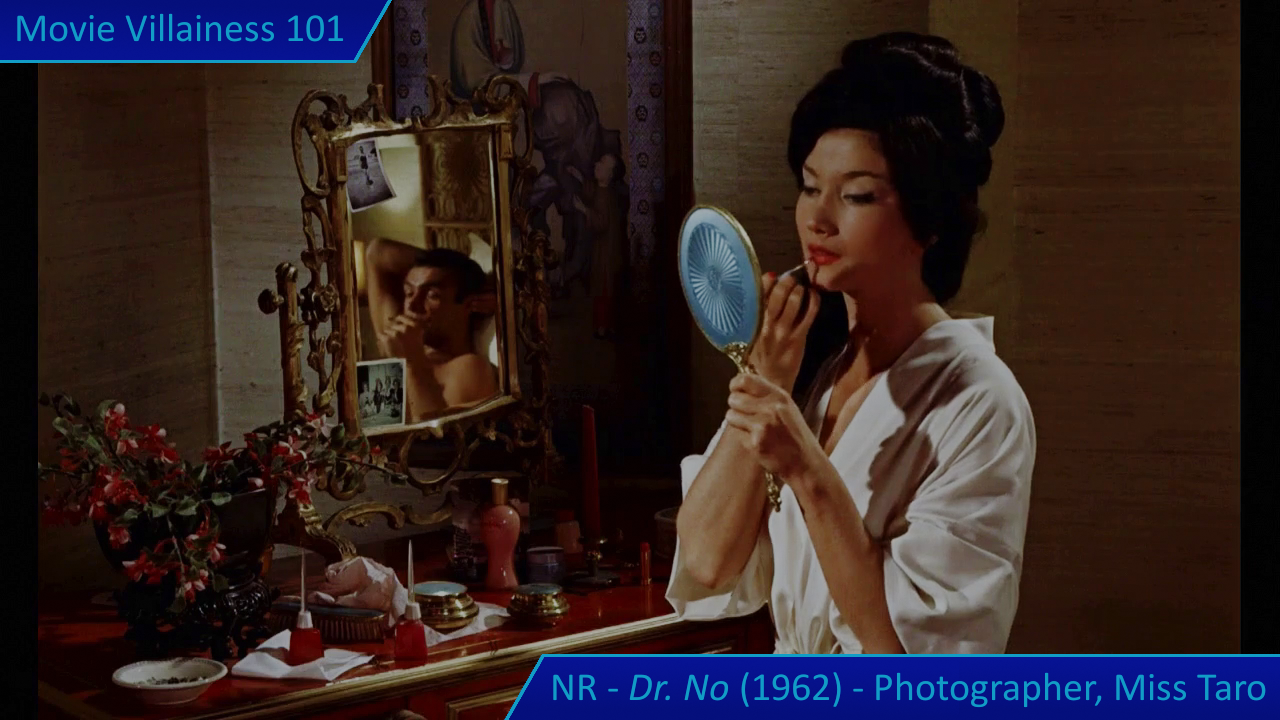
Dr. No (1962) – Photographer (Marguerite LeWars), Miss Taro (Zena Marshall)
The first official Bond movie set the tone for those that followed. Dastardly villains operate from elaborate lairs, and women are beautiful, seductive, and frequently dangerous. The weakest of Connery’s films from a villainess perspective, but there are two female foes worth a mention.
Marguerite LeWars has the honour of playing the first-ever Bond villainess, though the photographer is never named. A freelancer working for a mysterious enemy, this woman shows her evil side by licking a lightbulb after snapping shots of Bond in Kingston, Jamaica. When caught, the photographer refuses to talk, even when Bond’s allies threaten to break her arm. She even smashes a lightbulb in her questioner’s face, drawing blood. Tough cookie, this one.
Miss Taro is a more traditional femme fatale, relying on her sexy voice to deceive the spy. That might have been more effective if he hadn’t caught her eavesdropping. Still, Bond never turns down an opportunity to bed a beautiful woman, even one with dark intentions. Of course, the hero merely bides his time – and enjoys himself – until the authorities arrive.
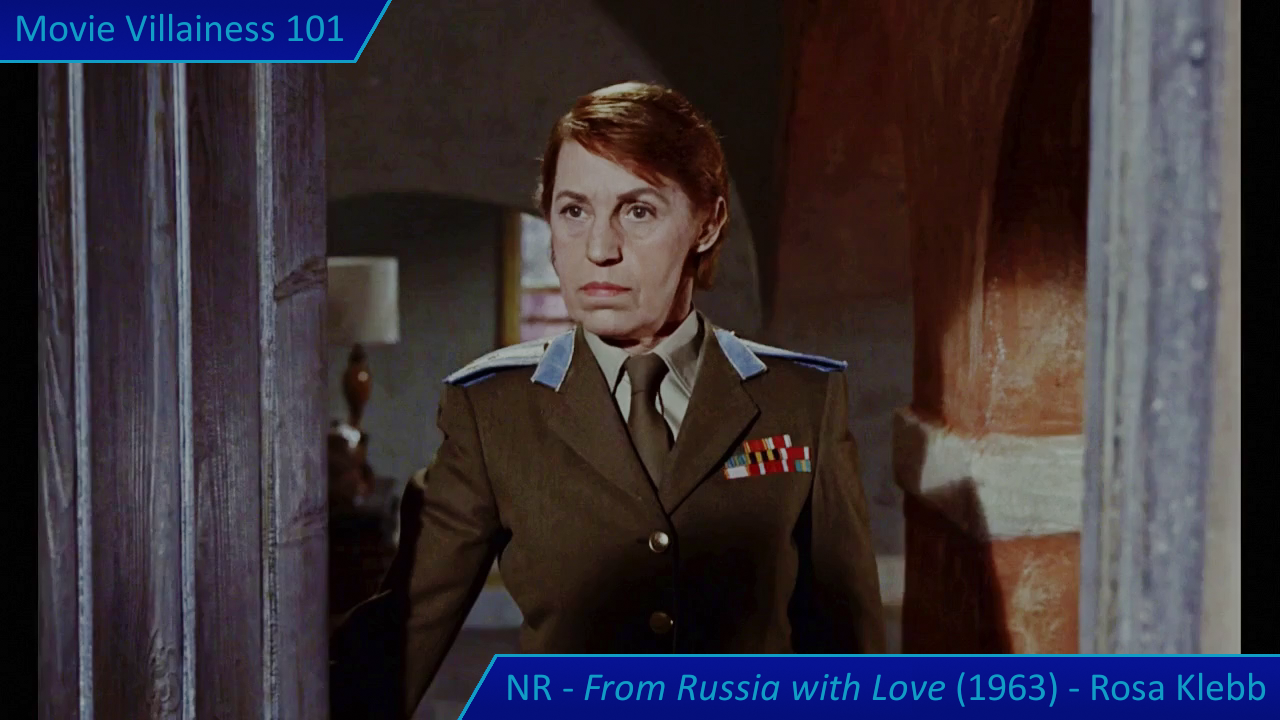
From Russia with Love (1963) – Rosa Klebb (Lotte Lenya)
The second film has the series’ first major villainess, even if she answers to Blofeld. The notorious man with the white cat is still faceless at this point, leaving Klebb and henchman Red Grant to do Spectre’s dirty work.
Klebb lost out to Fiona Volpe when I selected my pick from the early Bonds, but she makes a sinister spy. Her character is manipulative and controlling, especially with Bond girl Tatiana Romanova. Though prominent early in the movie, Klebb vanishes for the middle act, only to return and stab a fellow operative with a poisoned blade concealed in her shoe.
Her attempt to kill Bond doesn’t go so well, resulting in a poorly staged fight. After Tatiana shoots the villainess, Bond utters a darkly humourous one-liner, a trait that would continue throughout the series.
Goldfinger (1964)
The first truly extravagant movie in the franchise, there are many iconic elements, notably a charismatic title villain and his henchman Oddjob (don’t forget the killer hat). There’s also an epic finale at Fort Knox, where an all-female pilot squadron takes out tens of thousands of US troops with nerve gas.
Other minor villainesses include a treacherous beauty in the pre-credits sequence and an old lady guarding a checkpoint (who’s handy with a machine gun). A female sniper makes an appearance and takes a potshot at Bond. She’s after Goldfinger, but misses by some distance, only to meet her end shortly afterward.
The main female character is Pussy Galore, the villain’s personal pilot. A damn good one (in her words) and a judo expert. Bond still overpowers the feisty woman, seduces her, and converts her to the cause of good. So she exchanges the deadly nerve gas for a harmless alternative, and Goldfinger – while a classic movie – is not the best from a villainess perspective.
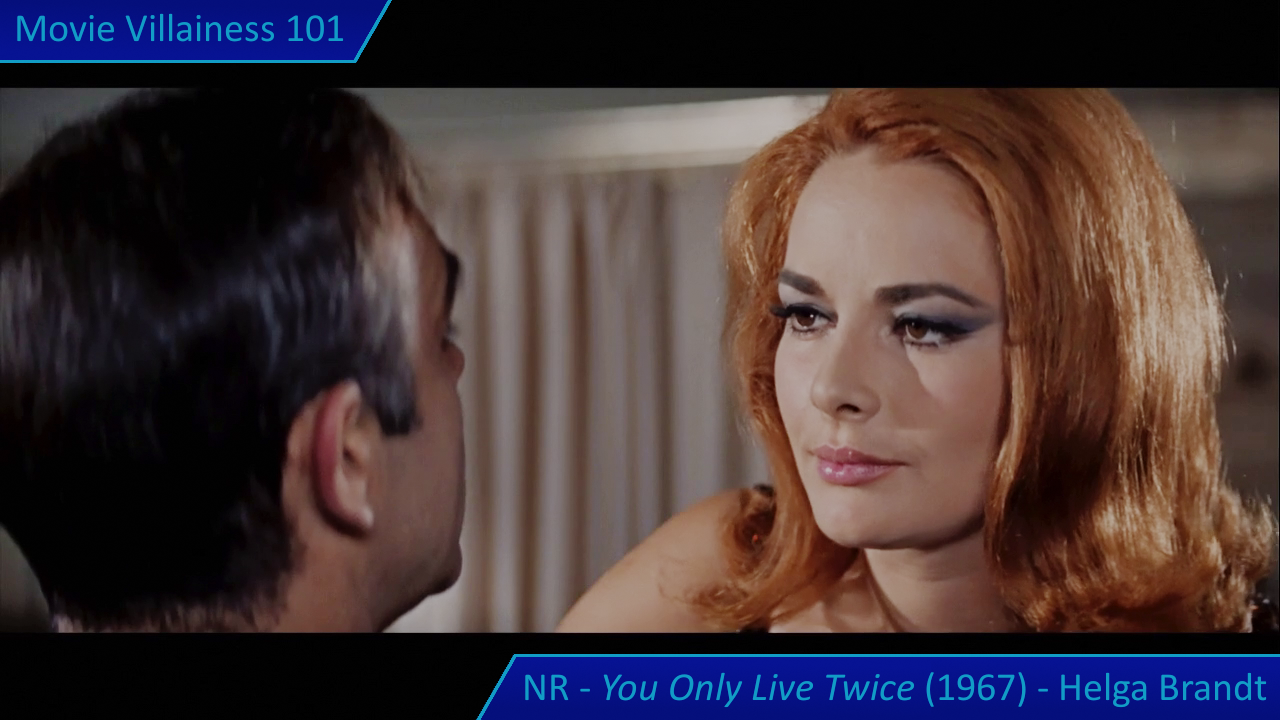
You Only Live Twice (1967) – Helga Brandt (Karin Dor)
This movie takes Bond to Japan, but he displays the same weakness towards women. Almost getting killed by a Chinese agent in the pre-title sequence doesn’t dampen his enthusiasm for Oriental females. In fairness, the “assassination” was staged to fake Bond’s death.
Blofeld returns, this time played by Donald Pleasance. The minor villains include businessman Osato and Spectre number eleven, Helga Brandt. After the henchwoman seduces Bond in a cabin, she traps him in a crashing aircraft and bails out mid-flight. Any 007 fan will know that elaborate attempts will fail, and what that means for Spectre operatives. Here, Blofeld feeds Helga to his piranha fish.
A gruesome death to frighten Osato (not that he succeeds either), followed by a ninja commando raid in a spectacular volcano lair. Some good girl action, but no female villains, unfortunately.
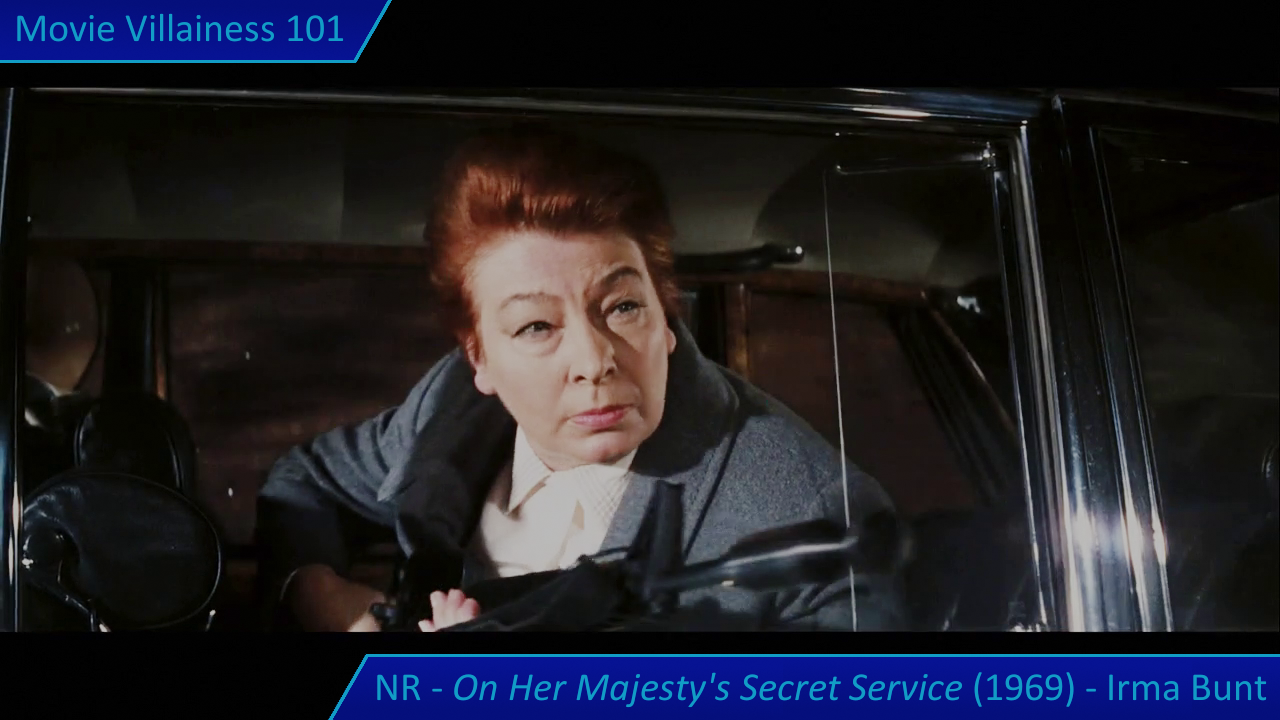
On Her Majesty’s Secret Service (1969) – Irma Bunt (Ilse Steppat)
George Lazenby starred as James Bond for the first and only time in a movie most famous for its tragic finale. Telly Savalas is Blofeld, with Irma as his main henchwoman. This lady comes across as a strict, bossy type and wouldn’t look out of place as a school headmistress. Many of her scenes take place in a Swiss Alpine clinic where Bond frolics with female patients, arguably the weakest part of the movie.
After a slow buildup, things kick into gear about halfway through with some great action sequences on the snowy slopes. For the descent, Blofeld leads the pursuit, but Irma takes over with a secondary team after Bond reaches the presumed safety of a village. Don’t be so naïve, 007 – it’s never that easy to escape.
Irma is overshadowed by Diana Rigg as the ill-fated Teresa Bond. The hero’s fling blossoms into genuine romance, and the lovers tie the proverbial knot. Most aficionados know how this story ends – with an injured Blofeld and Irma tracking the couple down. Since the main bad guy is injured, the henchwoman fires the fatal shot, a single wicked act that makes her a notable villainess in the franchise.
After the downer ending to Lazenby’s brief tenure, Bond entered the 1970s with this campy entry. Charles Gray is a much softer Blofeld with hair. He’s obsessed with world domination, and so scared of Bond’s vendetta that he’s got multiple doubles. Tiffany Case is among the weaker Bond girls, reduced to little more than a bimbo by the time the credits roll.
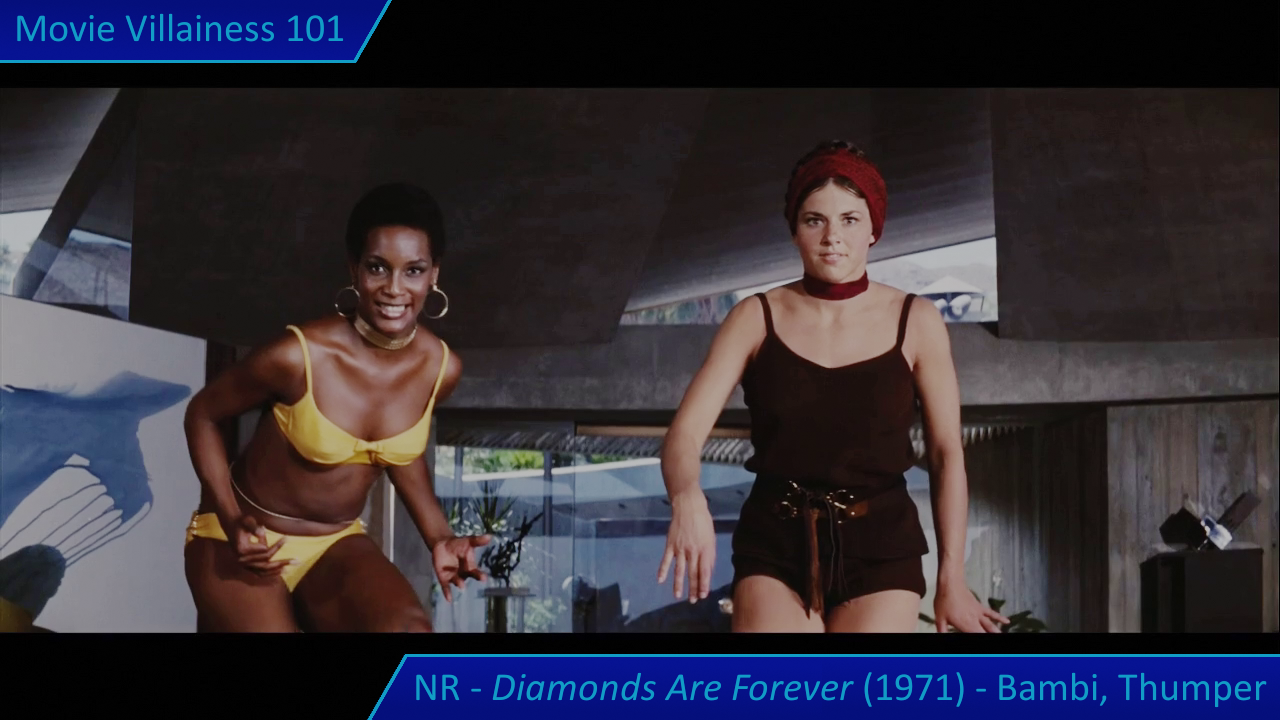
Diamonds Are Forever is best remembered for its secondary villains. There’s a great elevator fight between Bond and a smuggler, and a humorous pair of hitmen in Wint and Kidd. They have a thing for trading one-liners after they kill someone.
For villainess fans, two physical bodyguards in Bambi and Thumper, and like everything else in this movie, their scenes ooze camp. This is Bond’s first proper fight with female opponents, but the ending is weak. The two women dunk Bond in their swimming pool, only to be easily overpowered moments later.
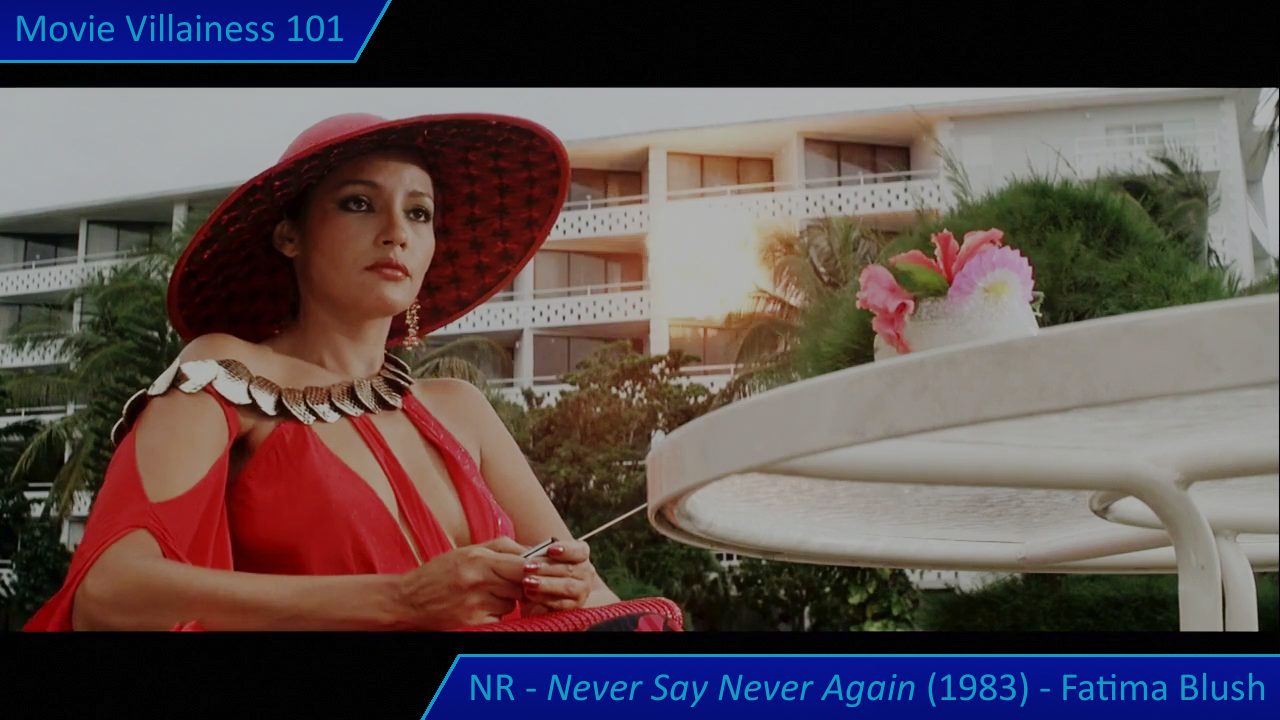
Never Say Never Again (1983) – Fatima Blush (Barbara Carrera)
Sean Connery returned for this unofficial remake of Thunderball. He shouldn’t have, because the updated version is inferior in almost every respect. The characters are unimpressive, with no official series actors present. Edward Fox is a comical version of M who’s dreadfully out of place, Max Von Sydow is a lacklustre Blofeld, and Rowan Atkinson has a terrible cameo as a hapless diplomat.
For the villainess, we have Barbara Carrera as the poor woman’s Fiona Volpe. Her first assassination – throwing a snake into a man’s car – is a pale imitation of the biker/rocket original. Carrera overacts in nearly every scene, giggling whilst wearing increasingly ridiculous outfits. She fails multiple times to kill Bond, using truly bizarre methods (remote controlled sharks, anyone?). In the end, Bond defeats her with an exploding pen with about forty-five minutes to go. Normally, such a premature exit would be disappointing, but it’s a relief here.